-
-
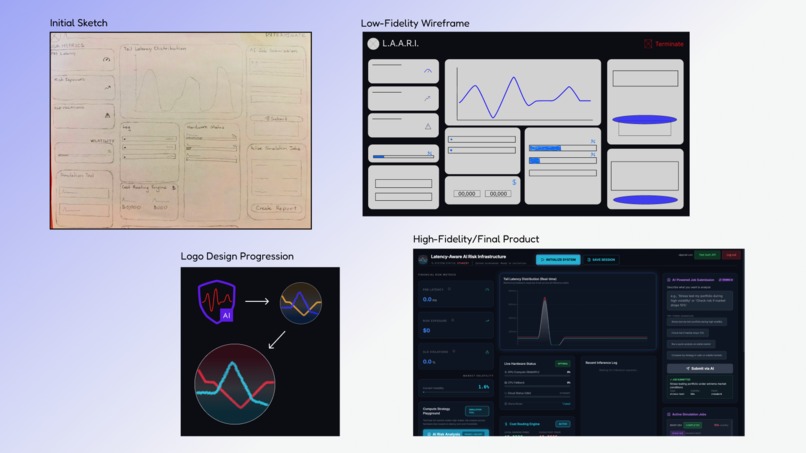
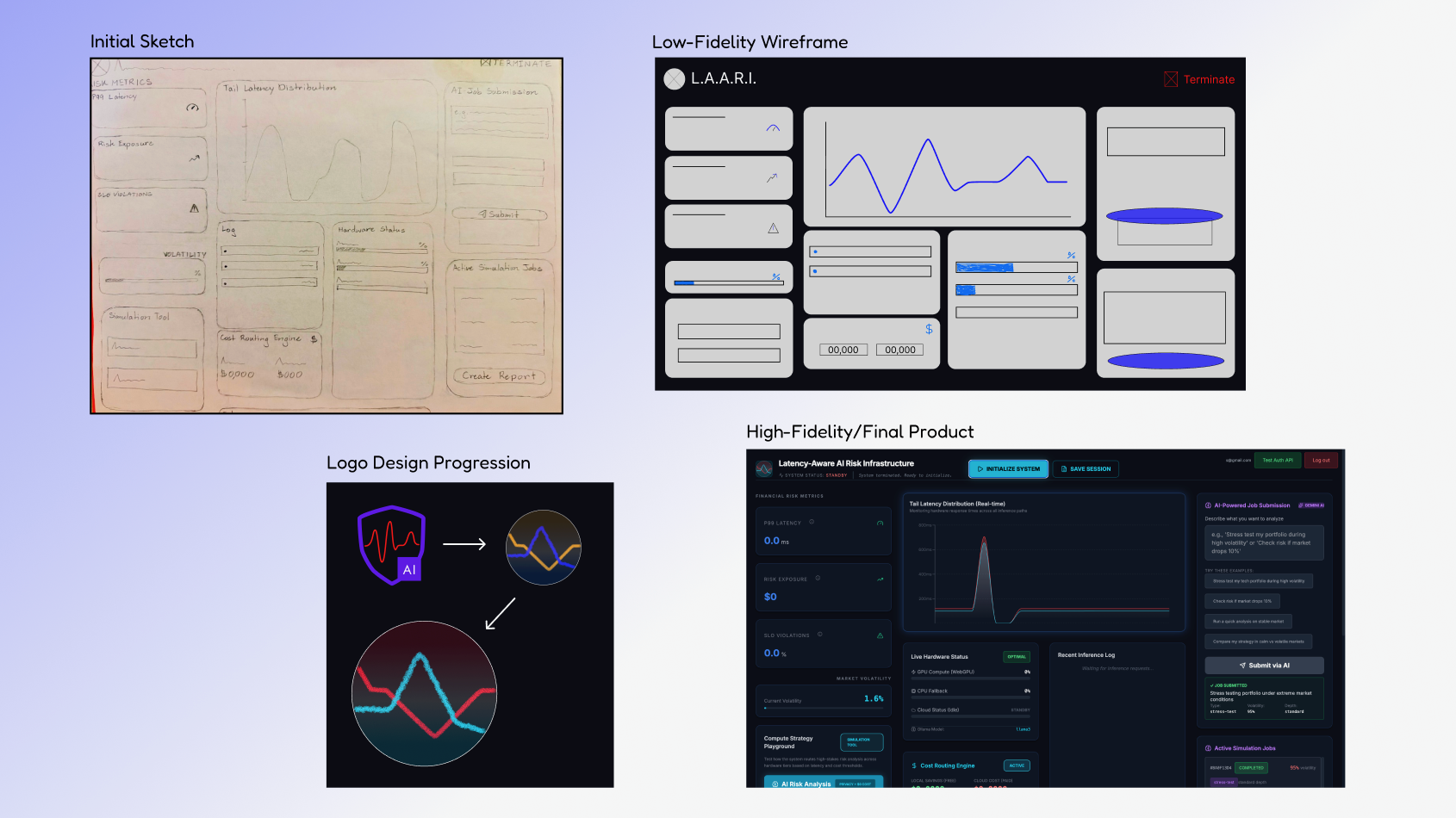
https://www.figma.com/design/slHObyXj6pLKj8cU6n0FKW/Untitled?node-id=0-1&p=f
Inspiration
In high-frequency trading, a delay of even 10 milliseconds isn’t just annoying; it can cost millions of dollars. The problem is that risk analysis today lives at two extremes. On one end, you have slow, local models that can’t keep up with market volatility. On the other, you have powerful cloud HPC systems that are expensive, complex, and introduce latency and privacy concerns. So teams are forced to choose between cost, speed, or control. We believe that tradeoff shouldn’t exist.
What it does
LAARI lets financial analysts run massive risk simulations in plain English. Type "Stress test my portfolio if the market drops 10%" and the system handles everything by processing 10 million scenarios across 96 parallel workers with a 96x speedup. It intelligently routes jobs between free local WebGPU and cloud HPC based on market conditions, then uses Gemini AI to turn raw data into clear executive reports with specific recommendations. MongoDB stores every analysis so you can track risk trends over time with Auth0-secured access.
How we built it
We built a hybrid system spanning browser, local compute, and cloud. React + TypeScript frontend shows live risk signals and market volatility. Node.js backend handles the intelligent routing. During volatility spikes, it automatically allocates 128 workers and shifts to the cloud. We integrated the Gemini API twice: once to parse natural language into HPC jobs, and again to generate executive reports from results. WebGPU handles client-side parallelism while the backend tracks p99 latency in real-time to optimize routing decisions.
Challenges we ran into
Making HPC complexity completely invisible while keeping the system trustworthy was hard. Getting Gemini to reliably parse diverse user requests ("stress test," "quick check") into consistent job parameters required careful prompt engineering. Deciding when jobs are "critical enough" for expensive cloud versus free local compute meant calibrating volatility-aware routing thresholds through experimentation. Integrating MongoDB with Auth0 while keeping real-time job updates responsive required careful state management.
Accomplishments that we're proud of
We achieved true abstraction: users never see cores or nodes, just results. The dual Gemini integration creates a complete AI workflow from input to actionable output. Our intelligent routing automatically scales from 64 to 128 workers based on volatility, showing real system awareness. We built enterprise features (Auth0, MongoDB, HTML reports) while keeping the interface simple enough for non-experts. The system proves hybrid routing works: 60-80% local execution with significant cost savings.
What we learned
Good abstraction is hard. Hiding complexity doesn't mean removing power; it means organizing it intuitively. AI works best at boundaries (input/output) while core routing needs carefully designed algorithms. Showing "1 million scenarios across 96 workers in 5 seconds" is more compelling than abstract metrics. We realized that saving past analyses with MongoDB turned LAARI from a calculator into a knowledge base. Users want to see trends, not just snapshots or one-off calculations.
What's next for LAARI
Our next priority is integrating real multi-cloud orchestration, pulling live pricing from AWS, GCP, and Azure to make truly cost-optimized routing decisions. We're planning job migration capabilities, so if a spot instance gets terminated mid-run, users won't even notice the handoff to another provider. We'd love to build collaborative features where teams can share simulation templates and compare portfolios side-by-side. Adding ML to the routing engine would be powerful, as the system could learn that certain job types consistently fail locally and proactively route them to the cloud before wasting time.
Beyond finance, we see huge potential in climate modeling, drug discovery, and supply chain optimization—basically anywhere non-experts need serious computation. The long-term vision is ambitious: we want LAARI to become the universal interface for HPC, where you ask a question in plain English and the system automatically spins up whatever compute resources are needed to answer it.
Built With
- auth0
- cloud
- express.js
- gemini-api
- groq
- hpc
- local
- mongodb
- node.js
- react
- typescript
- webgpu


Log in or sign up for Devpost to join the conversation.