Inspiration
The job market is hard right now, especially for students and people early in their careers. We kept hearing the same story: dozens of applications sent, almost no replies. Job boards make applying easy, but applying is only one part of getting hired. The rest is going to events, talking to the right people, following up and doing well in the interview. That's the part nobody teaches you, and the advice that does exist is scattered across forums and old Reddit threads.
What it does
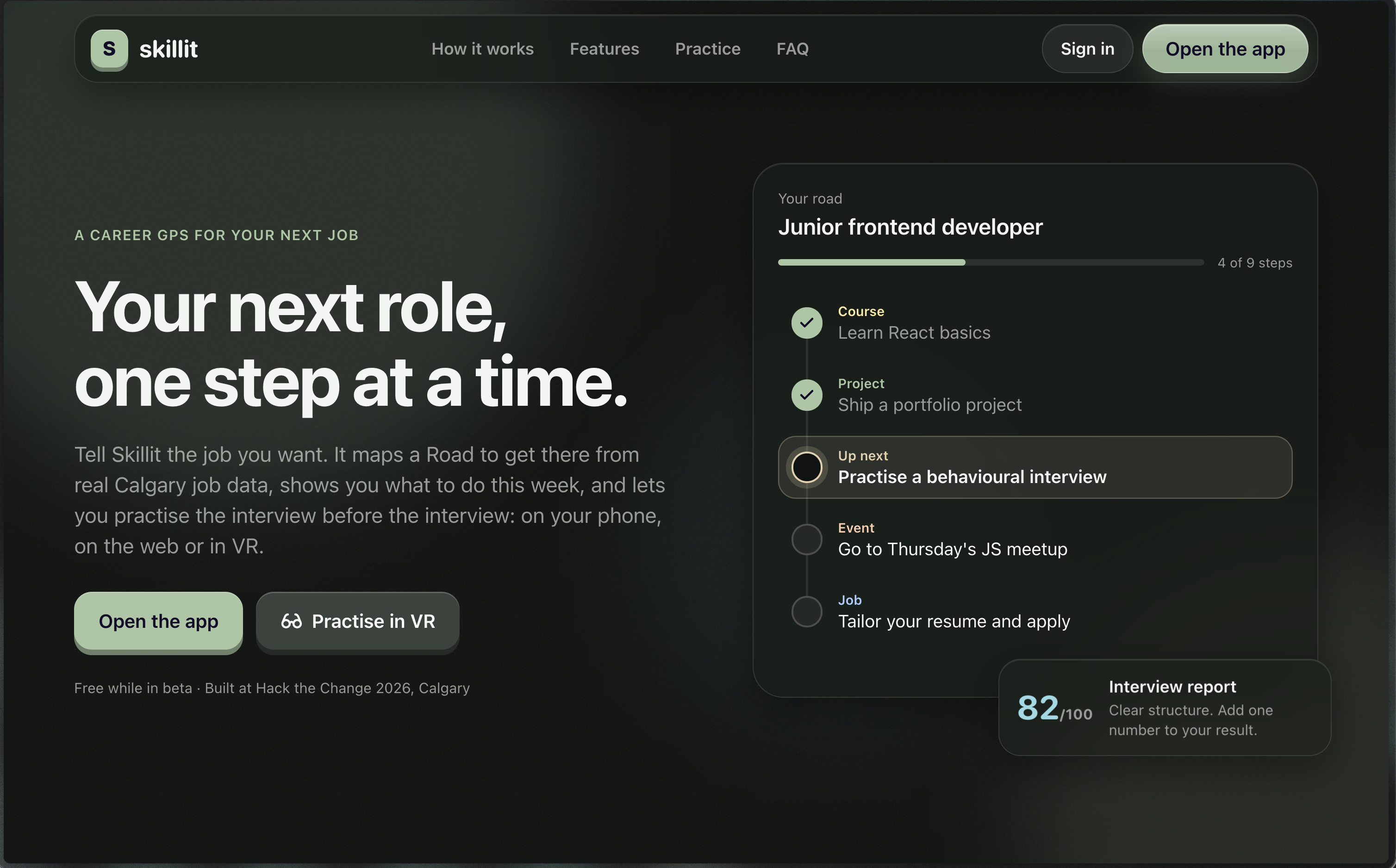
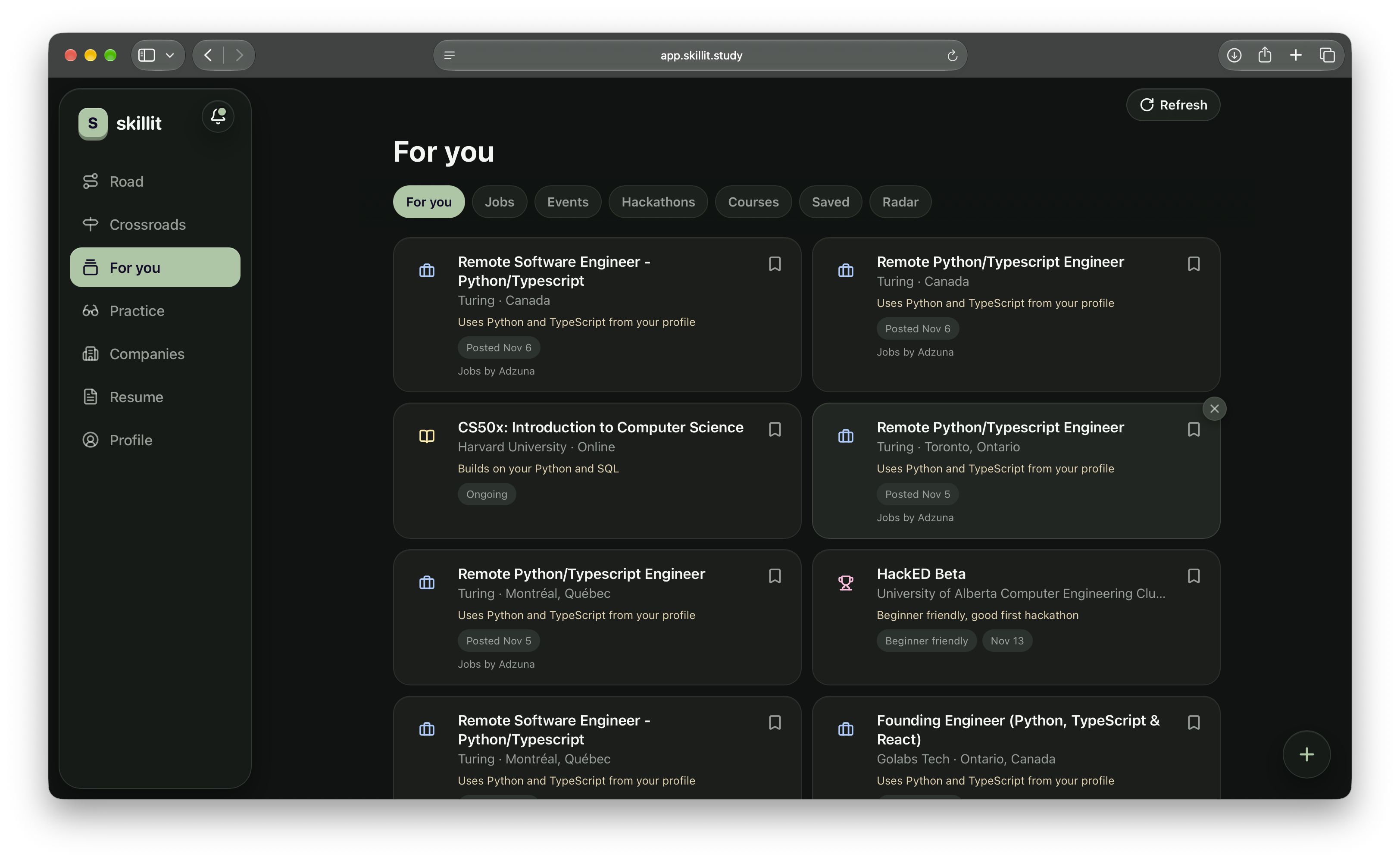
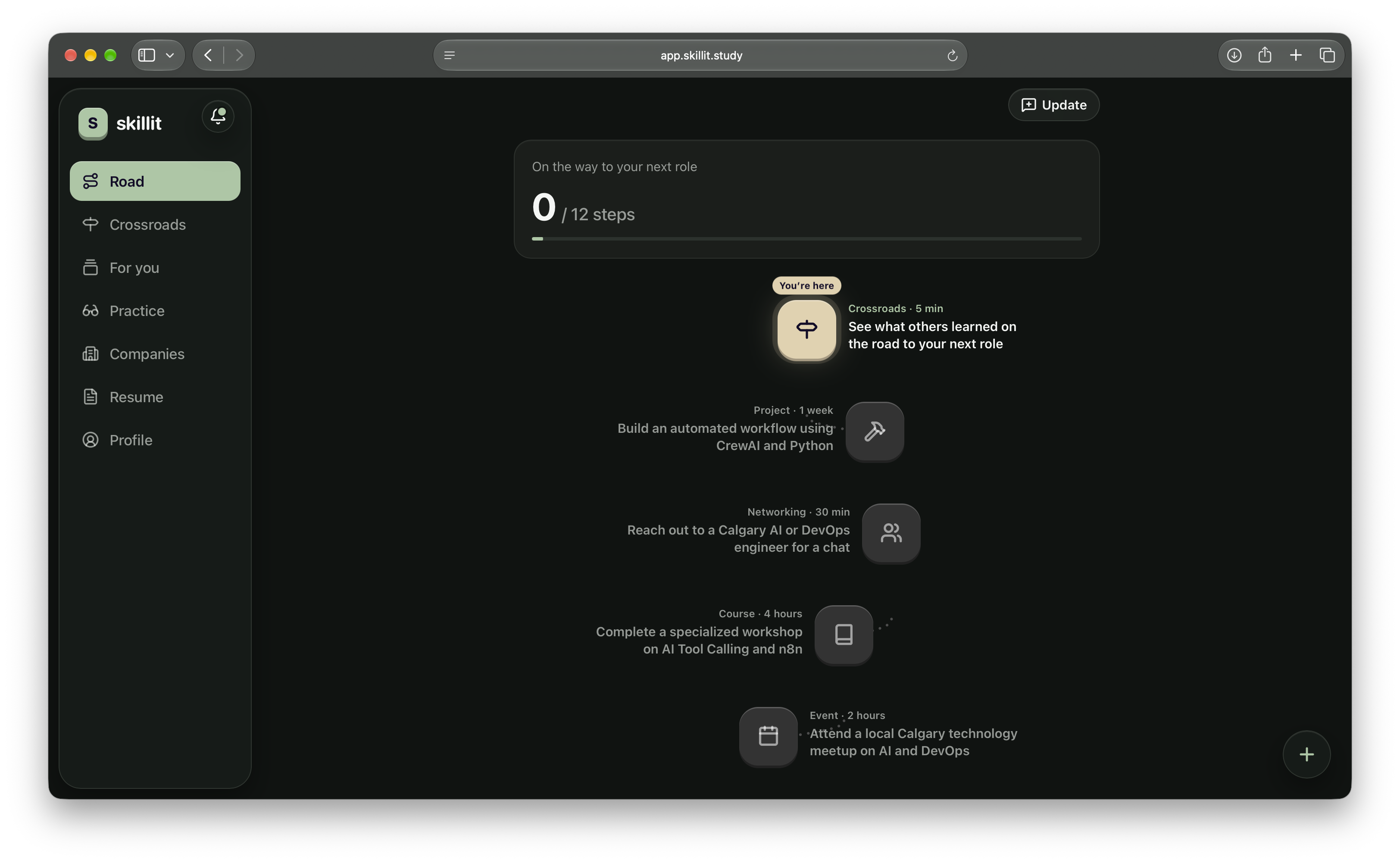
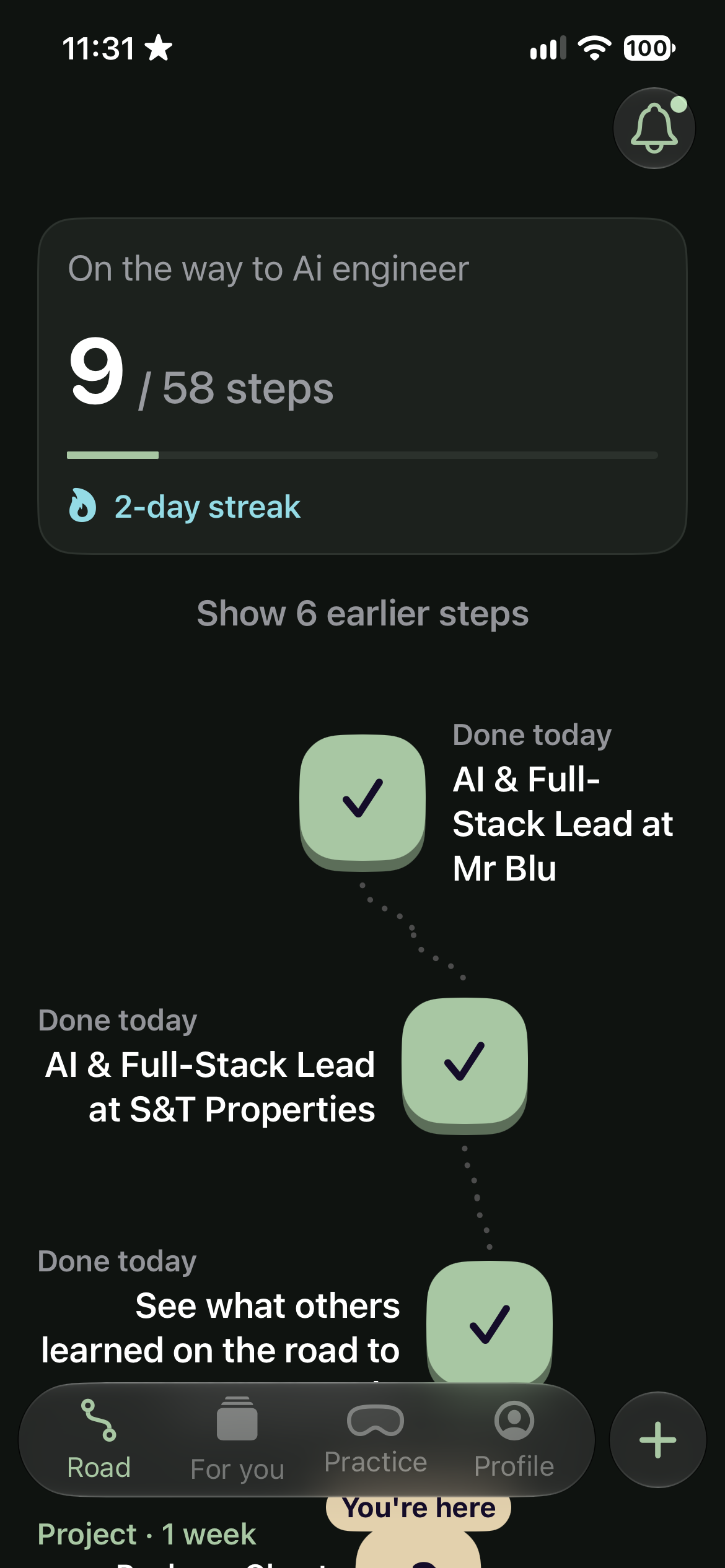
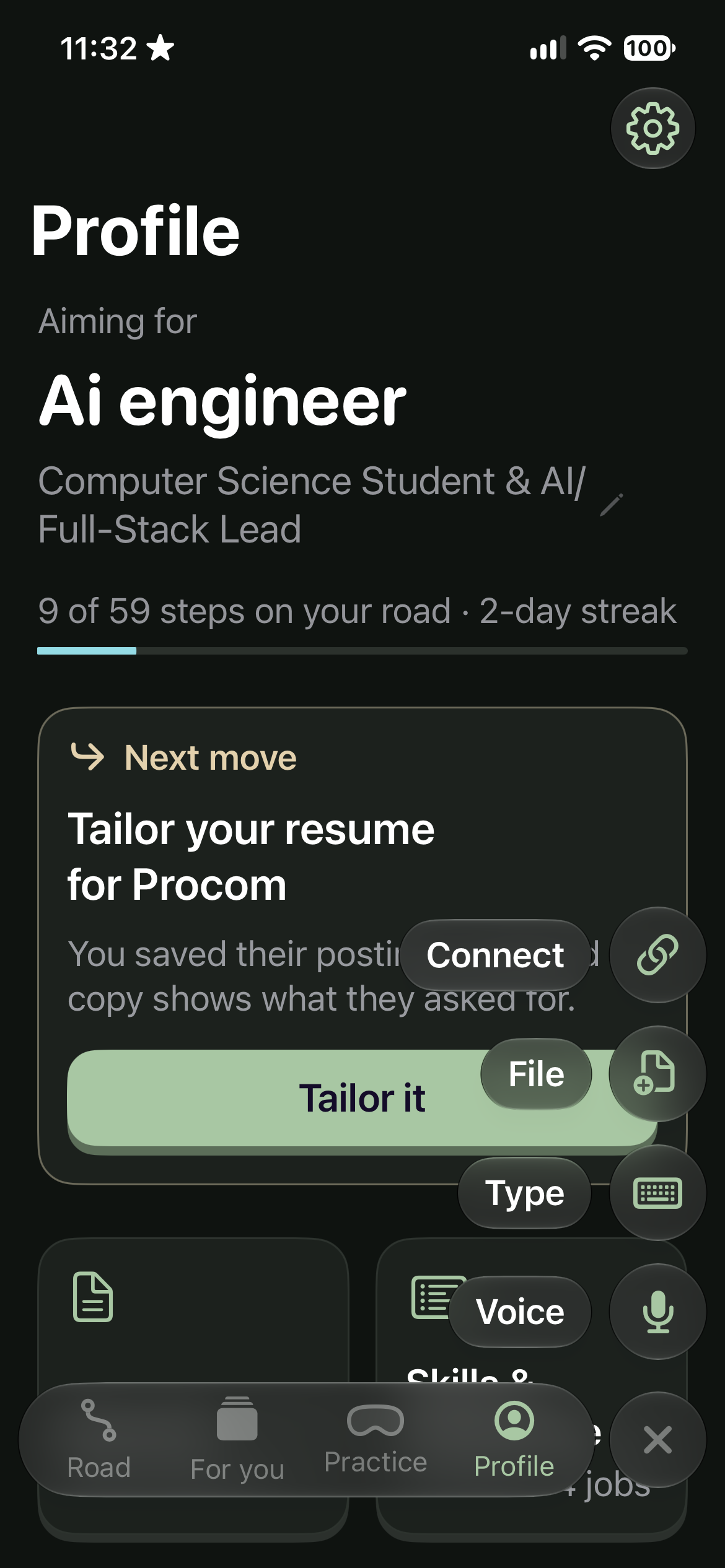
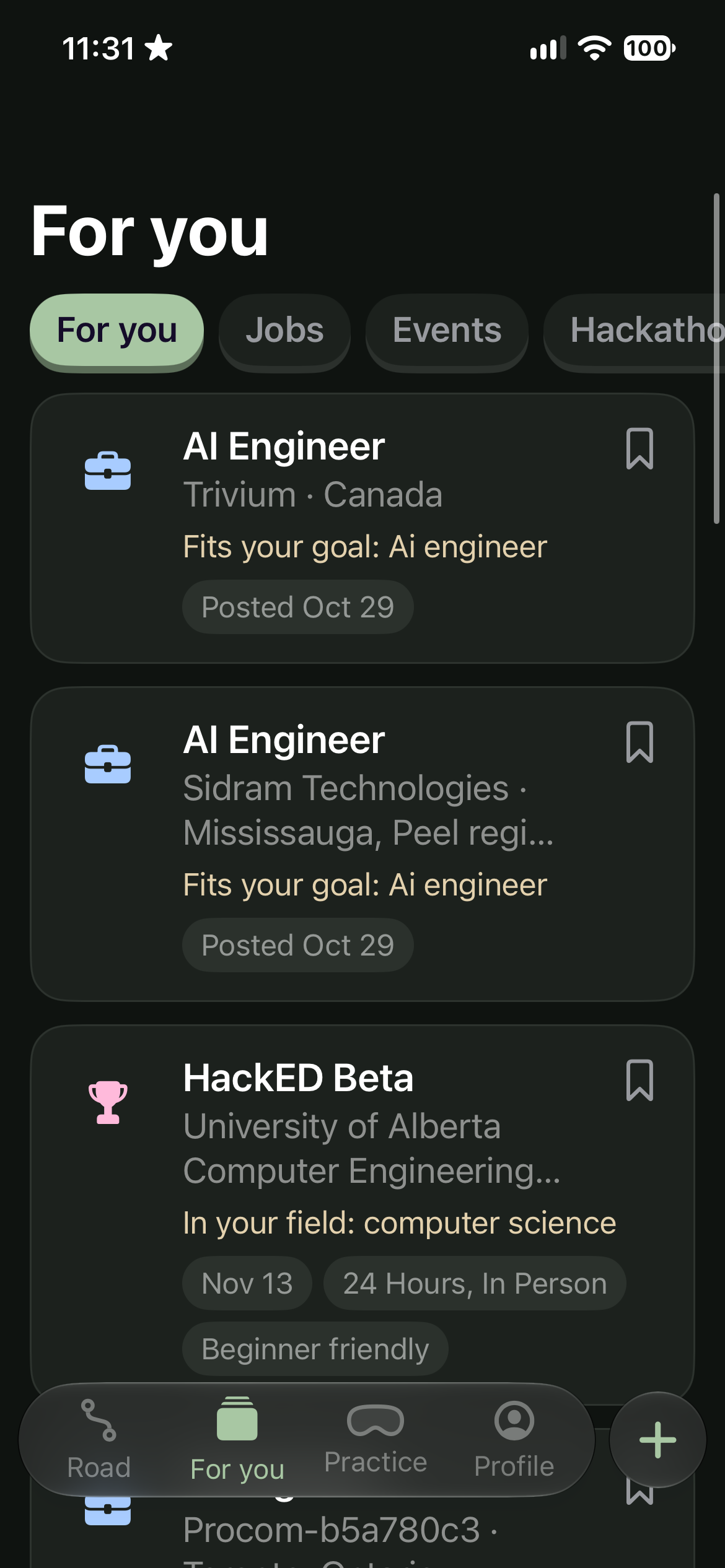
Skillit turns the job you want into a few small actions each week: a local event worth attending, an opener for the person you'll meet, a startup that just raised money, and a follow-up drafted for you to review and send.
When an interview comes up, you can practise wherever you are:
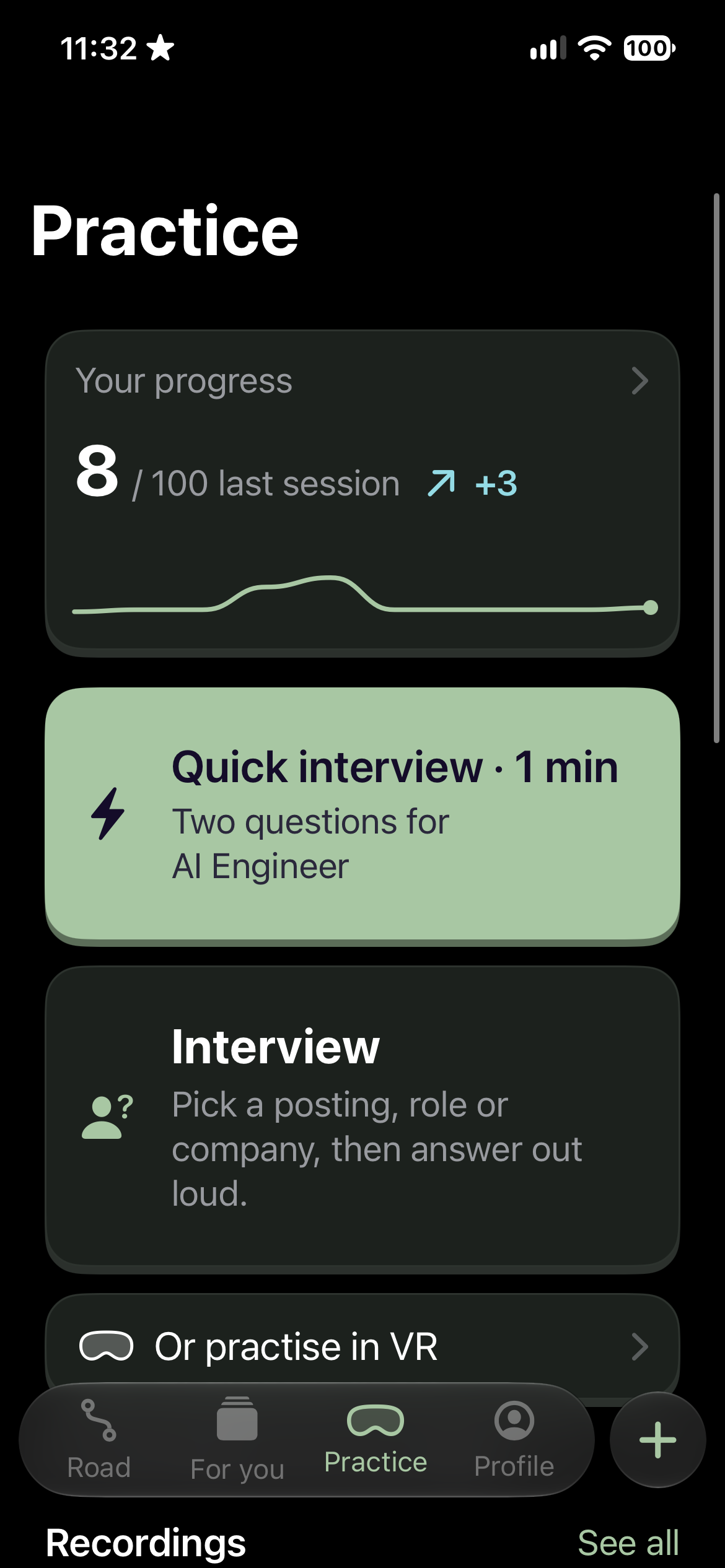
- On your iPhone: talk to the AI interviewer out loud, anywhere
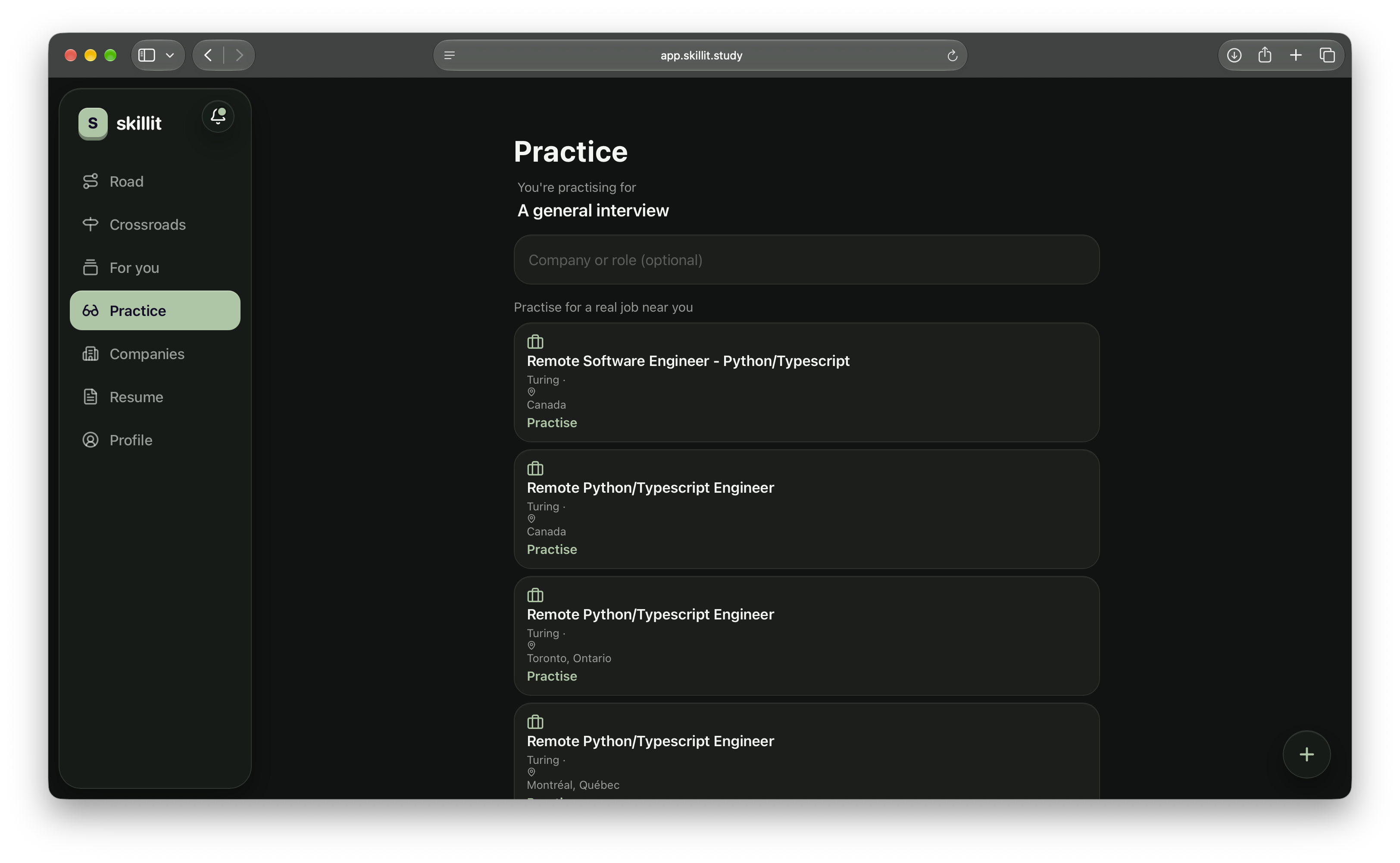
- On the website: practise by voice, or type your answers if you can't talk
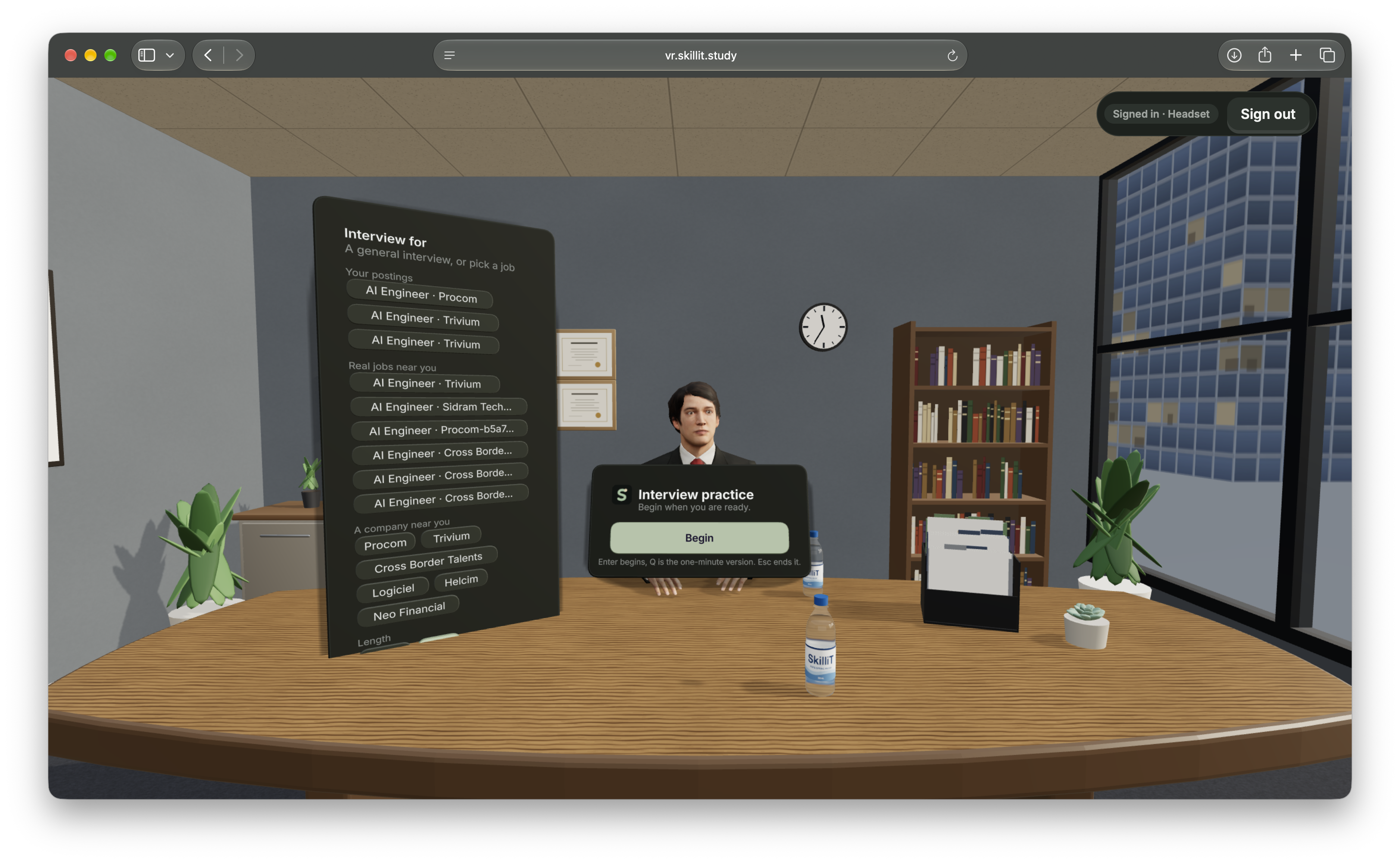
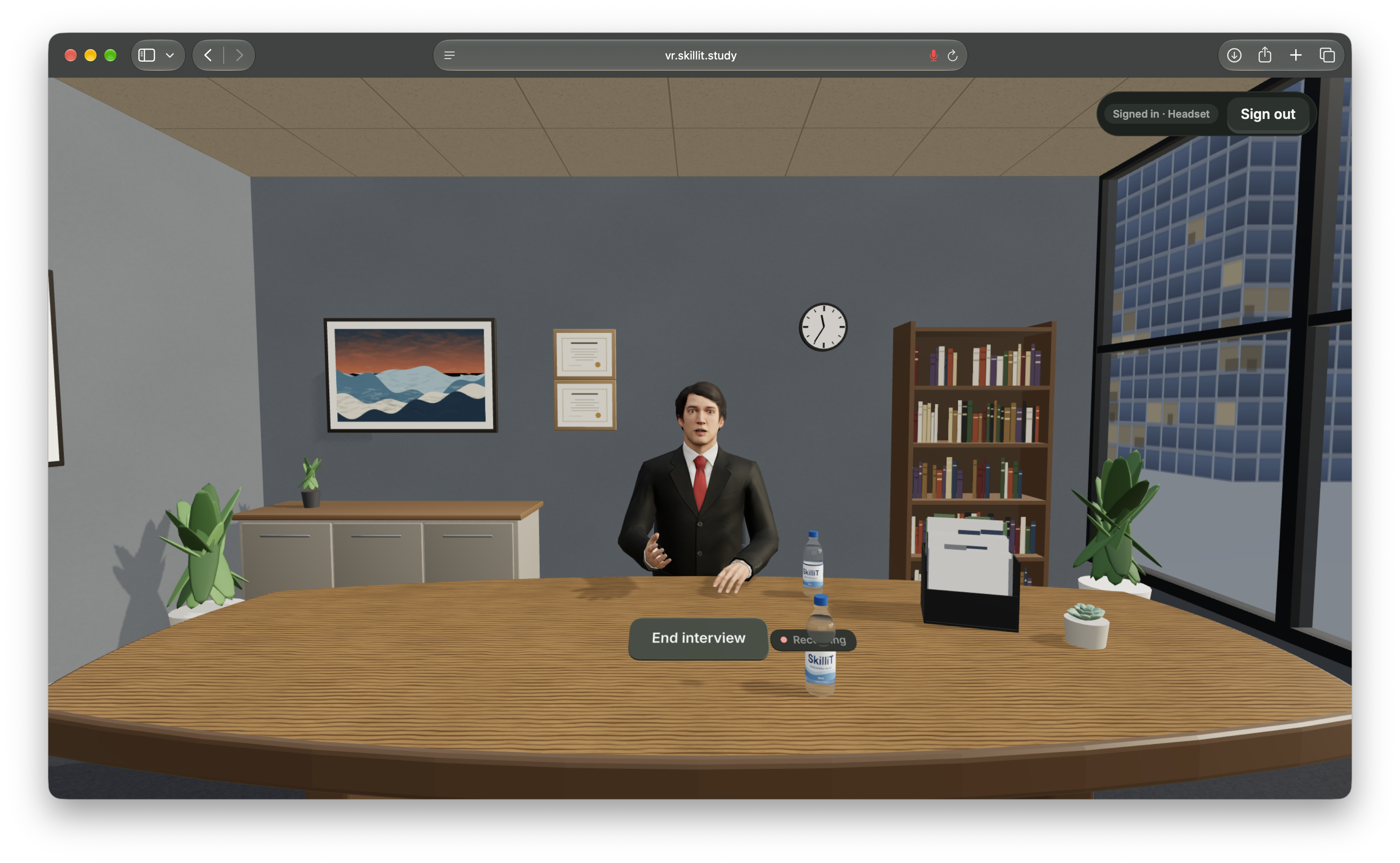
- In VR: put on a Meta Quest headset and sit across from the interviewer in a real-feeling boardroom
It's the same interviewer everywhere. It asks the questions people were actually asked at that company, scores each answer and shows you what a stronger one sounds like. You can send the interview to your headset when you're ready for the full experience.
What makes Skillit different is that it learns from two kinds of memory:
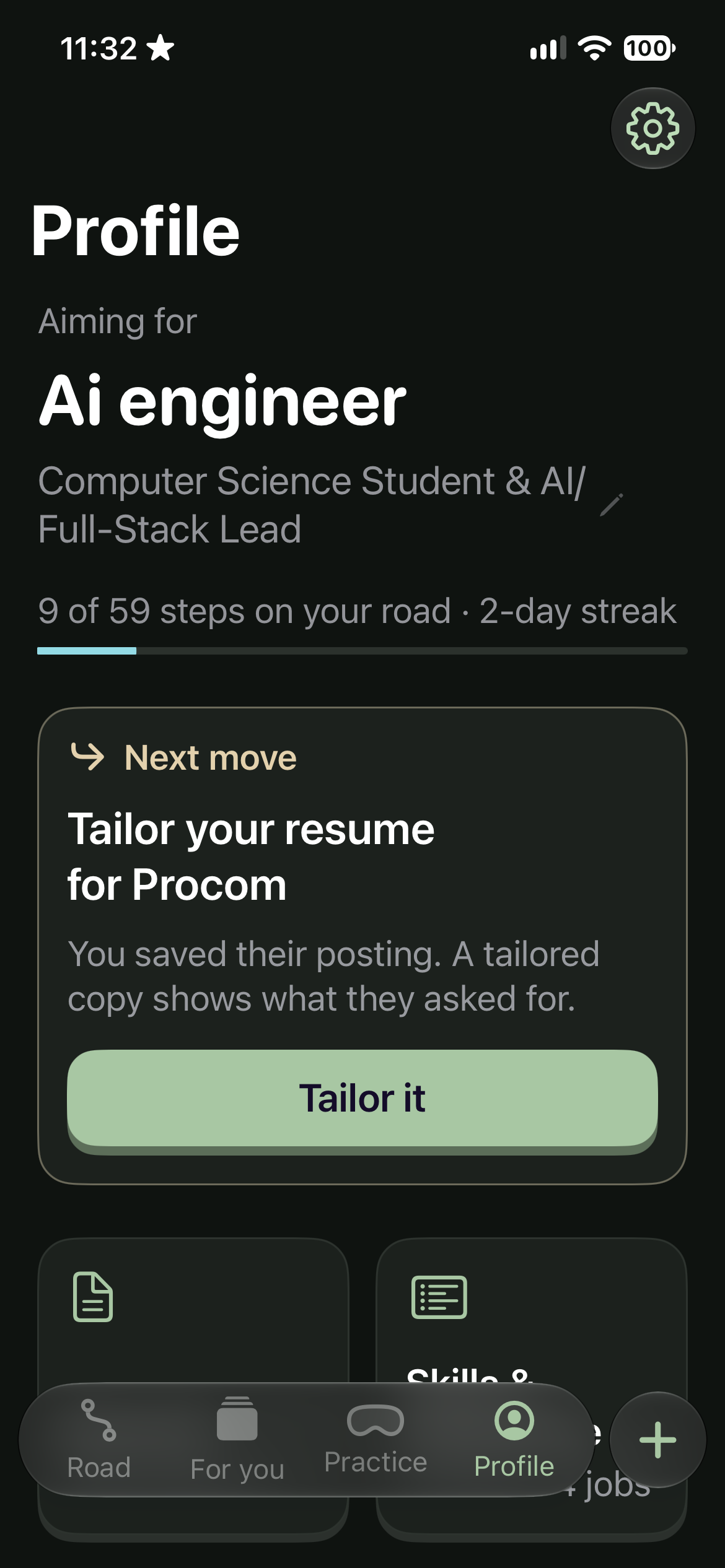
Your memory (private). Every event, practice session and real interview adds to what Skillit knows about you: your goals, your skills, the questions you struggled with and each real interview. You just tell the iPhone app how it went, out loud, and it pulls out the company, the round and the questions asked. This memory is encrypted with a key unique to you, and only you can see it.
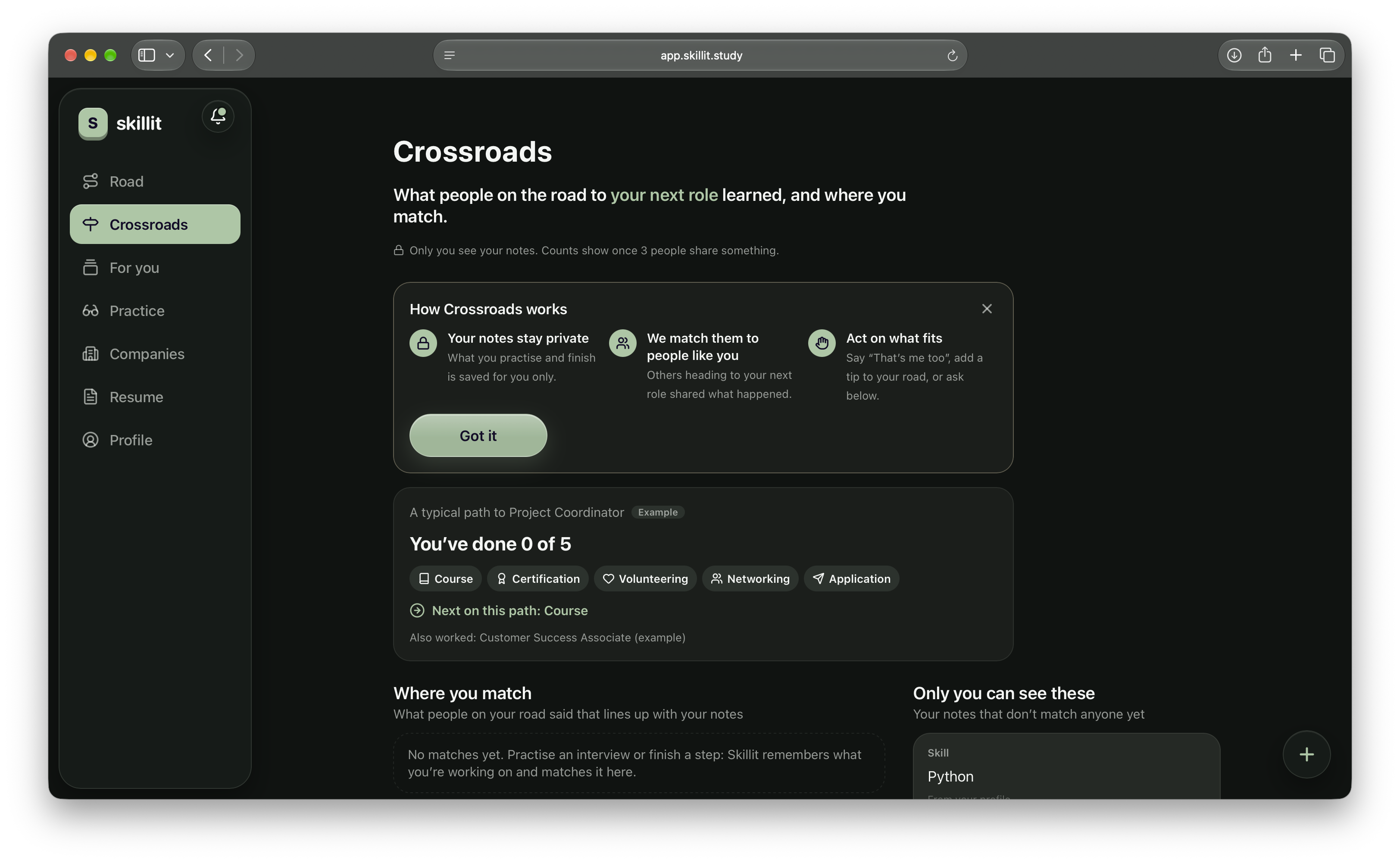
Everyone's memory (shared). When people report a company, Skillit removes names and adds the questions to that company's shared memory. A question only appears once at least three people have reported it, so no one can be traced back. Recent reports count more than old ones, reflecting what companies ask today. When someone gets the job, they can share the steps that got them there for the next person on the same path. Meanwhile, research agents work in the background, reading companies' careers pages, News and dev.to, and saving each fact with its source link.
The more people use Skillit, the better it gets for everyone. Then it matches that shared knowledge to your own weak spots.
How we built it
Skillit runs on a team of four AI agents, each focused on one part of the job search: your career plan, your resume, your interviews, and researching companies. Instead of one general chatbot trying to do everything, each agent has a set of skills. A skill is one focused job, like preparing you for an interview or tailoring your resume to a posting.
Every skill has its own instructions, and it can only use the tools that job needs. The resume skills can read your documents but can't browse the web. The research skills can read public pages but never see your private data. This keeps each answer focused and stops the AI from guessing or inventing things. A resume skill can reword what you've done, but it can't make up experience you don't have.
Skills run when they're needed, so you never have to ask the right question:
- When you upload a resume or job posting, Skillit reads it, updates your profile and adjusts your plan
- Before an interview, it picks practice questions for that company, weighted toward your weak spots
- After a practice or real interview, it turns the conversation into scores, notes and what to work on next, and saves what it learned to your memory
- In the background, every few hours, research skills check the companies people are tracking, read their careers pages and engineering blogs, and save new facts with their sources
The impact is that the advice gets more specific over time. Each skill reads from both memories, what Skillit knows about you and what everyone has learned, so your interview questions, your plan and your resume all come from the same up-to-date picture.
All three apps share one backend: a native iPhone app, a website, and a VR room that runs in the Quest's browser, so there's nothing to install on the headset. The interviewer has the same voice on every device. To work in parallel, we agreed on how the apps would talk to the server first, so each platform could be built against example data while the server was still being written.
Challenges we ran into
Making the interviewer feel real was harder than we expected. The voice, lip sync and captions all had to line up, and the Quest needed microphone access before entering VR. Keeping one interview consistent across iPhone, web and VR meant every platform had to follow the same session and scoring rules. Shared memory raised its own question: how do you learn from everyone without exposing anyone? That's where the three-person rule, removing names and per-user encryption came from. We also had to decide what the agents may read: sites that require a login or forbid scraping, like Glassdoor and LinkedIn, are off limits. Finishing a prototype across four platforms in one weekend meant hundreds of small commits and strict checks before anything merged.
Accomplishments that we're proud of
- Interview practice on three platforms iPhone, web and VR with the same interviewer and scoring on each
- A working VR interview on a real headset, with a live voice, lip sync and a score for every answer
- A memory system that gets smarter as more people use it, without exposing any one person
- About 1,500 automated tests, and nothing merged without passing them
- Every fact the agents save links back to its source, so you can verify it yourself
What we learned
We learned that a believable interviewer comes from small details like timing, voice and pauses, more than from graphics. We learned that people will only share honestly if their data stays private, so privacy had to be built in from the start. We also learned to agree on how the pieces connect before building them, which let four people move fast without breaking each other's work.
What's next for L331ZW - Baldy - Skillit
Next, we want to test Skillit with real job seekers and see which actions actually lead to interviews and offers. We also want to support fields beyond tech, since the same skills of talking to people and following up work everywhere. Finally, we want to expand past Calgary, so the shared memory grows city by city.
AI Usage Disclosure
Our team developed Skillit’s idea, features, architecture, and technology choices, including Cloudflare Workers, Gemini, ElevenLabs, Supabase, and WebXR. We also decided which public data sources to use and established the privacy rules.
We used AI coding assistants, Claude Code and Cursor, to help write much of the code based on briefs we created. A team member reviewed every change. Before merging, we tested changes on real devices and required them to pass our automated tests.
Built With
- adzuna
- cloudflare-d1
- cloudflare-vectorize
- cloudflare-workers
- cloudflare-workers-ai
- elevenlabs
- gemini
- hono
- job-bank
- keenable
- meta-quest-3
- postgresql
- react
- react-three-fiber
- statistics-canada
- supabase
- swift
- swiftui
- three.js
- typescript
- webxr
