Inspiration
Every once in a while, new technology comes along that changes the way an entire industry operates. Today, law firms use reactive horizon-scanning alerts. They tell you that the law has changed. But they cannot tell you which documents in your database are now non-compliant. Tracking this manually takes weeks of billable hours.
Legal documents often assume the rules will stay stable—but they do not. In Singapore, hundreds of subsidiary legislation documents are gazetted each year, potentially affecting years of confidential legal work. Existing tools can flag a legal change, but not which specific files may now be affected. Lawyers are then left to search manually, or otherwise risk uploading privileged documents to public cloud AI. L.A.R.P. closes that gap.
What it does
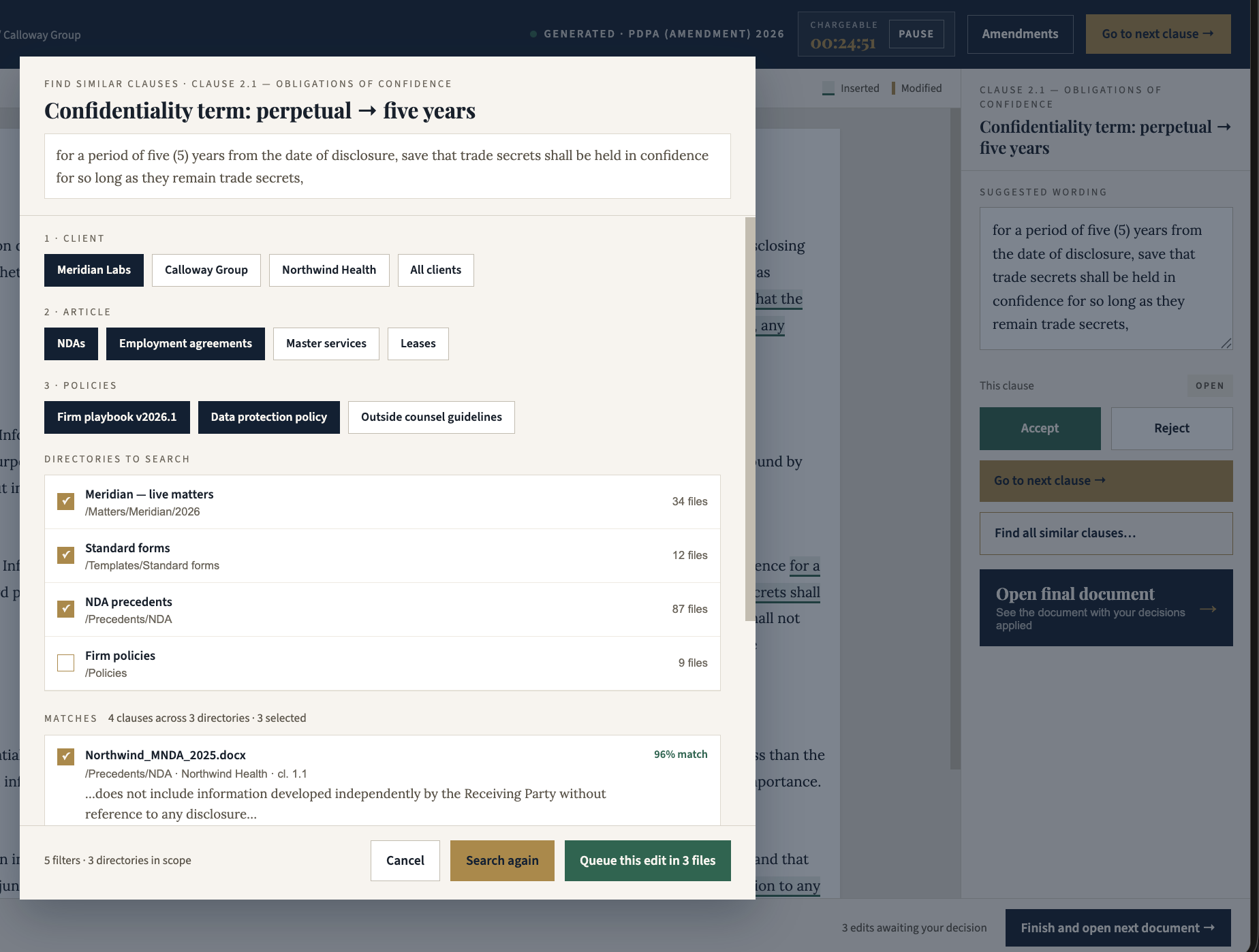
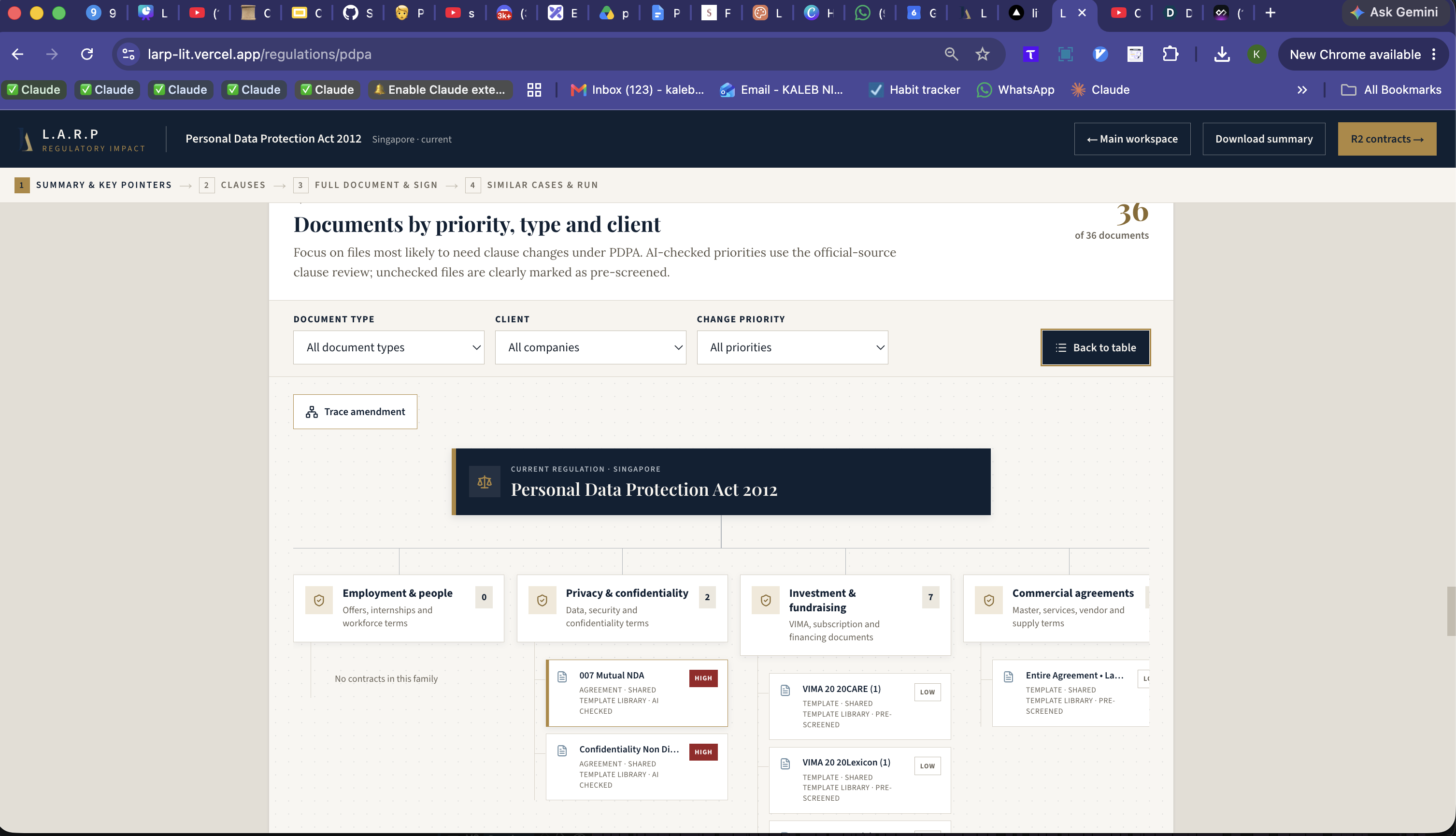
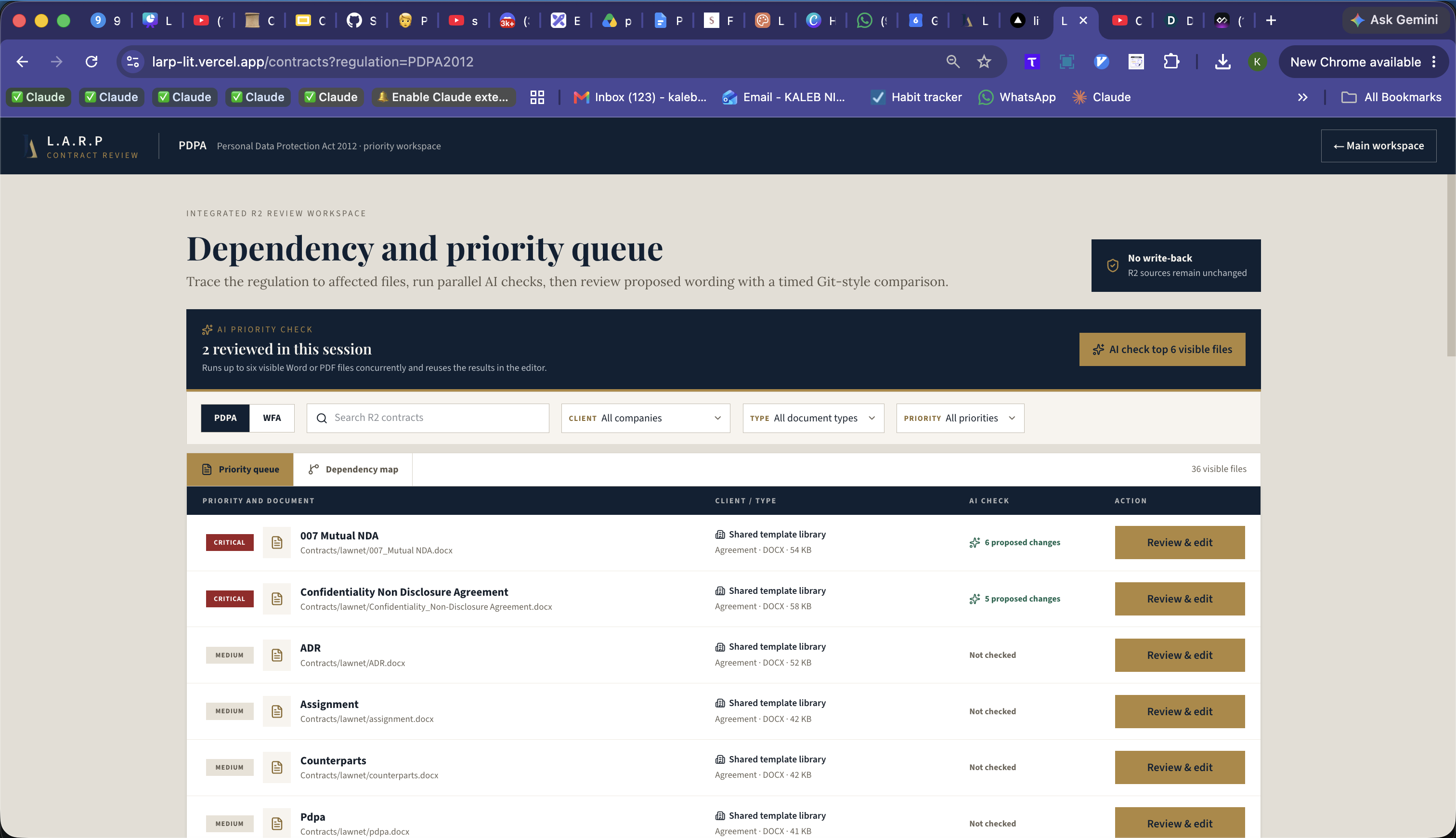
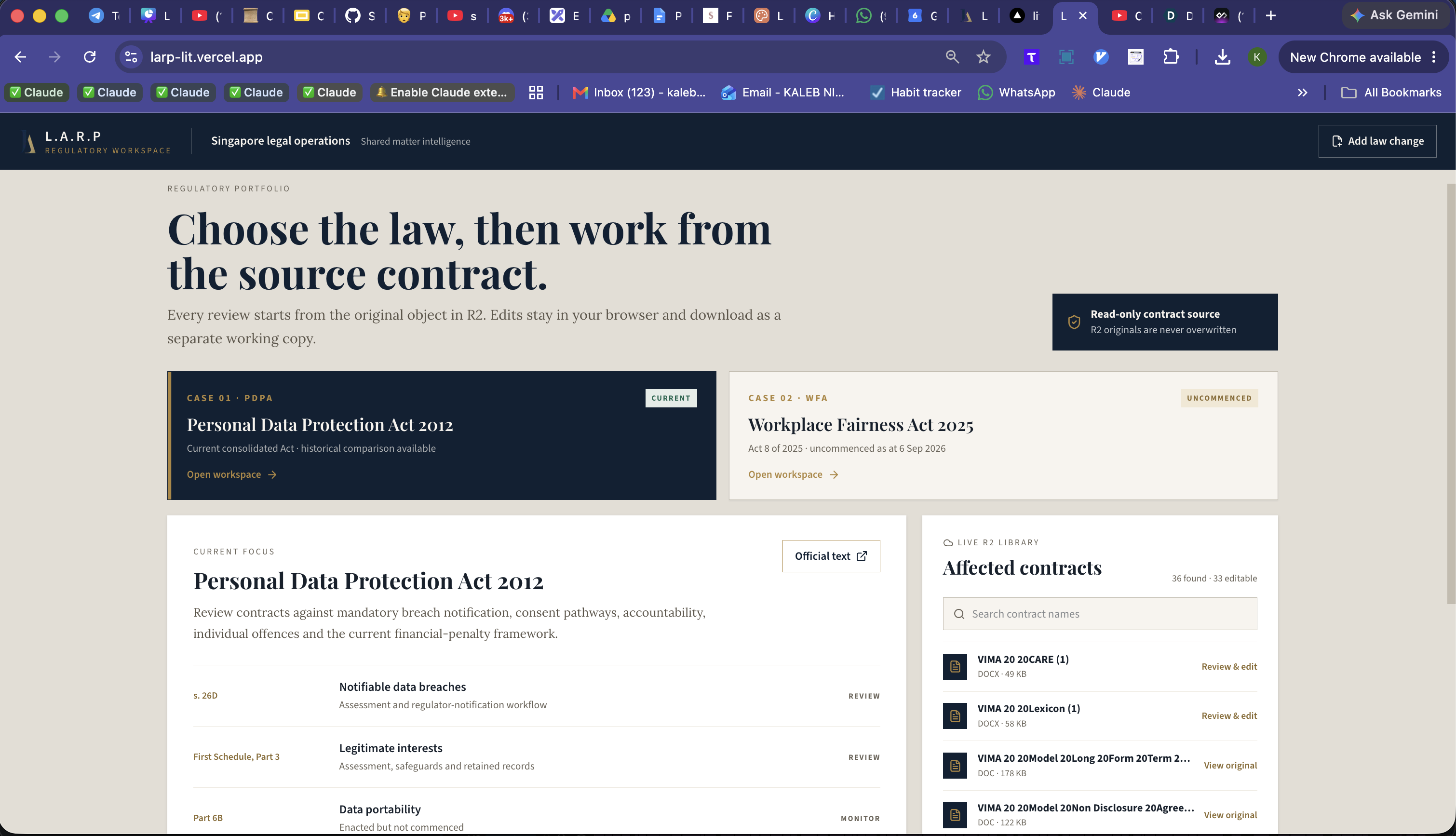
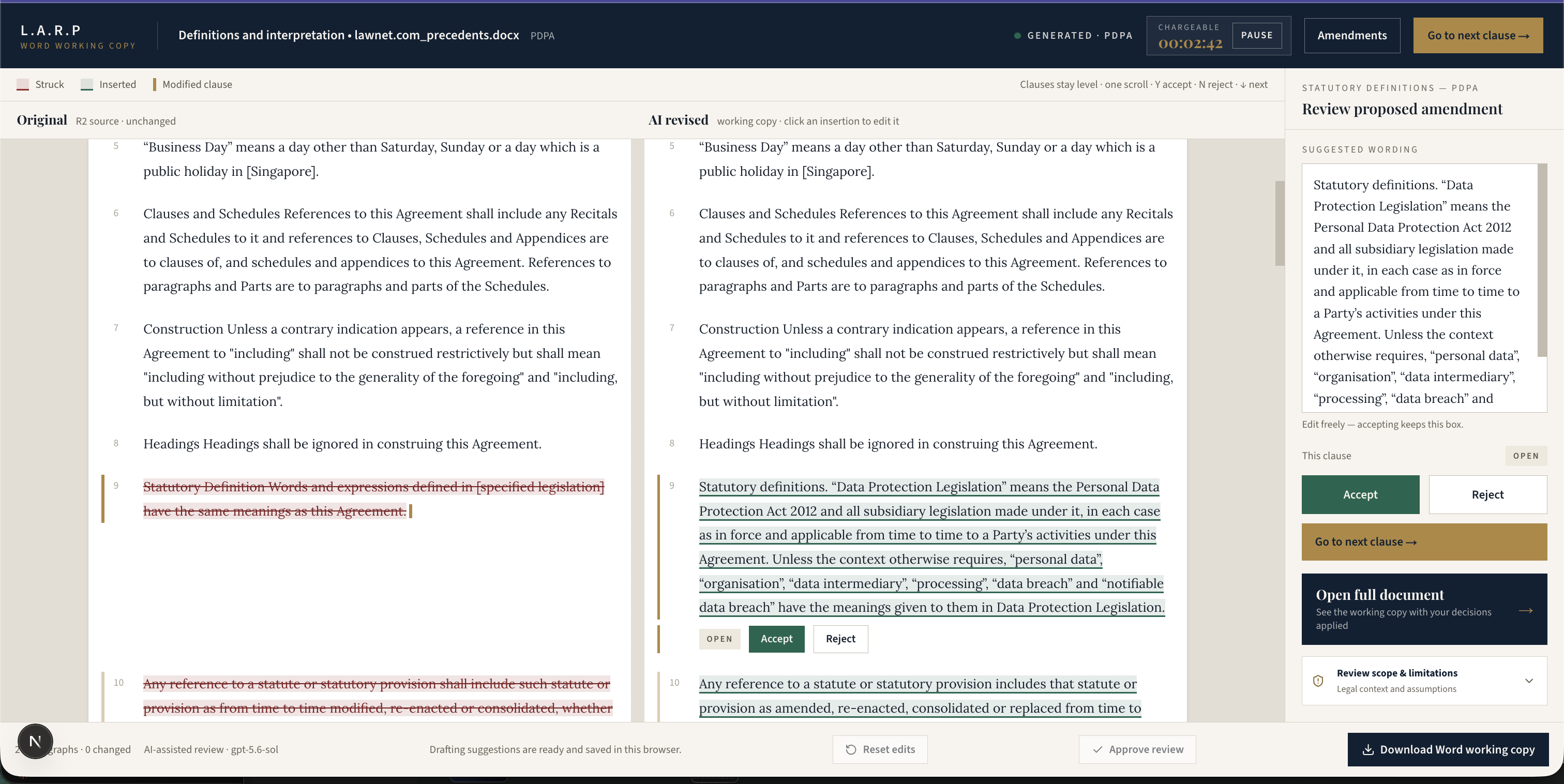
When a regulation changes, such as the latest 2026 PDPA amendment, L.A.R.P. generates a clear summary and actionable checklist, then runs a secure local semantic search across active files. Our tagged data pipeline links clauses to legal issues and files to client matters, minimising hallucinations and surfacing the documents that may be affected. Lawyers can filter results, review the proposed amendment, and accept it directly. This is simple, secure, and always human-in-the-loop.
L.A.R.P. is resilient because it does not wait for a law to pass before responding. Our horizon scanning keeps an eye on upcoming Bills, giving legal teams early notice to identify affected client materials and prepare in advance. Instead of a reactive fire extinguisher, L.A.R.P. is a proactive smoke detector. It turns regulatory change into opportunity and stronger compliance.
How we built it
We built L.A.R.P. as a Next.js application connected to Cloudflare R2 for secure document storage. OpenAI analyses official Singapore regulatory sources, compares legal changes, identifies affected contract clauses and proposes evidence-backed amendments. Lawyers can filter documents by company, type and priority, review suggestions using a Git-style comparison, track review time and download an edited Word copy while the original remains unchanged.
Challenges we ran into
Our first challenge was defining what “regulatory resilience” should mean in practice. We did not want to build a tool that reacted only after a problem had surfaced, but one that could help legal teams anticipate change and prepare for it. With members from different backgrounds, we had different views on whether the priority was tracking developments, locating affected documents or managing the follow-up. Eventually, these perspectives came together in our core workflow: anticipate, identify, trace and review.
Another challenge was the pace of the hackathon. We were trying to build an ambitious system across document retrieval, regulatory monitoring, AI-assisted analysis and review, while our tools did not always keep up with the intensity of the work. We had to make fast decisions about what was essential to demonstrate the concept and what belonged in a future version.
That pressure forced us to stay adaptable. When a technical bottleneck slowed one part of the project, we shifted attention to research, product flow, and the project narrative instead of losing momentum.
Accomplishments that we're proud of
We are proud that L.A.R.P. is more than “just a chatbot.” It uses AI to help lawyers navigate regulatory change, while keeping legal judgment and final approval firmly human.
We combined legal and technical perspectives to build around the realities of practice: confidentiality, accountability and usable workflows. This shaped our focus on localised processing, structured information and grounded retrieval.
Finally, we turned a broad idea of regulatory resilience into a working proof of concept: one workflow that identifies potentially affected materials, surfaces connections and supports lawyer review.
What we learned
Building the prototype pushed us to think carefully about where repetitive effort actually accumulates, what information lawyers need, and how a tool can fit naturally into existing ways of working.
Most of all, we are proud that the final product reflects a deliberate approach to LegalTech: AI can make work faster and more manageable, but it needs boundaries, evidence and human oversight to be genuinely useful.
What's next for L.A.R.P
With more time, we plan to bring L.A.R.P. directly into lawyers’ existing workflows. Our diff checker could integrate with Microsoft Word’s Track Changes, allowing accepted regulatory updates to appear as reviewable edits in active agreements. We also plan to add a billable timekeeper that records AI processing and lawyer review time by file and client, ensuring validation work is accurately captured for billing.
Our prototype is live, and we are ready to partner with forward-thinking law firms and legal departments to test L.A.R.P. in real workflows. Help us move legal teams from reactive compliance to structural resilience. We are the Larpers—and we are ready to build the future of law.
Built With
- cloudflare
- nextjs
- openai


Log in or sign up for Devpost to join the conversation.