Inspiration
We wanted to be able to combine both our EE and BME interested into a project helpful for people in everyday tasks.
What it does
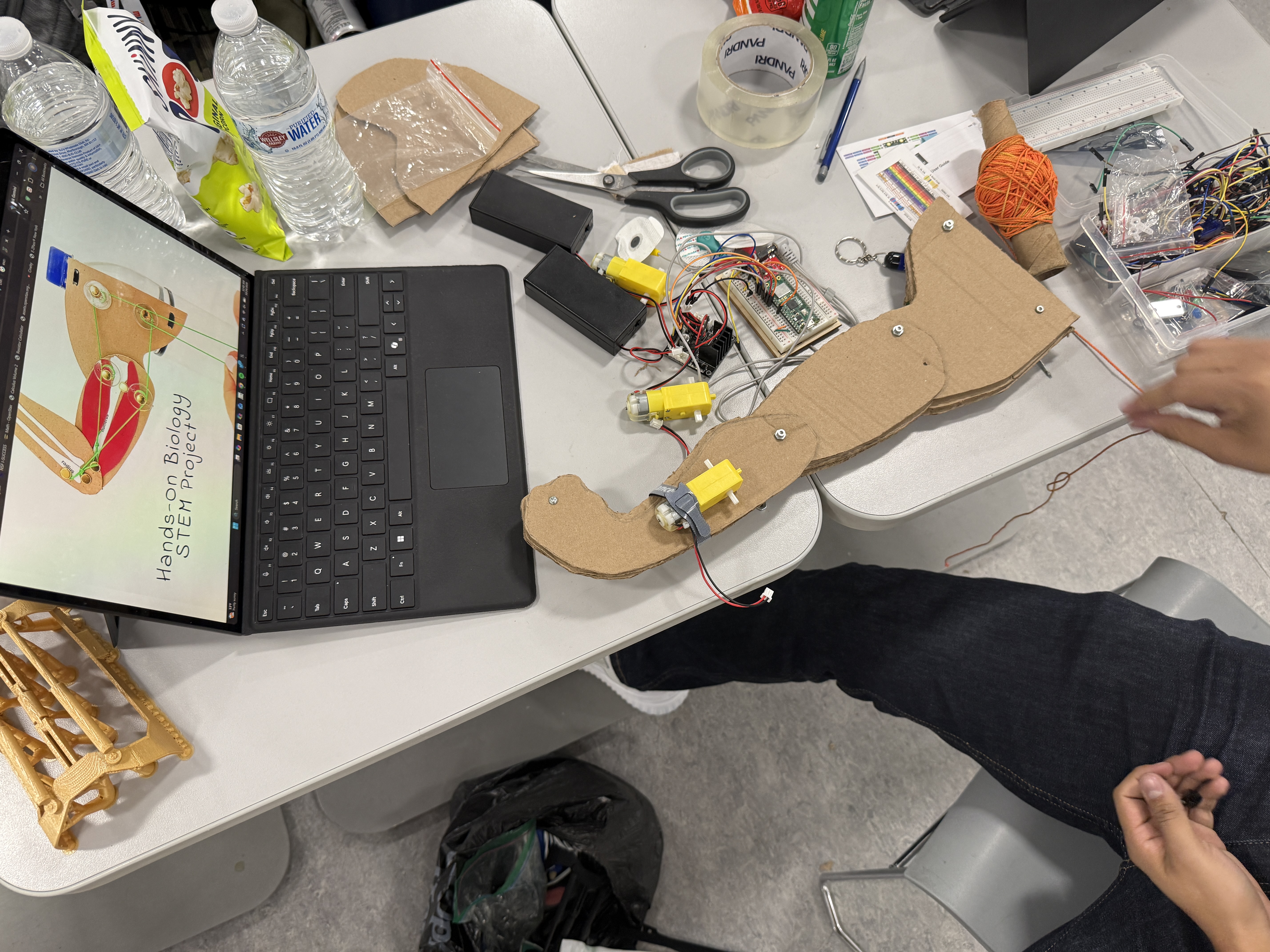
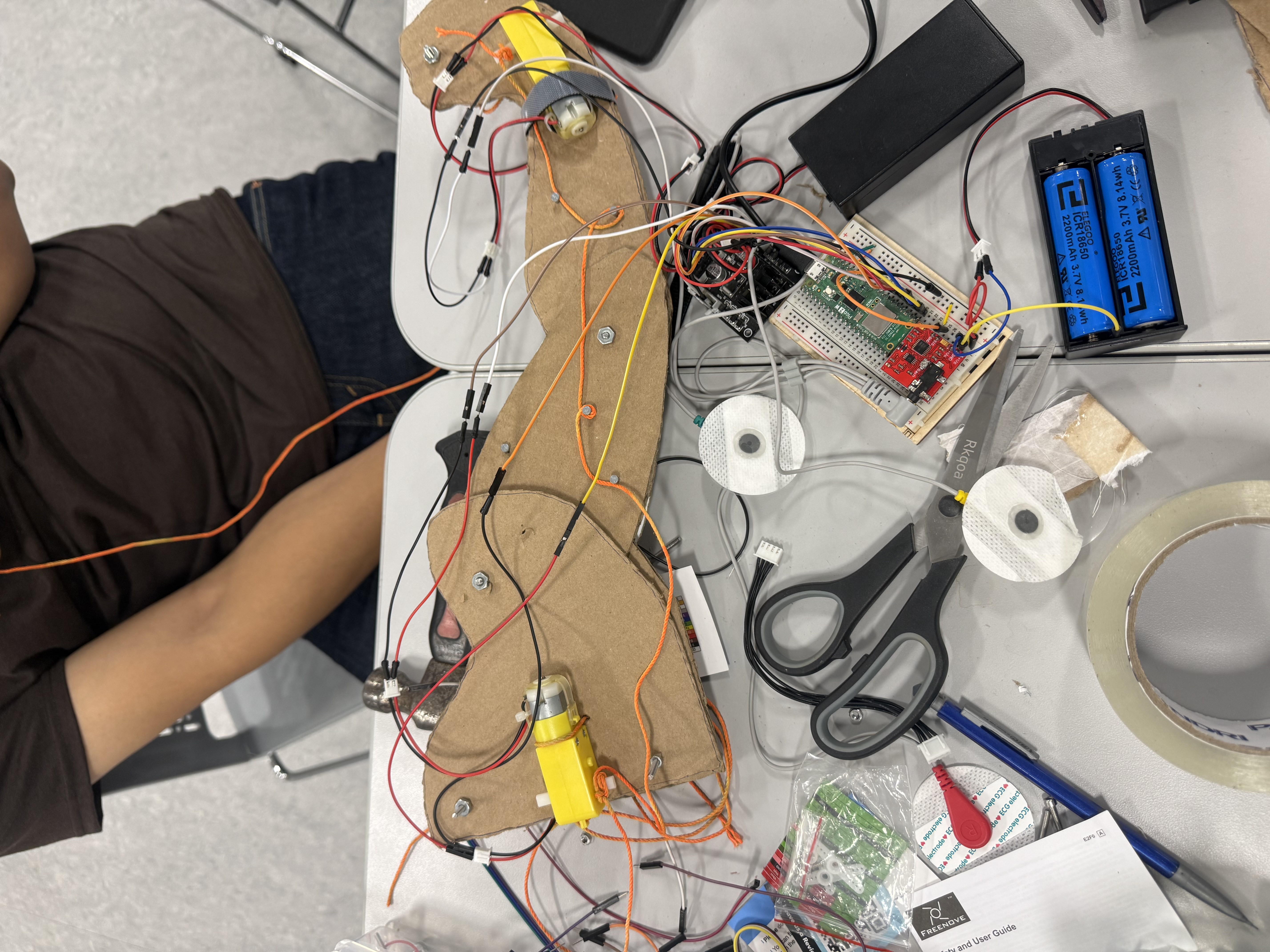
The arm acts as a Lifting Assistant Device where it responds to muscle contractions signaling motors to aid in movement upwards and downwards of the arm.
How we built it
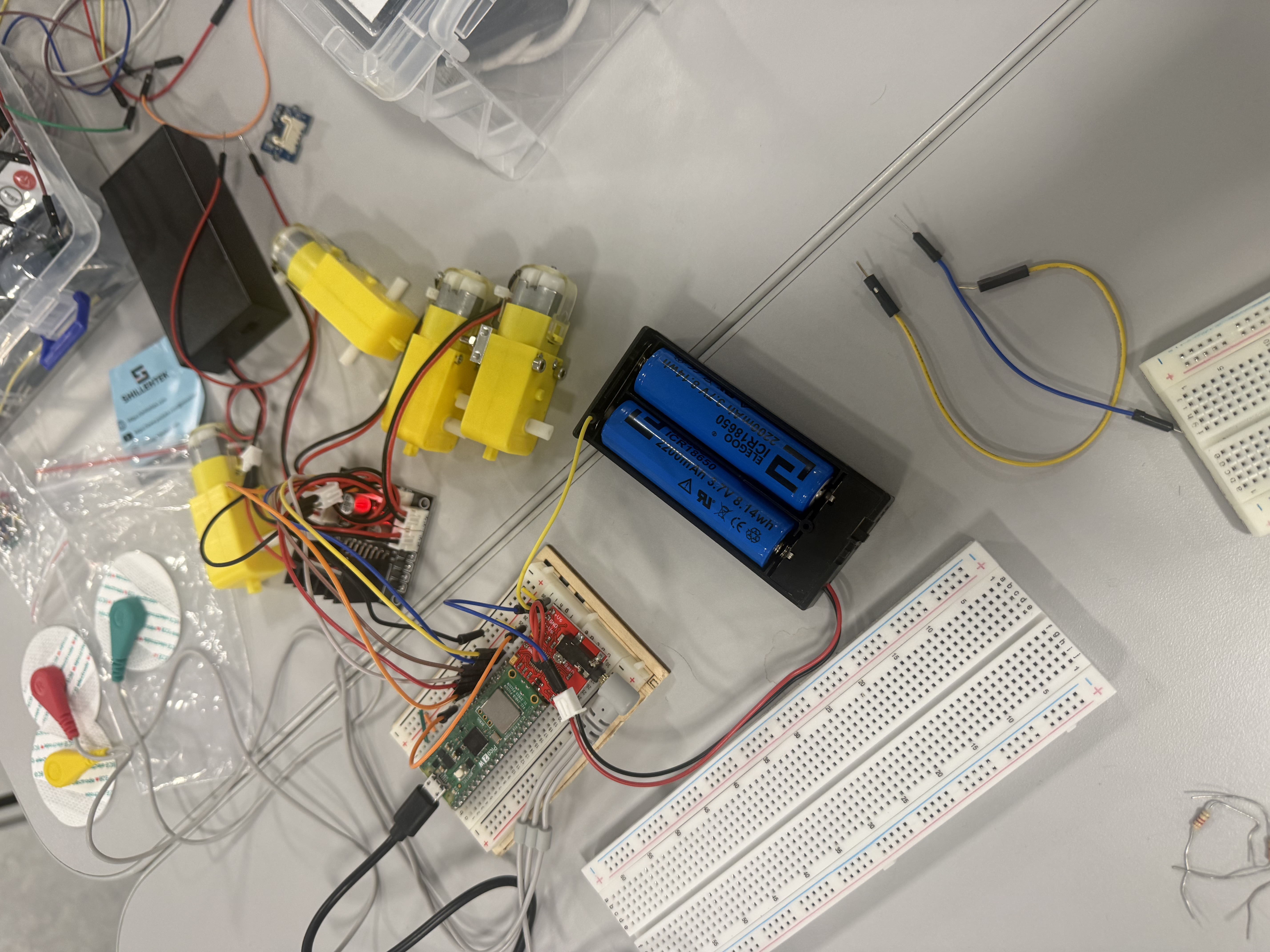
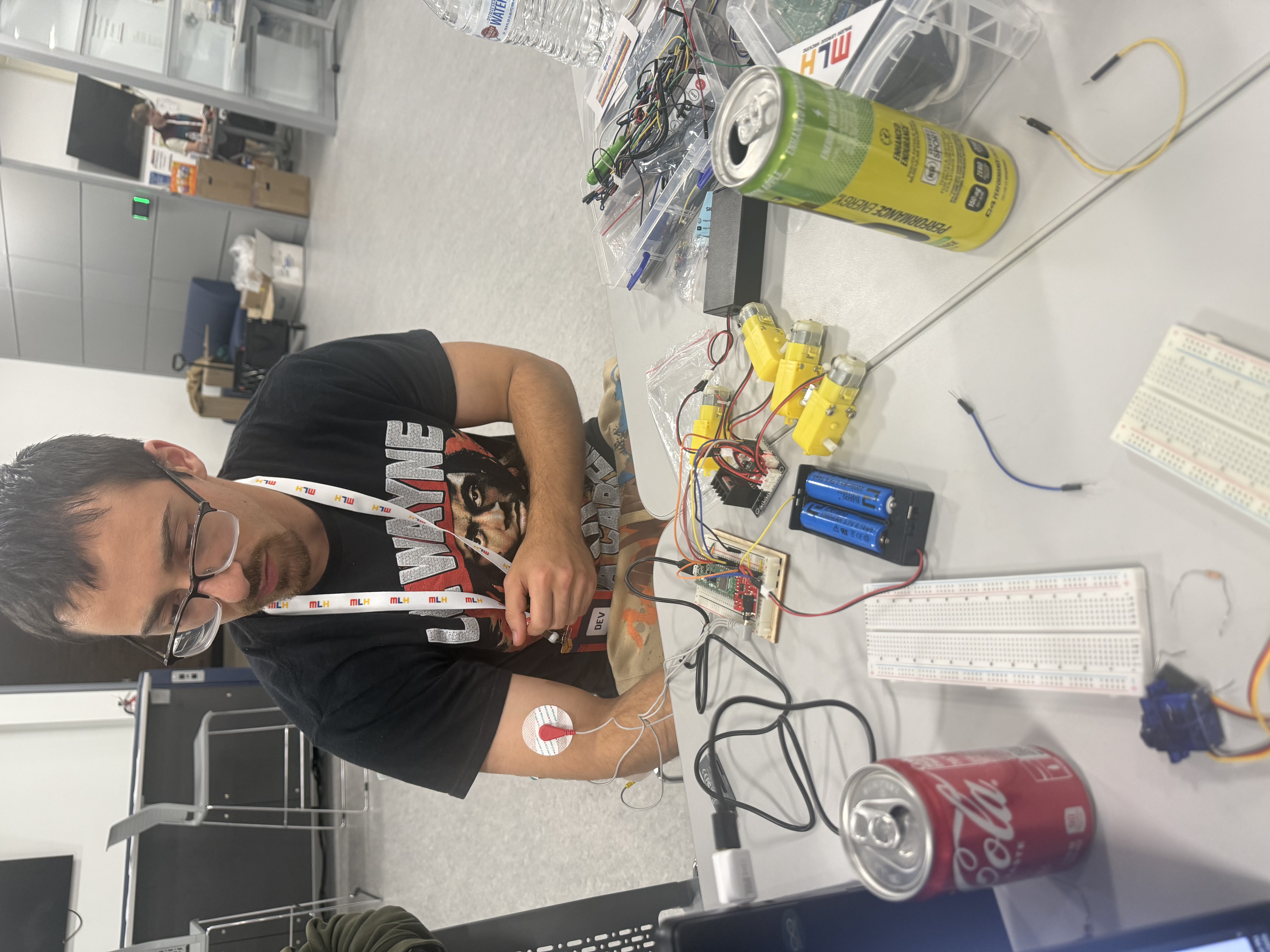
We used a Raspberry Pico 2W as our microcontroller that controlled the integrated EMG sensor, motor driver, DC motors, and two 7.4 V battery packs. It was programmed using Thonny which uses Python as its coding language.
Challenges we ran into
The biggest challenge once all of us had the least experience dealing with was the programming of the sensor and motors themselves. But also the lower quality parts used that resulted in sensor pads not adhesive to the bicep correctly. Other challenges include getting the initial sketch, the arm mechanism, and 3D prints being unsuccessful.
Accomplishments that we're proud of
The fact that we were able to collaborate and learn how to better communicate with each other in order to bring this vision to life. But also that we expanded our knowledge of sensors, code, and circuits as we progressed with the project. Especially with this being all of our fist Hackathon which meant it was a new experience.
What we learned
The ability to adapt to unforeseen problems and work towards fixing them, also the ability to stick to a deadline and progress at a good pace.
What's next for L.A.D. (Lifting Assistance Device)
Build a functioning 3-D printed version of the wearable L.A.D. for adults and design it so that it is comfortable for everyday use.
Built With
- batteries
- batterypack
- breadboard
- emg
- raspberry-pi
- thonny
- wires
