Inspiration
What it does# 🚨 Kwik – AI-Powered Urban Intelligence for Emergency Response
Kwik is an AI-powered urban intelligence system designed to provide a "living pulse" of metropolitan areas across India, such as Bengaluru, while transforming how emergency services like India’s 112 function.
🌟 Inspiration
The inspiration for Kwik comes from a deep-rooted urban problem:
Too much scattered data. Too little actionable insight.
In Indian cities, millions of data points are generated every minute—traffic, civic issues, emergencies, events. But this data is:
- Noisy
- Siloed across platforms
- Becomes outdated instantly
This overwhelms emergency systems like 112, leading to:
- ⚠️ Slow response times (12–24 minutes)
- ⚠️ Operator burnout and error-prone manual workflows
- ⚠️ Fragmented systems across states
- ⚠️ Poor emotional support for distressed callers
India's urban population is projected to reach 675 million by 2035. We saw the urgent need for AI-driven coordination and proactive intelligence to manage city crises swiftly and effectively.
📚 What We Learned
Through research, development, and testing, we learned:
🔗 Integration > Isolation
Siloed smart systems don't work. We need a unified platform that brings diverse civic data together.🔮 Proactivity > Reactivity
Cities shouldn’t only react to crises. Predictive AI can anticipate problems before they escalate.👤 Humans + AI = Best Results
AI should augment, not replace, decision-makers—offloading routine tasks while keeping humans in control.📸 Citizen Multimedia Reports = Rich Data
Geo-tagged photos/videos offer deeper ground-level insight than basic call logs.🌍 Context is Everything
Solutions in India need to be multilingual, low-bandwidth friendly, and offline capable.
🛠️ How We Built the Project
Kwik was built as a real-time, AI-powered emergency and urban event detection system. Here’s how:
🔄 1. Data Ingestion & Fusion
- Collects data from social media, citizens, IoT sensors, and public APIs
- Uses AI to synthesize reports from multiple sources into a clean, actionable summary
🎥 2. Multimodal Citizen Reporting
- Kwik’s AI detects objects, severity, sentiment, and automatically categorizes and maps the event
📈 3. Predictive & Agentic AI Layer
- Identifies early patterns (e.g., many blackout reports in one area)
- Sends predictive alerts and auto-suggested actions
🧠 4. Natural Language Understanding
- Uses LLMs (Gemini/PaLM 2) to extract:
- Location
- Type
- Severity
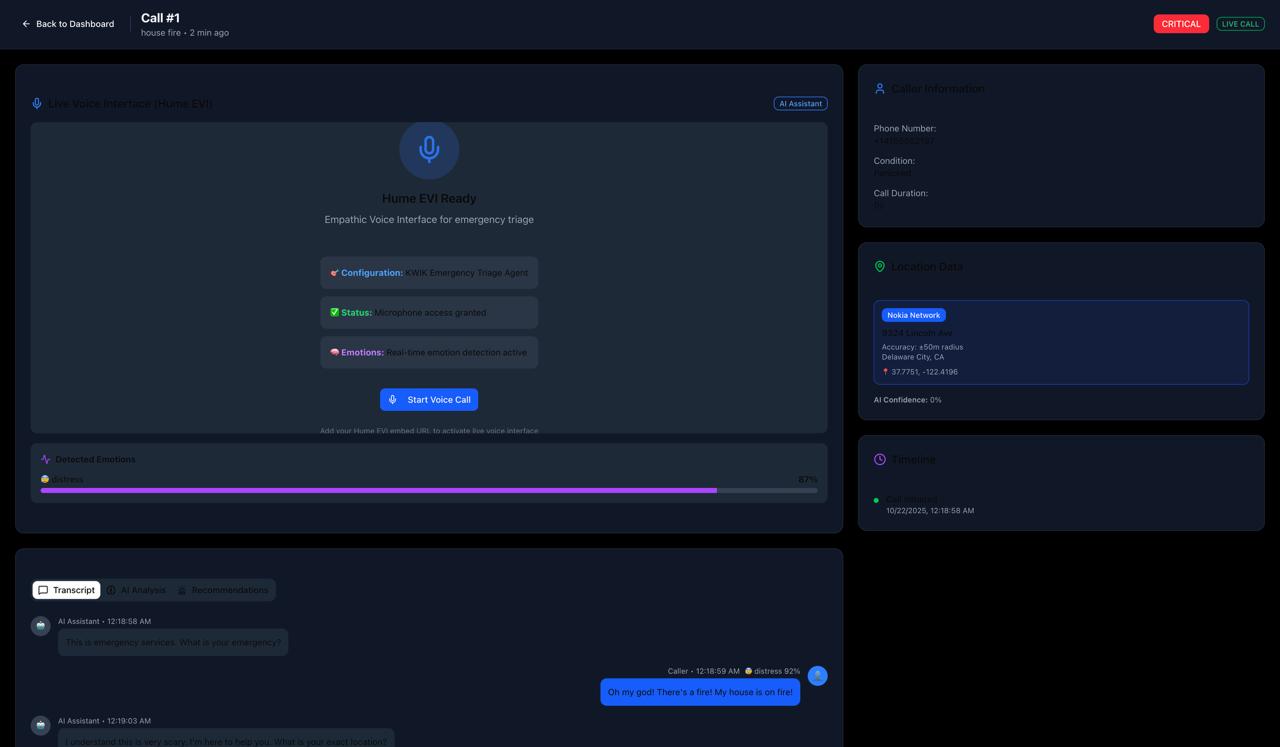
- Auto-generates structured incident reports
👥 5. Human-in-the-Loop
- Authorities review and approve all AI-generated actions
- Ensures accountability and human empathy
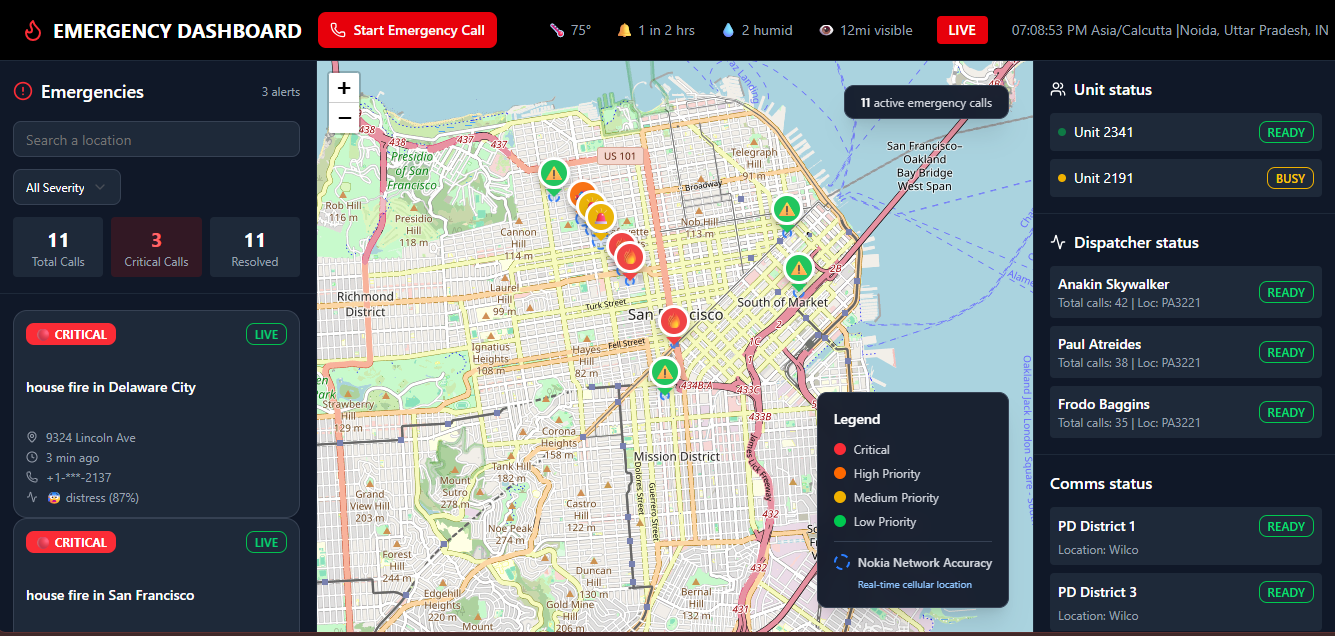
🌍 6. City Pulse Dashboard
- A real-time, map-based visualization of incidents
- Allows for faster and smarter decisions
🔑 Key Features
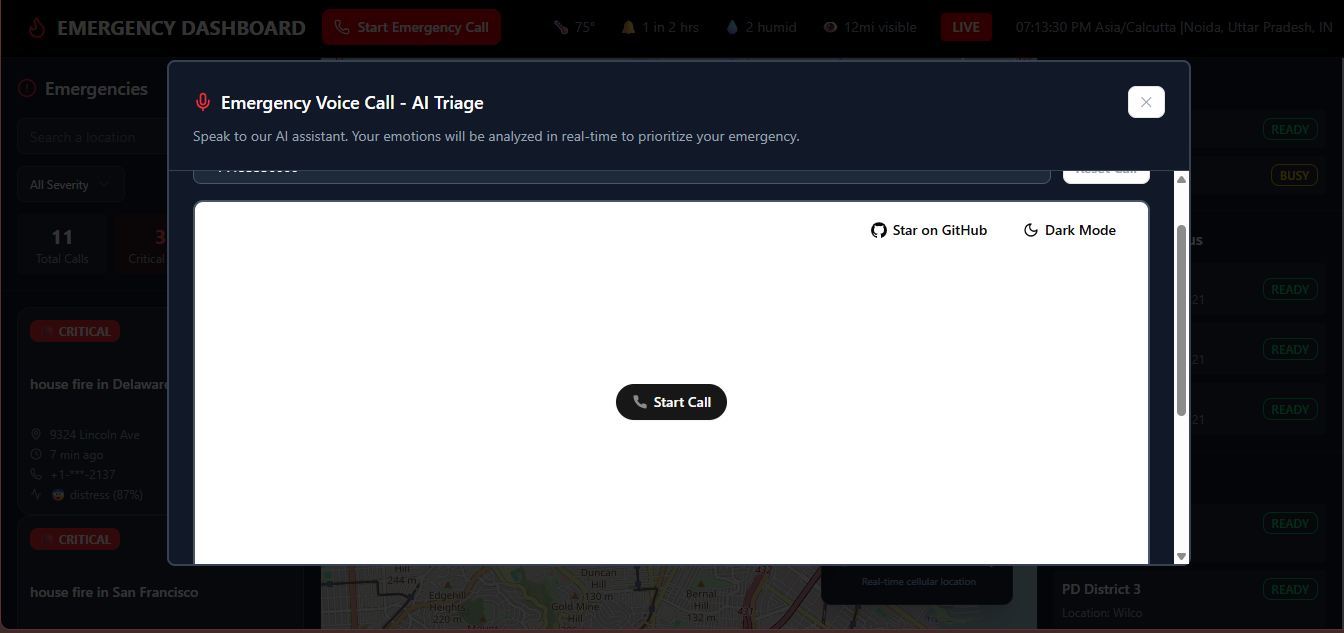
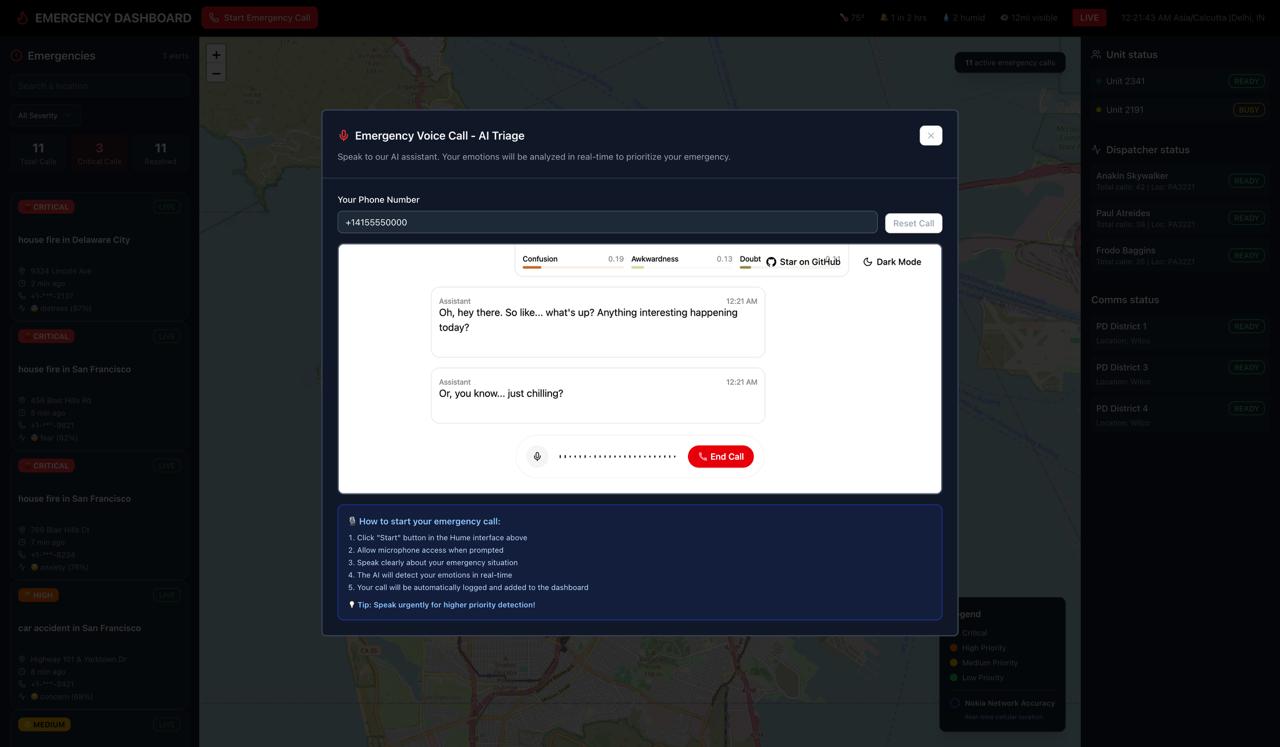
- 🗣️ Multilingual Input & Voice Recognition
- 😊 Mood Mapping using sentiment analysis
- 📍 Geo-tagged photo/video classification
- 📶 Low-bandwidth/offline SMS support
- 🔗 IoT & Smart City Integration
- 🔐 Privacy-first with Role-Based Access Control
💻 Technical Stack
| Layer | Stack/Tool |
|---|---|
| Frontend | React + Tailwind |
| Backend | Firebase (Firestore, Auth, Functions), FastAPI, Cloud Run |
| ML/NLP | Vertex AI (Gemini, PaLM 2), TensorFlow Lite, Google Cloud NLP/Speech APIs |
| Mapping | Leaflet (Geocoding, Roads, Directions) |
| DevOps | GKE, Cloud Run, Cloud Build, Cloud Monitoring |
| Data Processing | BigQuery, Cloud Dataflow, Pub/Sub |
⚔️ Challenges Faced
🧩 Integration with Legacy Systems
Aligning dozens of fragmented government and civic data platforms.📉 Data Quality & Interoperability
Designing robust schemas and governance frameworks.🔐 Privacy & Security
TLS encryption, RBAC, and strict compliance with Indian data protection laws.👥 Adoption & Awareness
Training government personnel and encouraging citizen participation.💸 Long-term Funding
Grants aren’t forever. Building sustainable GovTech + Public-Private models.🔁 Continuous Model Learning
Building feedback loops from human-in-the-loop decisions to improve model accuracy over time.
🔭 Vision
Kwik envisions a future where every Indian city has a digital nervous system, where AI and humans collaborate in real-time to save lives, optimize urban services, and build safer, more resilient communities.

Log in or sign up for Devpost to join the conversation.