-
-
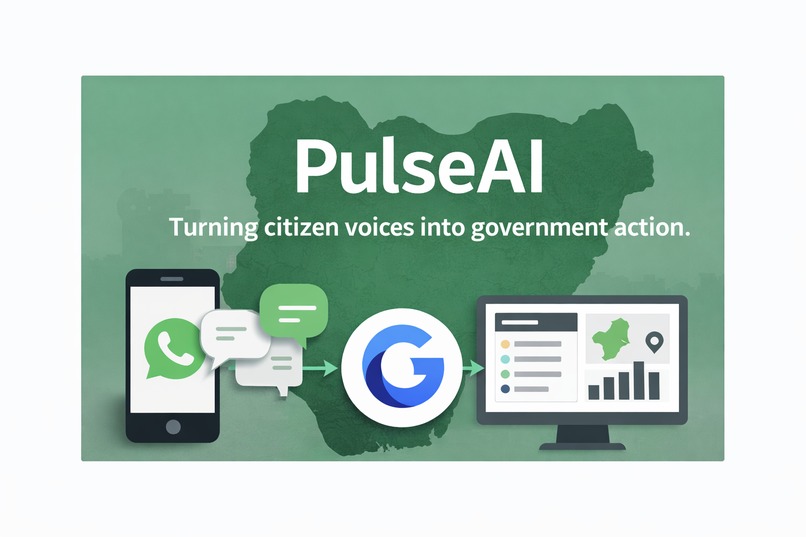
PulseAI - Turning Citizen Voices into Government Action
-
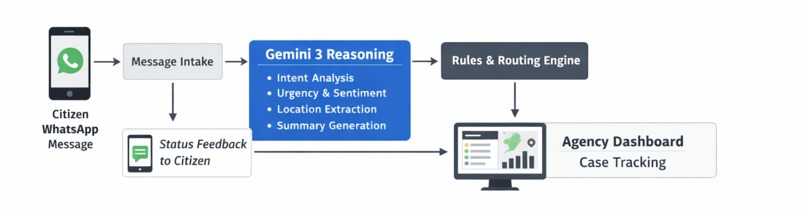
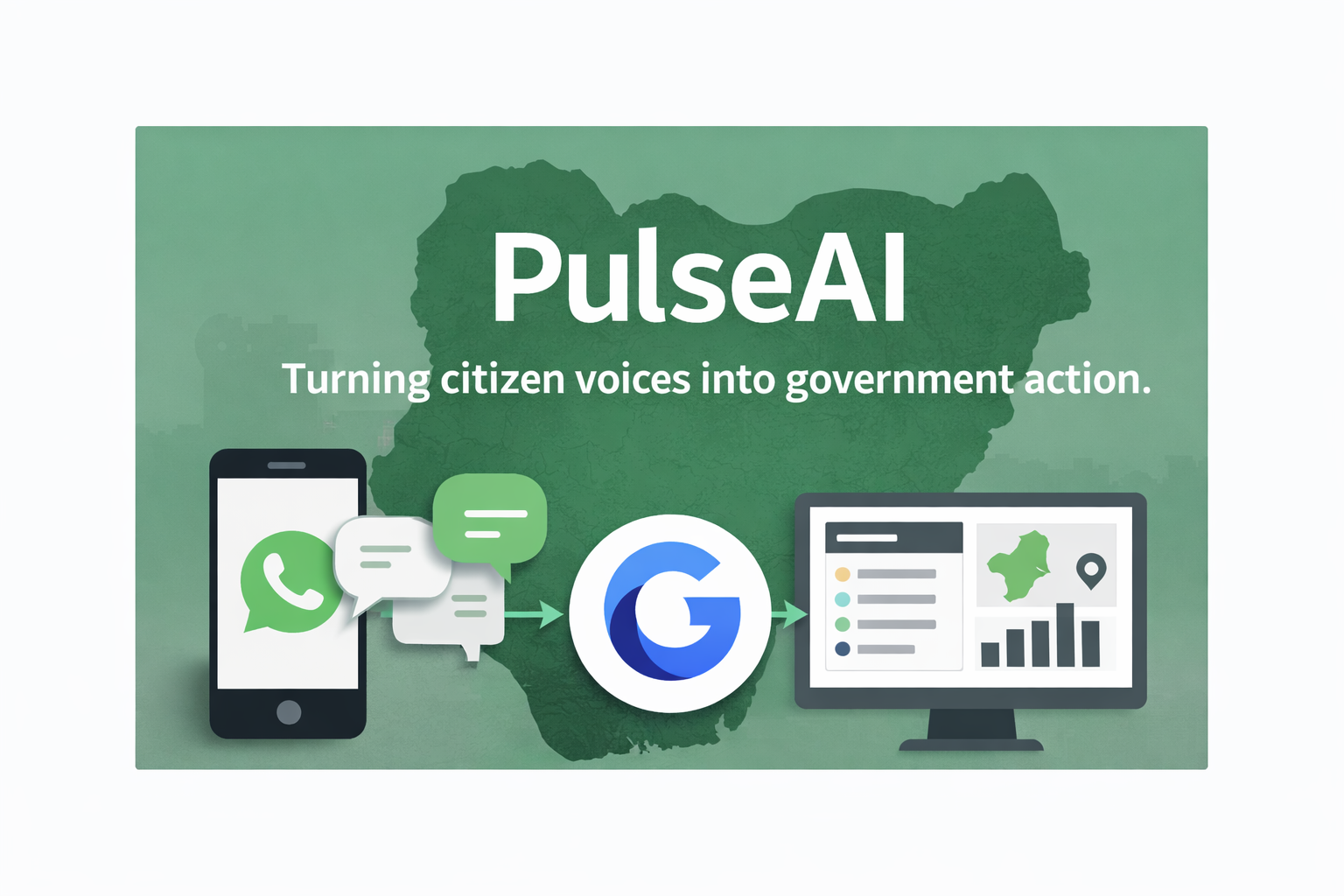
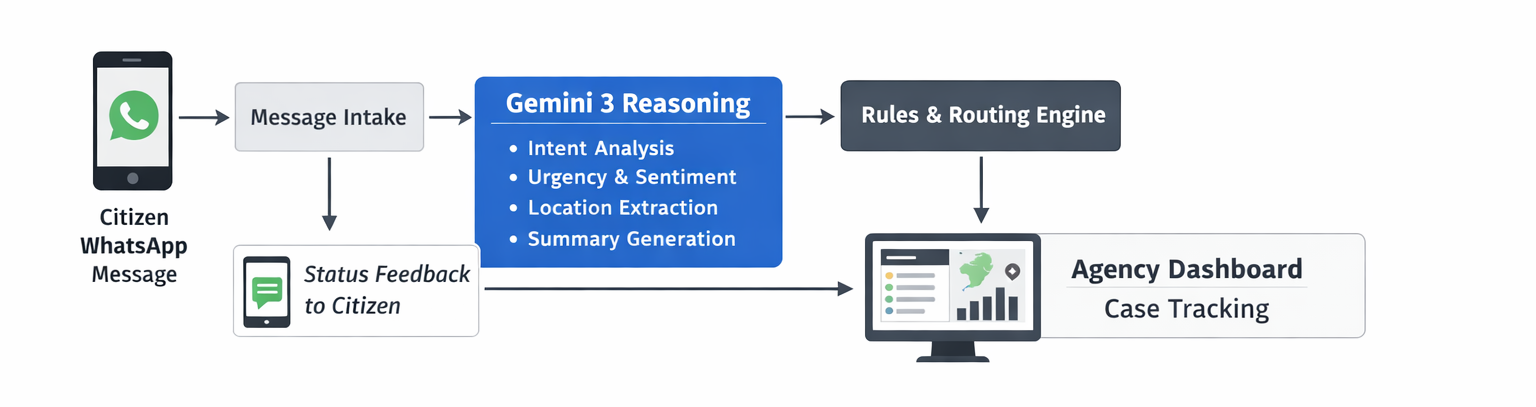
PulseAI Architecture Flow Chart
-
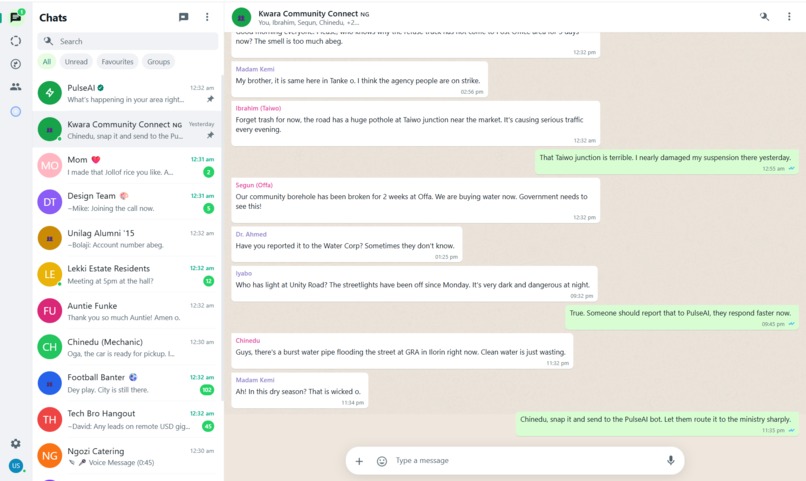
Nigerian voices for a better community
-
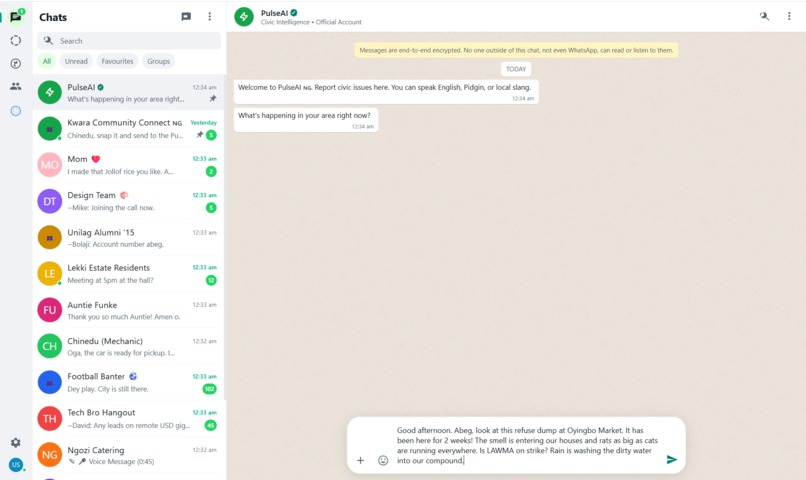
Reporting issues, driving change
-
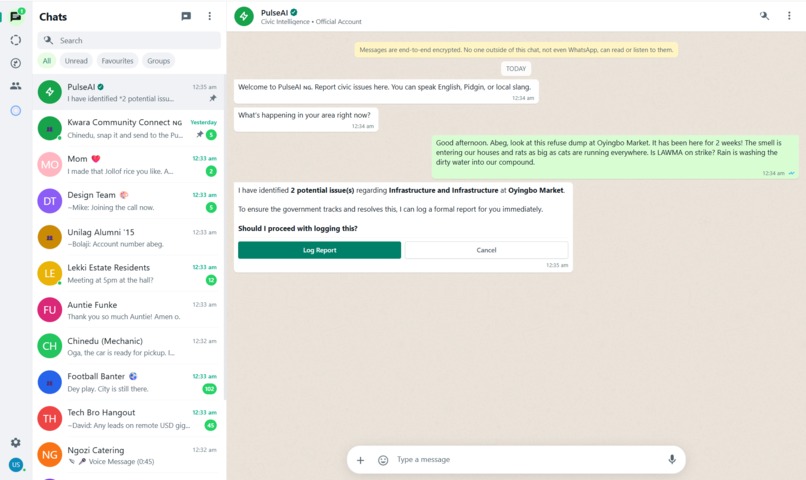
Bridge the gap between you and the state
-
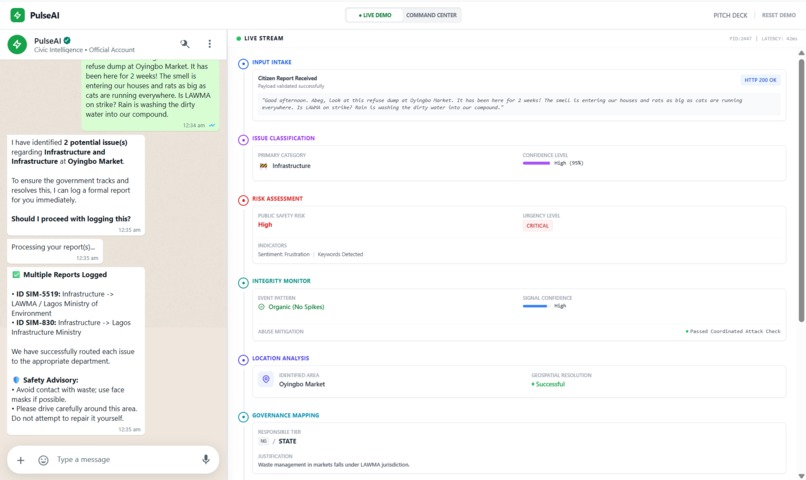
Intelligence in motion
-
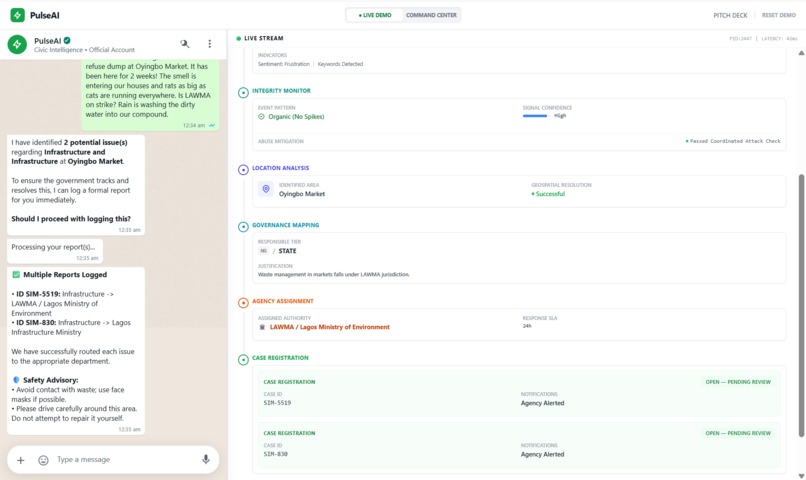
Real-time visibility into civic needs
-
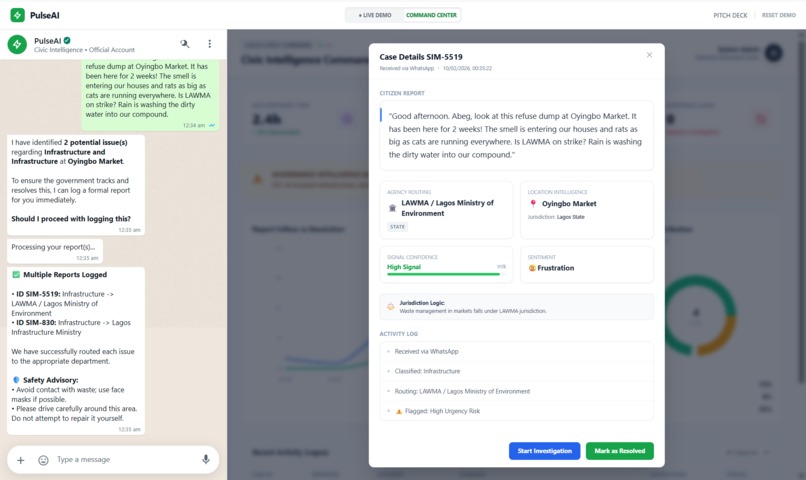
Precision in every report
-
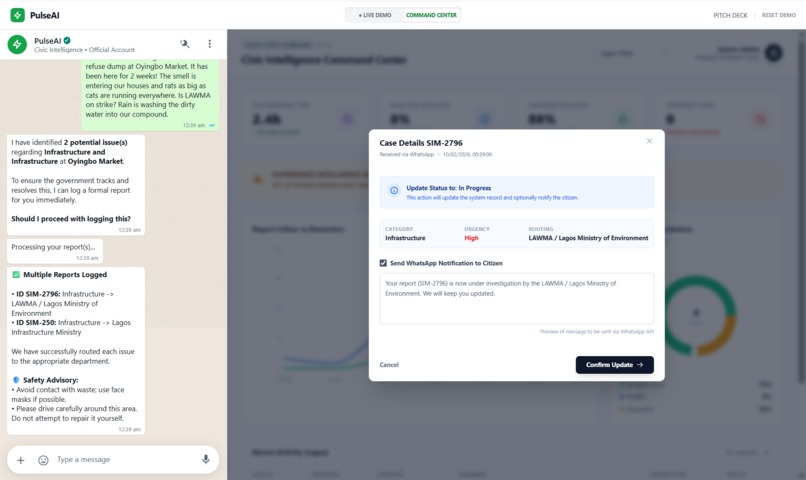
Accountability through data
-
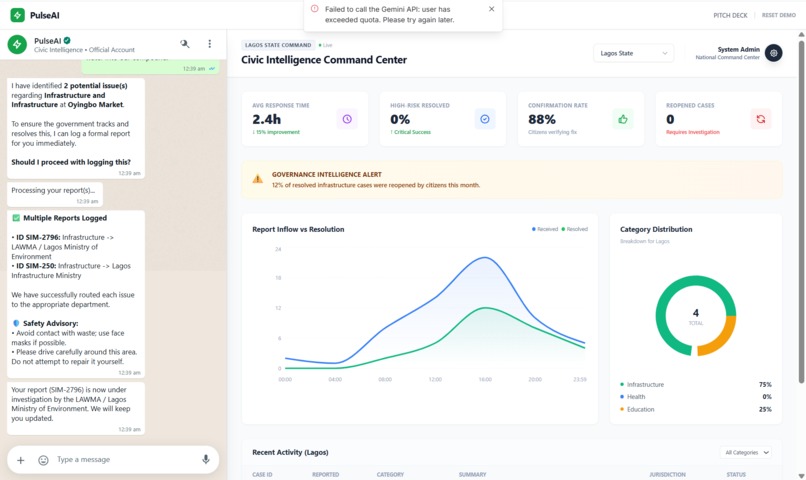
Visualizing impact, optimizing response
-
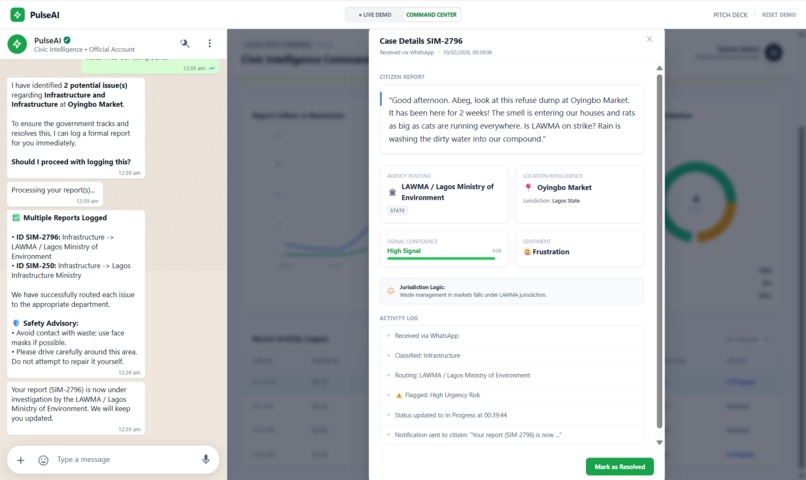
Precision in every report
-
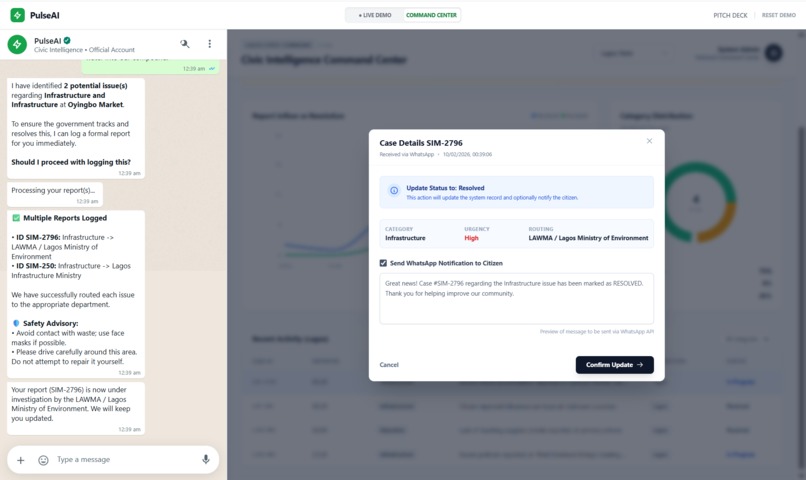
Accountability through data
-
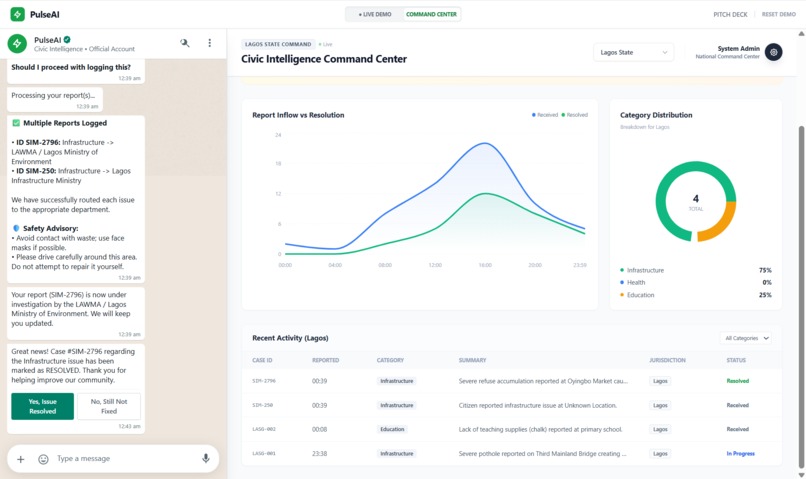
Data-driven decisions for a smarter city
-
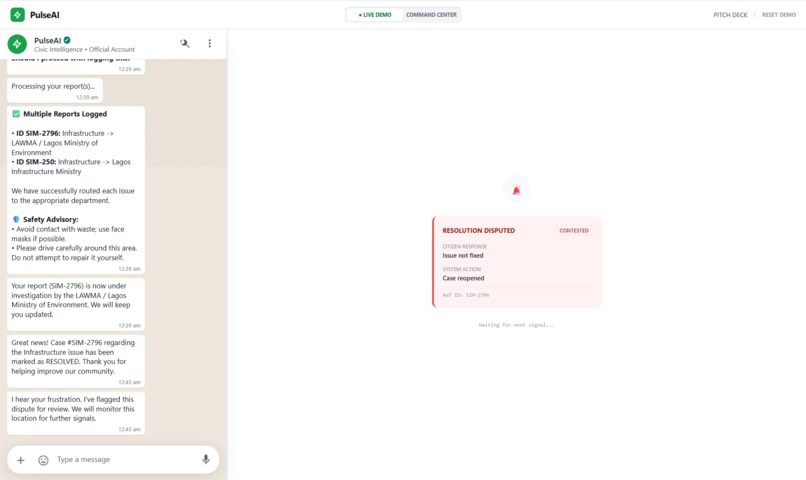
Tracking resolution, step by step.
-
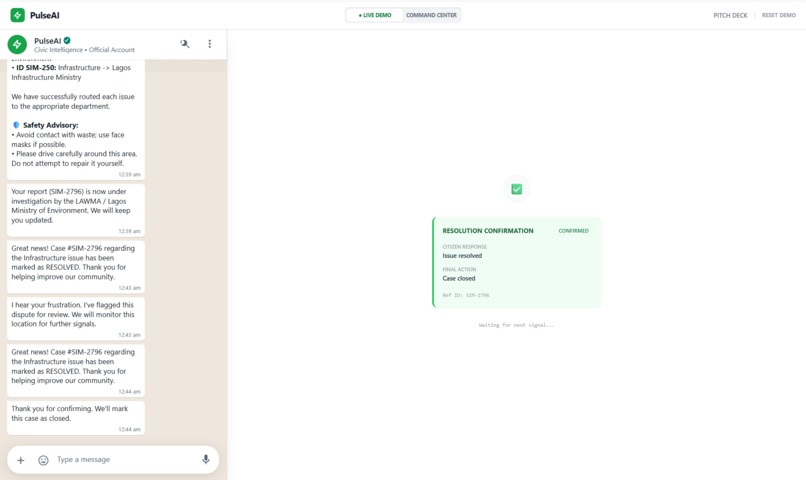
The heartbeat of governance
Inspiration
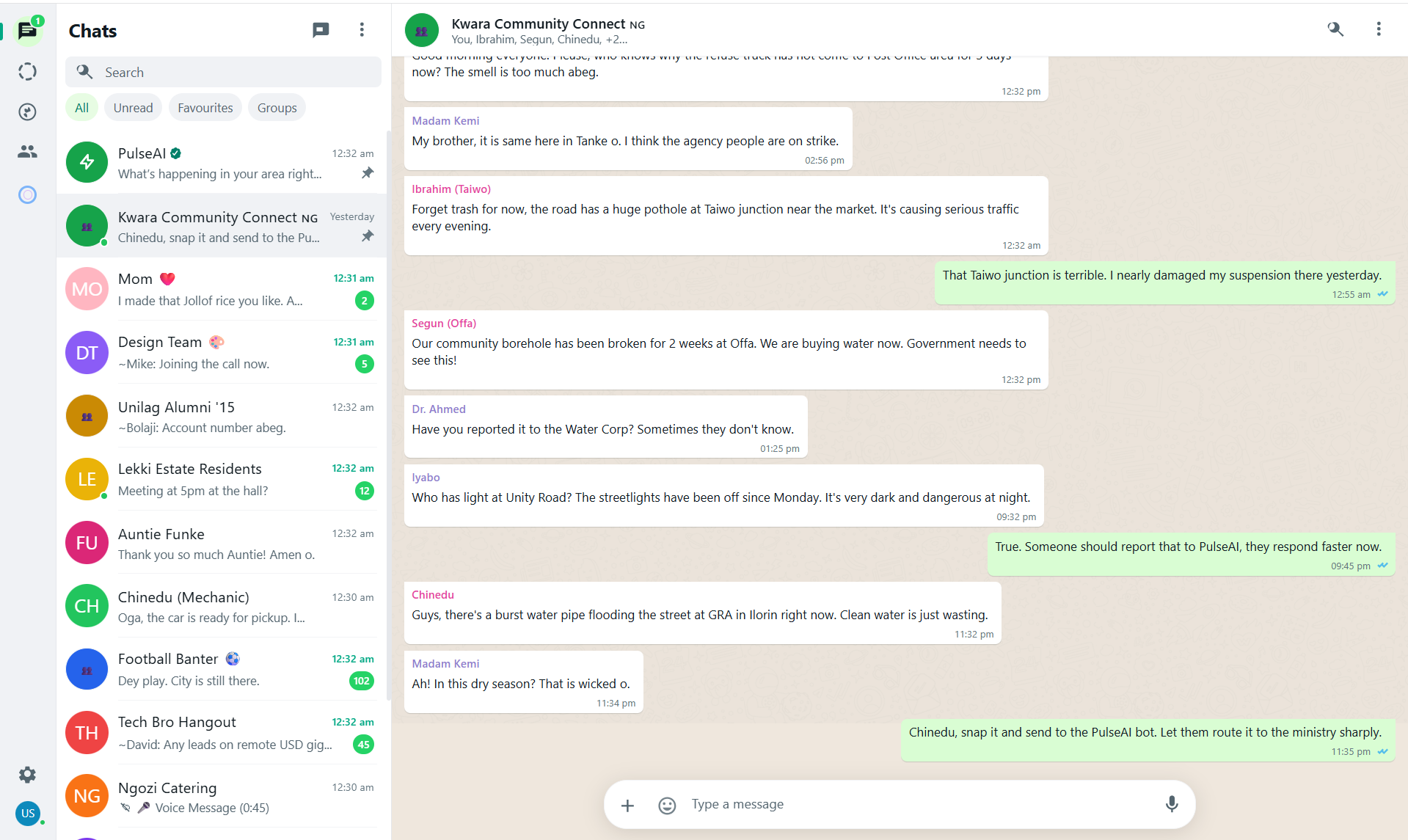
In Nigeria, people already talk about governance every day — not in official reports, but in WhatsApp messages. They discuss bad roads, power outages, hospital shortages, insecurity, flooding, and service failures in the same chats they use to talk to family and friends.
This matters because WhatsApp is Nigeria’s most pervasive digital platform, used by the vast majority of internet-connected citizens. Yet public institutions still depend on systems that assume formal access: portals, emails, paper forms, or fragmented hotlines that many people do not use or trust.
The problem is not a lack of citizen voice. It is a lack of listening infrastructure.
PulseAI was inspired by a simple question: What if the government could listen to citizens where they already are — and turn everyday messages into actionable intelligence in real time?
What it does
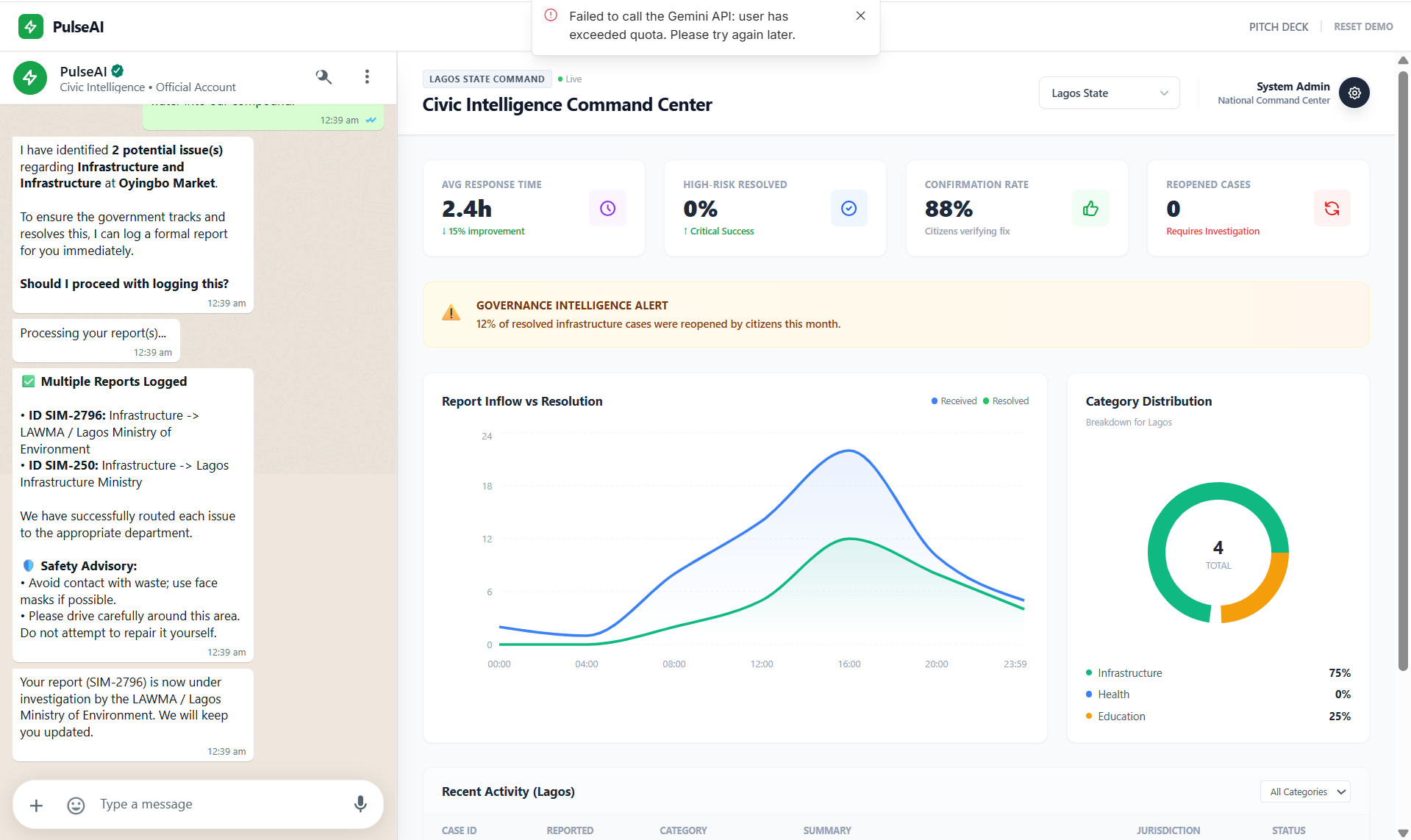
PulseAI is a WhatsApp-first civic intelligence system built for the Nigerian context.
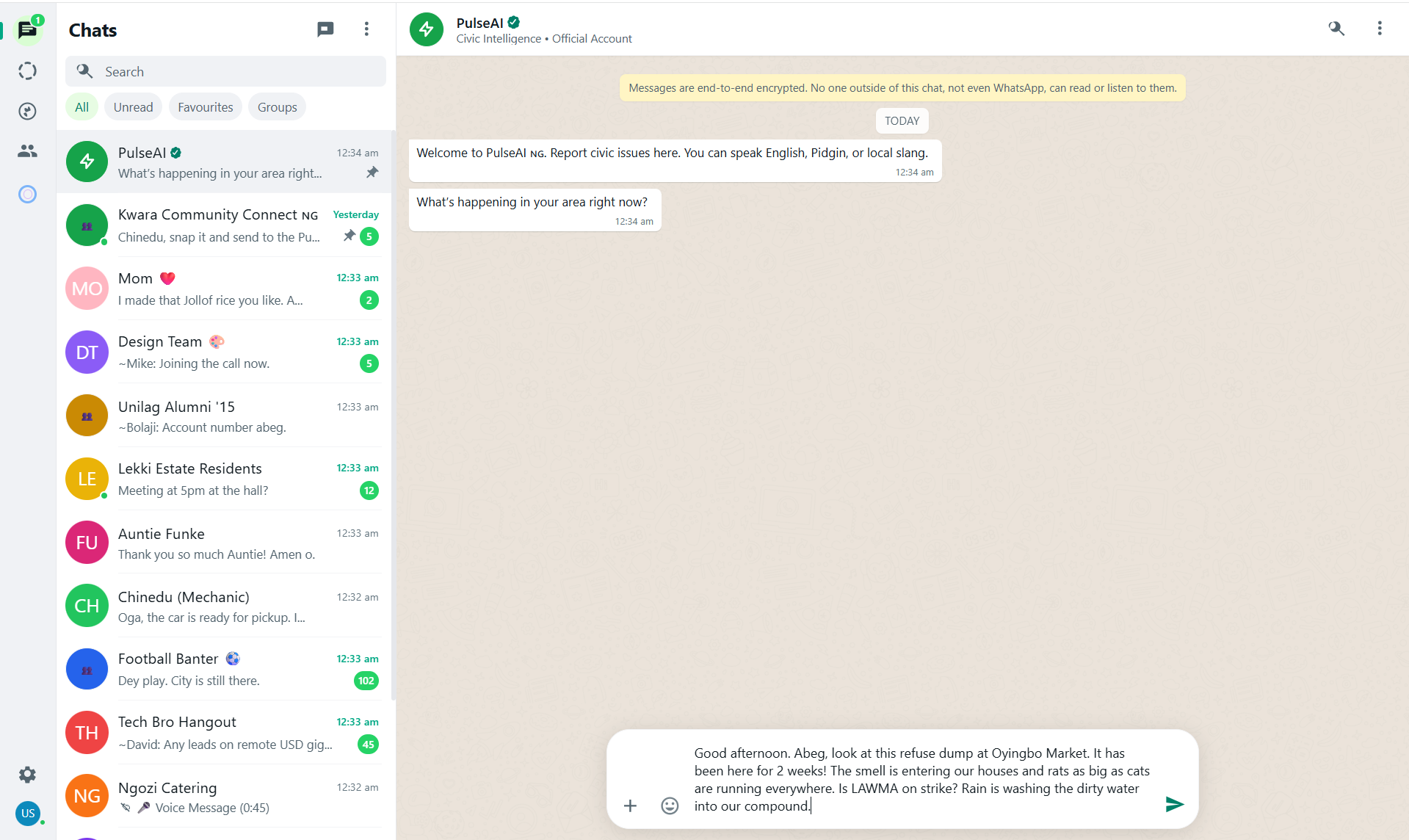
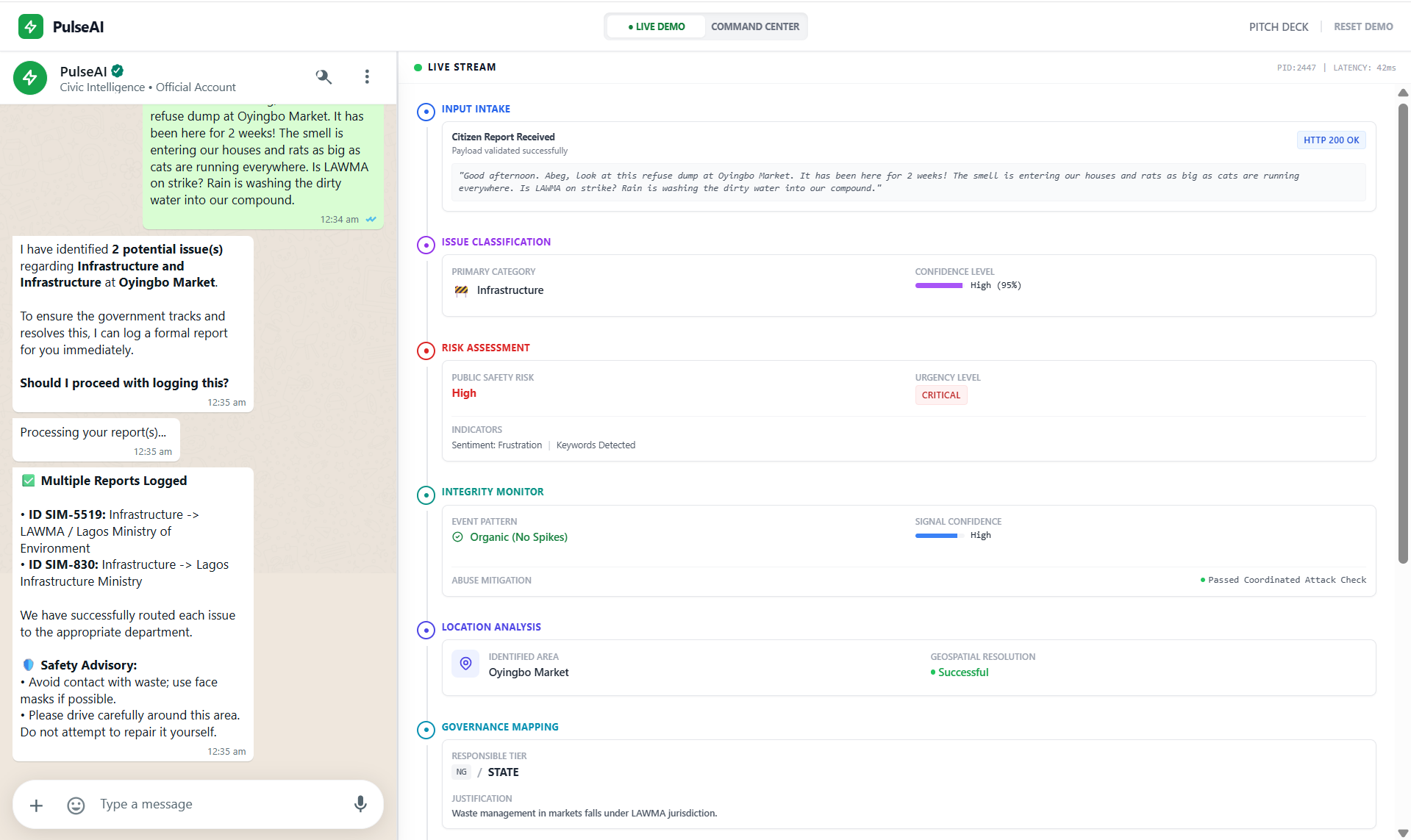
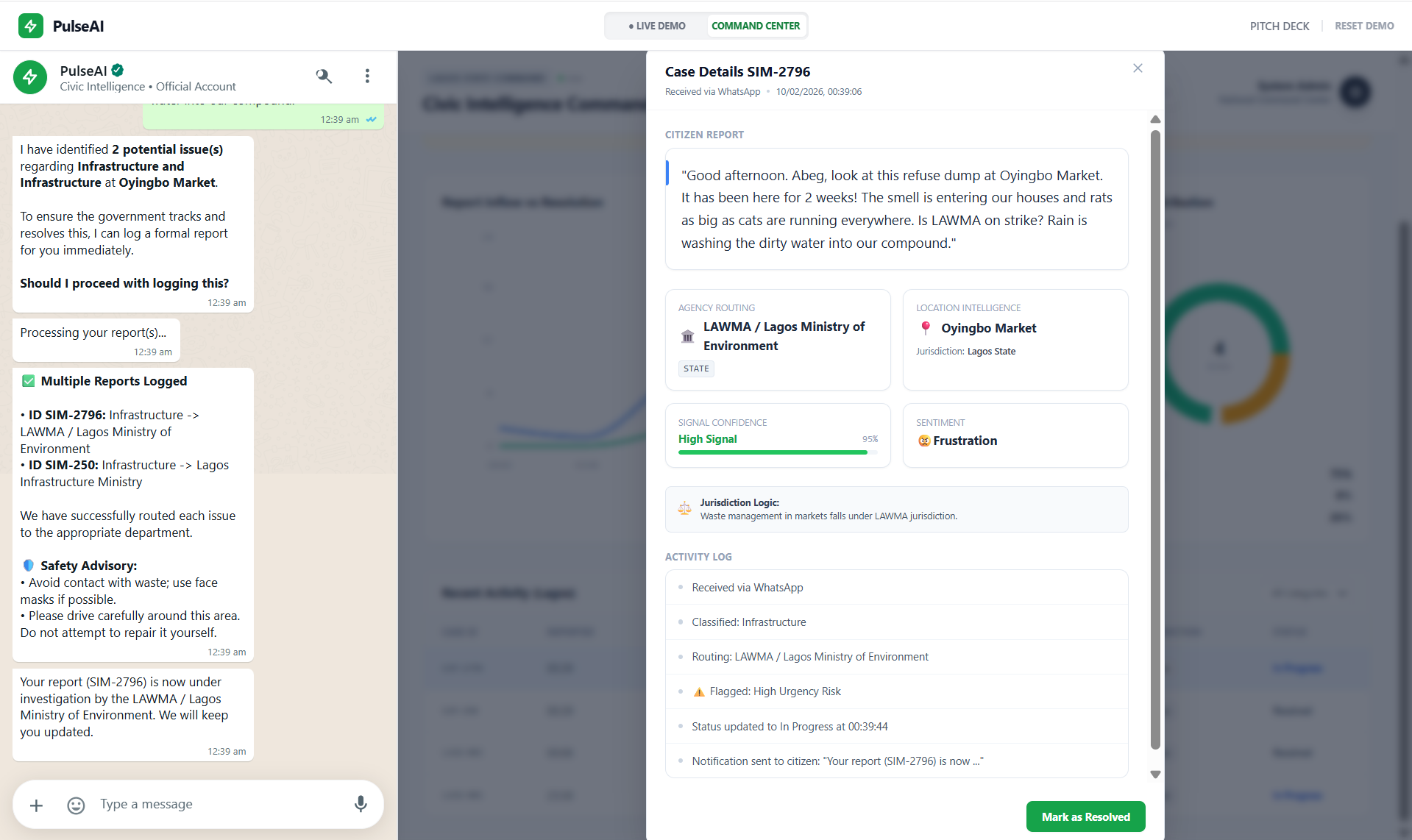
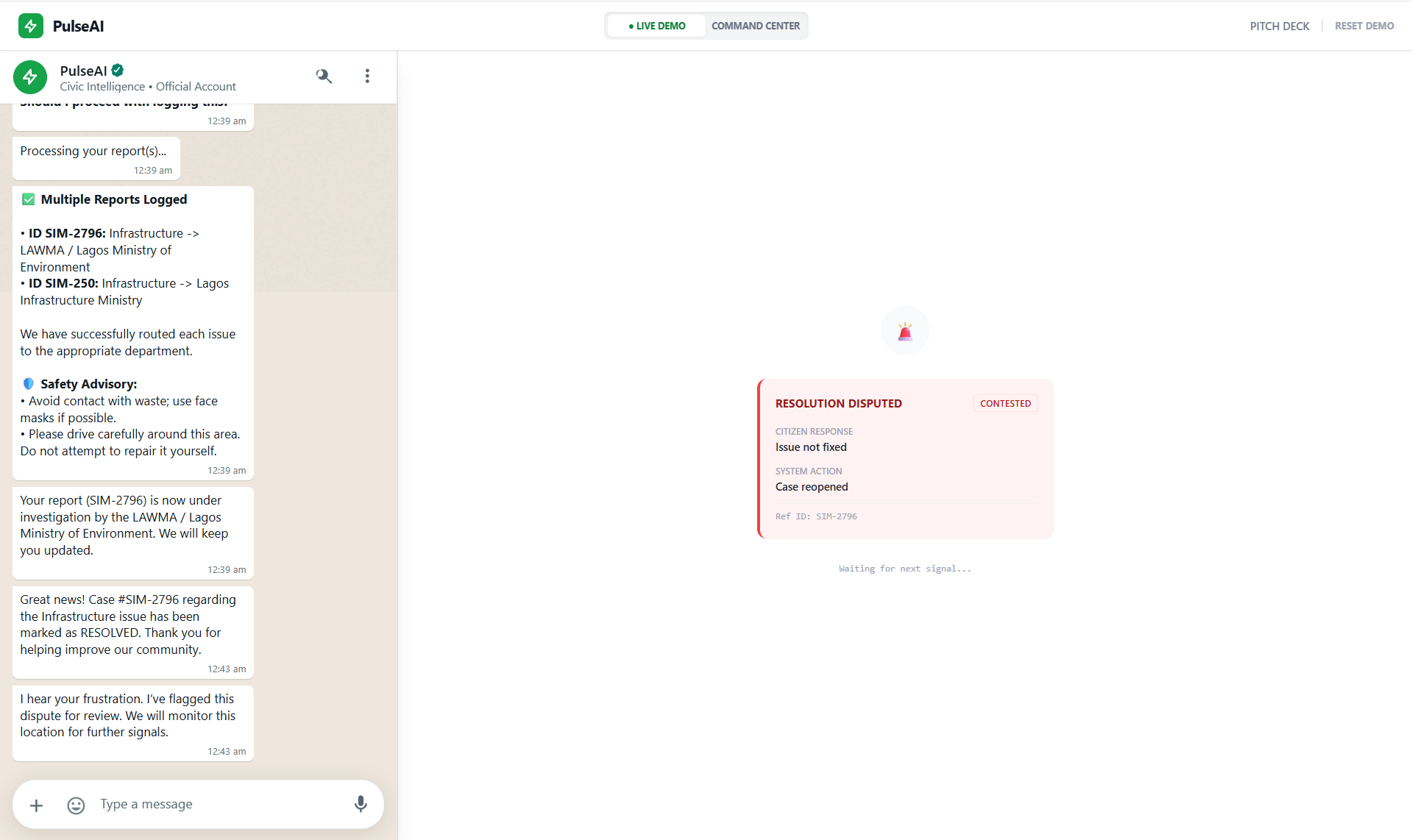
Citizens report issues in their own words — plain language, slang, or mixed expressions. PulseAI interprets these unstructured messages to:
- Understand intent across civic domains (health, infrastructure, education, security)
- Detect urgency and emotional distress
- Extract or clarify the location
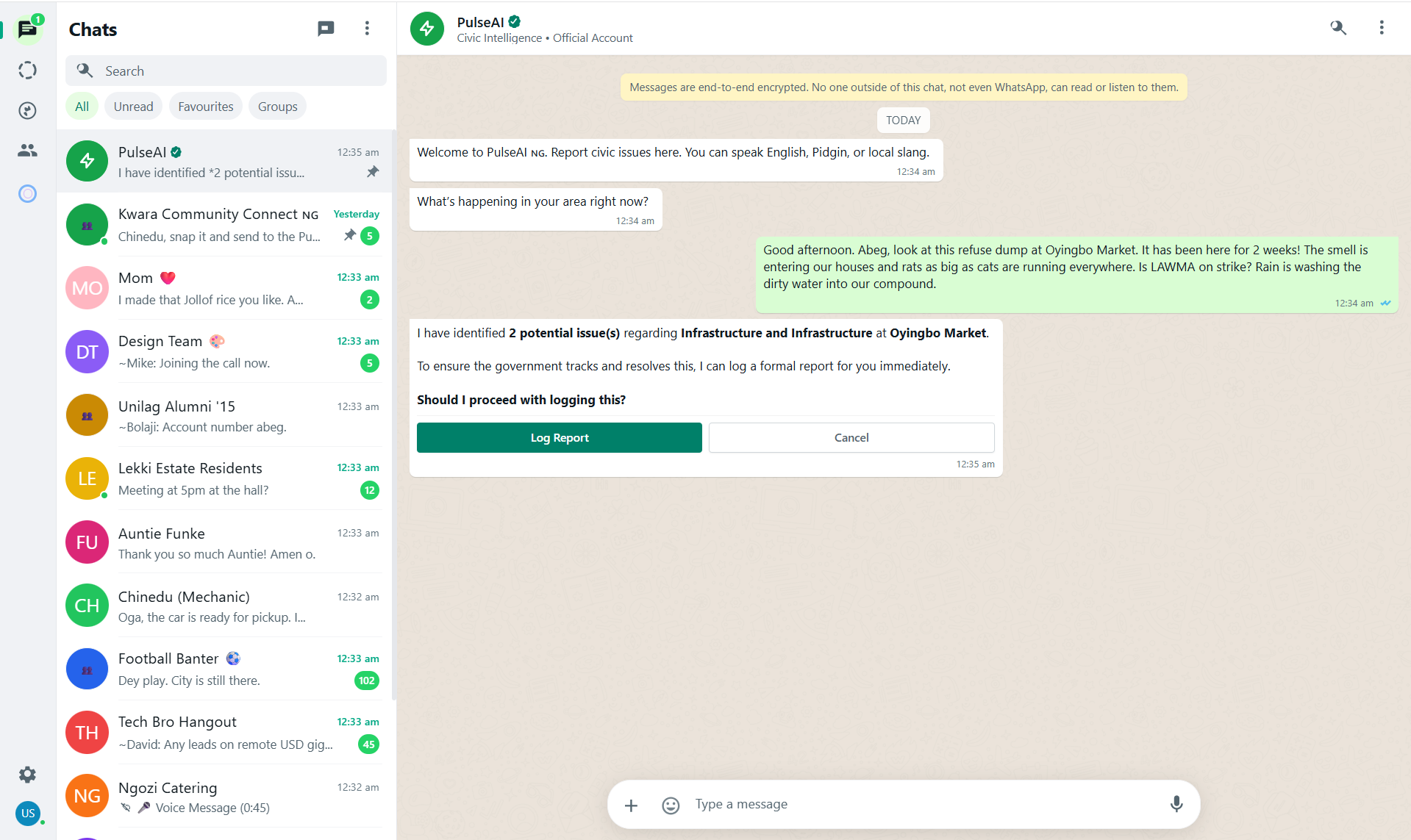
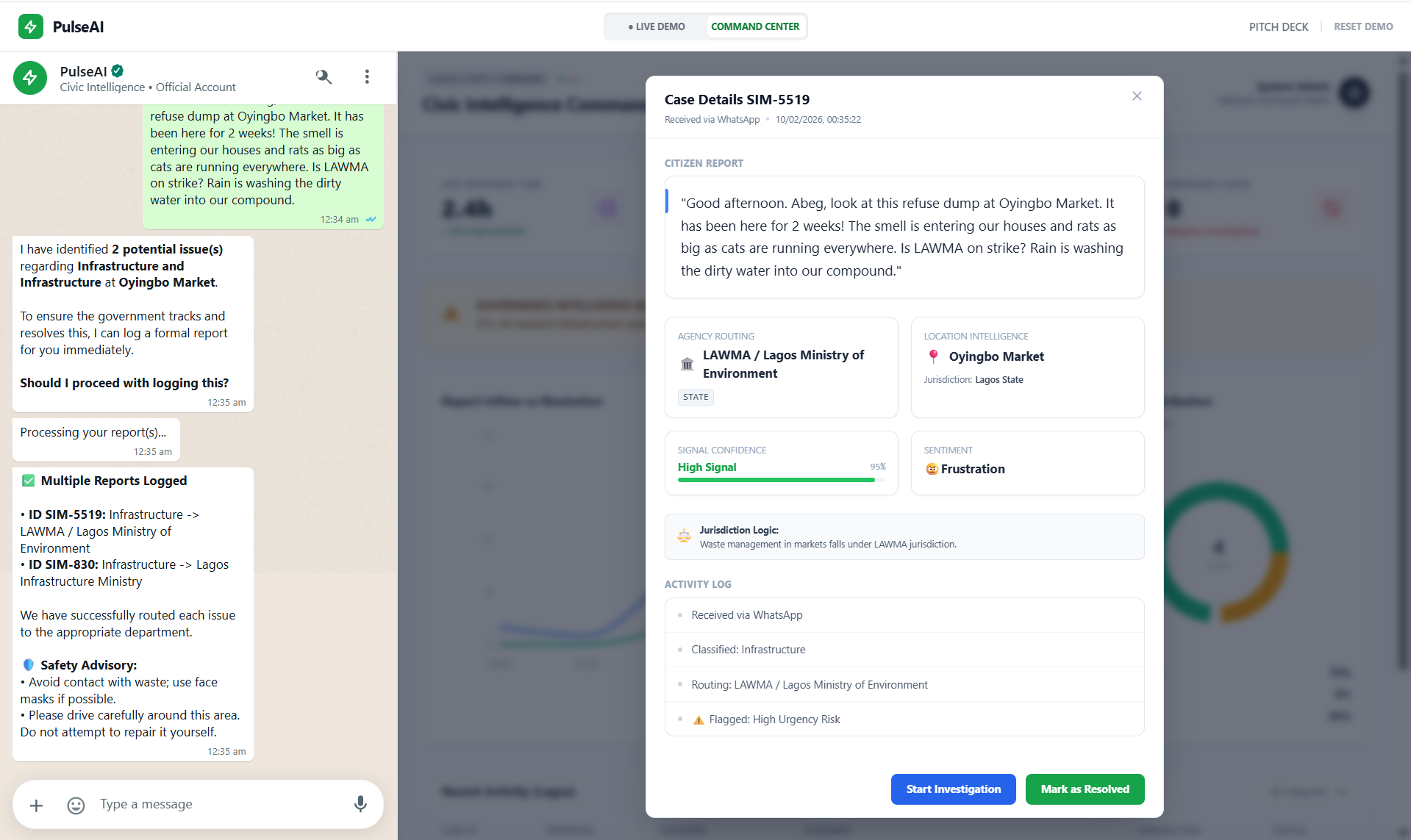
- Generate concise summaries for civil servants
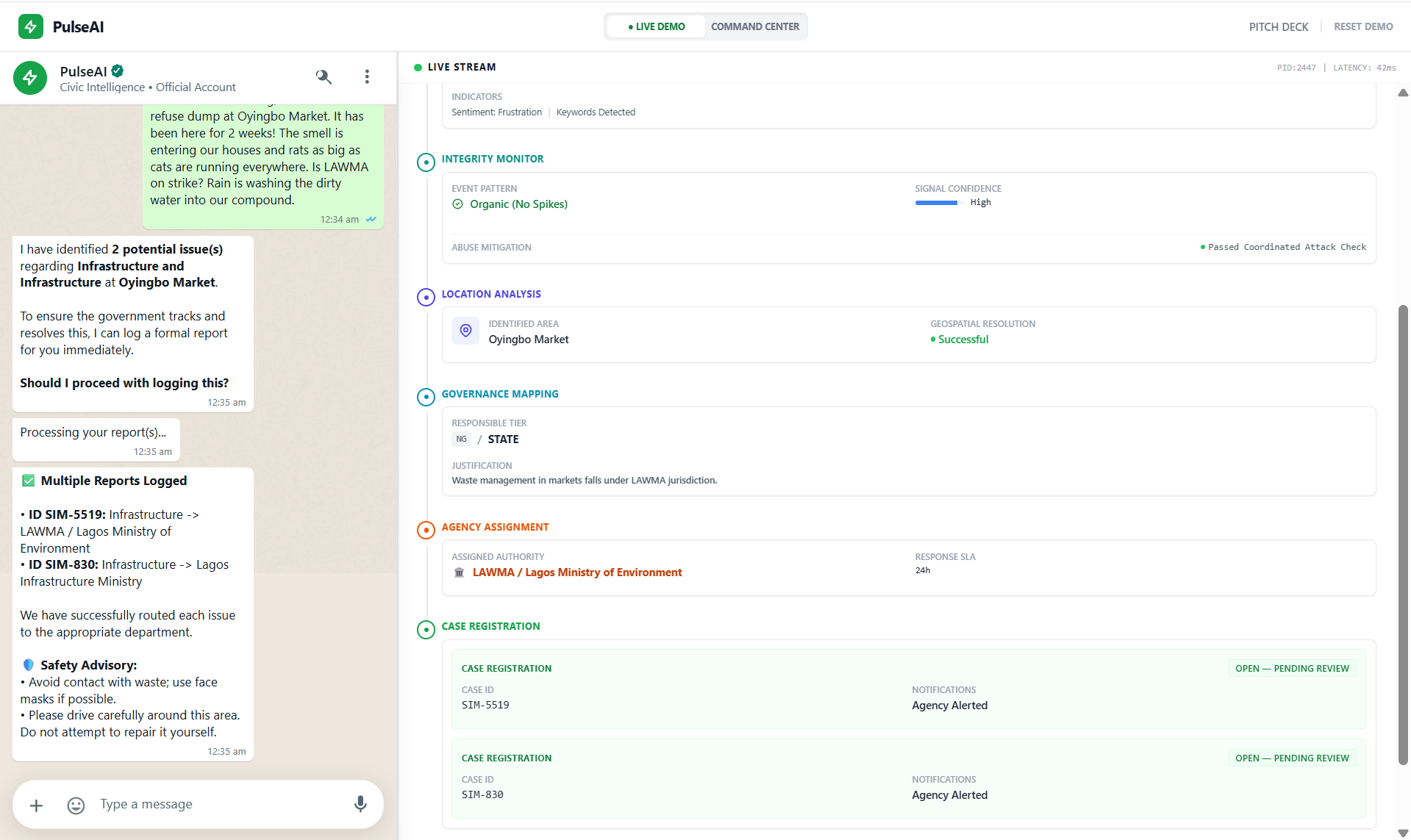
- Route cases to the appropriate ministry, department, or agency
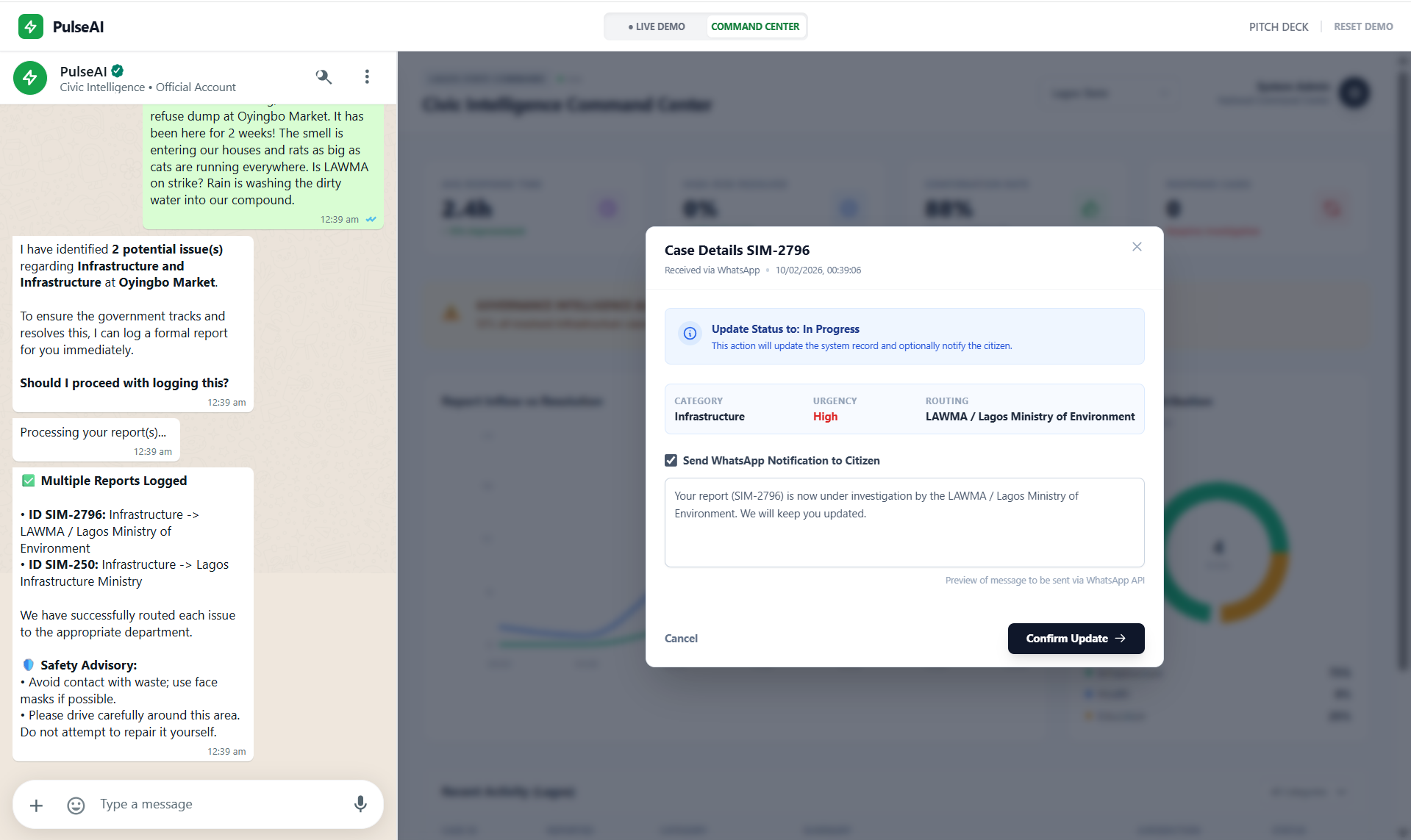
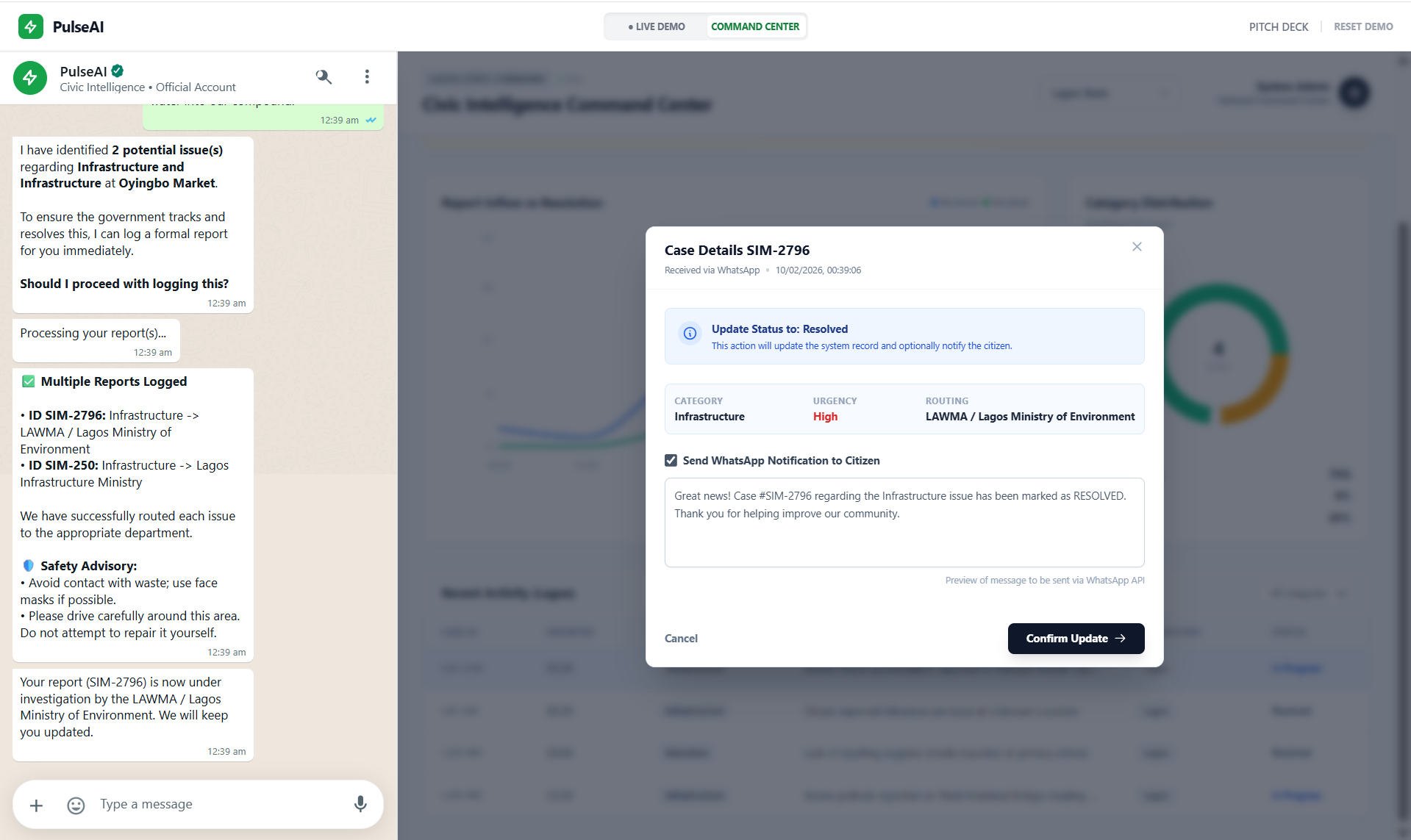
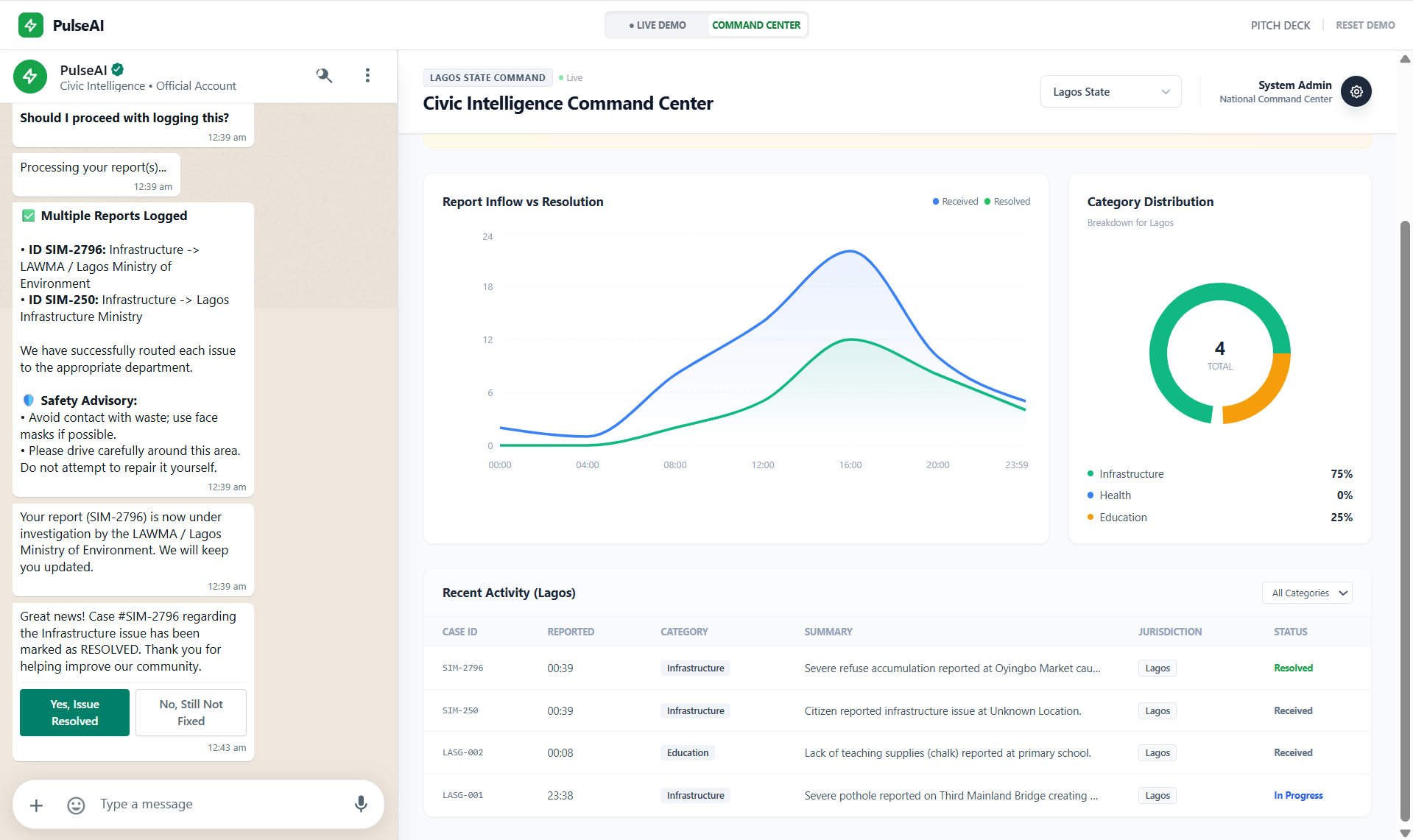
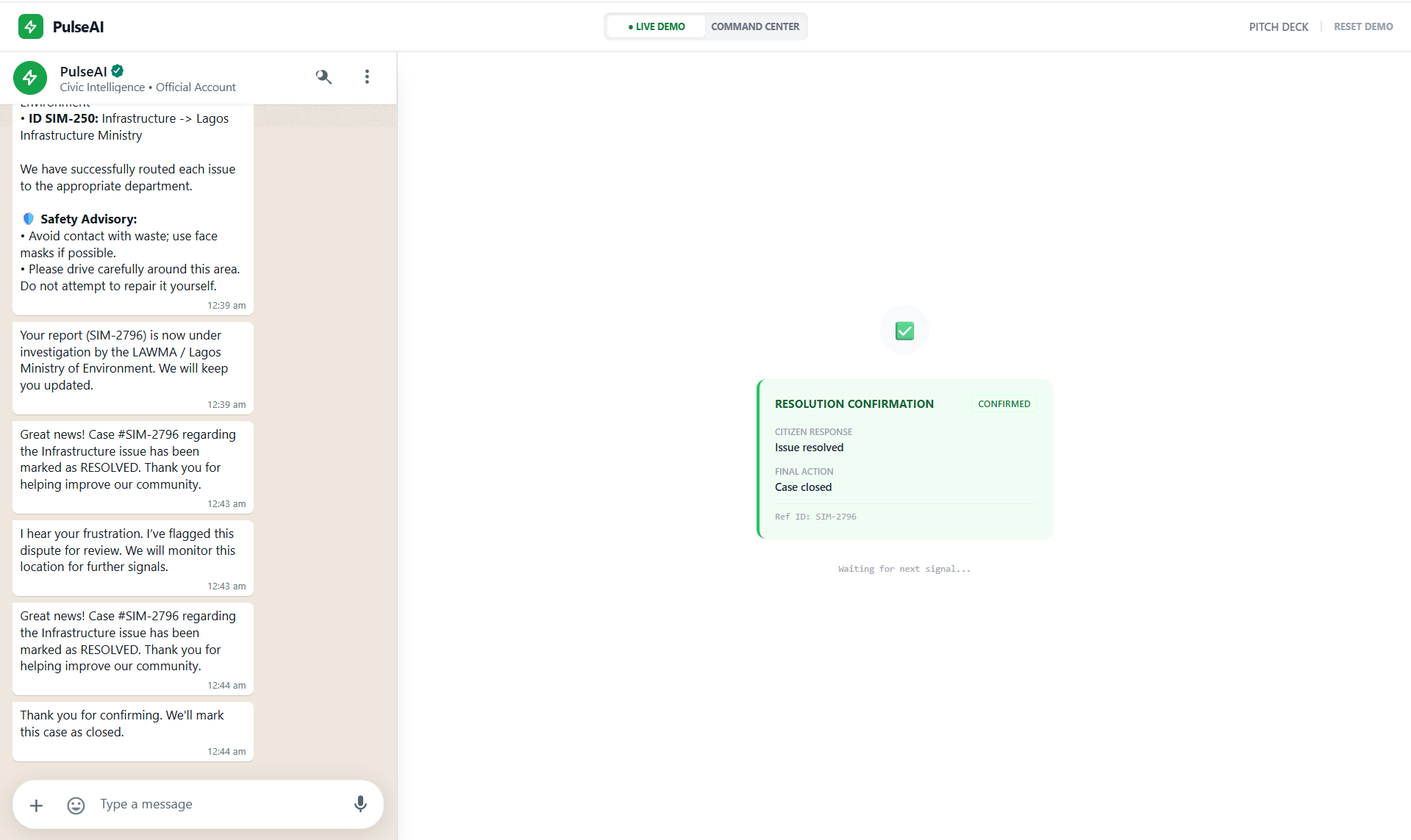
- Track status from receipt to resolution
- Send feedback updates back to citizens via WhatsApp
Aggregated and anonymized, these reports surface trends and hotspots for decision-makers.
How I built it
PulseAI was built as a modular, event-driven system designed for gradual adoption by Nigerian public institutions, where trust and accountability are critical.
At its reasoning core, PulseAI relies on Gemini 3 to interpret unstructured, real-world citizen messages that cannot be reliably processed by rules alone. Citizens in Nigeria often report issues via WhatsApp using informal language, slang, mixed expressions, or incomplete context. Gemini 3 processes these messages to understand intent, classify issues into civic domains (health, infrastructure, education, security), detect urgency and emotional sentiment, and extract or clarify locations.
Each message is passed through Gemini 3, which generates a structured summary along with a confidence score. These outputs are then fed into a deterministic rules-and-policy engine that governs routing, prioritization, and overrides. This ensures that AI remains assistive, auditable, and explainable, while human governance rules enforce accountability.
Gemini 3 also supports natural-language summarization for government officials, reducing triage time and enabling faster, more informed decision-making. When confidence is low or ambiguity persists, PulseAI prompts for clarification, ensuring reliable data capture without burdening citizens.
This hybrid architecture follows the guiding principle: AI suggests; rules decide.
By leveraging Gemini 3’s reasoning capabilities, PulseAI turns messy, everyday citizen conversations into actionable civic intelligence, enabling governments to respond faster, prioritize effectively, and generate evidence-based insights at scale.
Challenges I ran into
One challenge was avoiding the chatbot trap. Many civic tools stop at conversation without ensuring outcomes. PulseAI had to be designed around routing, tracking, and closure.
Another challenge was trust. In Nigeria, opaque systems lose credibility quickly. To address this, PulseAI stores summaries, confidence scores, and audit logs so AI-assisted decisions can be reviewed or overridden.
Balancing low friction with privacy also required careful trade-offs: collecting minimal data while remaining useful to agencies.
Accomplishments that I'm proud of
- Built a WhatsApp-first civic reporting system aligned with real citizen behavior
- Designed a hybrid AI and rules architecture suitable for government use
- Implemented real-time case tracking and citizen feedback loops
- Prioritized explainability, auditability, and human oversight
- Delivered a functional MVP focused on real deployment, not just demos
What I learned
In contexts like Nigeria, technology must adapt to behavior, not the other way around. Citizens should not need to learn new platforms to be heard.
I also learned that AI in governance must be assistive and transparent. Intelligence without accountability erodes trust; structure without intelligence creates bottlenecks.
Most importantly, listening itself is infrastructure.
What's next for PulseAI
Next versions of PulseAI will explore:
- Multilingual Nigerian and African language support
- Voice-based reporting for low-literacy contexts
- Predictive trend detection and early-warning signals
- Deeper integration with government case management systems
- Expansion to other African countries with similar communication patterns
PulseAI is designed to connect citizens to government where they already are.
Built With
- chatgpt
- gemini
- gemini-3
- google-ai-studio

Log in or sign up for Devpost to join the conversation.