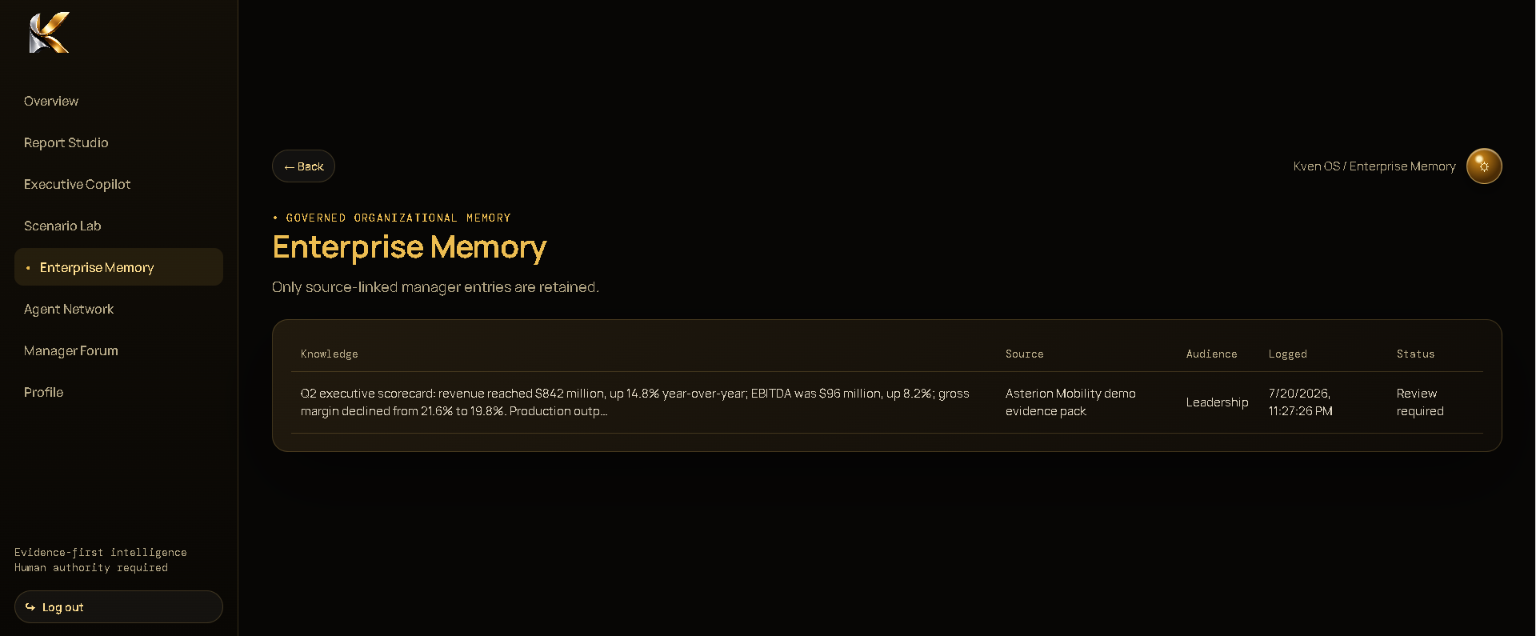
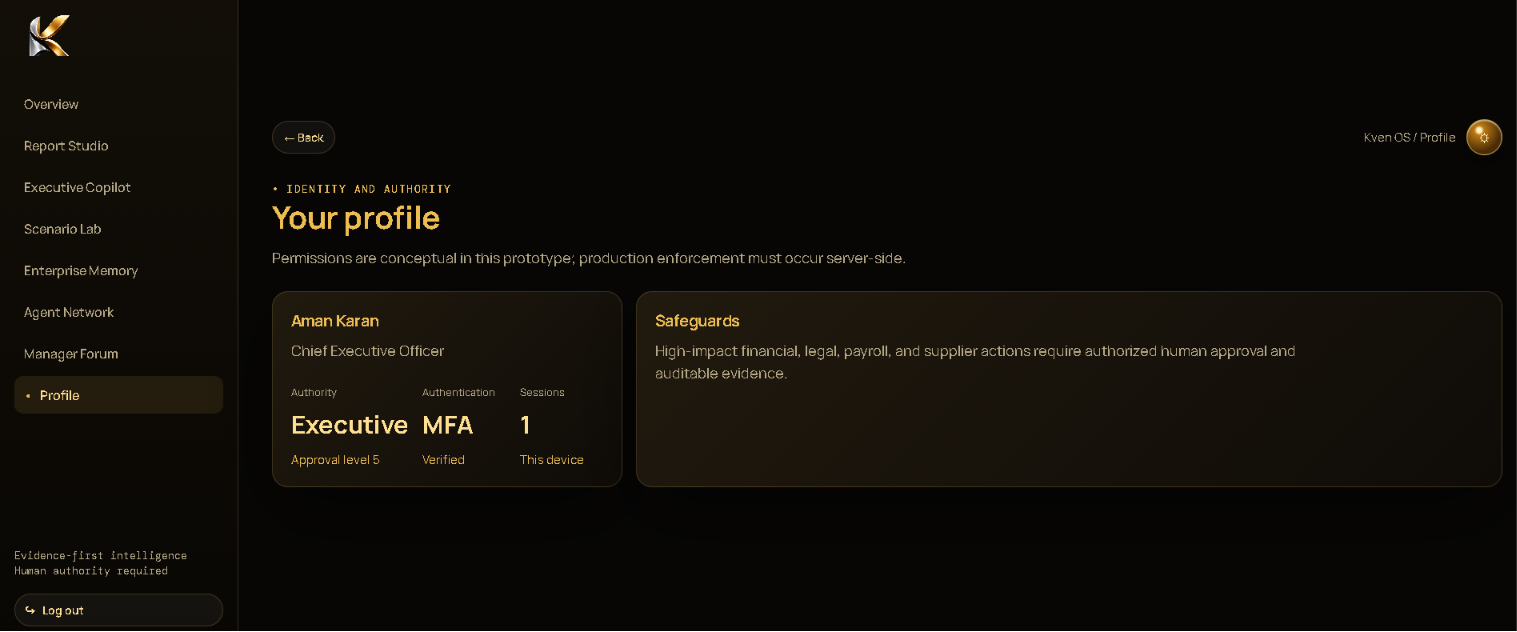
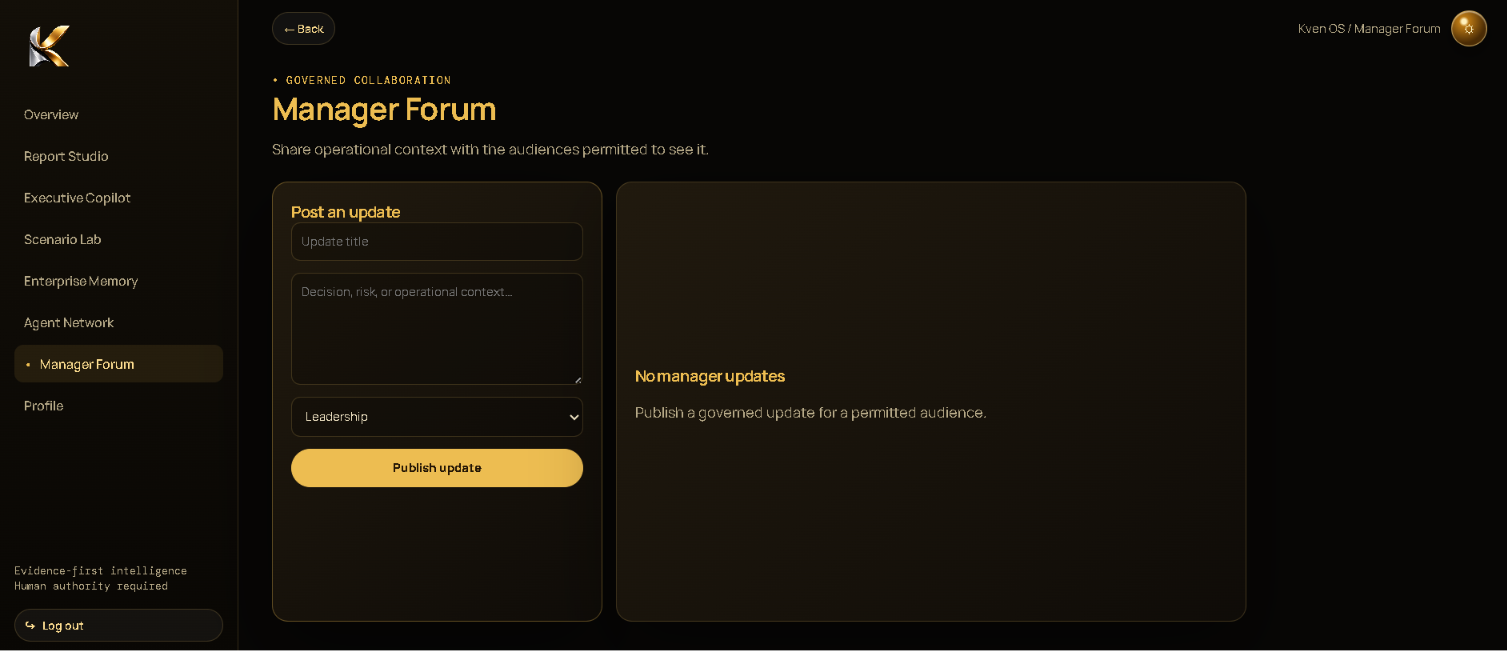
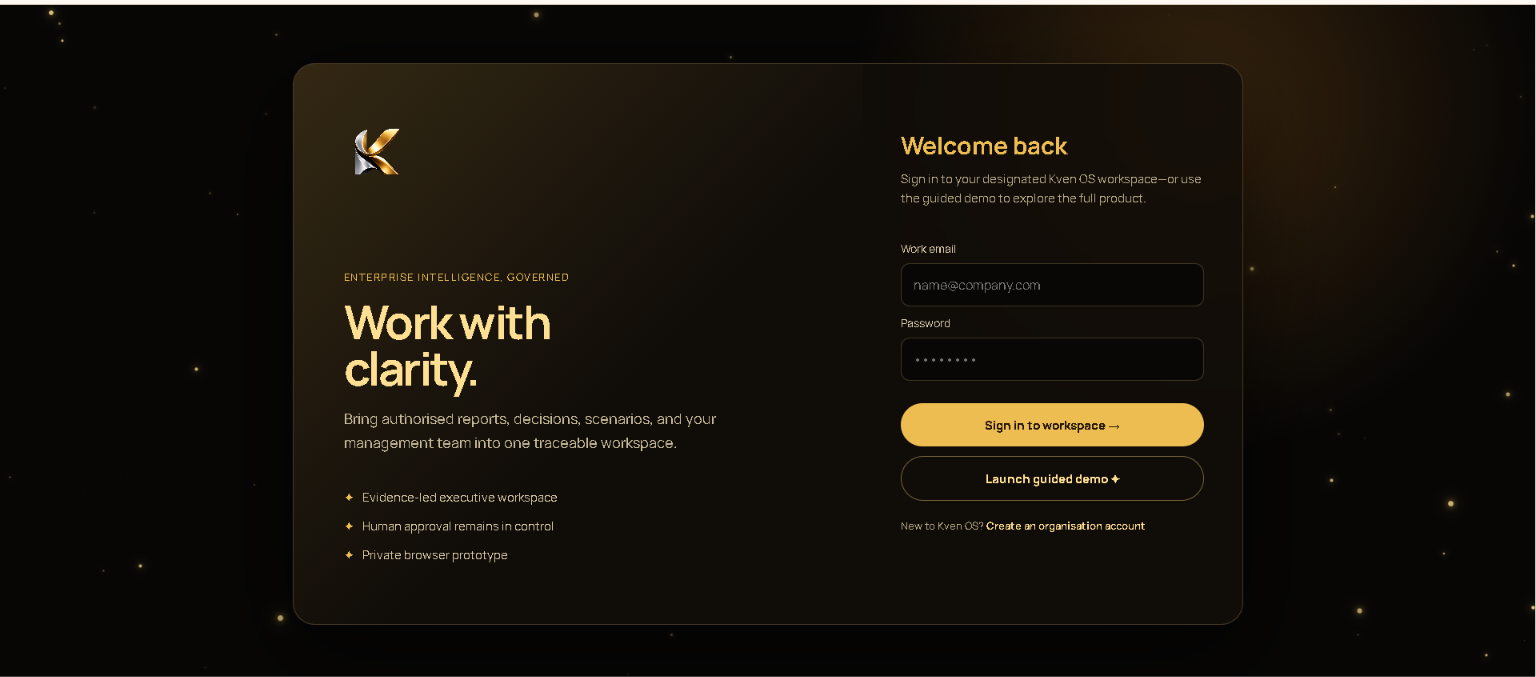
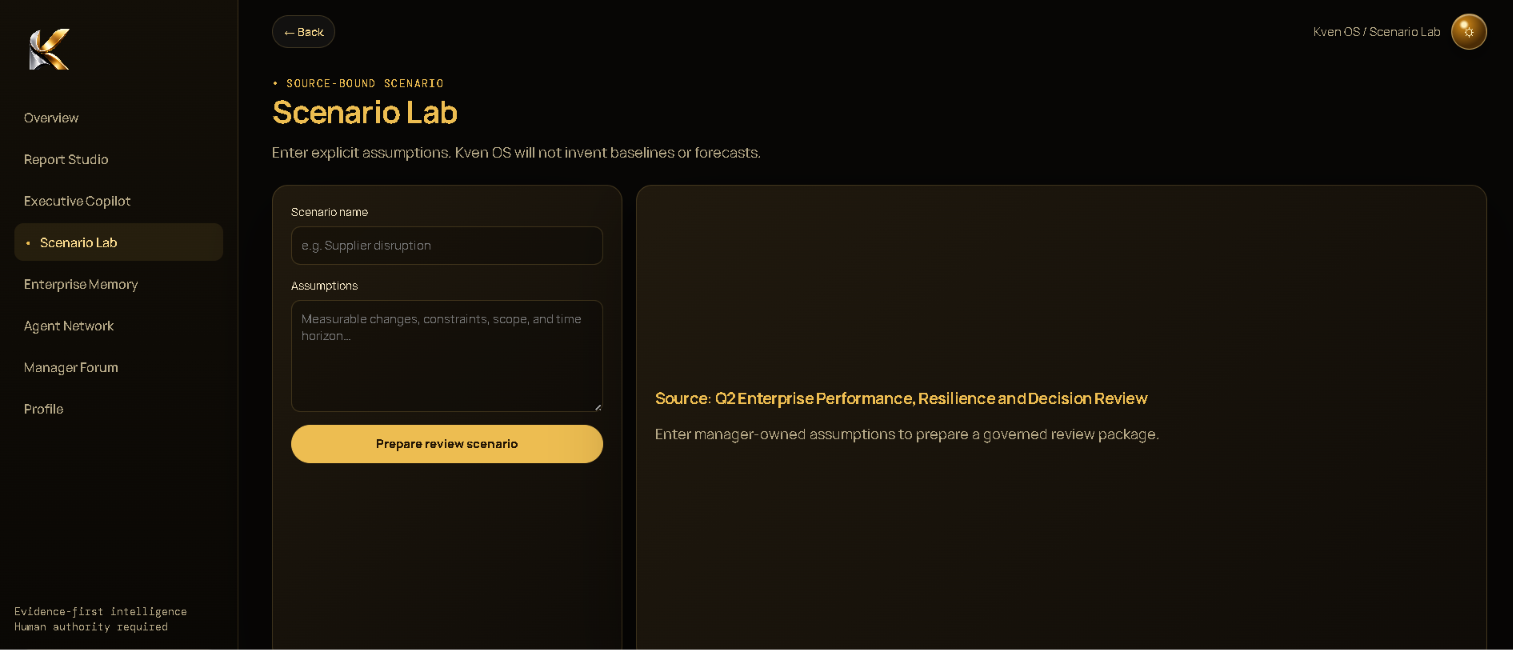
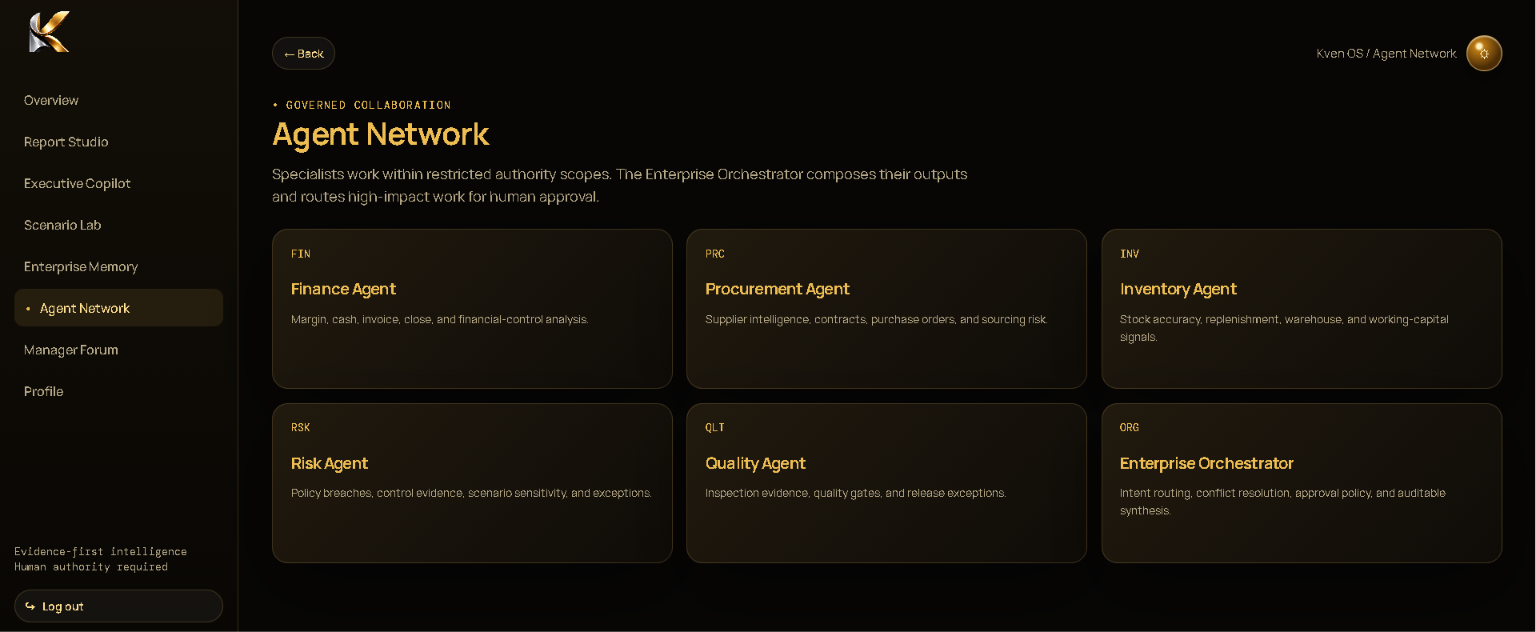
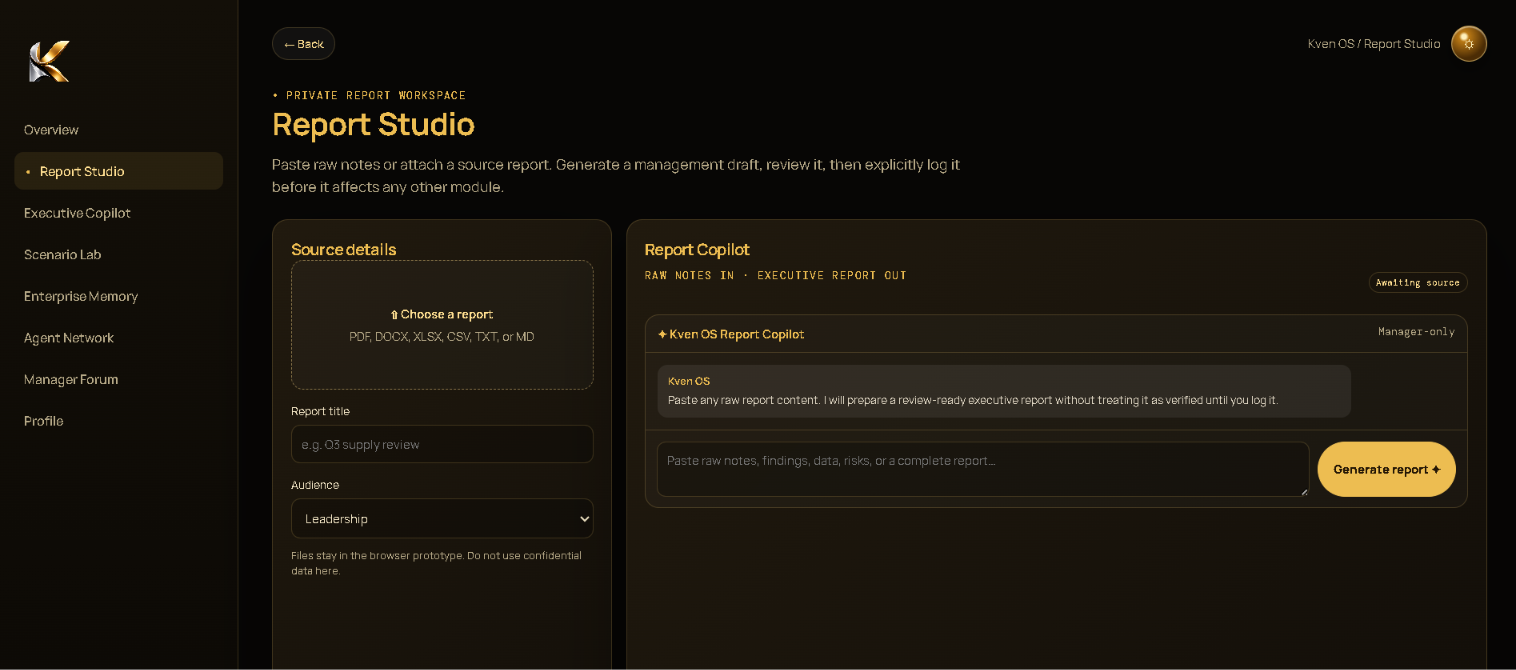
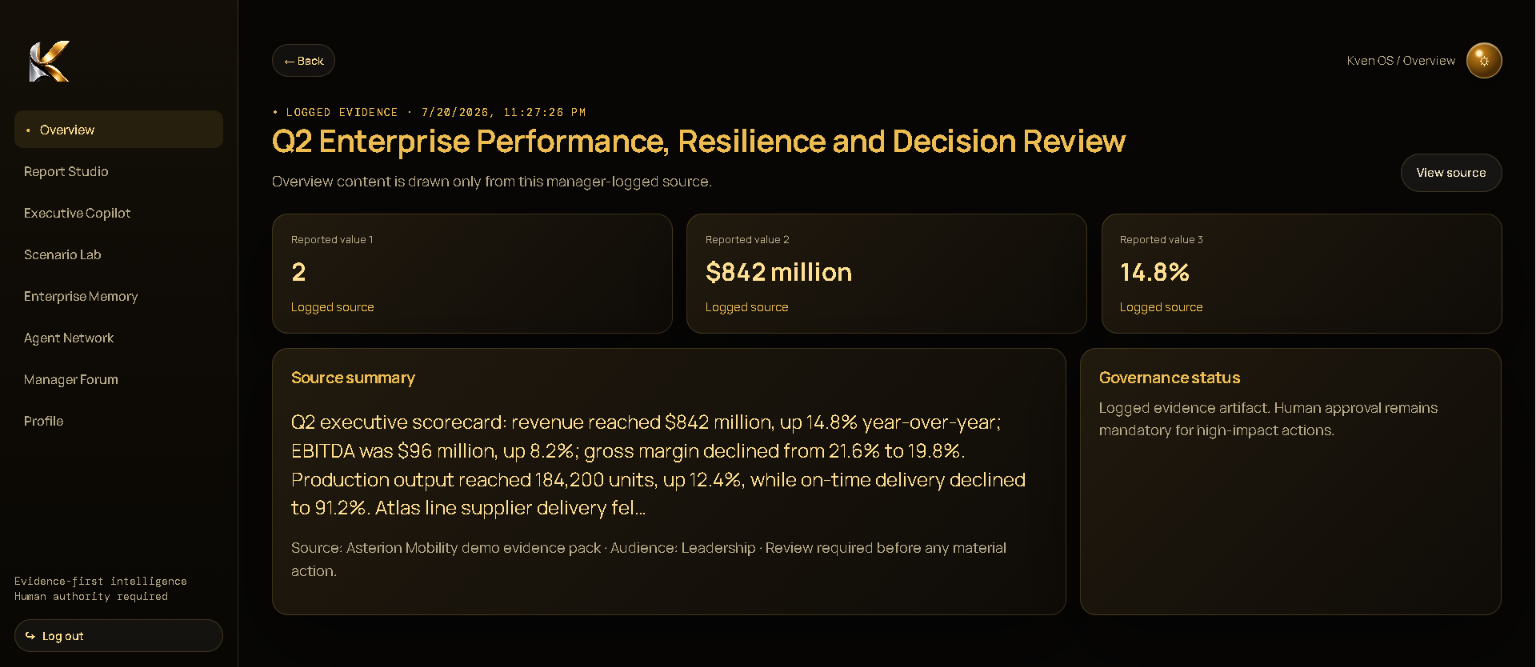
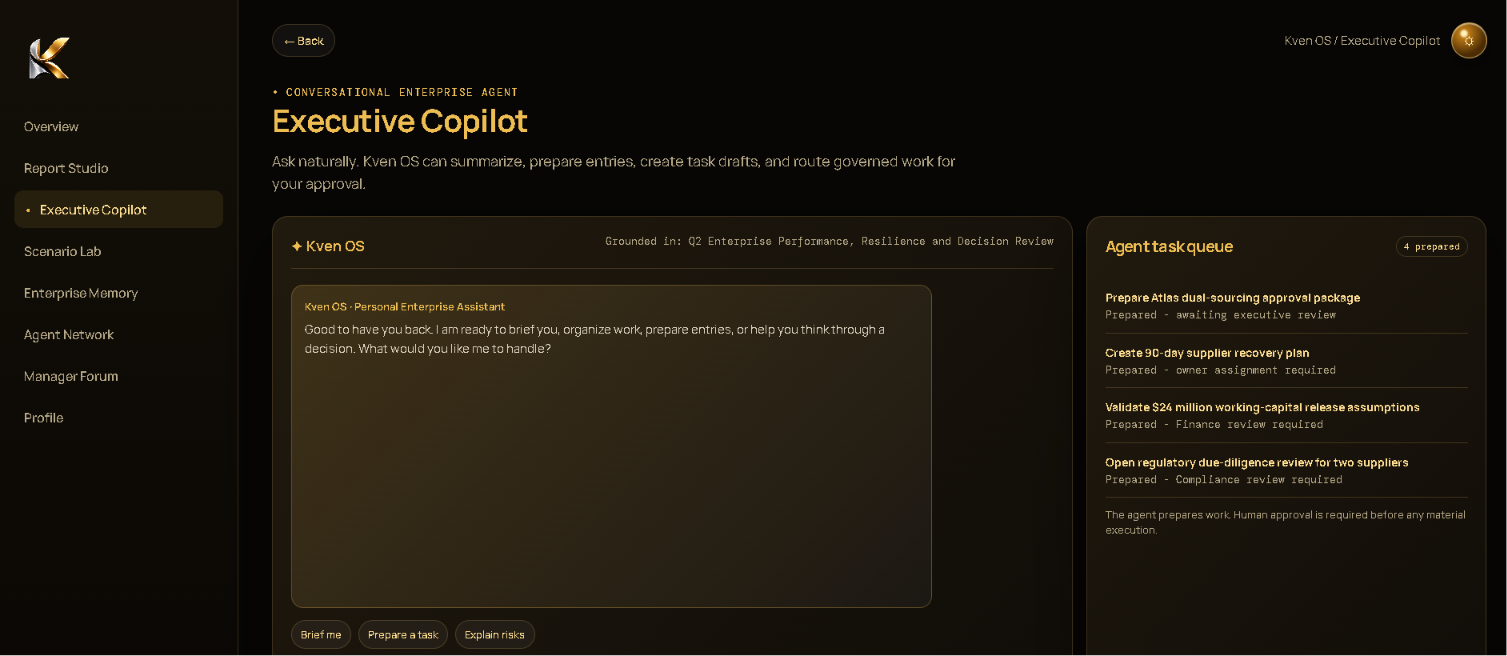


Inspiration Enterprise leaders often work across disconnected reports, dashboards, spreadsheets, meetings, and approval chains. Important business information exists, but turning it into an auditable decision is slow and fragmented. Kven OS was inspired by the idea of an AI-native enterprise operating system: one place where managers can upload or enter business evidence, explore its implications, coordinate with their teams, and prepare governed actions without losing human control. What it does Kven OS is a manager-focused enterprise intelligence workspace with: Report Studio for raw notes and management-report drafting Evidence-led Overview that activates only after a manager logs a report Executive Copilot for conversational, source-aware assistance Scenario Lab for manager-defined assumptions Enterprise Memory for logged organisational knowledge Manager Forum for permission-scoped updates Workspace creation, team roles, login flow, demo data, themes, and an enterprise-style UI How we built it We built Kven OS as a multi-page interactive web prototype using HTML, CSS, and JavaScript. The experience uses browser-local storage to simulate workspace creation, role assignment, report logging, demo data, forum posts, and Copilot task preparation. The visual system was designed around a gold-and-silver Kven identity, with a custom loading flow, responsive light/dark themes, glass-like surfaces, cosmic visual cues, and governed enterprise interactions. Challenges we faced The hardest challenge was balancing a futuristic interface with enterprise clarity. We avoided making the platform feel like a generic dashboard while keeping high-stakes ideas—evidence, permissions, approvals, and human accountability—visible. Another challenge was ensuring the prototype does not fabricate business outcomes. Overview, Scenario Lab, and Enterprise Memory remain empty until a report is explicitly logged. This reflects the production principle that AI should be grounded in authorised, traceable data. What we learned We learned that enterprise AI is not only about a powerful chatbot. It requires identity, permissions, data lineage, explainability, approval gates, auditability, and a user experience that helps managers trust the system. The current Copilot is simulated locally. A production version would connect a secure backend, enterprise data sources, and an AI model API while keeping API keys and confidential data off the frontend
Built With
- ai
- codex
- css
- html
- javascript
- responsive


Log in or sign up for Devpost to join the conversation.