Inspiration
The gap between a doctor’s diagnosis and effective treatment is often filled with bureaucratic lag and dense paperwork. Patients shouldn't need a medical degree to understand their options. At Kura, we bridge these "gaps" in healthcare by ensuring that patients will get the best non-clinic trial, safe, and effective medicine around them whenever they need. With just a few simple clicks, they can feel safe and experience world-class treatment in no time.
What it does
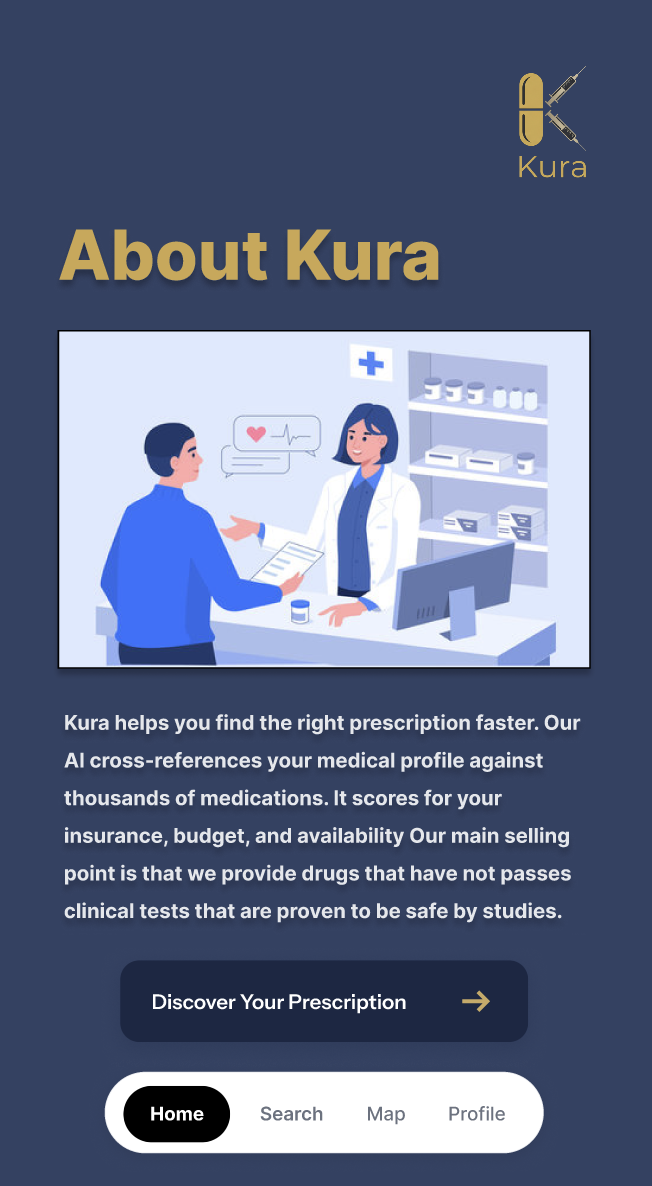
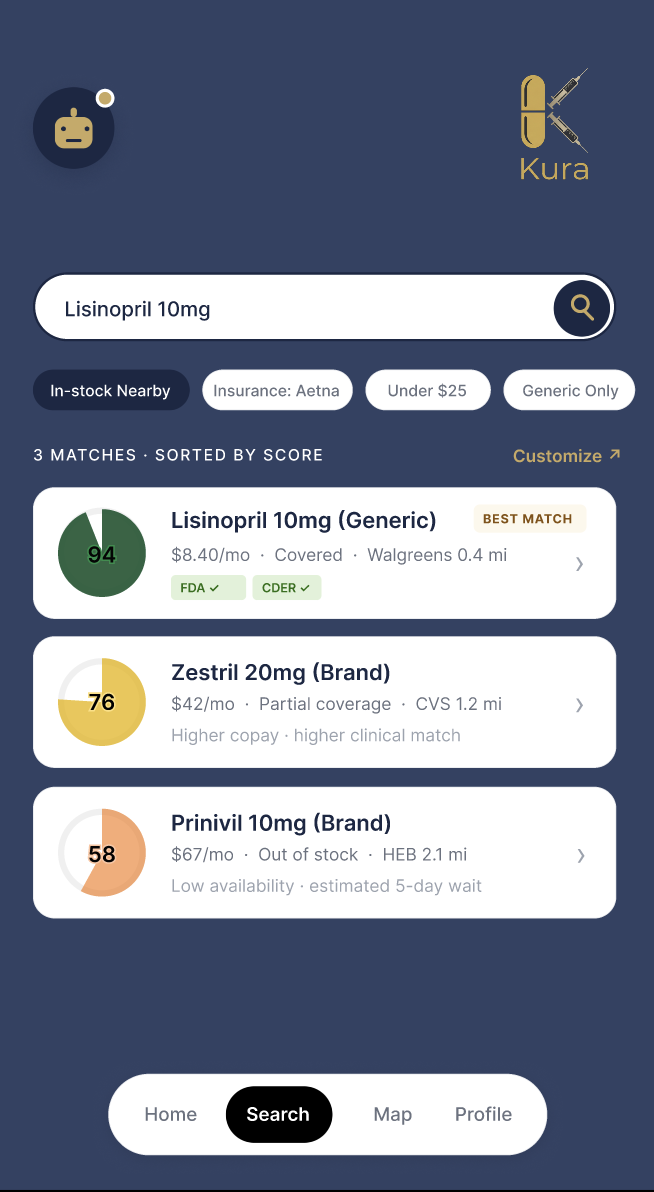
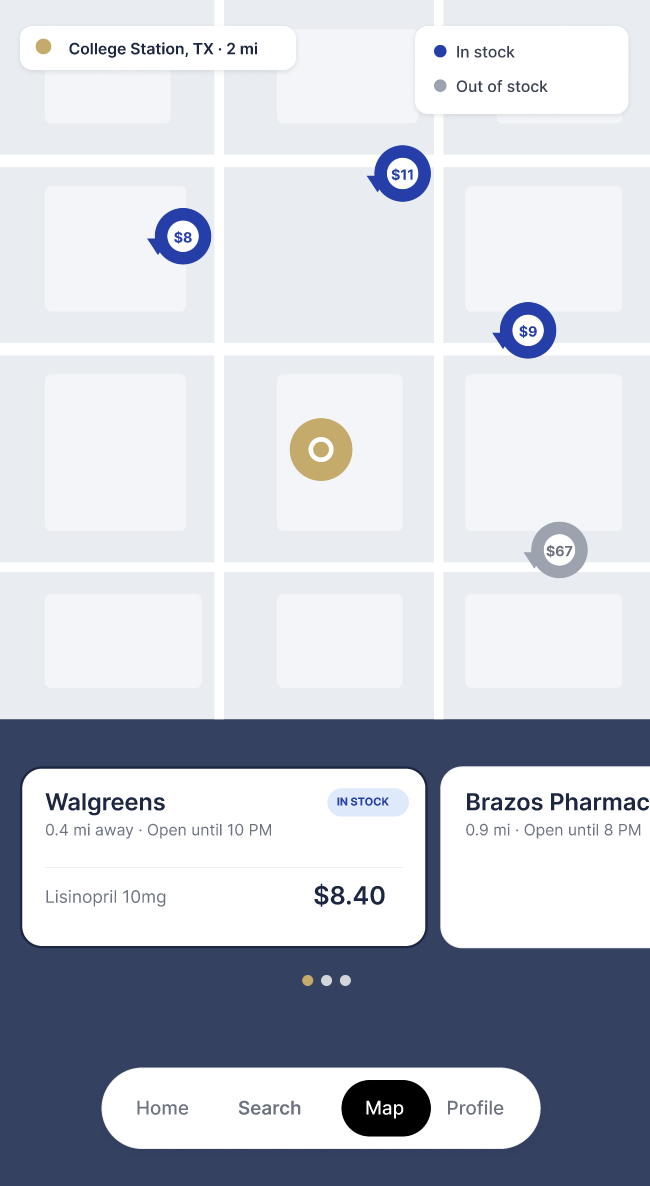
Kura is an AI-powered matching engine that connects patient diagnoses with a curated database of verified-safe drugs that are currently in the pre-trial or off-label efficacy stage. Clinical trials for drugs is a long and tedious process, which means a large of amount of safe and effective drugs have also yet to pass them. Kura uses public databases of safe, verified, fitting drugs that have not passed clinical trials yet to treat a patient's current health conditions. Unlike traditional searches which are static, Kura’s AI analyzes complex diagnostic text and maps it against biochemical databases to identify "best-fit" treatments that a standard pharmacy search would miss. It also uses the doctor's diagnosis, and takes in account of local pharmacies near the patient to give a list of the best options for medicines they can take to recover.
How we built it
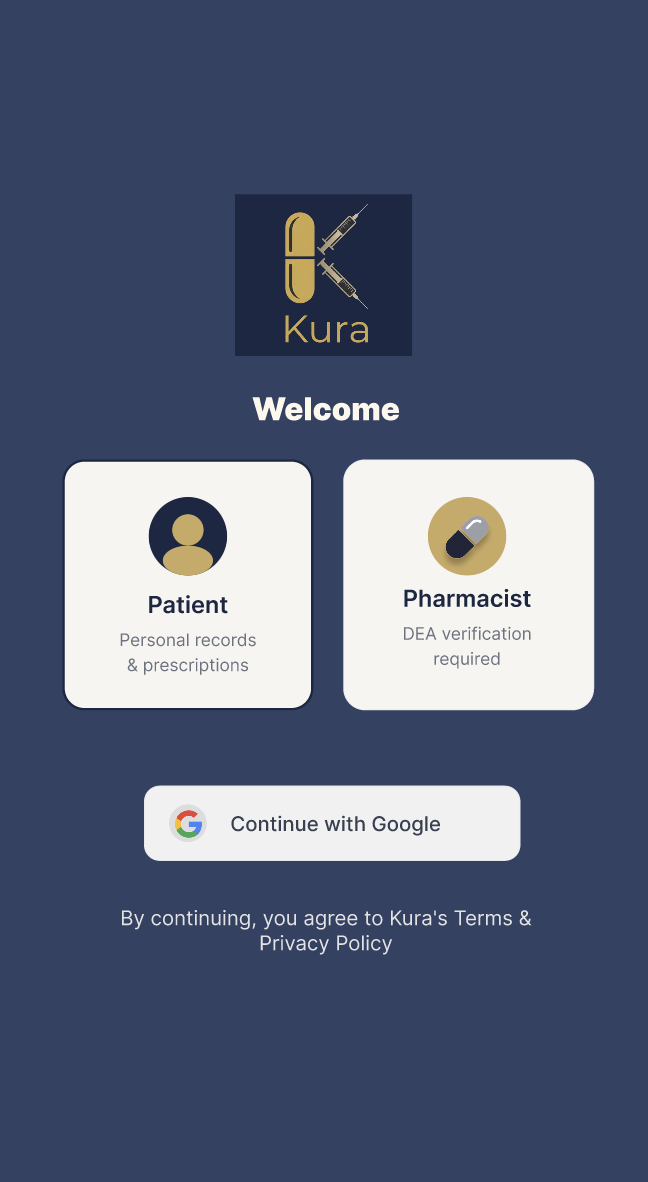
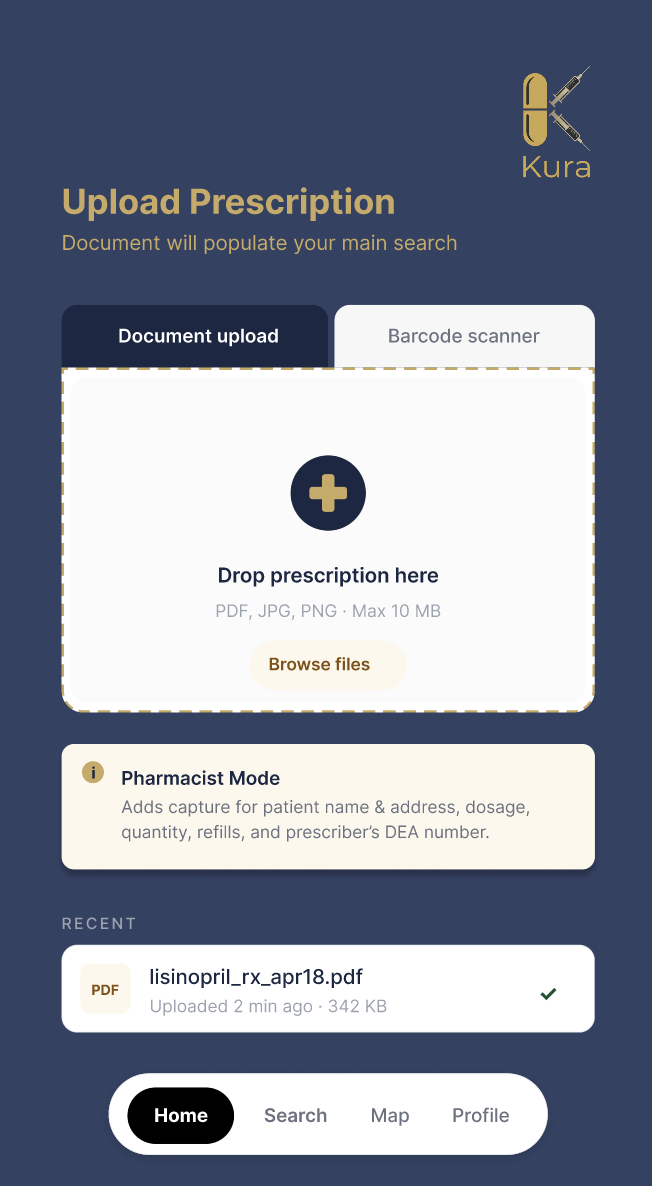
We used Figma and the new Claude Design to create a stunning UI for our app. We ensured that each panel in the Figma prototype directs the user to the appropriate functionality so that the flow of the entire app can be demonstrated. An emphasis was placed on making the UI simple to use yet pleasing to the eye by implementing the best design we can think of.
Challenges we ran into
Our biggest hurdle was UX Logic Mapping. Connecting each panel so they navigate to each other smoothly in presentation mode required rigorous prototyping. We initially struggled with managing dozens of interactive layers, but overcame this by implementing a modular design system that keeps the interface lightning-fast regardless of the data load.
Accomplishments that we're proud of
We are proud of our final UI design, simplicity for users, and smooth navigation between different functionalities. The UI is very straightforward yet catches the eye, the design is meant for the user to use with ease, and clicking buttons to use different features of the app is fast and efficient. Overall, we believe that these aspects of the app will allow users to fulfill the goal of this app, which is to deliver the best drugs for treatment for the user.
What we learned
There are many problems in the healthcare industry, and the best solutions are often niche and specific ones, which is why we came up with this idea. In addition, we learned to use a lot of the essential tools of Figma and used Claude Design that had been recently integrated into Figma to aid our design process. We also discovered how to deliver an app idea through Figma effectively by using its button linking and frame fitting features.
What's next for Kura
The next steps for Kura is to add more features such as more options for pharmacists and doctors to connect with the patient. Kura is an ambitious idea that can be useful in the real world. When going beyond the design phase, we can use a combination of React, Typescript, Python, and Claude Code to help turn the Figma into a real and functioning app. It can benefit from Firebase storage to keep user data safe, and have the storage be expansive. This will help patients find the best drug for them in reality. This is an idea that is extremely conducive to modern and viral marketing, where people seeking peptides or less well known pharmaceutical drugs would find use. We can target young adults and people interested in pharmacology.
Built With
- claude
- figma


Log in or sign up for Devpost to join the conversation.