-
-
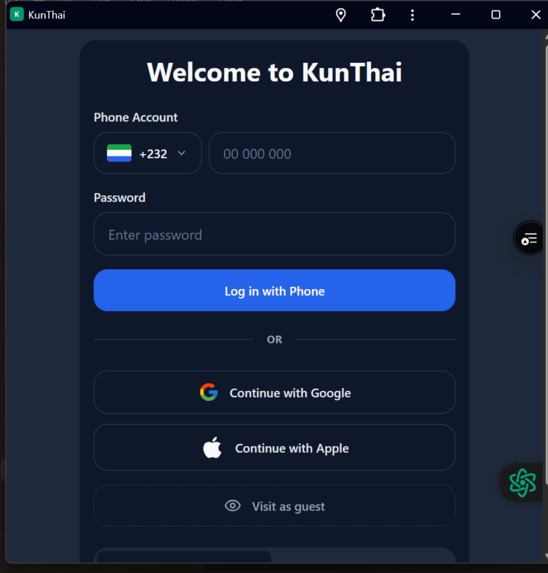
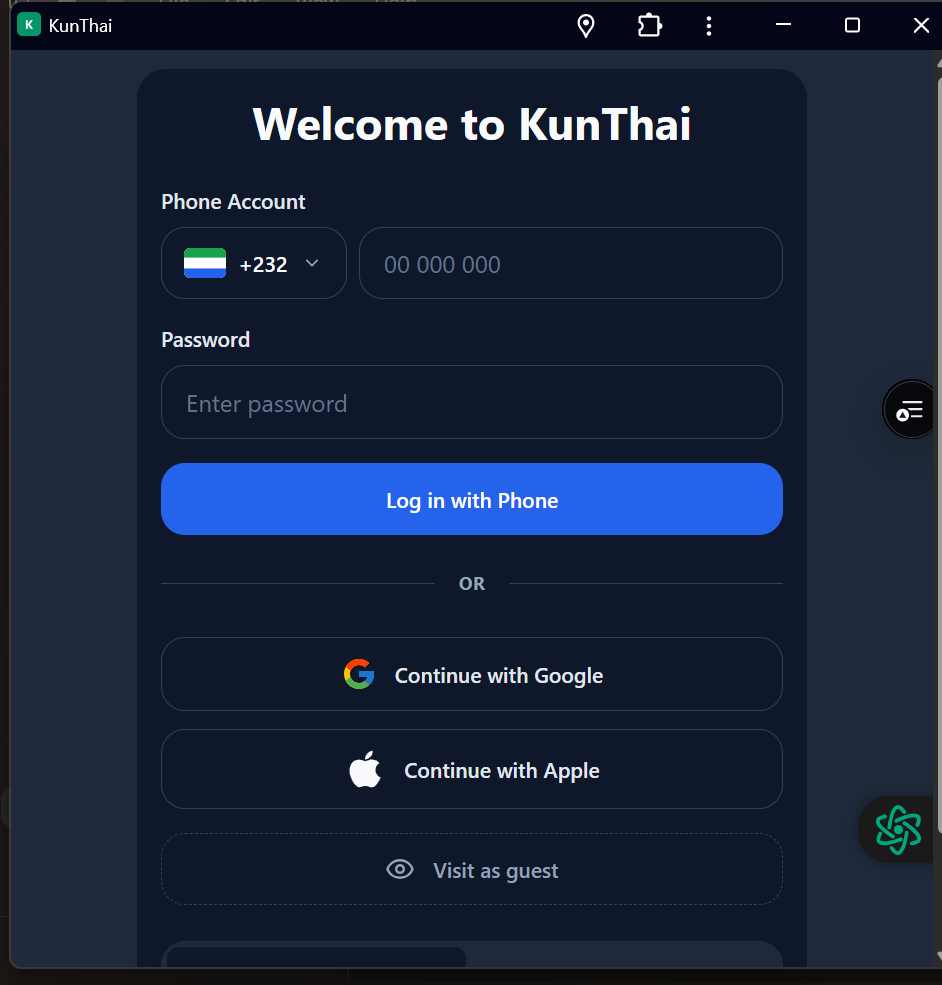
the registration form, the welcome screen
-
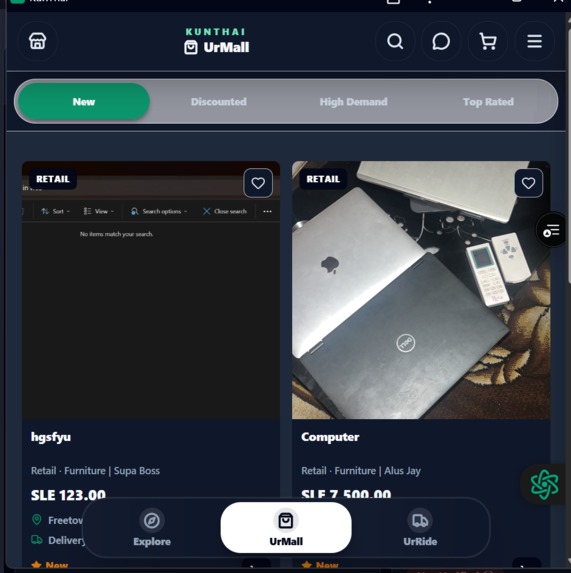
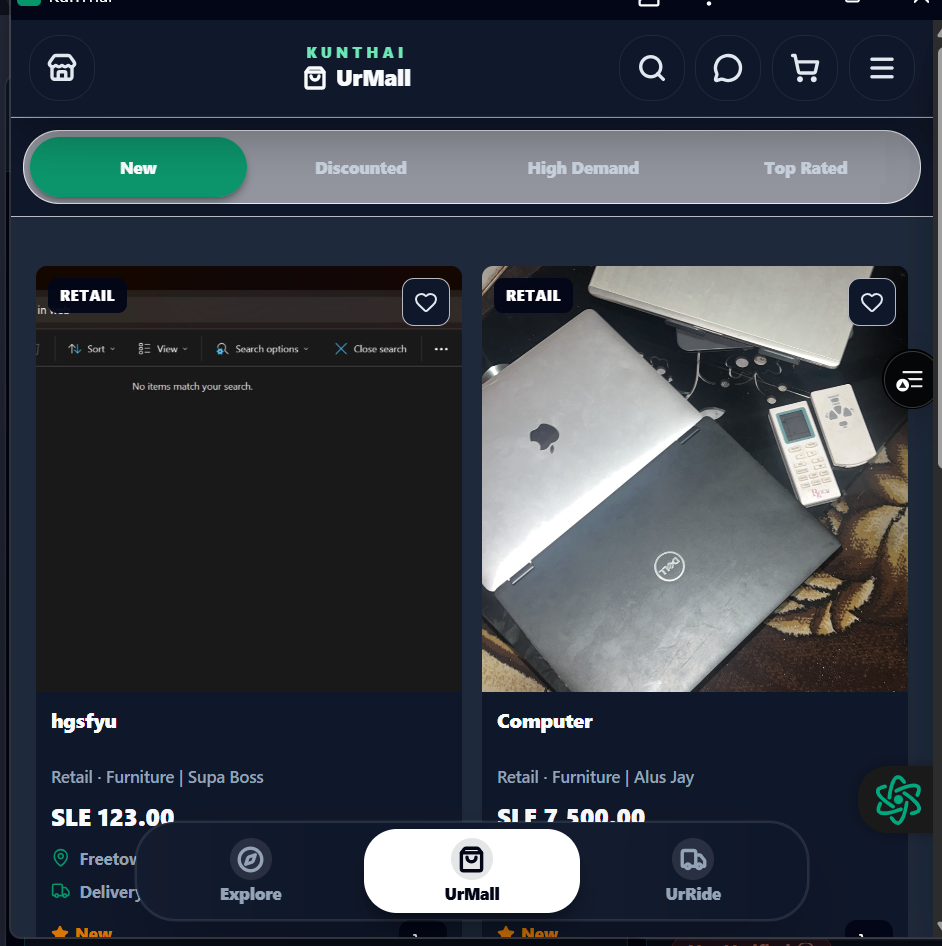
UrMall Represents E-Market, the business section.
-
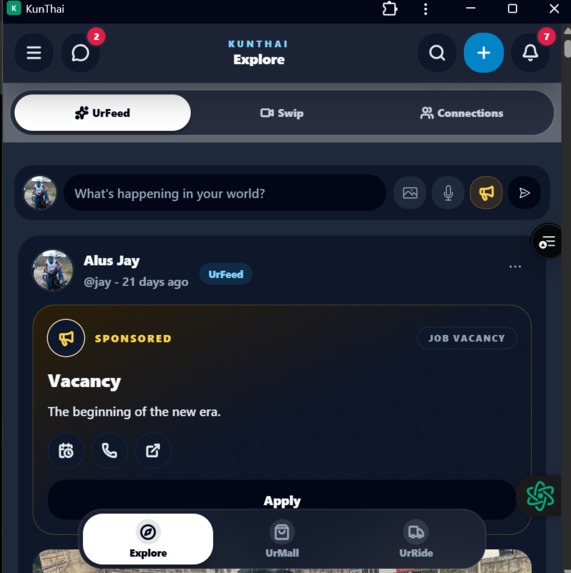
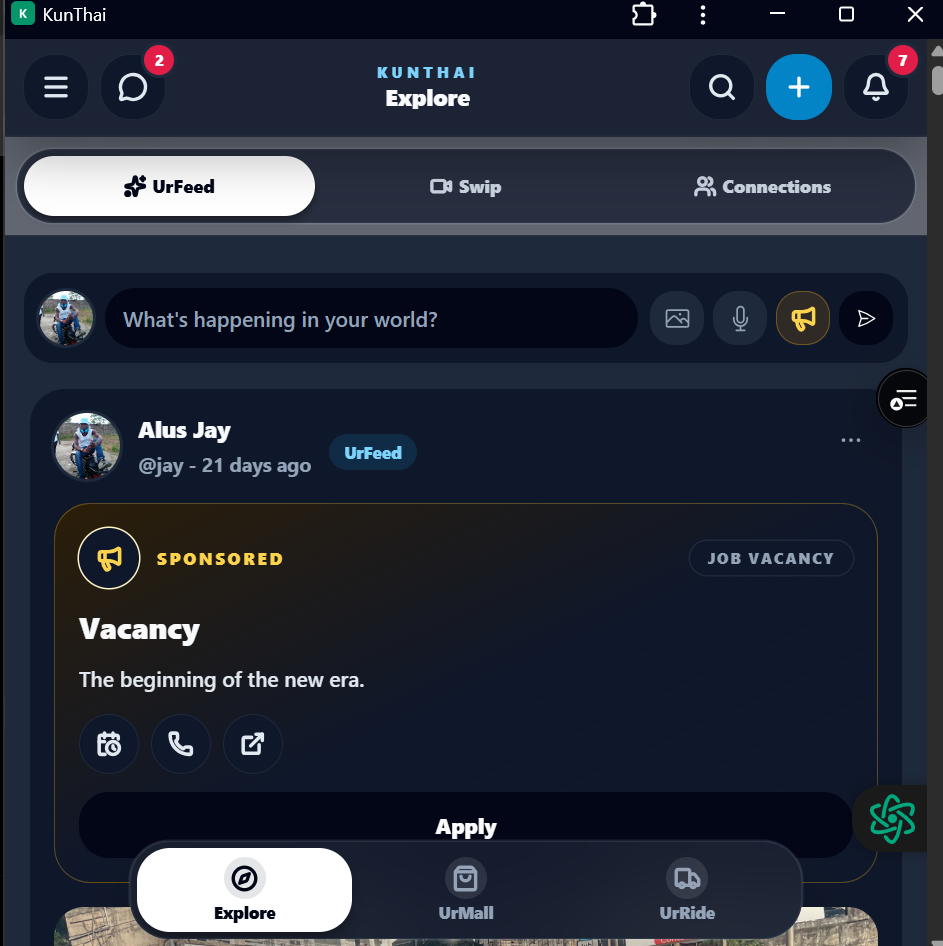
Explore, the social media section
-
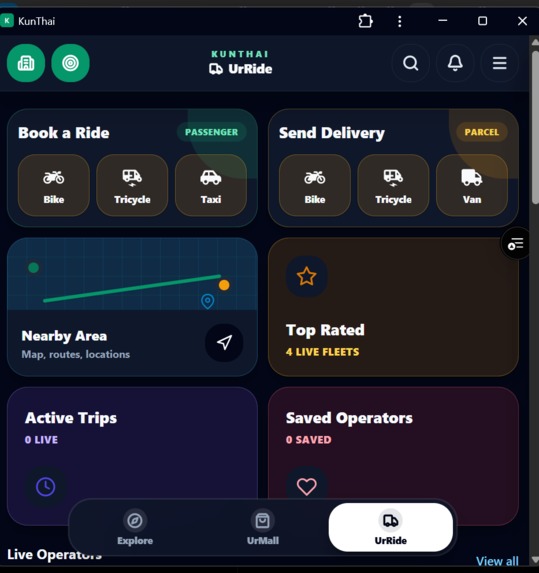
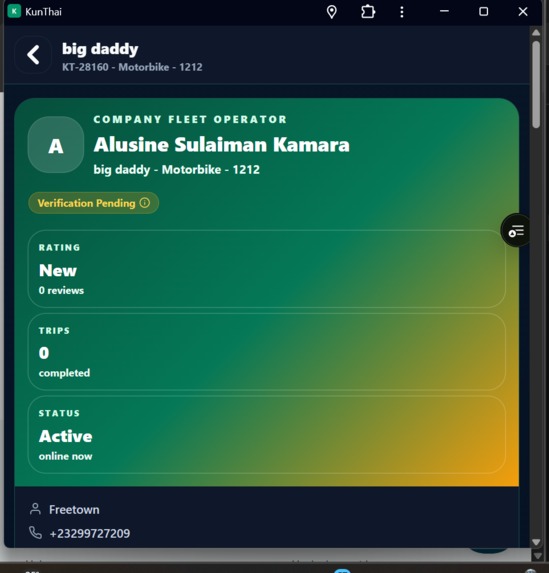
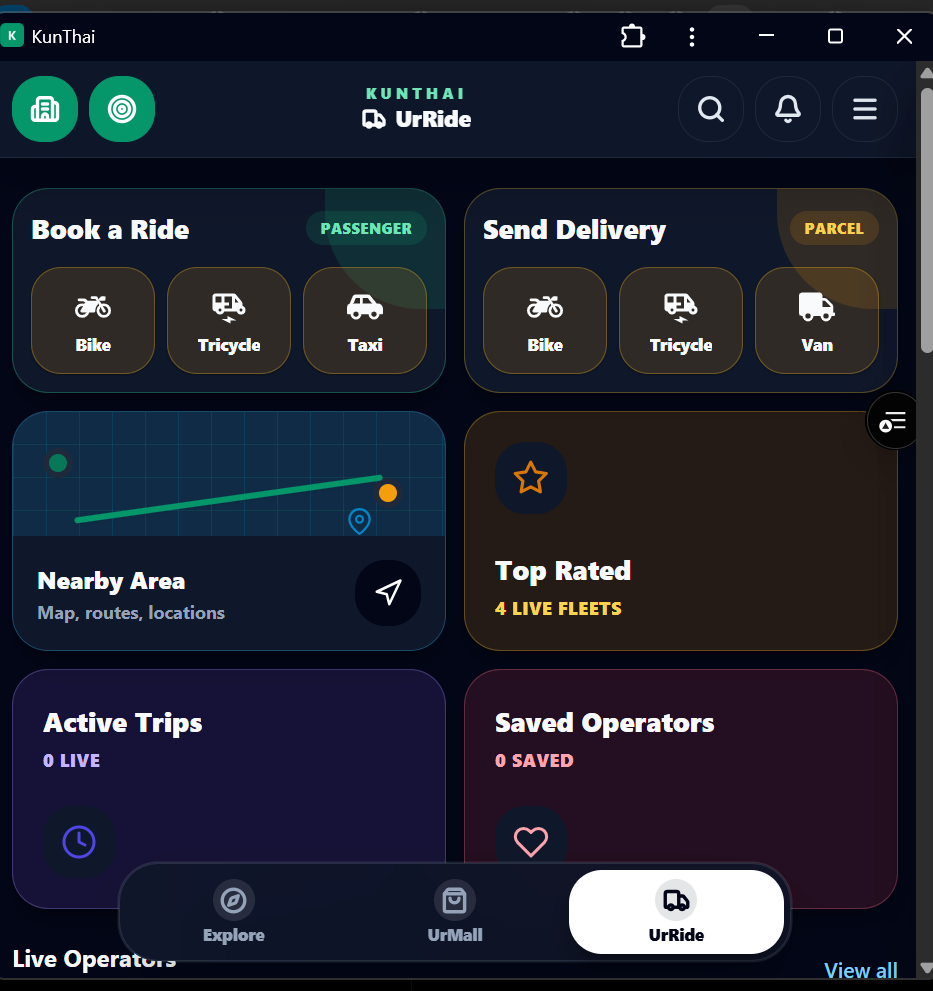
UrRide the transport section.
-
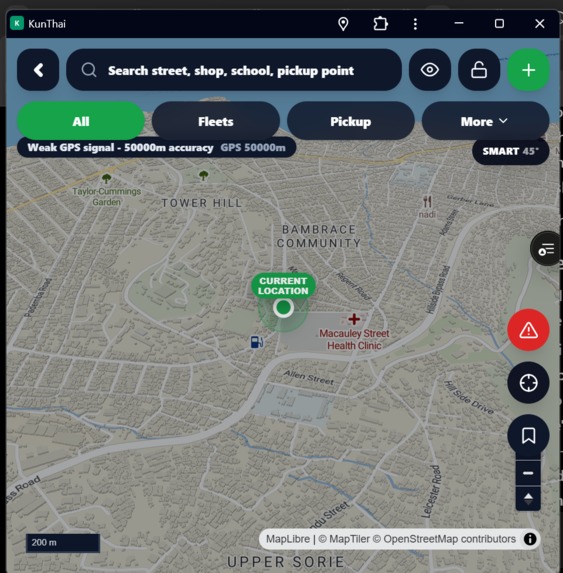
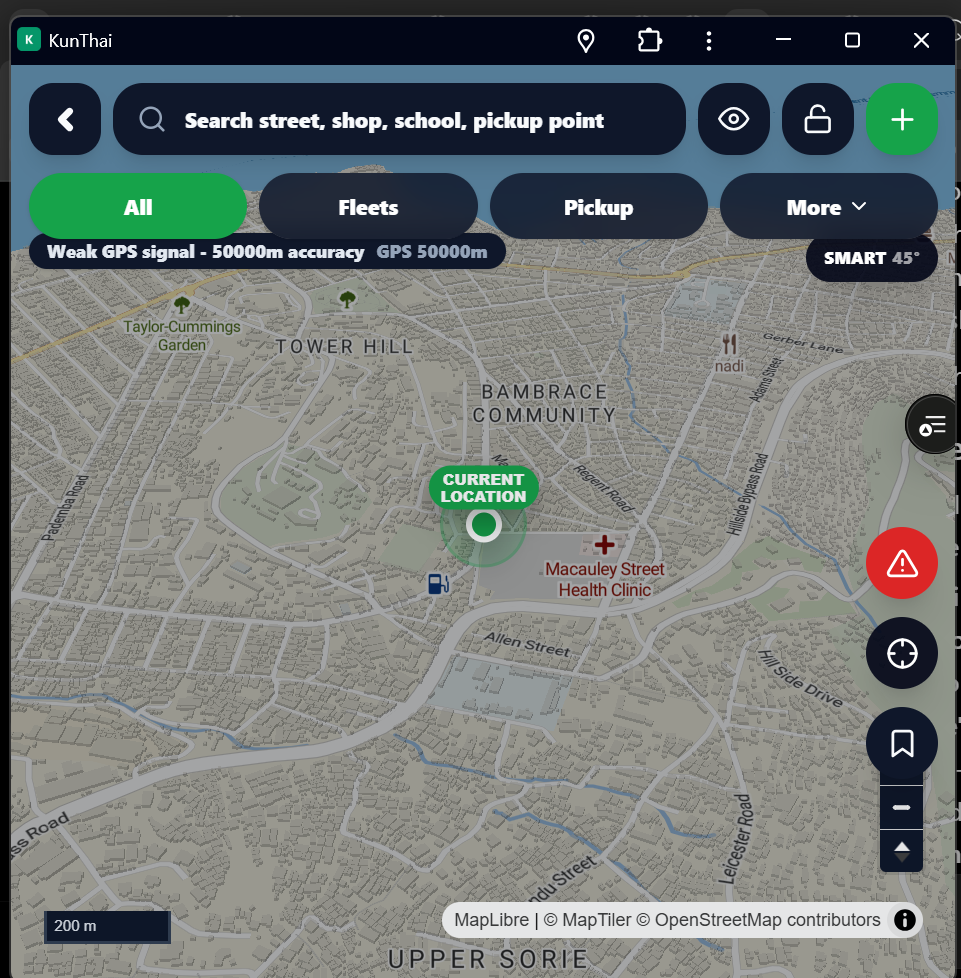
the inbuilt application, that helps in very clear and professional routing
-
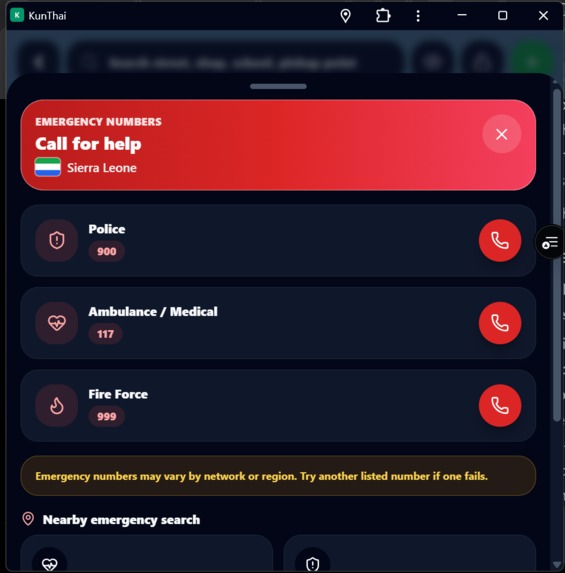
the emergency card, it changes by country for emergency codes
-
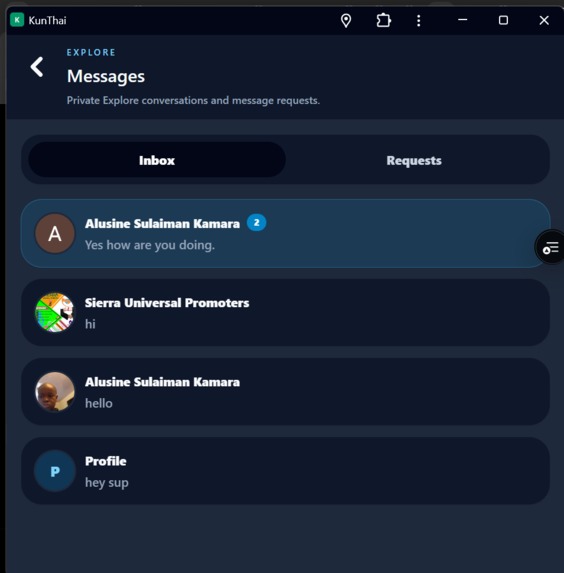
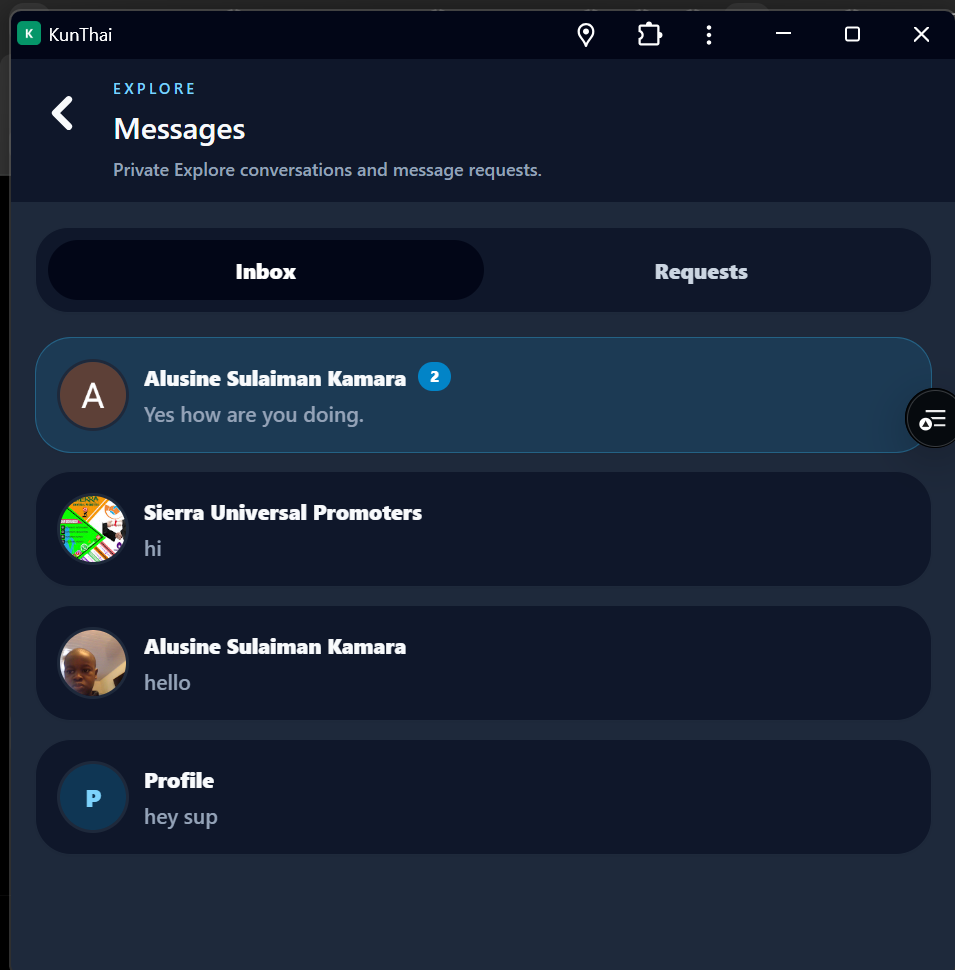
the message section for Explore
-
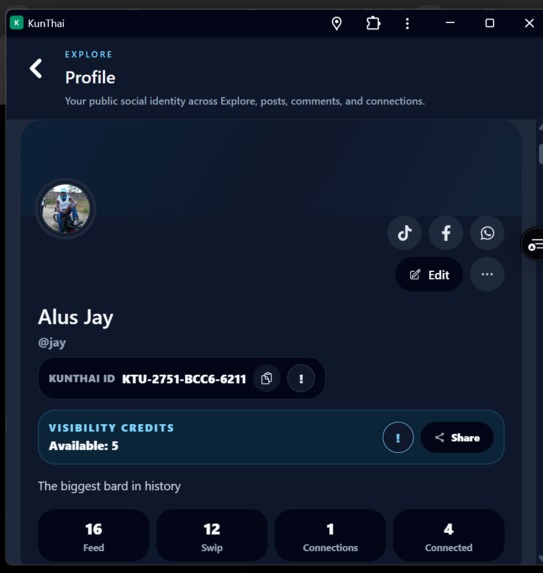
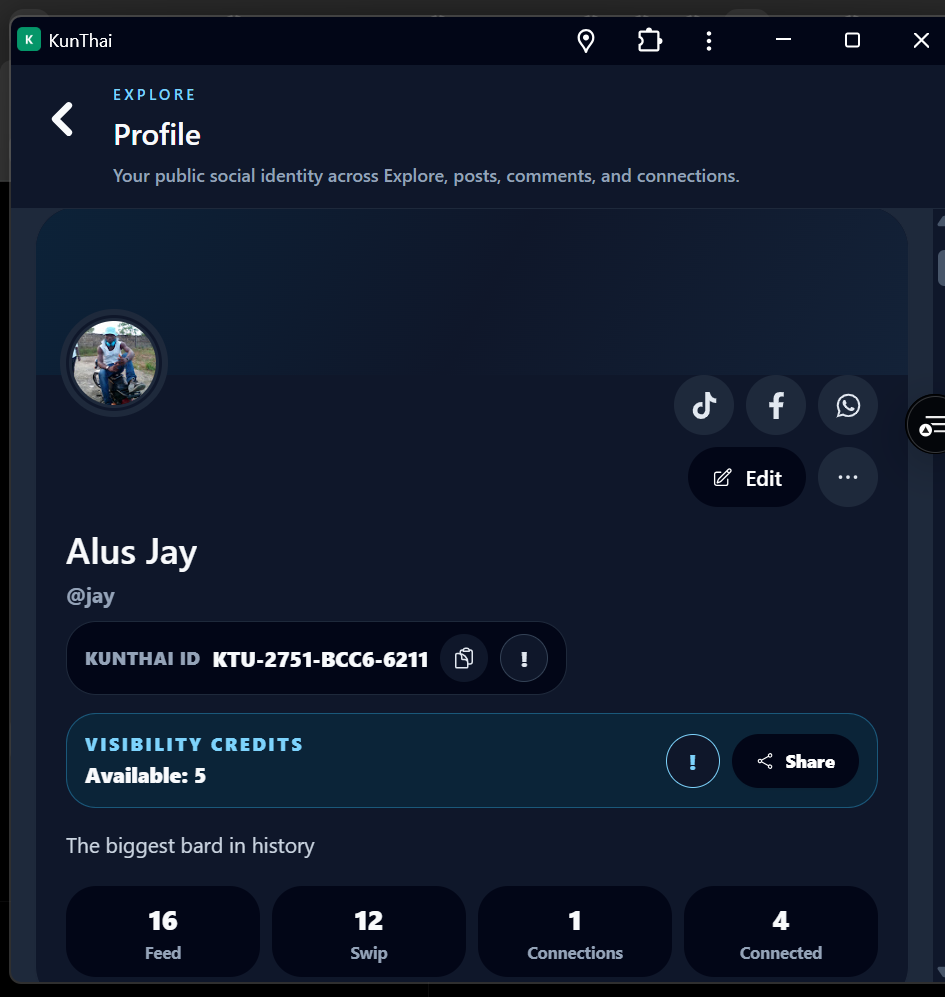
the main/explore profile screen.
-
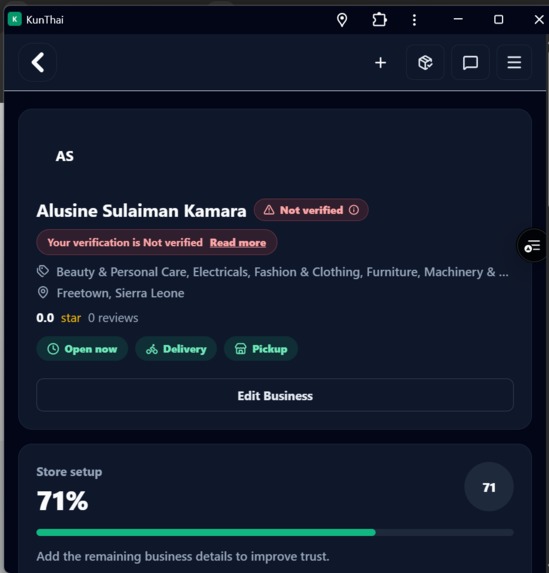
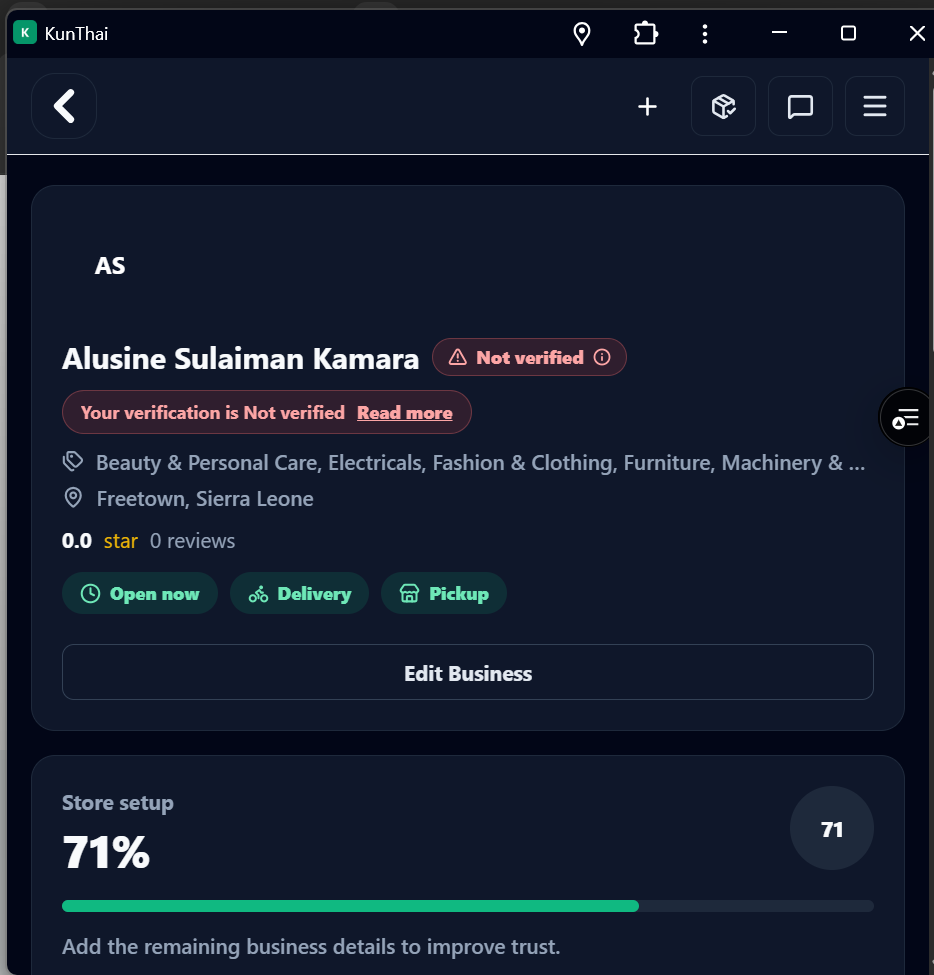
the urmall seller's dashboard
-
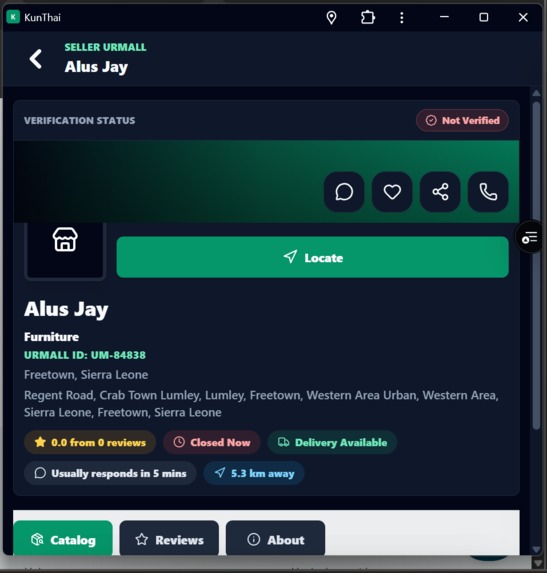
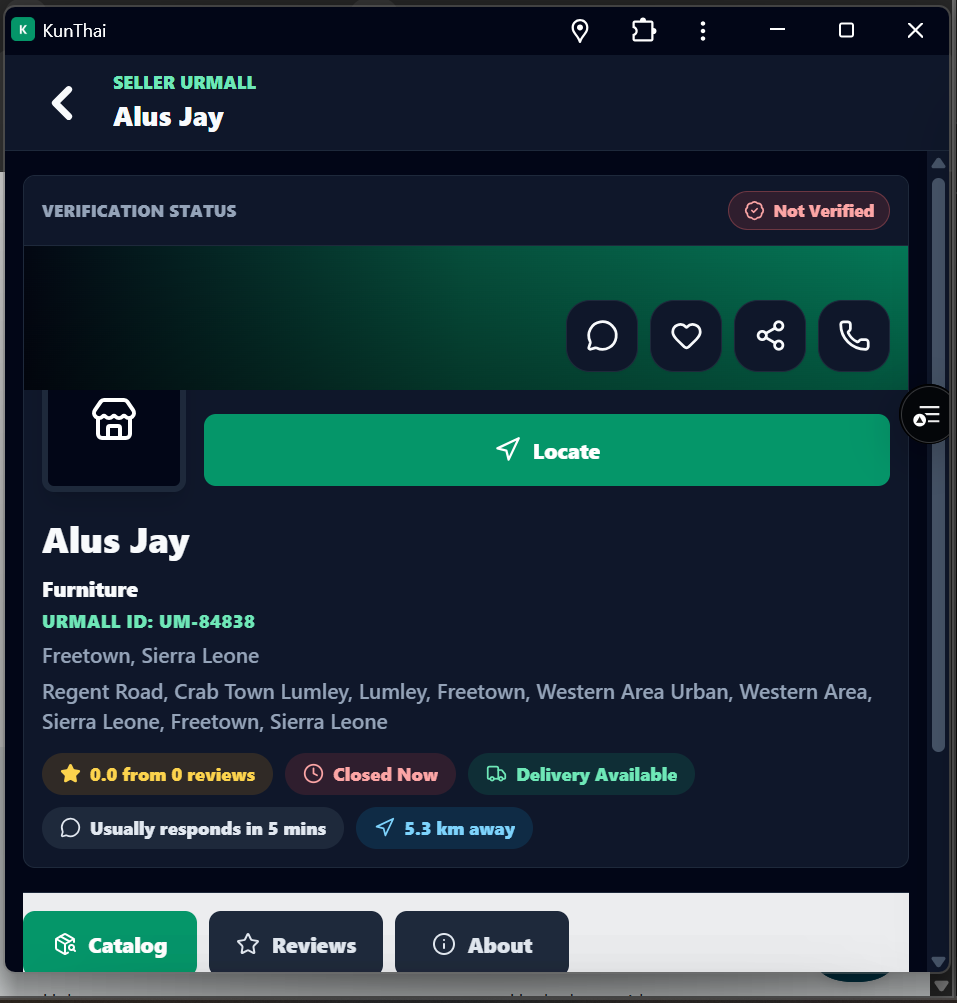
urmall dashboard viewed by a buyer.
-
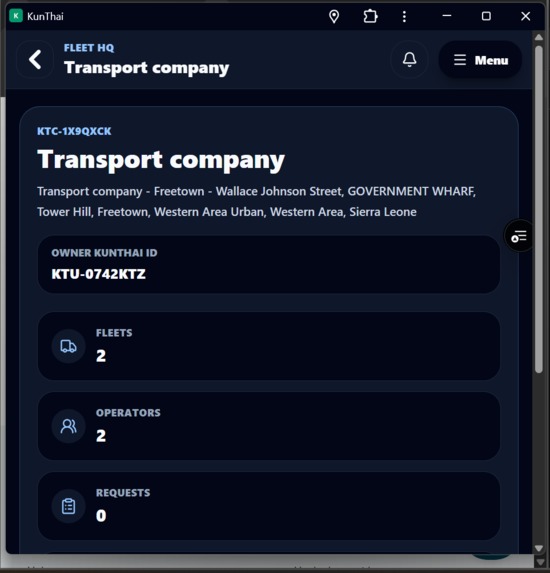
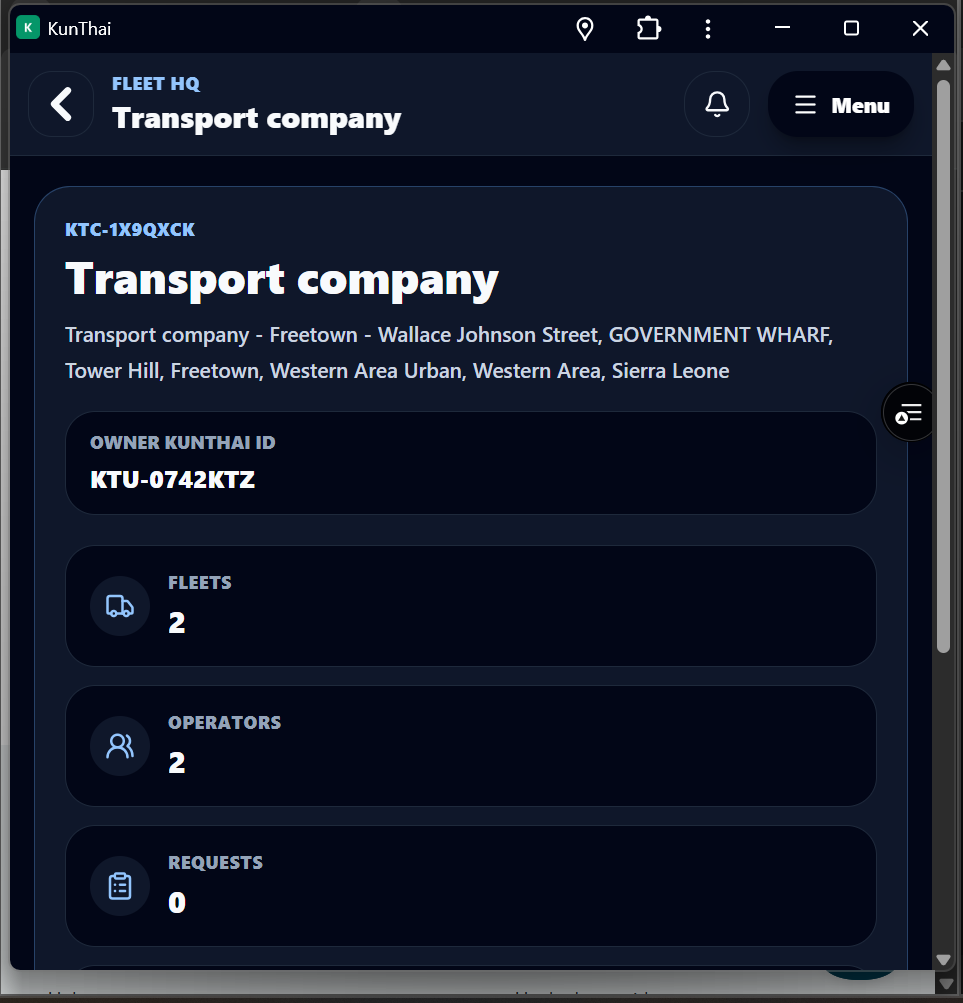
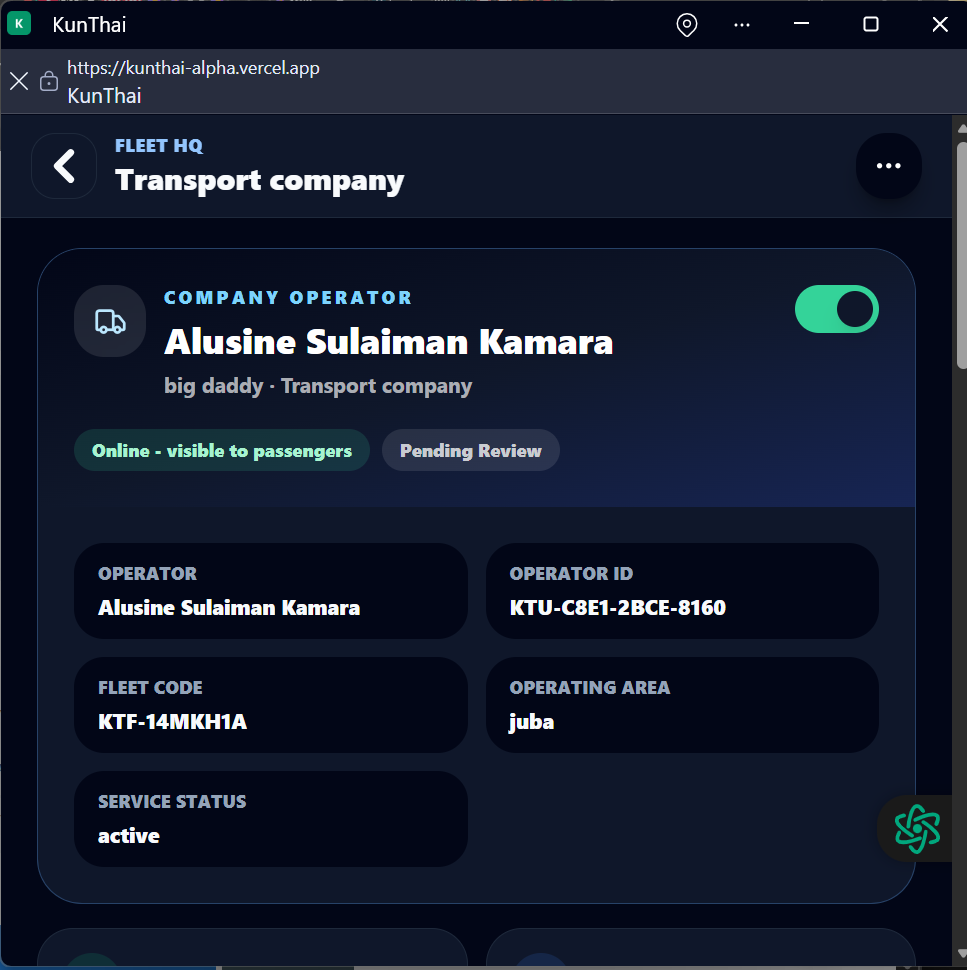
transport dashboard for a company
-
Transport dashboard viewed by a passenger
-
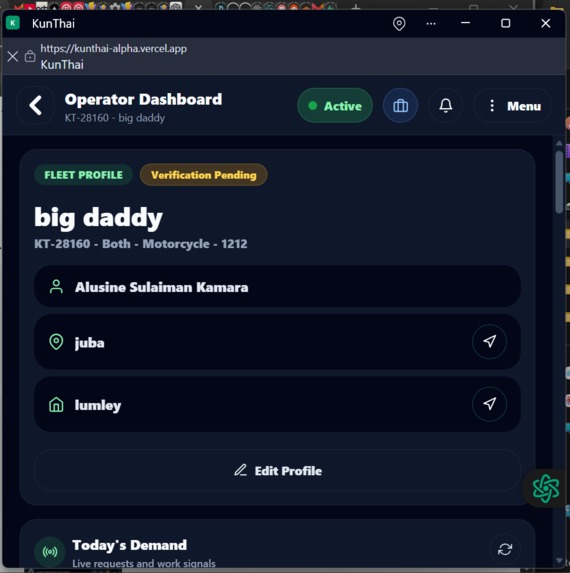
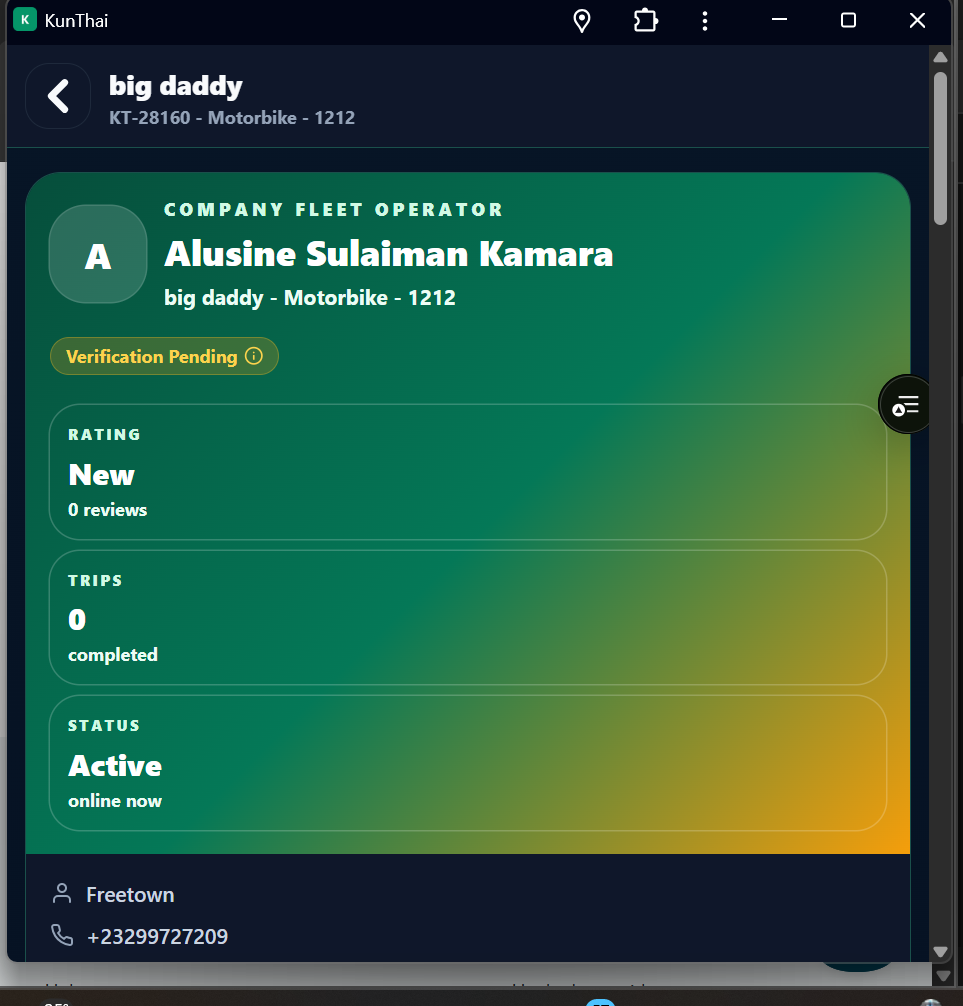
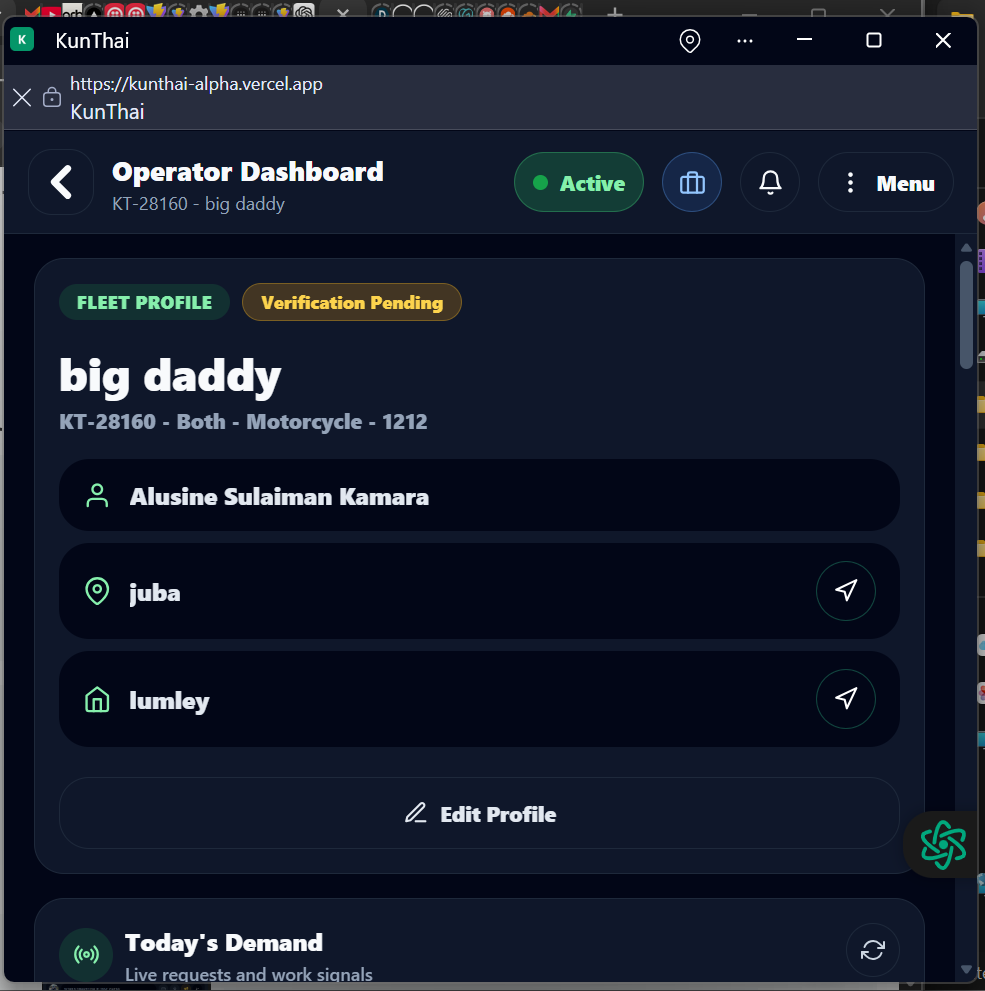
a Solo operator's dashboard
-
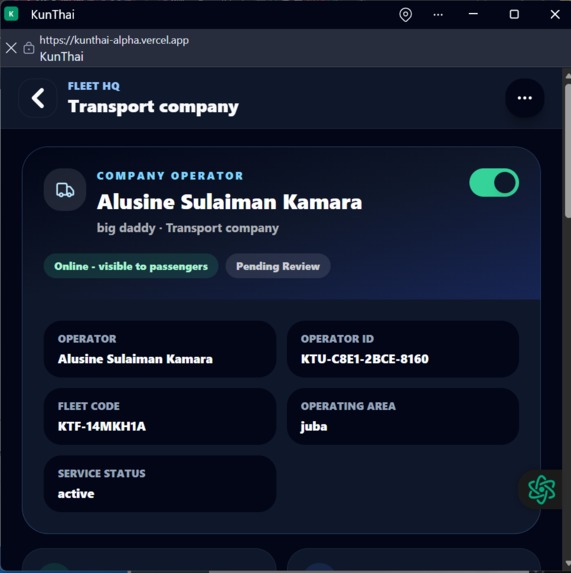
An Operator for a company dashboard

Inspiration
KunThai was inspired by a simple observation: people often rely on multiple disconnected applications for everyday life. One app for social networking, another for messaging, another for shopping, another for transportation, and many more for other services. I wanted to explore whether these experiences could be brought together into one intelligent platform without sacrificing usability.
The name "KunThai" comes from my village. I wanted the platform to reflect where I come from while building technology that can grow far beyond my local community. It reminds me that meaningful innovation can begin anywhere.
Over the past several months, I have focused on building a working platform that demonstrates this vision while using AI-assisted development to accelerate engineering, solve technical challenges, and improve the overall user experience.
What it does
KunThai is an AI-powered platform that combines multiple digital experiences into one application.
The platform currently includes:
- Social networking with posts, comments and reactions.
- Short-form video through Swip.
- Real-time messaging.
- Digital marketplace through UrMall.
- Transportation services through UrRide.
- Area View that is the built in navigation guidance
- Emergency card, it is focused for emergency support, it provides emergency number and near by hospitals, pharmacy, police station and fire force
- Secure authentication and onboarding.
- AI-assisted content moderation which is currently on paused.
- Administrative tools for platform management.
Instead of requiring users to move between different applications, KunThai provides a unified experience designed to make everyday digital interactions simpler and more connected.
How we built it
KunThai is built using modern web technologies including React, Vite, JavaScript, Supabase, PostgreSQL and Vercel.
Throughout development I used OpenAI Codex extensively to accelerate implementation, debug complex issues, improve application architecture, refactor code, and build production-quality features. AI-assisted development helped reduce development time while allowing me to focus on solving product and user experience challenges.
The application integrates authentication, database services, APIs, real-time features, cloud deployment into a single platform.
Challenges we ran into
Building a platform that combines multiple services introduced a number of technical challenges.
Some of the biggest challenges included:
- Designing secure authentication and onboarding.
- Building reliable real-time messaging.
- Managing database security and permissions.
- Creating a responsive experience across different devices.
- Connecting multiple services while maintaining a consistent user experience.
Each challenge required multiple iterations, testing and continuous improvement.
Accomplishments that we're proud of
The accomplishment I am most proud of is turning an ambitious idea into a working platform over more than six months of continuous development.
Highlights include:
- A fully working multi-service application.
- Integrated social networking, messaging, marketplace and transportation.
- Modern responsive user interface.
- Cloud deployment with continuous updates.
- Successful use of OpenAI Codex throughout development with very little help or support from other ai code agents.
What we learned
Building KunThai reinforced that AI works best as a collaborative development partner rather than a replacement for software engineering.
Codex accelerated development by helping generate code, explain complex problems, review implementations and speed up debugging, while final design decisions, testing, architecture and product direction remained driven by human judgment.
The project also highlighted the importance of user experience, security, scalability and continuous iteration when building applications intended for real-world use.
What's next for KunThai
This is only the beginning.
Future development will focus on:
- Expanding additional digital services.
- Enhancing AI capabilities throughout the platform.
- Scaling infrastructure for larger numbers of users.
- Launching native mobile applications.
- Growing from a locally inspired platform into a product that can serve users across Africa and eventually around the world.
How OpenAI Codex helped
OpenAI Codex was a core development tool throughout the project. I used it to accelerate feature implementation, debug complex issues, refactor code, explore alternative approaches, and improve development speed. Codex helped me iterate more quickly while allowing me to focus on architecture, product design, testing, and user experience.
Built With
- ai
- api
- authentication
- cloud
- codex
- css3
- database
- design
- github
- gpt-5.5
- html5
- javascript
- moderation
- node.js
- openai
- postgresql
- react
- real-time
- responsive
- rest
- supabase
- twilio
- vercel
- verify
- vite


Log in or sign up for Devpost to join the conversation.