
ERC-4337 Smart Wallet controlled with Passkeys
An All-in-one App that let you abstract all the difficulties of the blockchain
Smart Contracts
Supported Chains
- Lysk Sepolia
- Optimism Sepolia
- Arbitrum Sepolia
- Sepolia
Factory
0xaCea7eD933a39B18E30C9F899a97787669f55752
P256 Verifier
0x3AB1BDed845DE299EcC4A8E5aB6AF2AB10860F04
Paymaster
0x10Fa4C0fe7a48B7d5372Cb84651AA90E5BEB8E88
Demo Site
Project Summary
Onboarding new users into blockchain applications is a challenge. Current solutions revolves around mnemonics that need to be stored to recover accounts on users wallets, effectively introducing security risks. By using passkeys to control accounts, we abstract away the need for users to store mnemonics and we allow users to use a familiar interface to control their accounts (biometric authentication) in one click UX.
Our wallet is meant to be an implementation of the ERC-4337 standard, that allow users to have an account in the form of a smart contract. In this case, we use passkeys to let users control their account thanks to the onchain P256 signature verification developed by Daimo.

Why Passkeys?
Passkeys are a new way to authenticate users, that are more secure than passwords, and more user friendly than mnemonics. Our aim is to make blockchain applications more accessible to the general public, and we believe that passkeys are a great way to do so. Our UI strives in making it easy for users to create, retrieve existing accounts and sign transactions via Passkeys. As a user, all notion of passkeys are abstracted and you just need to remember a simple username to access your account.
Mobile first?
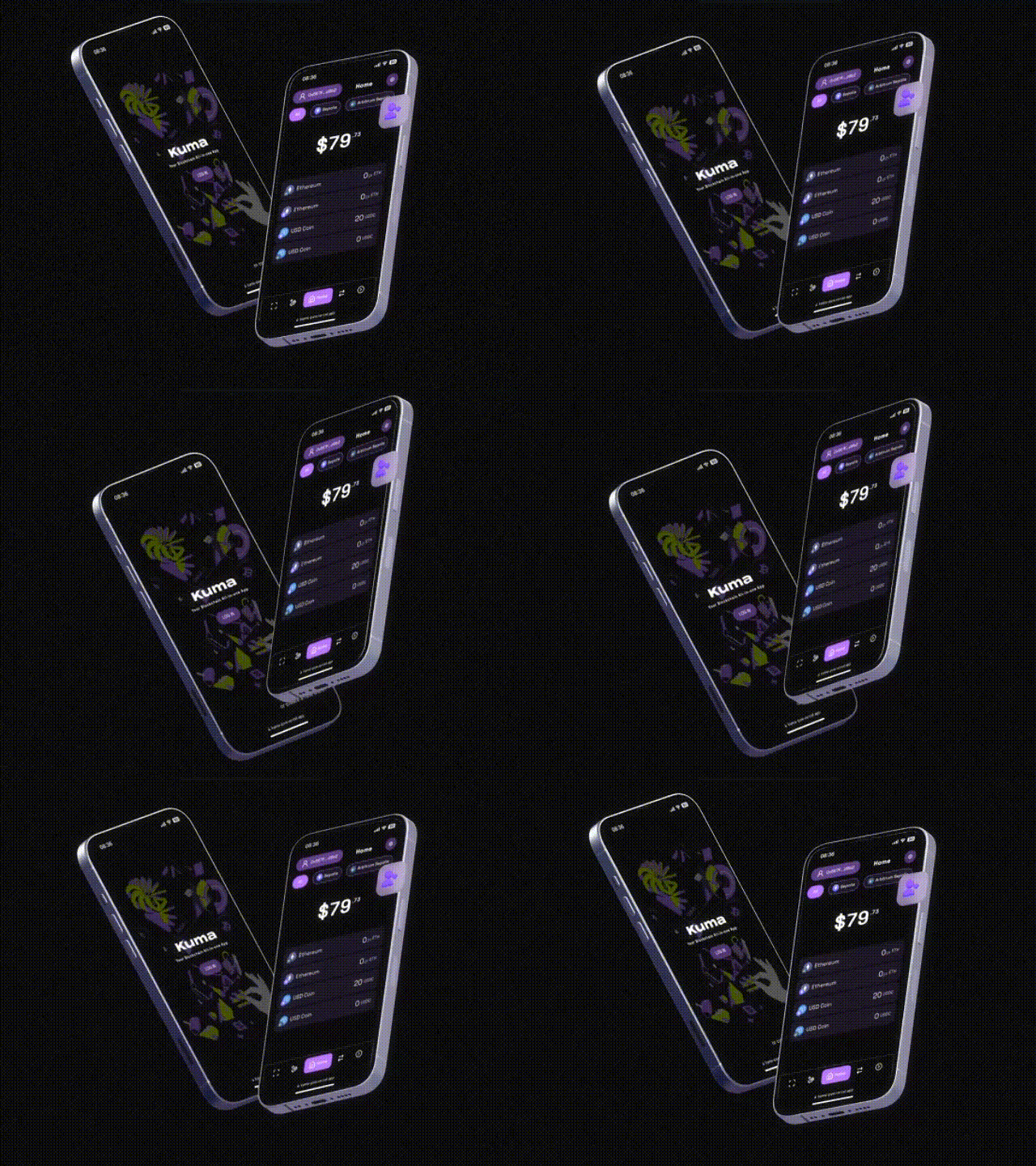
While being built with NextJS for ease of development, our wallet is designed to be easy to use on mobile. Grab your phone, proceed to a biometric authentication, and you can start using your account in a few seconds.
Wallet Connect support?
We support Wallet Connect in a very minimal way. We only allow you to connect to your account and send transactions.
How does it work?
Passkey Generation
When you create an account, a passkey is generated and stored in your device or your password manager. This passkey is tied to an id. This is worth noting that the passkey is never managed by the wallet itself, the wallet only uses the browser API to interact with it. Basically, the wallet asks for signatures and your device/password manager handles the rest. This is a very important security feature, as it means that the wallet never has access to your passkey, and cannot be compromised to steal it.
User creation
Once the passkey is generated, the passkeys browser API returns a public key and an id. These public information are stored onchain and used to identify your account.
Smart Account creation
The Smart Account is the contract implementing the ERC-4337 standard. Its address is deterministically computed from the public key of the user. This contract implements all the logic to verify signatures, effectively allowing the user to operate onchain actions thanks to their passkey. The contract is not deployed when the passkey is generated to avoid paying huge gas fees for a contract that might never be used. Instead, it is deployed when the user first interacts with the contract.

Onchain interactions via UserOperations
The ERC-4337 standard revolves around UserOperations, which are basically objects replacing transactions and that are sent on behalf of the user by nodes known as Bundlers. UserOperations are signed by the user with their passkey and the bundler's job is to include them in a block while taking a little fee for the work. In our case, we use the StackUp Bundler node implementation.
Built With
- next.js
- solidity

Log in or sign up for Devpost to join the conversation.