What it does
About Kulture Compass
Inspiration
AI has become incredibly good at generating answers, but one thing it often struggles with is understanding people beyond basic prompts. Recommendations can be generic because they don't always account for the cultural interests, tastes, and preferences that make each person unique.
I wanted to explore a different approach: What if AI could understand the cultural connections behind what people love and use that understanding to make better recommendations or suggestions?
That question inspired Kulture Compass — an AI-powered cultural discovery platform that combines Qloo's cultural intelligence with large language models to make recommendations more meaningful, relevant, and personalized.
What it does
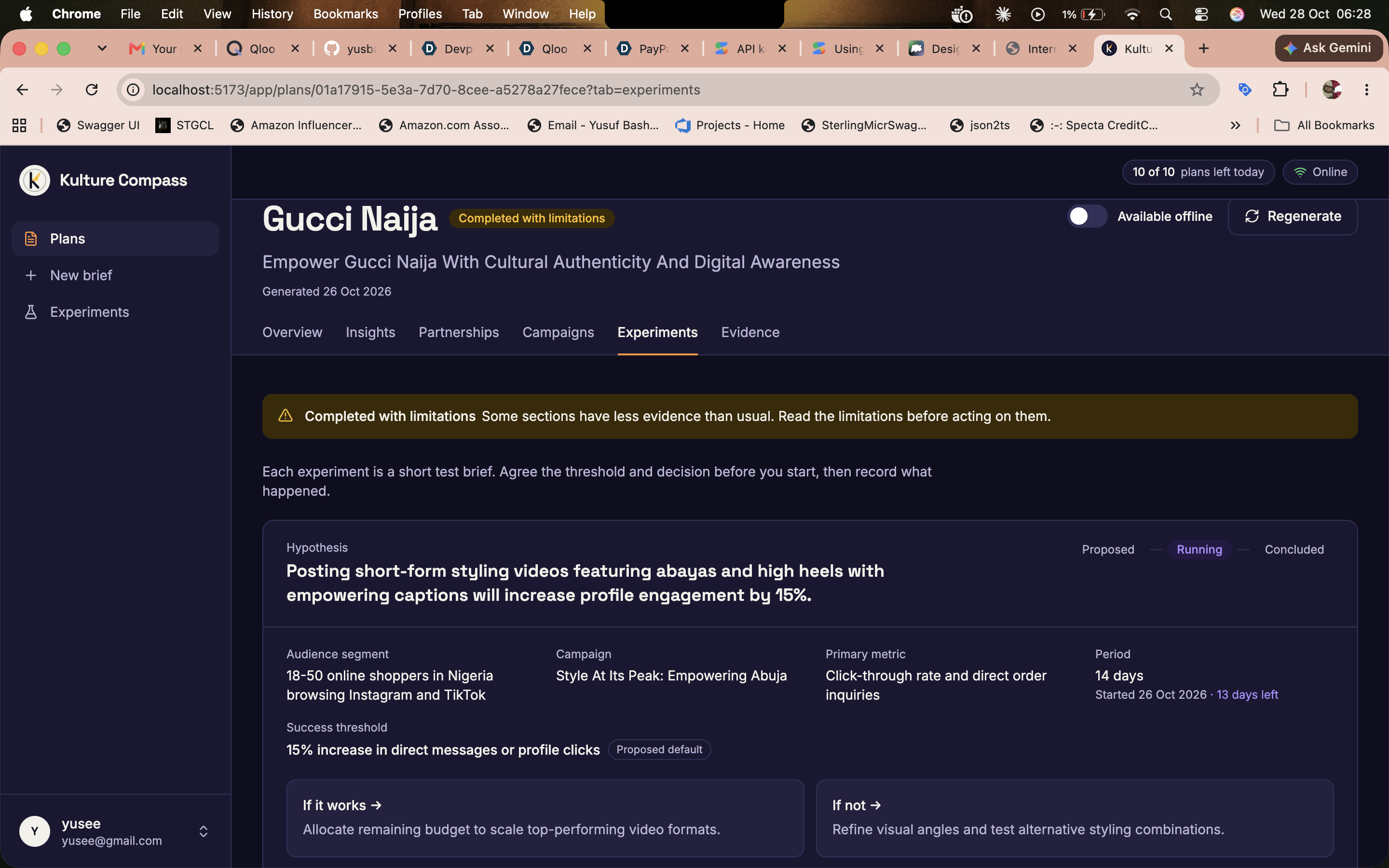
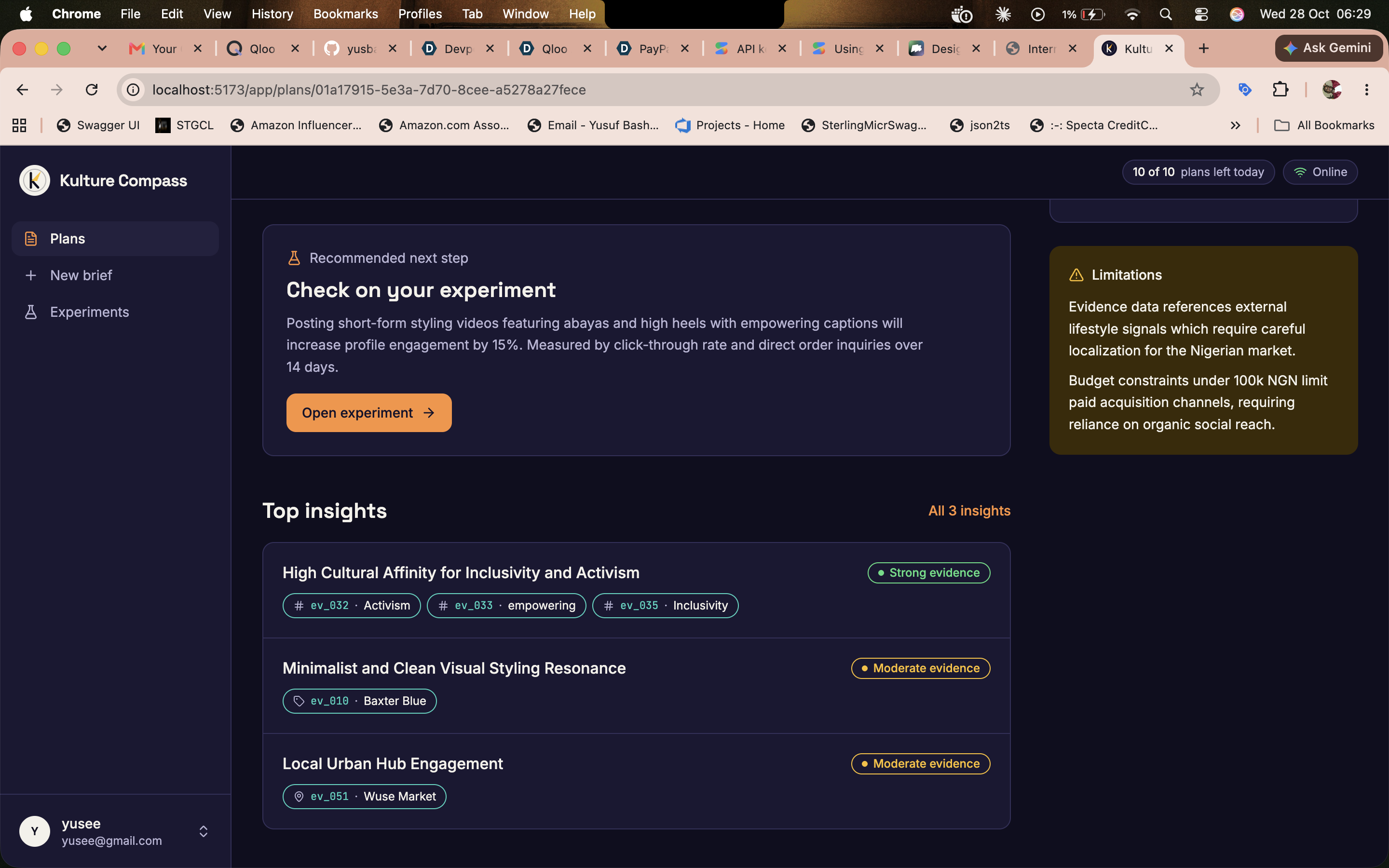
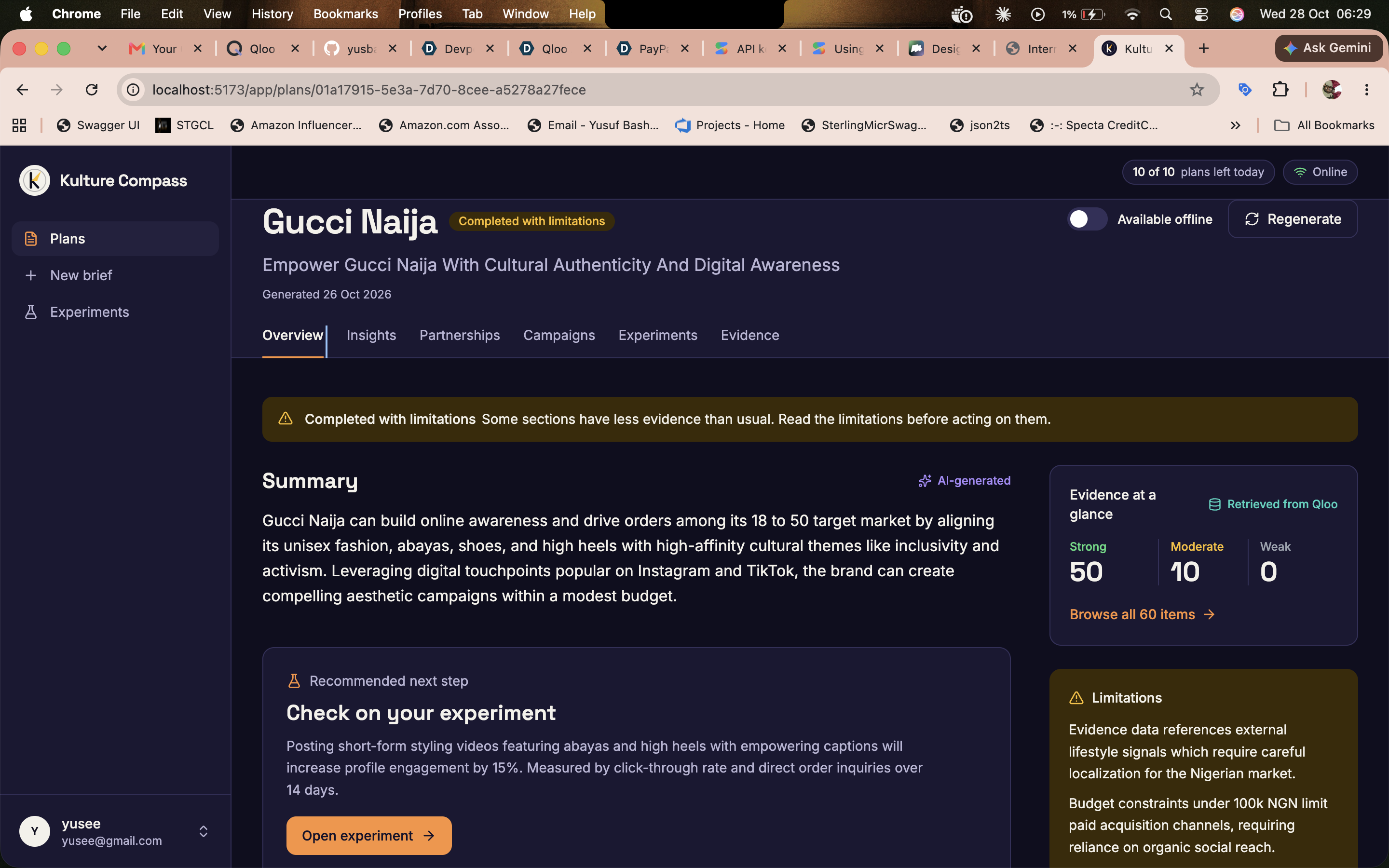
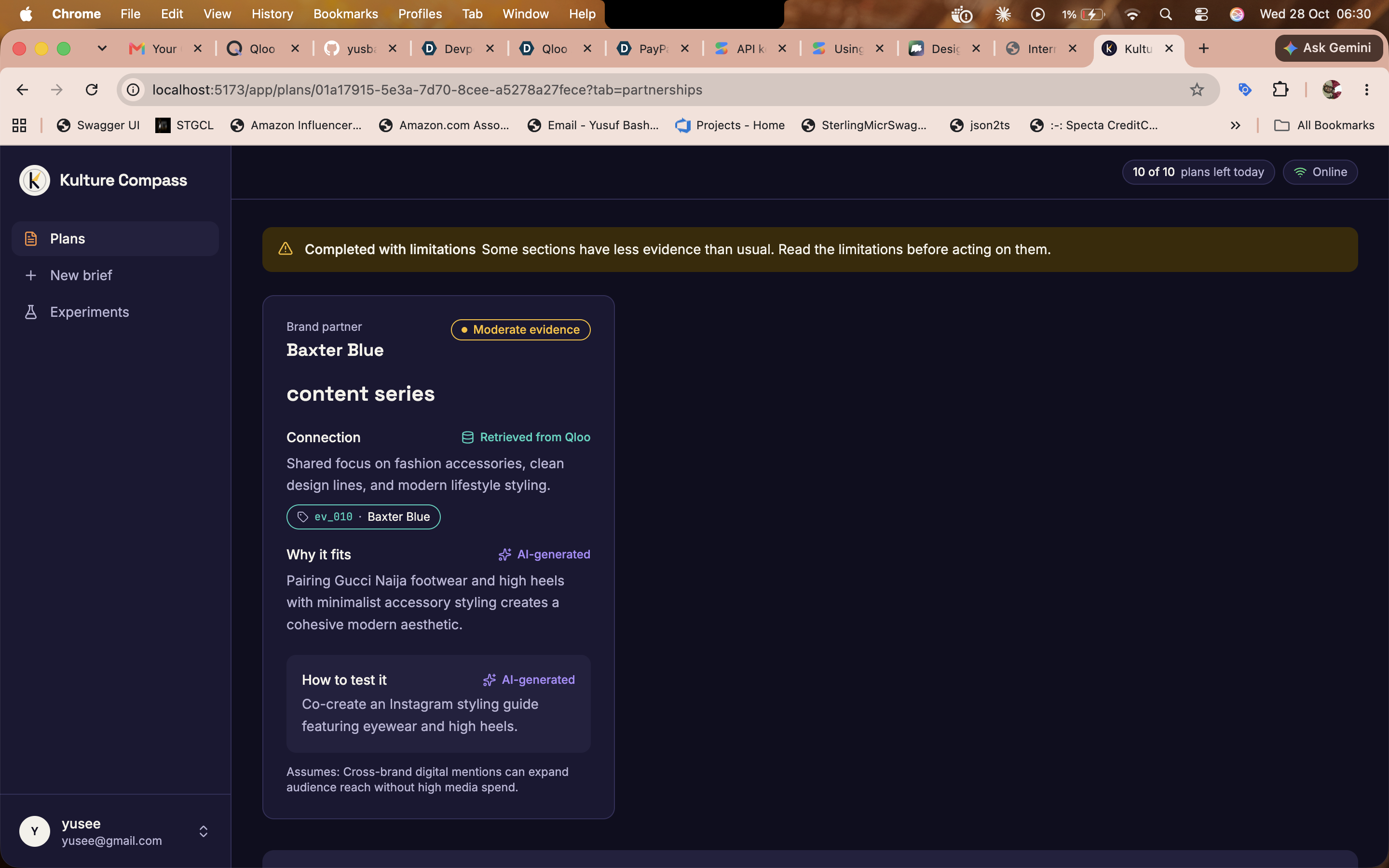
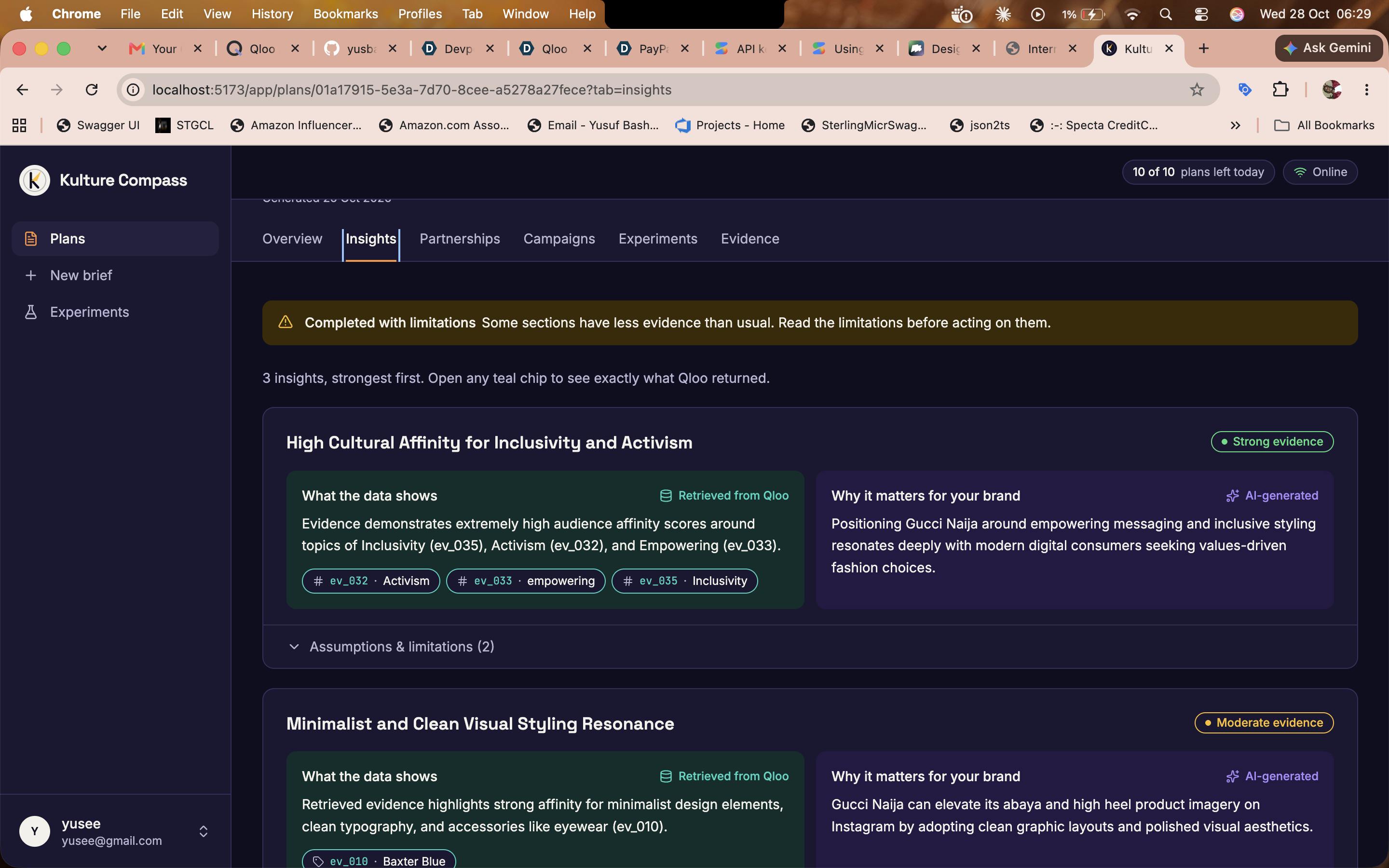
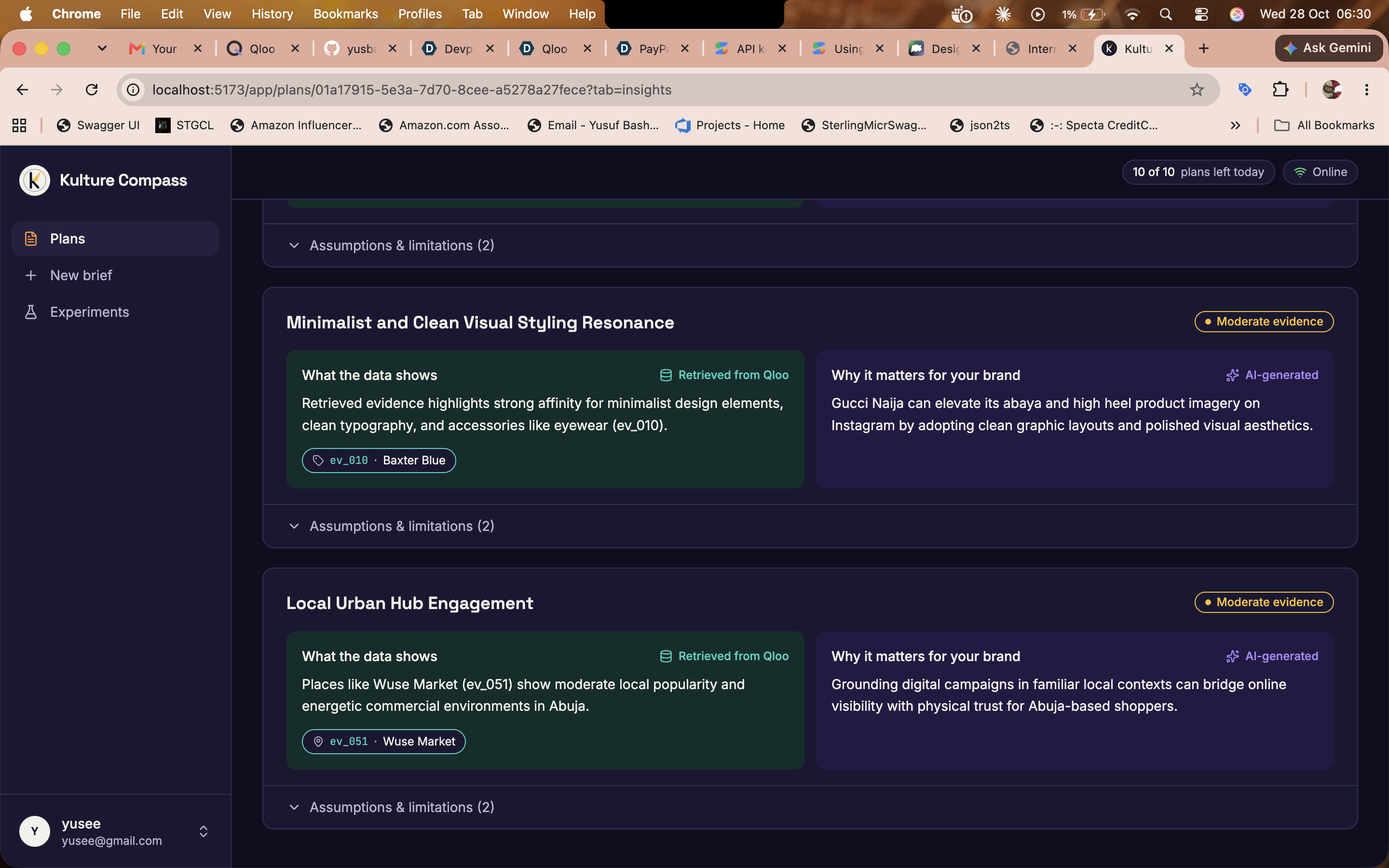
Kulture Compass helps users discover meaningful connections based on their interests and cultural preferences. Rather than relying entirely on generic AI-generated suggestions, it leverages Qloo's Taste AI and cultural knowledge graph to identify relevant connections across cultural domains.
The LLM then helps interpret and communicate those insights in a natural, understandable way, turning cultural intelligence into a more engaging discovery experience.
How I built it
I built Culture Compass as a full-stack application with three major components:
- Frontend: A pwa responsive web application that allows users to interact with Culture Compass, provide preferences, and explore recommendations.
- Backend: An ASP.NET Core API built with C# that handles application logic, processes requests, and coordinates communication between external services.
- Cultural intelligence: Qloo API integration provides the cultural insights and connections that power the recommendation experience.
- AI integration: Gemini LLM processes the relevant insights and helps generate contextual explanations and user-friendly responses.
I focused on creating a working end-to-end experience rather than just a conceptual prototype. The application is publicly hosted, allowing users to interact with the actual product.
What I learned
Building Kulture Compass taught us that making AI smarter is not always about using a larger model or generating more text. Sometimes, the real value comes from giving AI access to better context.
I have also learned how cultural intelligence can complement language models, how to integrate external intelligence APIs into a production-style application, and how to transform structured API responses into meaningful user experiences.
Most importantly, I explored how combining specialized knowledge systems with generative AI can create possibilities beyond conventional chatbots.
Challenges I faced
One of our biggest challenges was connecting different technologies into a cohesive experience.
Integrating Qloo's API, interpreting its responses, and combining those results with LLM-generated explanations required careful handling of data, API communication, and application logic.
We also had to ensure that the AI-generated explanations remained grounded in the cultural insights returned by Qloo rather than producing generic or unsupported recommendations.
Another challenge was building a reliable, publicly accessible application while keeping the experience simple enough for users to understand and explore.
What's next?
Kulture Compass is more than a hackathon experiment. We see opportunities to extend culturally intelligent discovery into travel, entertainment, hospitality, e-commerce, lifestyle platforms, and other products that benefit from understanding people's tastes and preferences.
Our long-term vision is to make cultural intelligence a practical layer that developers and businesses can use to create more relevant, personalized digital experiences.
Kulture Compass is built around one simple idea: AI should understand not just what people ask for, but the cultural interests and connections behind what they love.**


Log in or sign up for Devpost to join the conversation.