-
-
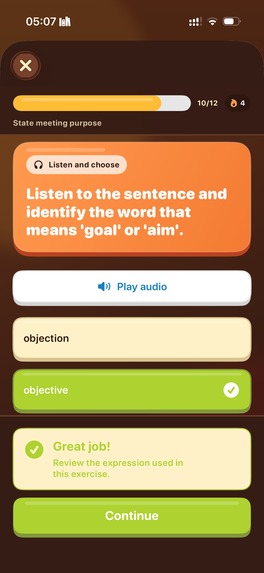
Turn learning into Games!
-
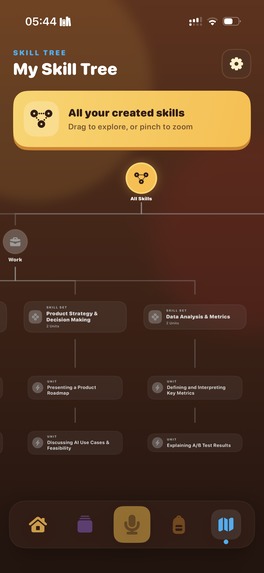
Your Own Skill Tree
-
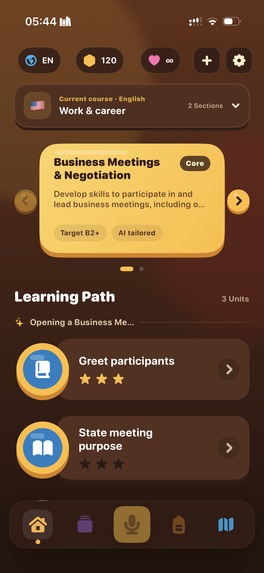
Personalized Course Section
-
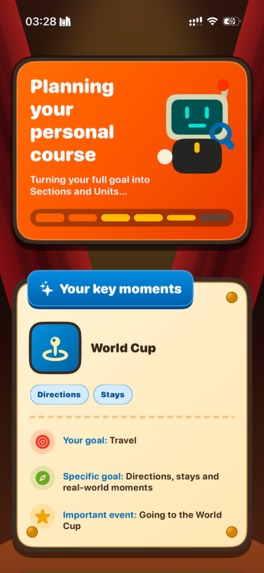
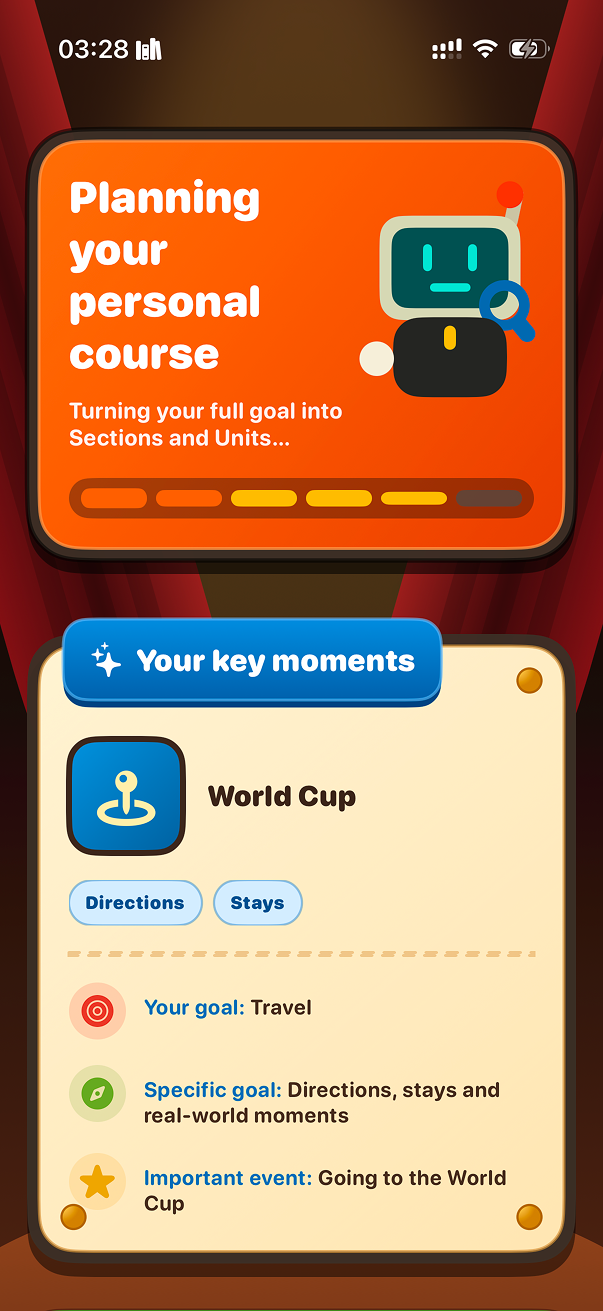
Turning your key goal into personal course
Inspiration
I’m a long-time Duolingo user. It did something incredibly valuable for me: it helped me keep learning.
As someone with ADHD, consistency is often harder than motivation. If a learning app is not engaging, easy to start, and immediately rewarding, I tend to stop before making meaningful progress. Duolingo’s short lessons and game mechanics kept me coming back.
But after completing the learning path, I realized I still struggled to talk about the things I genuinely cared about.
I had learned many words and sentence patterns, but they often felt disconnected from my life and from one another. Because everyone follows a similar path, the content rarely prepared me for my specific goals—such as an upcoming interview, a trip abroad, or a conversation about my interests.
AI conversation apps offer more freedom, but they often expect learners to start speaking immediately. Without the necessary vocabulary and sentence patterns, an open conversation can feel more intimidating than helpful.
That made me wonder: if AI can understand complex personal needs, why are language courses still largely one-size-fits-all?
That question became Kukii.
What it does
Kukii is an AI-powered, game-like language learning app that creates a personalized course around what the learner actually wants to accomplish.
Instead of putting everyone on the same path, Kukii asks what language the user wants to learn, where they want to use it, what they need to accomplish, and what their current level is.
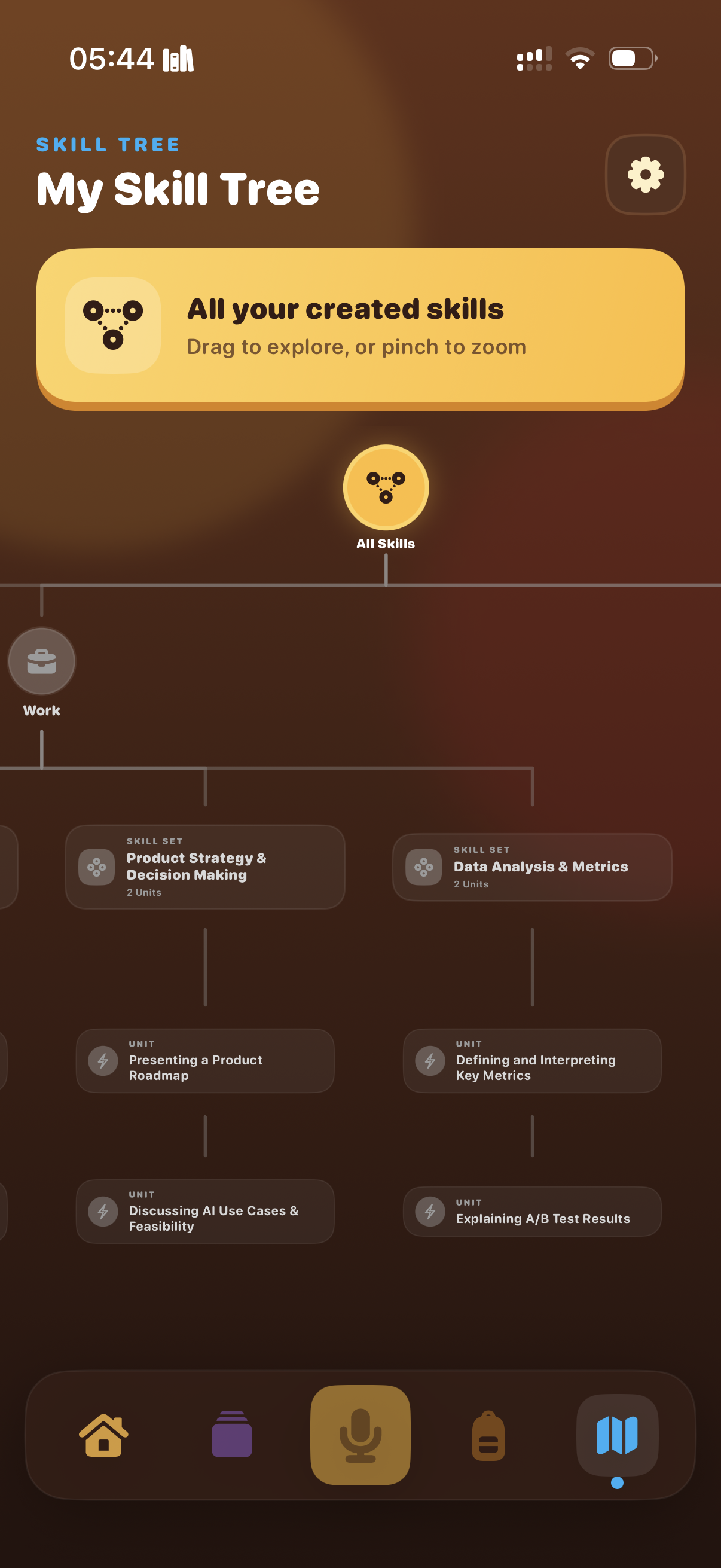
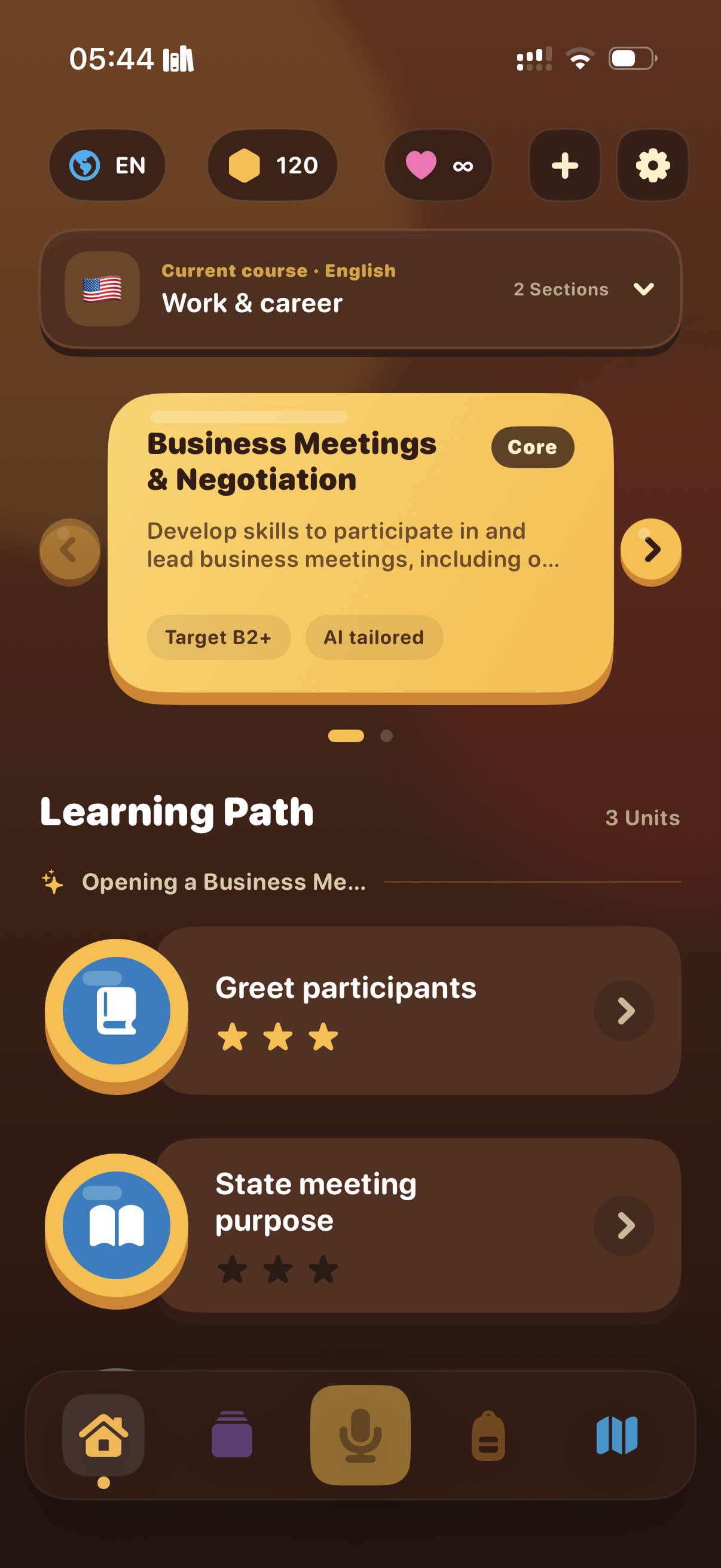
It then transforms that goal into a non-linear learning path made of practical skill areas, themed units, and bite-sized lessons.
For example, “I’m traveling to Mexico for the World Cup” does not become a generic travel vocabulary list. It becomes a course covering stadium entry, finding seats, buying food, understanding scores and calls, handling unexpected problems, and talking with local fans.
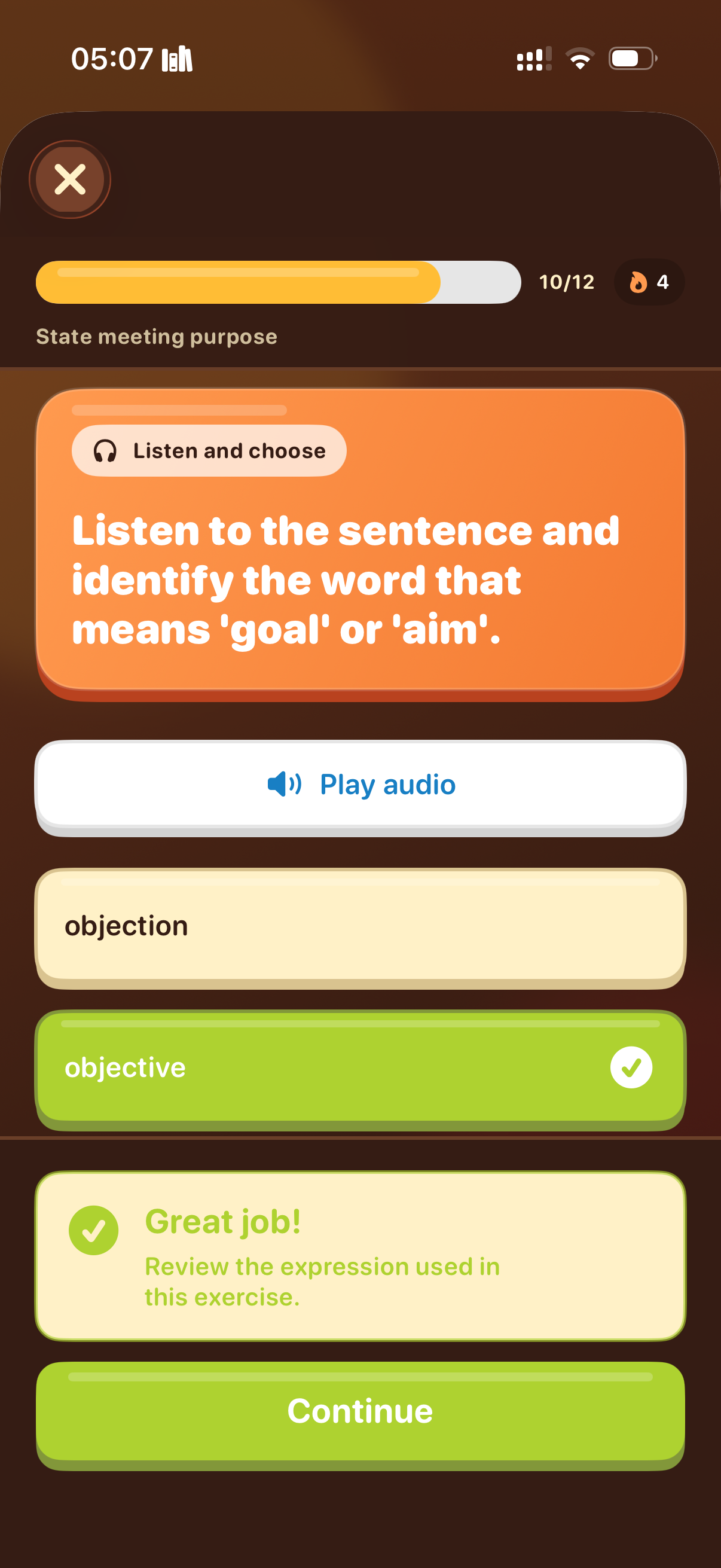
Before asking learners to enter an open-ended AI conversation, Kukii helps them build the vocabulary, phrases, and sentence patterns they will need. These are introduced and reinforced through short exercises such as matching, ordering, listening, fill-in-the-blank questions, and situational responses.
Each lesson takes only a few minutes and provides immediate feedback, XP, streaks, and visible progress. Mistakes do not prevent learners from continuing, and important content can return later in a slightly different form.
Kukii is designed to bridge the gap between fixed language courses and AI conversation: personalized enough to reflect the learner’s life, but structured enough to prepare them to speak.
How I built it
Kukii is a native iOS app built with SwiftUI. Courses and learning progress are stored locally using SwiftData, while a Cloudflare Worker manages the AI content pipeline.
Course creation is divided into several stages:
- Understand the learner’s goal and real-life context.
- Break that goal into practical skills and themed units.
- Generate relevant vocabulary, phrases, and sentence patterns.
- Turn the content into short learn, practice, and challenge lessons.
- Generate exercises when the learner opens a lesson.
AI handles goal interpretation and contextual content creation, while deterministic rules control lesson size, difficulty, answer structure, content coverage, and exercise order.
Generated content passes through structured schemas and semantic validation. Invalid results are repaired automatically, while an individual failed exercise can fall back to a reliable template without discarding the rest of the lesson.
The current MVP supports Chinese and English interfaces and can generate personalized courses for learning English, Chinese, and Spanish.
Challenges I ran into
The hardest problem was getting AI to generate content that formed a coherent and reliable course.
Giving AI complete freedom resulted in inconsistent difficulty, repeated material, and occasionally ambiguous answers. Adding too many fixed rules, however, risked recreating the same rigid learning paths Kukii was designed to replace.
The solution was to let AI and deterministic systems handle different responsibilities. AI understands personal goals, contexts, and communication needs. Software rules protect structure, pacing, answer validity, and quality.
Another major challenge was balancing usefulness with fun. Even perfectly relevant content cannot help someone who does not want to return. For learners who struggle with attention, low friction, immediate feedback, and a constant sense of momentum are not decorations around the learning experience—they are essential parts of it.
Accomplishments that I am proud of
I built the complete core journey from a personal goal to an AI-generated course, a playable lesson, and a progress screen.
What's next for Kukii
My first priority is improving the accuracy, consistency, and educational quality of AI-generated exercises.
I also want to make the entire experience more playful and engaging. This means improving feedback, progression, rewards, characters, animations, practice loops, and the feeling that there is always one more enjoyable thing to do.
Richer speaking practice is another major next step. Once learners have built the necessary vocabulary and sentence patterns, Kukii should help them move naturally into guided speaking exercises, realistic roleplay, and eventually more open-ended conversations.
My goal is to make Kukii the kind of app people choose to open during a subway ride or just before bed—not because they feel obligated to study, but because learning feels genuinely fun.
My goal is also to make Kukii practical enough to prepare learners for real conversations, and empowering enough to help them speak with confidence, connect across cultures, and share what they love.
Built With
- cloudflare
- codex
- figma
- gpt
- image-2
- swift

Log in or sign up for Devpost to join the conversation.