-
-
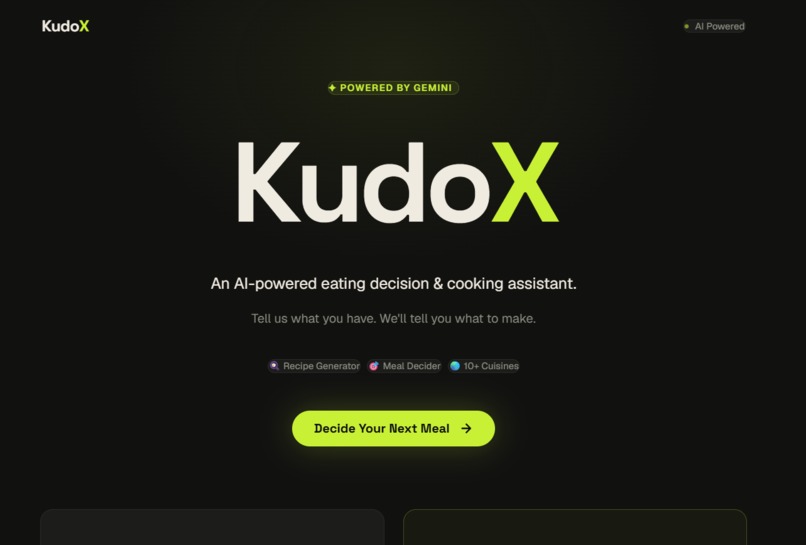
Landing Page
-
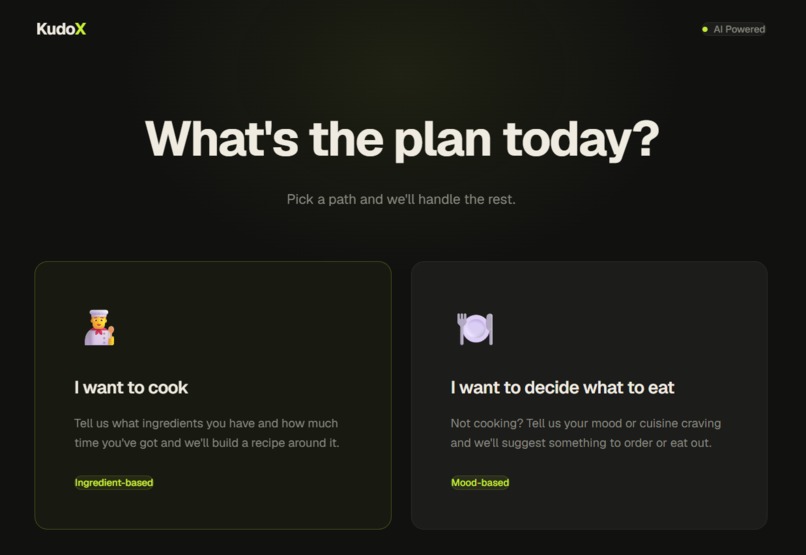
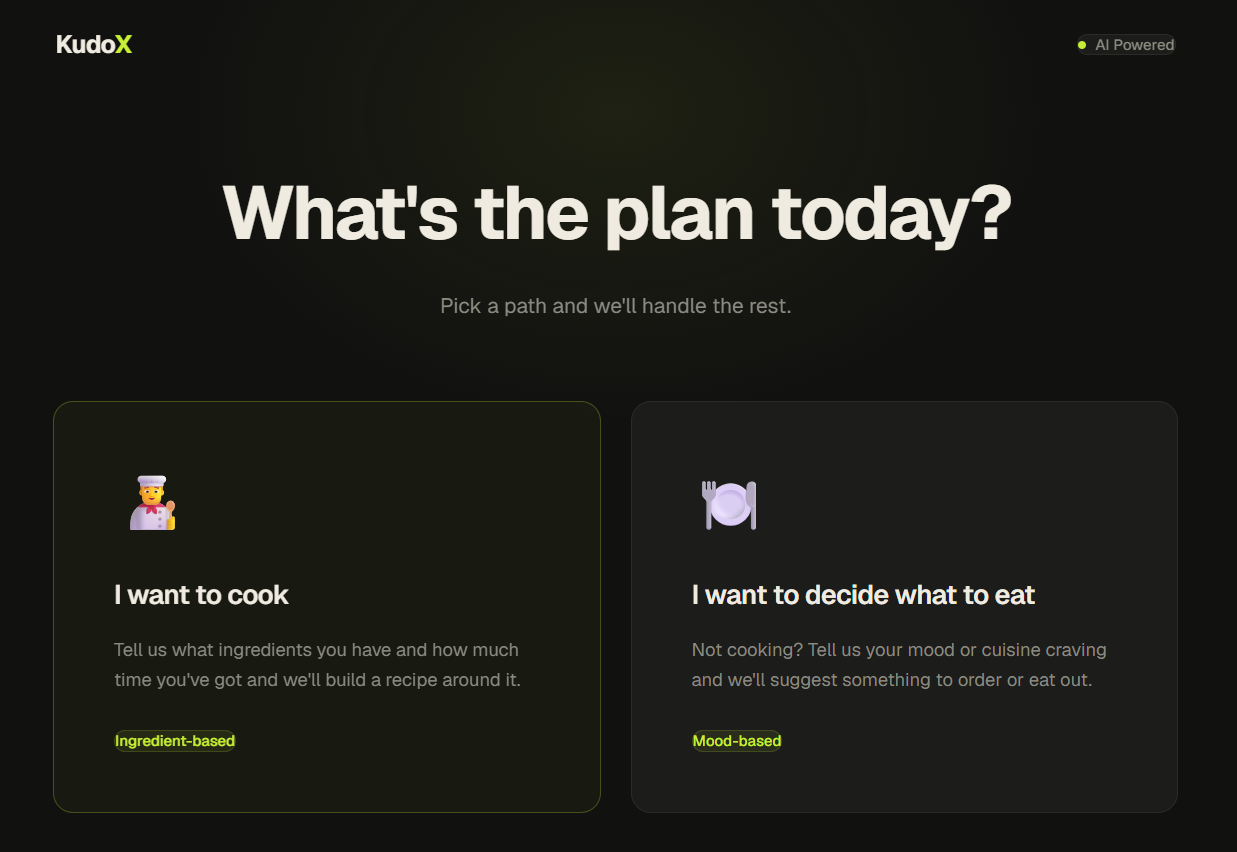
Decision Page
-
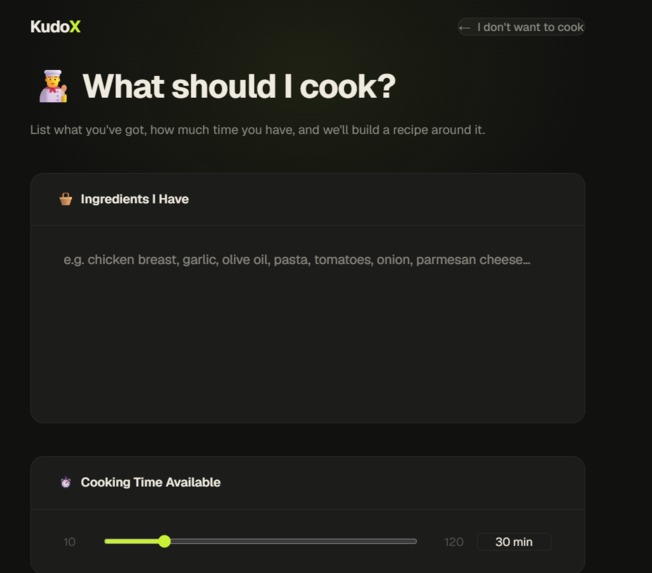
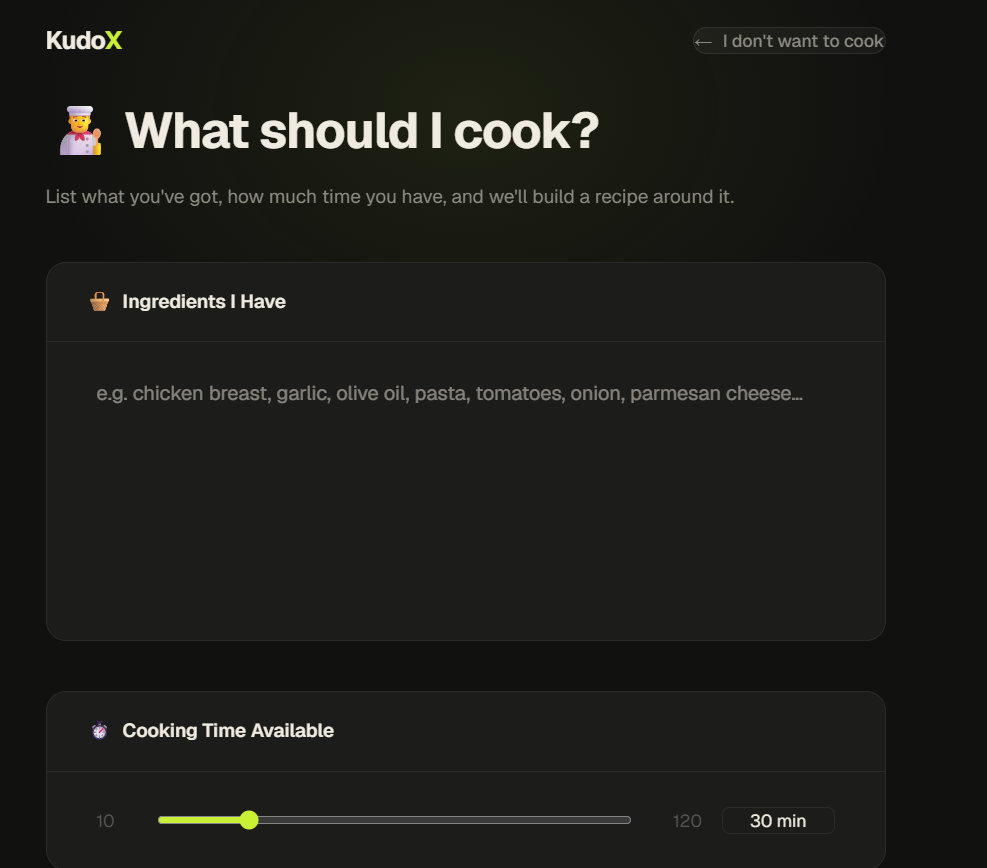
Cooking Page
-
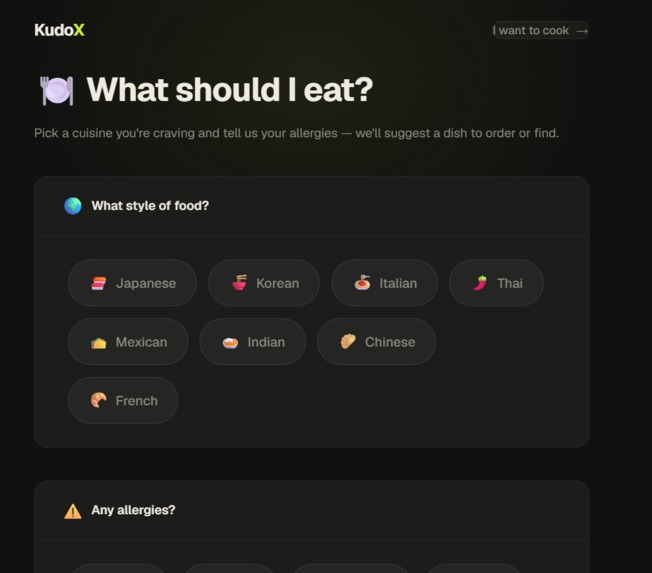
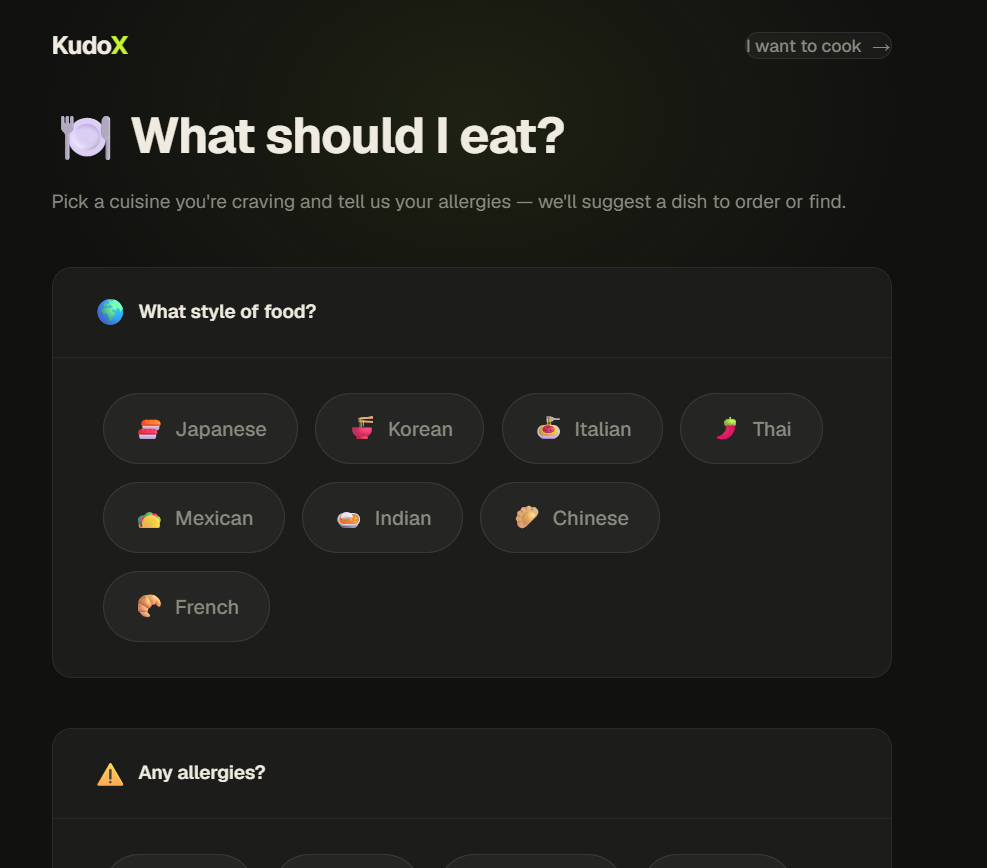
Eating Page
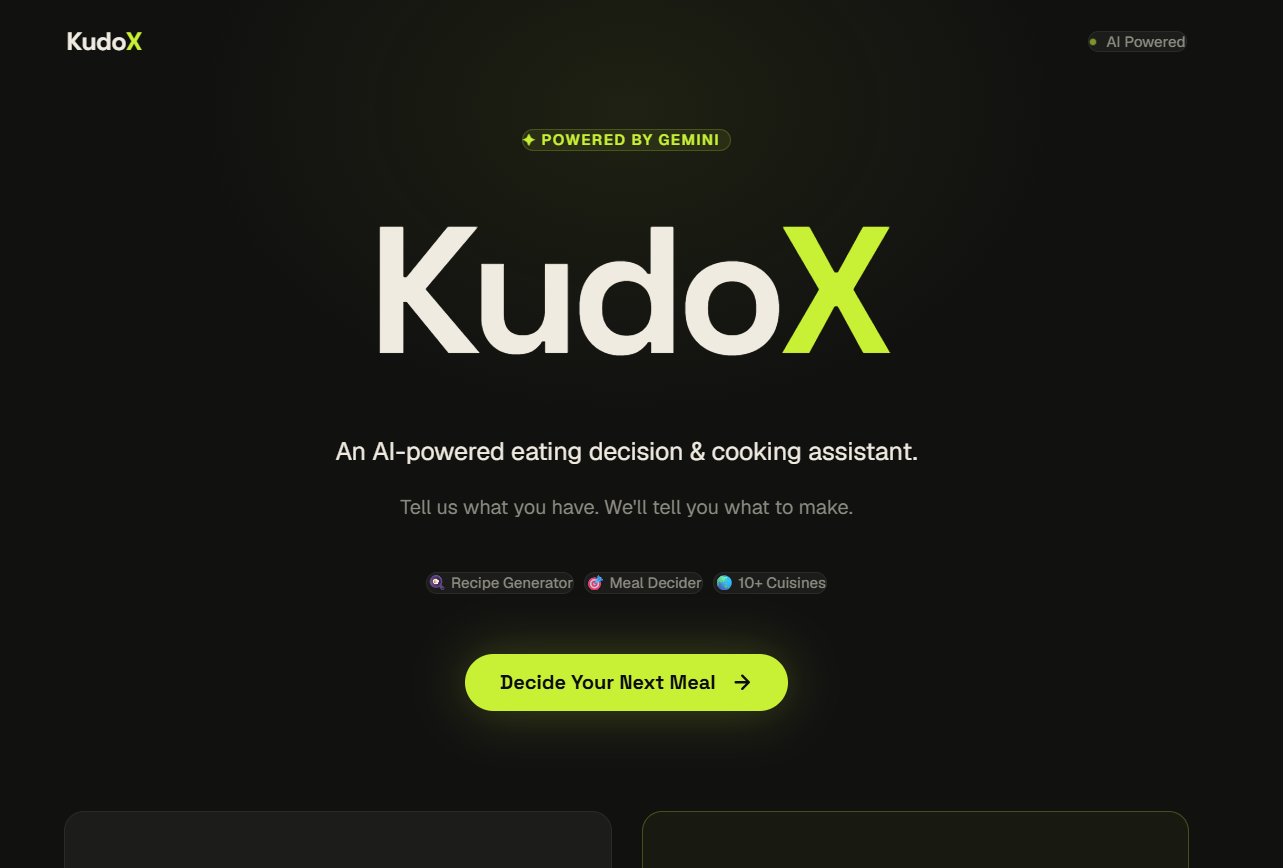
Track: AI & Automation
Inspiration
Every single day, all of us face the same tiny but draining decision, multiple times, what should I eat, what should I cook. It seems trivial, but it's decision fatigue happening two to three times a day, every day, for every person. I noticed that the tools that already exist don't actually solve this problem. Recipe blogs assume you already know what you want to cook. Delivery apps just show you what's nearby, not what fits your craving or your allergies. Nobody had built something that actually helps people decide. That gap is what inspired KudoX.
What it does
KudoX gives users one simple choice: do you want to eat, or do you want to cook? If want to eat, tell KudoX your craving and your allergies, and it instantly suggests a specific dish to find or order, complete with a price range, where to get it, and an allergen warning. If want to cook, tell KudoX what ingredients you already have, how much time you've got, and your dietary needs, and it generates a full recipe with ingredients and step-by-step cooking instructions. There's also a "surprise me" option that lets the AI generate a recipe freely for users who want something unexpected.
How I built it
KudoX is built with Next.js and deployed live on Vercel, so the demo is a real and working product and is not just a prototype. Under KudoX, two different AI providers work together. Groq powers the fast "what should I eat" suggestions, since speed matters most for a quick decision. Google's Gemini handles the more detailed "I want to cook" recipe generation, since recipes need more structure and depth. Both use structured JSON schemas, so every AI response is clean, predictable, and safe to render directly into the UI without unexpected formatting issues and allergy-safe.
Challenges I ran into
Getting structured AI output to reliably match our schema took several iterations, early on, responses sometimes got cut off mid-generation or didn't include every required field, which I fixed by tuning prompts and increasing token limits. I also had to make sure the design for allergy selection UI working correctly so that picking "none" and picking specific allergies didn't conflict with each other.
Accomplishments that I'm proud of
I'm proud that KudoX is a fully working and successfully deploy online. I especially proud of integrating two separate AI providers into one cohesive product, each suited to a different task, while keeping the user experience simple and consistent across both flows and I succcessfully complete this by solo participating in this hackathon.
What I learned
I learned how much careful prompt engineering by Ai engineer and schema design matters when building reliable AI-powered features, especially when allergy safety is involved. I also learned a lot about the practical side of shipping a real product like handling deployment configuration, environment variables and debugging build failures on a live platform like Vercel.
What's next for KudoX
For the future, I would like to implement user accounts so KudoX can remember dietary preferences and past choices, expand cuisine and allergy coverage and integrate directly with food delivery platforms so users can go from decision to order in a single flow.

Log in or sign up for Devpost to join the conversation.