Inspiration
Every small business owner we talked to said the same thing: their best customers come from word of mouth. A friend told them about the place. Yet most of their marketing budget goes to ads (Instagram, Google, Yelp) where they pay for views and can't tell what actually turns into a sale.
Meanwhile, the people really driving those customers, the regulars who keep saying "you have to try this," get nothing. Referral programs exist, but small businesses can't run them: they need software, fraud controls and payouts, and the platforms that offer them take a cut and change the terms whenever they like.
So we flipped it: a business pays only when a recommended customer actually buys, and that payment instantly rewards everyone who brought them in.
What it does
Kudos is a payments app for small businesses (cafés, barbers, salons, any local shop) where word of mouth pays.
- A business sets a reward rate for a customer's first purchase, say 15%.
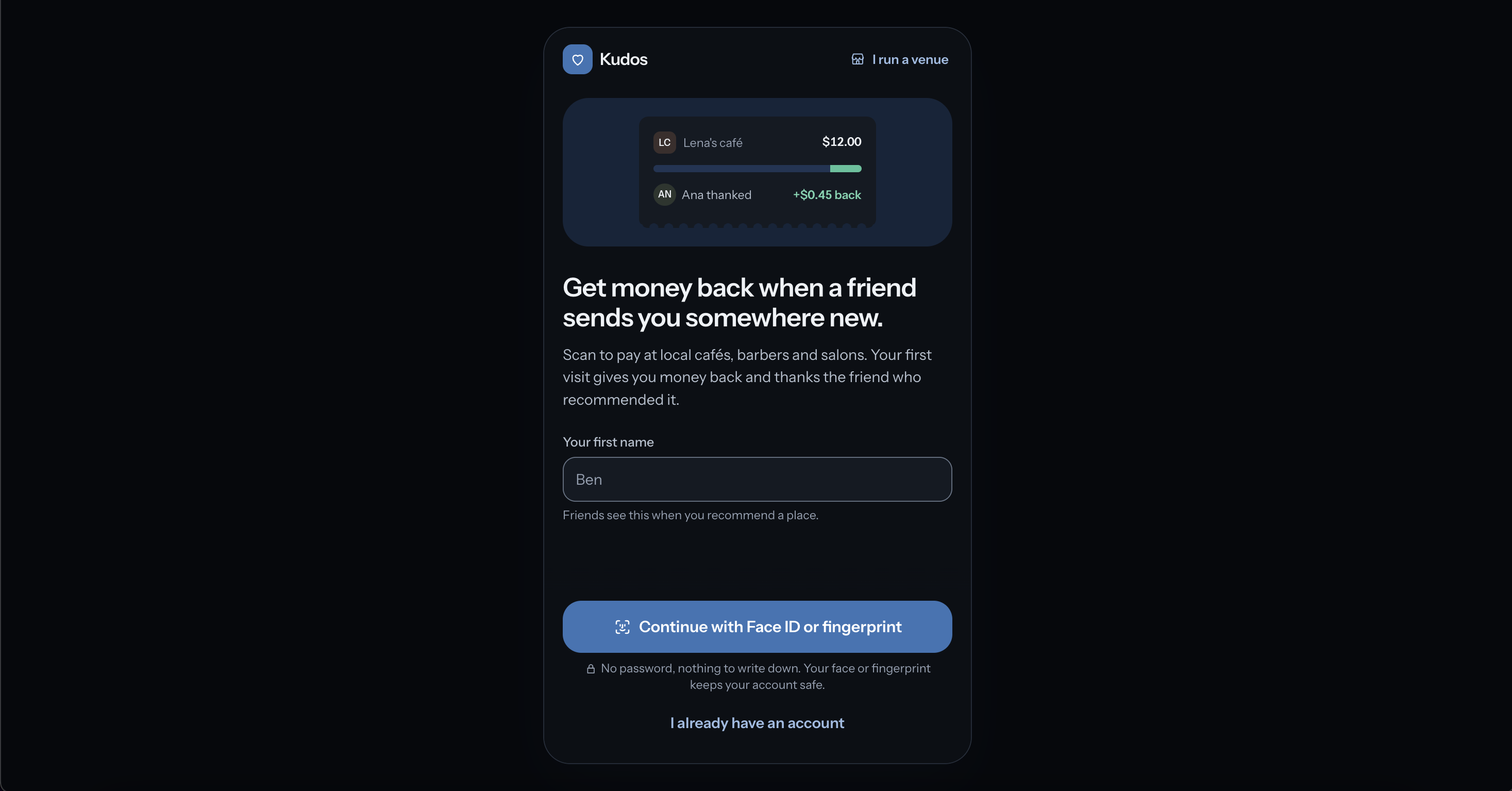
- Ana, who has bought there before, sends her friend Ben a link.
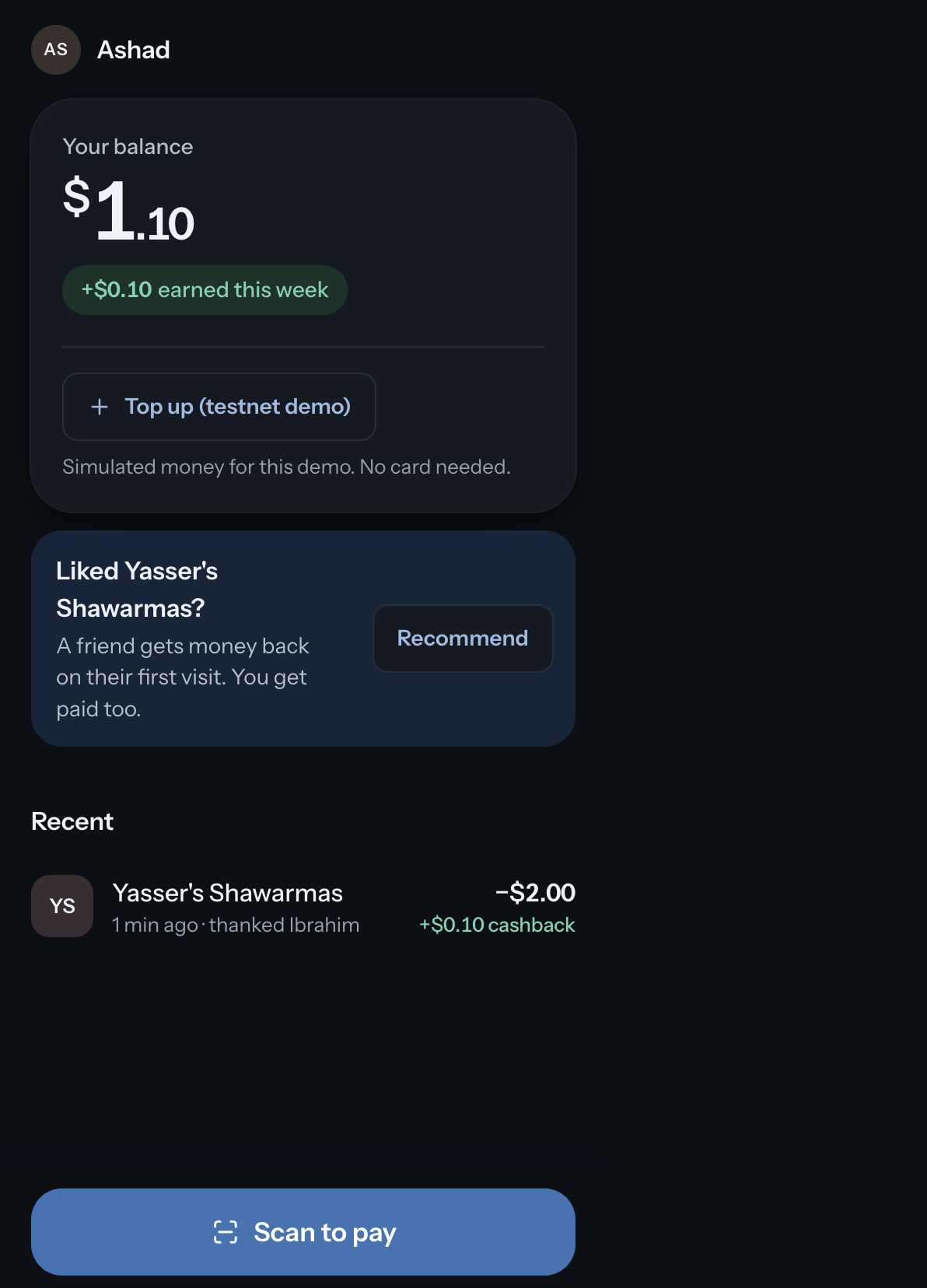
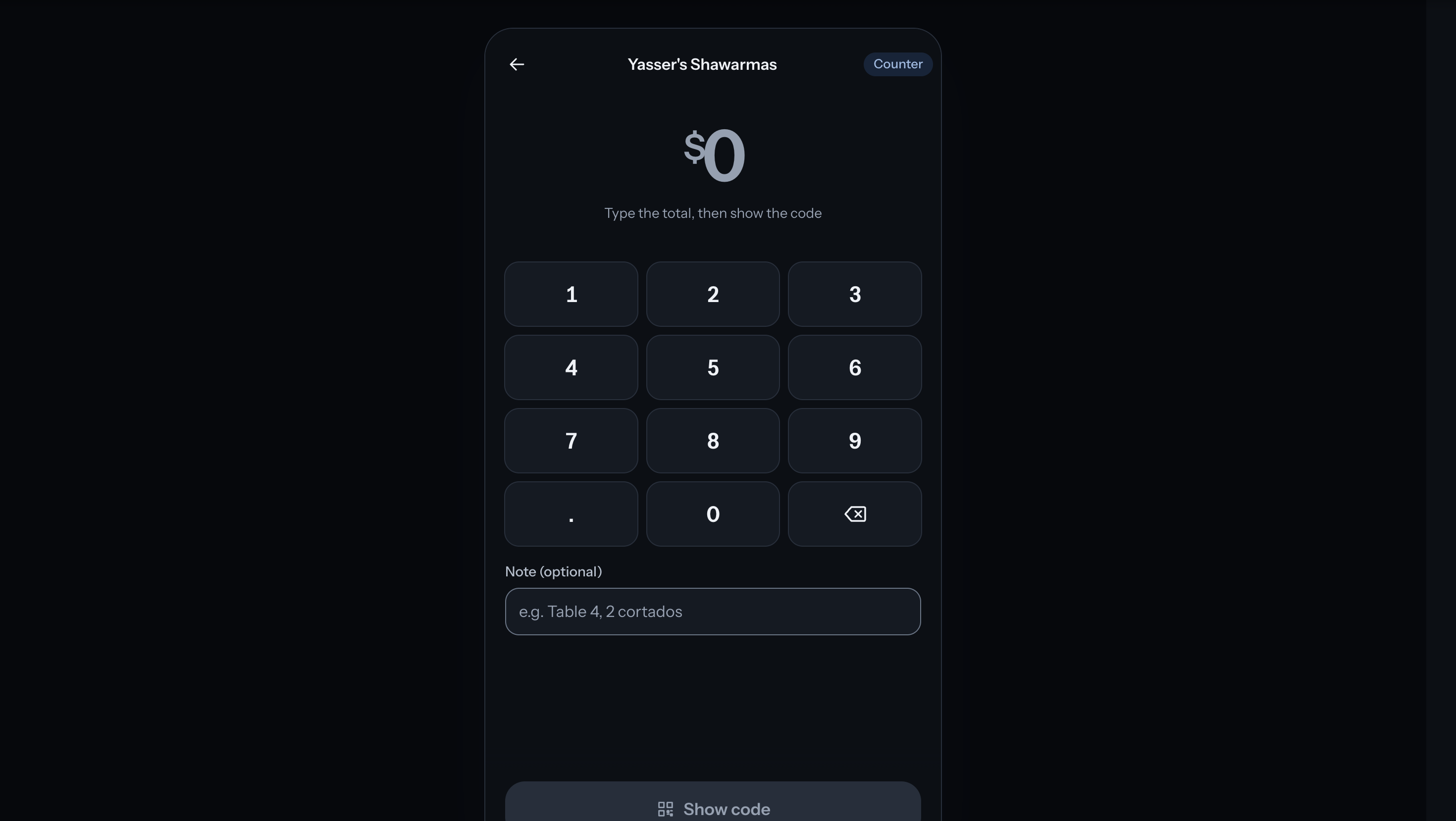
- Ben pays at the counter by scanning a code and confirming with Face ID: no wallet setup, no seed phrase, no fees to think about.
- In that same payment, the money splits: Ben gets cashback, Ana gets a reward, the person who originally introduced Ana gets a smaller share, and the business keeps the rest.
For example, on a $12.00 order with a 15% reward, the reward pool is $1.80. Ben gets $0.45 back, Ana gets $0.693, Priya gets $0.297, their introducers get $0.252 and $0.108, and the café keeps $10.20, all to the exact cent, in one transaction.
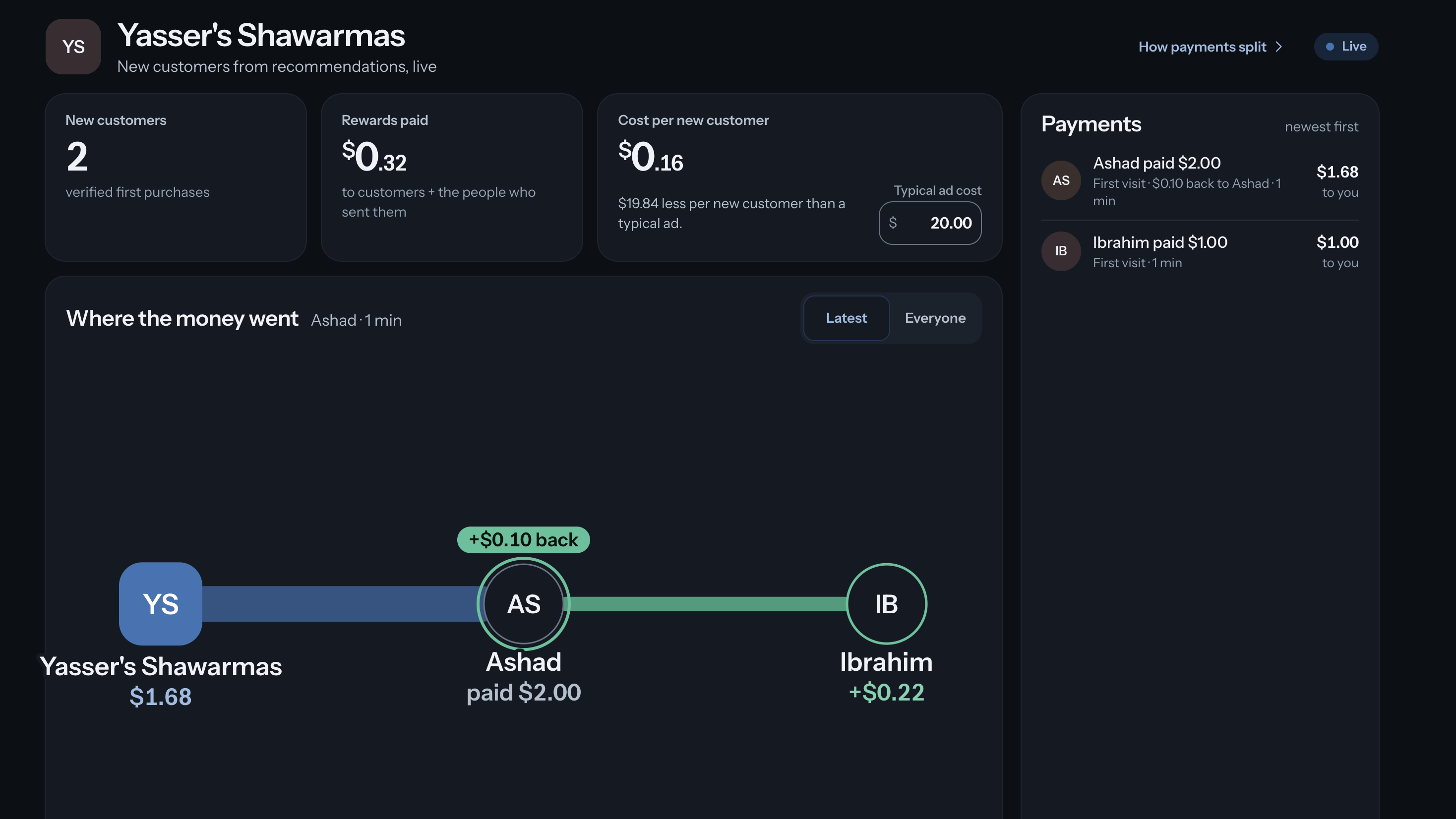
Businesses get a live dashboard with a money graph showing where every dollar went, plus their cost per verified new customer compared with what ads would have cost.
How we built it
- Smart contract (Solidity + Foundry) on Arc. The split happens atomically inside the payment, so a business can't skip paying the people who sent the customer. Reward terms freeze when a link is shared, so they can't be cut afterwards. Only customers with a verified purchase can recommend a business.
- Crypto you never see. Customers sign a USDC authorization (EIP-3009) with a passkey-protected key, and our relayer submits it. Arc uses USDC as gas, so a full multi-way split costs about one cent, and users only ever see dollars.
- QuickNode Streams as the backbone. A Stream on Arc Testnet, filtered to our contract's events, pushes every payment to a signed webhook. Every balance, feed and money graph is built from those events, and a payment shows as "paid" about 1–1.5 seconds after the tap.
- Stack: Next.js mobile-first web app (installable to the home screen) on Vercel, Fastify + Postgres on Railway, viem, and Playwright end-to-end tests on real testnet payments.
Challenges we ran into
- Making it safe, not just working. An independent review of our first contract found two serious bugs: a payment could be resubmitted to force the wrong split, and a business could set its payout to the contract itself and lock funds. Both are fixed; the final contract has around 200 tests, including fuzz and invariant tests proving payouts always add up exactly to the order.
- Contract size. We ended up about 540 bytes under Ethereum's contract size limit, so every late change had to be tiny.
- USDC decimals on Arc. Native gas uses 18 decimals while the USDC token uses 6. That's a classic source of bugs, so we tested it explicitly.
- Real-time data in the real world. The Streams API was locked on our trial plan, so we configured everything through the dashboard. Later we exhausted the trial's credits and had to rebuild the stream. Because our indexer is deterministic (backfill, live and replay all produce the same result), recovery took minutes.
- Hardening the backend. A security pass found the webhook could be overloaded before signature checks and the relayer had no overall spending cap. We added signature-first validation, size and rate limits, and hourly and daily gas budgets.
Accomplishments that we're proud of
- A real payment splits to the exact cent across up to seven people in one transaction, for about a cent in fees.
- Payment to "paid" in about a second, end to end, driven entirely by QuickNode Streams.
- A consumer experience with zero visible crypto: Face ID, dollars, done.
- Independent QE and security review on every phase, with a live deployment judges can try on their own phone.
- Built solo in one week.
What we learned
- Atomic settlement changes the trust model: when the reward is part of the payment, nobody has to trust the business to pay later.
- Good crypto UX means hiding everything: dollars only, Face ID only, fees covered.
- Building on real-time blockchain data means designing for failure: dropped connections, exhausted credits, retries and replays.
What's next for Kudos
- Card and Apple Pay on the front end, converting to USDC behind the scenes, so any customer can pay.
- Point-of-sale integrations, so staff never key in amounts.
- Refund handling and smarter fraud protection.
- Discovery: helping proven recommenders find new local businesses to support, and helping businesses find them.
Built With
- arc
- circle
- cloudflare
- drizzle
- eip-3009
- eip-712
- fastify
- foundry
- next.js
- node.js
- openzeppelin
- passkeys
- playwright
- postgresql
- quicknode
- quicknode-streams
- railway
- react
- solidity
- tailwindcss
- typescript
- usdc
- vercel
- viem
- webauthn
