Inspiration
We wanted to explore how modern cloud-native technologies, AI integration, and resilient infrastructure patterns could come together in a real-world use case. An e-commerce platform felt like the perfect playground since it touches almost every layer of distributed systems.
What it does
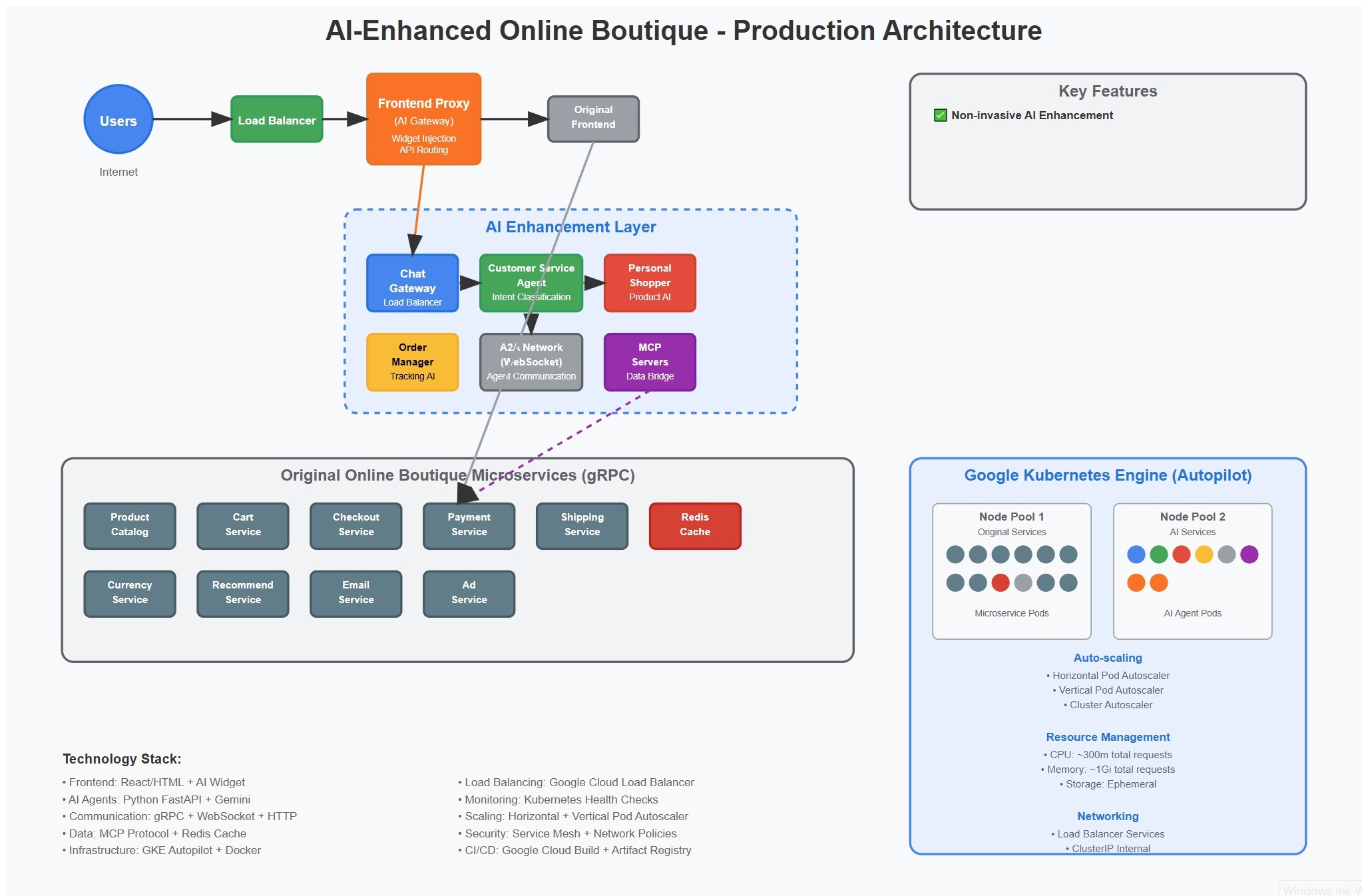
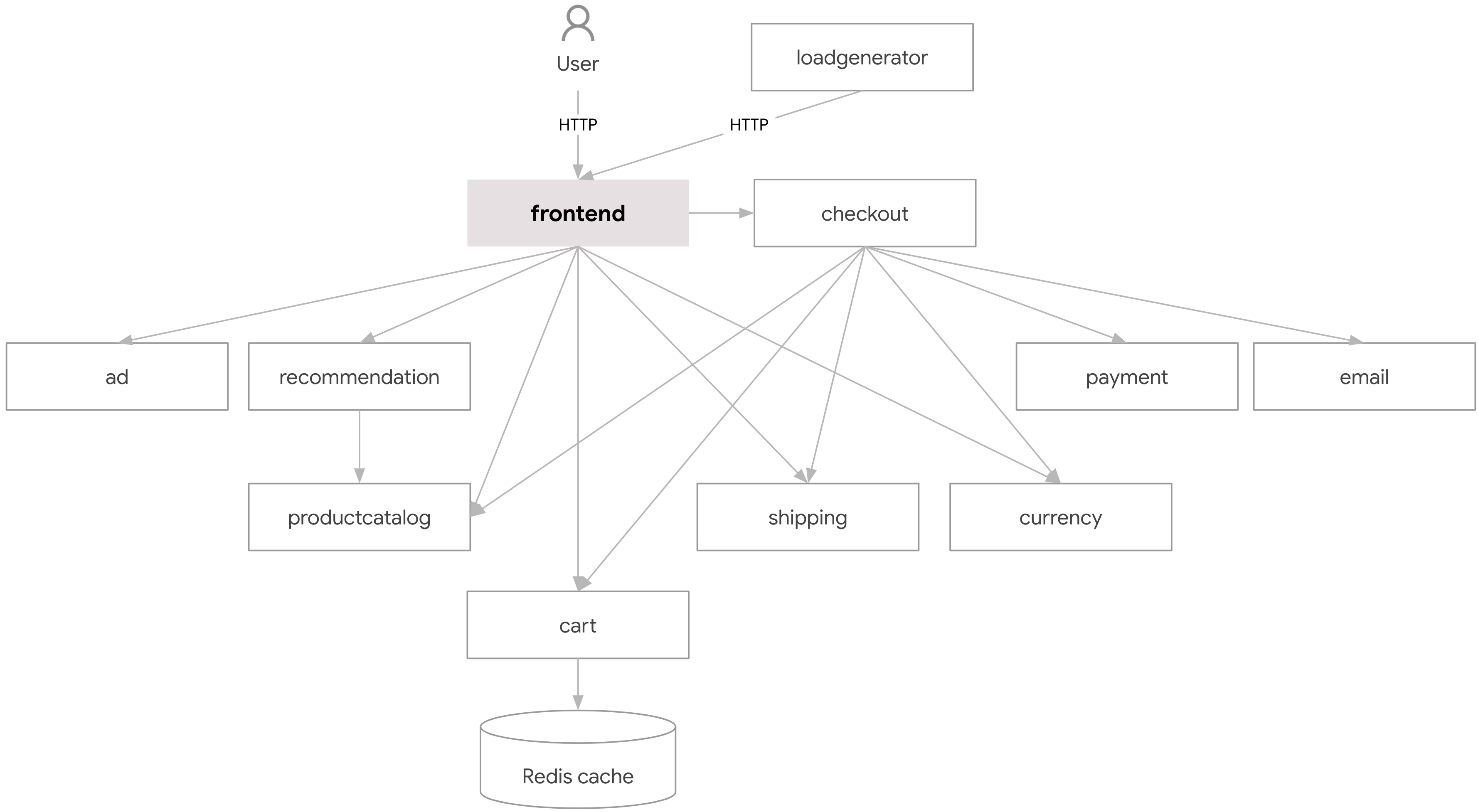
Online Boutique is a fully functional, cloud-first e-commerce app where users can browse, add to cart, and purchase items. Behind the scenes, it demonstrates service-to-service communication, gRPC, load balancing, observability, and Kubernetes scalability. We extended it with an AI-powered customer service chat that uses a Chat Gateway, intent classification, and specialized AI agents. These agents interact with backend microservices over MCP and gRPC to deliver intelligent, real-time support.
How we built it
Frontend & Services: Microservices deployed on Kubernetes with Helm. Service Communication: gRPC and REST APIs for inter-service messaging. AI Chat: Gateway routing requests to NLP intent classifiers and agent services. Infrastructure: Deployed on GKE with Artifact Registry, monitored using Prometheus & Grafana. Automation: GitOps pipeline via Argo CD for continuous delivery.
Challenges we ran into
IAM and permission issues with GCP services (Artifact Registry, GKE Autopilot). Autopilot restrictions that blocked default Helm charts (node exporter, hostPath volumes). Debugging authentication and quota projects when using multiple gcloud accounts. Adapting monitoring and dashboards without violating Autopilot’s constraints.
Accomplishments that we're proud of
Got a full cloud-native microservices app running end-to-end on GKE Autopilot. Integrated AI customer service chat into the flow successfully. Overcame cluster policy restrictions by customizing Helm charts. Set up GitOps pipelines with Argo CD for smooth deployments.
What we learned
Deep dive into Kubernetes Autopilot constraints and how to work within them. The importance of IAM and proper gcloud account setup for Artifact Registry & service APIs. Practical use of service mesh patterns, Helm customization, and observability in real deployments. How to integrate AI services into existing cloud-native architectures.
What's next for KubestronautInMaking
We plan to extend the AI integration beyond customer support—into dynamic product recommendations and anomaly detection for orders. We also want to make the setup “developer-friendly” by providing pre-built Helm charts, a plug-and-play GitOps template, and cost-optimization strategies for teams experimenting with microservices on the cloud.
Built With
- a2a
- adk
- argocd
- gemma
- kubernetes
- mcp
- ollama
- python
- terraform


Log in or sign up for Devpost to join the conversation.