Inspiration
The complexity of modern cloud infrastructure is exploding. A typical Cloud Architect or DevOps Engineer juggles AWS, Azure, and GCP, navigating through dozens of cluttered consoles just to find a rogue instance or check a bucket's permission.
We asked ourselves: "What if you could hire a senior Cloud Architect that works 24/7, costs pennies, and lives in a chat window?"
We didn't want another dashboard. We wanted a "Doer". We were inspired by the vision of Autonomous Agents—software that doesn't just chat, but actually touches the infrastructure, fixes problems, and optimizes costs on its own.
What it does
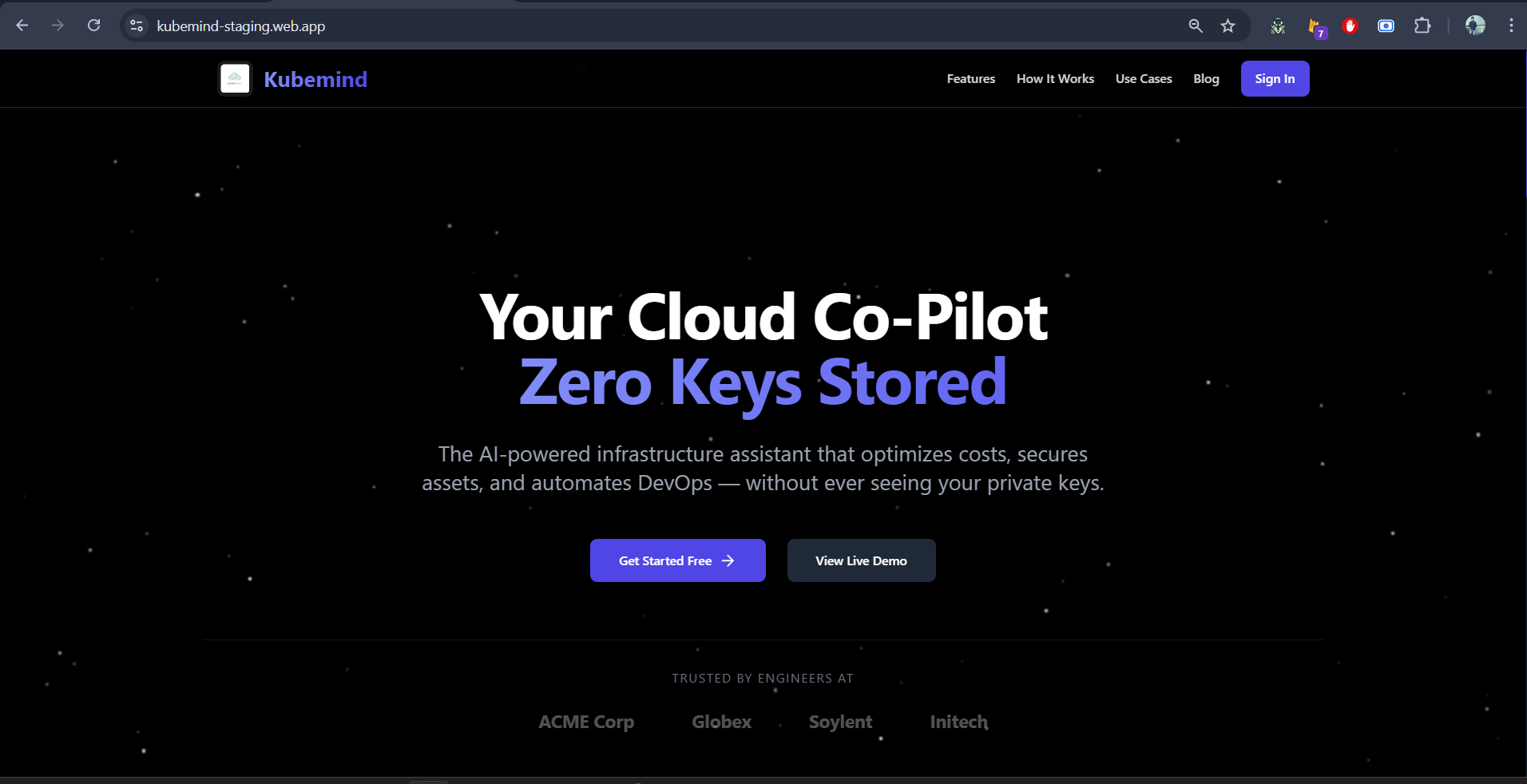
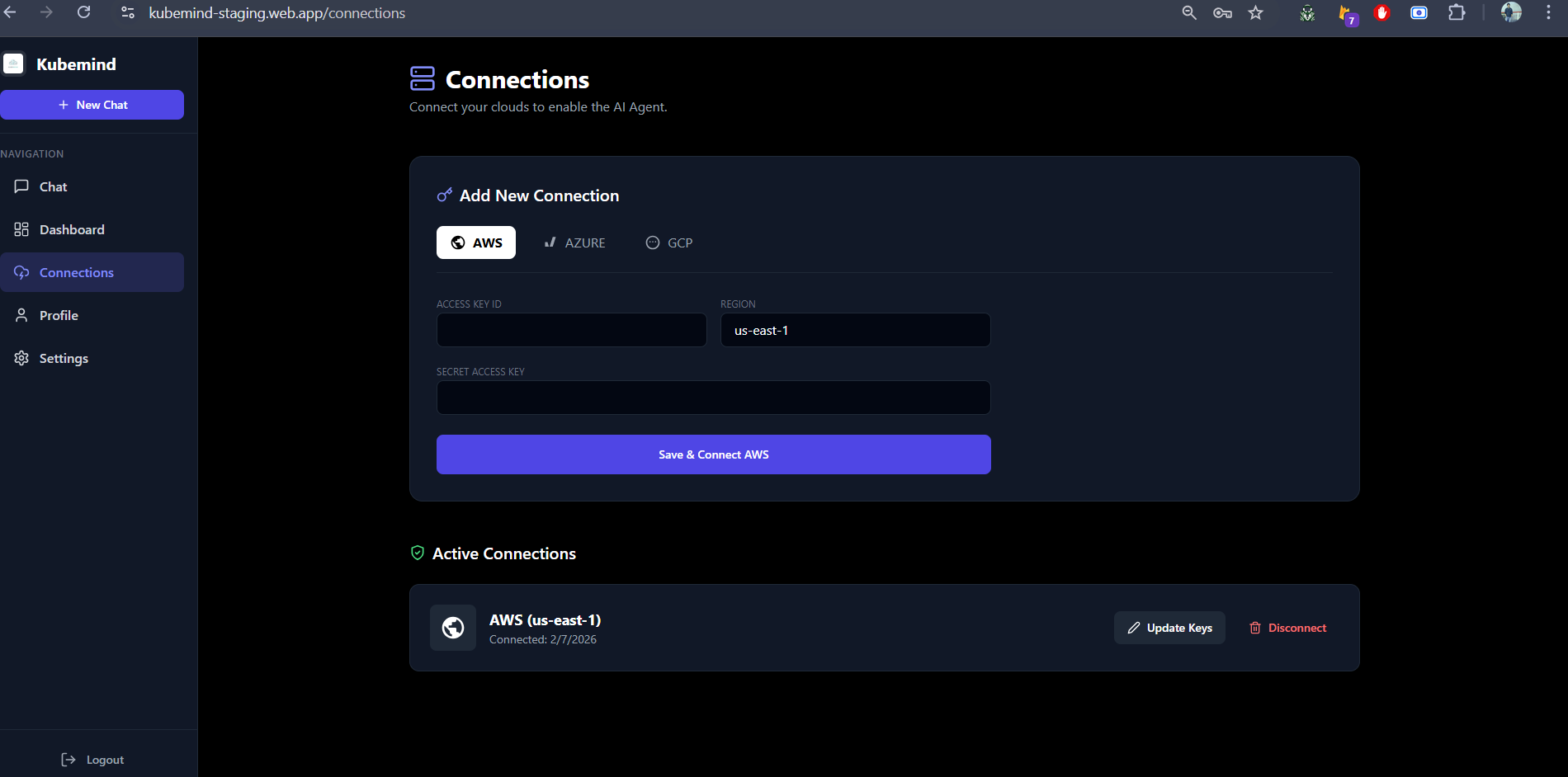
Kubemind is an autonomous agent that acts as a bridge between human intent and cloud APIs. It connects to your AWS, Azure, and GCP accounts and performs high-level tasks:
Natural Language Ops: You ask "List my S3 buckets created last week," and it queries the API and returns a formatted report.
Autonomous Actions: You say "Stop the development server," and Kubemind identifies the instance ID, verifies the action, and executes the stop command via the SDK.
Multi-Cloud Management: It abstracts the differences between clouds, giving you a unified interface for AWS EC2, S3, RDS, and more.
Security & FinOps: It acts as a security analyst (checking for public buckets) and a FinOps analyst (identifying idle resources).
How we built it
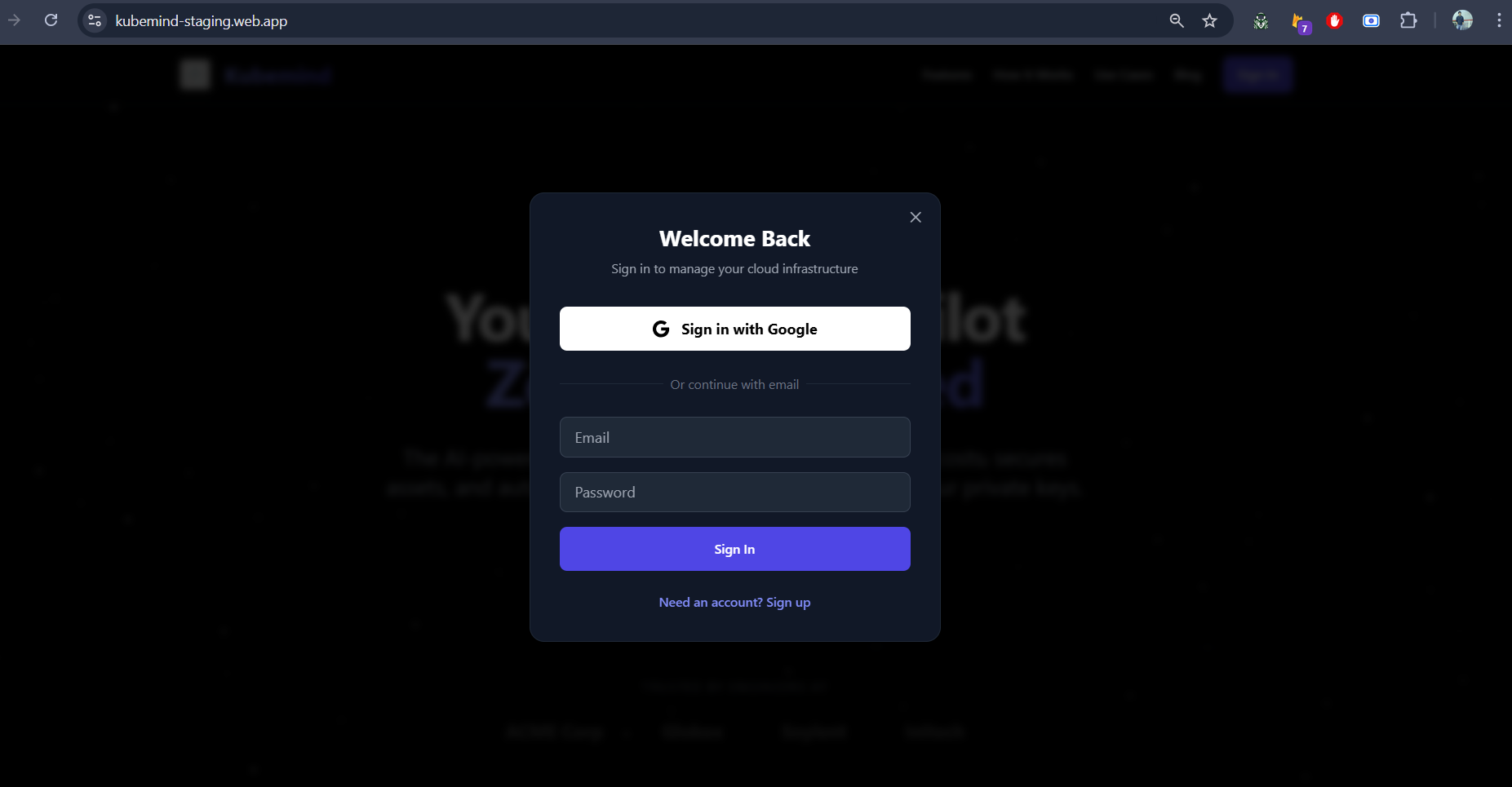
We built Kubemind using a modern, scalable, and serverless architecture.1. The Brain (Backend & AI)The core logic runs on Python FastAPI deployed on Google Cloud Run.We use Google Gemini 2.0 Flash as the cognitive engine (Chosen over other models for its ultra-low latency, which is critical for real-time "Chat-to-Action" agentic workflows).We engineered a complex System Prompt that forces the AI to function in two modes:Conversational Mode: Translates complex JSON cloud data into natural English.Action Mode: Outputs strict JSON commands (e.g., { "action": "STOP", "id": "i-123" }) when the user requests infrastructure changes.2. The Hands (Cloud SDKs)To make the agent "God Mode" capable, we integrated heavy-duty SDKs:AWS: boto3 and botocore for EC2, S3, and RDS management.Azure: azure-mgmt-compute and azure-identity.GCP: google-cloud-compute and google-cloud-storage.Data Processing: pandas for analyzing cost reports and logs.3. The Interface (Frontend)Built with React + Vite and Tailwind CSS.State management via Zustand with local persistence.Deployed on Firebase Hosting.4. Security & PersistenceFirebase Auth: Handles secure Google Login.Google Firestore: Persists encrypted cloud credentials so the agent "remembers" connections across server restarts.🧠 The Math Behind the LogicTo optimize costs, Kubemind uses a decision logic to calculate the efficiency of an instance. We define the Cost Efficiency $E$ of a resource as:$$E = \frac{\sum (CPU_{util} \times w_c) + (RAM_{util} \times w_r)}{Cost_{hourly}}$$Where $w_c$ and $w_r$ are weights assigned to CPU and RAM priority. If $E < \text{Threshold}$, Kubemind autonomously suggests terminating the instance.
Challenges we ran into
This project was a rollercoaster of technical hurdles:
The "Hallucination" Problem: Initially, the AI would "pretend" to stop a server without actually calling the API. We solved this by implementing a Strict Action Handler in Python that intercepts specific JSON patterns from the AI and executes the actual SDK code.
Docker Build Timeouts: Installing pandas, boto3, and grpcio requires compiling C extensions, which timed out on standard Cloud Build workers. We had to optimize our Dockerfile to use Python 3.11 (for pre-built wheels) and increase build timeouts to 2000s.
The "White Screen of Death": We faced a critical race condition where Firebase initialized multiple times during hot reloads, crashing the app. We implemented a Singleton Pattern in our state store to ensure getApps().length === 0 before initializing.
State "Ghosting": When a user deleted their account, local storage data persisted, causing the old dashboard to reappear. We built a "True Delete" protocol that wipes Firestore, deletes the Firebase Auth user, and nukes Local Storage simultaneously.
Accomplishments that we're proud of
Real-World Action: We didn't just build a chatbot; we built a tool that actually creates S3 buckets and stops EC2 instances in real-time and works on other Cloud engineer daily task.
Self-Healing Architecture: The agent handles API errors gracefully. If AWS is down, it reports the error in plain English rather than crashing.
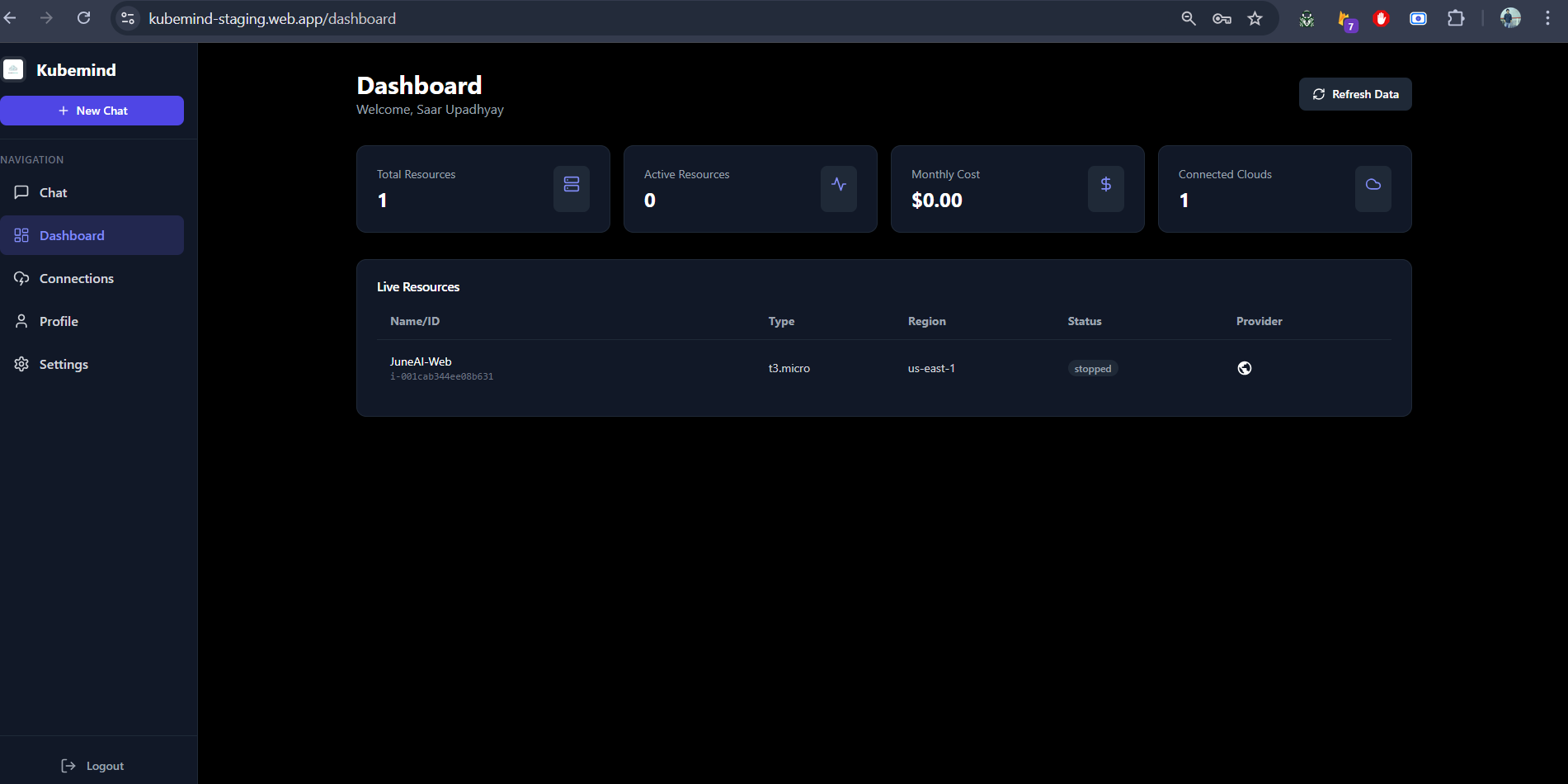
Seamless UX: The transition between "Talking to an AI" and "Viewing a Dashboard" is fluid. The AI updates the dashboard context dynamically.
What we learned
Prompt Engineering is Logic: Writing a system prompt is just like writing code—it requires edge-case handling, type definitions, and strict constraints.
Statelessness is Hard: Managing connections in a serverless environment (Cloud Run) required robust database design (Firestore) to maintain the illusion of a continuous session.
The Power of Gemini: The speed of Gemini 2.0 Flash was critical. Older models were too slow to make the "Chat-to-Action" loop feel instantaneous.
What's next for Kubemind
Infrastructure as Code (IaC): Teaching Kubemind to write and apply Terraform plans directly on to the platform with user confirmation.
Agent Node: Different/Multiple agent will handle work load and work on the given task.
Slack and Teams Integration: Bringing Kubemind into the team chat so developers can tag @Kubemind to debug production issues.
Predictive Scaling: Using ML to predict traffic spikes and scale resources before the load hits.
Built With
- amazon-web-services
- azure
- azure-sdk
- boto3
- css3
- fastapi
- firebase
- firebase-authentication
- gemini-2.0
- google-cloud
- google-cloud-client-libraries
- google-firestore
- html5
- pandas
- paramiko
- python
- react
- sdk
- tailwind
- typescript
- vite
- zustand

Log in or sign up for Devpost to join the conversation.