Inspiration
Many digital wellbeing tools try to remove negative feelings or replace them with positive ones. I wanted to explore a different approach: observing a worry carefully before trying to solve it.
KU is inspired by the Heart Sutra and its teaching of the Five Aggregates. Rather than presenting Buddhism as a religious authority, the project uses this framework as a respectful metaphor for separating facts, feelings, interpretations, reactions, and personal identity.
What it does
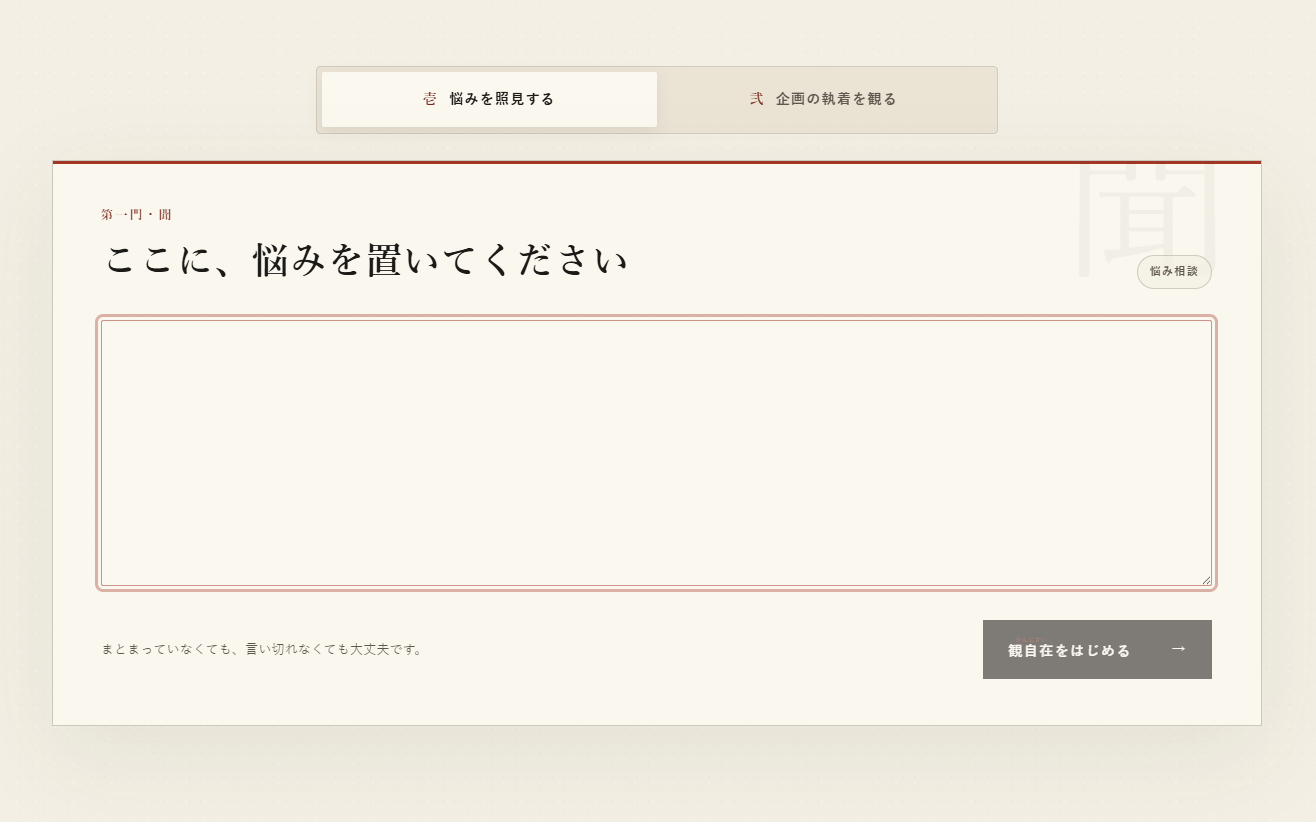
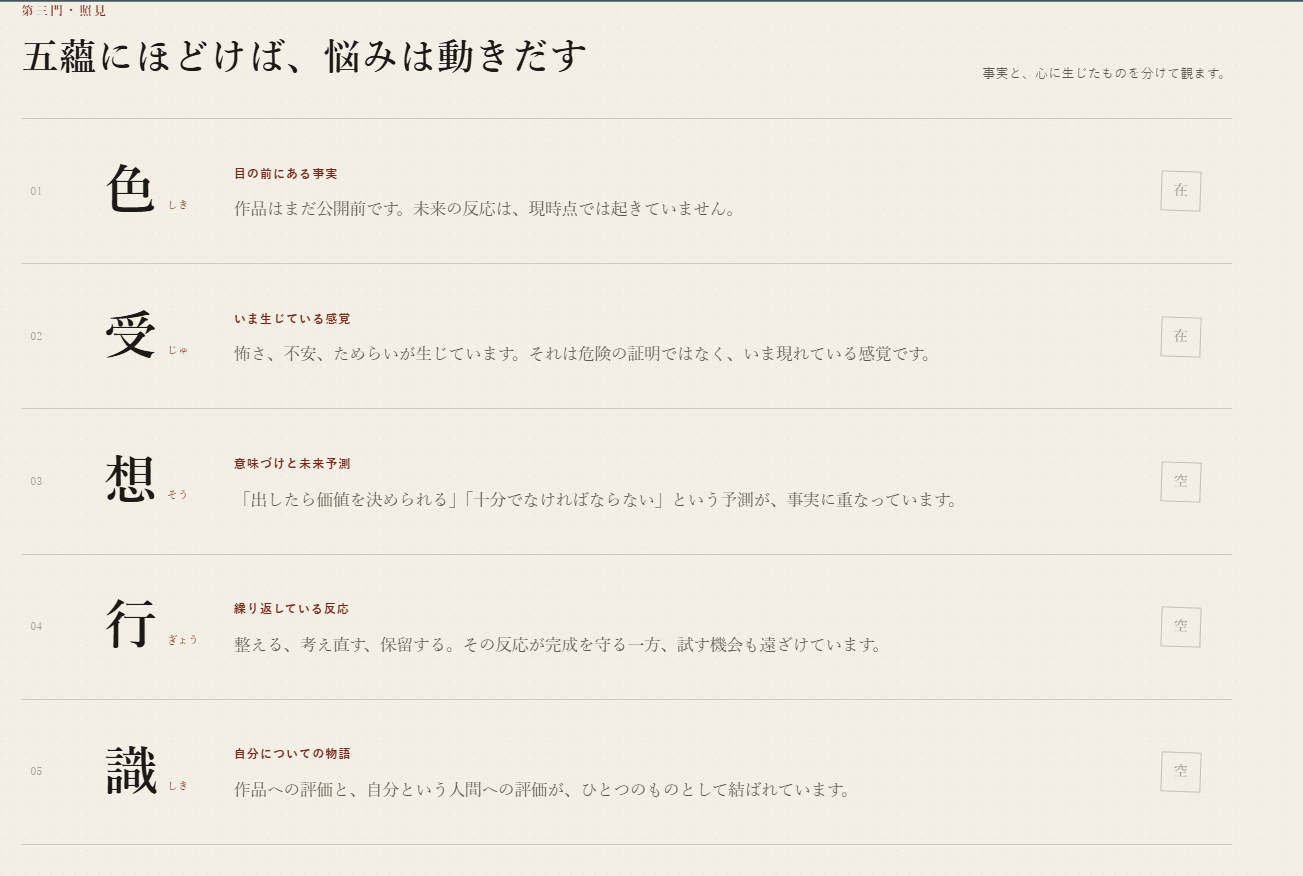
Users write down a worry in their own words. KU then guides them through five layers:
- Form — What can actually be confirmed
- Sensation — What is being felt right now
- Perception — Interpretations and predictions
- Mental formations — Repeated reactions and habits
- Consciousness — The story the user is telling about themselves
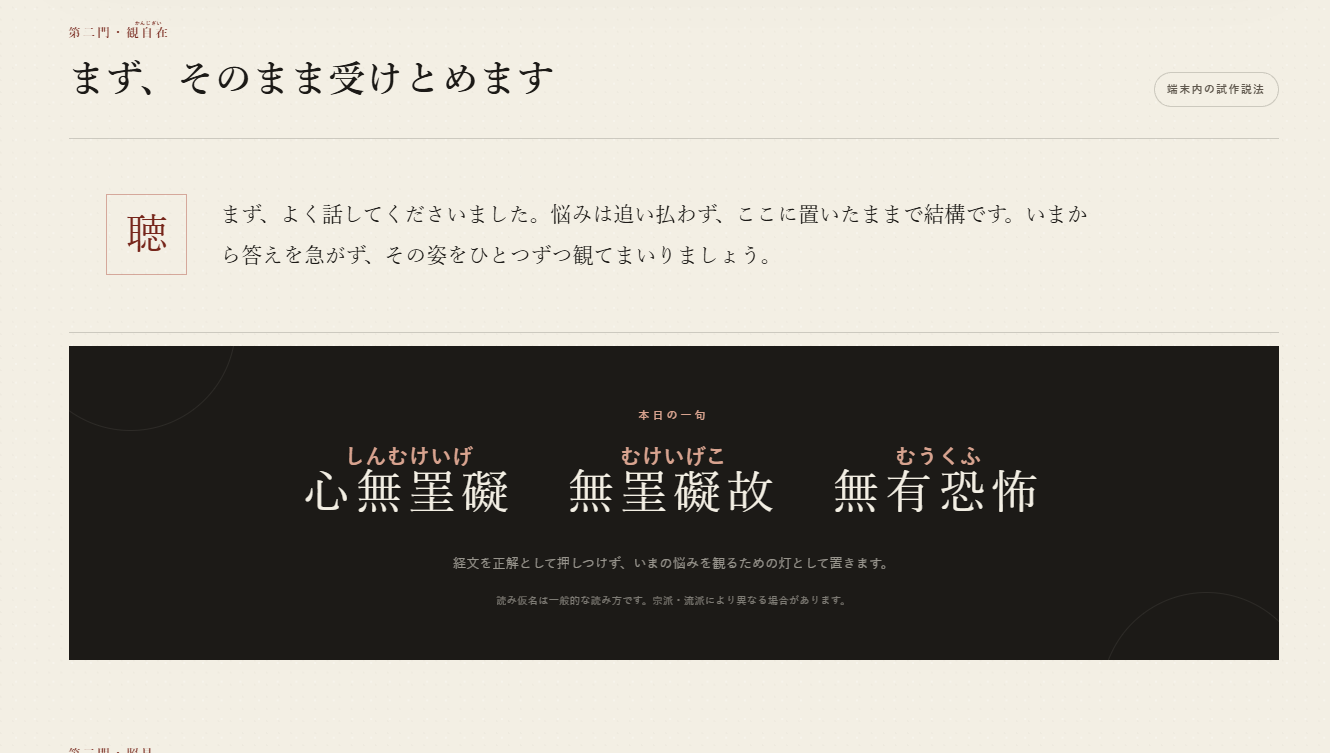
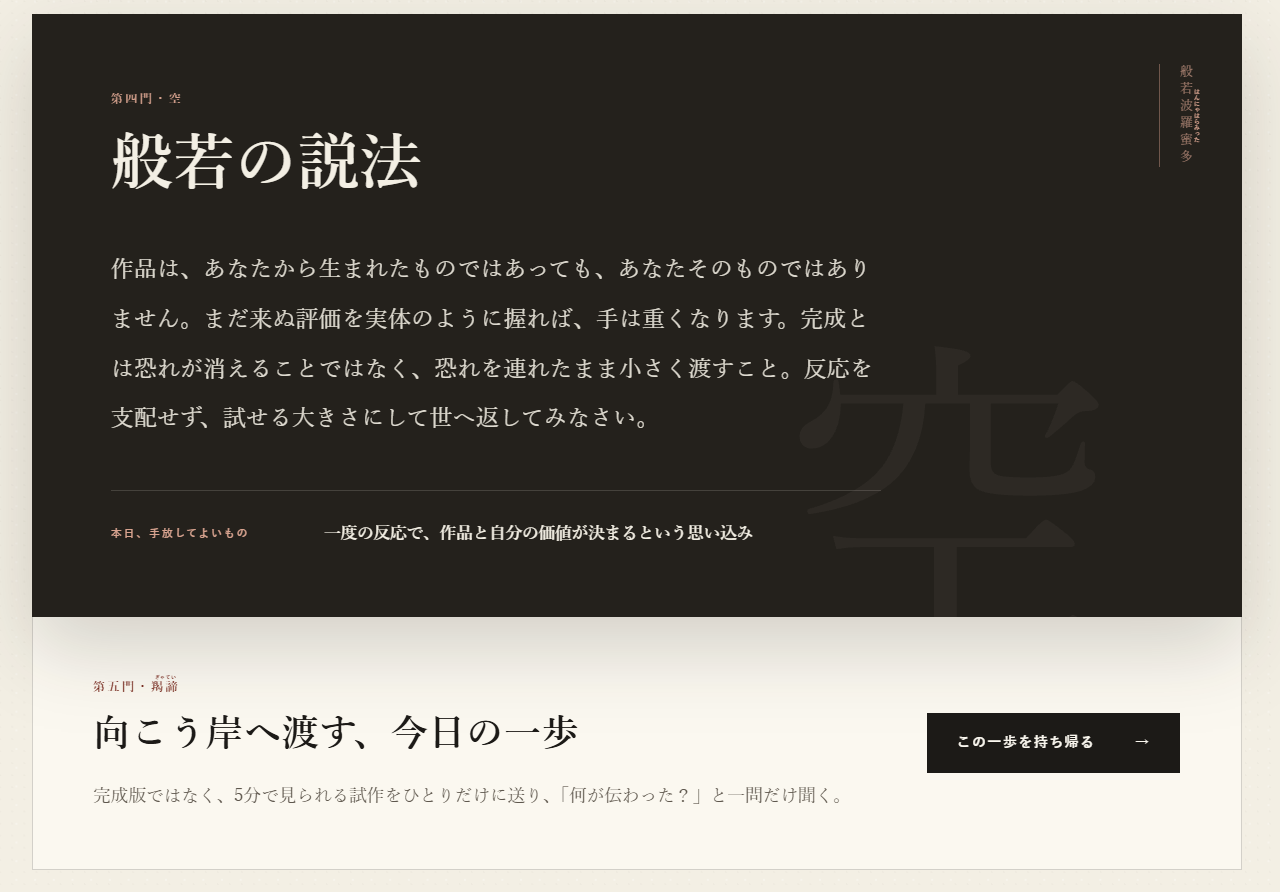
GPT-5.6 Terra selects a relevant passage from the Heart Sutra and generates a calm, sermon-inspired reflection. It identifies one rigid assumption that can be released and ends with one practical action that can be completed in less than 20 minutes.
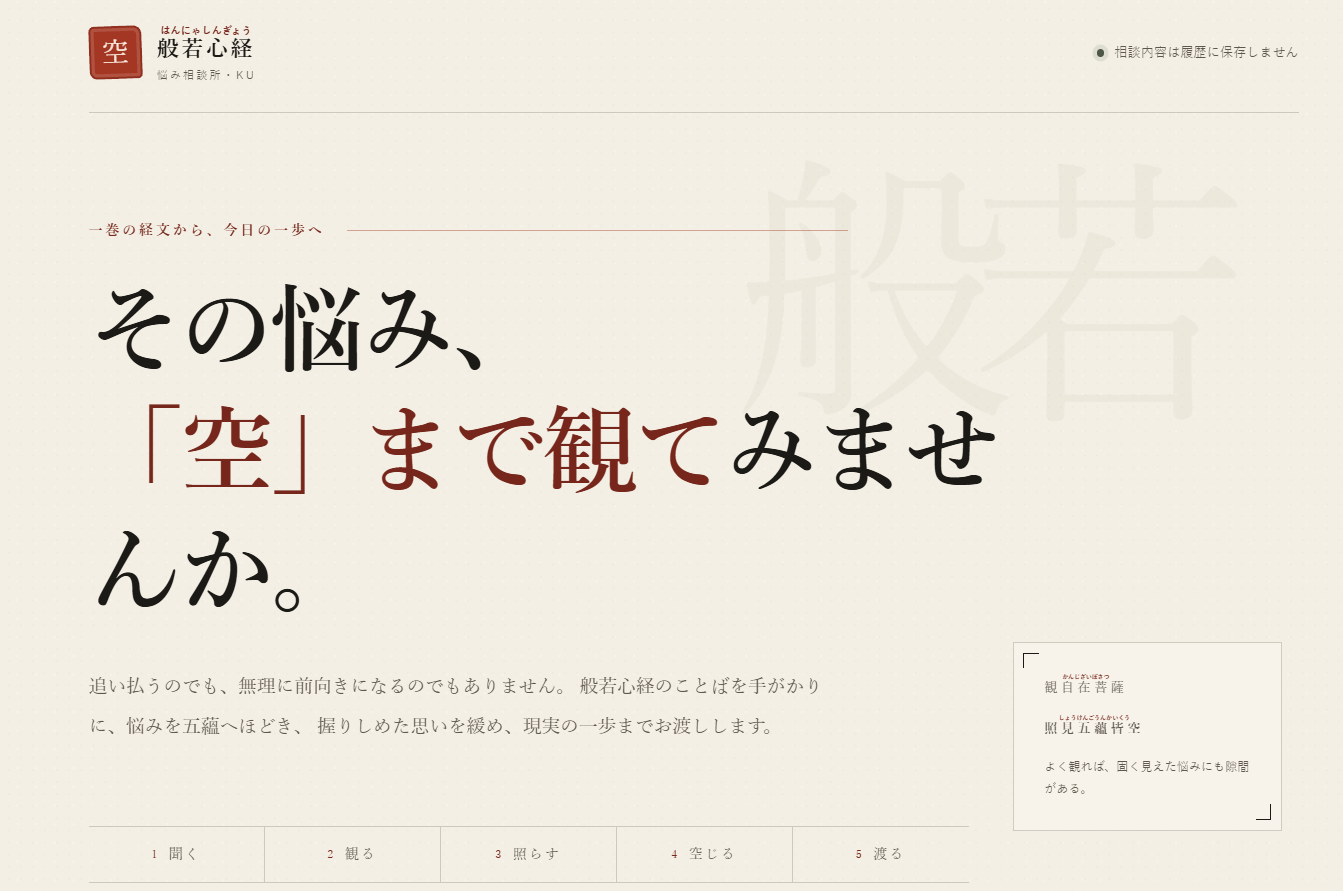
The experience follows a deliberate journey: listen, observe, illuminate, release, and cross to the next step.
How we built it
I built KU with Codex in the ChatGPT desktop app.
Codex helped me:
- Turn the original “thought debugger” concept into a complete counseling journey
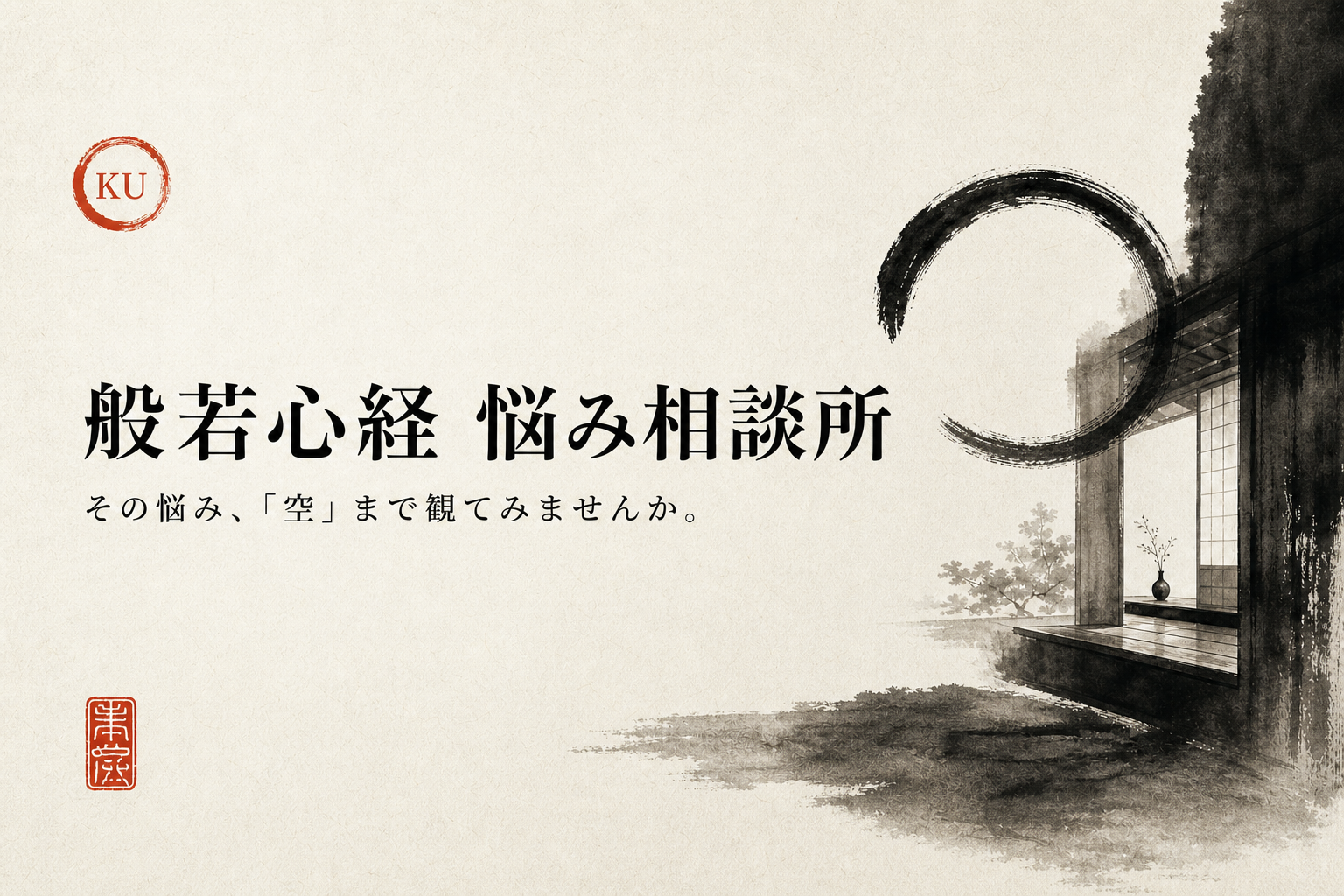
- Design the Japanese washi-paper, sumi-ink, and vermilion visual system
- Build the responsive interface with React and Next.js
- Create the GPT-5.6 integration with the OpenAI Responses API
- Define strict structured-output schemas for consistent five-layer reflections
- Add Japanese furigana to difficult Heart Sutra passages
- Implement safety behavior and a local fallback mode
- Iterate on copy, interaction design, accessibility, and deployment
The GPT-5.6 response includes an opening acknowledgment, a selected sutra passage, the Five Aggregates analysis, a short teaching, an assumption to release, and one concrete next step.
Challenges we ran into
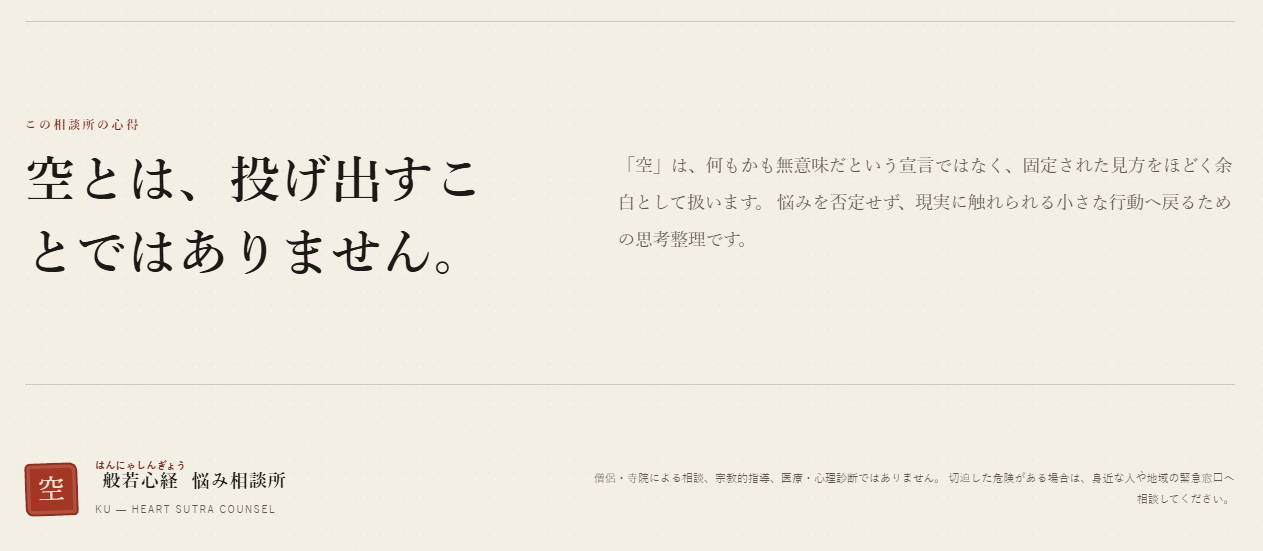
The hardest challenge was creating a sermon-like voice that felt contemplative without pretending to be a monk, religious authority, therapist, or medical professional.
We also needed to keep poetic language grounded in reality. Every reflection must distinguish facts from interpretations and finish with a testable action instead of abstract encouragement.
Other challenges included preserving Japanese typography across mobile screens, displaying furigana without disrupting the visual hierarchy, producing reliable structured responses, and keeping the experience usable when the API is unavailable.
Accomplishments that we are proud of
KU feels like a complete product experience rather than a generic chatbot. The interface, language, interaction flow, and AI output all support the same idea: a worry becomes easier to move when it is no longer treated as one solid object.
We are also proud of combining an ancient text with modern AI while clearly respecting religious, psychological, and safety boundaries.
What we learned
We learned that AI can do more than answer questions. It can help shape a reflective ritual with a beginning, transformation, and ending.
We also learned that culturally rooted AI experiences need careful language, transparent boundaries, and strong product design—not only a powerful model.
What's next for KU
Next, we want to add optional voice input, accessible recitation audio, multilingual explanations, and evaluation with both users and people knowledgeable about Buddhist texts. We also want to test whether the final “one small step” helps users take action after reflection.
Built With
- cloudflare
- codex
- gpt-5.6
- next.js
- openai
- outputs
- react
- responses
- structured
- typescript
- workers

Log in or sign up for Devpost to join the conversation.