Inspiration
We were inspired by the real-world impact of soil science in agriculture, environmental monitoring, and land management. Predicting Ksat (soil hydraulic conductivity) is crucial for understanding water flow through soil, and we wanted to explore how machine learning could support this.
What it does
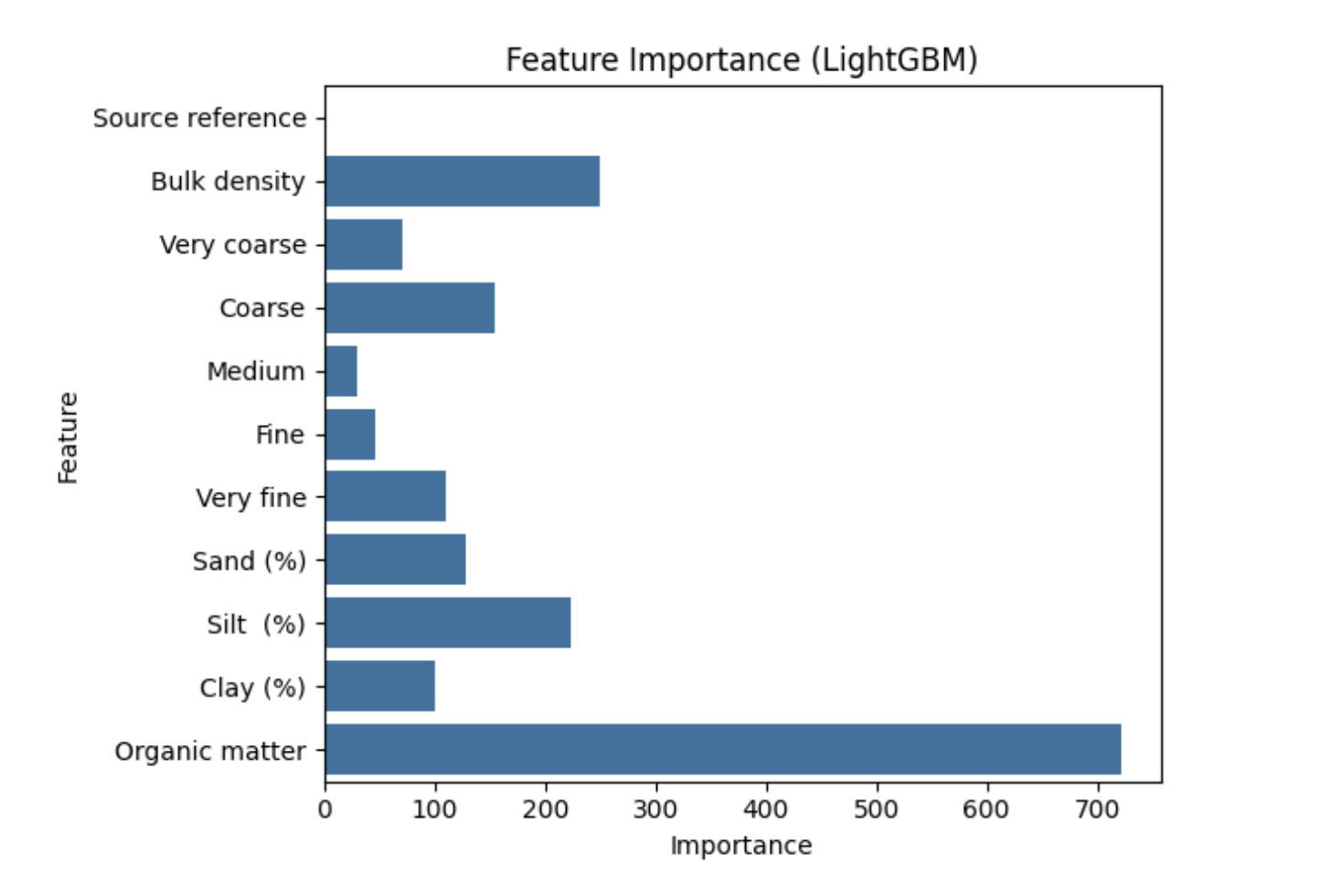
Our project predicts Ksat values using soil features such as bulk density, grain size distribution (very coarse to very fine), and sand/silt/clay percentages. We trained a regression model using LightGBM to make accurate predictions based on cleaned and curated datasets from multiple references.
How we built it
- Parsed and cleaned multiple sheets from a raw Excel file (
data.xlsx) - Removed columns and rows with excessive missing values
- Standardized and merged features into a unified dataset
- Selected relevant features based on soil science principles
- Trained a LightGBM regression model (with early stopping)
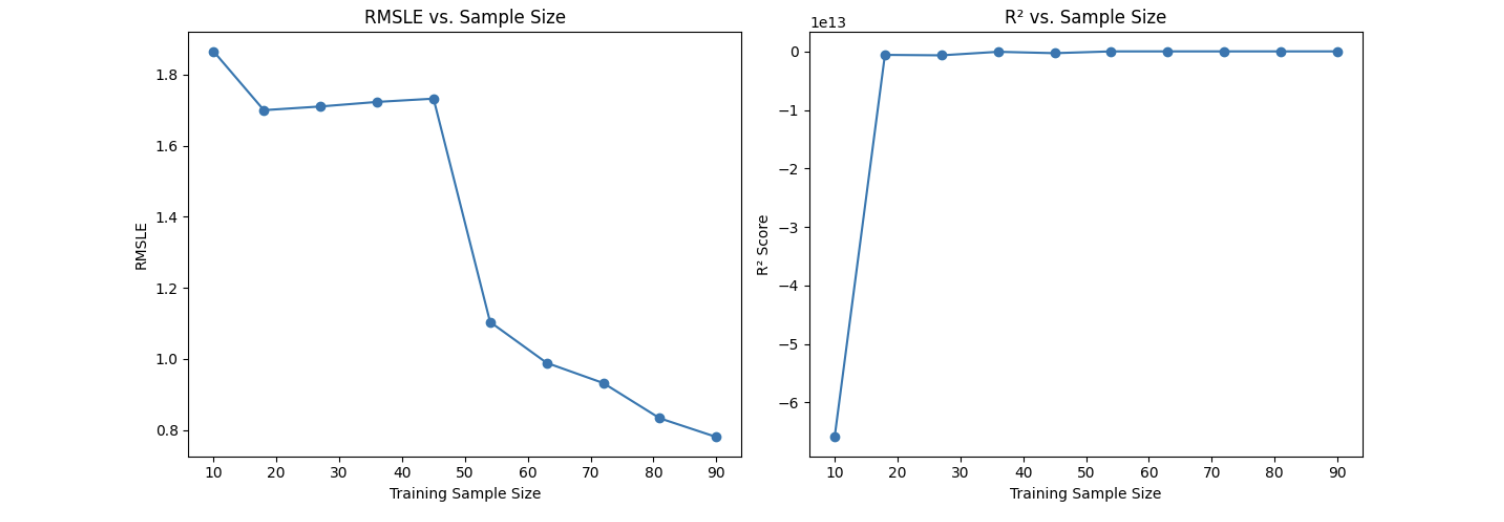
- Evaluated performance using R², MAE, and MSE
Challenges we ran into
- The original dataset was disorganized and inconsistent across sheets
- Many useful features had too much missing data to include
- Aligning headers and columns while merging sheets was time-consuming
- Limited time for hyperparameter tuning or advanced preprocessing
Accomplishments that we're proud of
- Achieved an R² score of 0.94, indicating strong model performance
- Successfully cleaned and aligned data from over 40 sheets
- Built a working model using real-world environmental data
- Learned how to build effective machine learning models from messy, multi-source data
What we learned
- How to handle and preprocess unstructured Excel data
- The importance of feature selection in environmental modeling
- How LightGBM works and how to interpret model performance metrics
- That small but high-quality datasets can lead to meaningful results
What's next for KSATQuest:RegressionRunoff_JASP
- Implement advanced hyperparameter tuning (e.g., grid search, Bayesian optimization)
- Address outliers and apply log transformations to stabilize variance
- Test the model on new soil datasets for generalization
- Build a lightweight web app to visualize predictions and feature impacts
