-
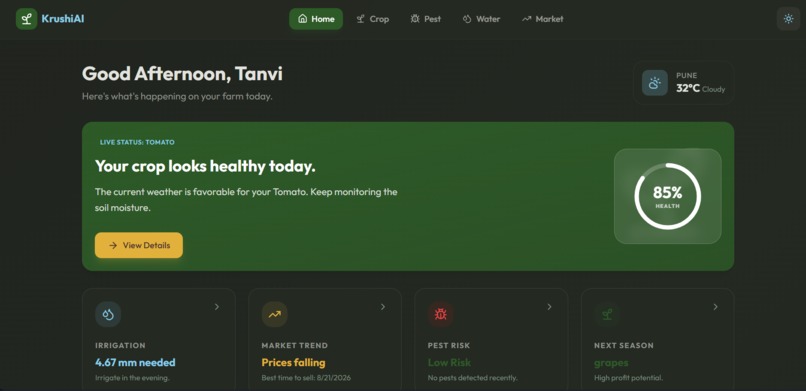
Unified Farmer Dashboard
-
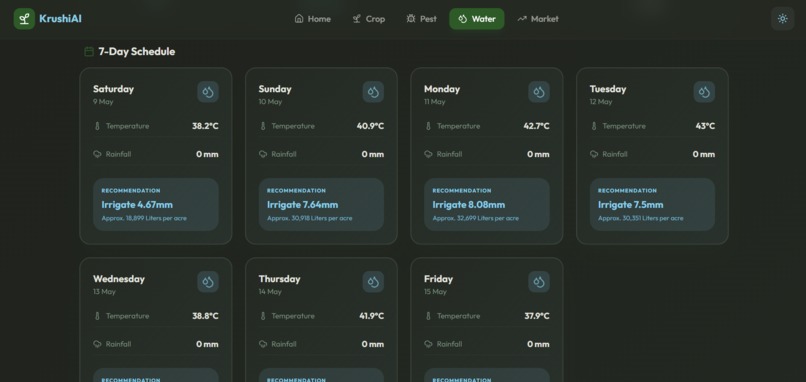
Irrigation Advisor Module
-
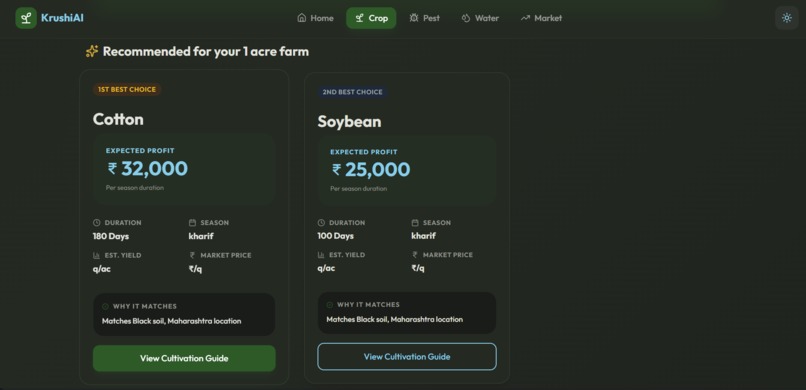
Irrigation Advisor Module
-
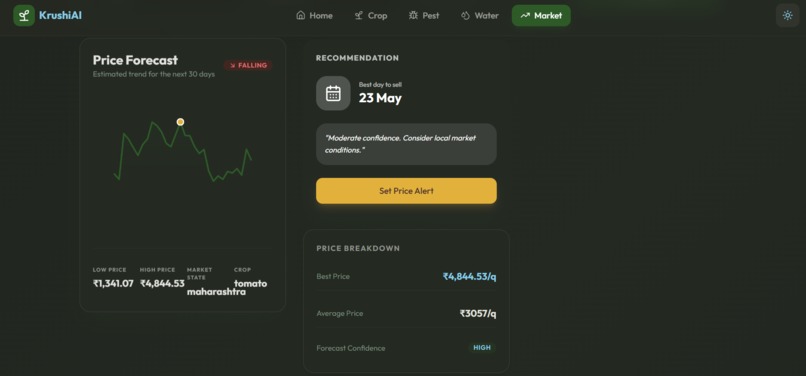
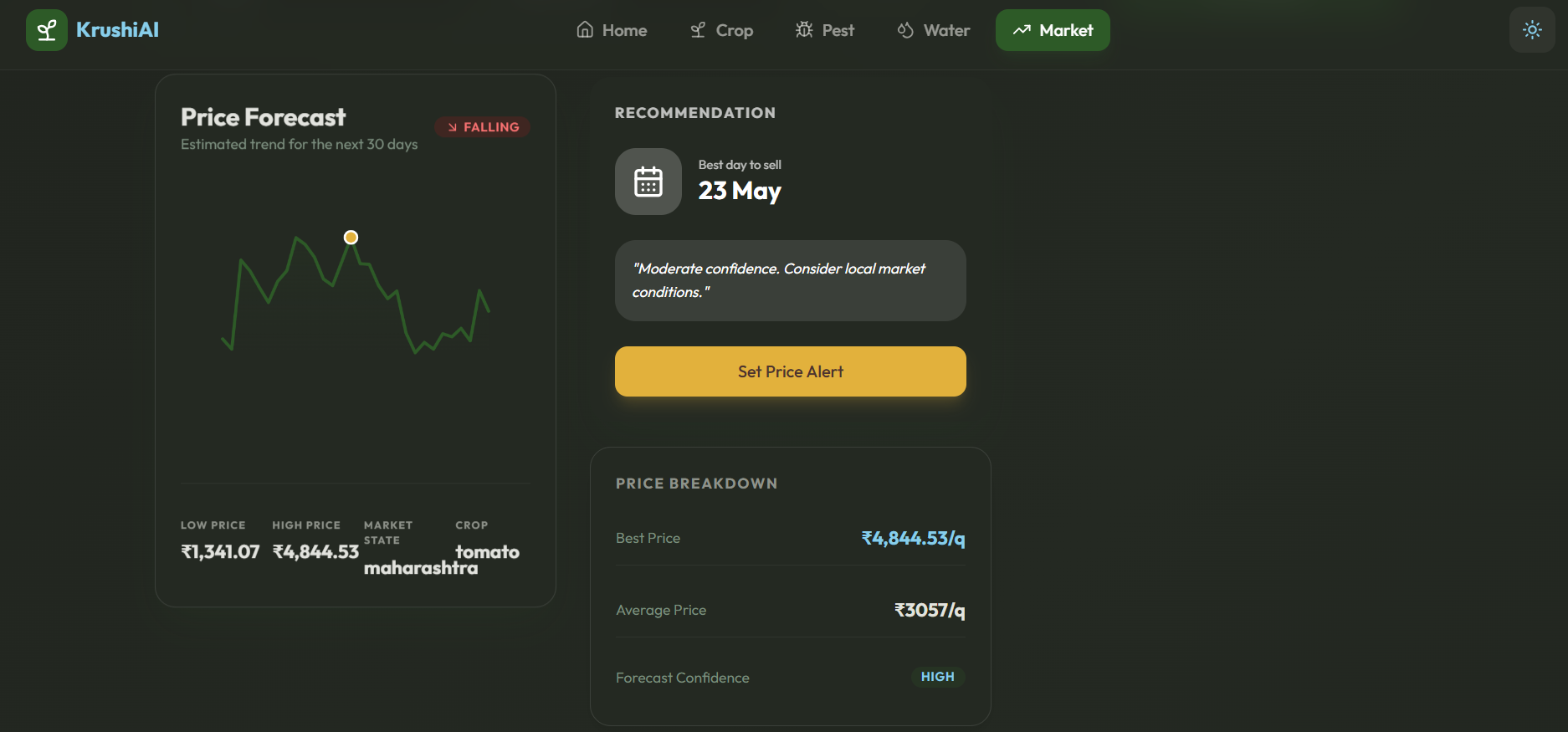
Market Predictor Module
-
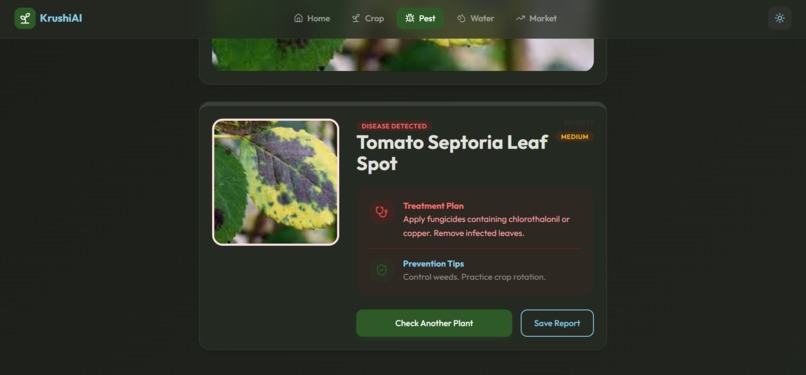
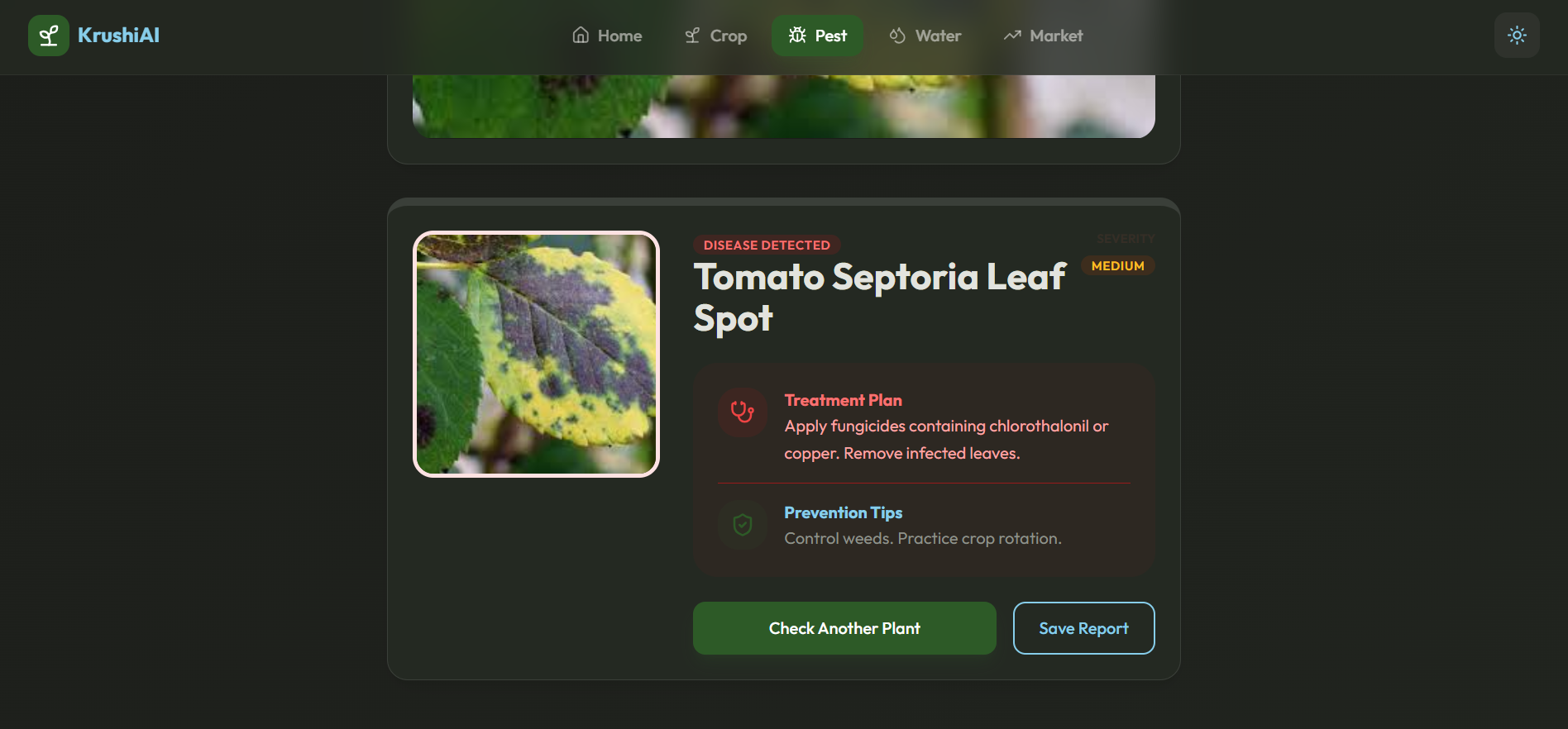
Pest Detection Module
-
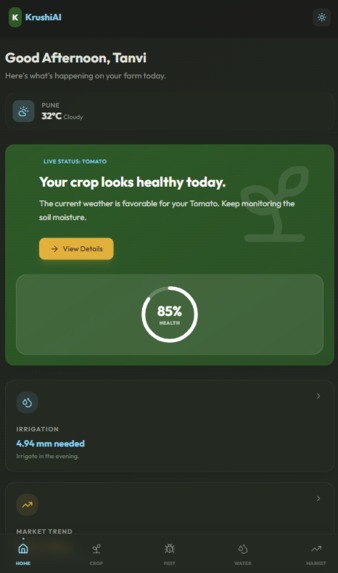
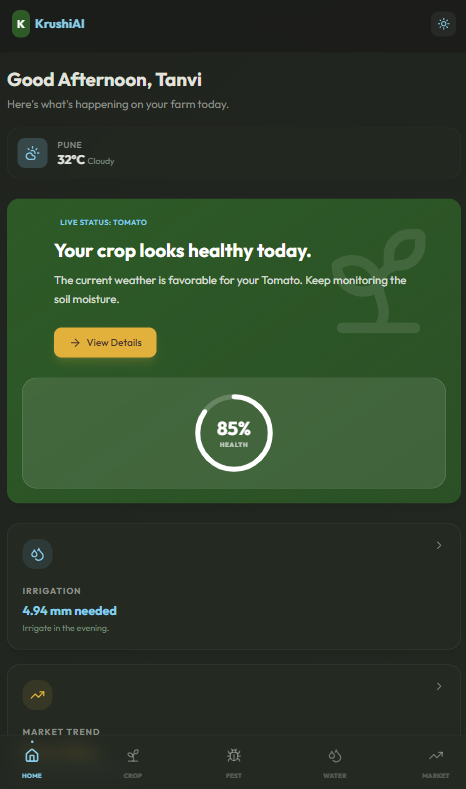
Responsive Mobile View
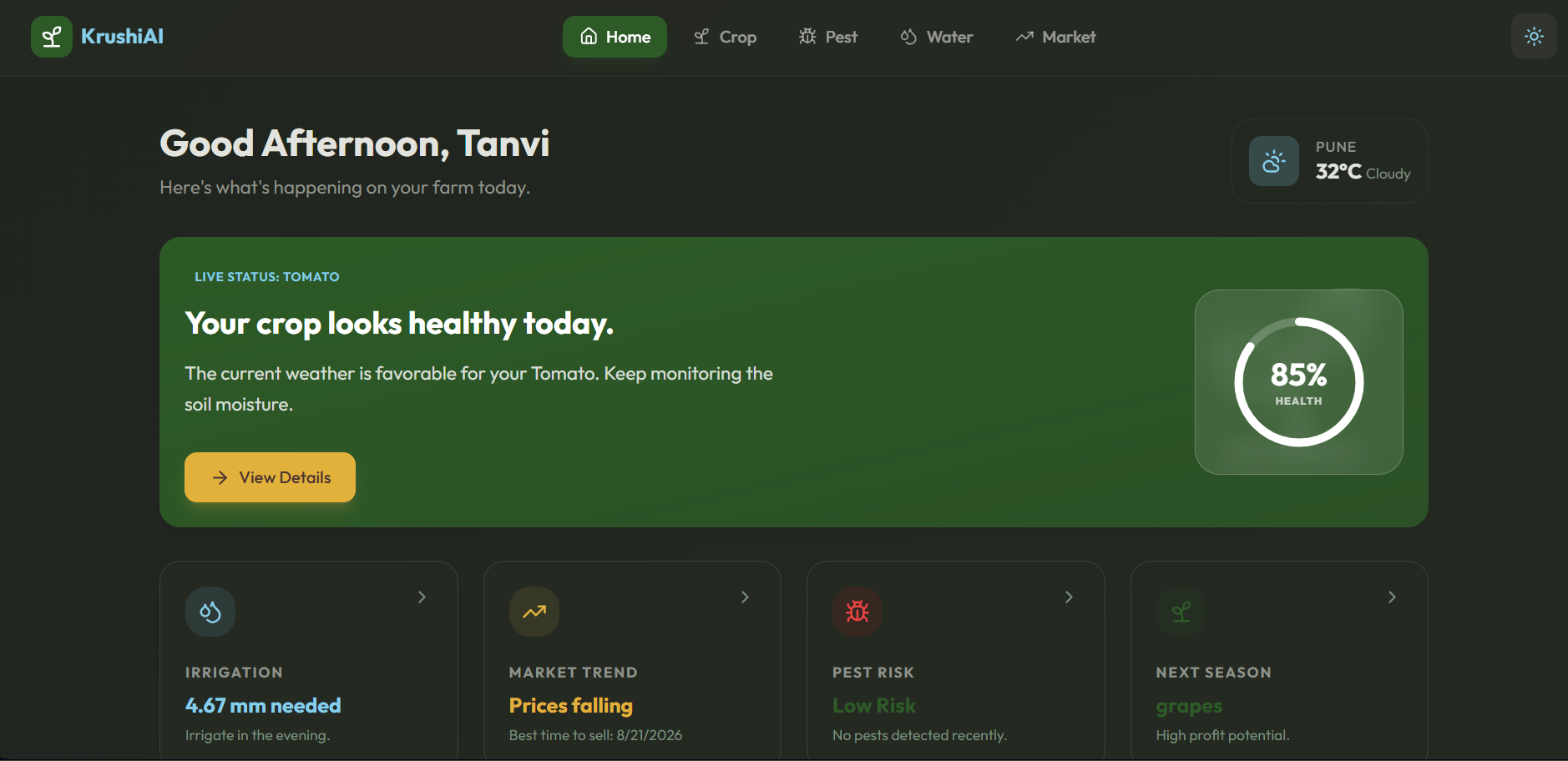
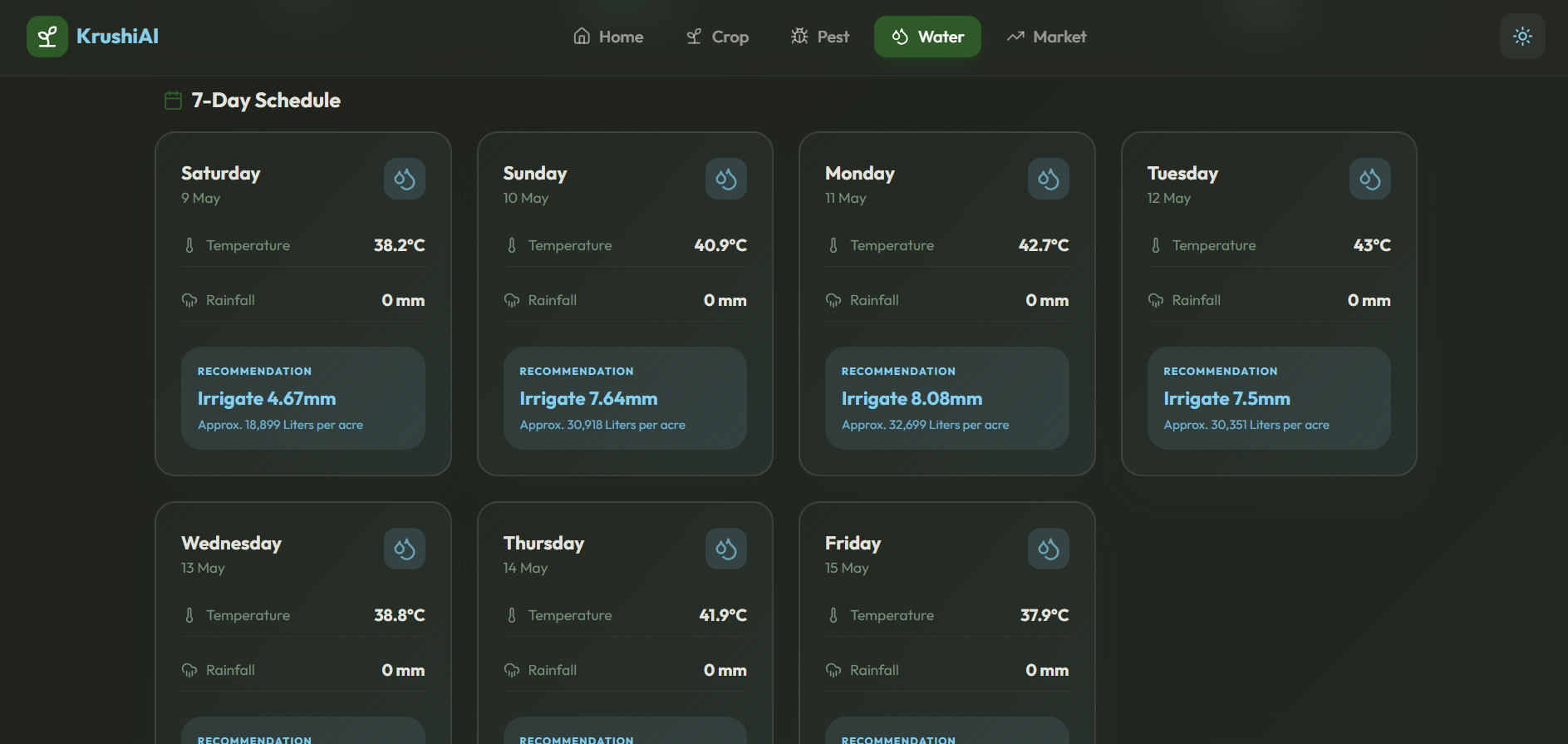
Inspiration
KrushiAI was inspired by the fragmented way agricultural decisions are made, where farmers depend on multiple disconnected sources for crop selection, pest detection, irrigation planning, and market pricing. The aim was to unify these into a single AI-assisted decision support system that simplifies farming decisions using data.
What it does
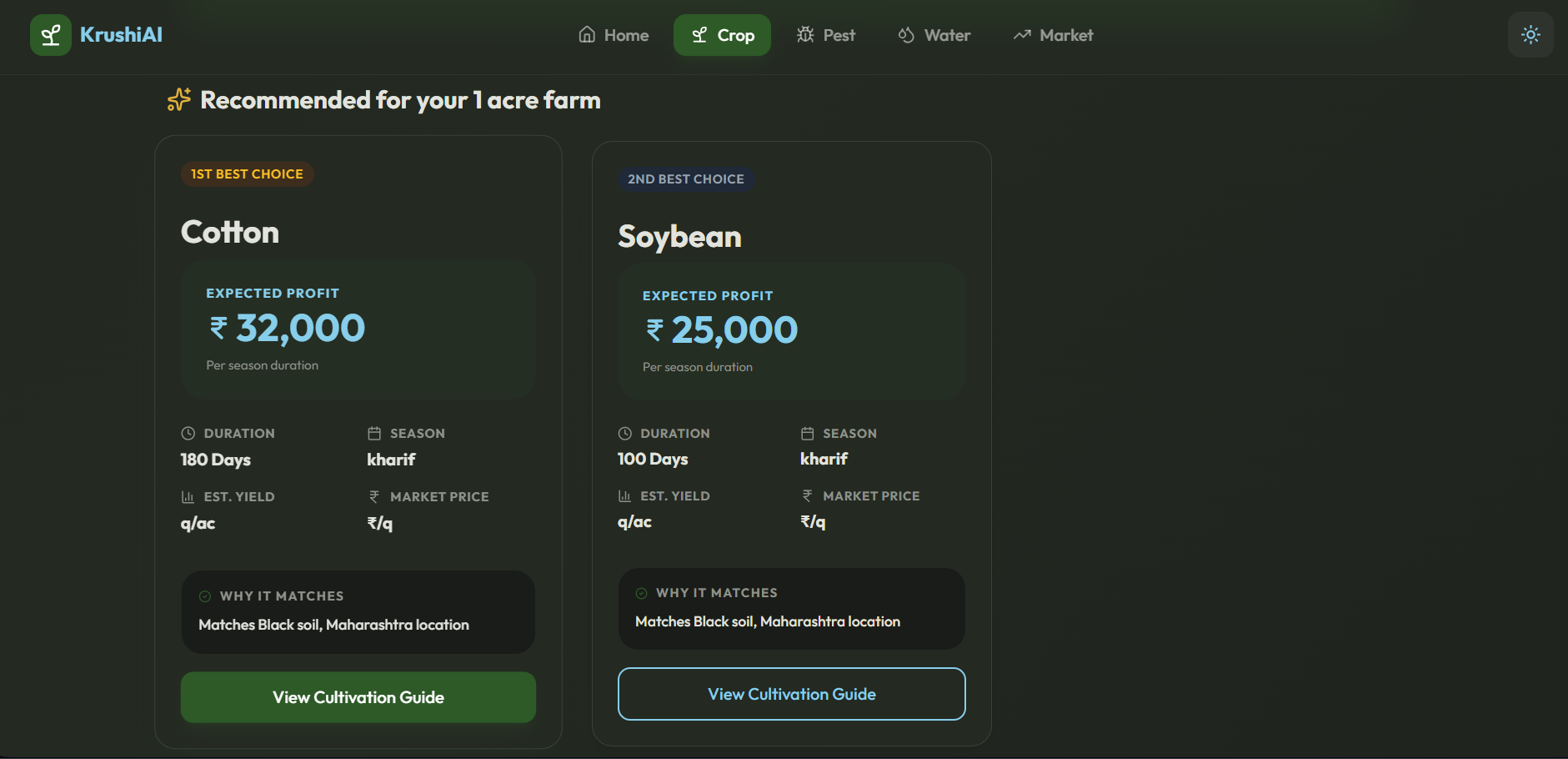
KrushiAI is a full-stack AI-based agricultural advisory platform that provides crop recommendations based on soil and climate inputs, detects plant diseases from images, generates irrigation schedules using weather data, and predicts market prices for agricultural commodities. It acts as a unified decision-support system for farmers.
How I built it
The system is built using a React.js frontend and a FastAPI backend. The backend exposes modular REST APIs for each AI feature. Machine learning models are used for crop recommendation and market prediction, while a computer vision model handles pest detection from leaf images. External APIs like Open-Meteo are used for weather data integration. SQLite is used during development for lightweight storage and logging.
Challenges I ran into
A major challenge was integrating multiple AI workflows with different input types (images, tabular data, and time-series data) into a single consistent architecture. Another challenge was keeping the backend modular while ensuring smooth communication between frontend modules and independent AI services.
Accomplishments that I'm proud of
Successfully designing and implementing a modular AI system where each agricultural feature operates independently but integrates into a unified platform. Building a clean full-stack architecture that connects machine learning, APIs, and a responsive frontend dashboard.
What I learned
This project improved my understanding of full-stack development, API design with FastAPI, React-based modular UI systems, and practical integration of machine learning models into real-world applications. It also strengthened my ability to design scalable and maintainable AI workflows.
What's next for KrushiAI
Future improvements include implementing authentication for personalized user experiences, migrating to PostgreSQL for better scalability, adding multilingual support for farmers, and deploying the system using containerization. The long-term goal is to evolve KrushiAI into a scalable agricultural intelligence platform.
Built With
- axios
- fastapi
- framer-motion
- huggingface
- mobilenet-v2
- open-meteo-api
- pydantic
- python
- pytorch
- react
- scikit-learn
- sqlite
- tailwind
- torchvision

Log in or sign up for Devpost to join the conversation.