Inspiration
Two in five college students face food insecurity , and about a quarter of loyalty points never get used. That is food people already paid for.
We asked: can an AI agent find the food money sitting in your rewards apps and get it to you, without spending a cent you did not approve?
What it does
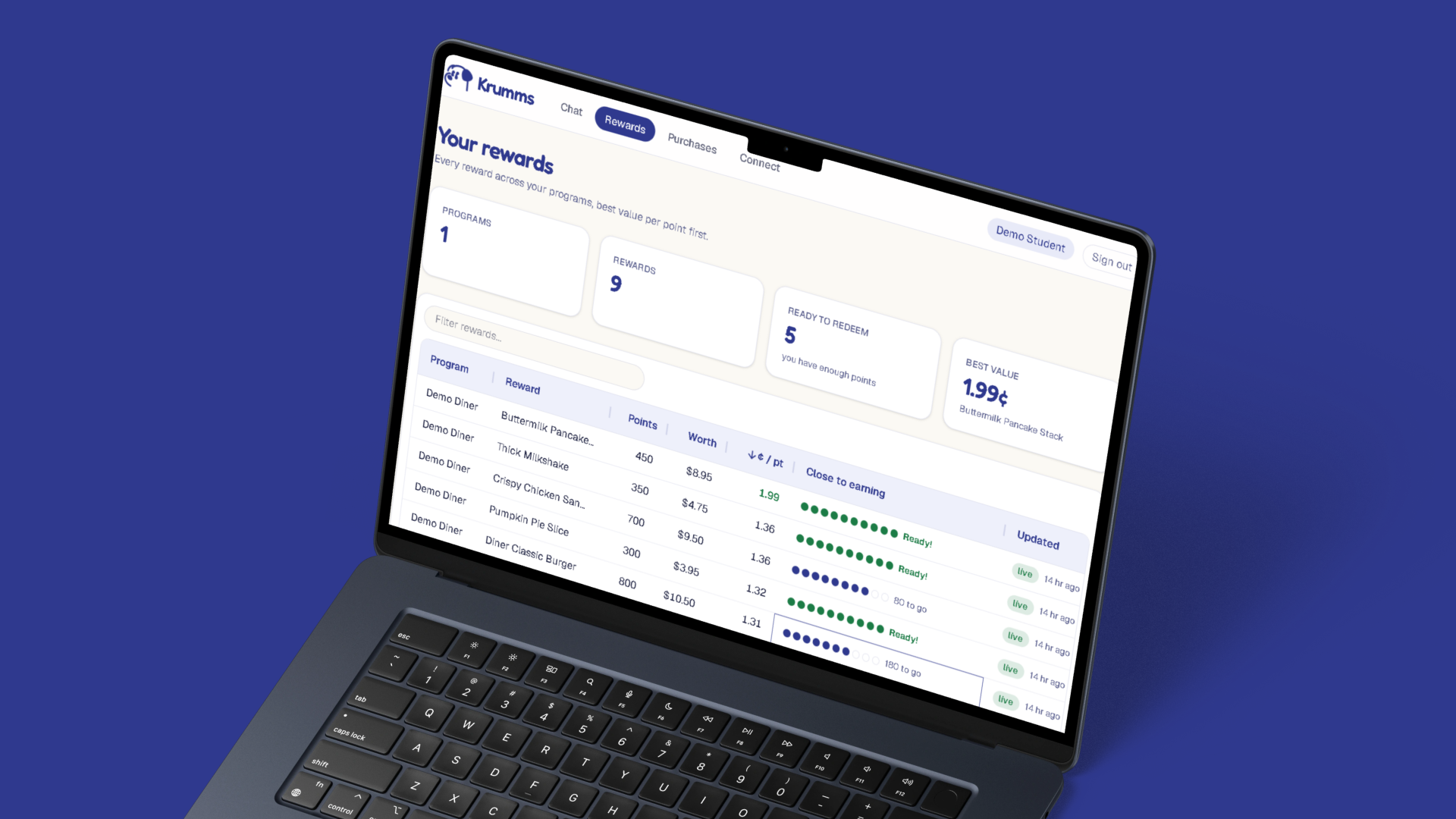
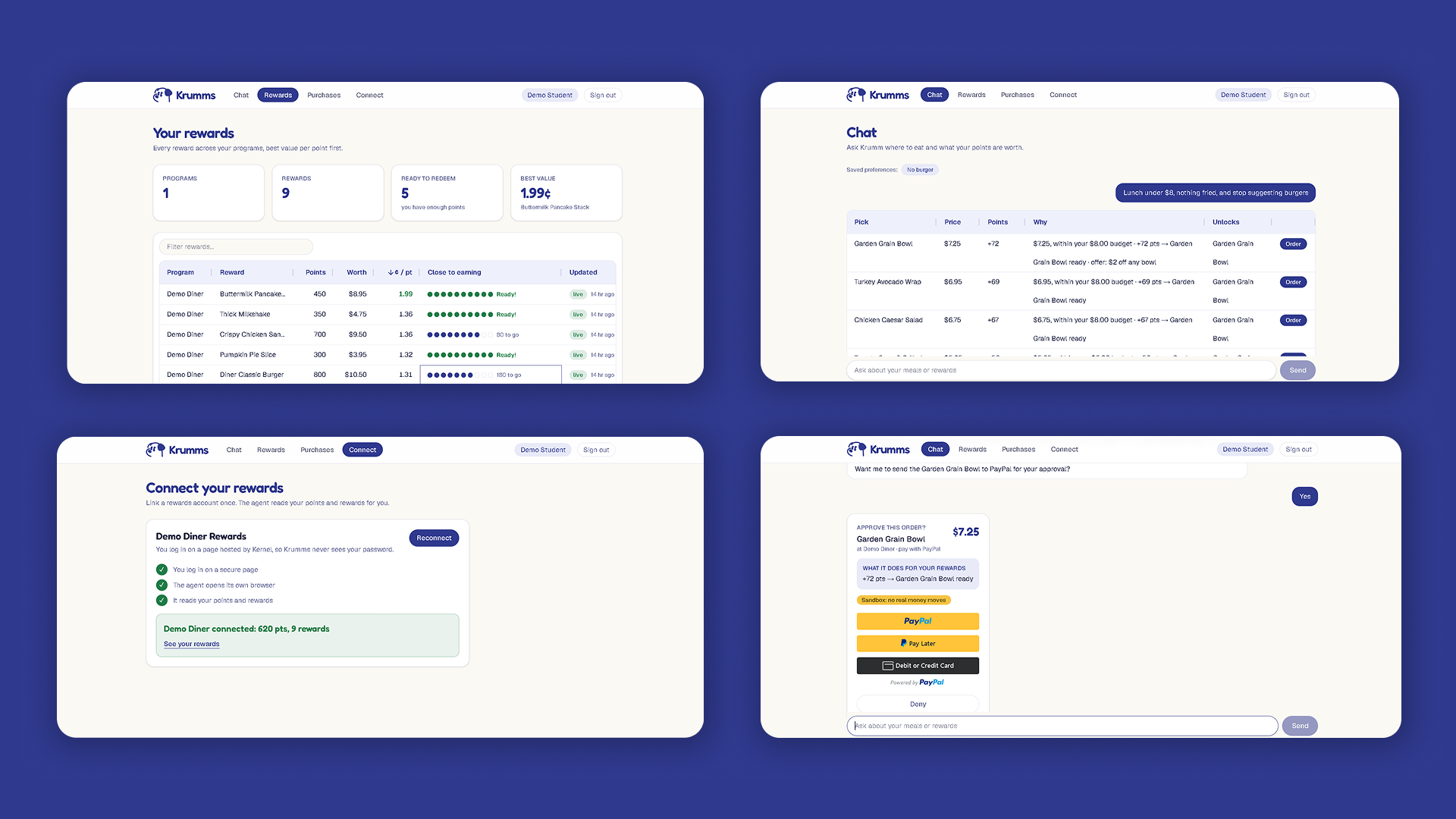
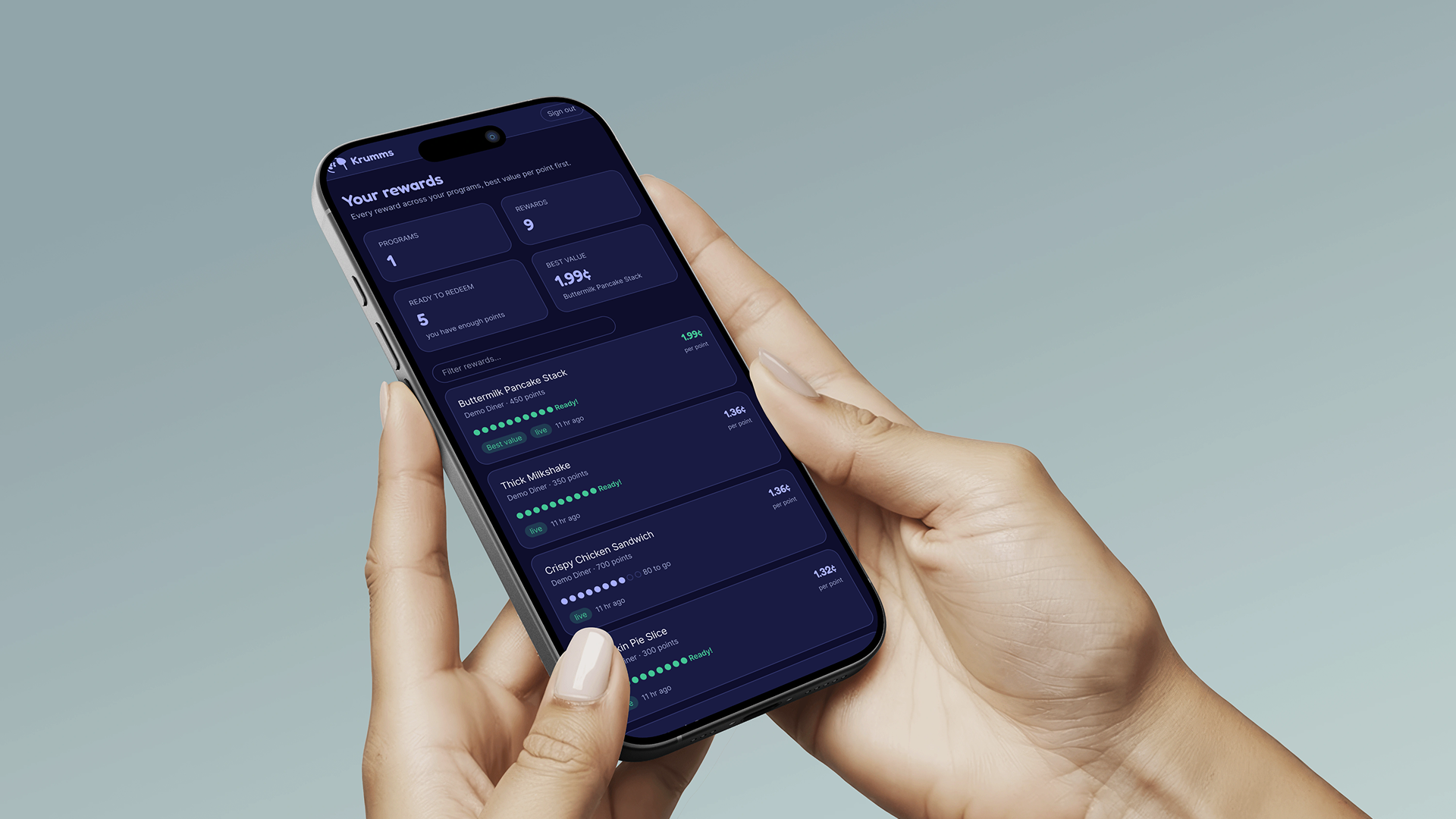
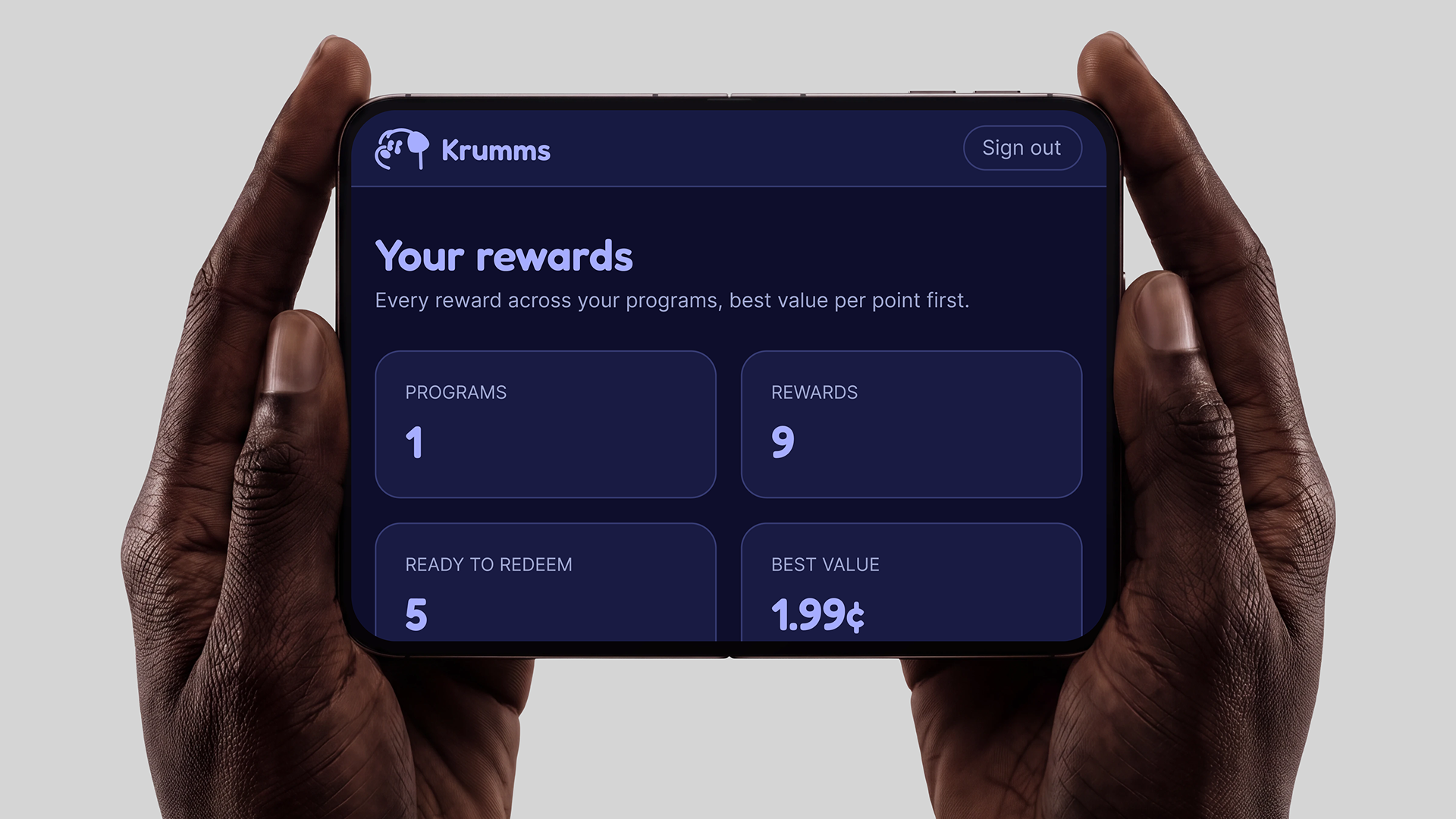
Krumms reads where you eat from your PayPal history and flags places where you are not in the rewards program. You log in to a rewards site on a Kernel-hosted page (Krumms never sees your password), and the agent reads your points in its own browser. Ask for "lunch under ten dollars, no burgers" and it recommends a pick with its reasons, then pays with PayPal, but only after you approve.
How we built it
Next.js and Postgres on Render. The agent is Claude, via the Vercel AI SDK, with tools for purchases, rewards, scoring and approval. Grids use AG Grid. PayPal runs in the sandbox through the APIMatic-generated PayPal Server SDK: Transaction Search for purchase history, and Orders v2 for checkout, where only the server's capture step records a purchase.
Claude extracts rewards from the page into a strict schema, and every number it reports must appear in the page text, or the read is rejected. Scoring is plain code; the model only explains it.
Value per point. A reward that costs c points and is worth p cents on the menu has value:
$$v = \frac{p}{c}$$
It is flagged as a poor use of points when v is below 70% of the program's median value per point (m):
$$v < 0.7 \cdot m$$
Close to earning. A reward is close when the points still needed (n) fit in two typical visits, where a is your average purchase in dollars and r is the program's earn rate in points per dollar:
$$n \le 2 \cdot a \cdot r$$
Pending points. Points from purchases made after the balance was last read (at time T) show as pending, rounded down per purchase of d dollars:
$$P = \sum_{t > T} \lfloor d \cdot r \rfloor$$
Challenges
- Real rewards sites block automation. We built Demo Diner, a fictional restaurant that uses the same adapter and extraction path.
- PayPal's sandbox surprised us. Transaction Search only reads the account that owns the credentials, new data took up to three hours to appear, and each checkout reappeared under a different ID. We match those by PayPal's reference ID so nothing is counted twice.
- Three people, three days. Agreeing on data contracts first let us build the agent and its UI in parallel, but a shared database meant one bad reset could wipe everyone's demo data.
What we learned
Test against real data early. Keep the model out of the arithmetic. In agentic payments, the hard part is the approval: no charge without consent, no double charge on a double click, and an honest message when a capture fails.
What's next
Official partnerships with rewards programs, PayPal partner access so students can link their own accounts, and alerts when a reward is one visit away.

