-
-
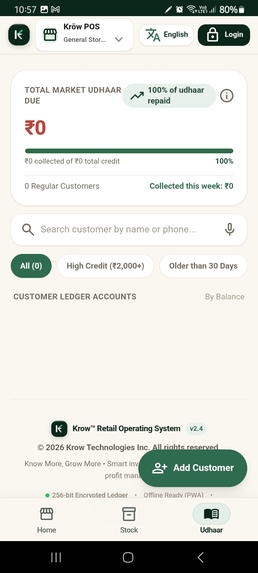
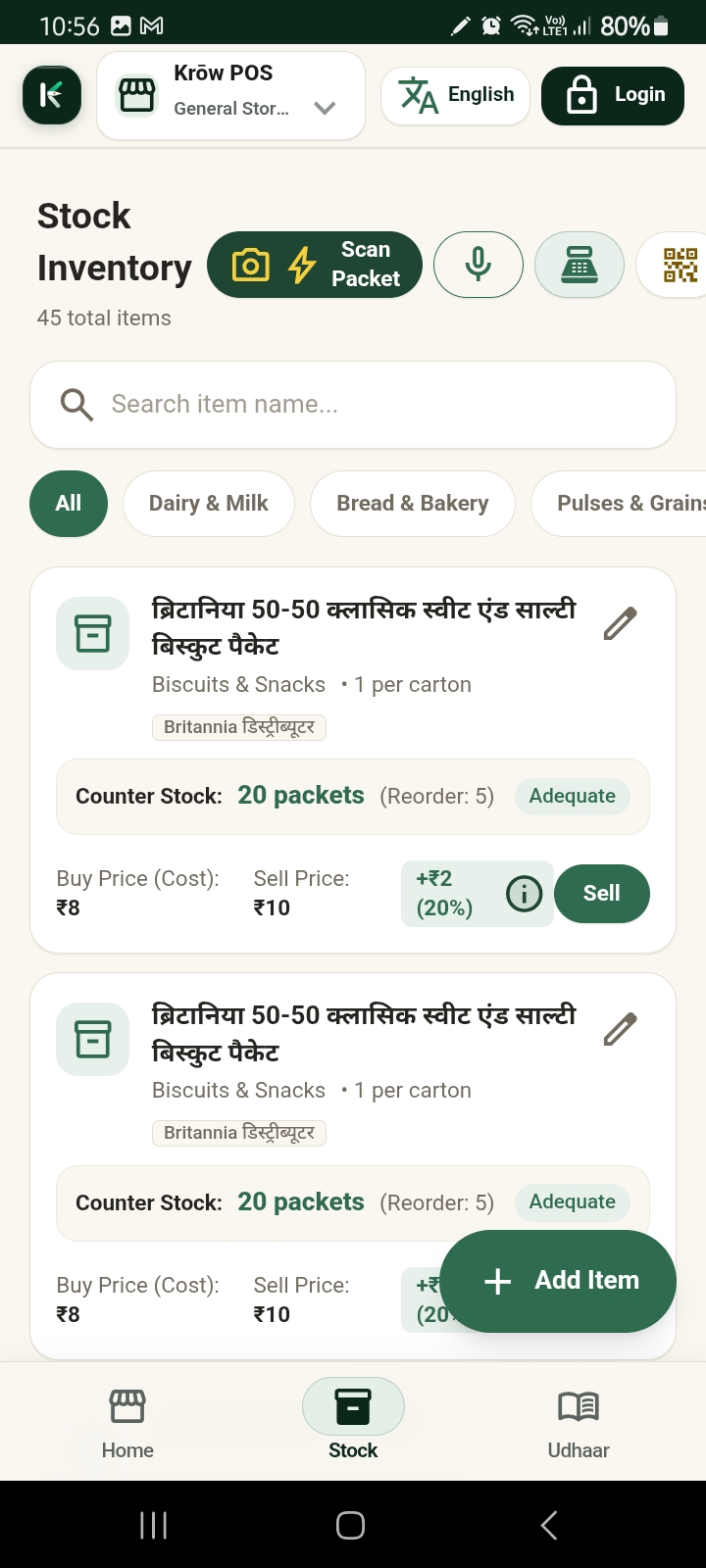
Stock Tab
-
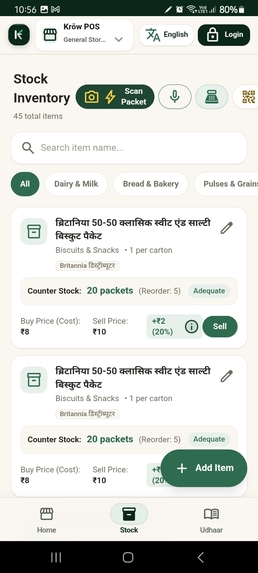
Udhaar/Credit Tab
-
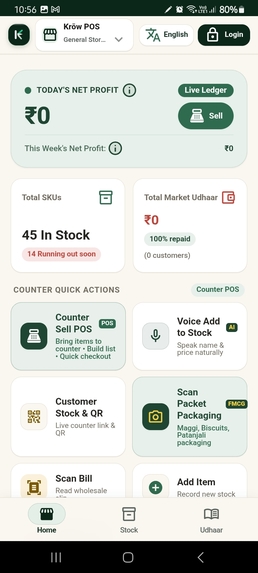
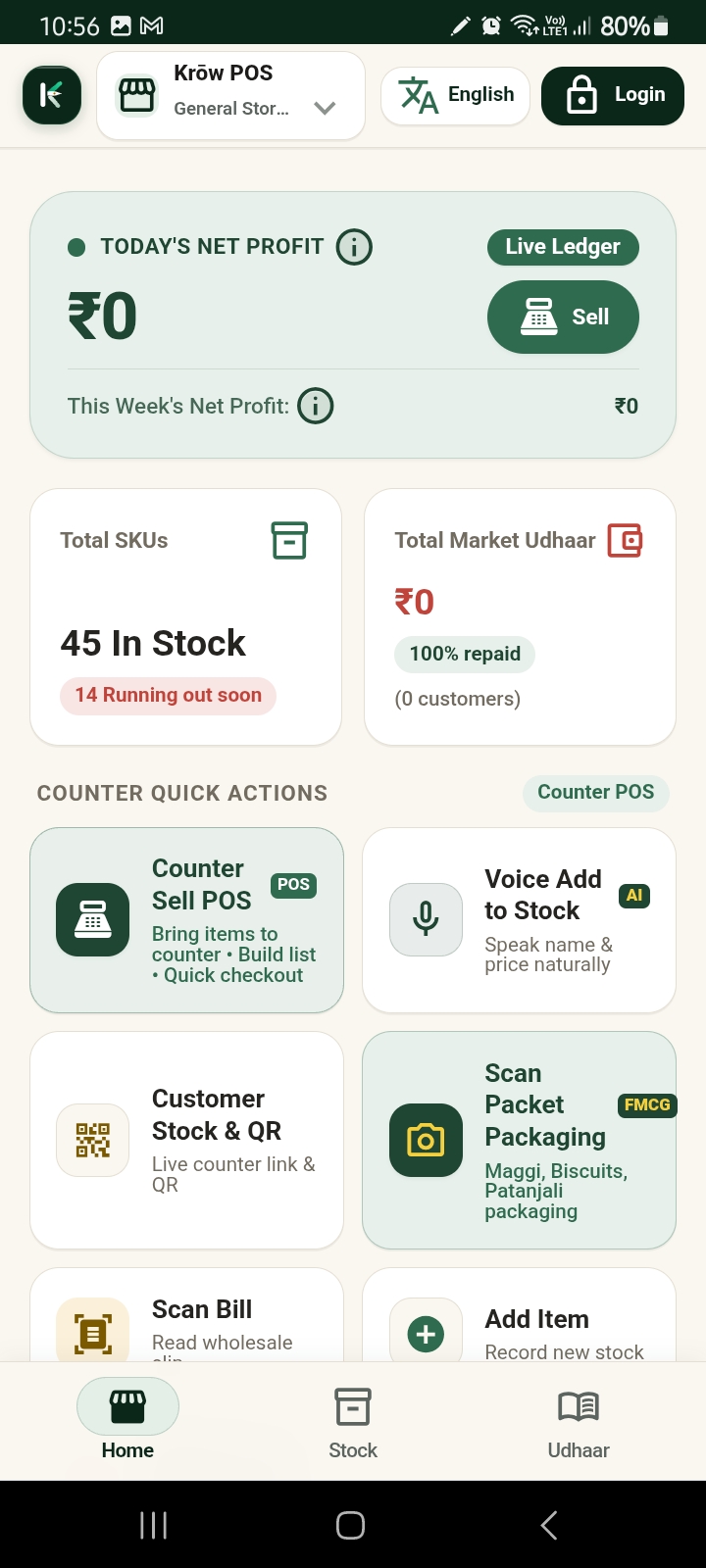
Home Page
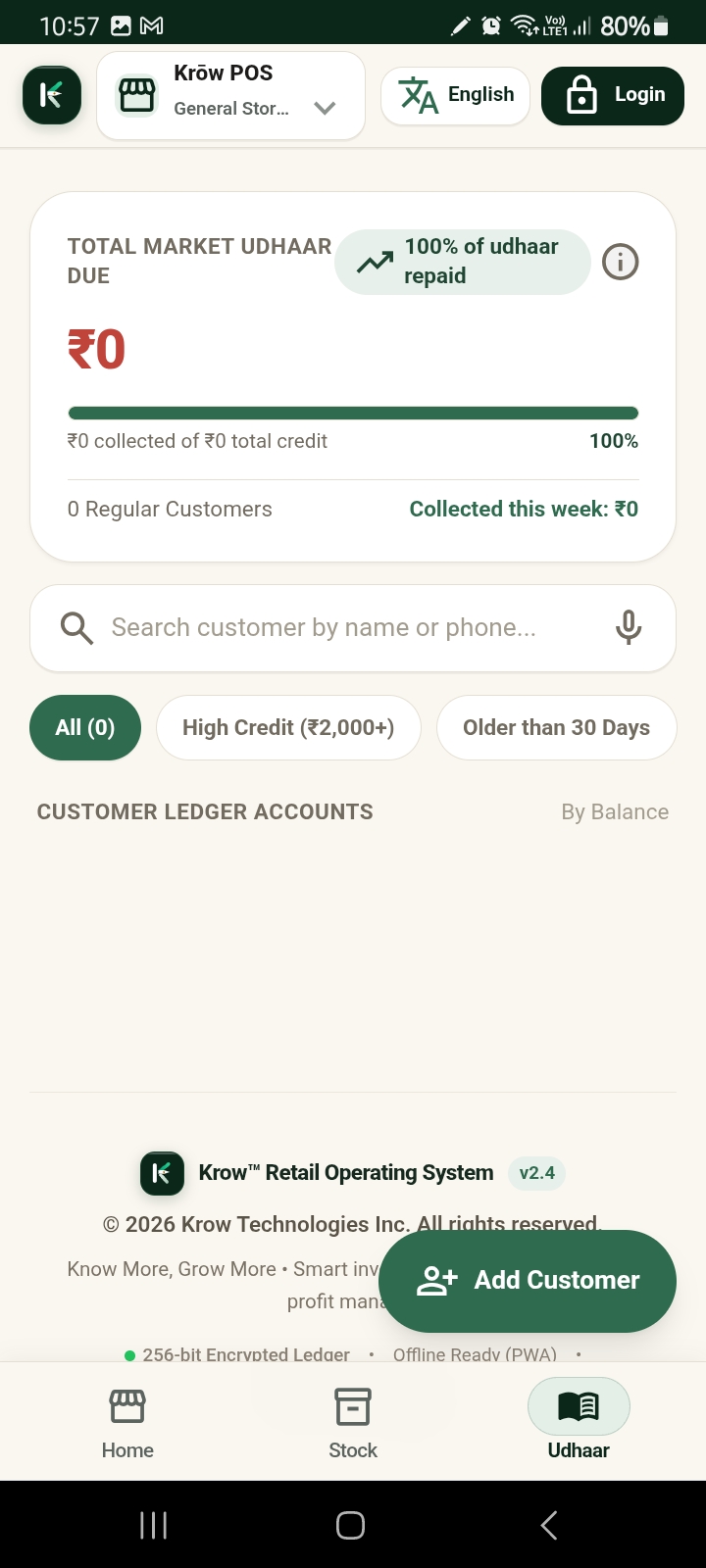
Inspiration
I grew up watching my parents run their own general store — tracking stock, customer credit (udhaar), and profit almost entirely from memory or a paper notebook. The notebook had no structure: there was no way to see what one customer owed without flipping through pages, and existing shop-management apps assumed English fluency and forced rigid units like "kg," which didn't match how my parents actually spoke about their own stock. Krow started from that real, lived problem, not a hypothetical one.
What it does
Krow is a multilingual (Hindi, Punjabi, English, Japanese) stock, credit, and profit tracker built specifically for small shopkeepers:
- Tracks stock in whatever units a shop actually uses, not just kg or pieces
- A full udhaar (credit) ledger with running balances and WhatsApp reminders
- "Night Count" — type what's left at closing, and Krow calculates what sold and the day's real profit automatically, instead of logging every sale
- AI-powered bill scanning (Google Gemini) that reads a photographed handwritten wholesaler bill and extracts items, correctly telling a purchase count apart from a weight description
- An automated reorder list that can be sent straight to a supplier over WhatsApp
How I built it
Krow is a mobile-first Progressive Web App (installable free, no app-store fee) built with React and Firebase (Firestore + Authentication), so each shop's data stays private to their own account. Bill scanning uses Google's Gemini vision model. I iterated on the design and prompts using Google AI Studio and Google Stitch.
Challenges I ran into
- Getting true language consistency was harder than expected — keeping Hindi, Punjabi, English, and Japanese from mixing on the same screen took several real rounds of fixing, not one pass
- An early version of the AI bill scanner misread weights as purchase counts (e.g. reading "500g Garam Masala" as 500 units instead of one 500g item) — fixing it meant testing against real, messy handwritten bills, not clean examples
- Debugging an authentication/backend setup that worked in preview but failed once deployed — taught me the real difference between "looks done" and "actually verified"
- Balancing building this with being a full-time student
What I learned
That a prototype exists to test assumptions, not to be finished — nearly every real improvement in Krow came from watching an actual shopkeeper (my own parents) use it and get confused by something I'd assumed was obvious.
What's next for Krow
Testing with more real shops beyond my own family's store, barcode-based "scan to sell" for packaged goods, and a public read-only stock page.

Log in or sign up for Devpost to join the conversation.