Inspiration
Kronos was inspired by a problem almost every student knows too well: having a long list of assignments, classes, deadlines, and personal responsibilities, but no clear way to turn all of that into a realistic weekly plan.
Most productivity tools help you collect tasks, but they do not help you answer the harder questions: Can I actually finish this on time? What happens if I get sick? Which task should I do first? How do I plan around my real calendar without burning out?
We wanted to build a system that feels less like a checklist and more like a planning companion. Something that helps students capture the chaos, organize it, and pressure-test their plans before real life turns a manageable week into a stressful one.
What it does
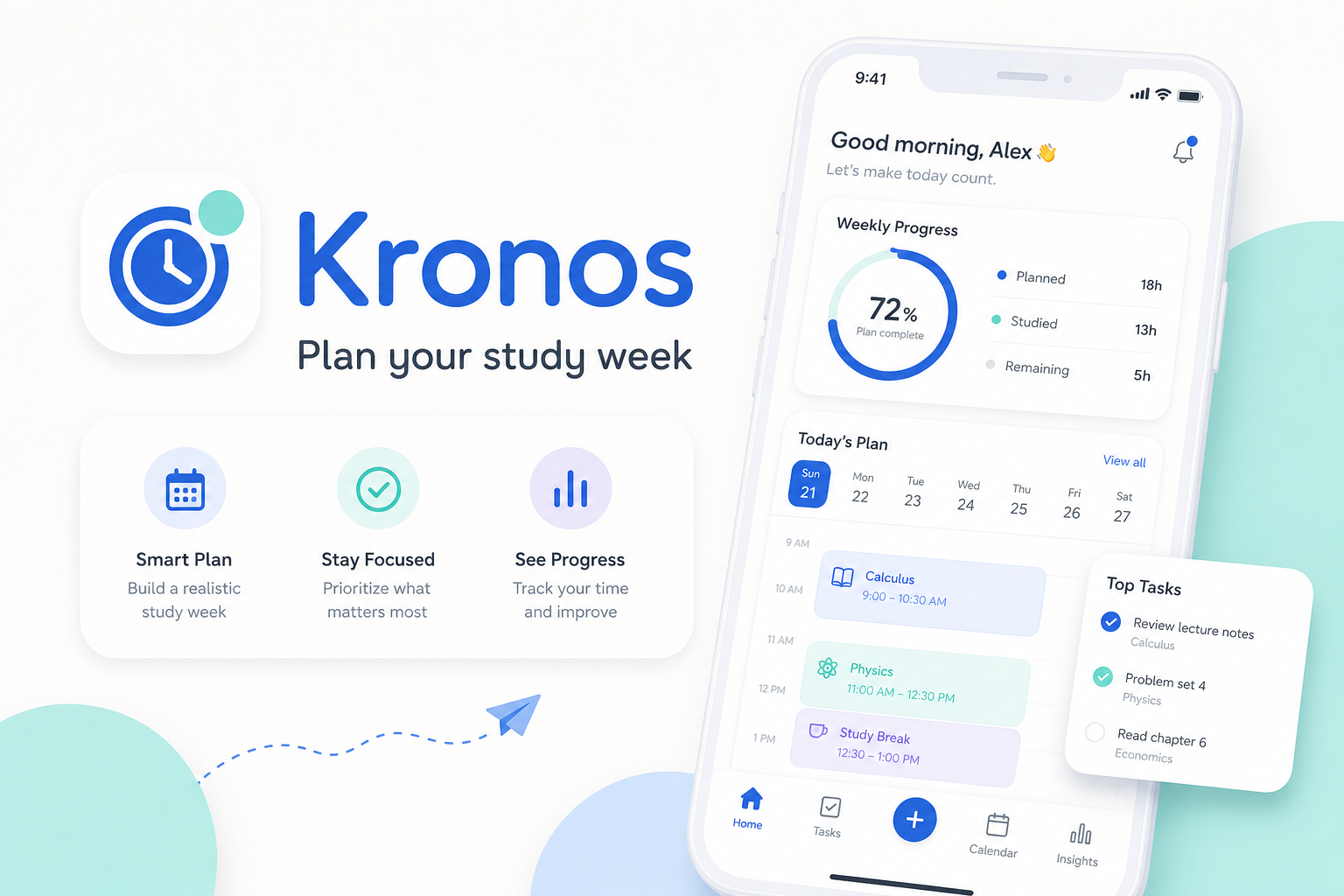
Kronos is an AI-assisted study planning system that helps students go from unstructured tasks to a realistic plan.
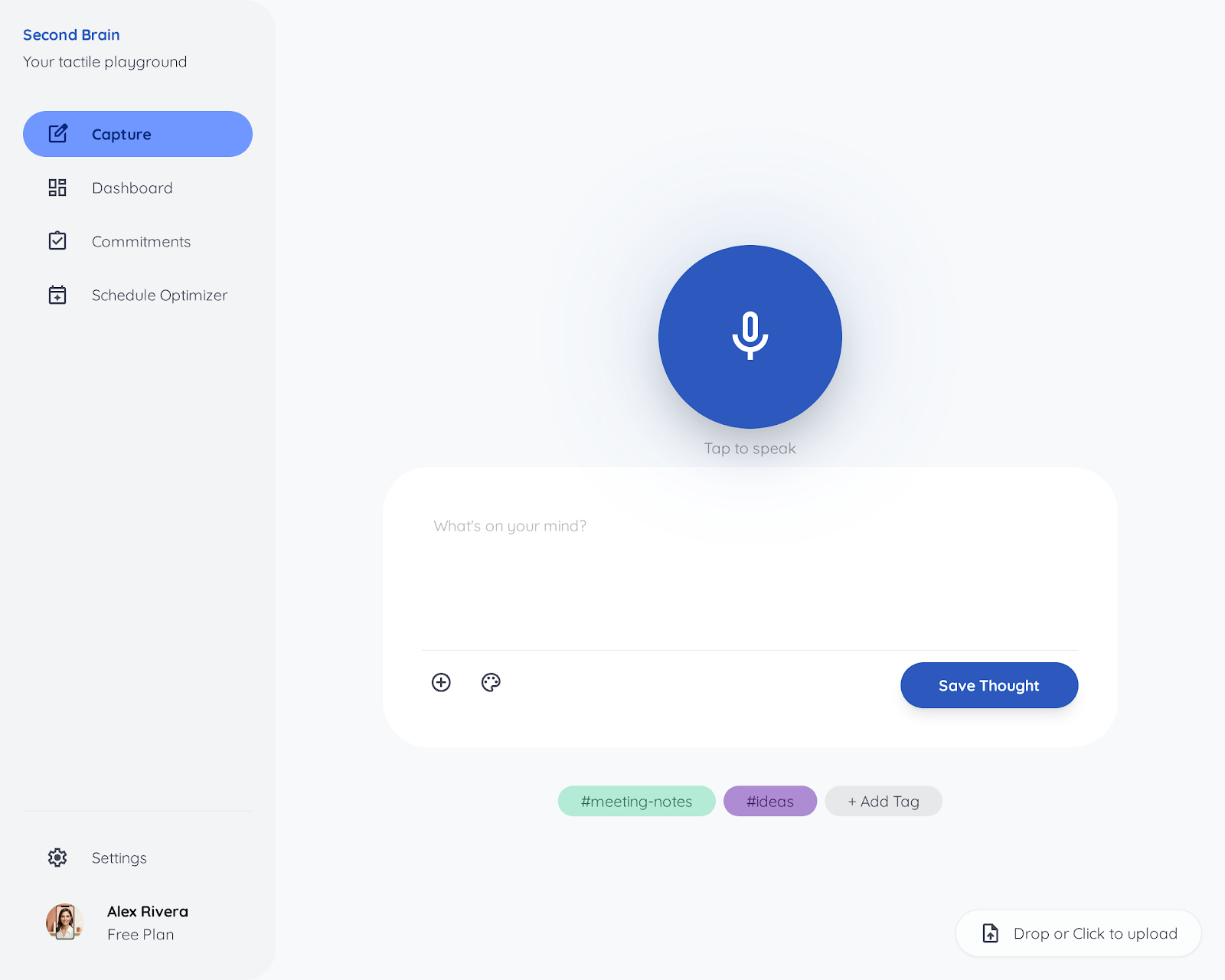
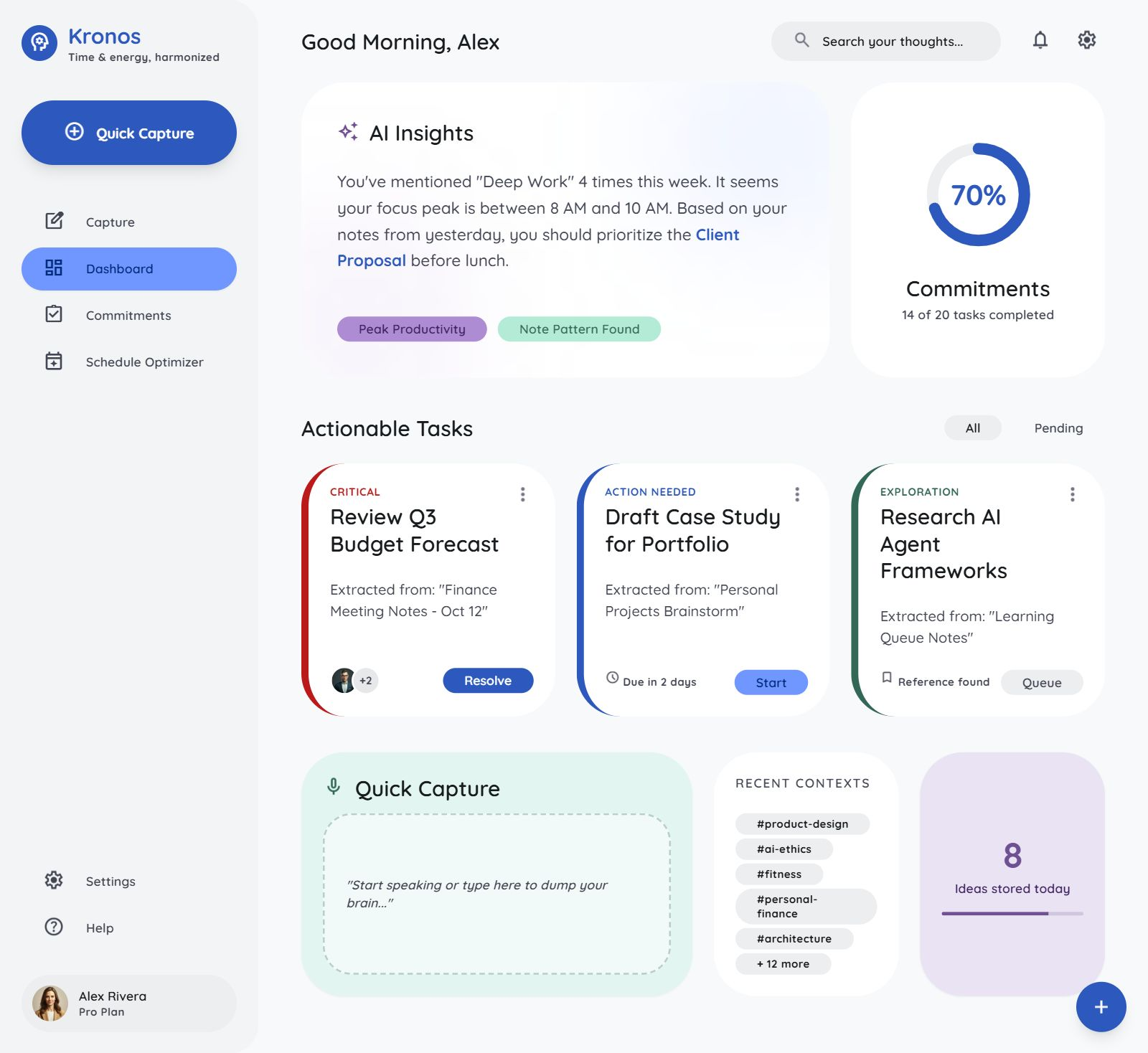
A user can paste a messy brain dump or upload a syllabus, and Kronos extracts structured tasks with due dates, workload estimates, and cognitive intensity. From there, the app can:
- build a study plan around real calendar commitments
- simulate stressful scenarios and see whether the plan still survives
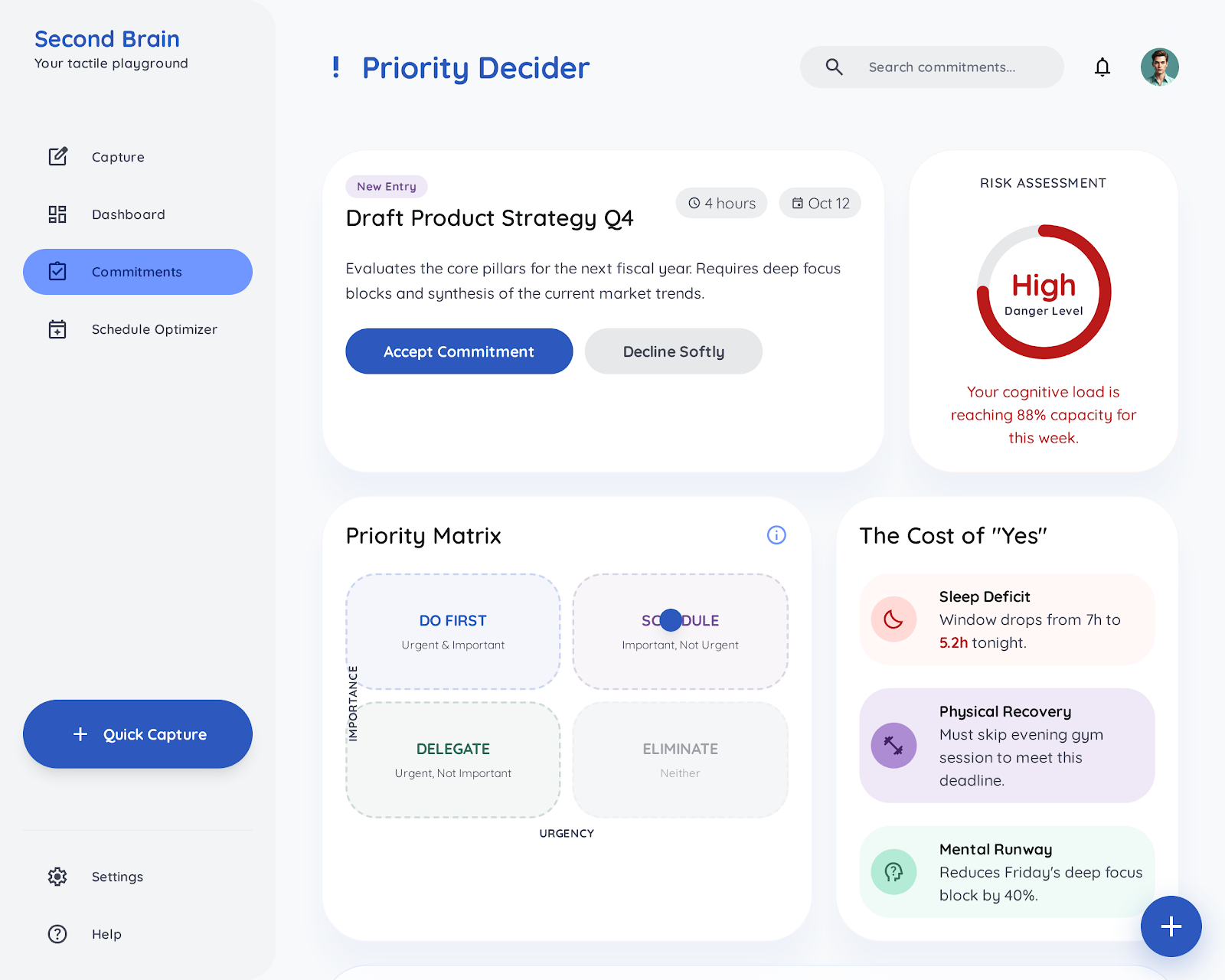
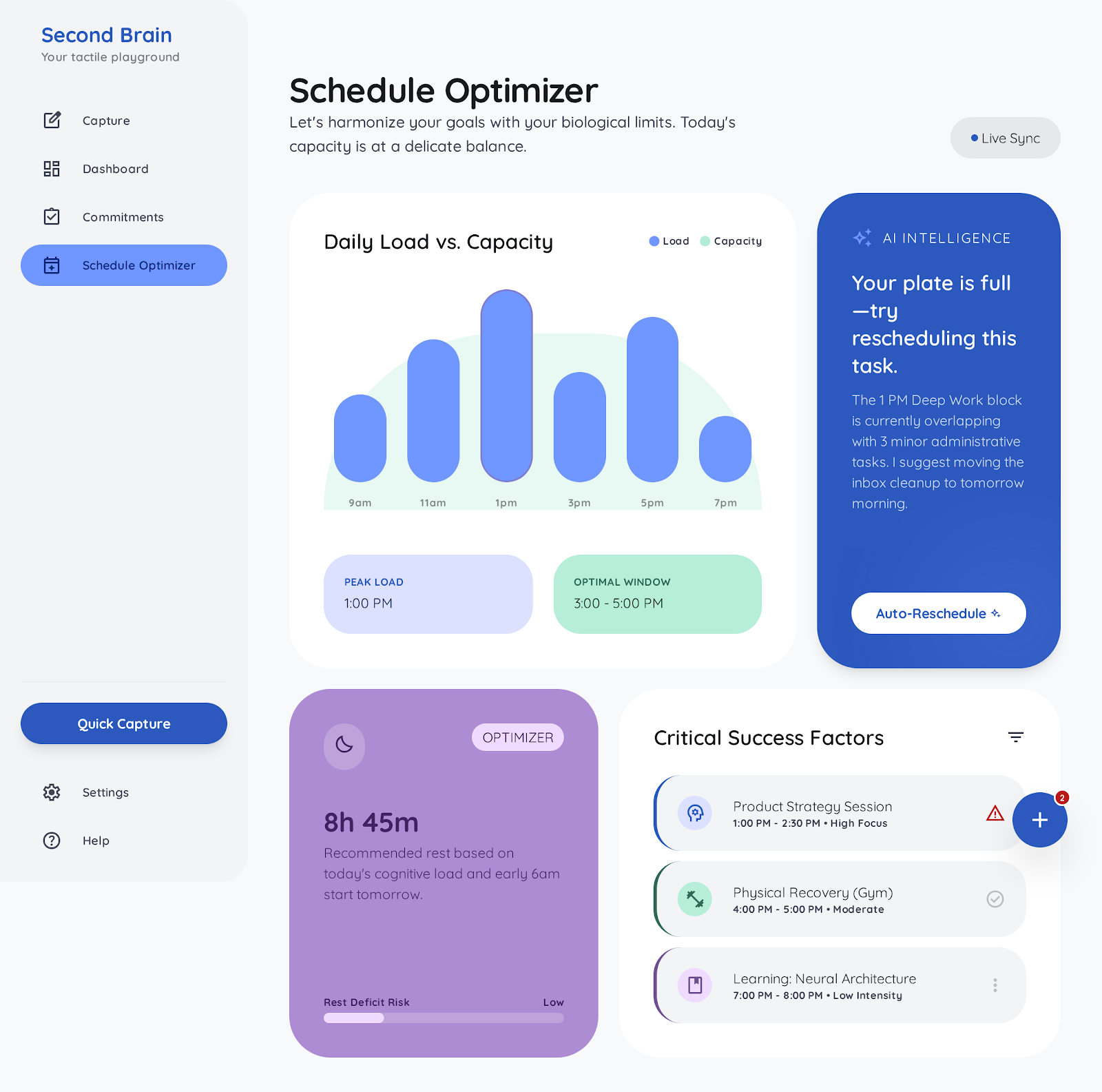
- show schedule pressure, workload, and task priority
- sync with Google Calendar to protect classes and fixed events
- surface personal study insights like pacing and timing trends
Instead of only showing what is due, Kronos helps answer what to do next, what is risky, and whether the current plan is actually sustainable.
How we built it
We built Kronos as a full-stack monorepo with a Next.js frontend and a FastAPI backend.
On the frontend, we built the student experience using React and the Next.js App Router. This includes task capture, dashboard views, schedule planning, stress testing, insights, and a mobile-first interface. We also redesigned the frontend into a cleaner, softer UI that feels more approachable for students and works better on small screens.
On the backend, we built a planning engine that combines multiple techniques instead of relying on a single model:
- LLM-powered ingestion to extract tasks from text and PDFs
- Monte Carlo simulation to test whether a study plan survives disruptions
- constraint/optimization logic to generate realistic study schedules
- Google OAuth + Calendar integration so plans can be built around real commitments
- behavior and velocity tracking so the system can learn how long work actually takes
A big architectural decision was keeping LLM use narrow and intentional. We used AI where it is strongest, especially for turning messy human input into structured data, but we relied on deterministic planning logic for the scheduling and simulation itself. That made the system much easier to trust.
Challenges we ran into
One major challenge was making the product feel trustworthy. A planning app can look impressive, but if students do not understand why the system made a recommendation, they will ignore it. We had to simplify both the UX and the wording so the product felt clear, calm, and usable.
Another challenge was getting the frontend and backend fully aligned. The backend already supported real functionality like ingestion, optimization, simulation, authentication, and calendar sync, so the frontend needed to stop behaving like a static prototype and start behaving like a real product. That meant removing hardcoded values, eliminating screens not backed by the API, and wiring the experience to the live contract.
We also spent time cleaning up the authentication and calendar-linking flow. Even with working backend endpoints, making the frontend connection feel seamless across redirects, persisted state, and mobile-first UI required careful iteration.
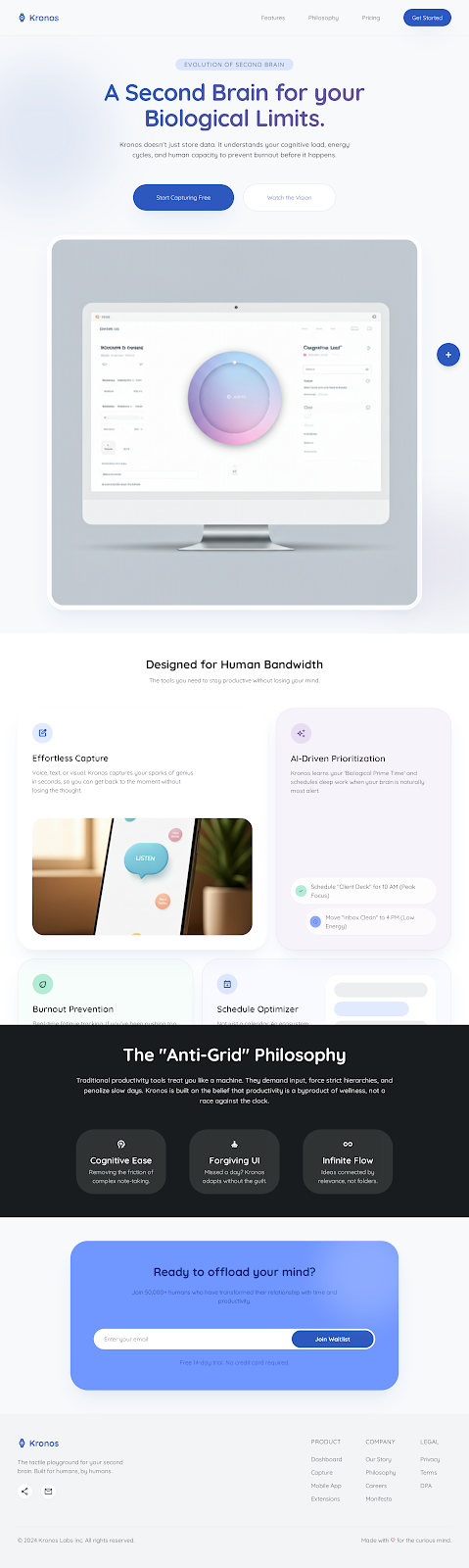
Finally, there was the design challenge. The original interface worked, but it did not feel like a world-class student product. Reworking the shell, navigation, branding, icons, and mobile layout into something softer and more polished was a major part of the build.
Accomplishments that we're proud of
We are proud that Kronos is not just a concept demo. It already supports real end-to-end functionality:
- task ingestion from text and PDFs
- real study-plan generation
- stress testing through simulation
- Google Calendar linking
- personalized insights
- a much more polished mobile-first UI
We are also proud of the product direction. Kronos does not just help students collect work; it helps them reason about time, risk, and capacity. That shift from “task list” to “planning intelligence” is the part we are most excited about.
What we learned
We learned that the most useful AI products are not the ones that hand everything over to a model. They are the ones that combine AI with structured systems in a way that makes the final experience more reliable.
We also learned that product design matters just as much as technical capability. Even with strong backend logic, the experience can still fail if the interface feels intimidating, confusing, or too abstract. Making the product clearer, friendlier, and more student-centered dramatically improved it.
Finally, we learned how important it is to design around real constraints. A study plan is only useful if it respects classes, fixed events, energy, uncertainty, and the fact that life rarely goes exactly as planned.
What's next for Kronos
Next, we want to make Kronos even more adaptive and personal.
Our next steps include:
- deeper personalization based on study habits and past performance
- better prioritization recommendations across competing deadlines
- stronger mobile interactions for daily use
- more transparent explanations for why the planner recommends certain schedules
- richer calendar workflows and smarter auto-adjustments when plans break
Long term, we want Kronos to become a true academic decision-support system for students: not just a place to record work, but a tool that helps them plan realistically, avoid overload, and stay consistent over time.
Built With
- fastapi
- framer-motion
- gemini
- google-calendar-api
- google-oauth
- lucide-react
- next.js
- numpy
- postgresql
- pulp
- python
- react
- render
- scipy
- sqlalchemy
- tailwind-css
- typescript
- vercel


Log in or sign up for Devpost to join the conversation.