-
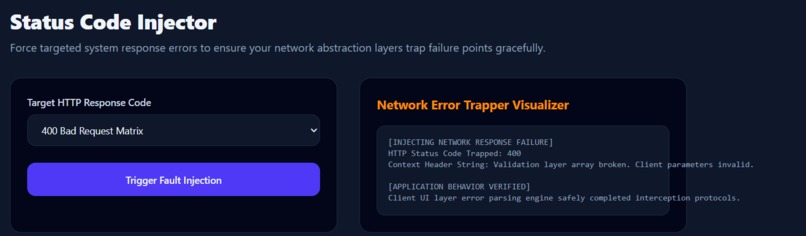
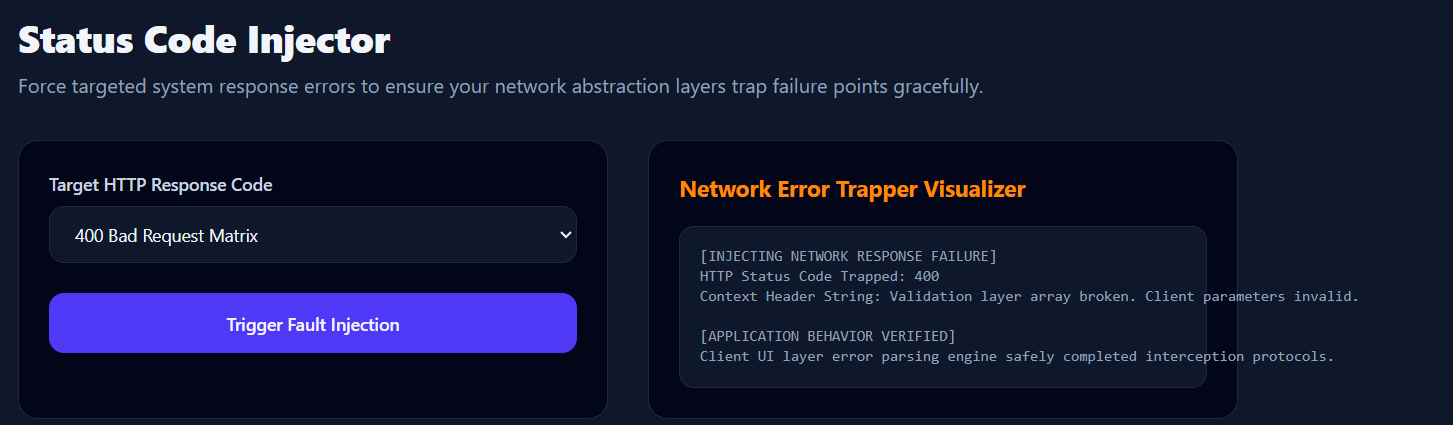
Explicitly forces targeted HTTP response errors like 404 or 500 to test if client error handling abstractions trap failures gracefully.
-
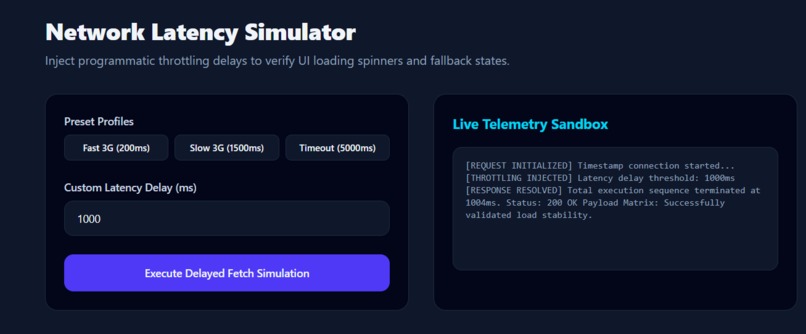
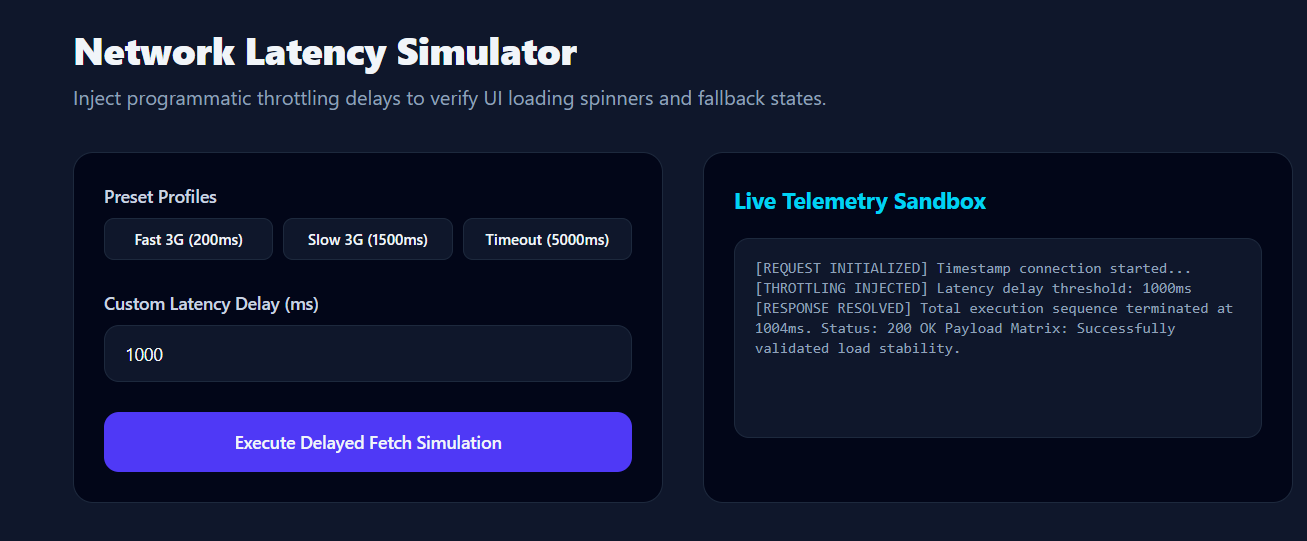
Injects variable programmatic throttling delays like Slow 3G to evaluate frontend rendering states under poor connectivity.
-
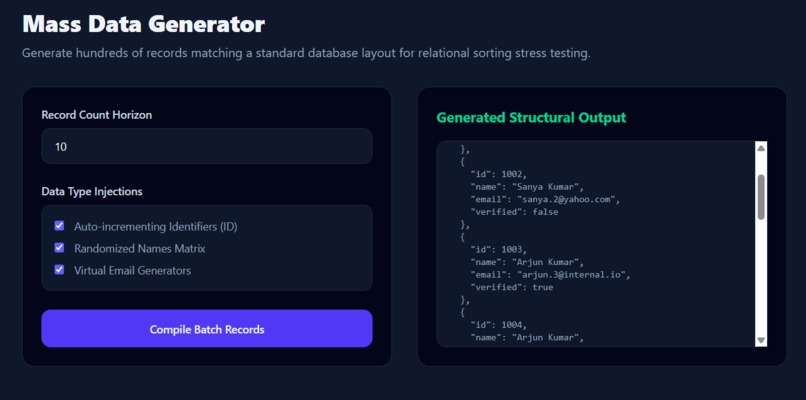
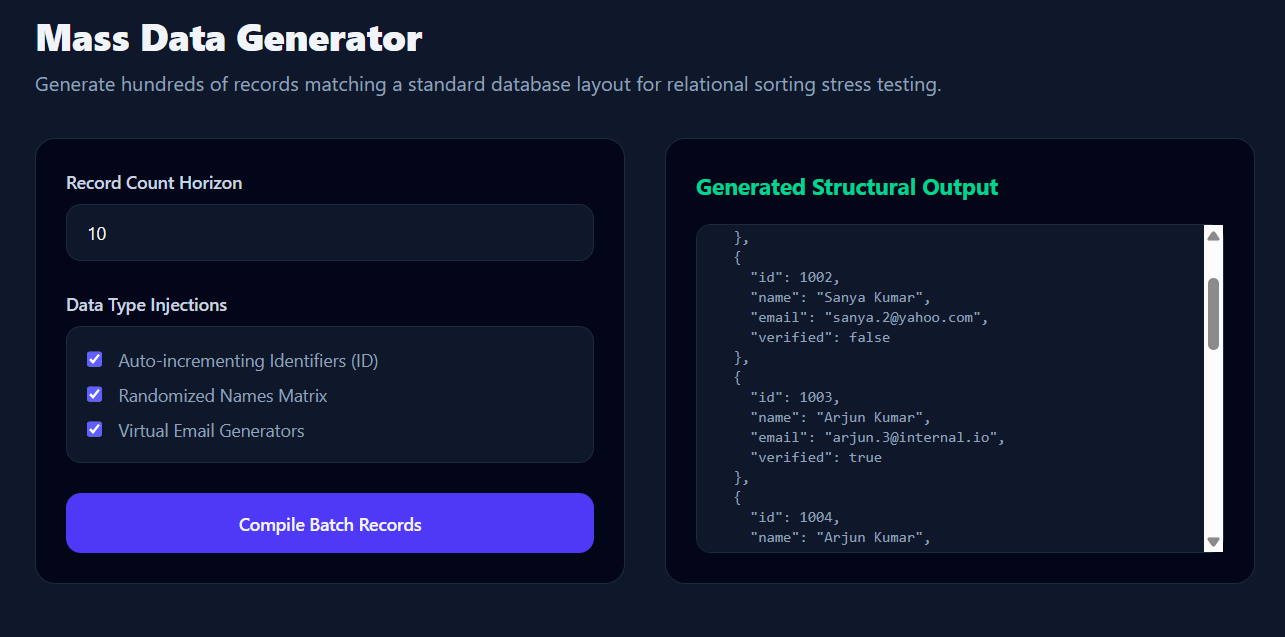
Generates high-volume mock database relational arrays with randomized names and emails to stress-test UI data layouts.
-
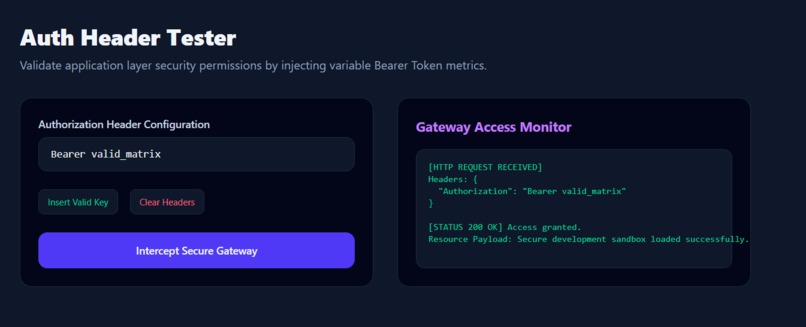
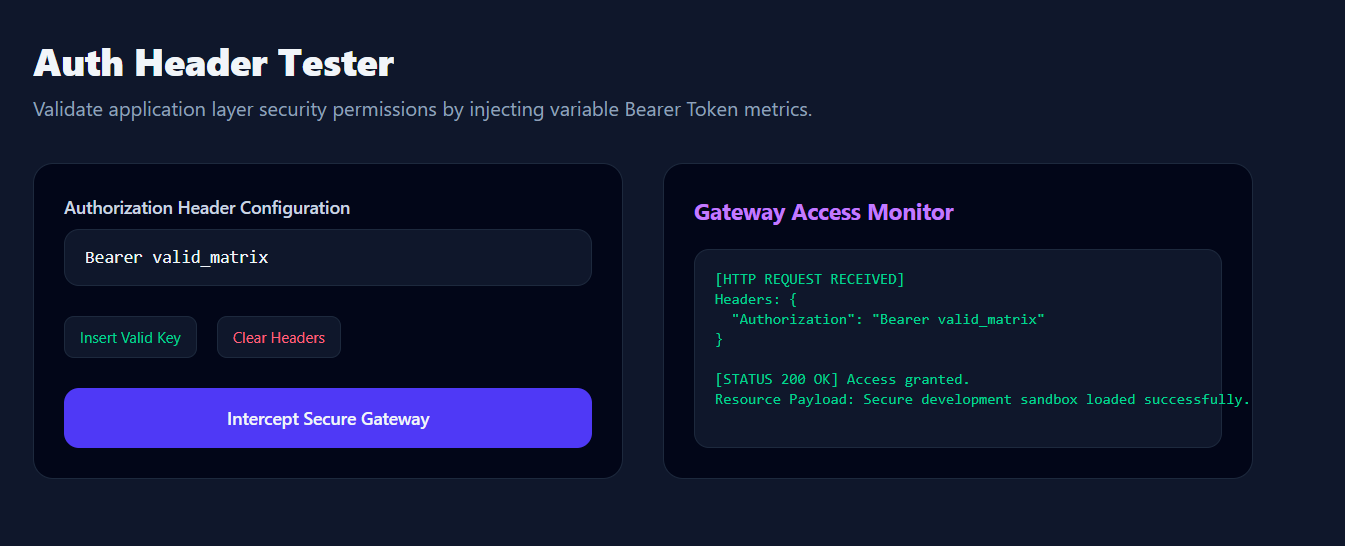
Intercepts incoming Bearer Tokens to accurately validate application layer security states and unauthorized fallback sequences.
-
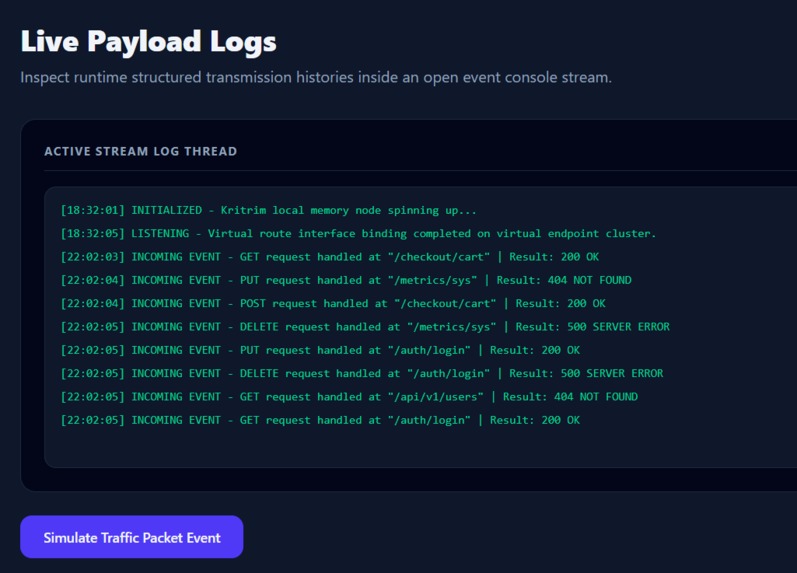
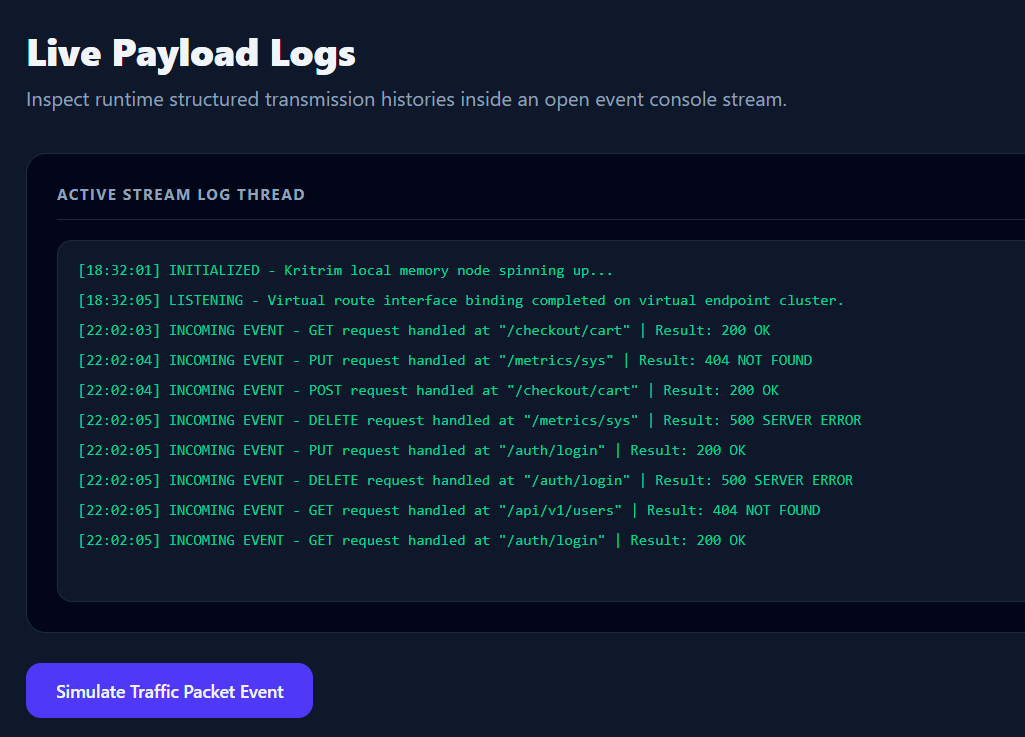
Monitours and streams live simulated network traffic packet timelines in a visual console interface for granular debugging.
-
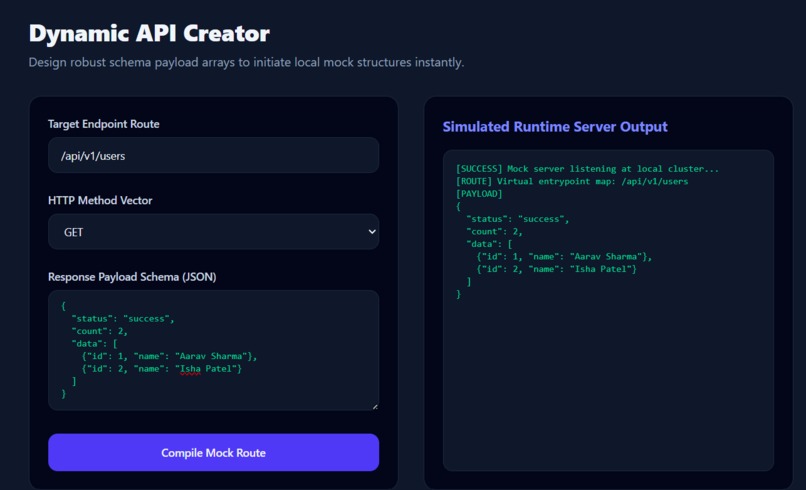
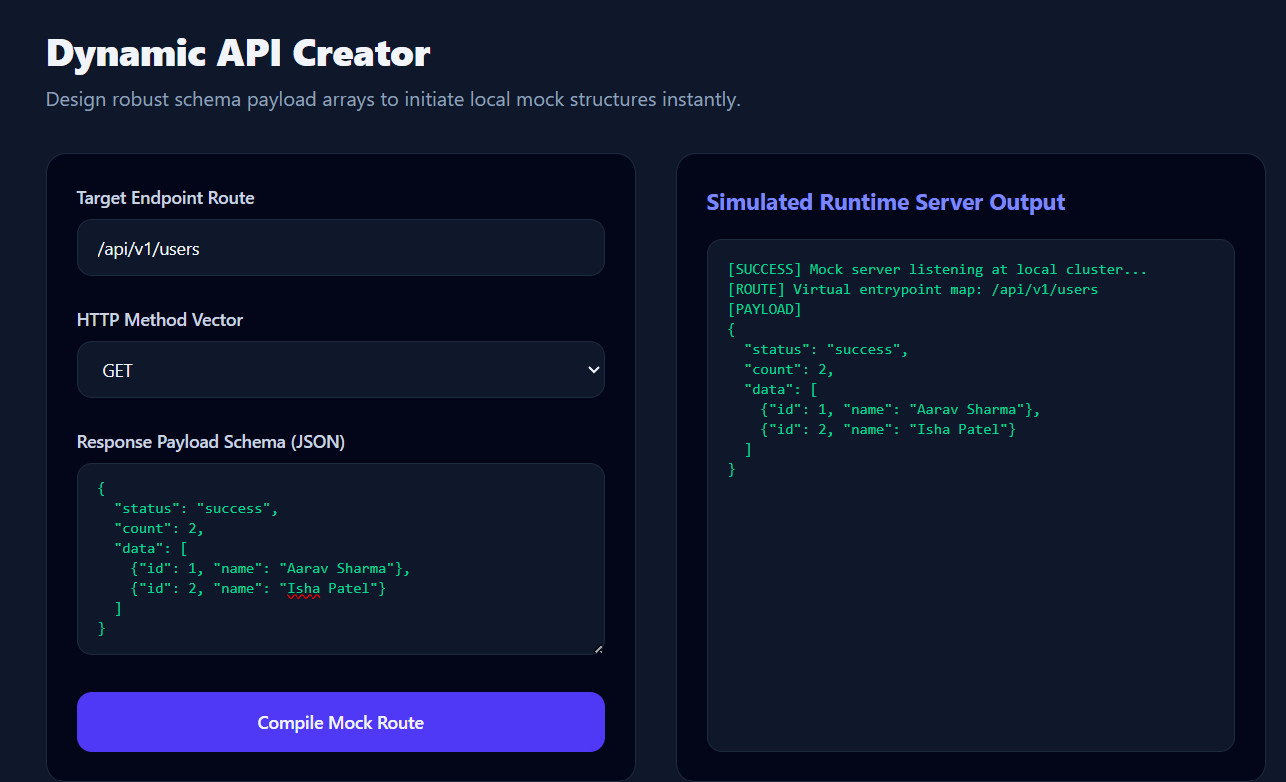
nstantly compiles custom multi-tiered JSON schema payloads with specific HTTP methods to simulate live local backend server endpoints.
-
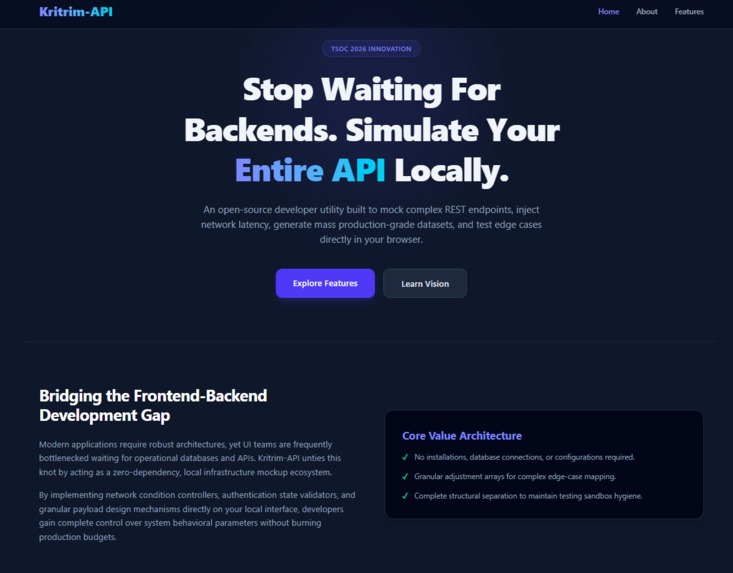
this is the main dashboard
Inspiration
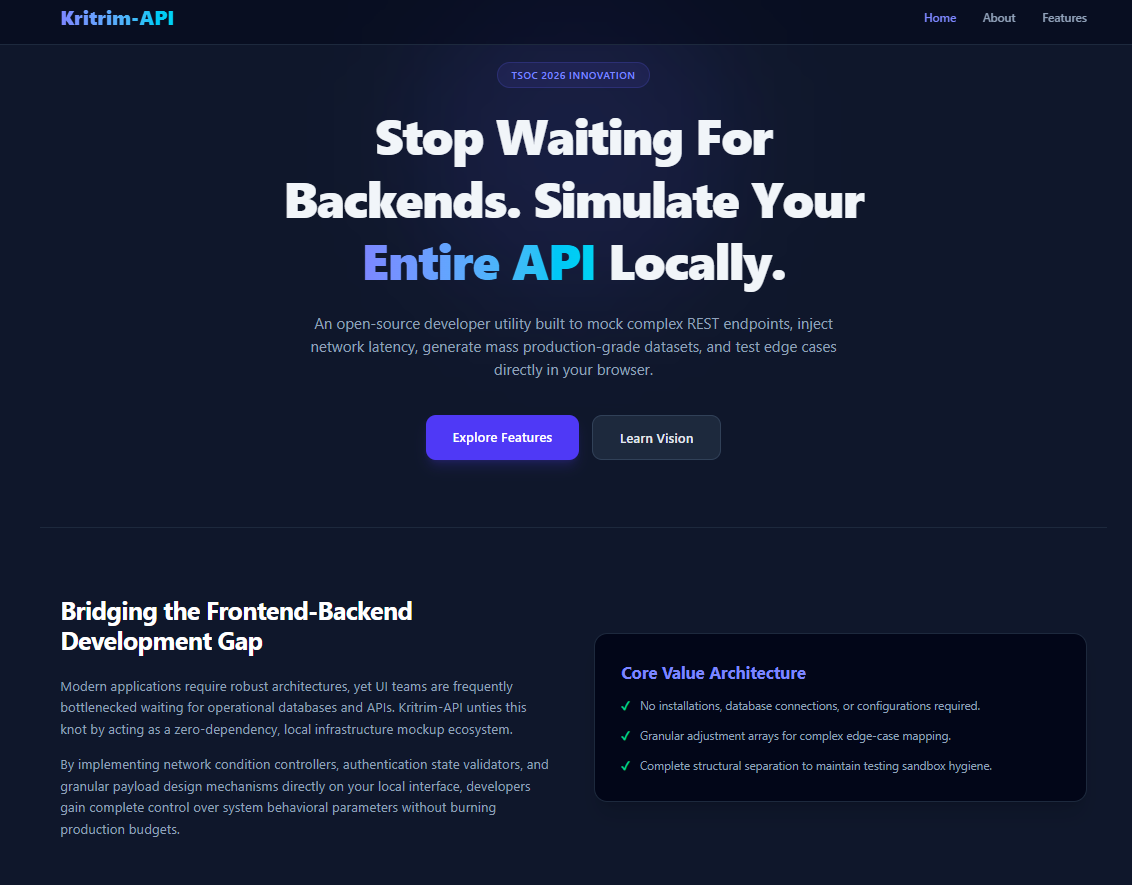
During rapid application development cycles, frontend developers are constantly bottlenecked by incomplete or slow backend architectures. Standard online mocking utilities often require complex configurations, external server setups, or paid tiers. This inspired us to create Kritrim-API (where Kritrim stands for artificial/simulated in Hindi)—a zero-dependency, local sandbox designed to give developers total runtime autonomy over API simulation, network conditions, and fault testing right in their browser.
What it does
Kritrim-API is a lightweight, local developer utility that functions as a highly granular API mockup and performance simulation ecosystem. It allows engineers to:
Compile Dynamic Mock Routes: Build custom JSON payload structures on the fly.
Simulate Network Latency: Test application rendering states under Slow 3G or connection timeout conditions.
Generate Mass Production Datasets: Spin up hundreds of mock database entries for stress testing layout responsiveness.
Intercept Auth States: Emulate secure gateway headers (Bearer Tokens) to evaluate authentication fallback rules.
Inject Custom HTTP Status Faults: Programmatically trigger 400, 404, 429, or 500 error vectors to test downstream resiliency.
Stream Live Logs: Track runtime traffic packets through a real-time terminal visualizer.
How we built it
To keep the application highly reliable and light on system resources, we avoided heavy database configurations or platform dependencies. We engineered the entire ecosystem using clean, modern HTML5, Vanilla JavaScript, and Tailwind CSS (via CDN). The UI routing and layout maps use an interconnected flat-file matrix (href links) to eliminate complex bundler setups, while asynchronous state triggers mock the computational behavior of high-level servers.
Challenges we ran into
One of the core challenges was mimicking server-side configurations (like throttling delays and explicit HTTP structural failures) inside a static client sandbox without introducing real network transport packages. We resolved this by configuring asynchronous setTimeout triggers matched with structural layout switches, creating an effective emulation environment that replicates asynchronous REST interactions without adding system bloat.
Accomplishments that we're proud of
We are proud of building a completely self-contained, functional web developer playground that requires absolute zero installation. Designing 6 long-form, multi-tier operational features that interact cleanly without breaking system isolation is a massive milestone for this project.
What we learned
This project deeply expanded our understanding of custom data stream handling, application layer security mechanics (Bearer Tokens), and user interface state progression under forced network errors. We also mastered the open-source philosophy of optimizing developer utilities for accessibility, speed, and usability.
What's next for Kritim-API
The immediate roadmap for Kritrim-API includes:
Integrating an export pipeline to download configuration schemas as standardized Postman Collections or OpenAPI/Swagger JSON files.
Developing local system storage hooks to persist mocked endpoints across browser refresh loops.
Adding regular expression (Regex) payload matching to handle intelligent conditional responses.
Built With
- css3
- es6+
- html5
- javascript
- tailwindcss


Log in or sign up for Devpost to join the conversation.