-
-
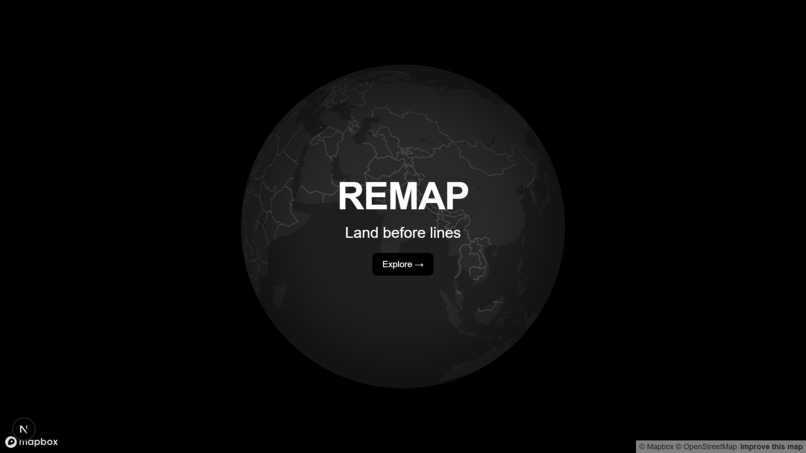
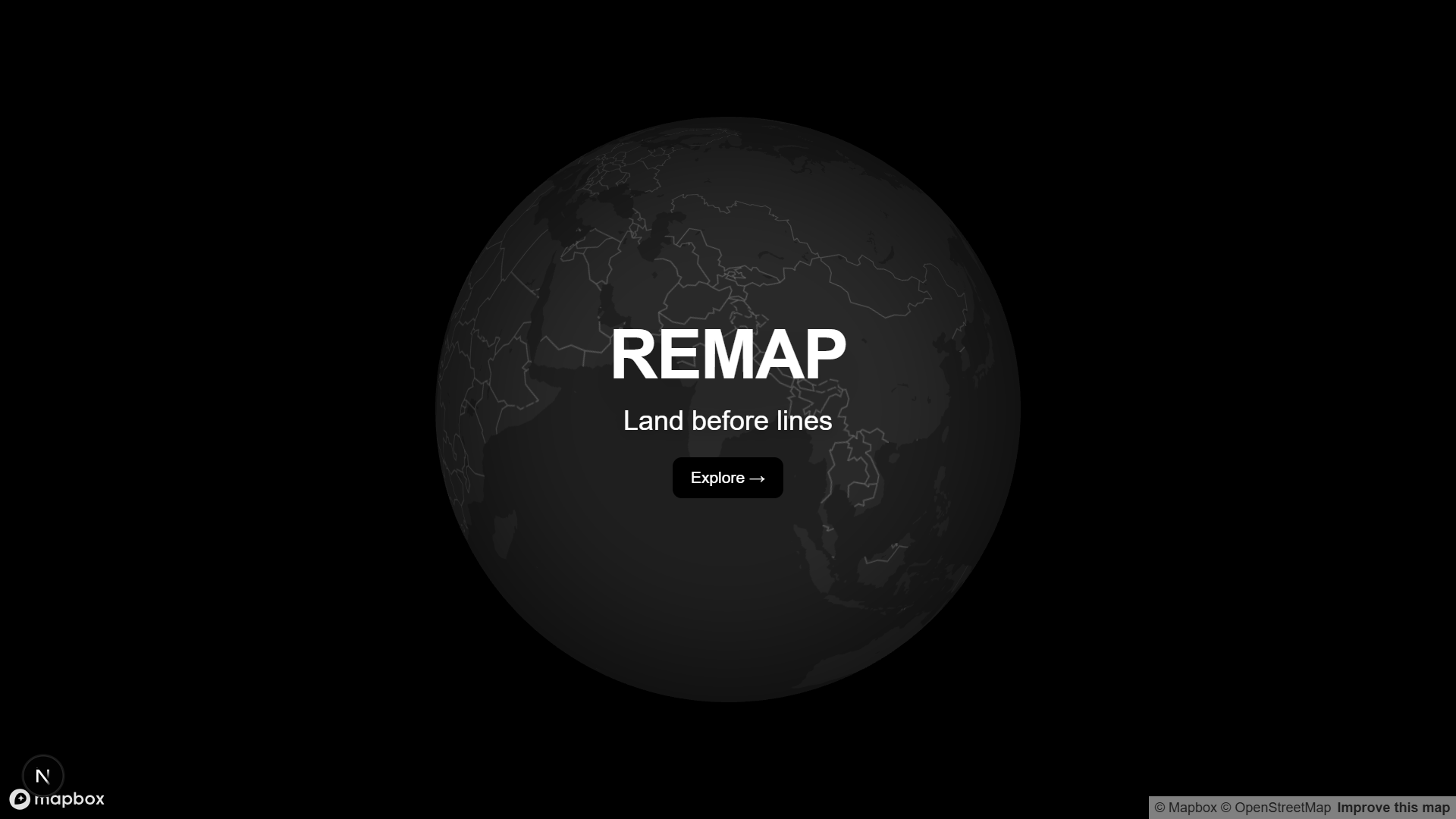
Landing page
Inspiration
Urban development decisions are often made using data about infrastructure and economics, while the land’s ecological limits and Indigenous history are treated as secondary or symbolic. We were inspired by the question: what if cities planned by listening to the land first? Remap was born from the desire to make sustainability and Indigenous responsibility practical, visible, and actionable for urban planners, not an afterthought.
What it does
Remap is an interactive planning tool that helps urban planners explore development through an ecological and Indigenous lens. Using a 3D map of Toronto, users can select any location and receive an ecological sensitivity score based on public data such as tree coverage, green spaces, and protected environmental areas. The platform also identifies the Indigenous territory, treaty, and language associated with each location, clearly surfacing the cultural history and responsibilities tied to the land.
Three AI agents then guide planners through visualization, Indigenous context, and workflow execution, helping them imagine sustainable futures, engage respectfully with Indigenous communities, and move seamlessly from insight to action.
How we built it
We built Remap around a geospatial-first architecture, combining public environmental and Indigenous datasets with AI-driven workflows. MongoDB stores geospatial data, user sessions, ecological scores, and interaction history, allowing us to efficiently query locations and build adaptive user profiles.
The first AI agent is orchestrated using LangGraph, coordinating analysis, synthesis, and visualization steps. It uses Google Street View imagery as a base, with Gemini 1.5 generating structured redesign logic and Gemini 2.5 Flash producing image-based future-state visualizations weighted by water, biodiversity, and cultural significance.
The second agent uses Claude 3.5 Sonnet via Backboard.io alongside geographic lookups to identify Indigenous territories, retrieve treaty information, suggest culturally appropriate contacts, and outline consultation protocols that respect sovereignty.
The third agent supports planning workflows by generating step-by-step plans, drafting role-specific emails, scheduling meetings via Google Calendar, sending Slack updates, and generating PDF reports using external APIs.
We use Amplitude to analyze user feedback and ratings, turning interactions into insights that continuously improve agent recommendations.
Challenges we ran into
One of our biggest challenges was responsibly integrating Indigenous context without oversimplifying or tokenizing it. We also had to carefully coordinate multiple AI models across different agents while maintaining a coherent user experience. Working with geospatial data at different resolutions and aligning it with Street View imagery required careful handling to ensure accuracy and relevance.
Accomplishments that we're proud of
We’re proud of building a system that goes beyond visualization and actually supports real planning workflows. Integrating ecological analysis, Indigenous context, AI-generated visualizations, and automated communication into a single platform was a major technical and design achievement. Most importantly, we’re proud that Remap treats Indigenous knowledge and ecological responsibility as core planning inputs, not add-ons.
What we learned
We learned that meaningful sustainability tools need to balance technical rigor with cultural care. Building AI systems that influence real-world decisions requires transparency, humility, and thoughtful constraints. We also learned how powerful multi-agent systems can be when they’re designed around clear roles and real user needs rather than novelty.
What's next for Remap
Next, we plan to expand Remap beyond Toronto to other Canadian cities and eventually internationally. We want to deepen partnerships with Indigenous communities to co-design features and validate consultation workflows. On the technical side, we plan to add scenario comparison tools, long-term impact simulations, and policy-aware constraints, turning Remap into a full decision-support system for responsible urban development.
Built With
- amplitude
- backboard.io
- claude
- fastapi
- gemini
- langchain
- langgraph
- mapboxgl
- mongodb
- next.js
- openai
- python
- react
- typescript

Log in or sign up for Devpost to join the conversation.