Inspiration
Agriculture forms the backbone of Bangladesh's economy, yet smallholder farmers constantly struggle with shifting climate patterns, localized pest outbreaks, volatile market prices, and limited access to agronomic expertise. Inspired by the need to bridge this technology gap, KRISHORA was developed as an all-in-one, voice-enabled AI companion. By delivering hyper-localized, personalized agronomic insights in native Bangla dialects, KRISHORA empowers rural farmers to make data-backed decisions from sowing to harvest.
What it does
KRISHORA combines core agricultural domains into a unified intelligent assistant:
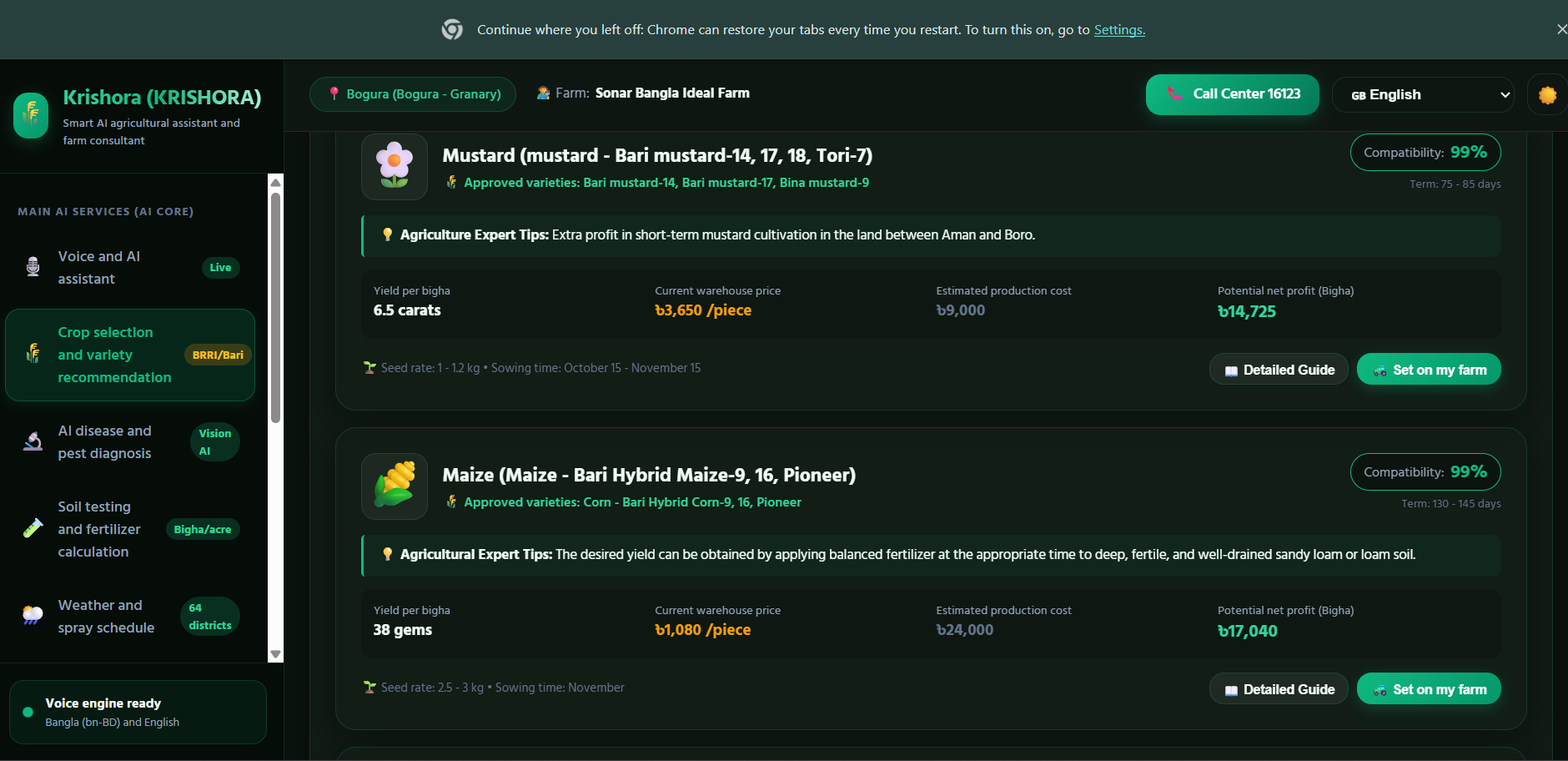
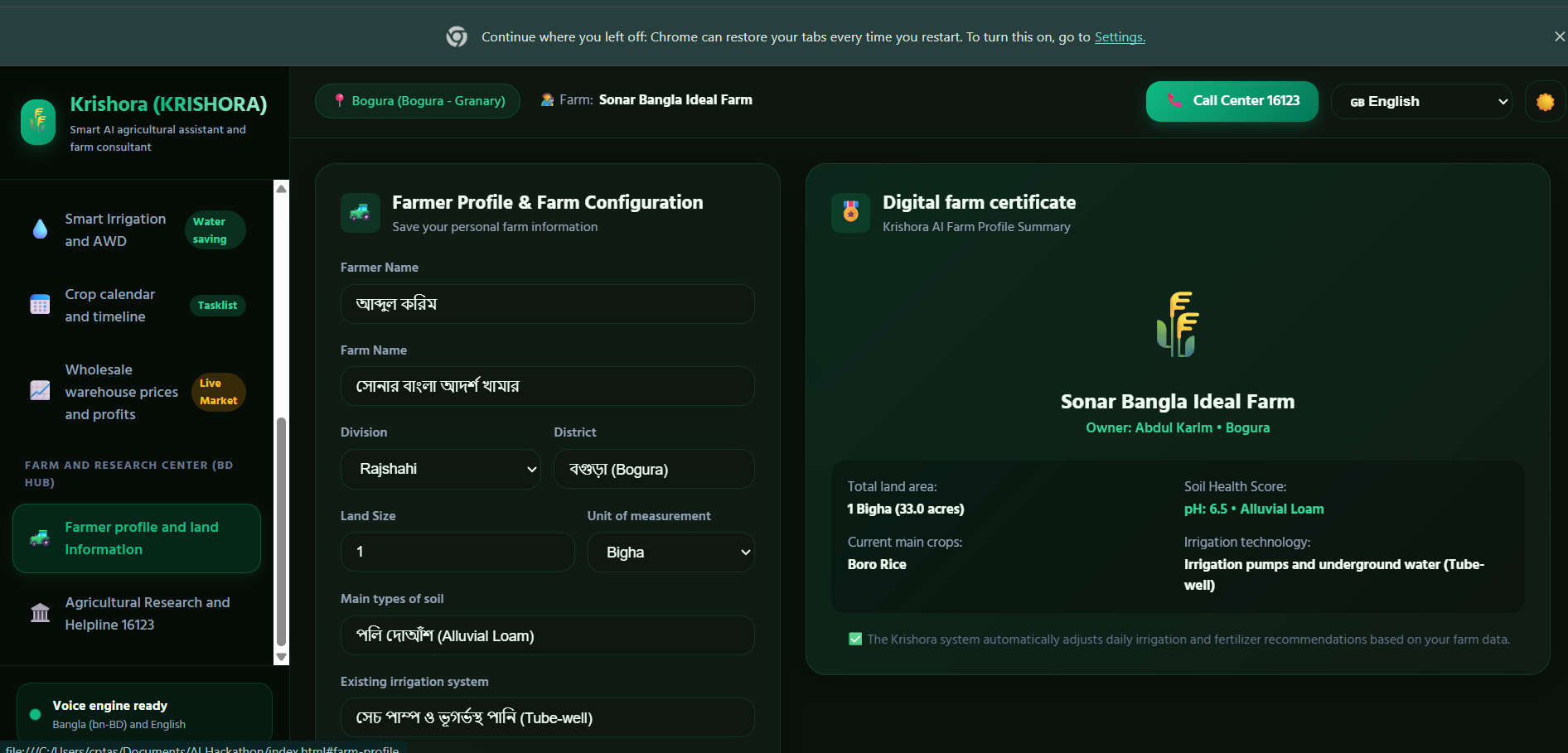
- Farmer Profile & Smart Recommendation: Recommends optimal crop varieties (e.g., BARI and BRRI releases) based on soil profile, location, irrigation access, and historical cropping patterns.
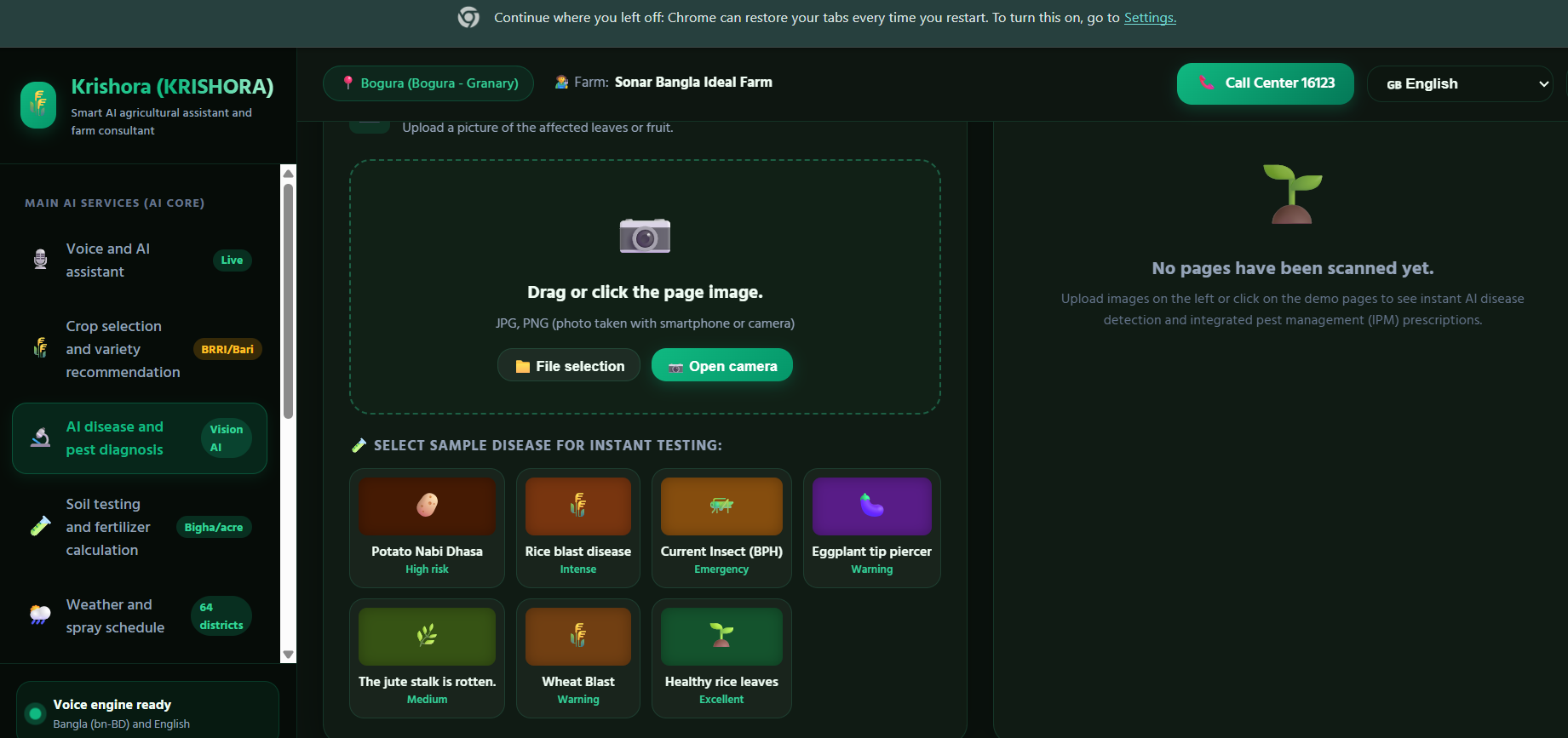
- AI Disease & Pest Detection: Identifies crop health issues from leaf/fruit photos and recommends Integrated Pest Management (IPM) techniques to minimize chemical overuse.
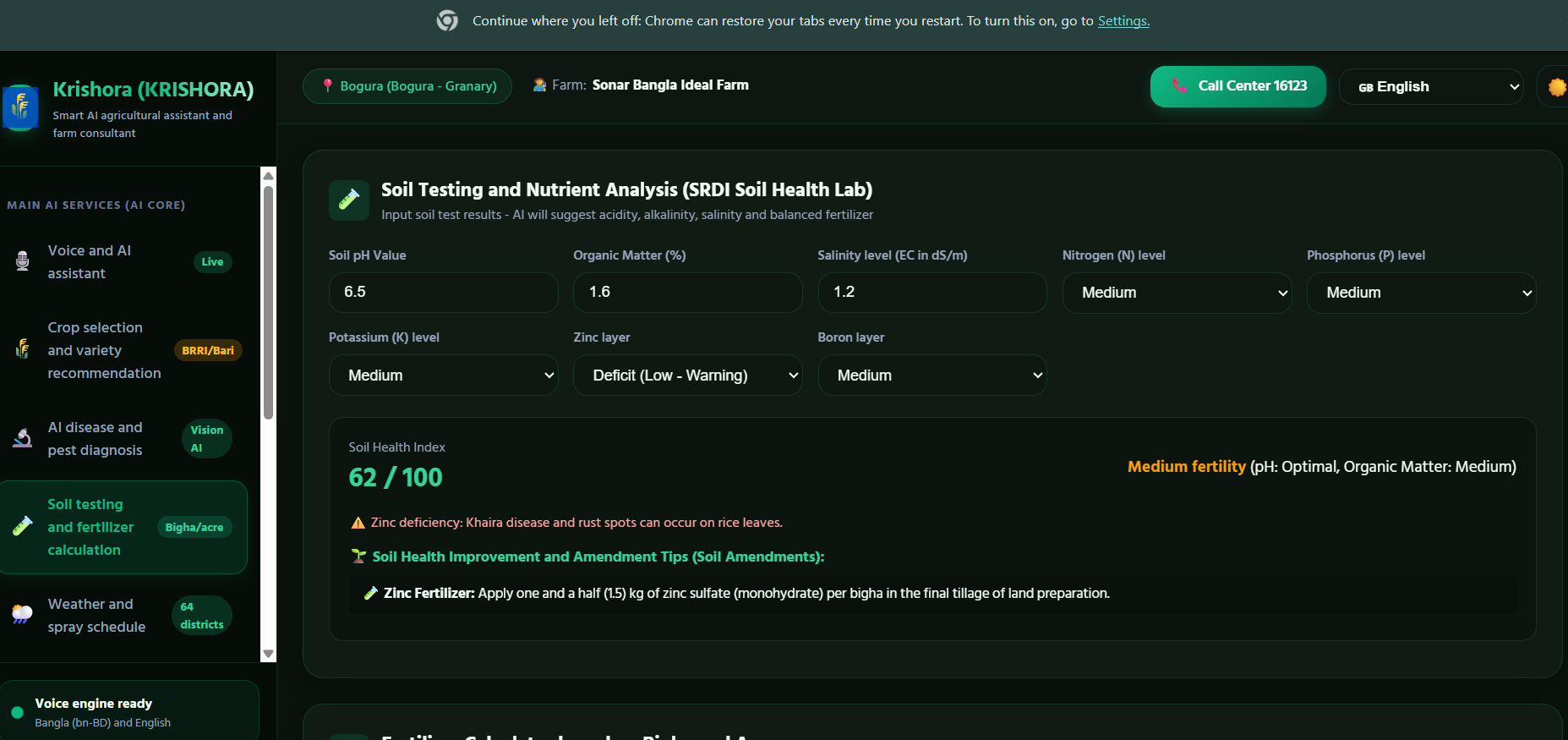
- Soil & Nutrient Management: Interprets soil tests and performs precise fertilizer dosage calculations: $$F_{\text{required}} = \frac{(N_{\text{target}} - N_{\text{soil}}) \times A}{\text{Nutrient Ratio}}$$
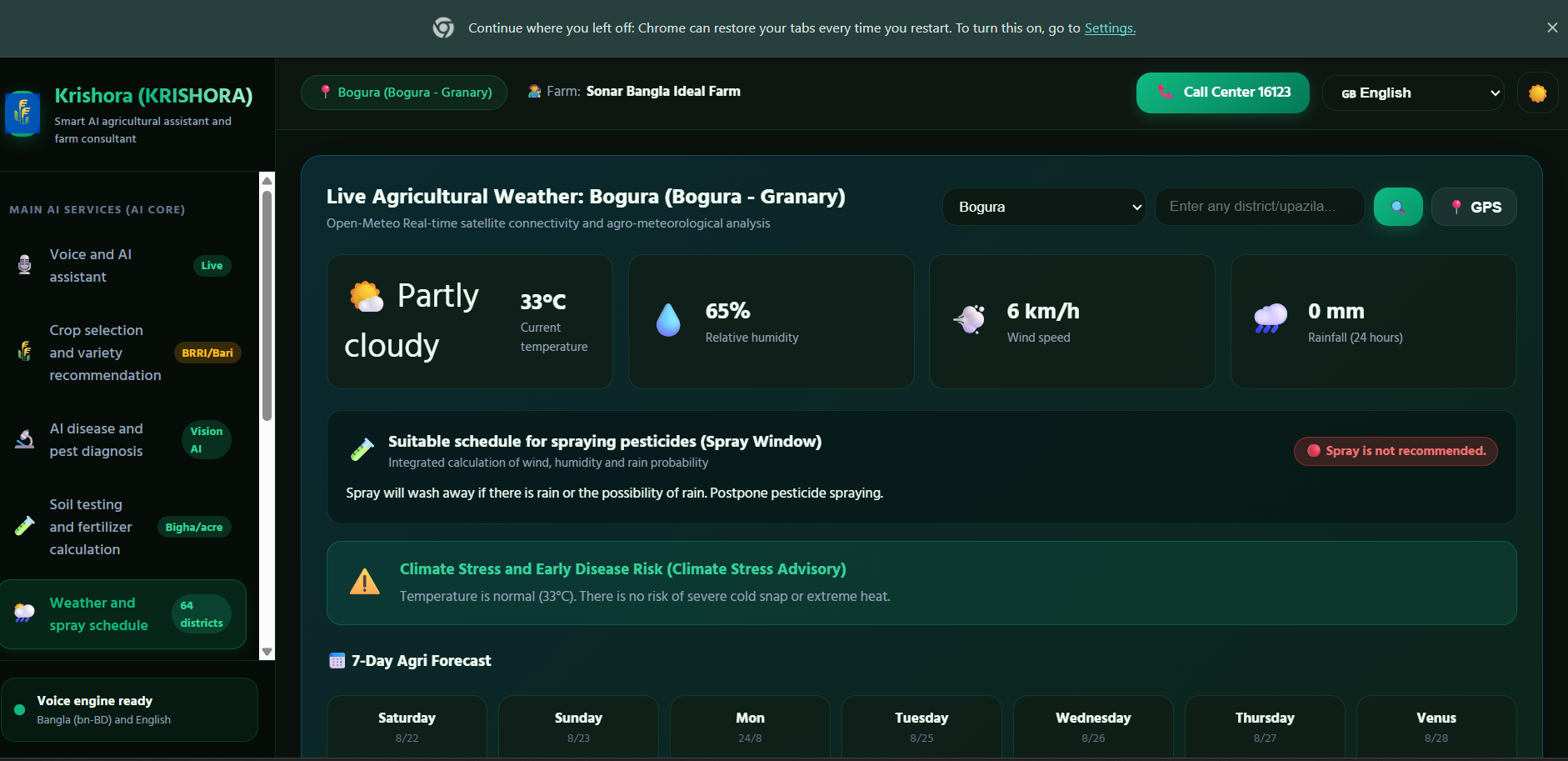
- Hyper-Local Weather & Risk Alerts: Delivers upazila-level weather forecasts along with early warning alerts for flooding, waterlogging, heat stress, and coastal salinity risks.
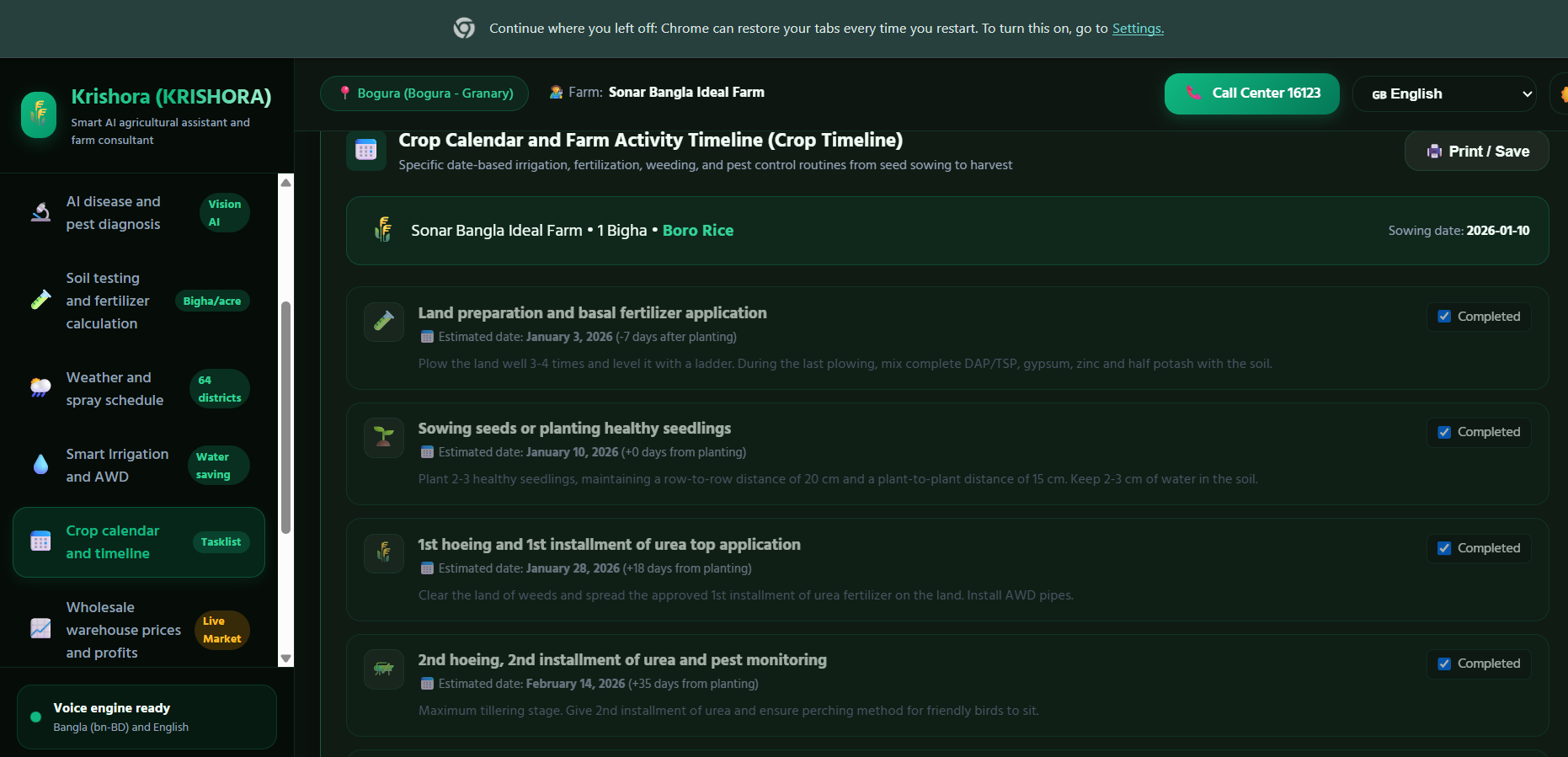
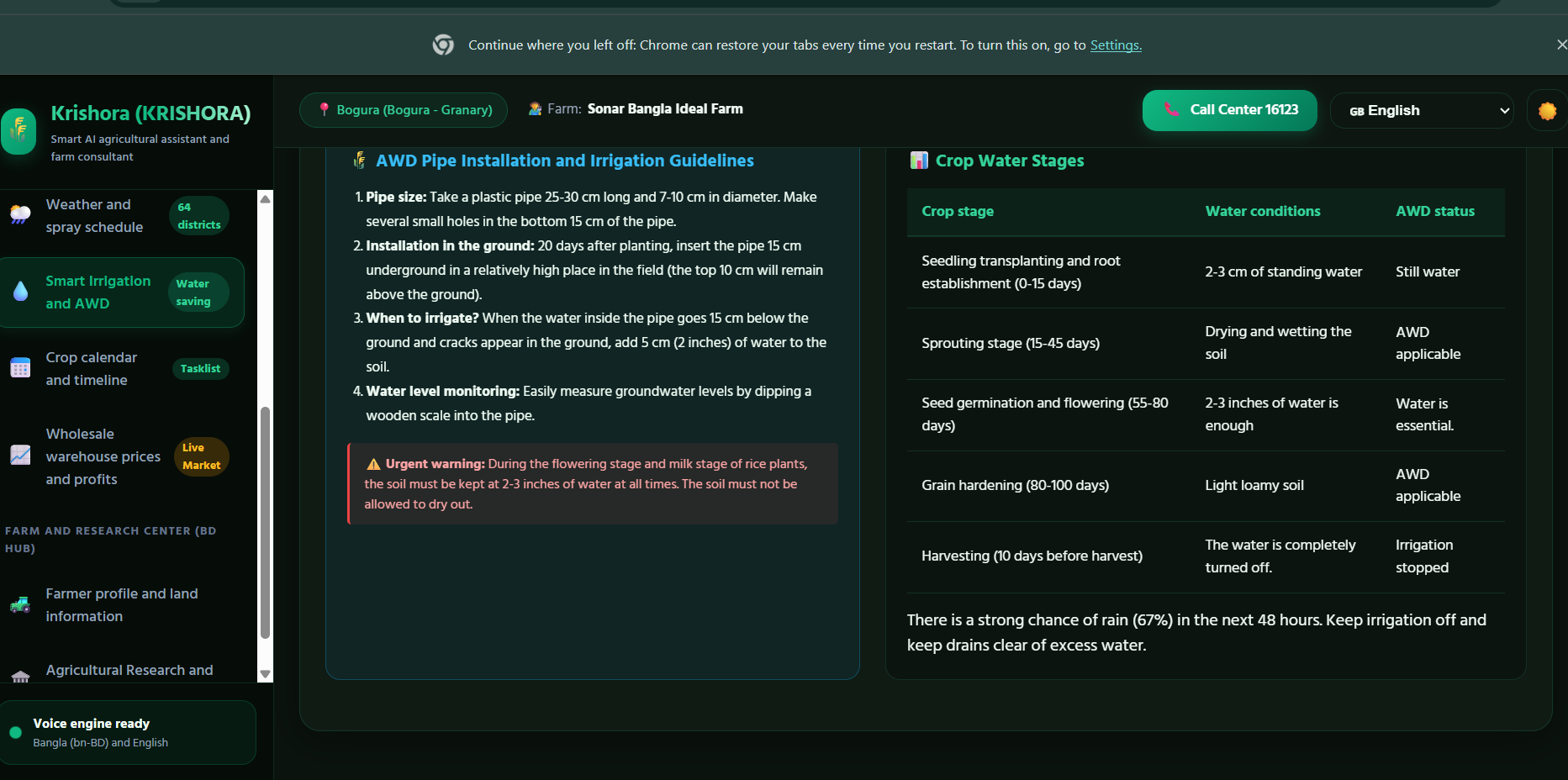
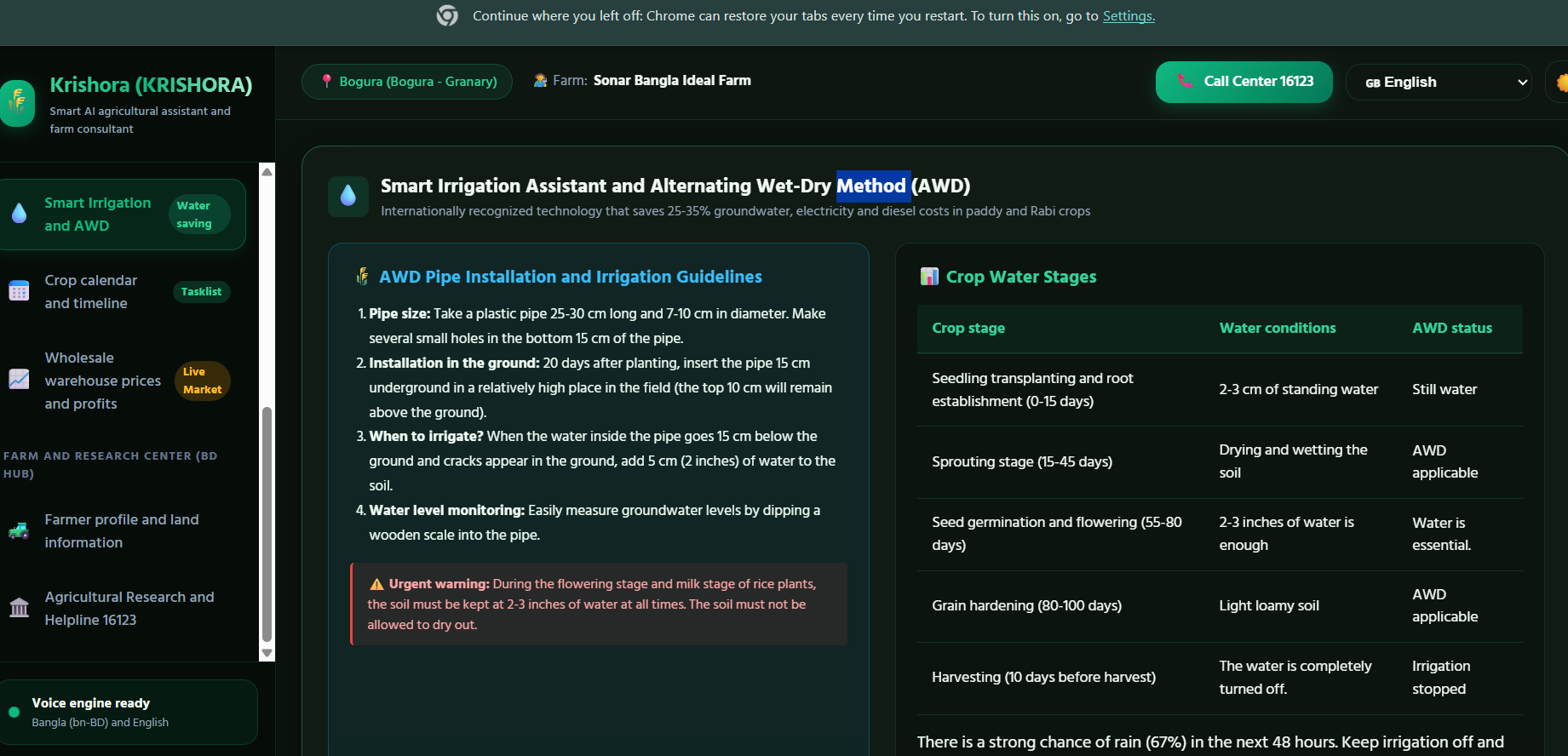
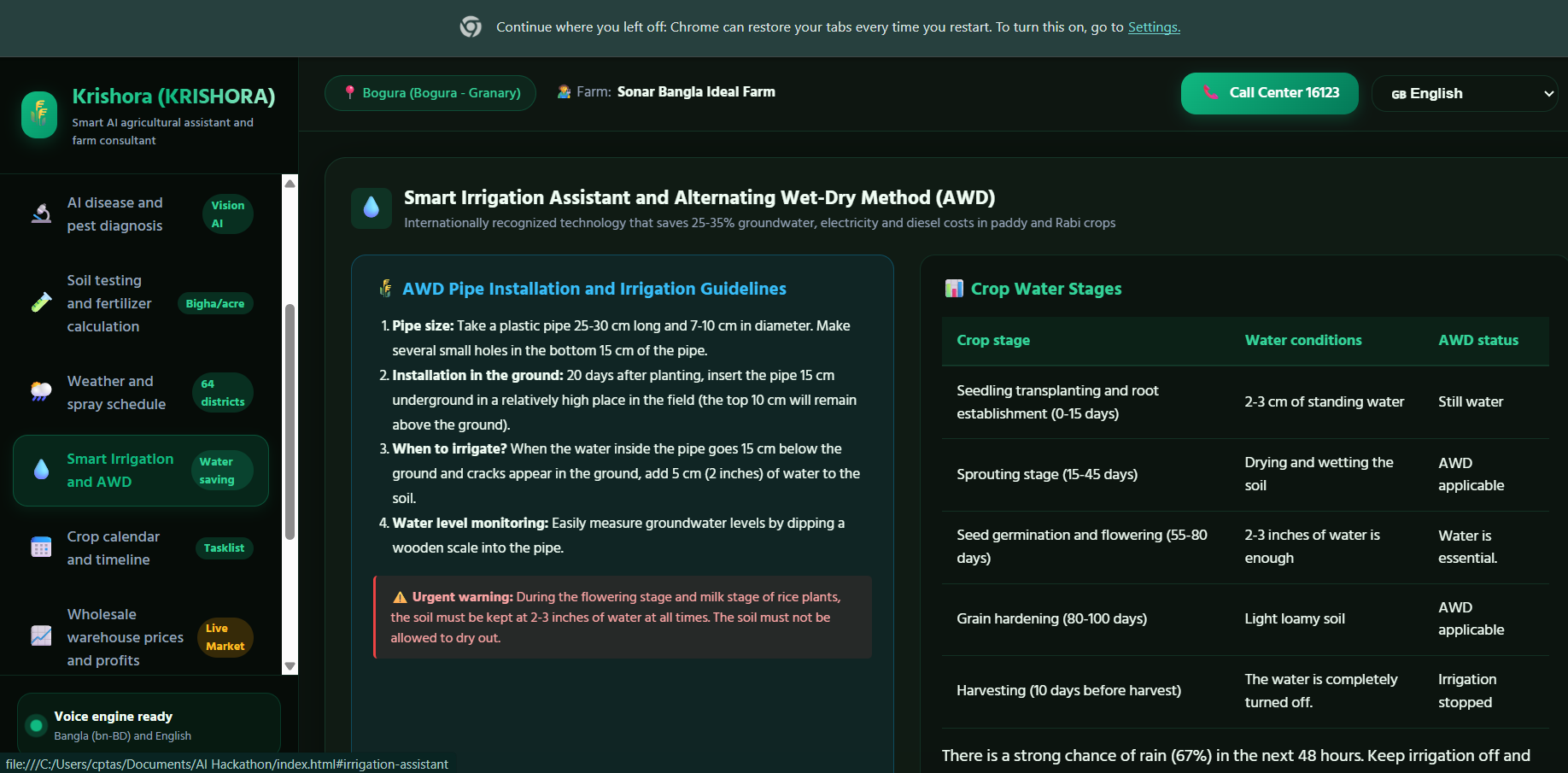
- Smart Irrigation & Crop Calendar: Estimates crop water requirements to calculate dynamic watering intervals and dynamic farming schedules.
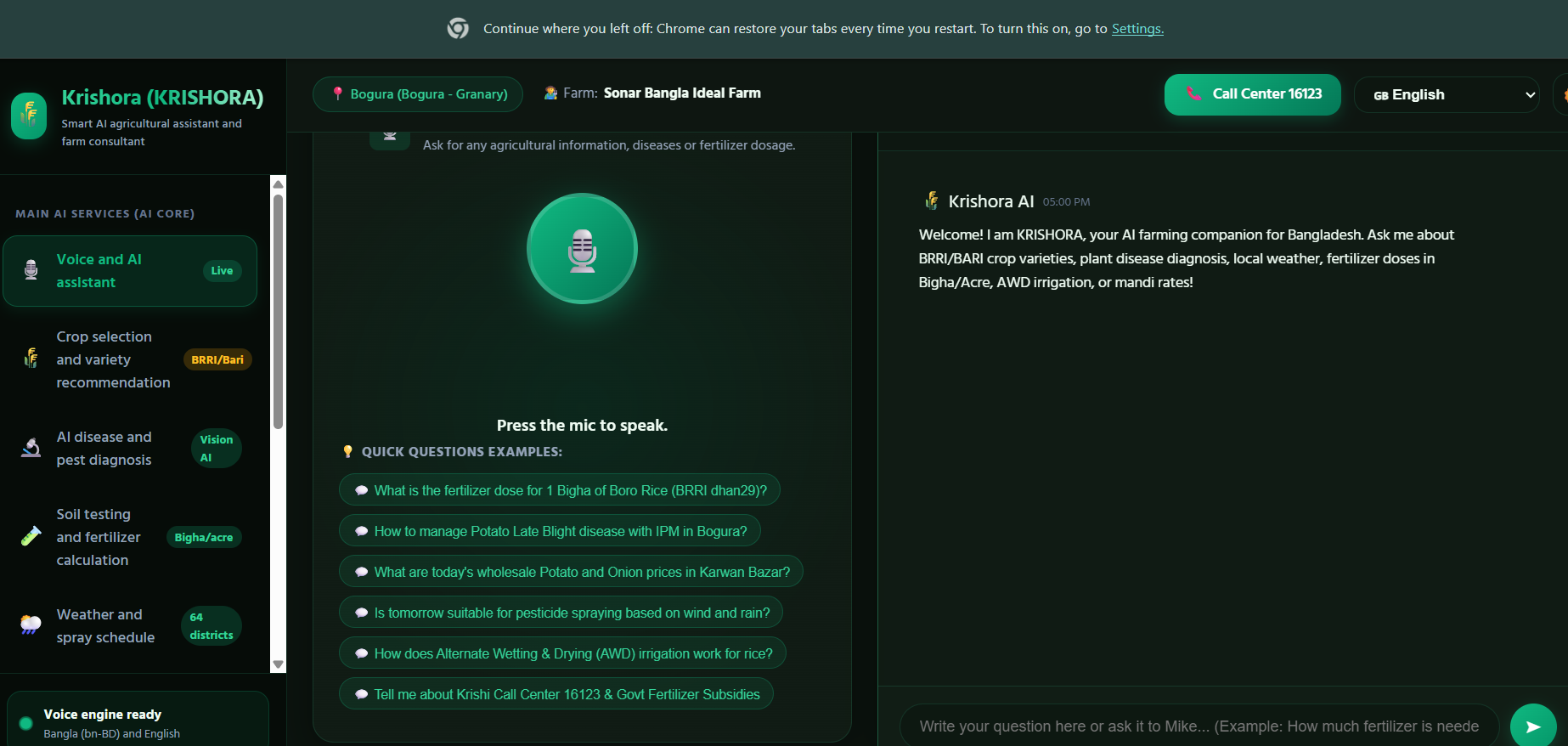
- Voice-Based Bangla AI Chatbot: Accepts voice queries in local Bangla dialects (e.g., "আমার ধানের পাতায় এই দাগ কেন?") to accommodate users with limited digital literacy. ## How we built it We created AI prompts using Google Antigravity, which subsequently helped us write the code. Then, we created a GitHub account and deployed it there.
Challenges we ran into
- Acoustic & Dialectical Variations: Disambiguating agricultural terms across varied regional Bangla dialects in noisy rural environments required extensive acoustic model fine-tuning.
- Data Scarcity for Native Crops: Obtaining localized datasets for crops like jute, indigenous rice strains, and regional vegetables required manual data collection and heavy data augmentation.
- Low-Bandwidth Optimization: Reducing model parameters so complex computer vision models run efficiently under poor connectivity conditions.
Accomplishments that we're proud of
- Built a fully functional end-to-end voice engine capable of processing complex agronomic queries in native spoken Bangla.
- Integrated dynamic IPM strategies to prioritize sustainable farming practices over simple chemical application recommendations.
- Developed an adaptable framework addressing geographical challenges like coastal salinity and flash flooding in low-lying zones.
What we learned
- Accessible UI/UX design featuring voice input is vital when building digital tools for rural communities.
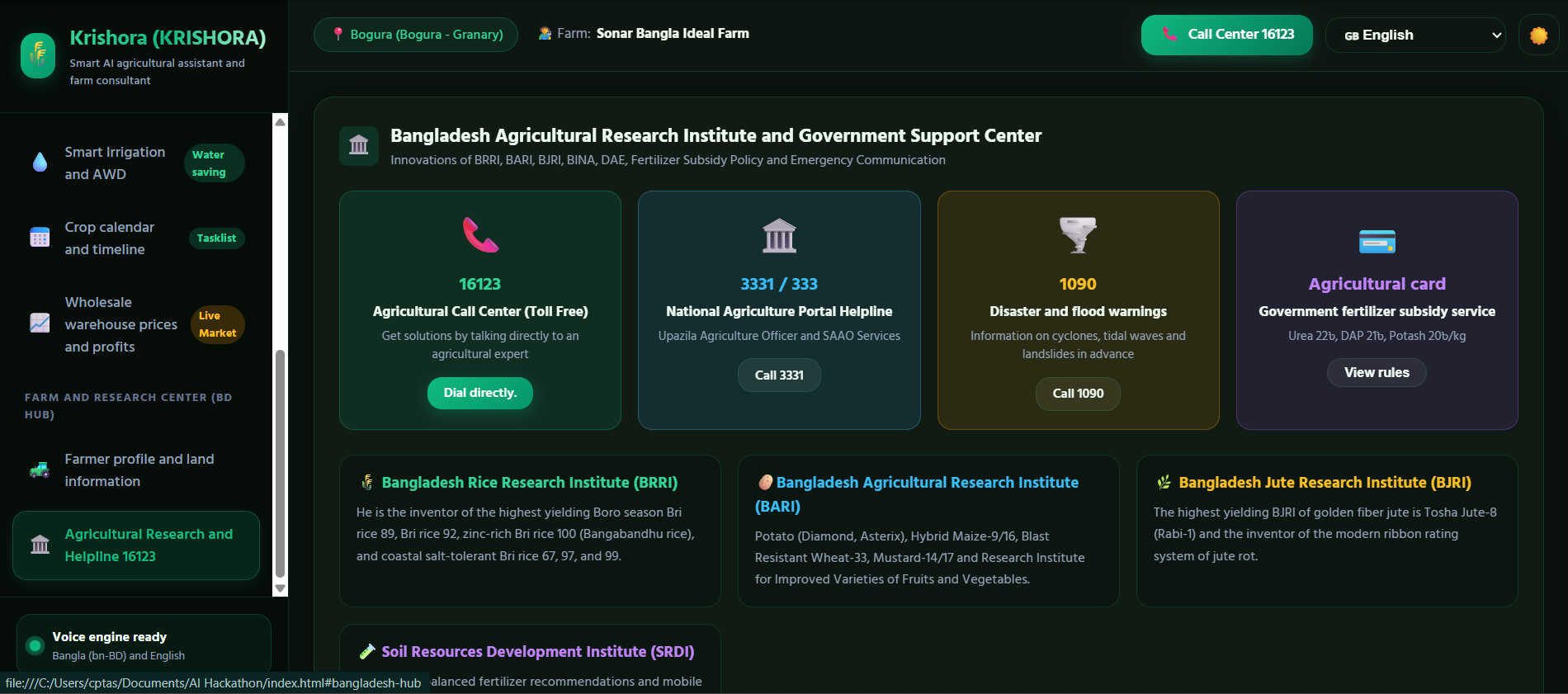
- Integrating verified localized research data (BARI/BRRI) significantly boosts user trust compared to generic AI responses.
- Quantizing deep learning models for edge execution dramatically lowers latency for field deployment.
What's next for KRISHORA
- Offline On-Device Inference: Deploying compressed computer vision models directly to the mobile client for offline disease diagnosis.
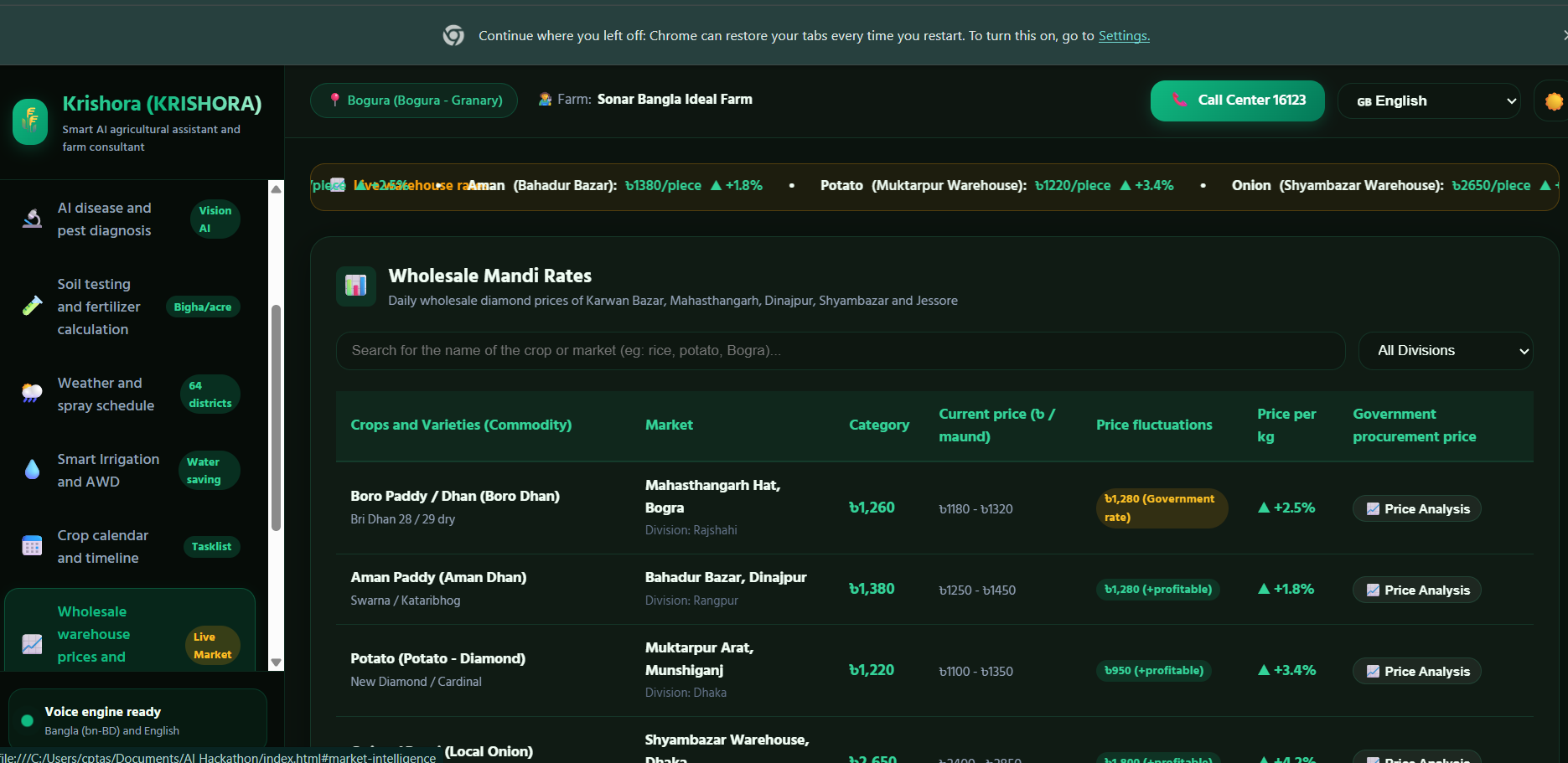
- Supply Chain Interactivity: Linking local farmers directly to regional buyers and agricultural extension officers to minimize middleman markups.
- IoT Sensor Integration: Connecting remote low-cost soil moisture and pH sensors for automated real-time irrigation triggers.

Log in or sign up for Devpost to join the conversation.