-
-
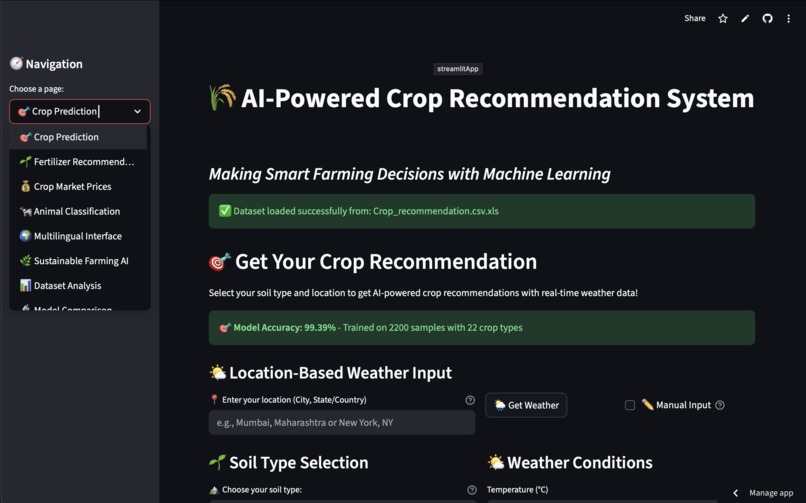
home page
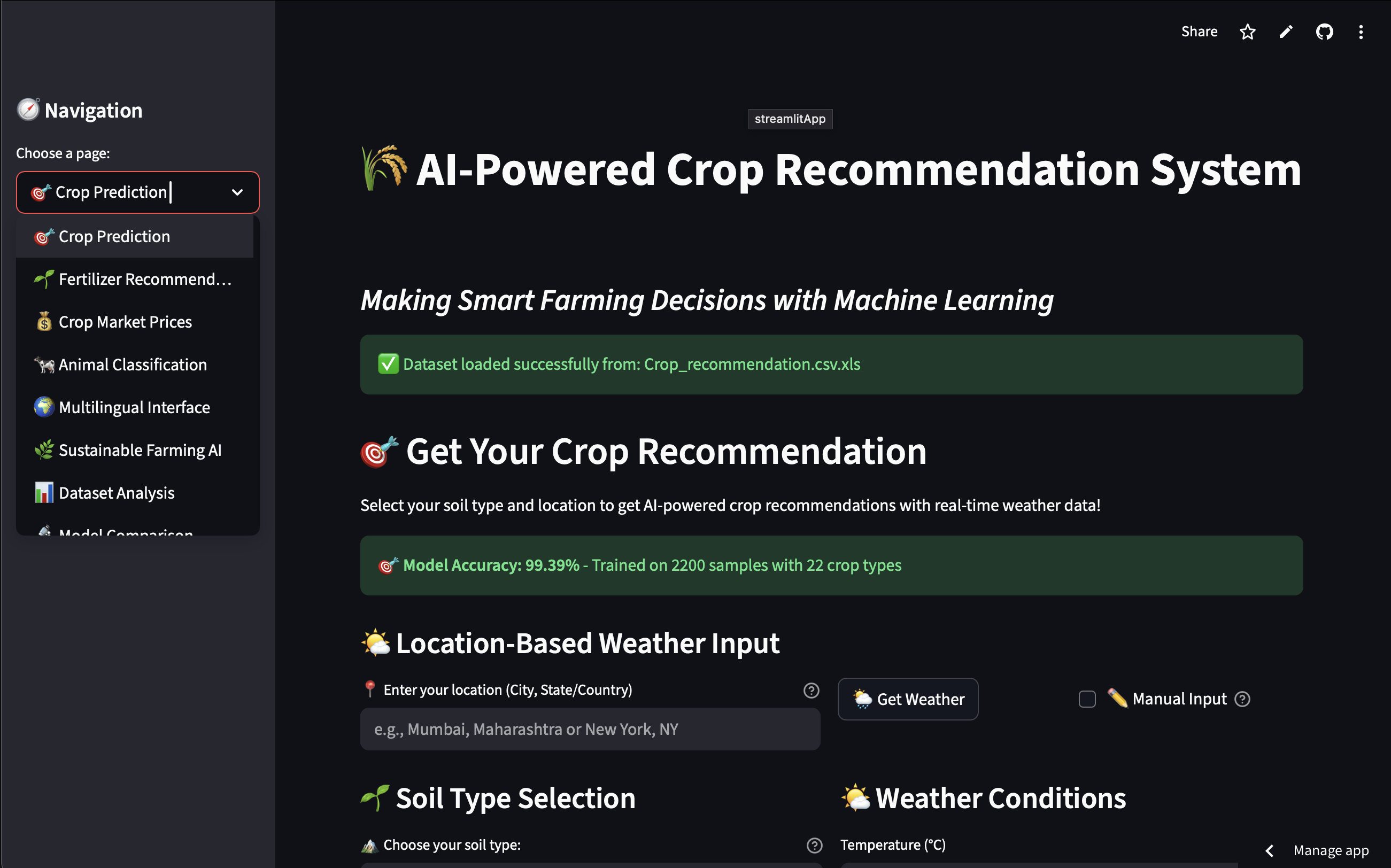
Inspiration
Agriculture is the backbone of India, yet a majority of small and marginal farmers depend on guesswork, local shopkeepers, or traditional methods for decisions on crop selection, pest control, and fertilizer use. This often results in low yields, crop losses, and unstable incomes. We were inspired by the vision of using AI, data science, and digital platforms to bridge the gap between modern knowledge and farmers’ needs. Our goal was to build a personalized, real-time advisory system that can help farmers make data-driven decisions, from soil to market.
What We Learned
Through this project, we explored and applied: Machine Learning (ML): For crop recommendation, soil health prediction, and market price forecasting. Deep Learning (DL): Using CNN models for pest and disease identification from crop images. Natural Language Processing (NLP): To build a voice-enabled, multilingual chatbot for farmers. API Integration: Linking with external data sources such as IMD (weather), Agmarknet (market prices), and Soil Health Card data. System Design: How to combine different modules (soil, weather, pest, market, feedback) into one unified platform.
How We Built It
Soil Health & Fertilizer Advisory Collected soil datasets and nutrient information. Applied classification models (Random Forest, Decision Trees) to suggest suitable crops and fertilizers. Weather-Based Alerts Integrated IMD weather APIs and built time-series forecasting models (ARIMA, Prophet) for rainfall prediction and advisory. Pest & Disease Detection Trained a CNN (ResNet/EfficientNet) using labeled crop disease datasets. Enabled farmers to upload images via the mobile app for instant diagnosis. Market Price & Demand Tracking Used Agmarknet data and developed regression + forecasting models to recommend profitable markets and crops. Voice & Chatbot Support Implemented multilingual NLP-based chatbot with voice support for accessibility. Deployment Backend: Python (FastAPI, Django) Frontend: PWA Mobile + Web App Cloud: AWS/GCP for scalability
Challenges We Faced
Data Collection & Quality: Agricultural datasets were often incomplete, inconsistent, or region-specific. Connectivity Issues: Many rural areas lack strong internet; we had to design offline-first modules. Multilingual Support: Building accurate translations for local dialects was challenging. Model Generalization: Ensuring the AI works across different soil types, crops, and regions. User Adoption: Designing a farmer-friendly interface that is simple, visual, and voice-driven.
Impact
Our system aims to: Improve crop yield through data-driven recommendations. Reduce losses from pests and diseases. Empower farmers with market intelligence for better pricing. Provide inclusive support with regional languages and voice features.

Log in or sign up for Devpost to join the conversation.