-
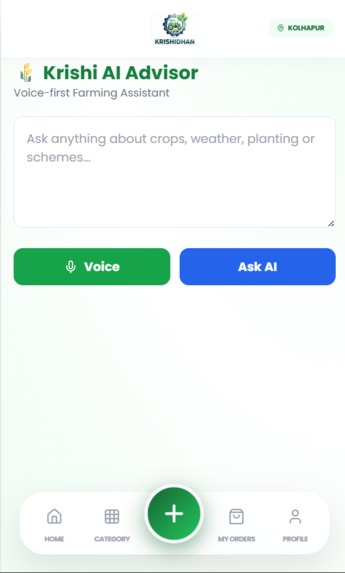
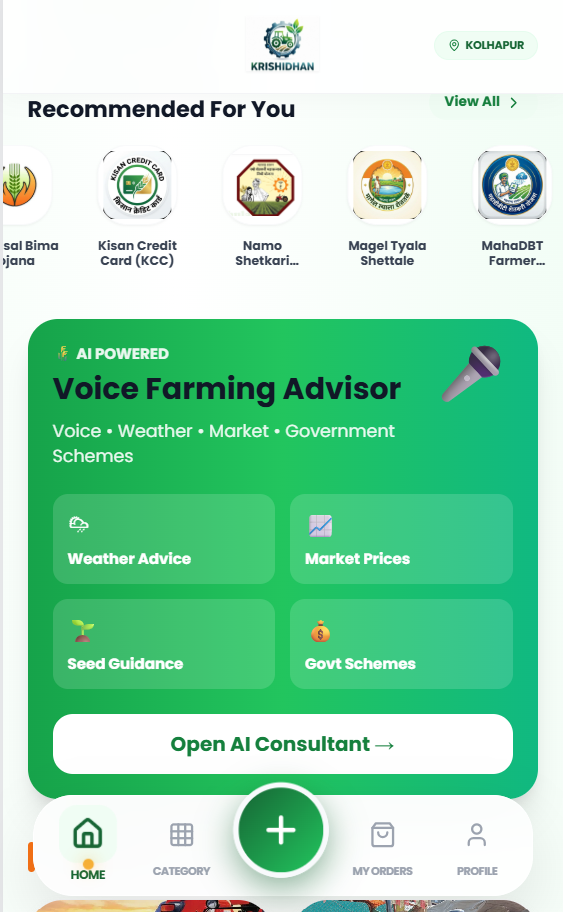
ai advisor
-
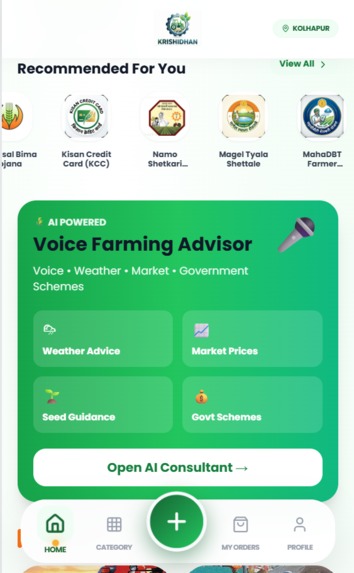
gov scheme info
-
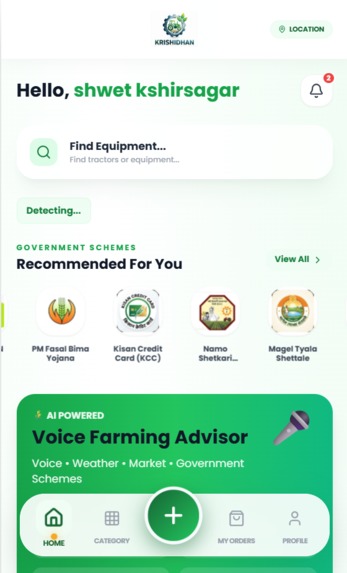
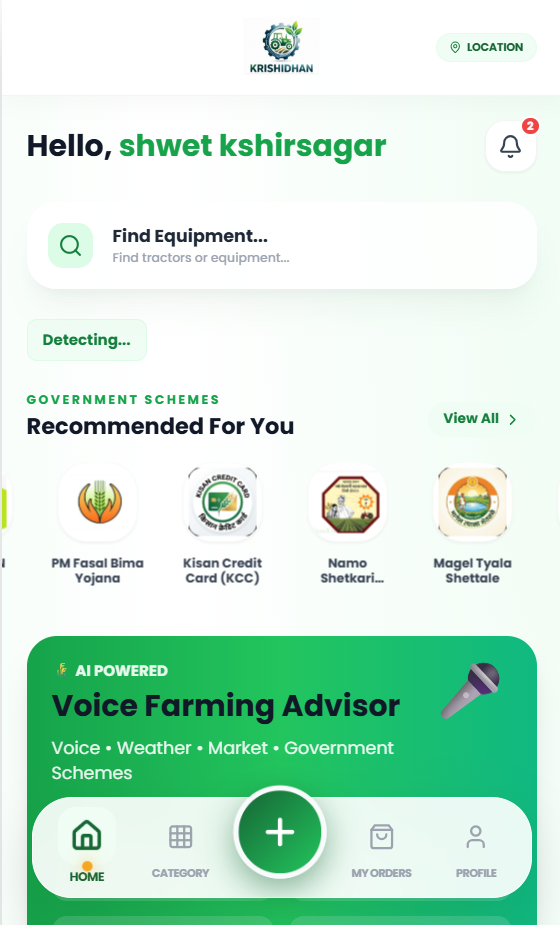
homepage
Inspiration
Agriculture still runs on decisions farmers make with incomplete information — what to plant, when to plant it, and whether the market will make it worth the risk. Most farm-advisory tools assume a farmer who can read, type, and navigate an app in a language that isn't always their own. That assumption excludes a huge share of the people who need this help most. We wanted to build something that meets farmers where they already are: talking, not typing.
What it does
The Voice-Based Natural Farming Consultant lets a farmer simply speak a question — about which seeds to plant, how to plan finances for the season, or what the weather and market prices look like — and get a spoken answer back in return. No forms, no dashboards, no reading required. Under the hood it covers two core areas: seed and financial guidance, and weather and market intelligence, blending real-time data with AI reasoning to give advice that's actually actionable, not generic.
How we built it Speech-to-text: Whisper, accelerated through Groq for near-instant transcription instead of the multi-second lag typical of cloud STT. Reasoning layer: An LLM interprets the farmer's question, pulls in weather and market data, and generates guidance grounded in that context rather than a static script. Text-to-speech: gTTS converts the response back into natural spoken audio, closing the loop so the farmer never has to read a word. Backend/Frontend: FastAPI serves the pipeline, with a React frontend handling the voice interface end-to-end. Challenges we ran into
Making the voice loop feel conversational rather than clunky was the hardest part — latency anywhere in the STT → reasoning → TTS chain breaks the illusion of talking to an assistant rather than a form. Grounding the LLM's advice in live weather and market data (instead of letting it hallucinate generic farming tips) took careful prompt and pipeline design. We also had to think hard about language and literacy barriers from first principles, since the whole point was to not fall back on a UI as a crutch.
What we learned
Voice-first design forces a different kind of empathy — you can't hide behind a menu or a tooltip. We learned a lot about optimizing real-time audio pipelines under latency constraints, grounding LLM outputs in live external data instead of static knowledge, and just how much complexity disappears from a user's perspective when the interface is "just talk to it."

Log in or sign up for Devpost to join the conversation.