KREV CultureLens
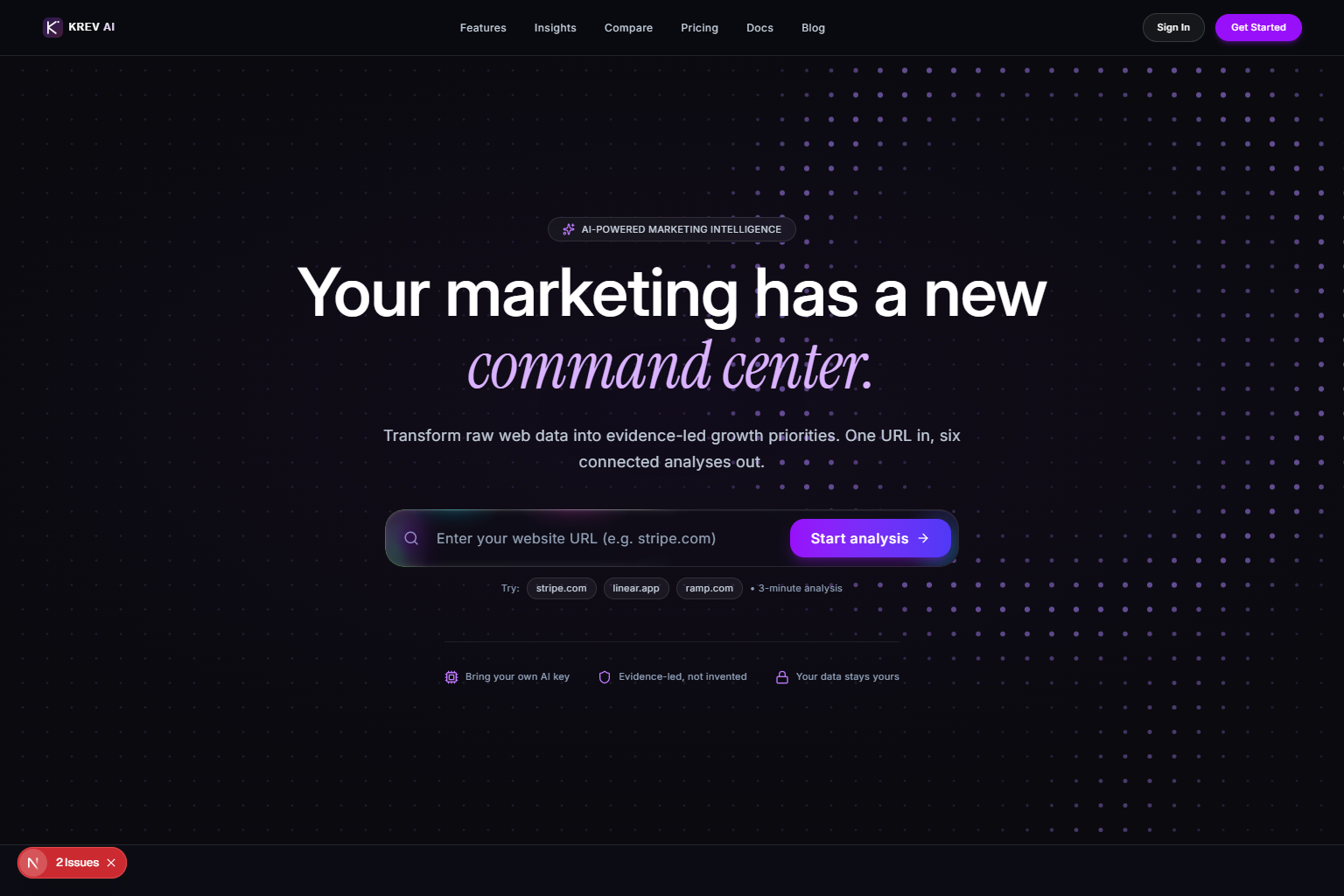
Turning cultural affinities into actionable audience, content, partnership, and campaign opportunities.
Inspiration
Marketing teams have access to more data than ever, but much of it still produces generic recommendations. Traditional tools can explain website performance, search visibility, demographics, and competitors, but they often miss an important question:
What does this audience genuinely care about?
People do not experience brands in isolated categories. Someone’s interest in a restaurant may connect with particular music, films, fashion labels, travel destinations, creators, or cultural communities. These relationships can influence which messages feel relevant and which campaigns are ignored.
We created KREV CultureLens to connect business intelligence with cultural intelligence. Qloo inspired this direction because its Taste AI and knowledge graph can uncover affinities across people, places, brands, entertainment, and culture. KREV adds the strategic layer that converts those affinities into decisions a marketing team can use.
What it does
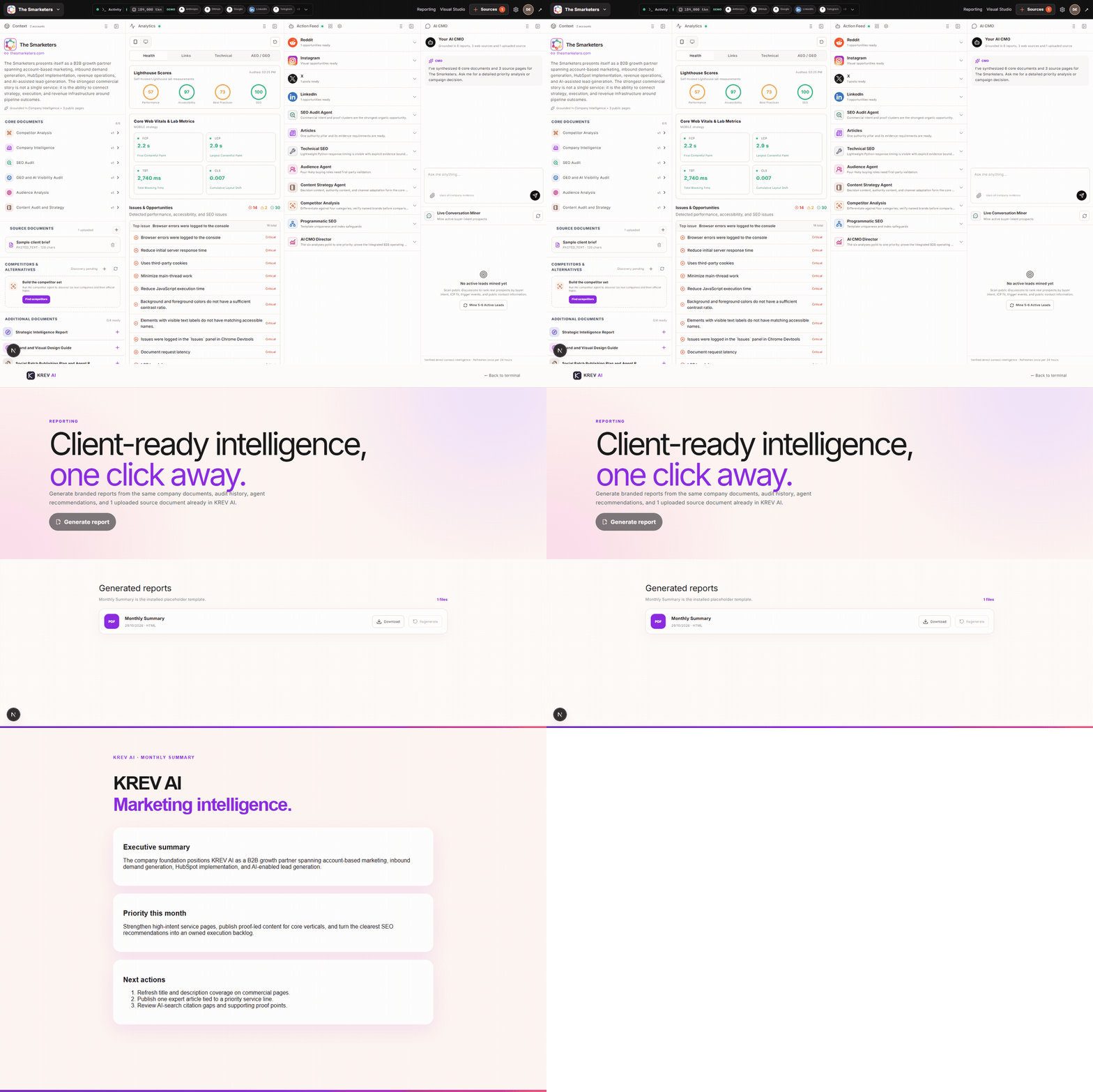
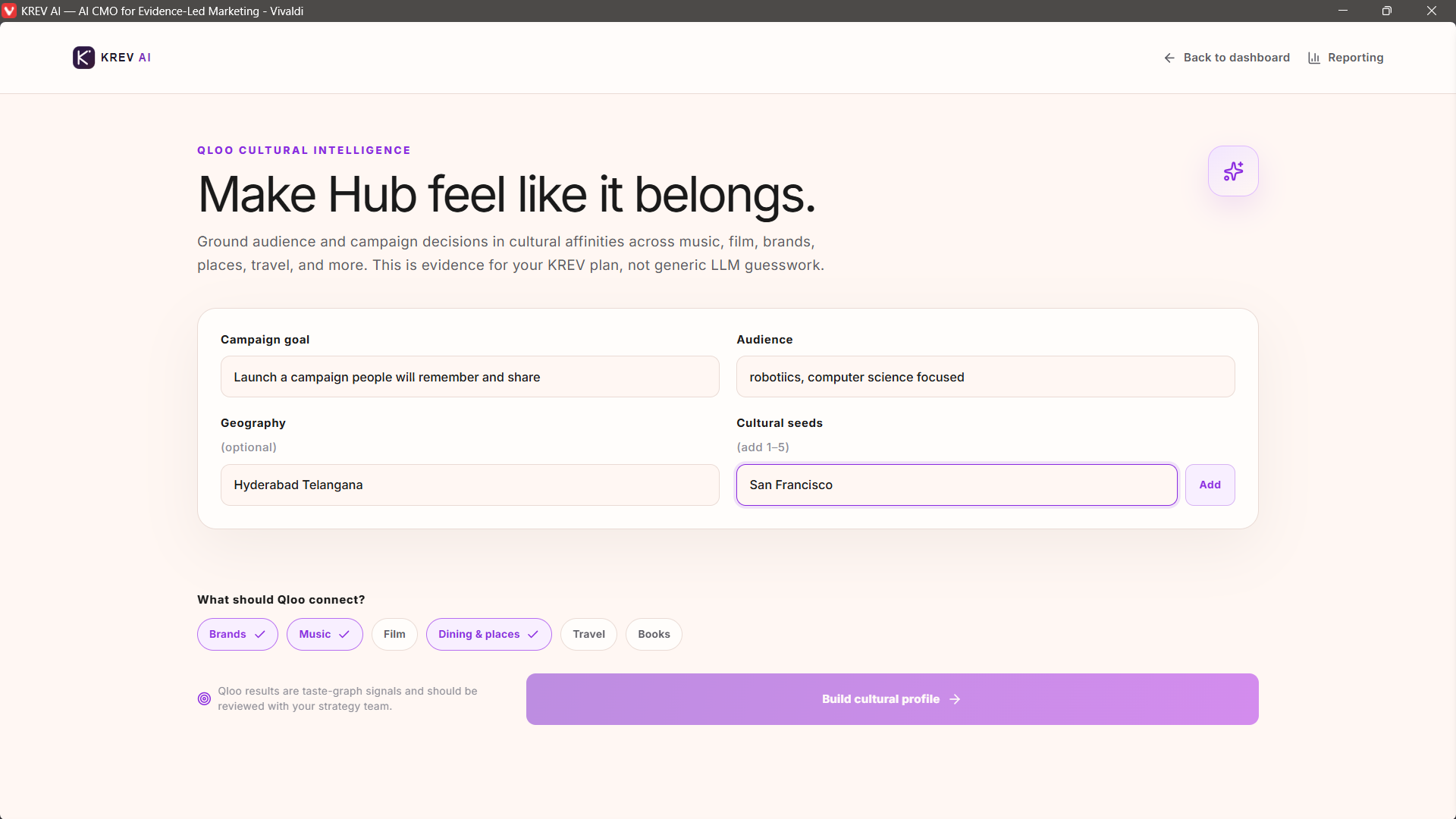
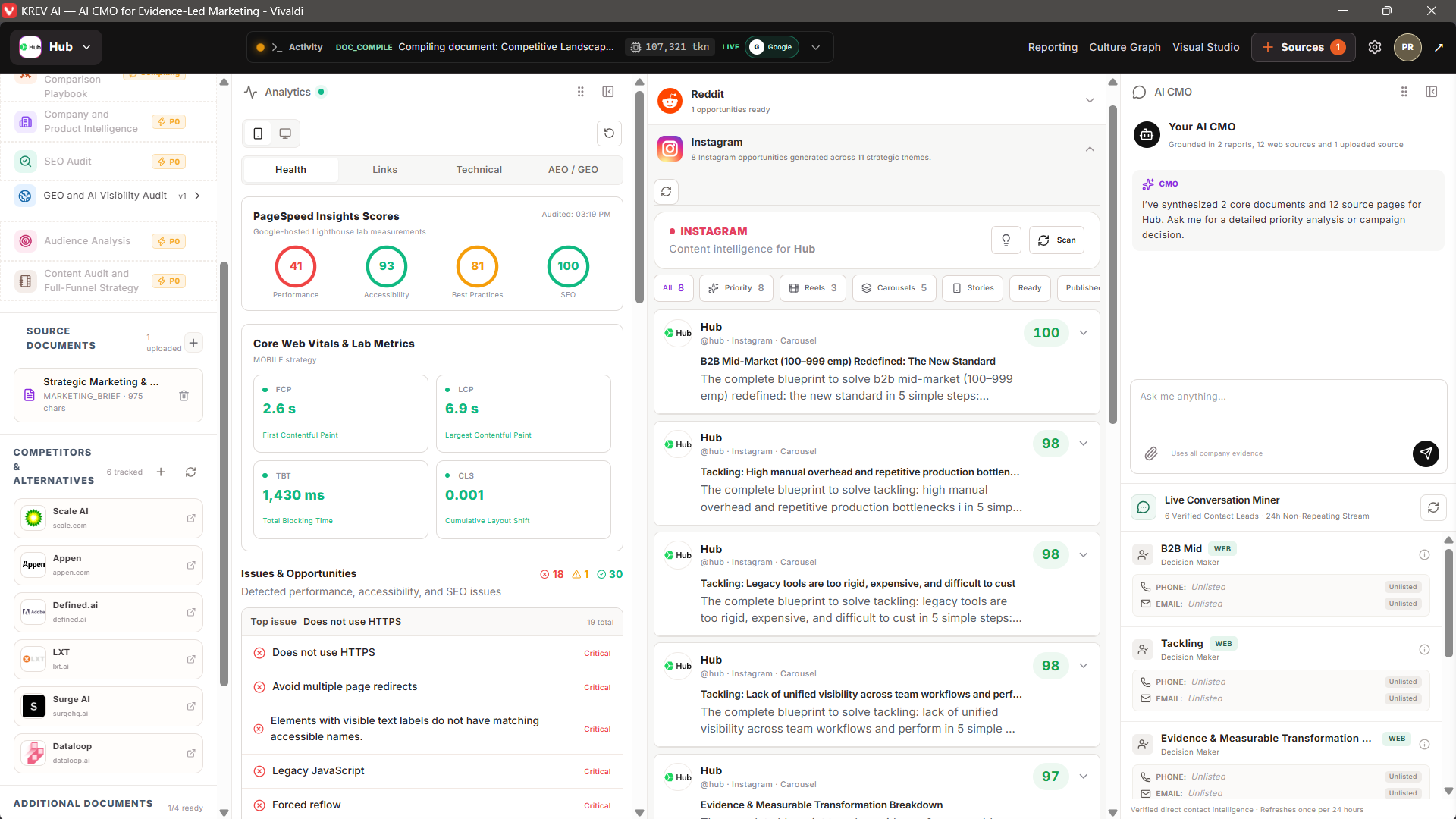
CultureLens begins with a company name, website, target audience, and target market. It then builds a structured understanding of the company by examining its:
- Products and services
- Positioning and value proposition
- Target customers
- Competitors
- Website content
- Geographic focus
- Existing marketing strategy
The application uses Qloo to resolve relevant brands and interests into entities and discover affinities across categories such as:
- Brands
- Music
- Film and television
- Books
- Fashion
- Food
- Travel
- Places
- Lifestyle interests
KREV’s specialist AI agents interpret these signals and convert them into:
- Culture-led audience segments
- Cross-category affinity maps
- Content themes
- Brand partnership opportunities
- Campaign concepts
- Regional insights
- Competitive whitespace
- Strategic marketing recommendations
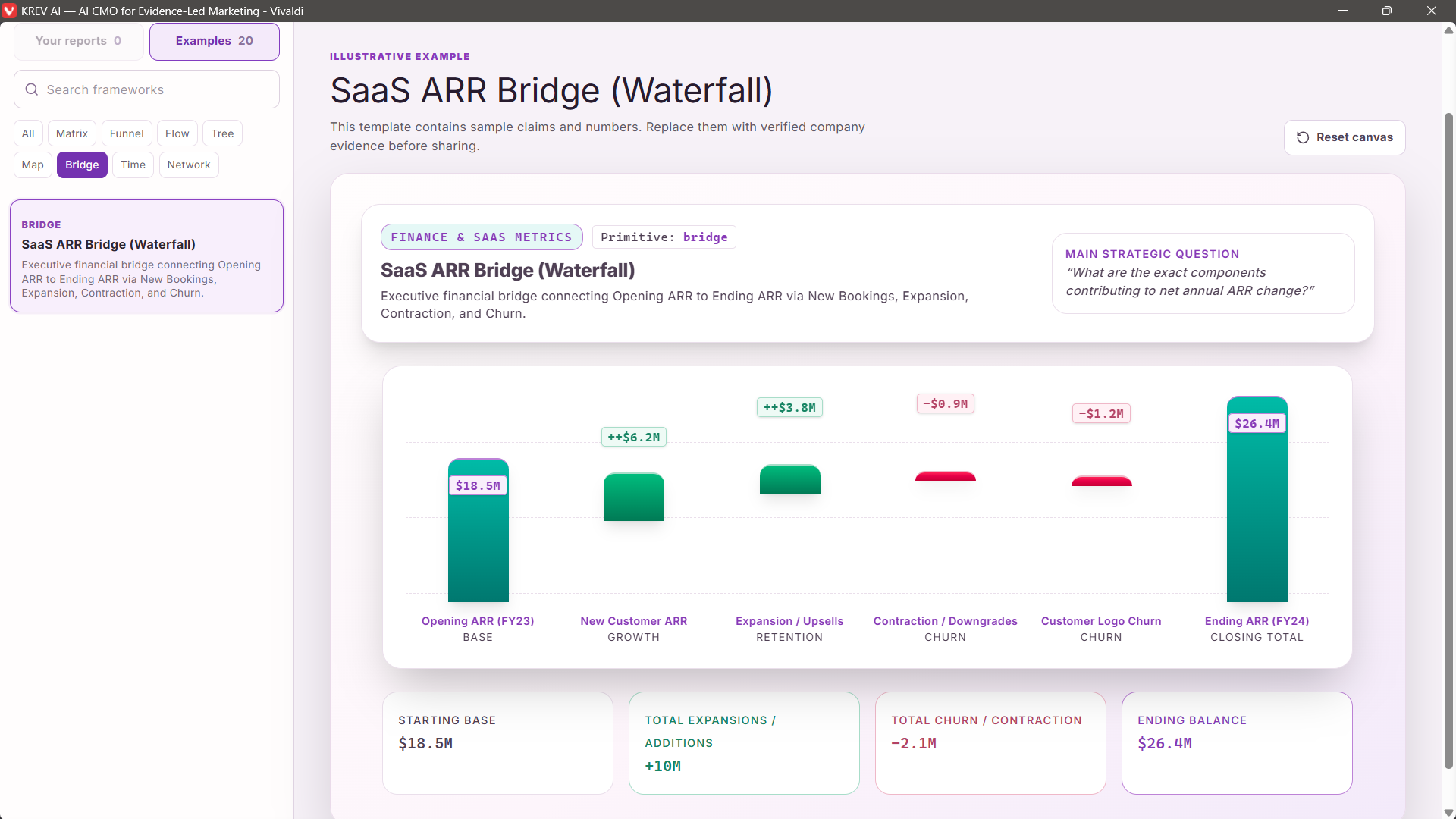
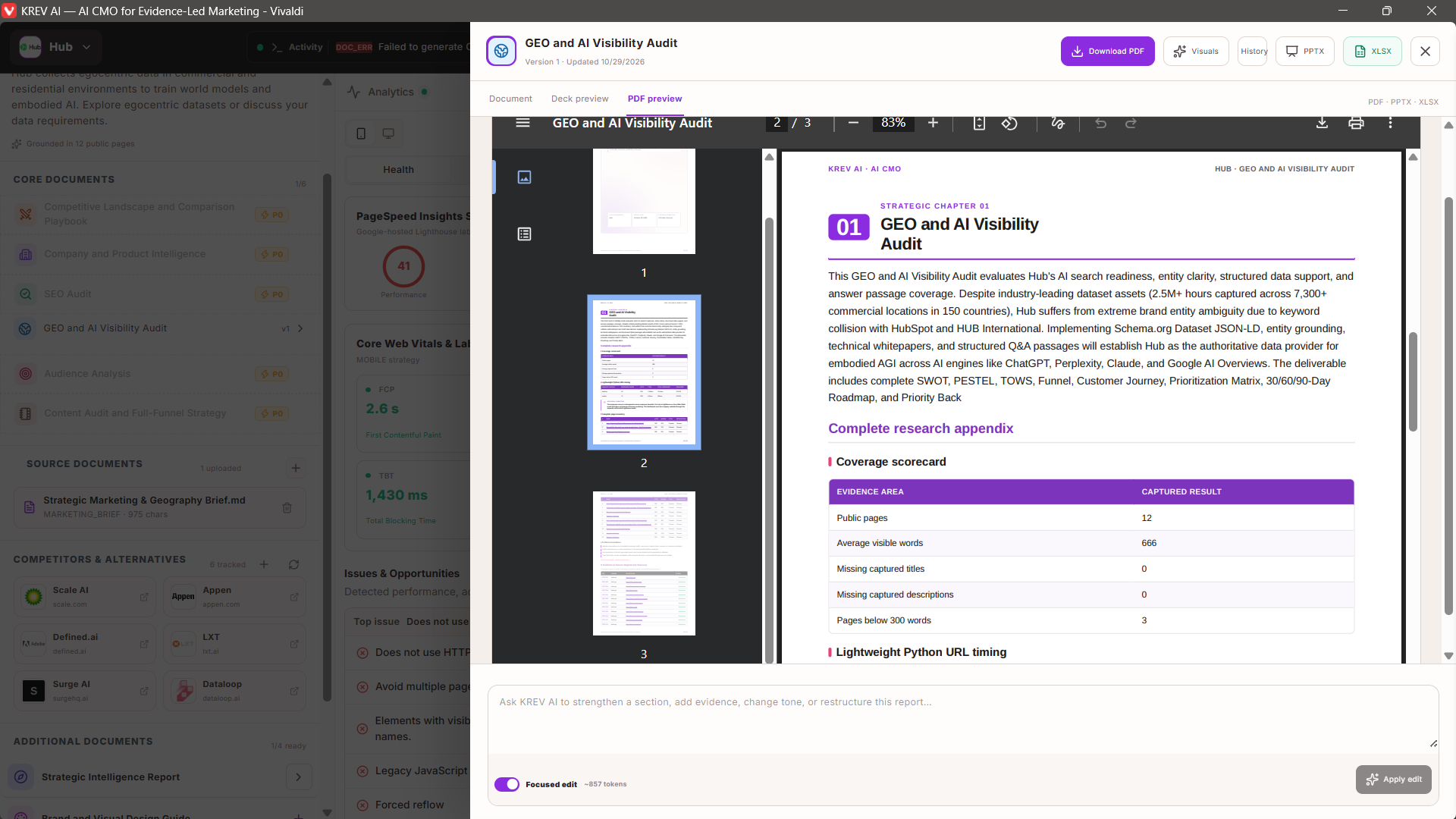
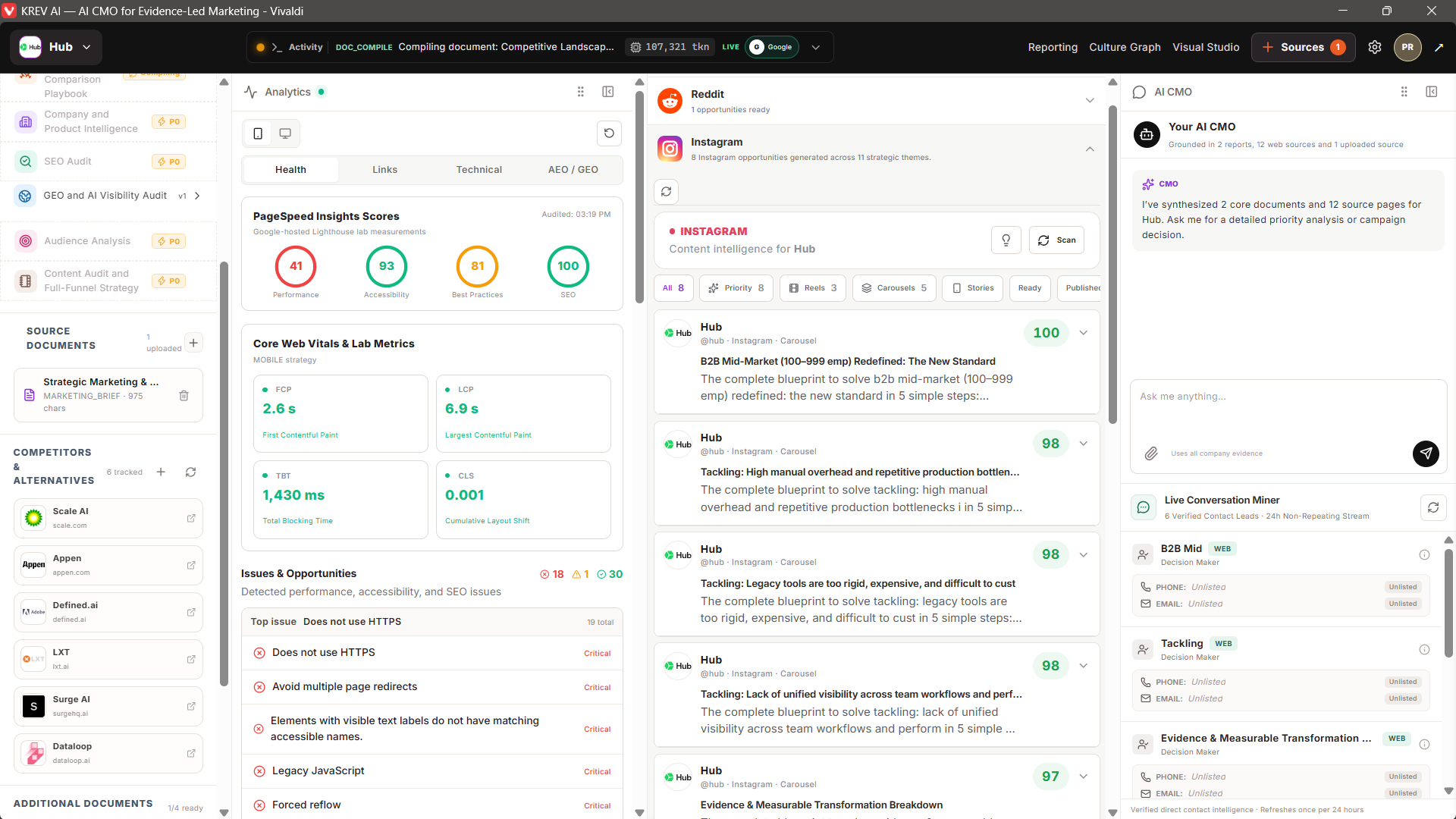
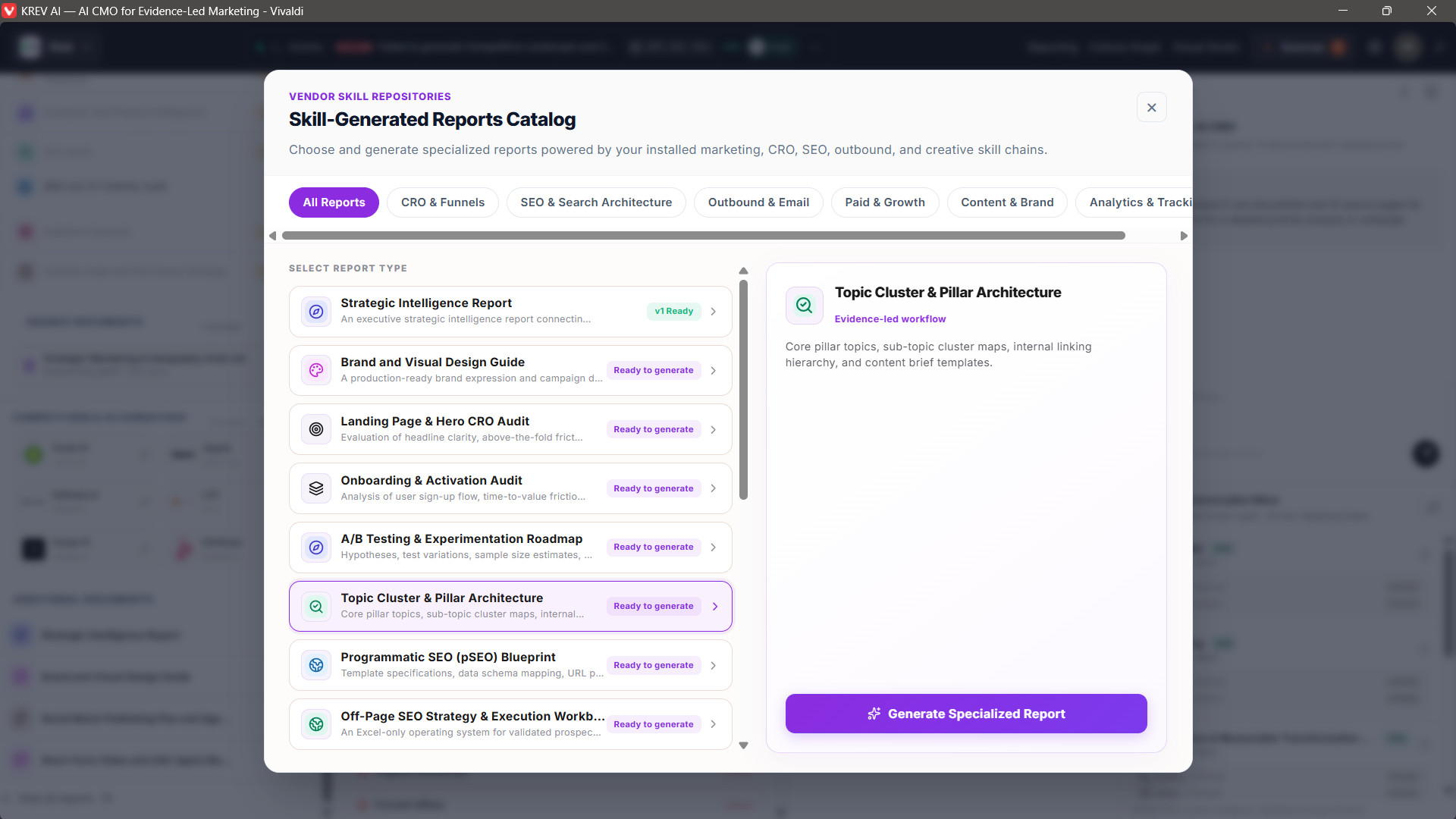
Users can explore the findings in the dashboard and generate presentation-ready reports for internal teams, clients, and campaign planning.
How we built it
CultureLens was developed as an intelligence layer inside the existing KREV platform.
The application uses Next.js and TypeScript for the product interface and backend API routes. PostgreSQL and Prisma manage users, companies, research evidence, agent runs, generated documents, and stored cultural-insight snapshots.
The research process follows a structured pipeline:
- A user creates a company workspace and enters its website.
- KREV crawls the permitted public pages and extracts company information.
- The platform identifies potential brands, competitors, categories, locations, and audience interests.
- Qloo’s Search API resolves those names into structured Qloo entities.
- Qloo’s Insights API retrieves related entities and affinity signals.
- CultureLens stores a normalized snapshot of the response with its source, query, timestamp, and confidence.
- Specialist agents combine the cultural signals with website, competitor, SEO, GEO, and uploaded evidence.
- The document engine produces structured reports and recommendations.
- The export system transforms the stored report into branded PDF and presentation formats.
Qloo requests are performed exclusively on the server. The API key is stored as a protected environment variable and is never exposed to the browser.
To prioritize opportunities, we designed a simple conceptual scoring model:
[
\text{Opportunity Score}
\text{Affinity} \times \text{Business Relevance} \times \text{Evidence Confidence} \times \text{Execution Feasibility} ]
The score prevents a culturally interesting connection from automatically becoming a recommendation. An affinity must also be relevant to the company and realistic to activate.
Challenges we faced
Entity resolution
Company and product names can be ambiguous. A search result might refer to a brand, place, person, or similarly named organization.
We addressed this by considering entity type, description, website, category, and location before accepting a match. When confidence is insufficient, the application can request confirmation or omit the signal.
Converting affinity into strategy
An affinity score is not automatically a campaign idea. We needed to translate cultural relationships into useful recommendations without overstating what the underlying data proves.
CultureLens therefore separates:
- The signal returned by Qloo
- KREV’s interpretation of that signal
- The recommended marketing experiment
The application describes affinities as evidence-backed hypotheses rather than facts about every member of an audience.
Reliable background processing
Website crawling, external API calls, AI analysis, and document generation can take longer than a typical web request. Hosting limits and temporary external-service failures made this especially challenging.
We introduced staged processing, timeouts, cached snapshots, structured job states, and graceful fallbacks. The interface communicates whether a process is queued, running, completed, partially completed, or failed.
API configuration and error handling
Environment variables, authentication headers, rate limits, and invalid responses can make integrations difficult to diagnose. An HTML error response can also accidentally be parsed as JSON, resulting in confusing messages such as Unexpected token '<'.
We added explicit response validation and human-readable states such as:
- Connected
- Authentication failed
- Rate limited
- Timed out
- Service unavailable
Consistent document generation
Generating a strong analysis is different from generating a polished report. Live API calls during export could cause two exports of the same report to contain different information.
To make reports reproducible, CultureLens stores the research snapshot before document generation. PDFs and presentations are rendered from the stored evidence instead of requesting fresh data during export.
What we learned
The most important lesson was that an LLM and a cultural knowledge graph solve different problems.
An LLM is effective at interpretation, synthesis, and communication. Qloo provides structured cultural relationships grounded in a specialized data graph. Combining them produces stronger results than asking a language model to infer audience tastes on its own.
We also learned that provenance is essential. Every important recommendation should make it possible to answer:
- Where did this signal come from?
- When was it retrieved?
- How confident are we in the entity match?
- What part is observed evidence?
- What part is an AI-generated interpretation?
Finally, we learned that visible system feedback is part of reliability. Users need to know when an integration is connected, when research is progressing, and why an operation failed.
What makes CultureLens different
CultureLens is not simply a recommendation engine and it is not another generic AI report generator.
Qloo discovers cultural relationships. KREV explains what those relationships mean for a specific company and converts them into marketing action.
The result is a bridge between cultural intelligence and practical execution.
What’s next
Our next steps include:
- Interactive cultural-affinity visualizations
- More detailed location-based analysis
- CRM audience enrichment using privacy-safe aggregate signals
- Campaign performance feedback loops
- Cultural trend monitoring
- Partnership and creator discovery
- Collaborative report editing
- Additional integrations with advertising and analytics platforms
- Automated comparison of predicted opportunities with campaign results
Our long-term vision is for CultureLens to become a cultural decision engine that helps every brand understand not only who its audience is, but also the wider world of interests that shapes what that audience values.
Built With
- ai-agents
- auth.js
- chromium
- css3
- docker
- html5
- json
- large-language-models
- llm
- markdown
- next.js
- node.js
- pdf-generation
- postgresql
- powerpoint-generation
- prisma
- prisma-orm
- puppeteer
- qloo
- react
- render
- rest-api
- typescript
- web-crawling


Log in or sign up for Devpost to join the conversation.