-
-
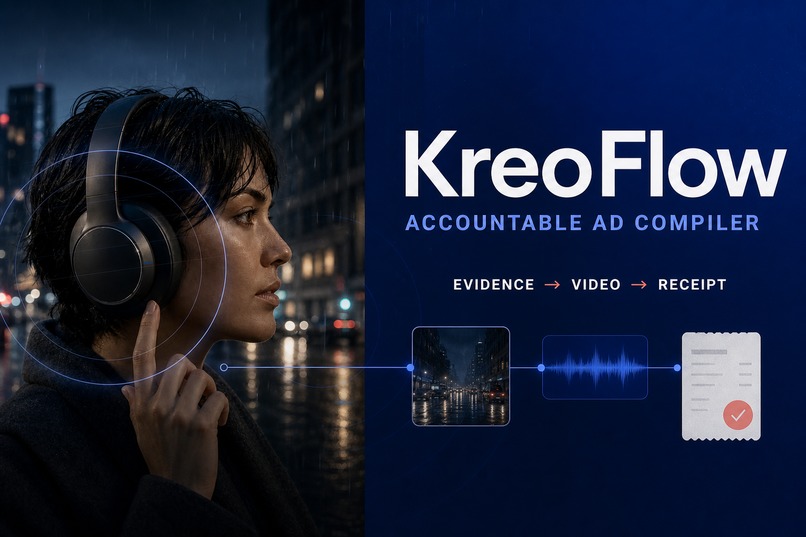
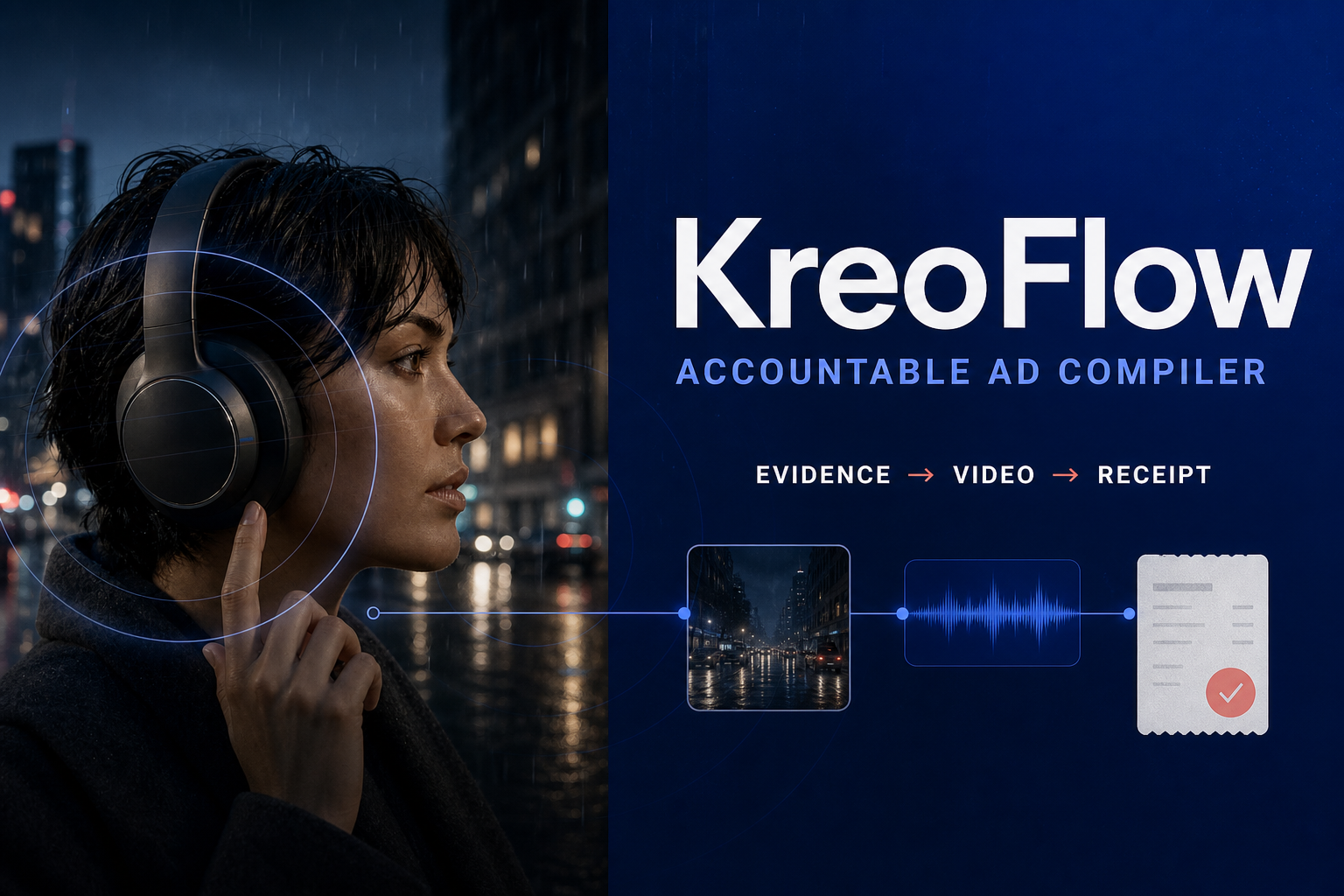
KreoFlow — evidence → video → receipt.
-
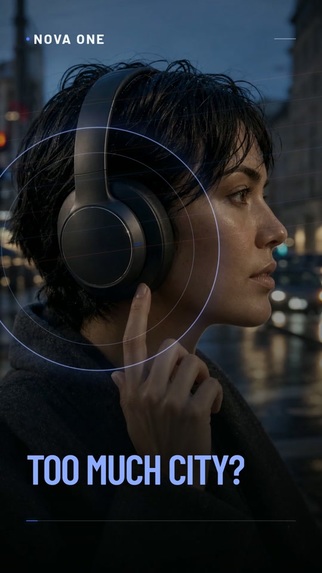
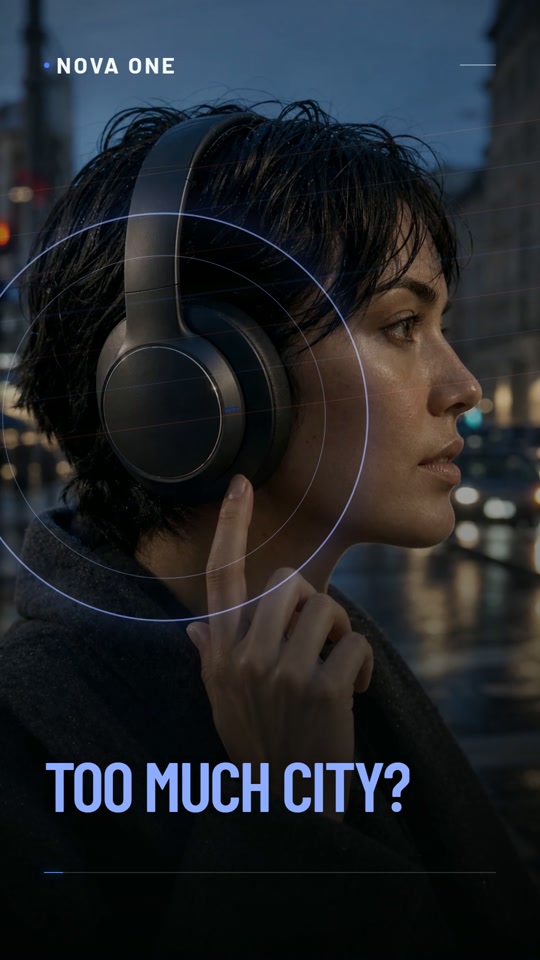
Actual 1080×1920 H.264 ad output with audio.
Inspiration
Product teams can have strong product photography and still struggle to turn it into a coherent, review-ready advertisement. Most AI video workflows produce attractive fragments, but they do not reliably preserve product truth, claim provenance, timing, or delivery quality.
KreoFlow explores a different approach: treat advertising production as an accountable compiler rather than a prompt-to-video lottery.
What it does
KreoFlow converts structured product evidence and approved media into:
- a typed CreativeSpec;
- a schema-driven vertical video composition;
- an exact-output render receipt;
- a technical QA receipt;
- an explicit human approval record.
Factual overlays must reference source-attributed evidence. Blocked, unapproved, missing, or text-mismatched claims are rejected before rendering.
The included NOVA ONE fixture produces a real 12-second 1080×1920 H.264 advertisement with audio. Its public proof page exposes the scene plan, claim sources, technical measurements, hashes, and limitations.
How we built it
ProductEvidence and CreativeSpec are validated with strict Zod schemas. A server-only OpenAI Responses API adapter targets GPT-5.6 with Structured Outputs for creative planning.
The public demo deliberately replays a labelled fixture, so it never presents a fixture as a live model response.
Remotion executes the scene timing, selected assets, overlays, CTA, and audio. FFmpeg and ffprobe verify dimensions, codec, frame rate, duration, audio format, loudness, and true peak.
Every successful render produces a receipt bound to the current evidence, CreativeSpec, source-media bytes, output path, and exact MP4 hash. A build-time provenance gate prevents stale or mismatched artifacts from being deployed.
Codex was used to research the event, audit the previous videos, design the architecture, implement the compiler and renderer, write regression tests, perform adversarial reviews, and verify the final browser experience.
Challenges
The hardest problem was not encoding a video. It was defining which parts of an AI-generated plan could be trusted.
We had to separate creative language from factual claims, bind scenes to declared assets, prevent old PASS receipts from surviving failed reruns, and protect source files from destructive output-path collisions.
Another challenge was producing a polished advertisement from still images while keeping the composition driven by the CreativeSpec rather than hardcoded to one filename.
Accomplishments
- A real 12.053-second vertical MP4 with synchronized audio.
- 13 blocking technical QA checks.
- Evidence, media, specification, render, and QA artifacts connected through SHA-256 hashes.
- Fail-closed artifact lifecycle and deployment provenance gate.
- 98 automated tests.
- Responsive proof page verified at desktop, tablet, and mobile sizes.
- Honest separation between automated QA and pending human commercial review.
What we learned
AI is most useful for interpreting ambiguous product material and proposing creative direction. Deterministic code is better for enforcing timing, provenance, delivery specifications, and artifact freshness.
A receipt is not legal approval, authentication, or proof that an advertisement will convert. It is an inspectable production record that makes failures and human responsibilities visible.
What's next
Next we want to connect the browser brief to the compiler, run the GPT-5.6 adapter from a compliant supported environment, support rights-cleared product footage, and produce three concepts with two hook variants for one real product.
The commercial test is not another technical receipt. It is whether a real customer will pay for the resulting advertising pack.
Built With
- codex
- ffmpeg
- ffprobe
- github
- gpt-5.6-adapter
- next.js
- node.js
- openai-responses-api
- playwright
- pnpm
- react
- remotion
- structured-outputs
- typescript
- vitest
- zod

Log in or sign up for Devpost to join the conversation.