Inspiration
Vibe coders jump straight to code, but the biggest mistakes happen before coding begins. We wanted to help teams think clearly about system design early, so they can avoid costly architectural decisions and tech debt later.
What it does
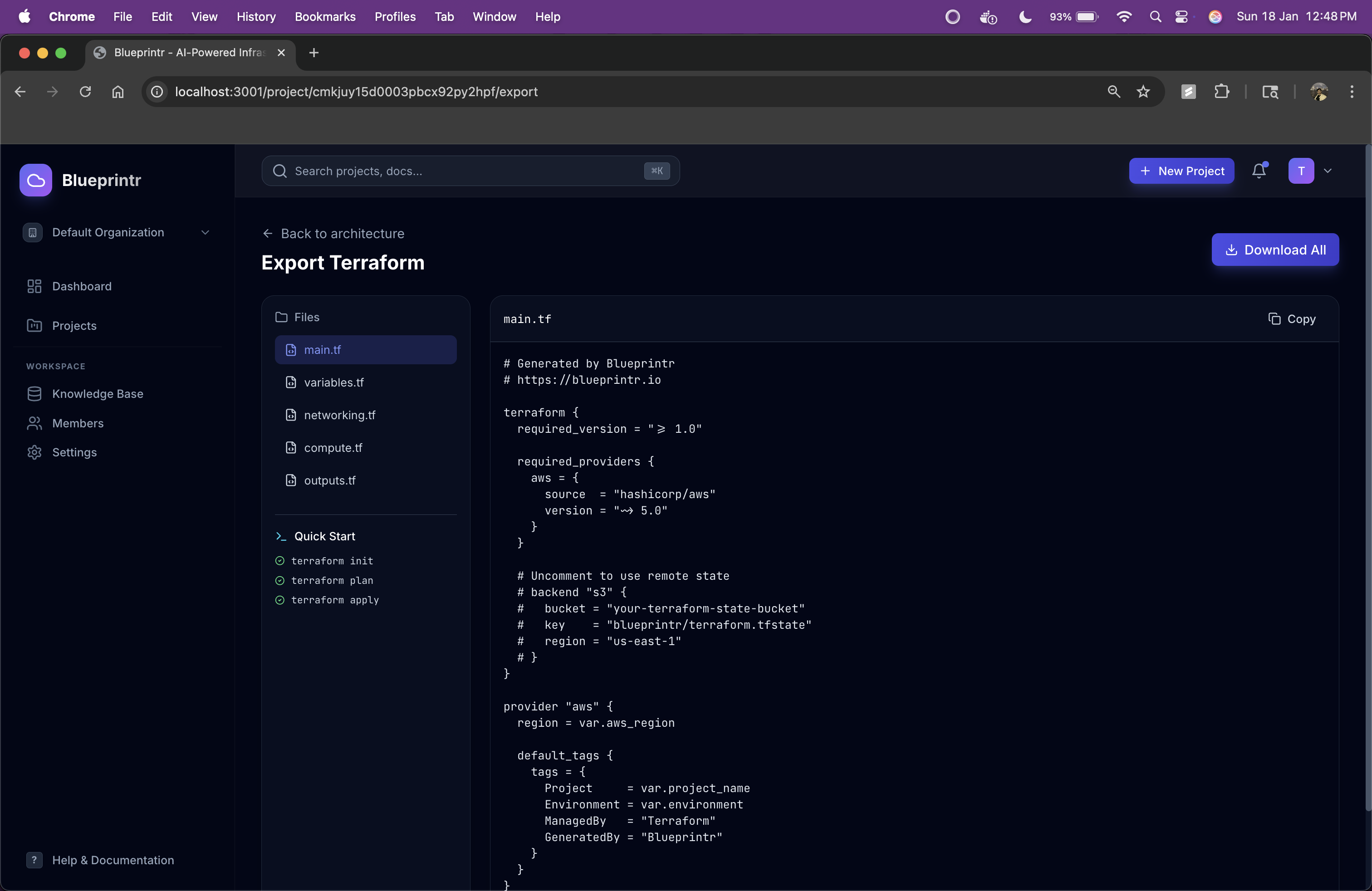
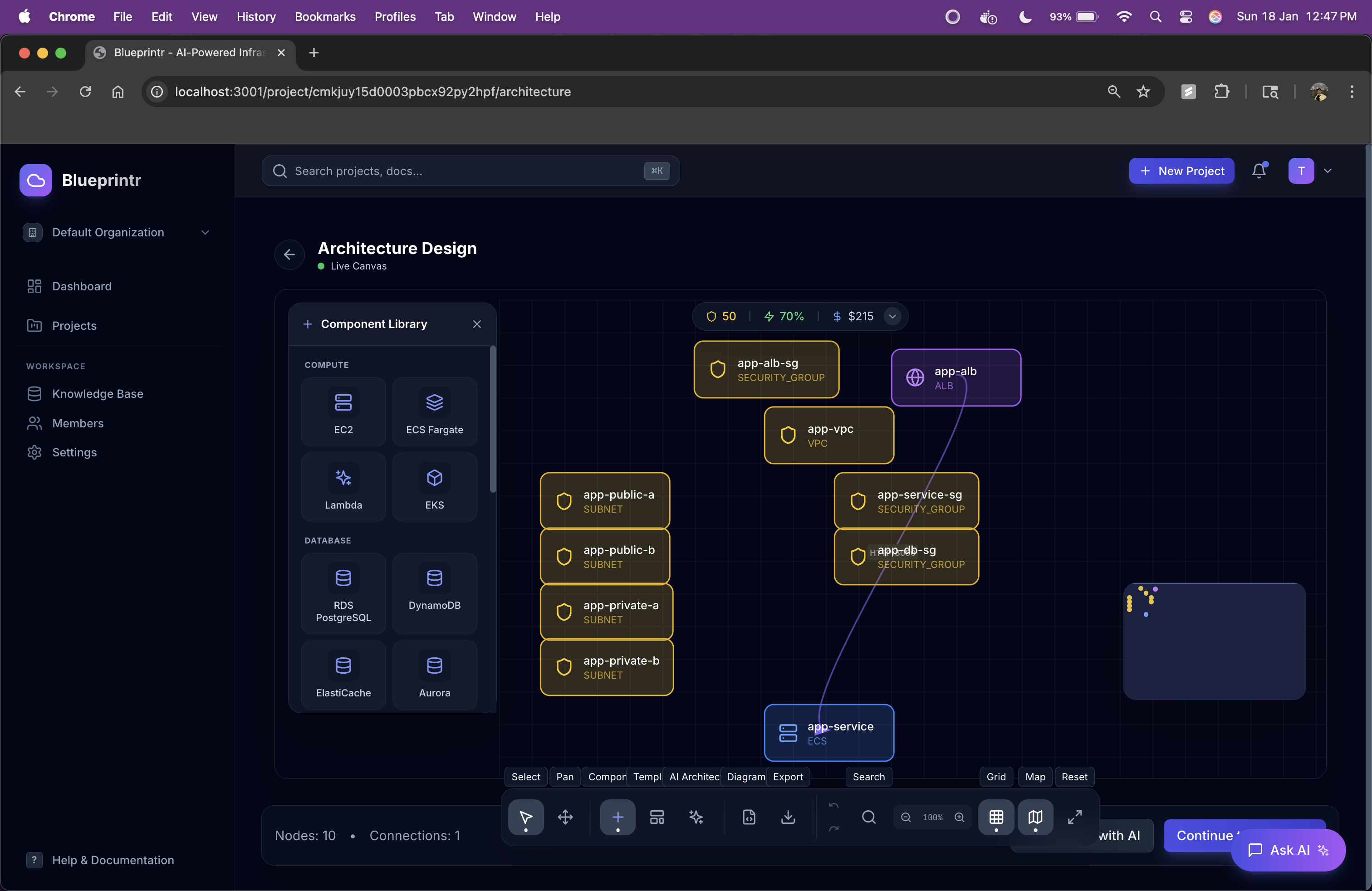
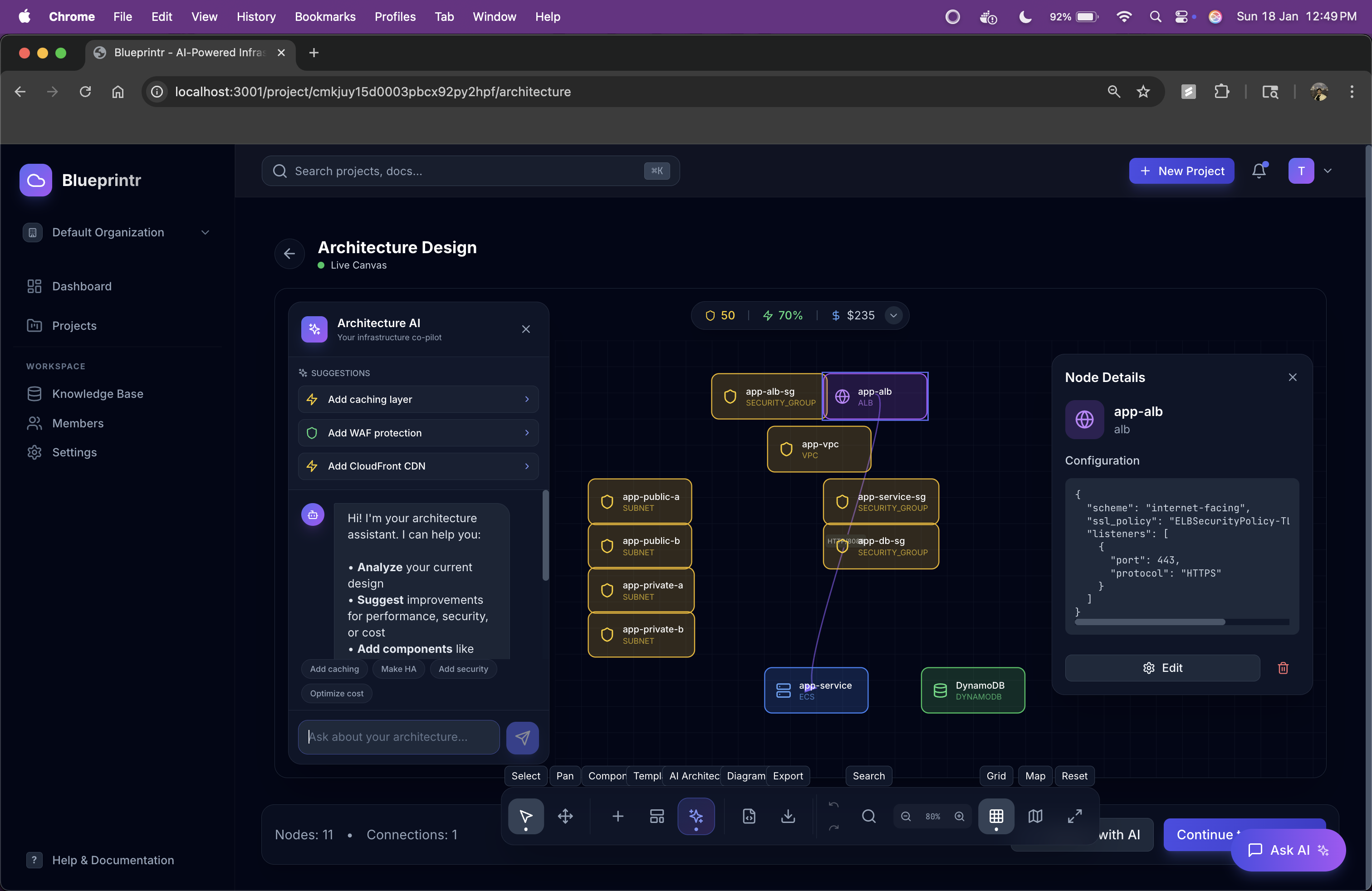
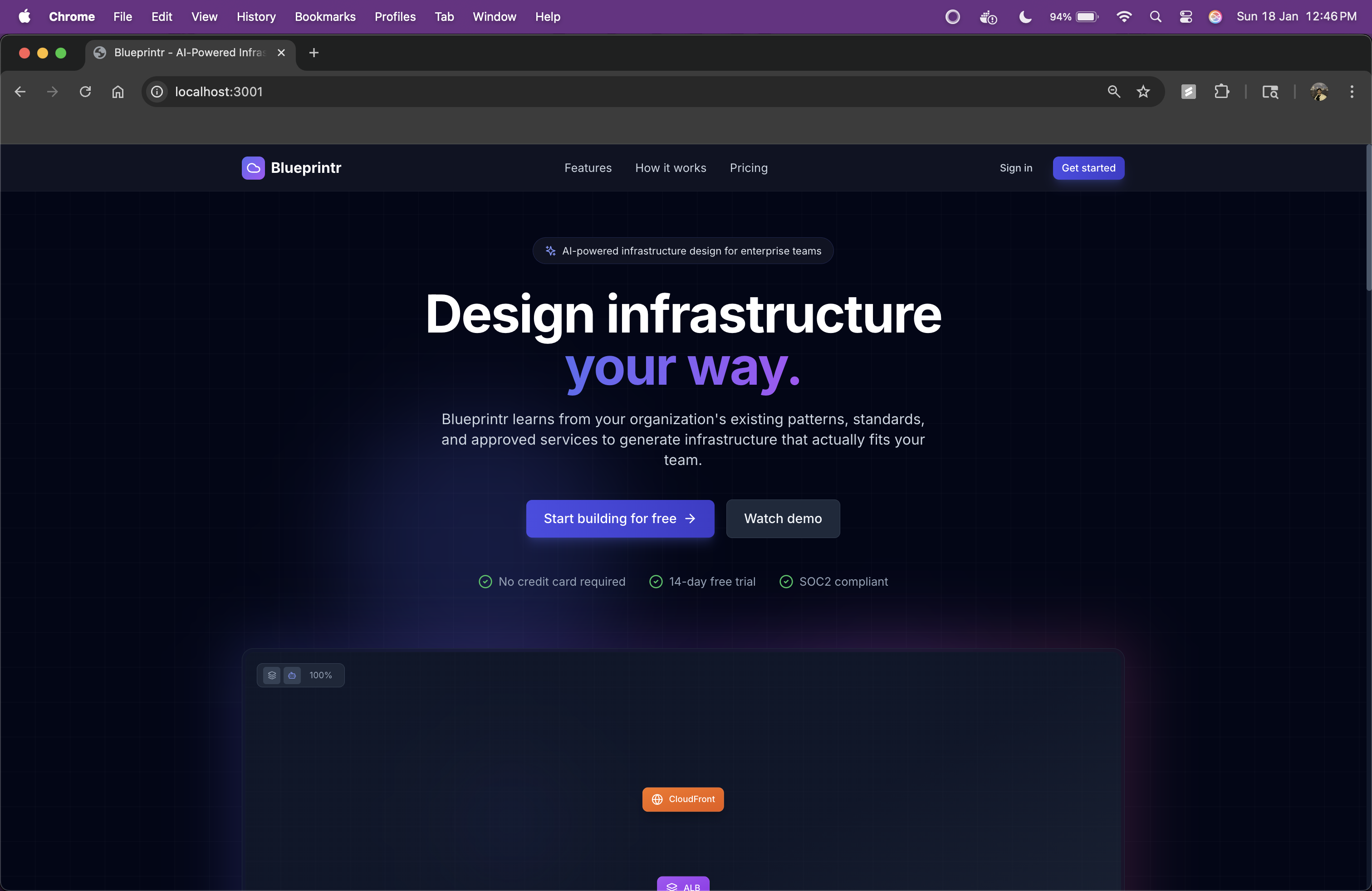
Blueprintr helps teams design system architecture before writing code. Users describe their idea and constraints in natural language, and Blueprintr generates a structured system blueprint
How we built it
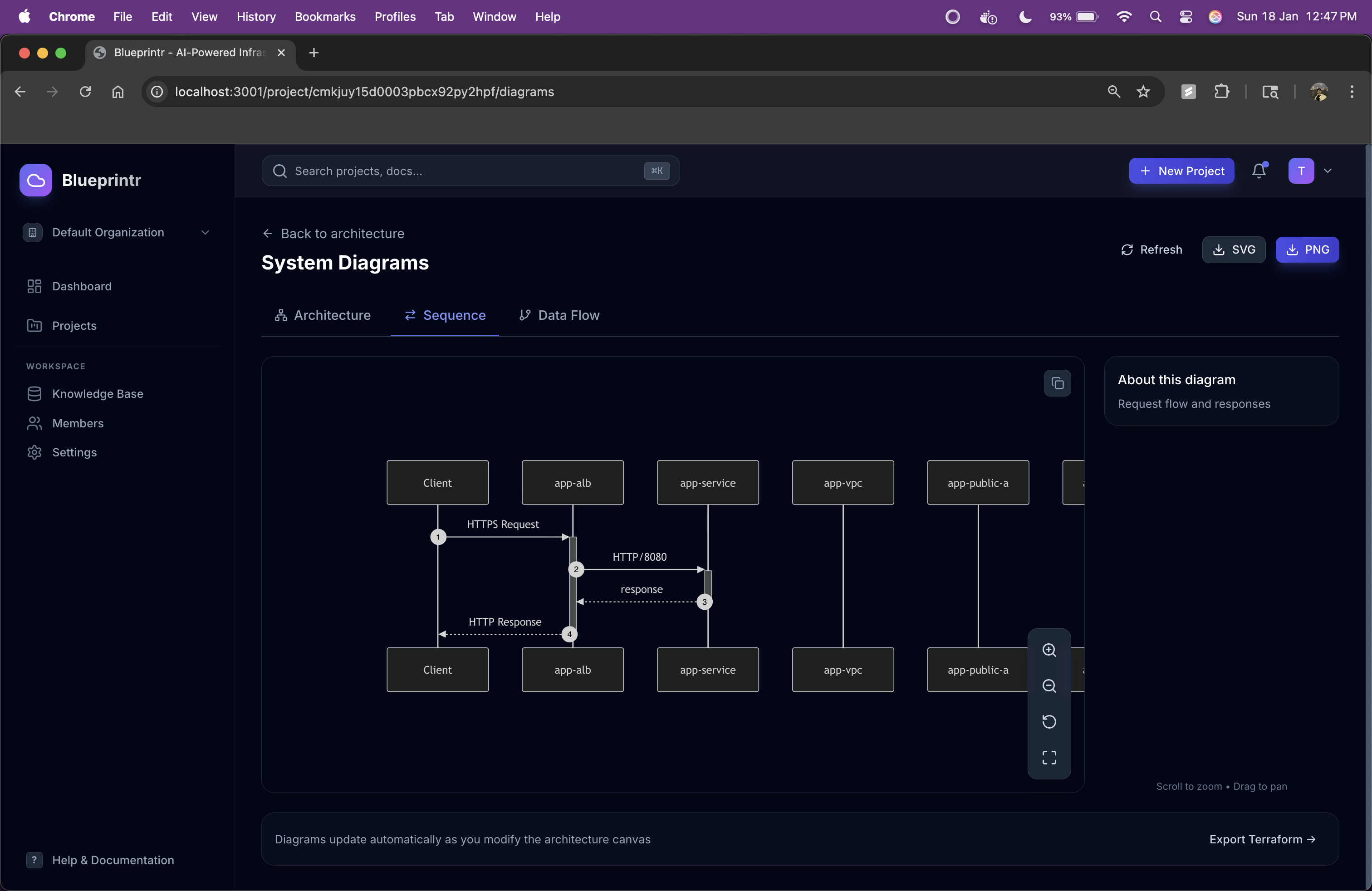
We used an LLM to convert unstructured intent into a structured representation of services, data flow, and infrastructure. Guardrails and heuristics ensure concrete decisions, while the frontend visualizes the architecture as an interactive diagram.
Challenges we ran into
The main challenge was avoiding generic AI responses. We solved this by enforcing structure and explicit architectural choices, balancing flexibility with clarity.
Accomplishments that we're proud of
Blueprintr generates interactive architecture diagrams and explicitly surfaces design tradeoffs, such as cost vs. latency or scalability vs. complexity. Within the hackathon, we validated the tool by designing multiple distinct systems and iterating on architectures in minutes rather than hours, showing that it meaningfully accelerates early-stage technical decision-making.
What we learned
Good architecture is about shared understanding. AI is most effective when it helps structure thinking rather than replacing it.
What's next for Blueprintr
We plan to add cost and scalability analysis and integrate Blueprintr into existing dev workflows so architecture evolves alongside code.


Log in or sign up for Devpost to join the conversation.