-
-
KOZAI
Inspiration
The moment that started everything happened at a café on the corner of my neighbourhood. A blind man asked someone to read him the menu. His eyes were closed, but I could see the pain in his expression — not from his condition, but from his dependence on a stranger for something as ordinary as choosing what to eat. One question formed in my mind and never left: why should a medical condition take away a person's freedom?
What it does
KOZAI is a portable offline document scanner for blind users. Point the camera at any printed document, and within seconds the text is read aloud via TTS and rendered in physical braille. No internet. No cloud. No assistance needed.
The user holds the camera over a document. The system detects the document automatically, waits for stillness via optical flow analysis, captures the sharpest frame, runs the full OCR pipeline, and outputs the result simultaneously to a speaker and a custom braille display.
How we built it
The server runs on Raspberry Pi 4B with a Flask REST API. The computer vision pipeline uses OpenCV for document detection (Canny edge detection + homography-based perspective correction), adaptive histogram equalization (CLAHE), Sauvola binarization, and Tesseract OCR with a multi-candidate evaluation system that picks the highest-confidence preprocessing output.
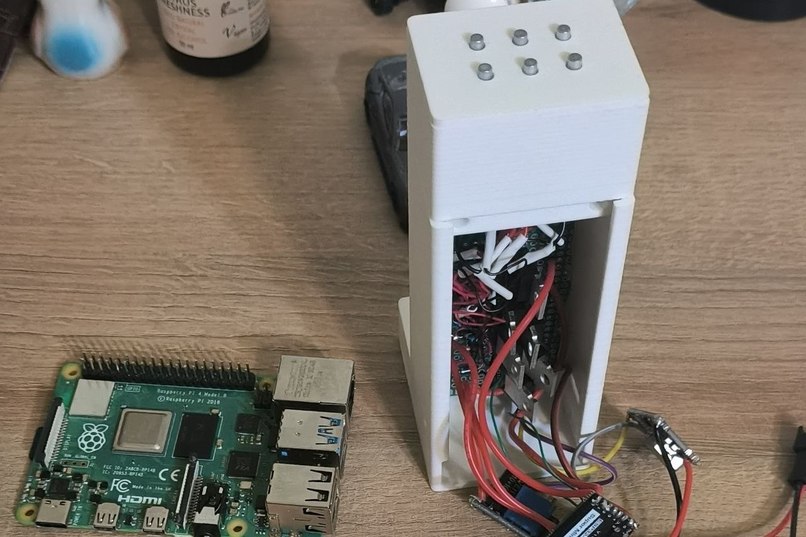
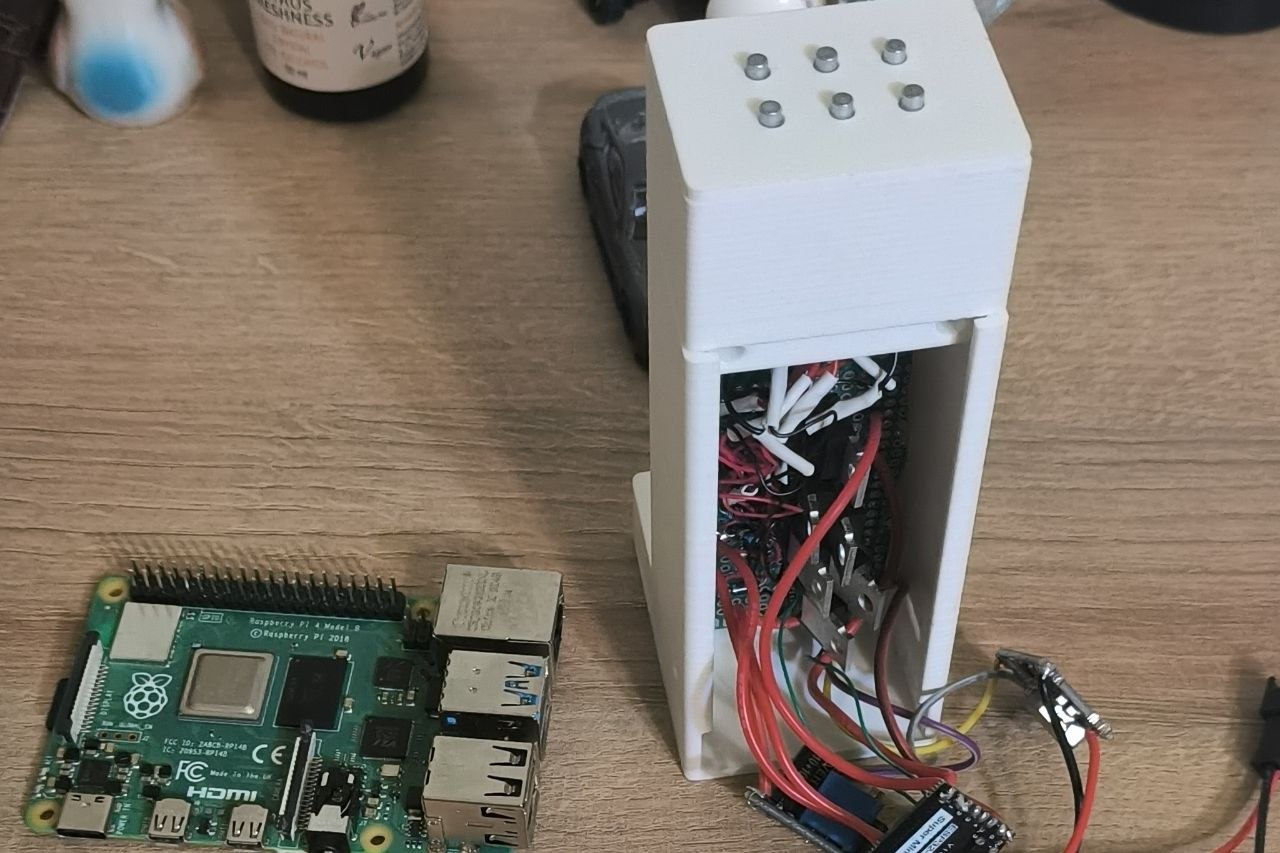
The braille display is custom-built using an ESP32-C3 SuperMini driving solenoids through logic gate transistors and resistors — one solenoid per braille dot. The display receives text from the RPi server via API and converts each character to its braille cell pattern in real time.
The full pipeline runs offline on consumer hardware costing under $150 total.
Challenges we ran into
Document detection in uncontrolled lighting was the hardest problem. We implemented an adaptive sharpness threshold that calibrates to ambient conditions in the first 15 frames, and a rectangularity filter using both minAreaRect ratio and cosine angle verification to reject trapezoids and partial views. OCR confidence on real-world photos plateaued around 71% — the main bottleneck is input image resolution, which we're addressing with closer capture distance and higher upscale factors.
Accomplishments we're proud of
- Full offline pipeline: camera → OCR → braille output, no internet required
- Custom braille display built from scratch with solenoids and ESP32
- Adaptive guided capture with vibration feedback for blind users
- 71% OCR confidence on real printed documents with a $35 computer
What we learned
Blind users cannot see if the camera is aligned — every piece of feedback must be tactile or audio. This shaped every design decision: vibration patterns for document detection, TTS segmentation for long texts, and automatic capture on stillness detection.
What's next
Upgrade to Orange Pi 5 with NPU for faster inference. Add Kazakh and Russian language support. Miniaturize into a wearable chest-mounted form factor. Submit to Kazakhstan's national assistive technology program.
How it helps?
This project contributes directly to SDG 4 (Quality Education) — because literacy access is education access — and SDG 10 (Reduced Inequalities) — because independence should not be a privilege determined by income or geography.


Log in or sign up for Devpost to join the conversation.