-
-
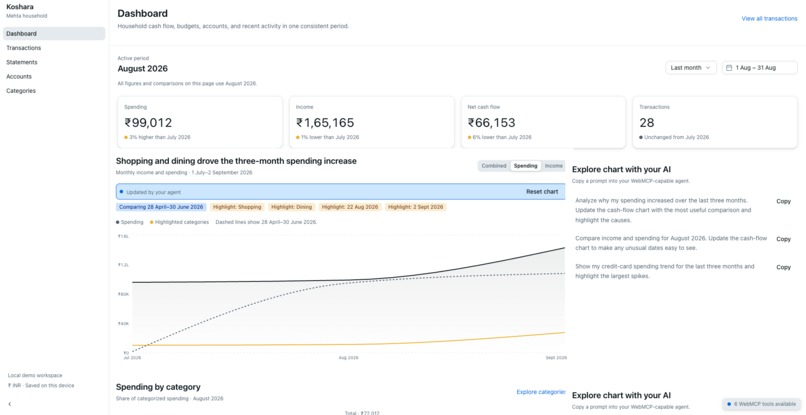
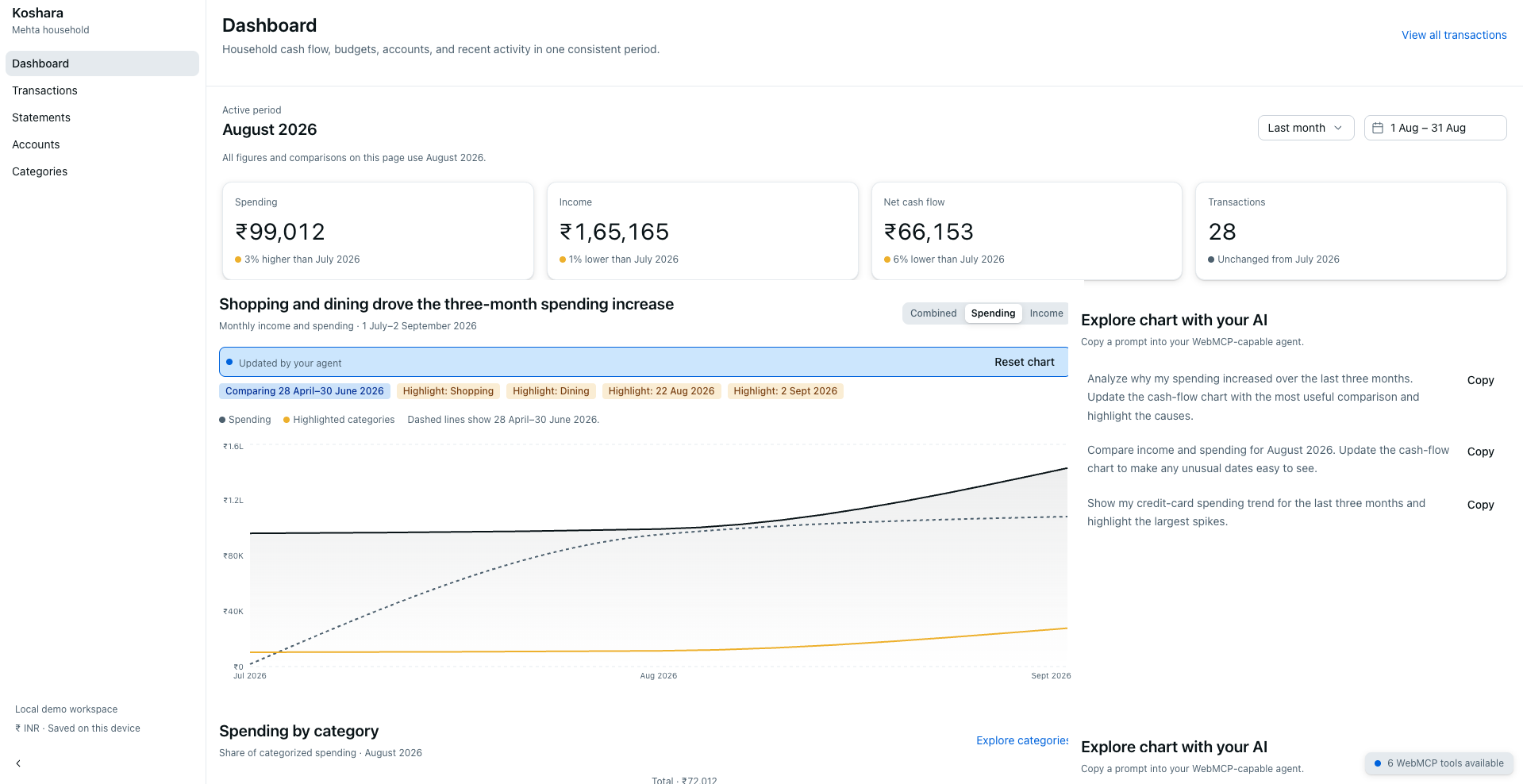
Dashboard update charts using AI
-
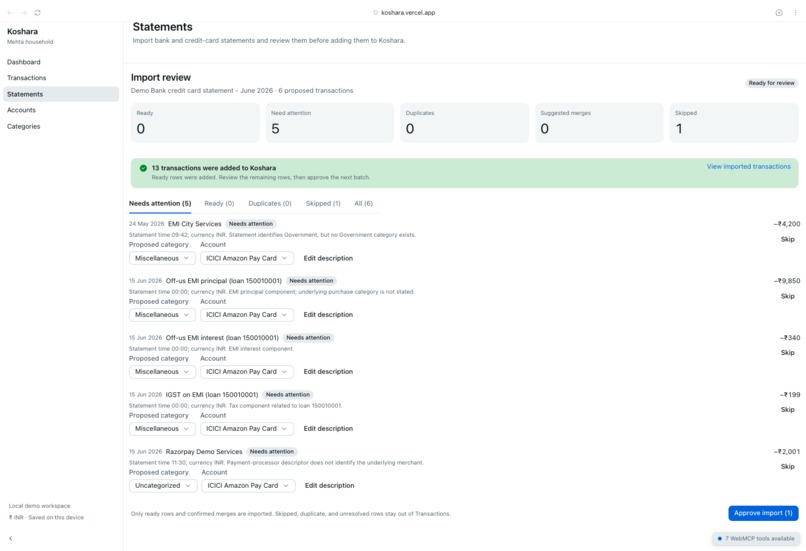
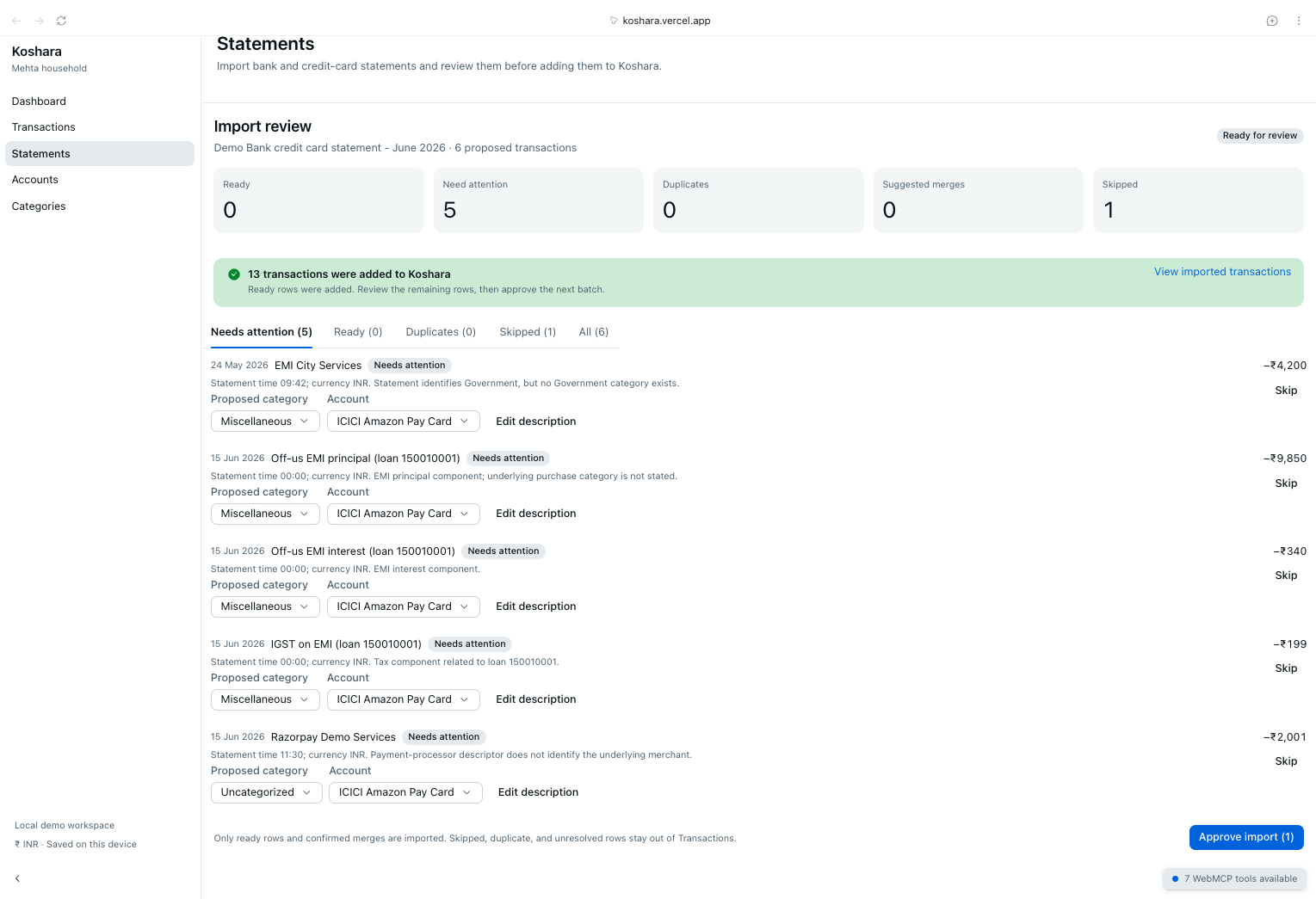
Statement import review and approve
-
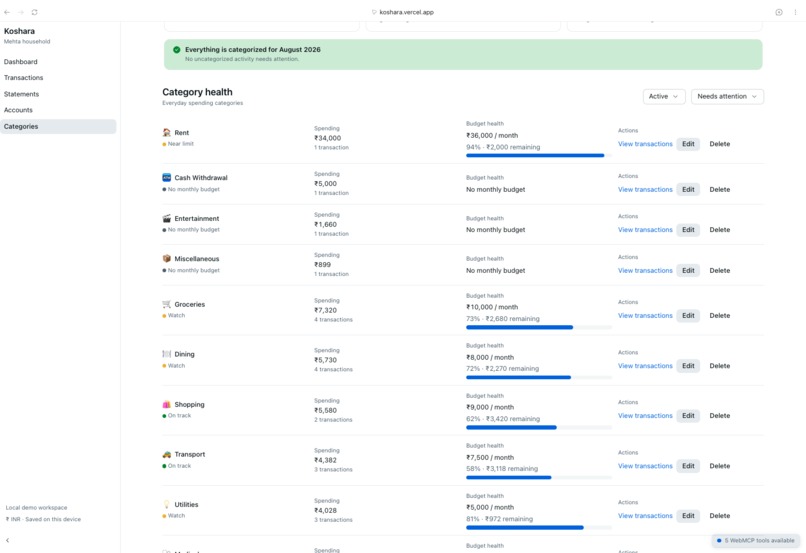
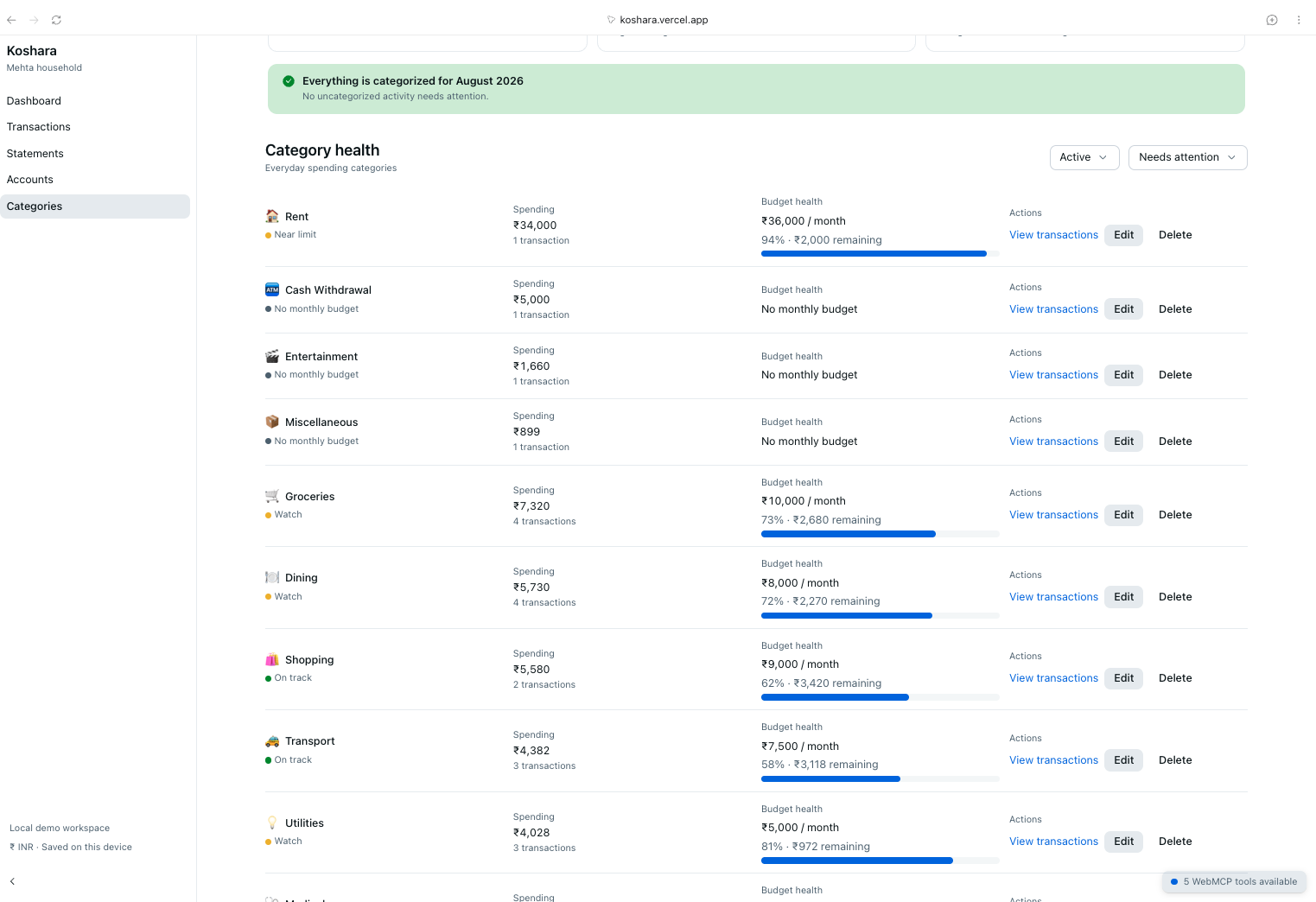
Add update categories
-
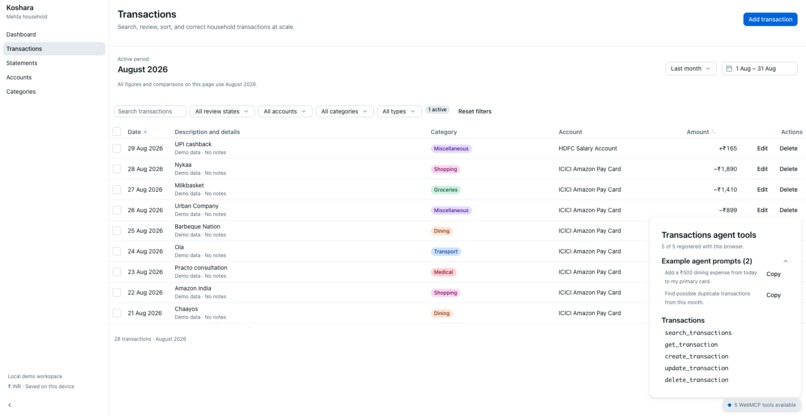
Add update transactions
-
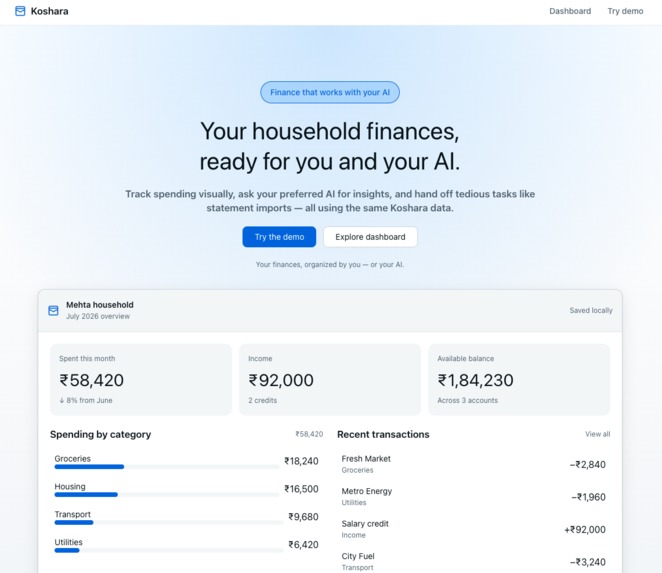
Landing page
Inspiration
Managing household finances still involves repetitive work: reviewing statements, categorizing transactions, finding duplicates, and configuring dashboards. We wanted to explore a model where users keep the familiar financial interface while their chosen AI handles tedious preparation through structured WebMCP tools—not fragile browser automation.
What it does
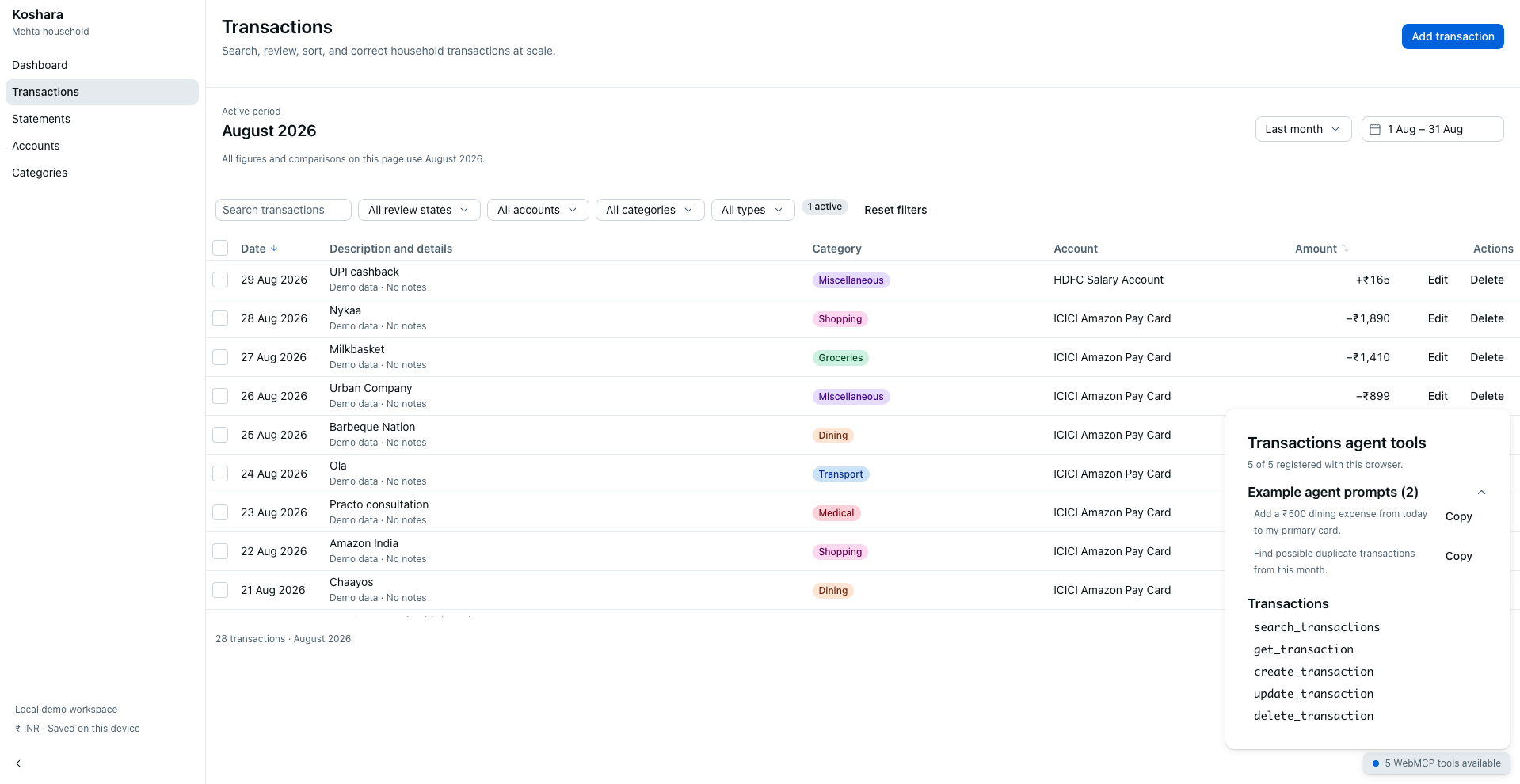
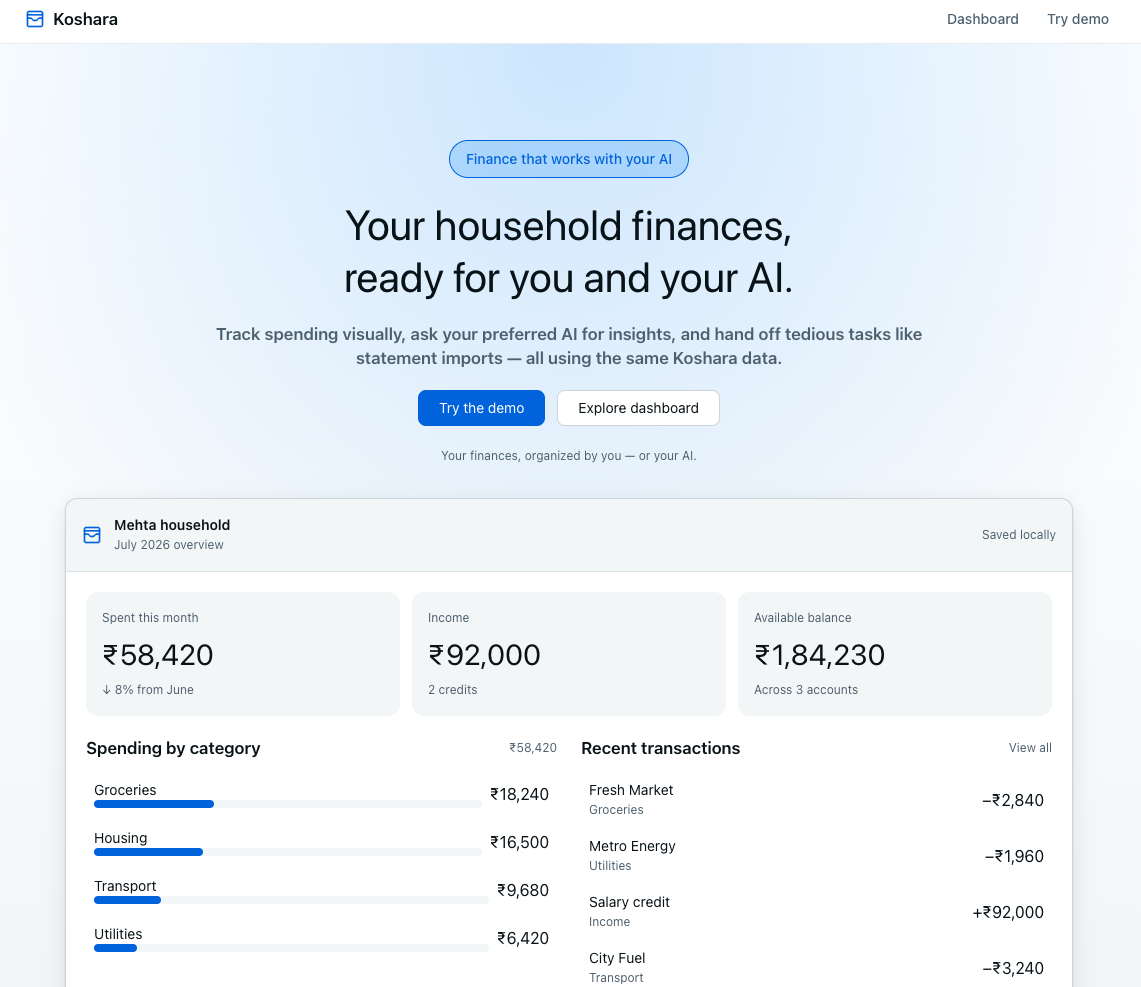
Koshara is a household finance application for managing accounts, transactions, categories, statements, and cash-flow insights.
Using WebMCP, an AI agent can:
Configure dashboard charts from a natural-language request. Parse an unstructured bank statement. Send the extracted transactions to Koshara as a temporary import batch.
Koshara then validates and groups transactions into Ready, Needs Review, Possible Duplicates, and Suggested Merges. The user reviews everything in the normal UI and clicks Approve Import before any transaction enters the main history.
How we built it
We built Koshara with Next.js and TypeScript, using Astryx for the interface and Recharts for financial visualizations.
Koshara registers structured WebMCP tools directly in the browser. The dashboard tool updates chart presentation and insights, while the statement tool accepts parsed transactions and stages them for review. The prototype stores its data locally in the browser and is deployed on Vercel.
Challenges we ran into
The main challenge was deciding where agent autonomy should end and human control should begin. Financial statements may contain ambiguous categories, duplicates, refunds, or related transactions.
To handle this safely, we separated staging from committing. The AI prepares the data, Koshara validates it, and the user approves the final changes.
We also had to ensure WebMCP actions updated the same application state and UI used by the human.
Accomplishments that we're proud of
We created an end-to-end workflow where an external AI can interpret an unstructured statement and transfer the result into a structured, human-controlled review experience.
We are also proud that Koshara does not require an embedded chatbot. The application supplies the data, rules, tools, and interface, while users can bring their preferred AI.
What we learned
We learned that an agent-native application does not need to replace its visual interface. WebMCP works best as an almost invisible capability layer behind a useful product.
AI is effective at interpreting messy information and preparing work. Applications are better at validation and business rules, while humans should remain responsible for ambiguous or consequential decisions.
What's next for Koshara
Next, we plan to support more statement formats, improve duplicate and merge detection, add authenticated persistent storage, and provide a clearer audit trail for agent-prepared actions.
We also want to expand the WebMCP tools so users can ask richer financial questions and generate more personalized dashboard views.
Built With
- astryx
- nextjs
- react
- rechart
- typescript
- webmcp

Log in or sign up for Devpost to join the conversation.