-
-

Korox logo
-
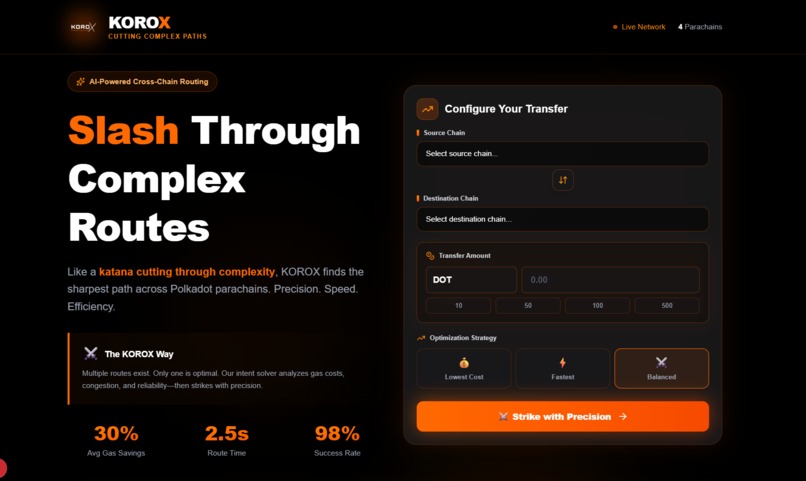
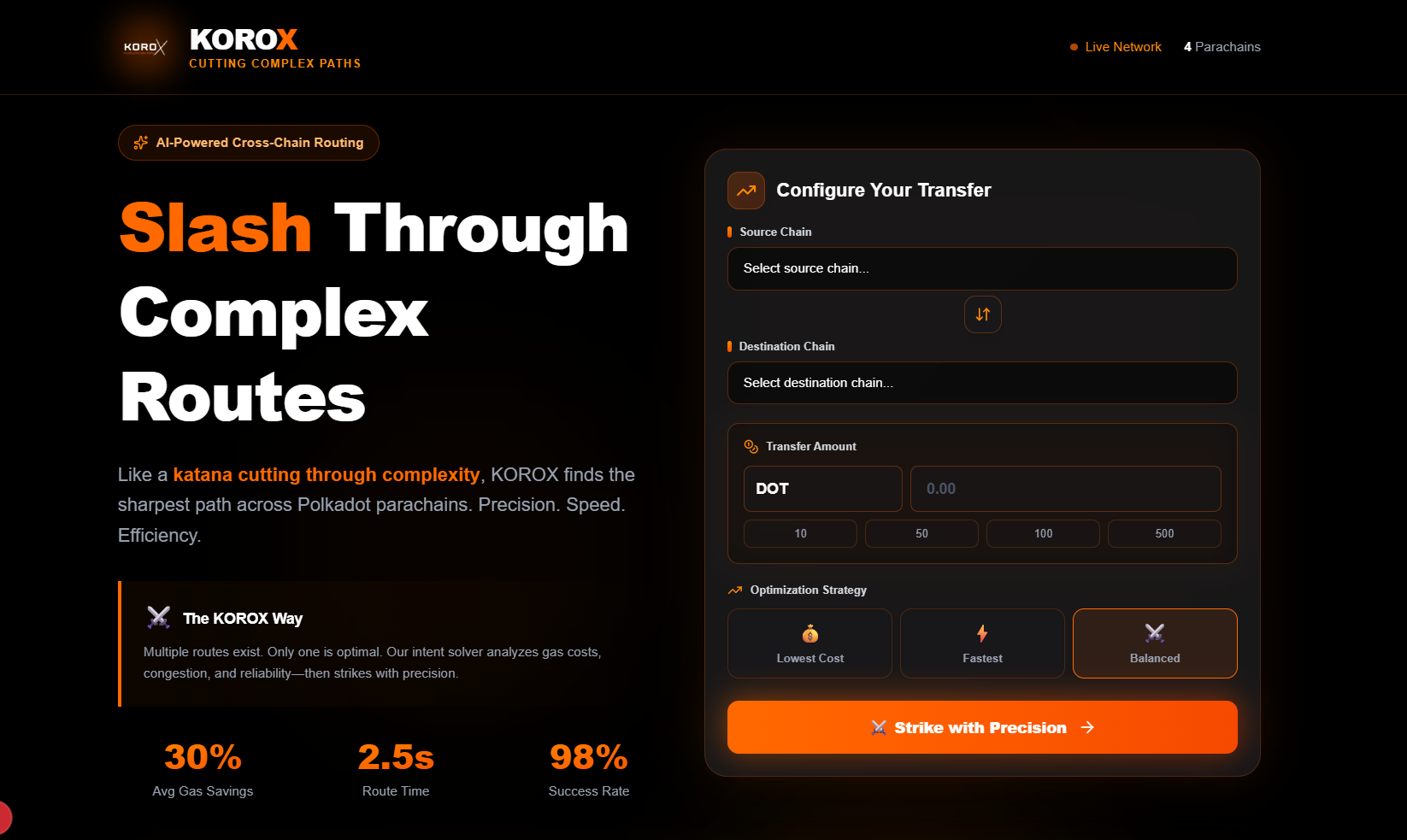
Landing Page
-
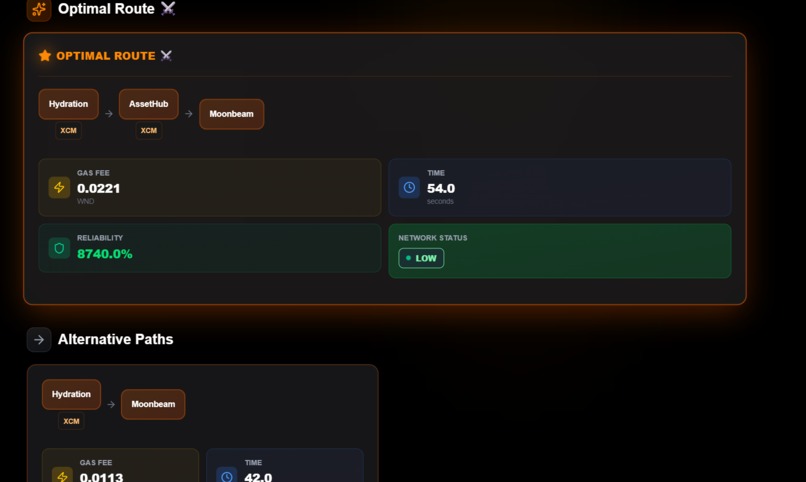
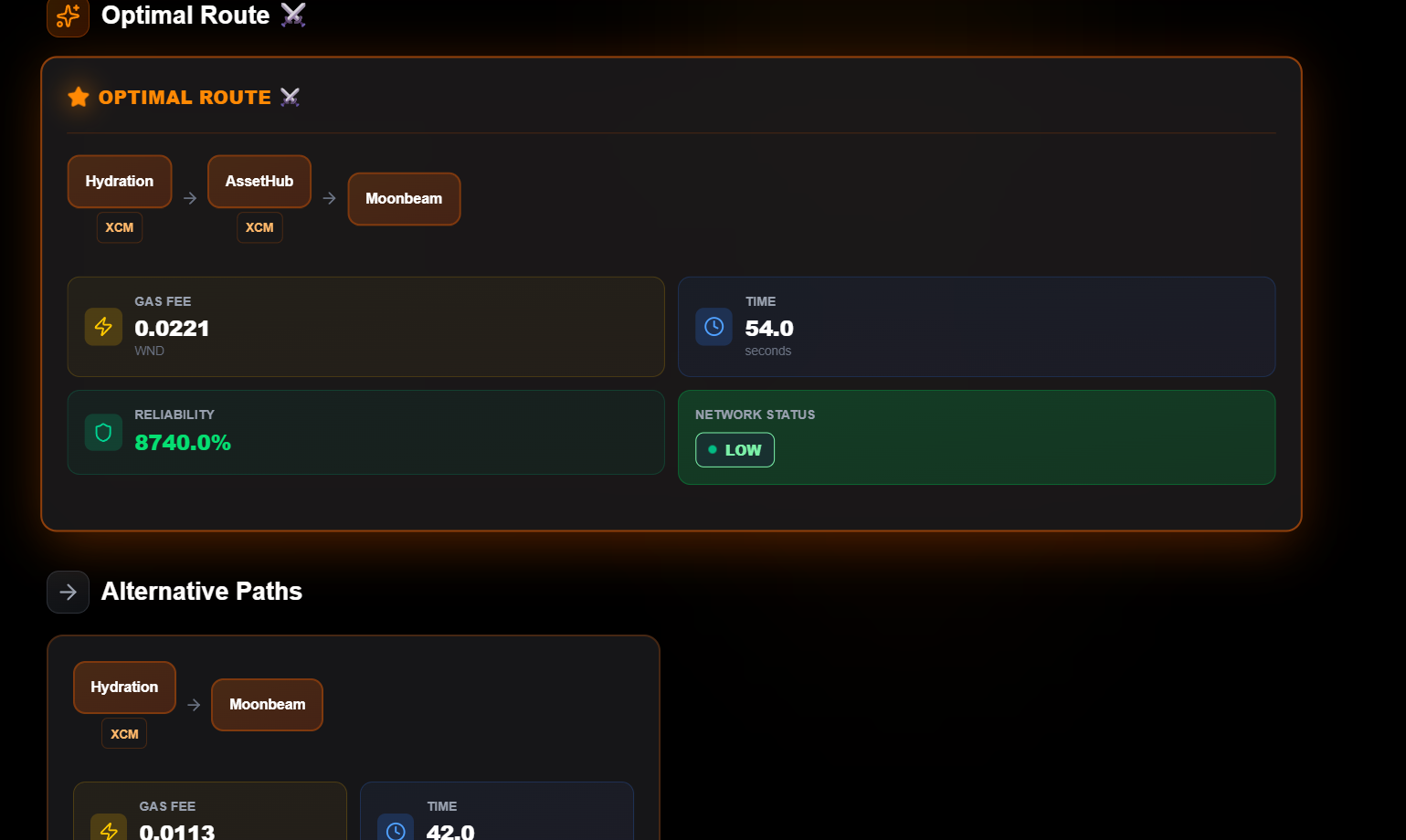
Possible routes

Inspiration
The goal of this hackathon was to onboard web2 users to web3. One thing I noticed is that we don't have to pay gas fees for each transaction in web2, which could be a barrier for new users to join the web3 ecosystem. I decided to create a solution to this issue, and Polkadot already has relay and parachain capabilities, which allow chains to easily communicate with one another.
What it does
KOROX is an intent-based routing optimizer for cross-chain transfers in the Polkadot ecosystem. We've built a real-time monitoring system that analyzes network congestion across 4+ parachains using direct RPC calls, calculates optimal routes based on gas costs, transfer time, reliability, and congestion levels, and then recommends the most efficient path for your cross-chain transactions.
How we built it
Real-Time Monitoring: Our backend continuously monitors all Polkadot parachains every 30 seconds, collecting live data on block fullness, transaction queues, and gas costs via WebSocket RPC connections Intelligent Routing: When you want to transfer tokens between chains, KOROX uses a multi-factor scoring algorithm to analyze all possible paths (up to 3 hops), weighing gas costs, speed, reliability, and current congestion Smart Recommendations: The system returns the optimal route plus alternatives, showing you exact gas savings, estimated time, and network health—so you always get the best path for your needs.
Challenges we ran into
The idea itself is the biggest challenge I can think of. I acknowledge that I haven't implemented the entire main idea of what I thought of, but this is just the beginning. I've also heard from many people that it's difficult to make something like this; if it were easy, someone must have done it sooner.Making an agent that carries out transactions based on user intent and connecting this parachain outside of the Polkadot ecosystem is still the most difficult part.
Accomplishments that we're proud of
I wrote about this concept on X, and it has received over 7.2k views and counting. This indicates that there is a need for this solution and that people will enjoy using it. Post Link- https://x.com/vikram_twt/status/1984147607539867782?s=20
What we learned
The architecture of Polkadot, relay chains, parachains, how they communicate with each other without a bridge, what problems they solve, how they communicate via XCM, and hyperbridge, such as how to connect parachains outside of the Polkadot ecosystem, were all new to me because this was my first time building on Polkadot.
What's next for Korox
The MVP I'm submitting here is merely a proof of concept for my primary concept. Our vision is to transform KOROX into a complete autonomous cross-chain agent: Launch KOROX Parachain: Build our own parachain on Polkadot to offer native routing services and create a decentralized intent execution layer Autonomous Transaction Execution: Upgrade from "show the path" to "execute the path"—our agent will automatically execute the entire multi-hop transaction on your behalf with a single click Universal Cross-Chain Routing via Hyperbridge: Connect Polkadot to all major blockchains (Ethereum, Solana, Cosmos, Avalanche, etc.) using Hyperbridge as our cross-chain messaging layer World's First Universal Routing Agent: Enable users to find and execute the most efficient path between any two chains in the world—whether it's DOT on Polkadot to USDC on Ethereum, or SOL on Solana to ATOM on Cosmos AI-Powered Intent Solver: Evolve into a natural language intent system where users simply say "Send $100 to Alice on Ethereum," and KOROX figures out the entire route, bridges, swaps, and execution automatically
Built With
- javascript
- next-js
- polkdot-sdk
- typescript


Log in or sign up for Devpost to join the conversation.