
Inspiration
My friends and I kept running into the same problem: we'd buy food, forget about it, and only remember it once it had already gone bad — straight into the bin. It happened often enough that it stopped feeling like an accident and started looking like a system failure.
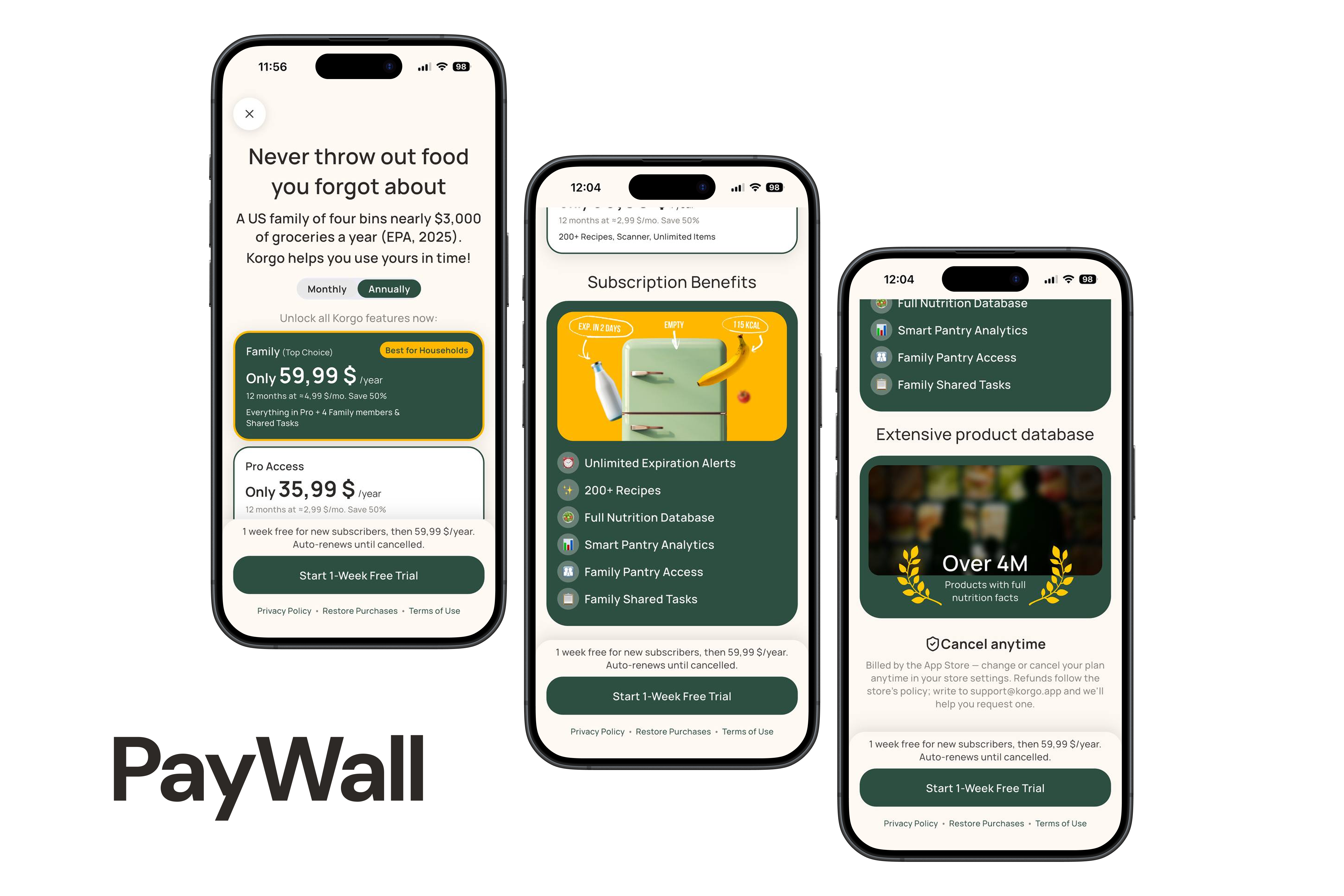
We're not alone: the average US family of four throws away nearly $3,000 of groceries a year (EPA). And you pay for it twice — once with money, and again with the mental load of trying to keep track of everything in your head.
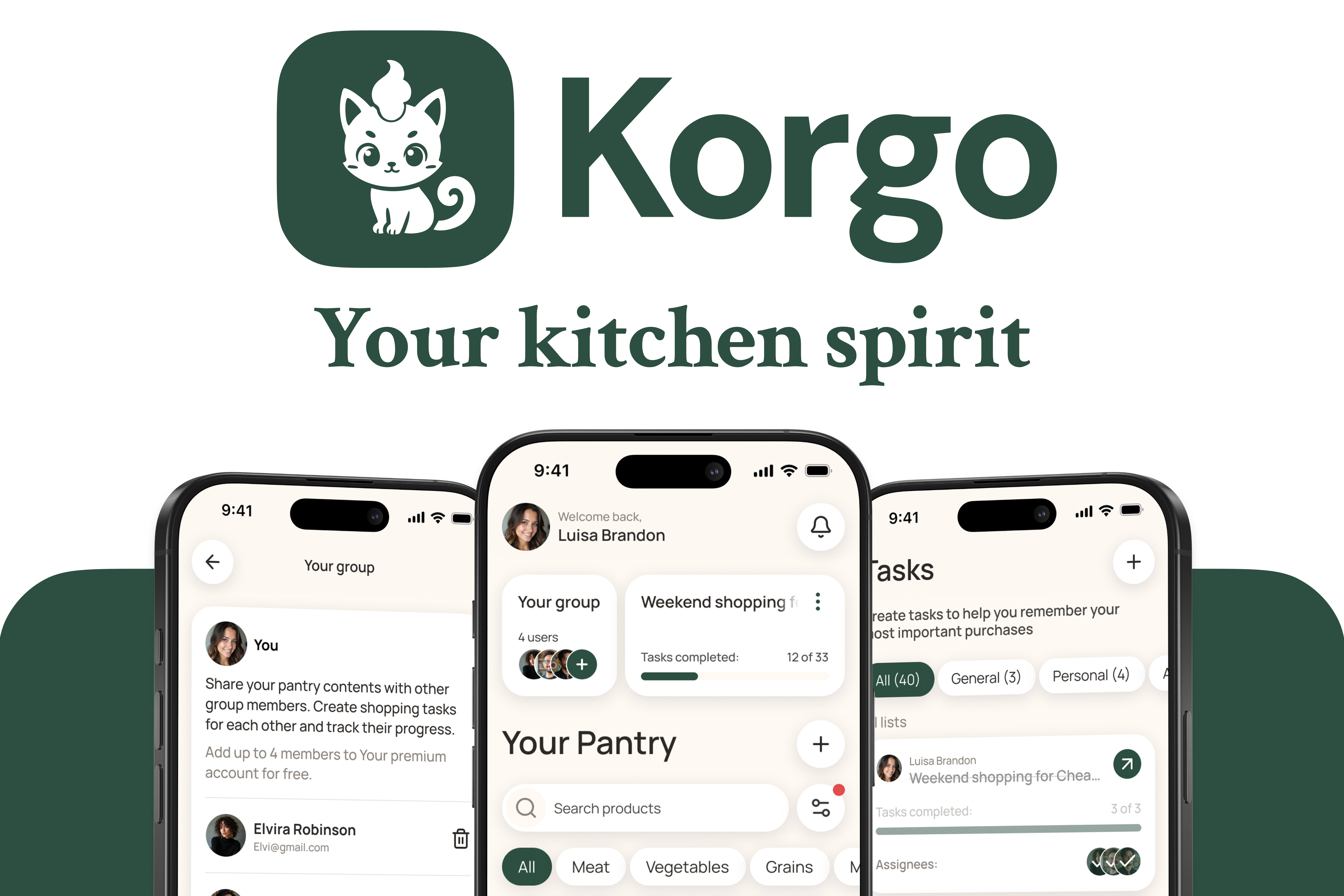
So we built Korgo: an app that remembers what you have and when it expires, and nudges you to use it in time. Beyond the practical problem, we want to help popularize mindful consumption — buying what you need and actually using what you buy.
The name comes from Slavic folklore: Korgo is a cat-like household spirit that looks after the home. That's the role we want the app to play.
What it does
Korgo turns the kitchen into a system you can actually see and manage.
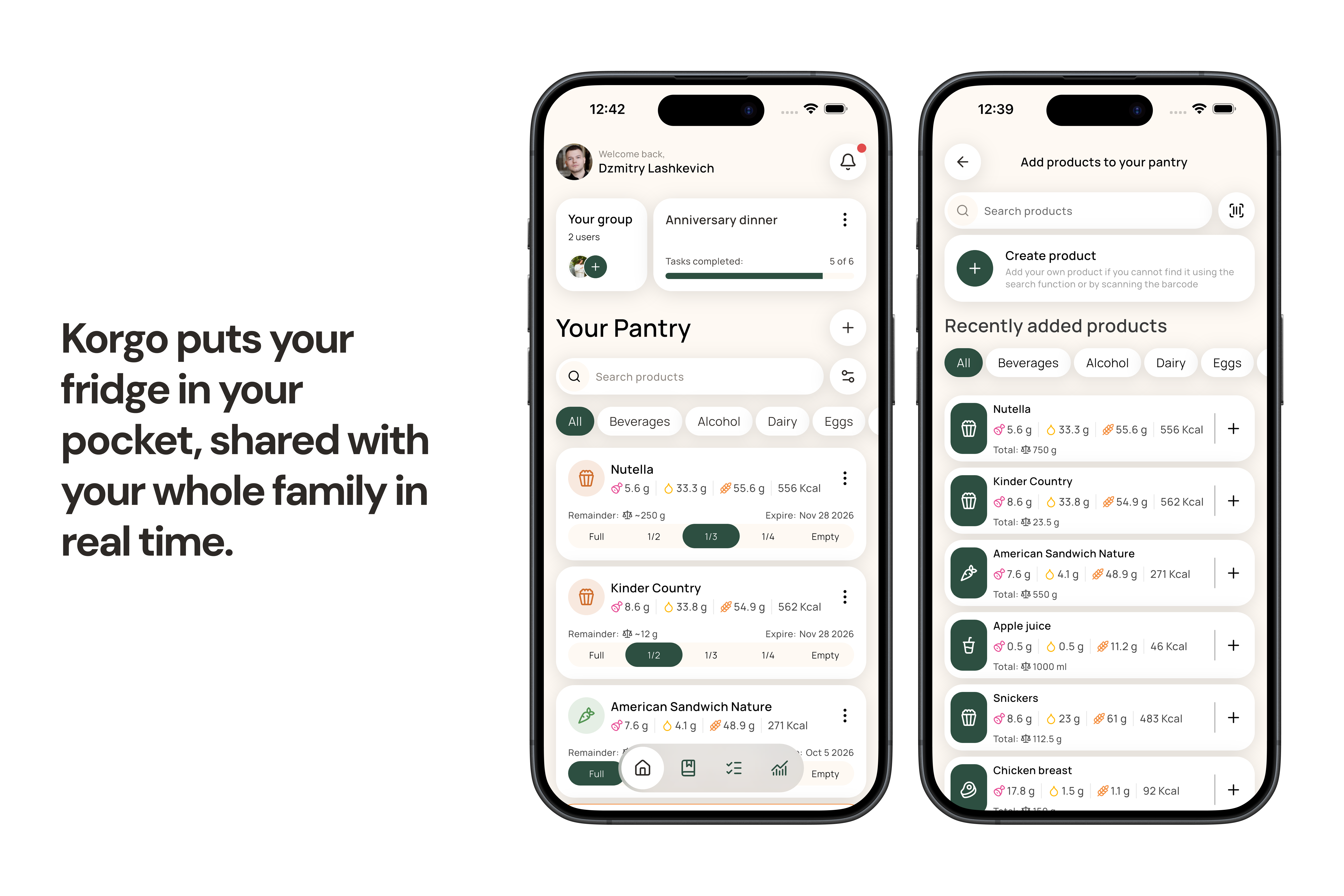
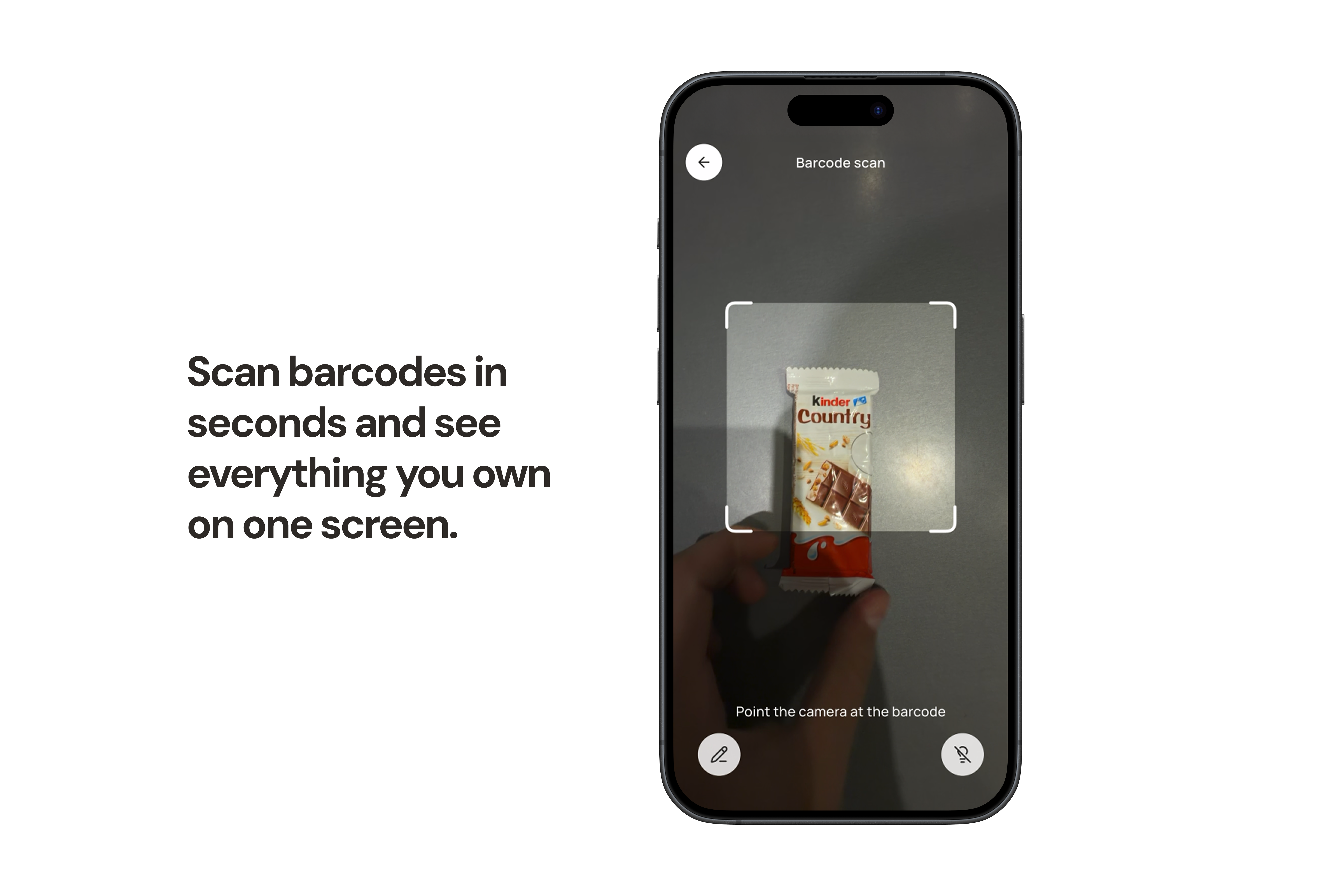
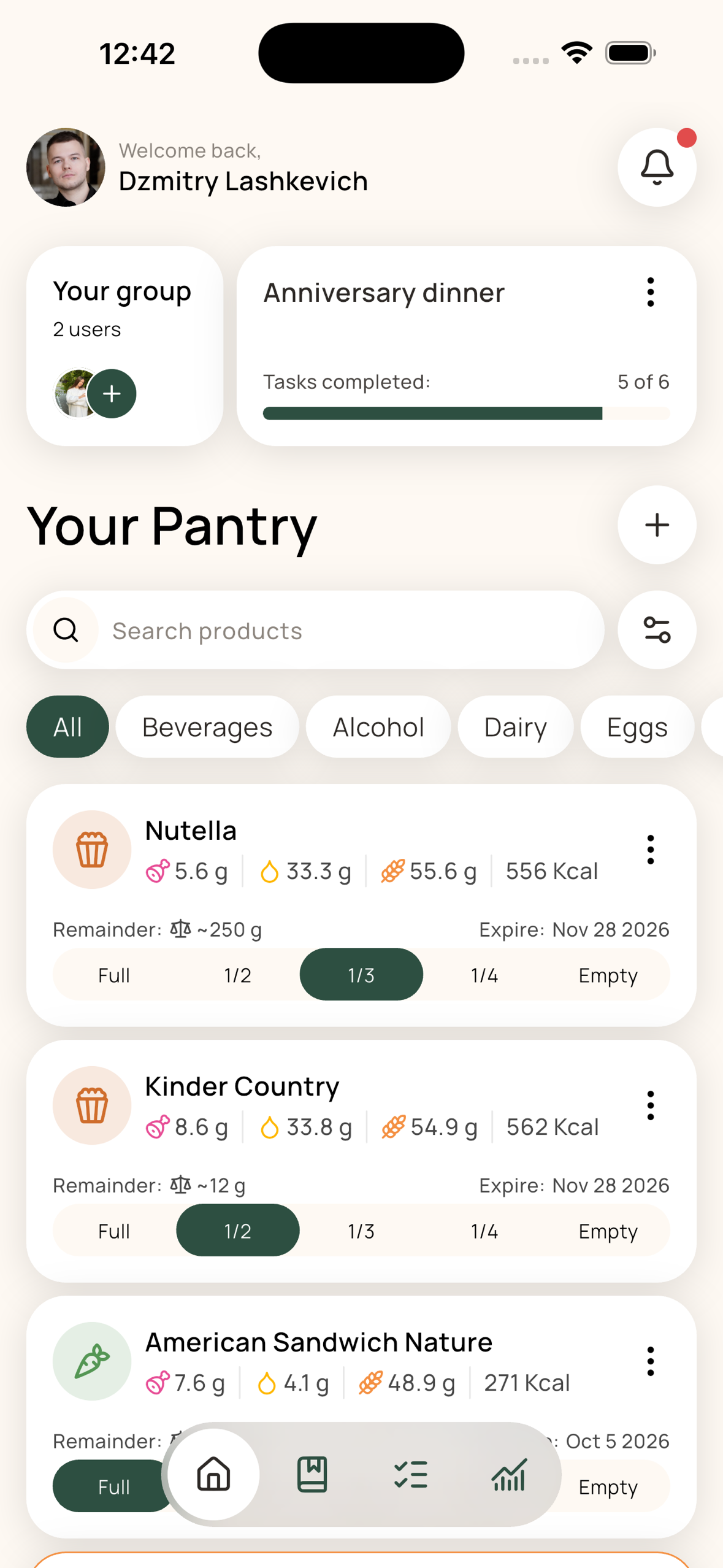
- Pantry inventory — everything you own on one screen. Scan a barcode and the name and nutrition fill in automatically; or search by name, or create a custom product.
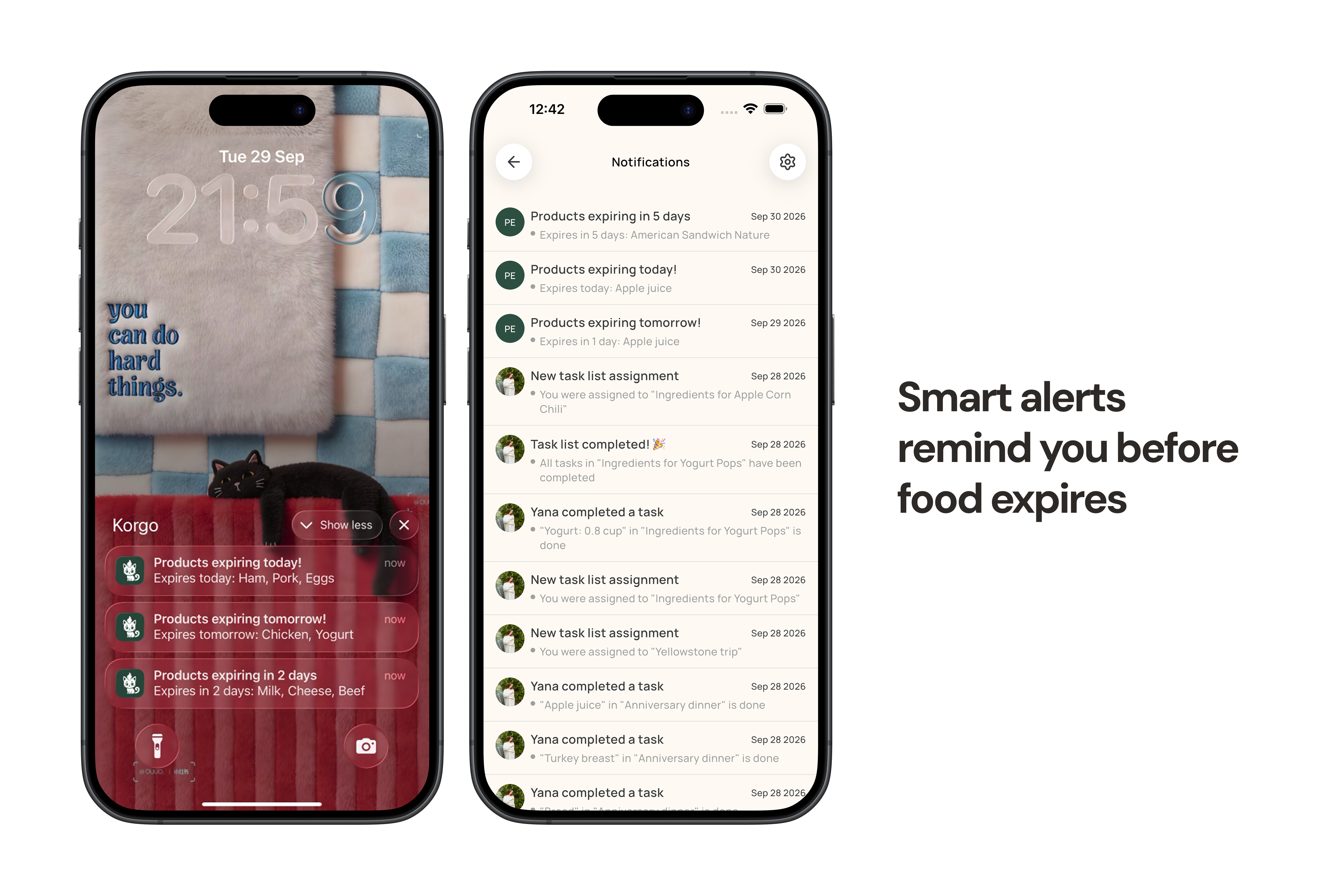
- Expiration tracking — expired and soon-to-expire products are highlighted, and gentle push reminders arrive before food turns into waste.
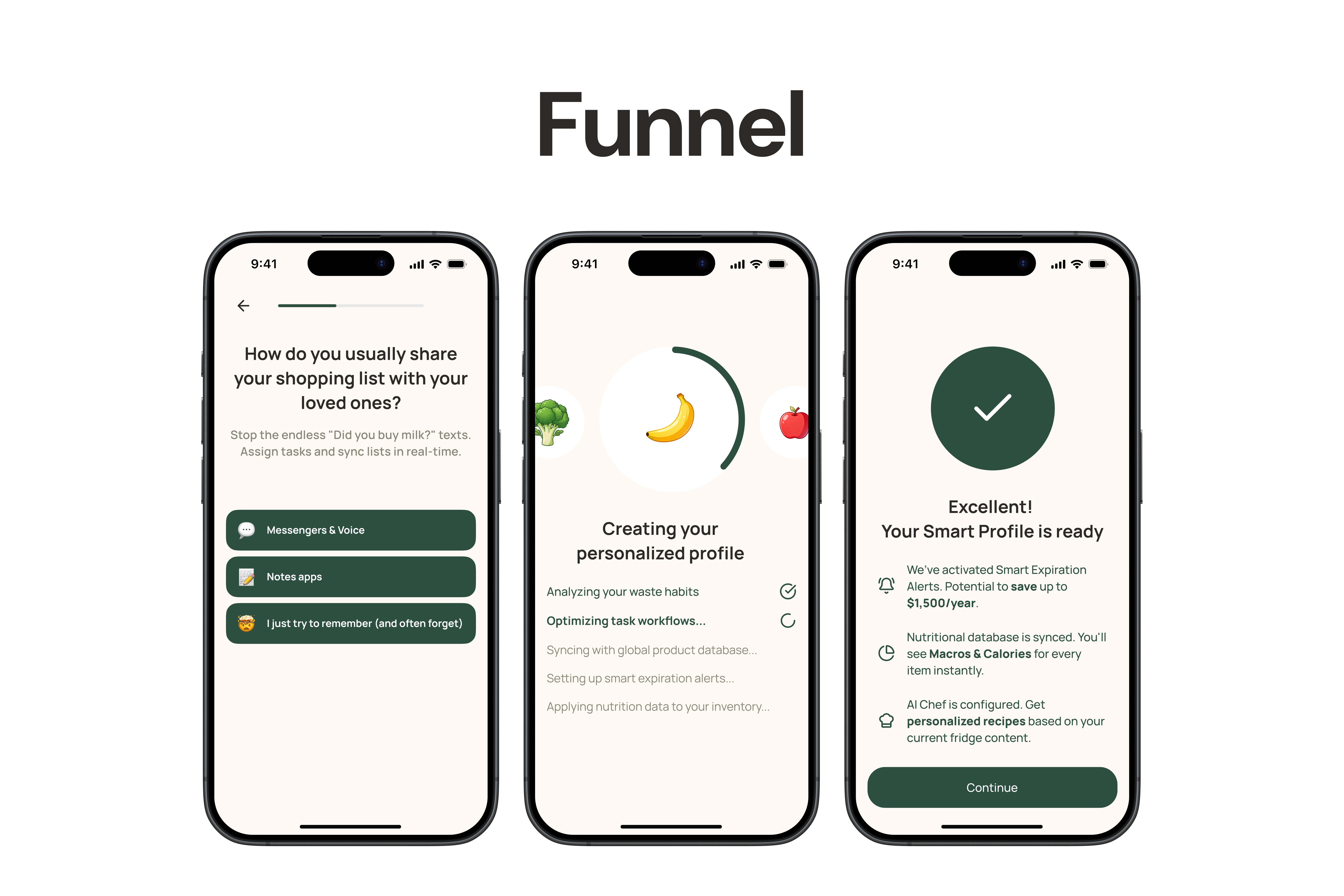
- Nutrition — calories, protein, fat and carbs for everything you add.
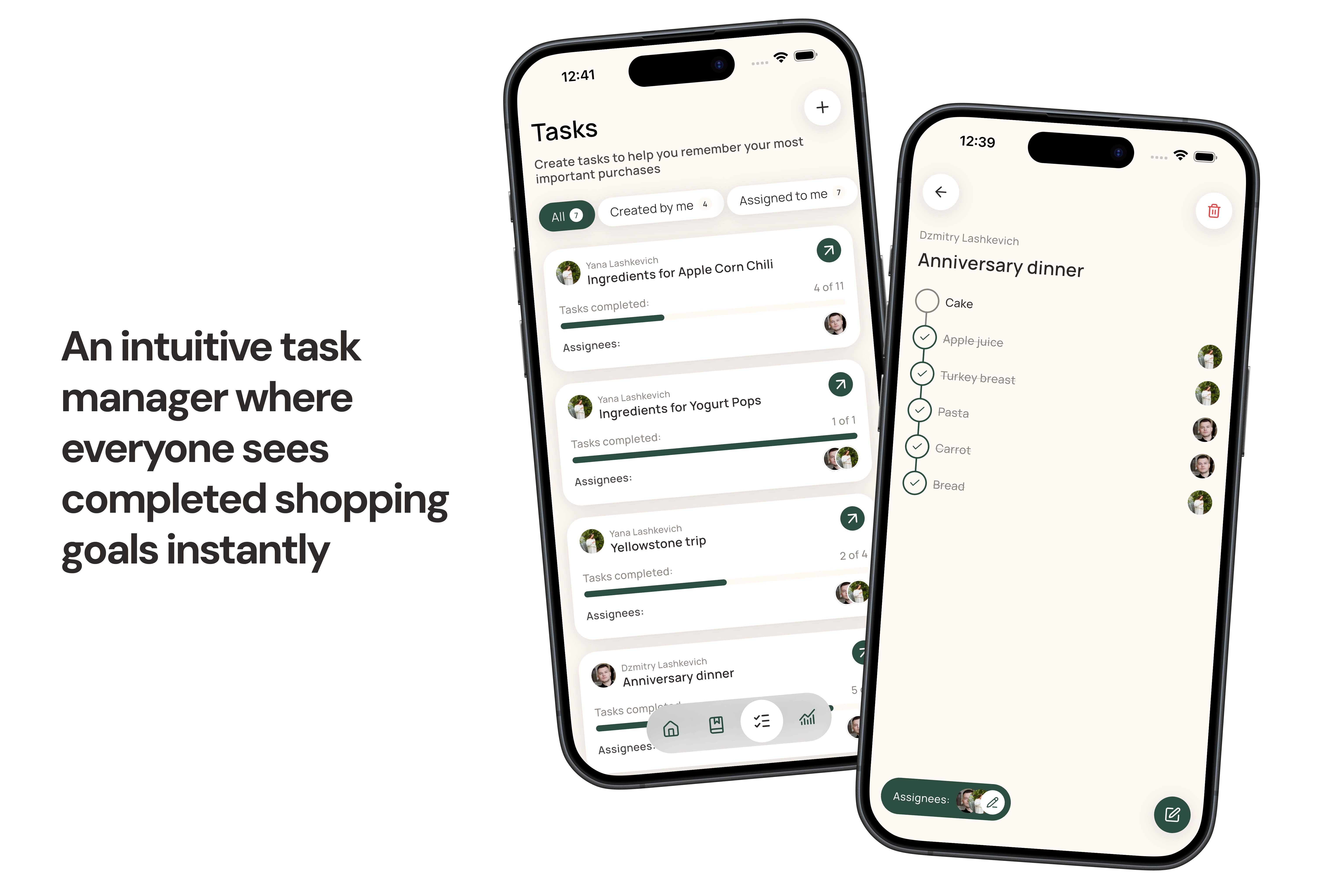
- Task & shopping lists — plan the next shop so you stop buying duplicates.
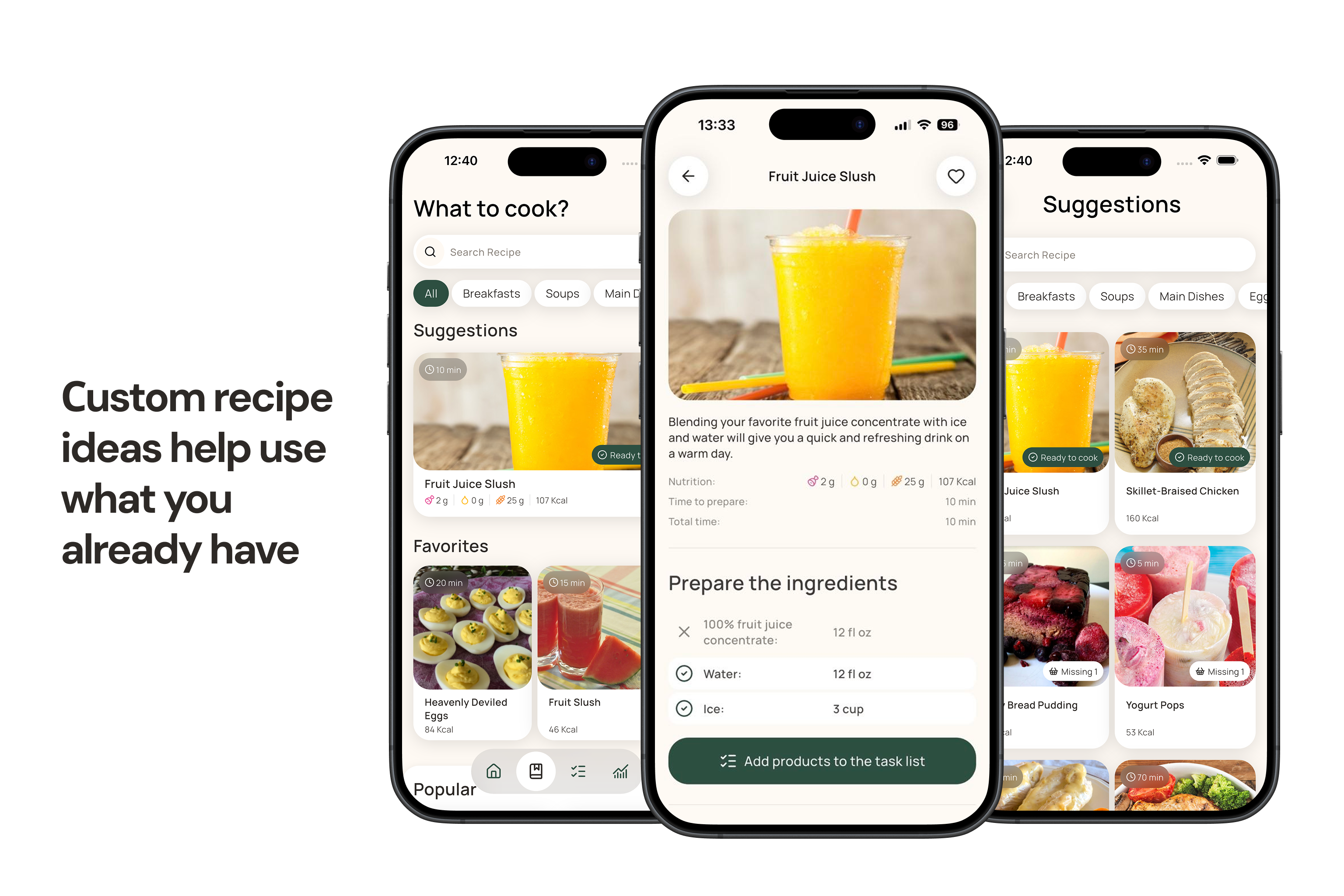
- Recipes from what you have (Pro & Family) — 200+ recipes matched to what's already in your pantry.
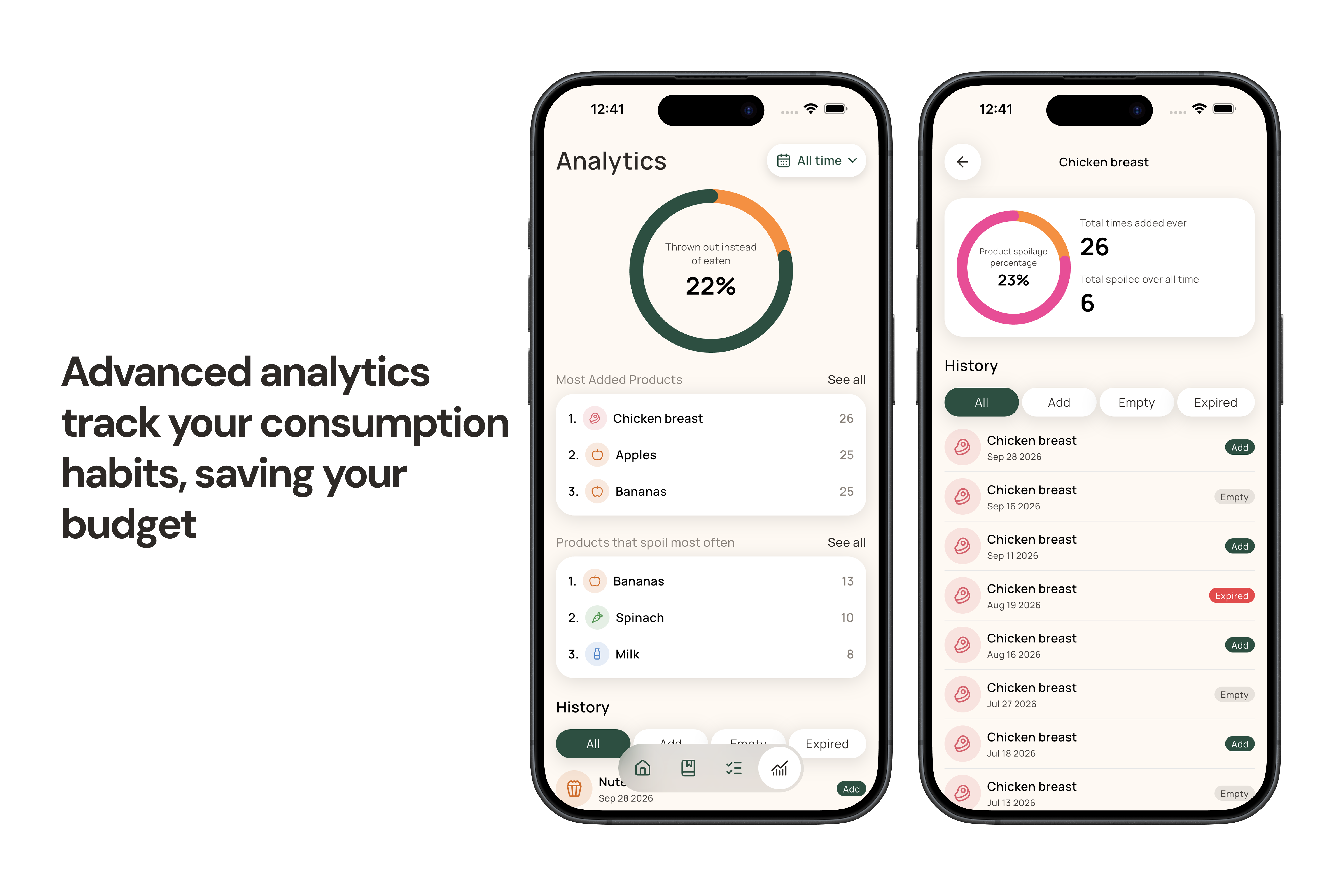
- Pantry analytics (Pro & Family) — what you add, what you actually use, and what keeps ending up in the bin.
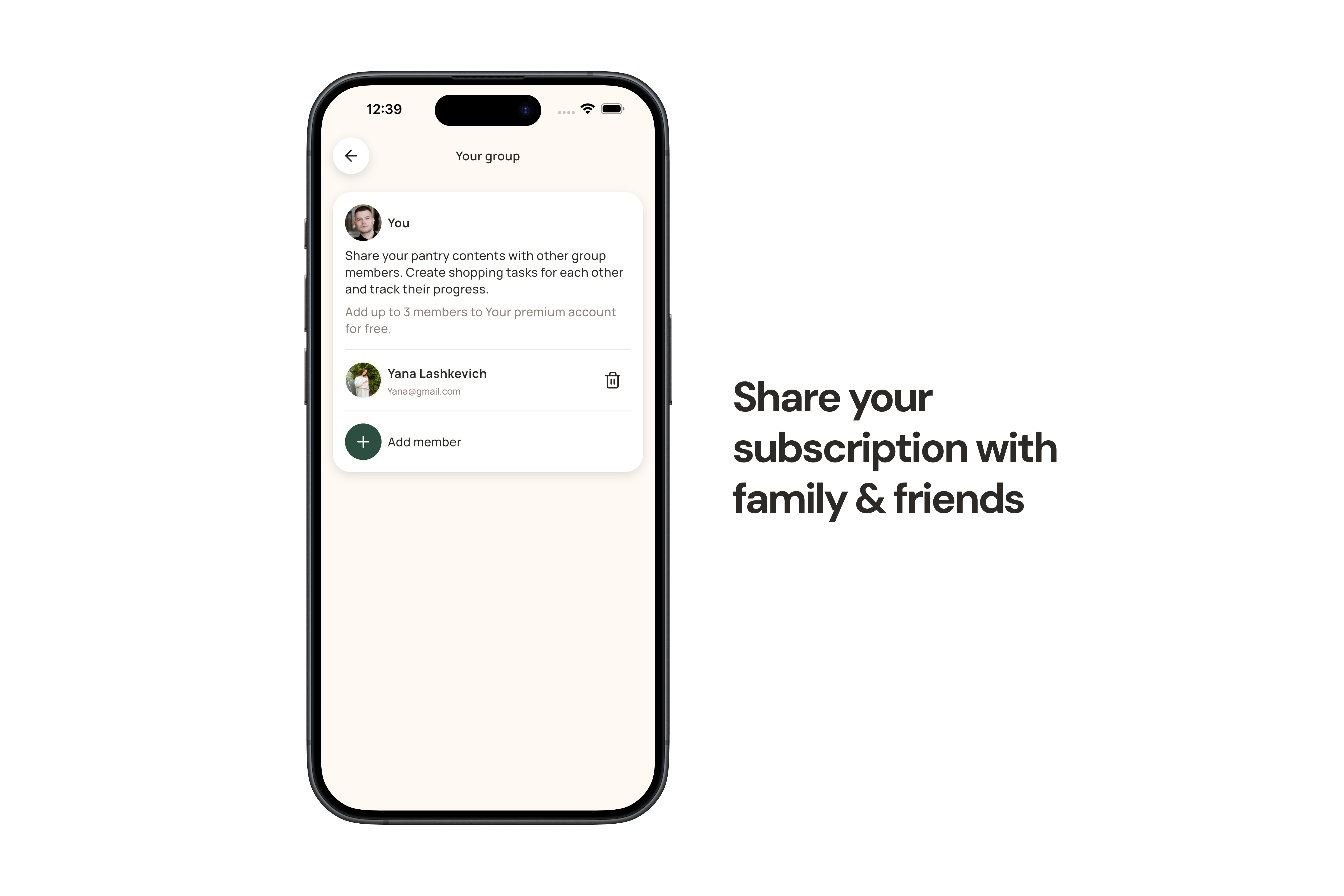
- Household sharing (Family) — everything in Pro, extended to the whole household: one shared pantry, shared lists with assignable tasks, and shared analytics. Only the group owner pays, and they can invite up to 4 members, who all get full access.
The core is free: inventory, expiry alerts, scanning, nutrition and personal lists. Pro and Family are available monthly or yearly, with free trials on the annual plans (3 days for Pro, 7 days for Family). No ads, no cross-app tracking, and user data is never sold.
How we built it
- Mobile: Flutter, shipped on iOS (iOS 15.6+).
- Backend: Python / FastAPI + PostgreSQL, hosted on Railway.
- Auth & push: Firebase Auth (Sign in with Apple and Google) and Firebase Cloud Messaging.
- Product data: a local copy of the Open Food Facts database instead of their live API. Barcode lookups are fast and never leave our servers.
- Monetization — RevenueCat:
- The RevenueCat SDK handles all purchases and restores behind our own custom-designed paywall.
- Offerings are built from our App Store subscription products (Pro and Family, monthly and yearly), imported directly into RevenueCat.
- RevenueCat webhooks feed our FastAPI backend, which stays the source of truth for access. When a Family subscription starts, renews or ends, the backend creates the household, grants every member access through the owner's entitlement, or returns the shared pantry to the owner.
Before Shipaton we had built our own subscription pipeline — App Store Server Notifications v2, Google RTDN via Pub/Sub, receipt anti-replay and upgrade handling — but it never ran in production: the app was TestFlight-only until its first public release in September. Migrating to RevenueCat before launch let us replace that whole layer with one SDK and one webhook integration.
Challenges we ran into
- Subscriptions for a household, not a person. Store family-sharing mechanisms don't cover shared app state, so we designed our own household model:
- The group is created automatically on a Family purchase, and members join by email invite or deep link.
- Every edge case has a defined answer. Products merge into the shared pantry when you join, with no duplicates. The food stays in that kitchen when you leave. When the subscription ends, the pantry and its full history return to the owner and come back to life on renewal.
- Getting through App Review. Our first submission was rejected under Guideline 2.1. Apple asked for a physical-device screen recording, reviewer credentials, a list of external services and proof of third-party data rights. Answering all of it forced us to document the app far more precisely than we had planned, and made the product better.
- Privacy done properly. This meant a privacy manifest, App Privacy labels and sub-processor disclosure. Choosing a local copy of Open Food Facts was partly a privacy decision.
- Pricing that won't need to change right after launch. We had to balance a genuinely useful free tier against features worth paying for.
Accomplishments that we're proud of
- Korgo is live on the App Store: version 1.0.0 was approved and released on September 18, 2026, and version 1.1.0 — with everything described here — shipped shortly after.
- Early organic traction: around 15 new users a week with zero ad spend.
- A perfect rating so far: every App Store rating is 5 stars (8 ratings, 3 written reviews).
- A real multi-member Family plan: one subscription paid by the owner covers up to 5 people in total, with a shared pantry, shared lists and defined behavior for every join, leave and cancel scenario.
- A generous free tier. The core problem — knowing what you have and what's about to expire — is solved without paying.
- A clean billing migration. Before launch, we replaced a hand-rolled webhook pipeline with RevenueCat while keeping our custom paywalls and backend-controlled access.
- Privacy by default: no ads, no tracking, and barcode lookups never leave our servers.
What we learned
- Model subscriptions around the unit people actually live in. For a food app, that's the household, not the individual account. That one choice shapes the data model, the entitlements and every UX edge case.
- Don't build billing infrastructure you don't need to own. Our custom webhook pipeline worked, but RevenueCat let us delete a lot of fragile code while keeping our backend in control of access.
- App Review rewards clarity. Clear reviewer notes, a demo account and an honest list of external services save weeks.
- Scope ruthlessly. Going English-only with Apple and Google sign-in only let us ship a focused 1.0 instead of waiting for a perfect one.
- Real users beat assumptions. Even a small group of early users surfaces things no amount of internal testing did.
What's next for Korgo
- Listening to users. We're actively collecting feedback from early users and shipping improvements based on it.
- A bigger product database, for better barcode coverage and fewer manual entries.
- More recipes, so suggestions fit more of what people actually have at home.
- Localization for new regions. Additional languages are already built into the app and waiting to be unlocked.
Built With
- astro
- celery
- dart
- fastapi
- firebase
- flutter
- postgresql
- python
- railway
- revenuecat


Log in or sign up for Devpost to join the conversation.