-
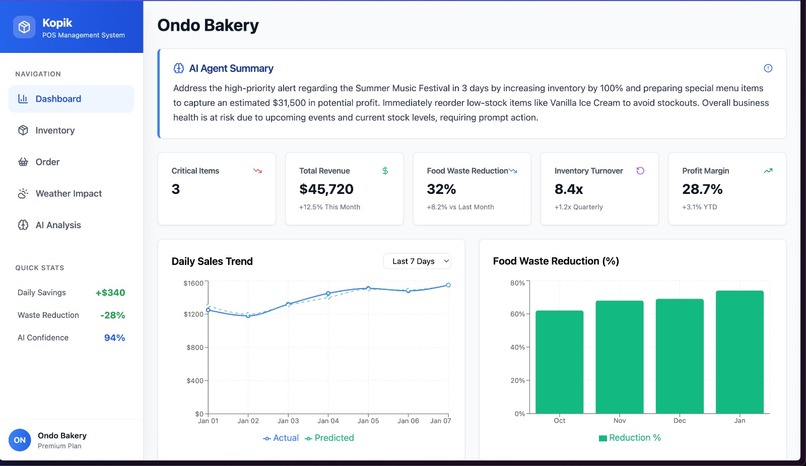
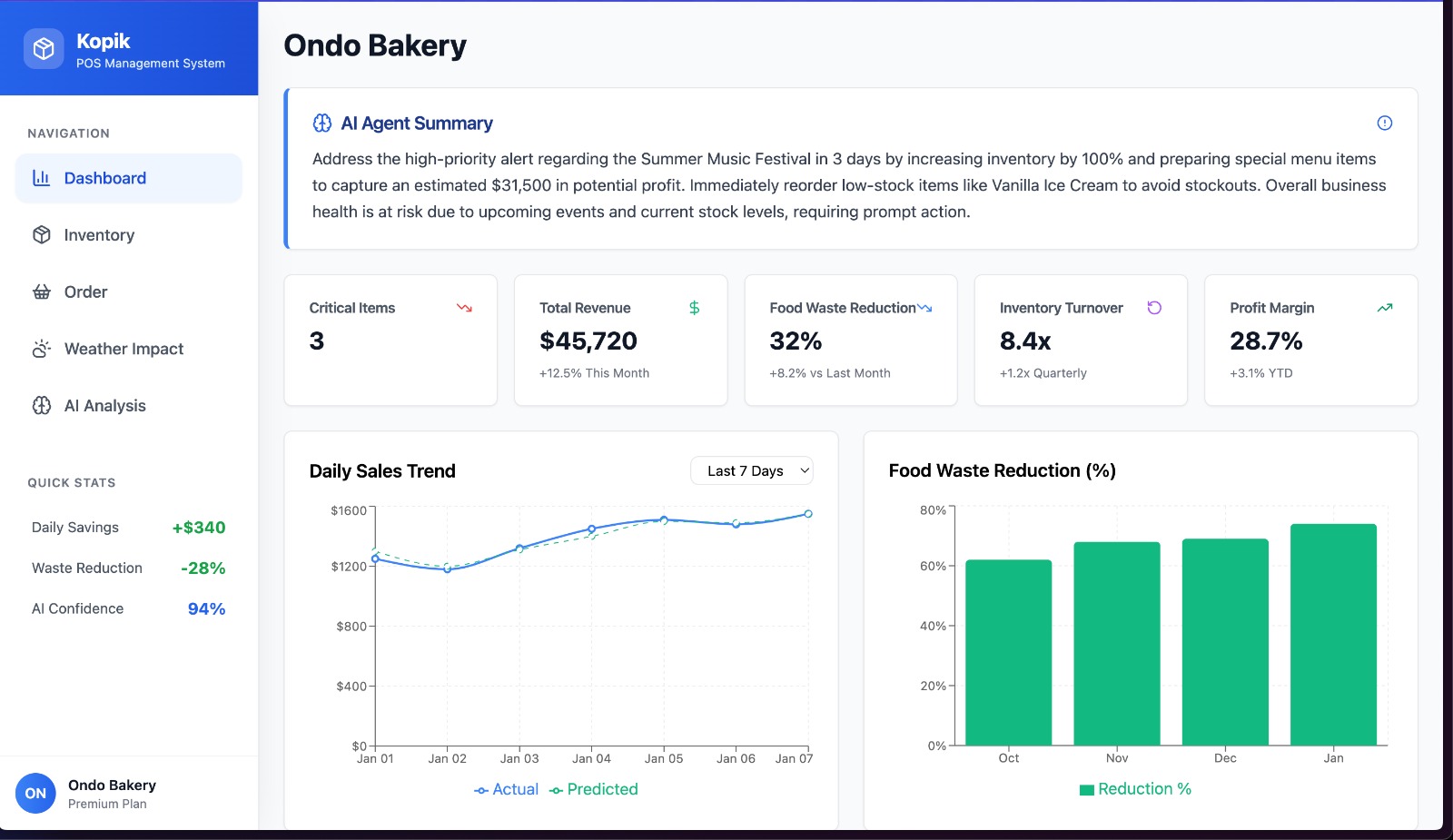
Main Dashboard
-
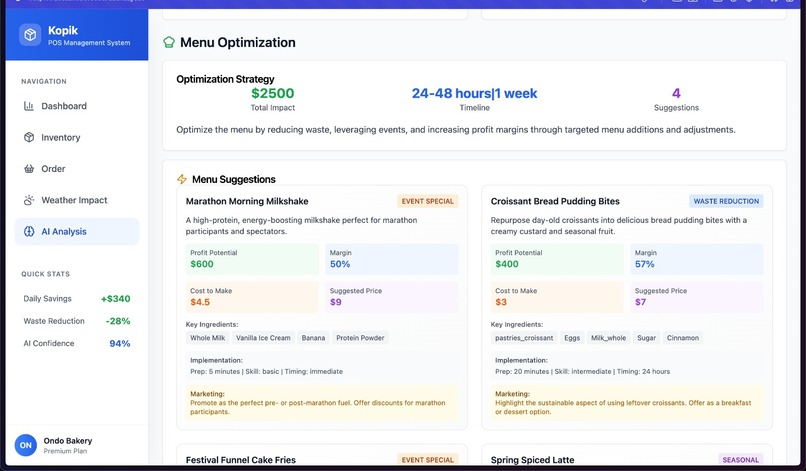
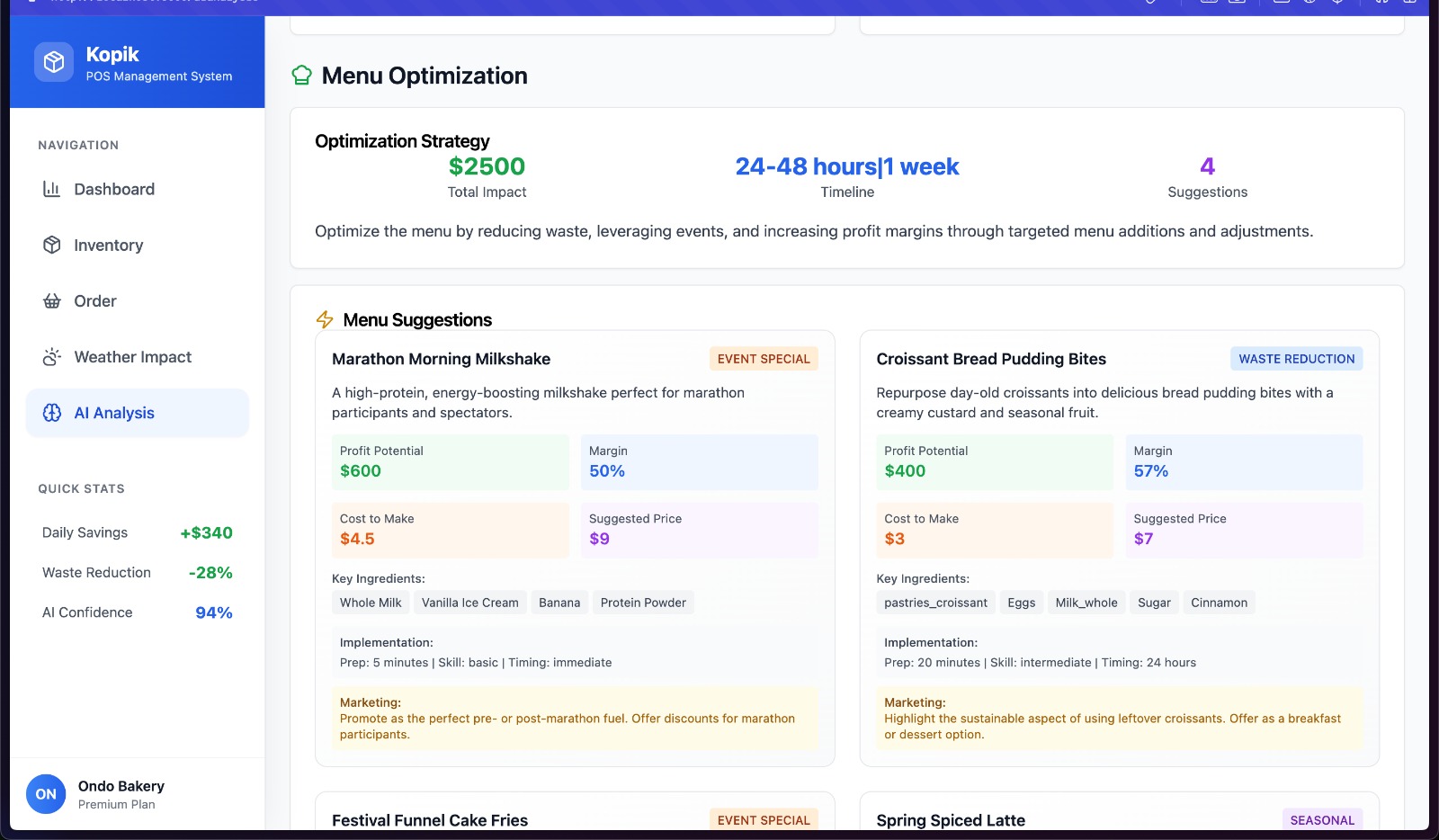
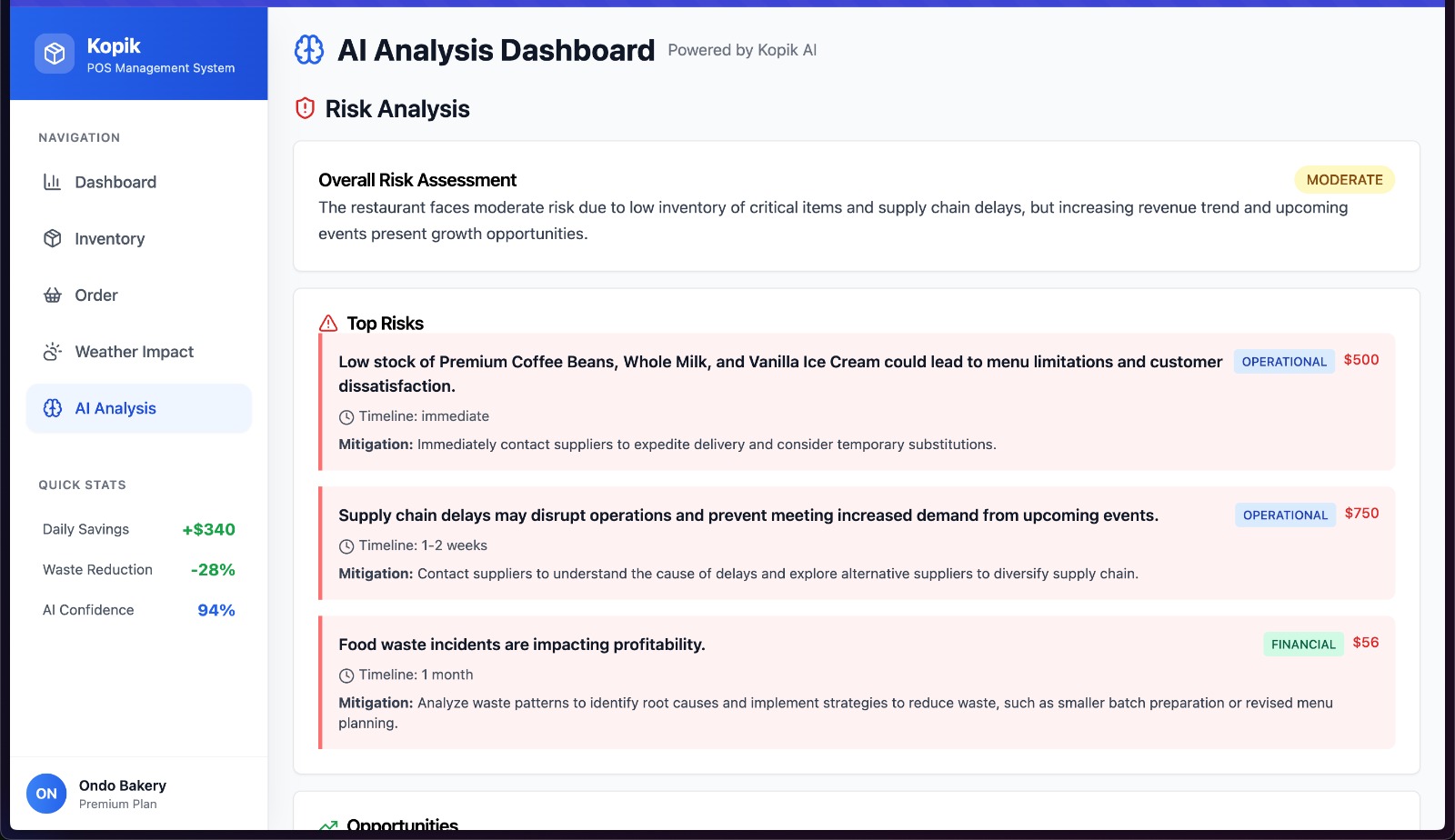
AI-Driven Insights
-
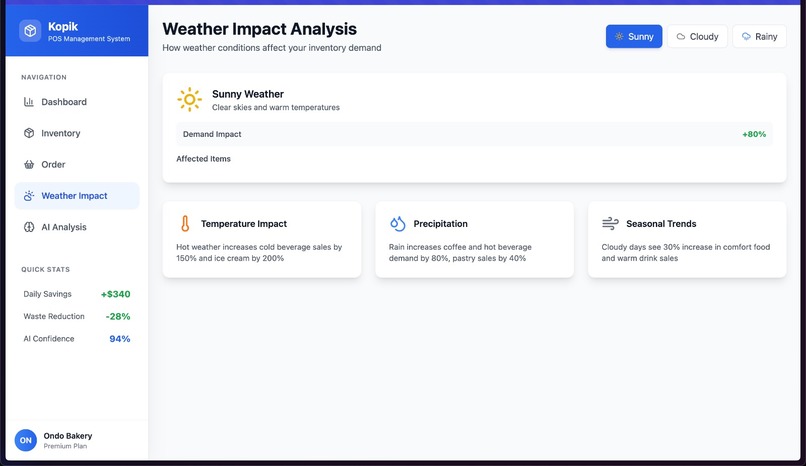
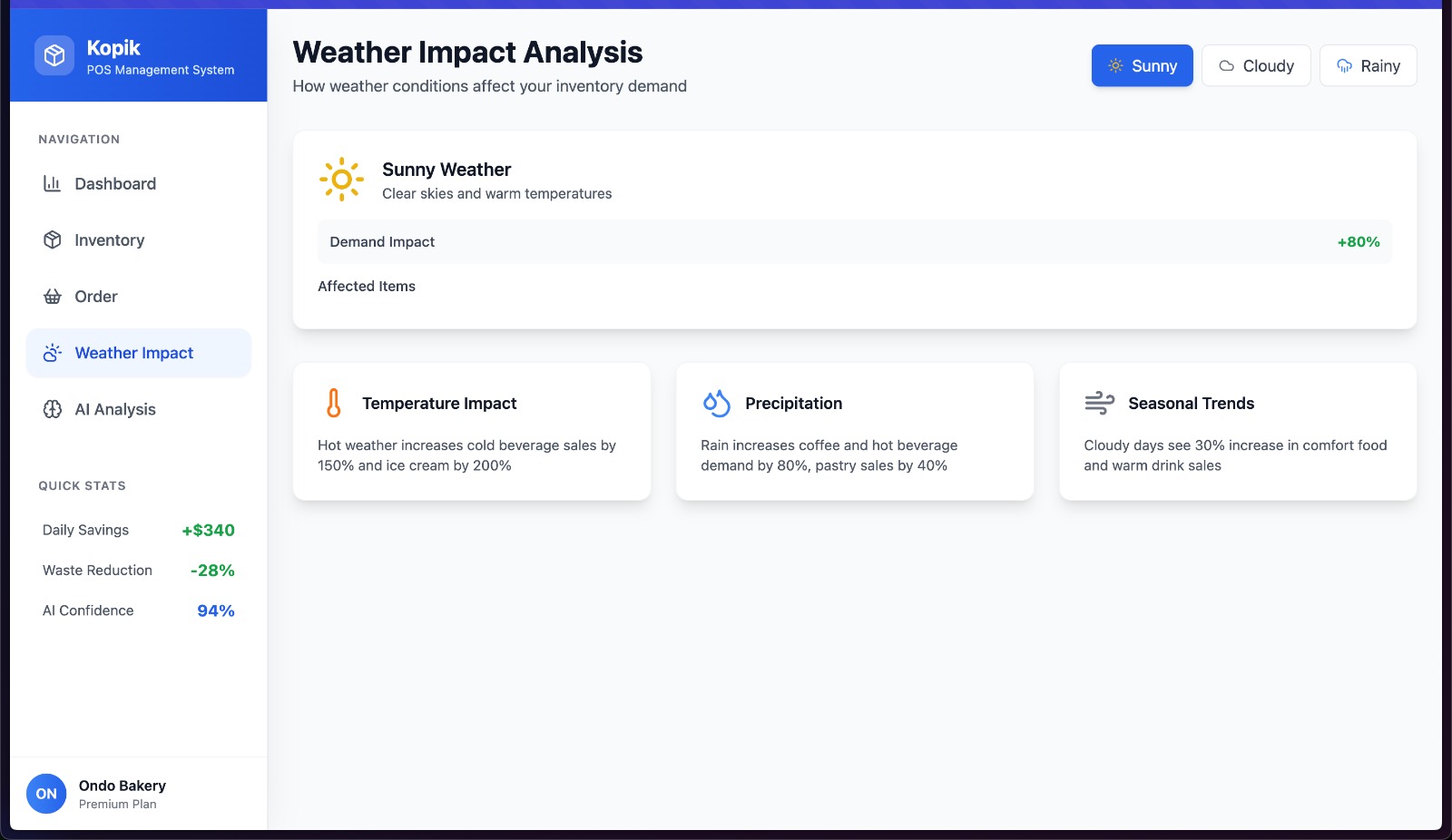
Weather Analysis
-
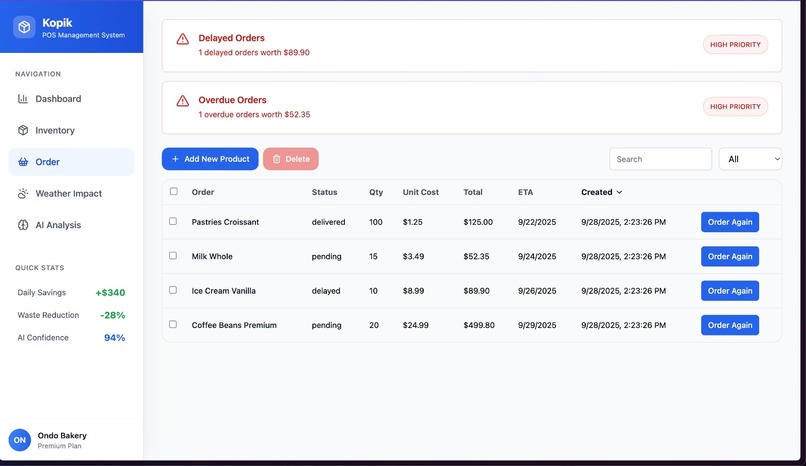
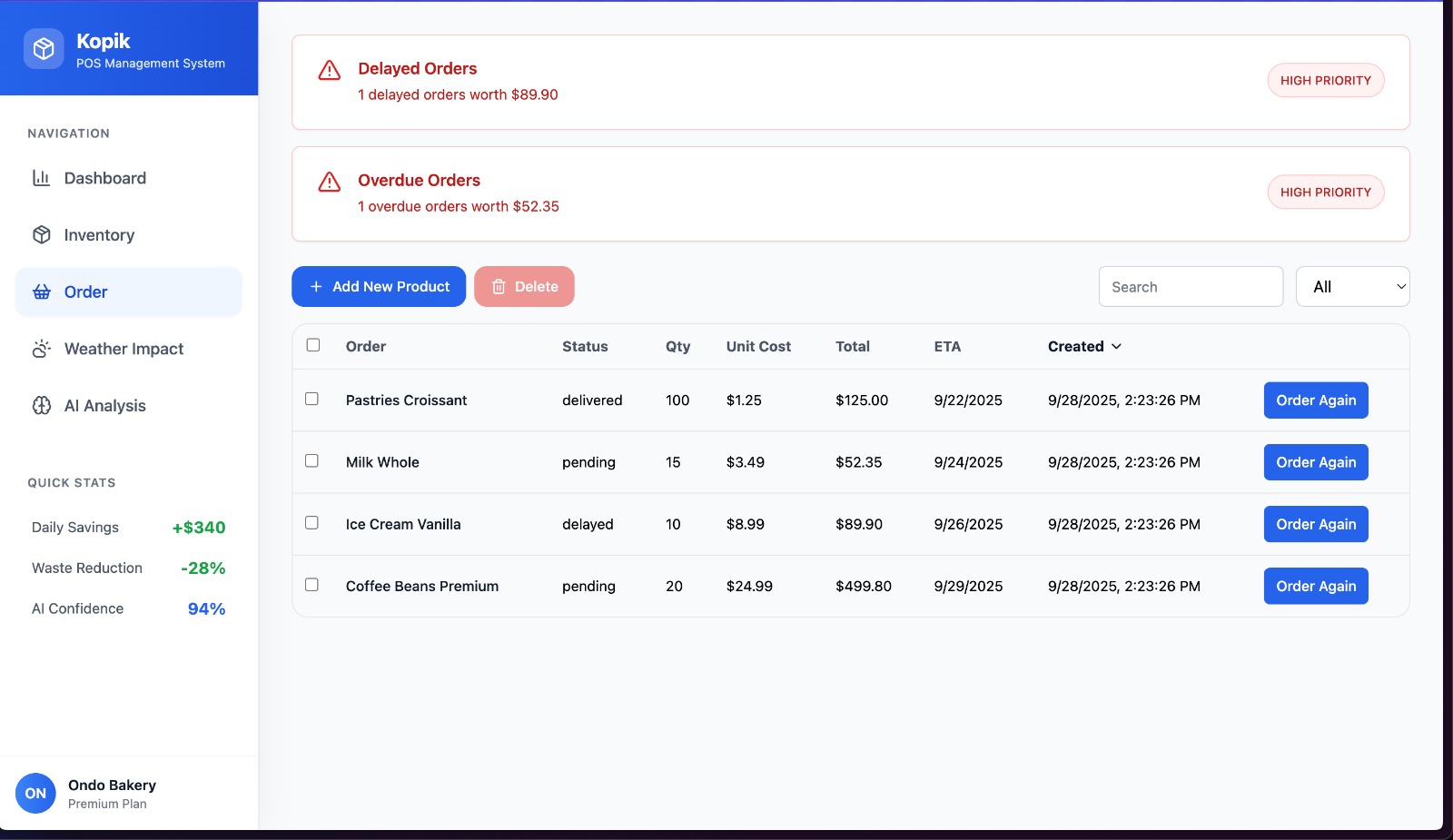
Order Tracking
-
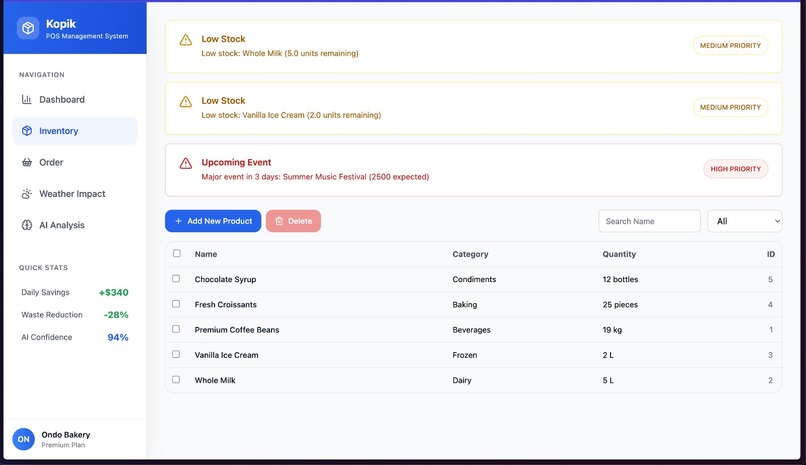
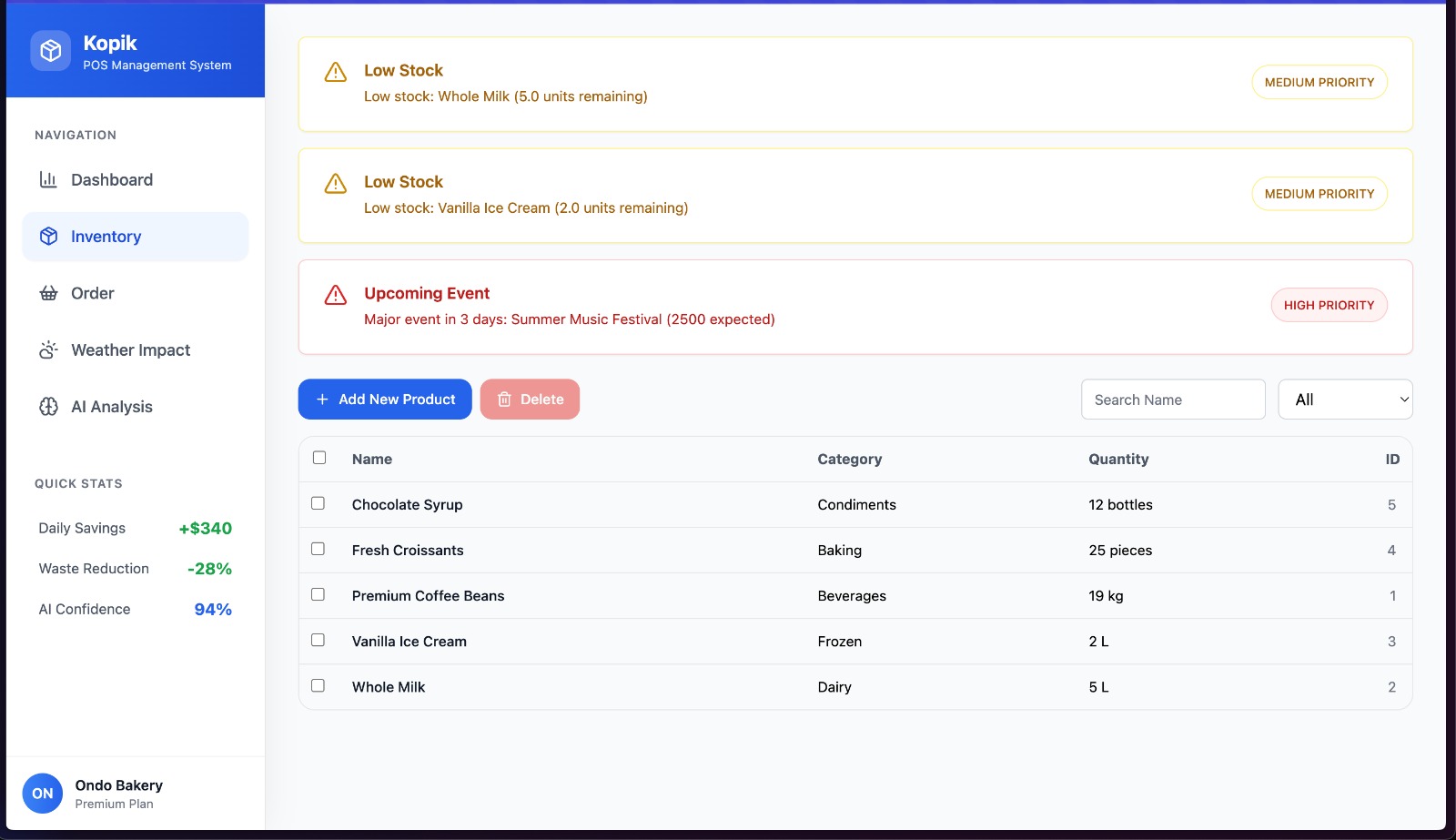
Inventory
-
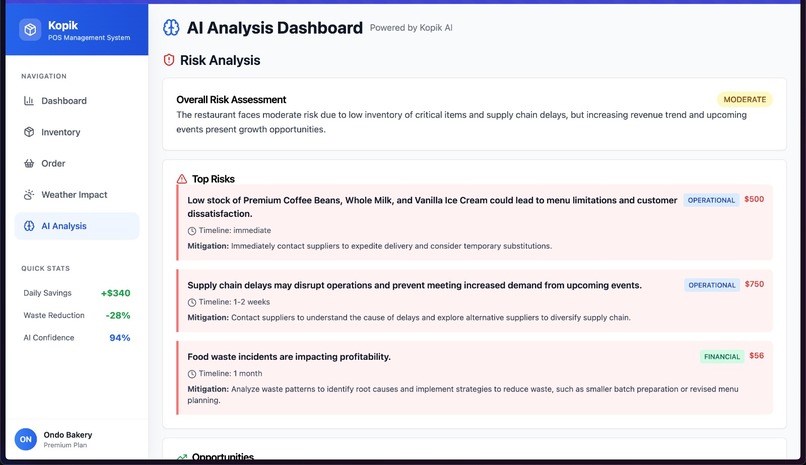
Kopik-AI Analysis
Kopi (Coffee in Indonesian) + K(nowledge)
Inspiration
Kopik was inspired by a close friend who runs a local cafe and constantly struggled with manual inventory decisions. Every morning meant guessing how much to order — often ignoring how weather spikes hot drink sales, or how nearby events suddenly double dessert demand. The result was wasted food on quiet days and frustrating stockouts during peak hours.
When we learned that the food industry wastes $162B annually while 76% of restaurants struggle with profitability due to poor inventory management, we knew this was a problem worth solving with technology.
What it does
Kopik is an AI-driven inventory management platform that helps cafes and bakeries make smarter ordering decisions by factoring in weather, local events, and historical sales.
Instead of guesswork, Kopik delivers actionable recommendations such as:
- “Order 2 extra coffee bags for tomorrow’s rainy weather”
- “Prepare 20% more desserts for tonight’s concert.”
The system integrates directly with POS platforms, runs AI analysis in real-time, and surfaces clear, prioritized insights through an intuitive dashboard — helping business owners reduce waste, prevent stockouts, and improve margins.
How we built it
Kopik was developed as a full-stack web application with a React frontend and FastAPI backend, supported by real-time data flows and AI agents.
Frontend
-Base 44 for the Frontend Development
- React 19.1.1 + Vite for development speed and performance
- React Router DOM for client-side navigation
- Tailwind CSS for modern, responsive UI
- Recharts + Framer Motion + Lucide React for interactive charts, animations, and icons
- Centralized **React Context (
DataContext) to manage live state from backend APIs
Backend
- FastAPI with SQLAlchemy ORM for RESTful APIs
- SQLite (
kopik.db) for persistent storage - Pydantic v2 models for serialization and validation
- AI System Uses GEMINI for real-time demand prediction and recommendation generation
- REST endpoints under
/apifor inventory, recommendations, and analytics - Swagger Docs auto-generated for API exploration
Challenges we ran into
- API architecture & data flow synchronization: The frontend was calling
/intelligence/dashboardimmediately after/intelligence/analyzewithout waiting for analysis to complete. This caused race conditions where stale data appeared while AI was still processing new inventory changes. - Real-time data integration: The system was mixing static JSON mock data with live API calls, leading to data inconsistencies, unpredictable behavior, and blocking scalable deployment.
- Multi-system integration complexity: Connecting the React frontend, FastAPI backend, and AI agents required seamless communication between three different systems under tight hackathon deadlines while maintaining demo reliability.
Accomplishments that we're proud of
- Built a scalable full-stack system with React + FastAPI in under 12 hours
- Created a functional AI agent that analyzes inventory against external signals in real-time
- Integrated live data flows: inventory changes immediately trigger AI analysis and dashboard updates
- Designed a clean, modern dashboard that surfaces insights instead of overwhelming data
What we learned
- Real-world inventory management is highly dynamic — demand forecasting must account for external context, not just past sales.
- Small business owners value clarity and simplicity above raw AI power — actionable recommendations win over complex dashboards.
- Building synchronous AI workflows requires balancing accuracy, latency, and system reliability.
- We deepened our understanding of full-stack integration, combining React, FastAPI, SQLAlchemy, and Pydantic into a cohesive system.
What's next for Kopik
Immediate Goals (next 3 months)
- Expand POS integrations (Toast, Clover, Revel)
- Improve AI model accuracy with larger training datasets
- Add supplier integrations for automated ordering
- Launch pilot with 10+ local cafes
Medium-Term (6–12 months)
- Extend to restaurants and broader food service businesses
- Incorporate social media sentiment analysis for trend detection
- Add dynamic pricing recommendations
- Release a mobile app for on-the-go insights
Long-Term Vision
- Scale to serve 1000+ businesses globally
- Expand into supply chain optimization and delivery platform integrations
- Become the go-to AI platform for food industry inventory intelligence
Built With
- fastapi
- geminiapi
- git
- github
- javascript
- node.js
- pydantic
- python
- react
- sqlalchemy
- sqlite
- tailwindcss


Log in or sign up for Devpost to join the conversation.