-
-
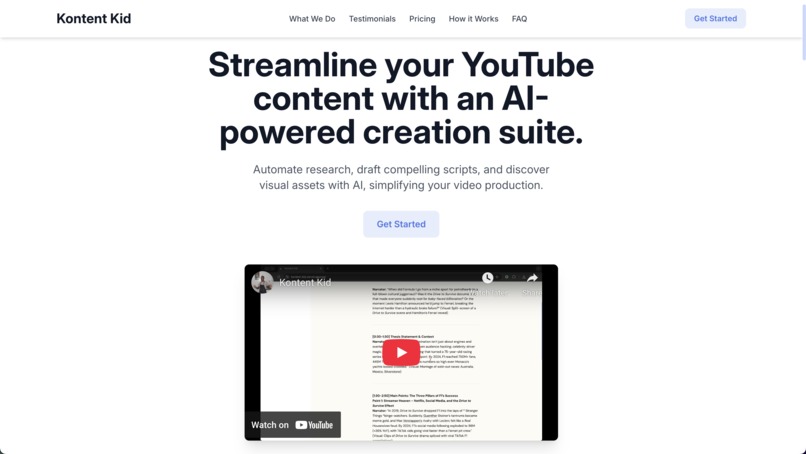
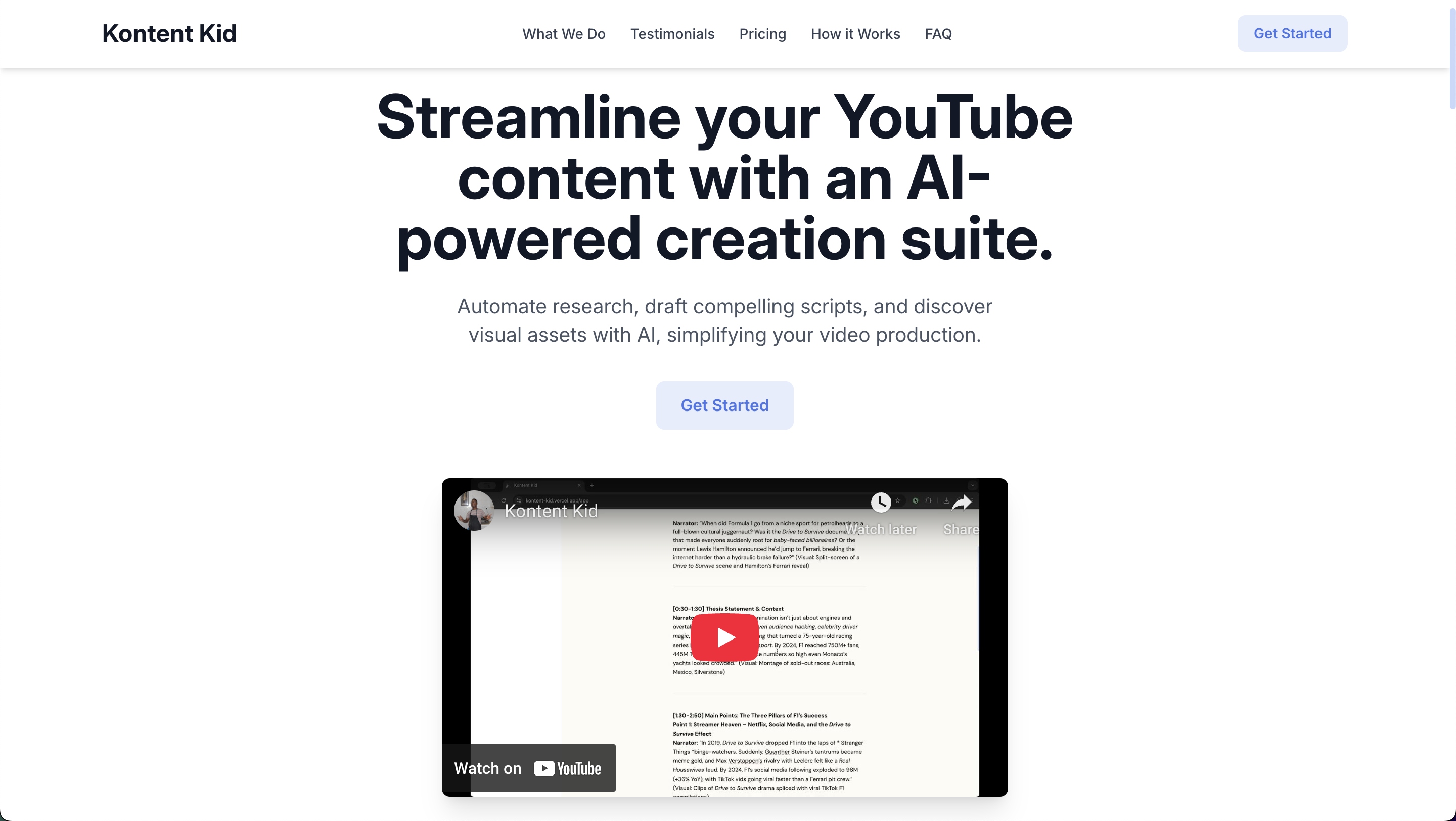
Landing page
-

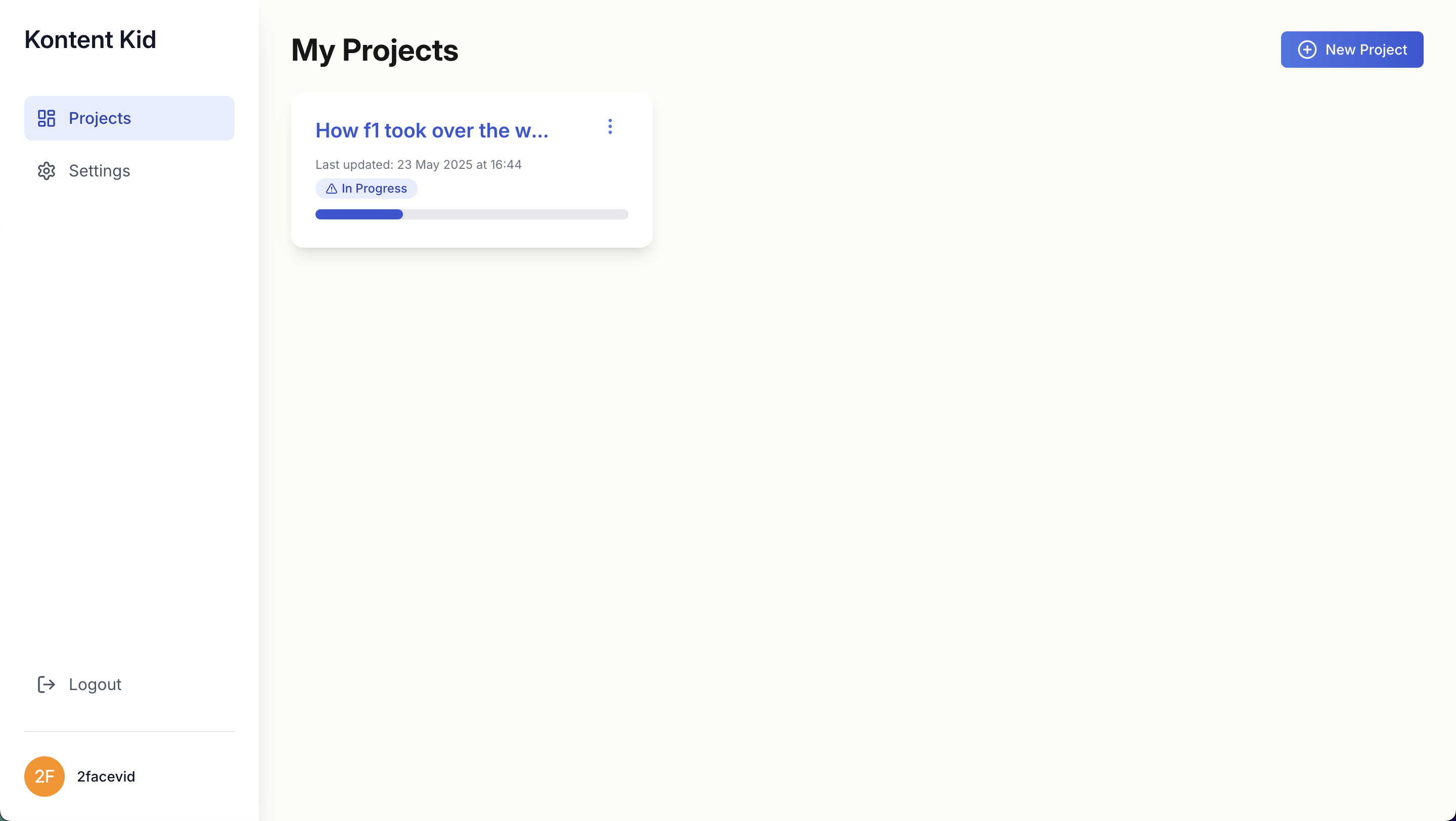
Projects Page
-
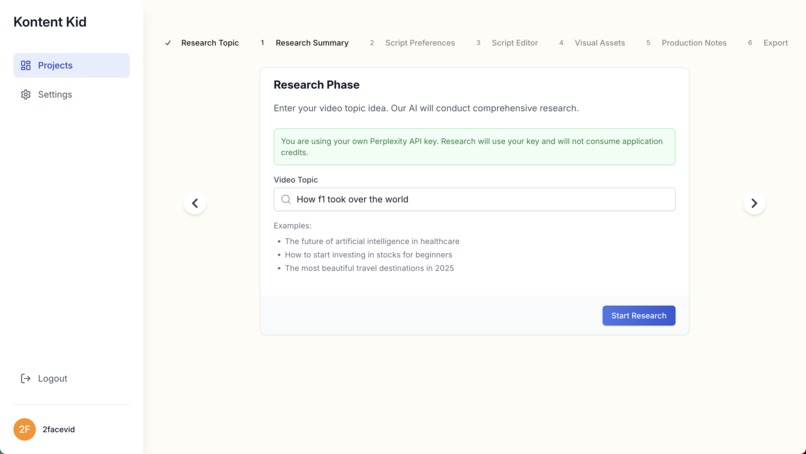
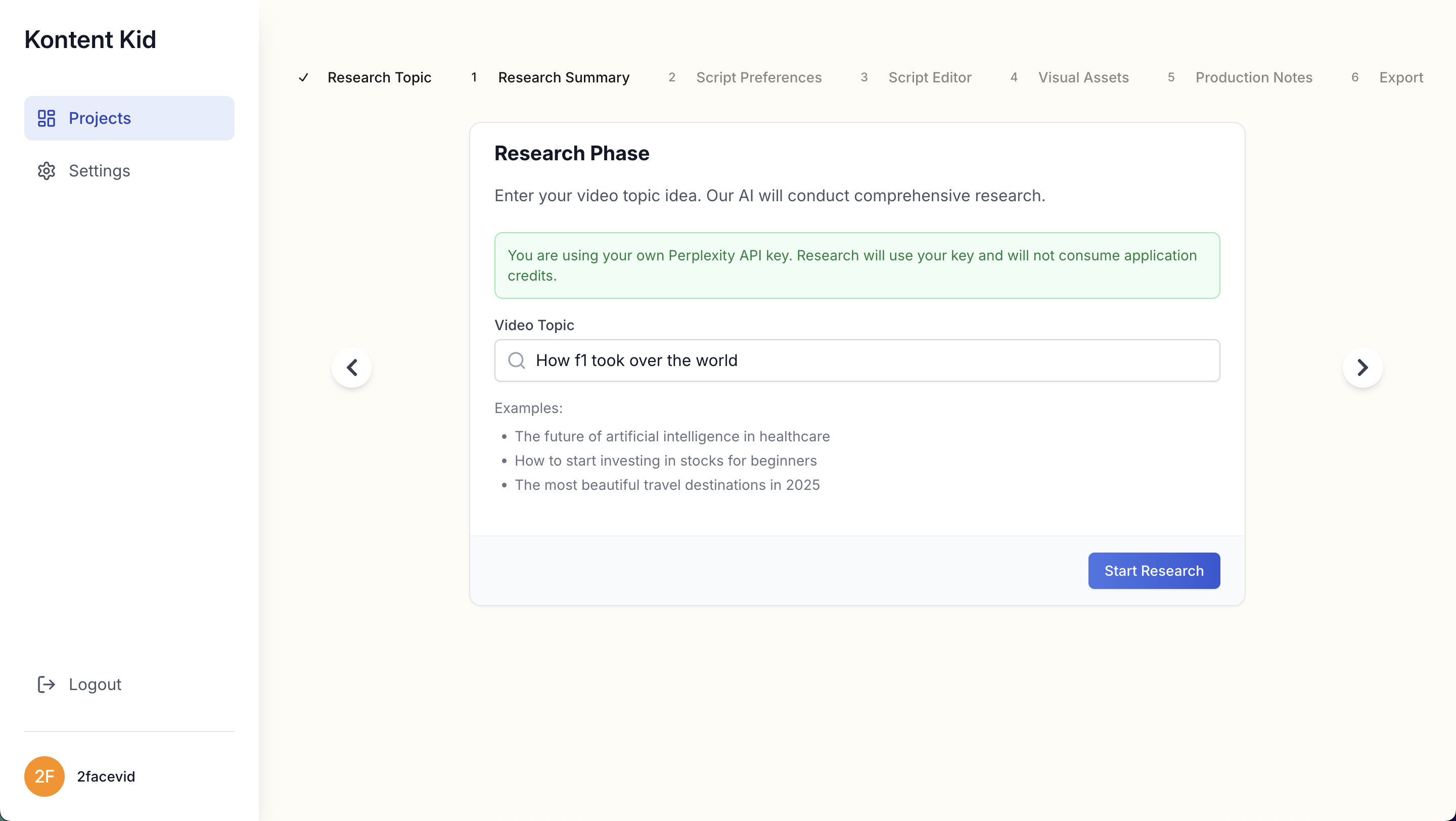
Research Phase
-
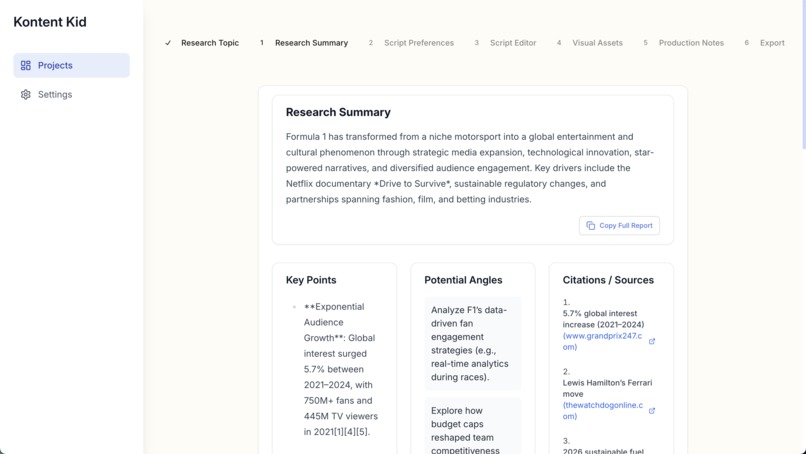
Research Summary
-
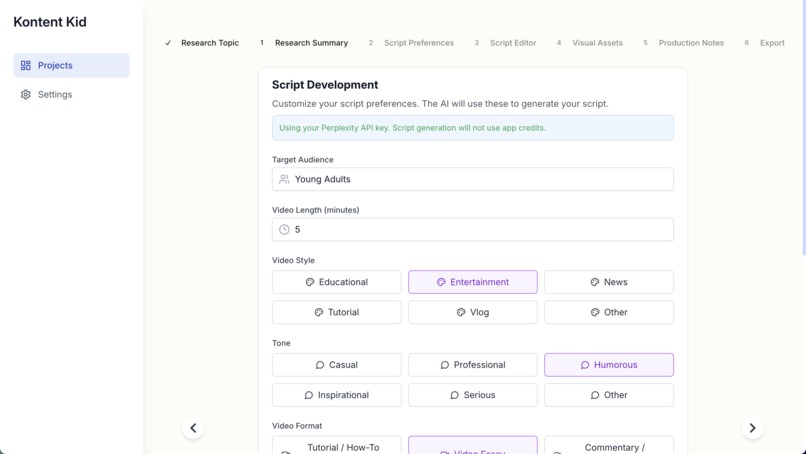
Script Preferences
-
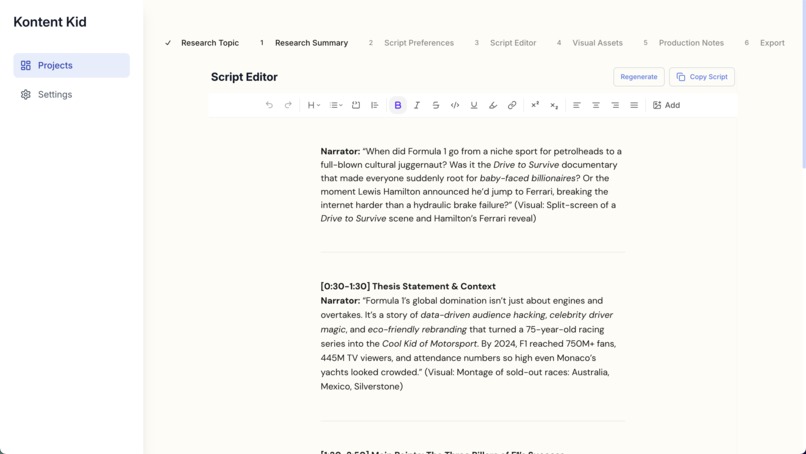
Script Output
-
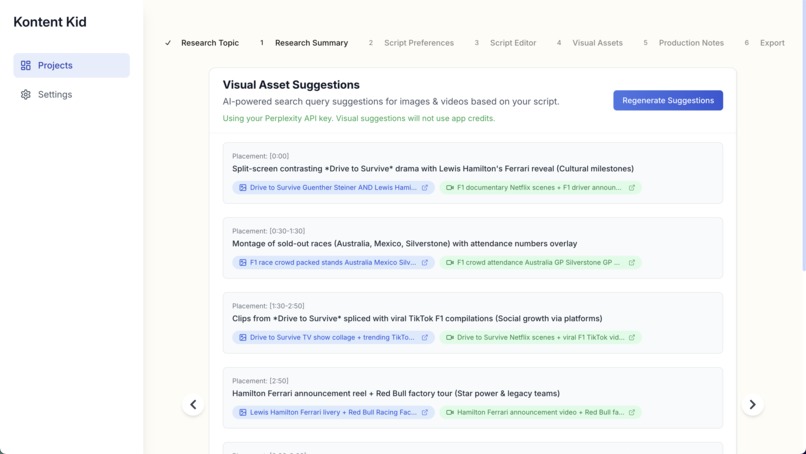
Visual Assets
-
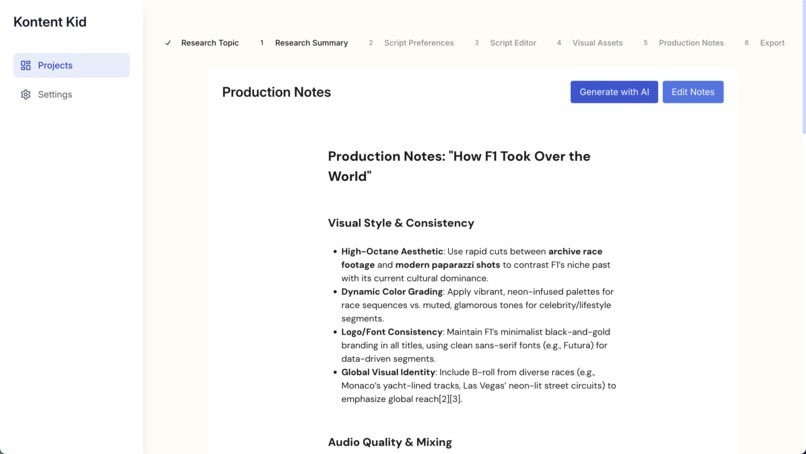
Production Notes
-
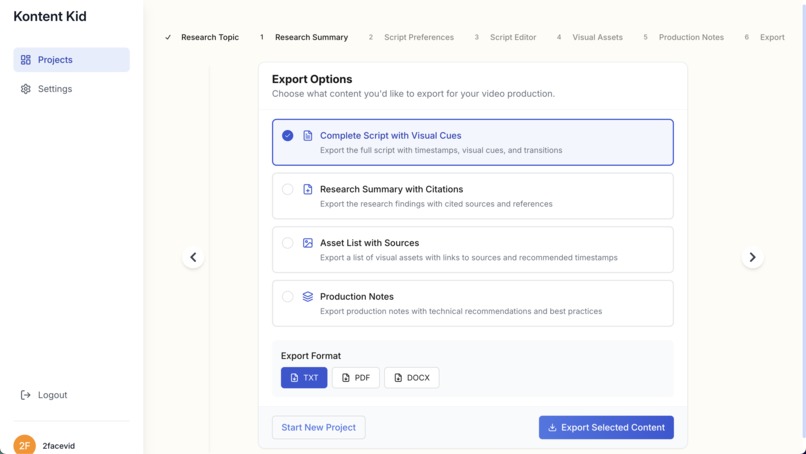
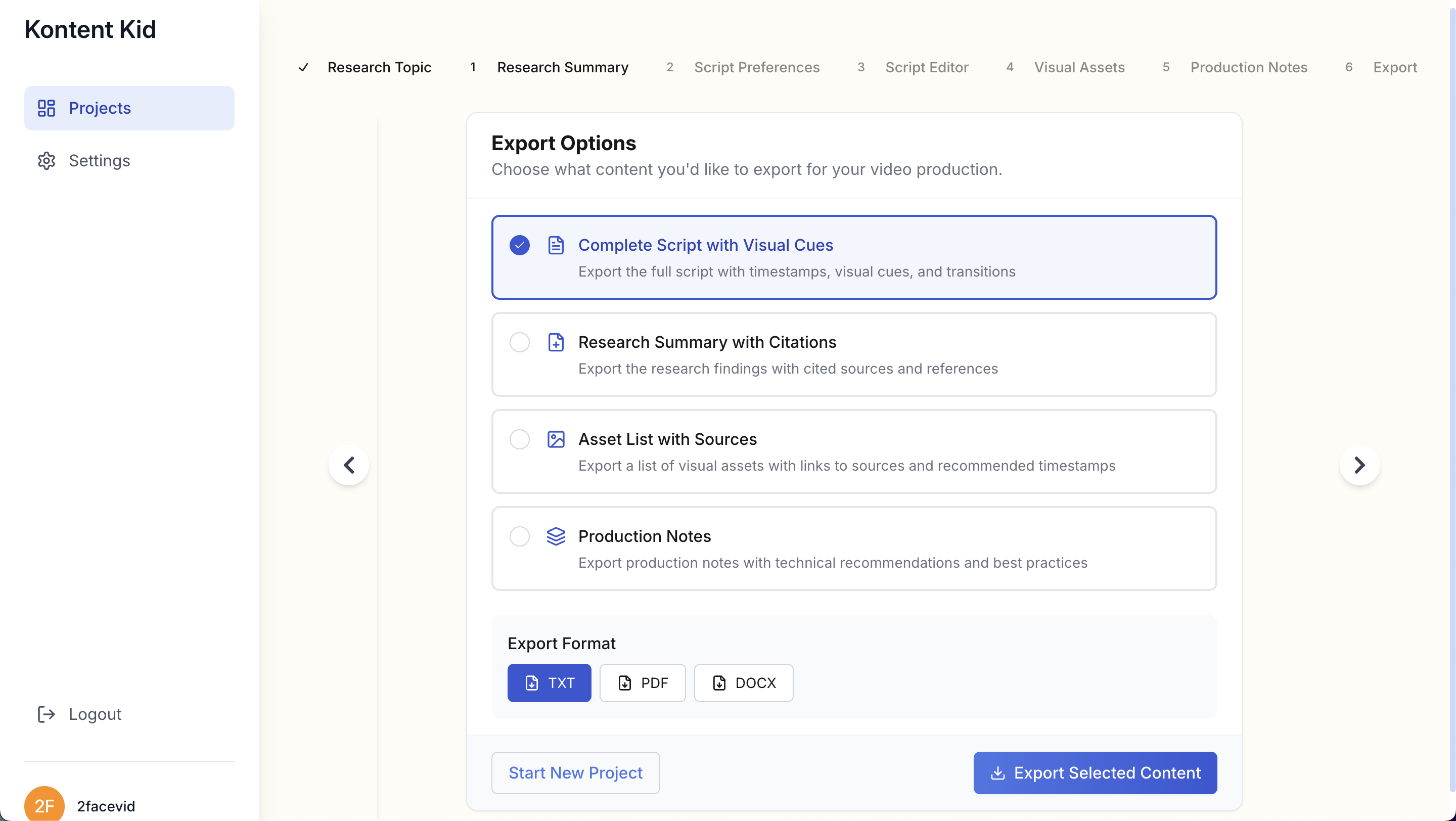
Export
-
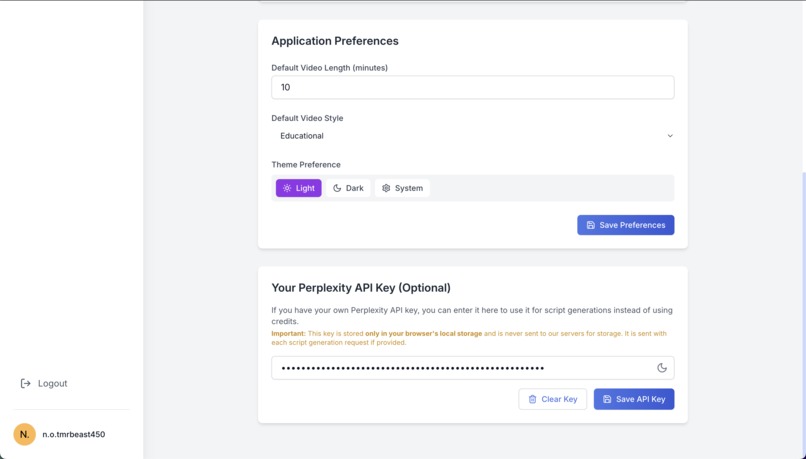
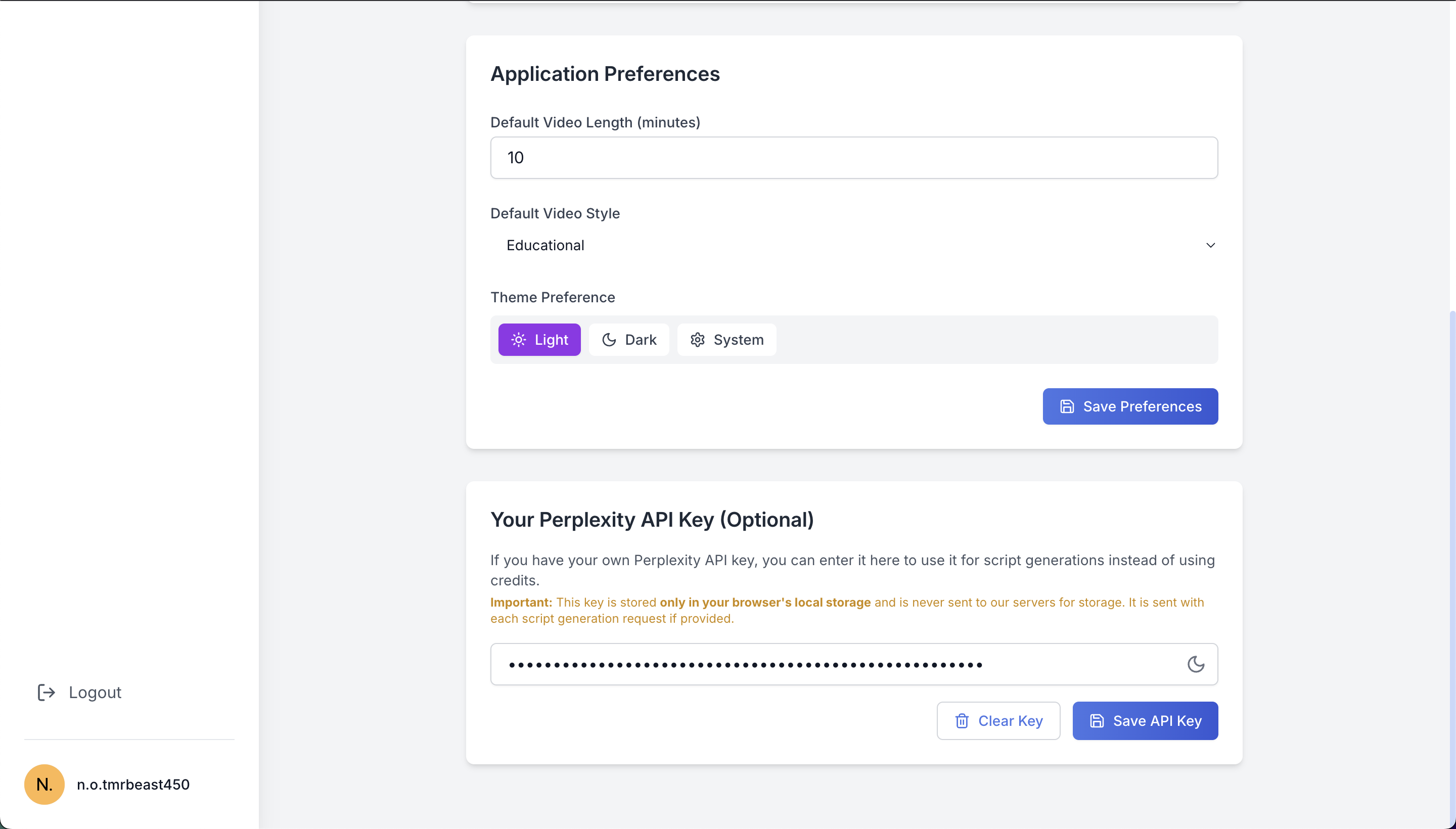
Settings Page

Inspiration
The inspiration for Kontent Kid came from a personal challenge: I wanted to create YouTube content, but found that my topics often required extensive research. This led to a bottleneck where I'd gather a lot of information but then struggle to distill it into a concise and engaging script. It felt like the research and scripting phase was a major hurdle preventing me from actually producing videos.
I realized many aspiring creators likely face similar issues. So, I decided to build Kontent Kid to solve this problem – to create a tool that streamlines the research process and helps transform that research into well-structured, ready-to-use content. The goal is to empower anyone to move from idea to finished script more efficiently, taking the pain out of the initial, often overwhelming, stages of content creation.
What it does
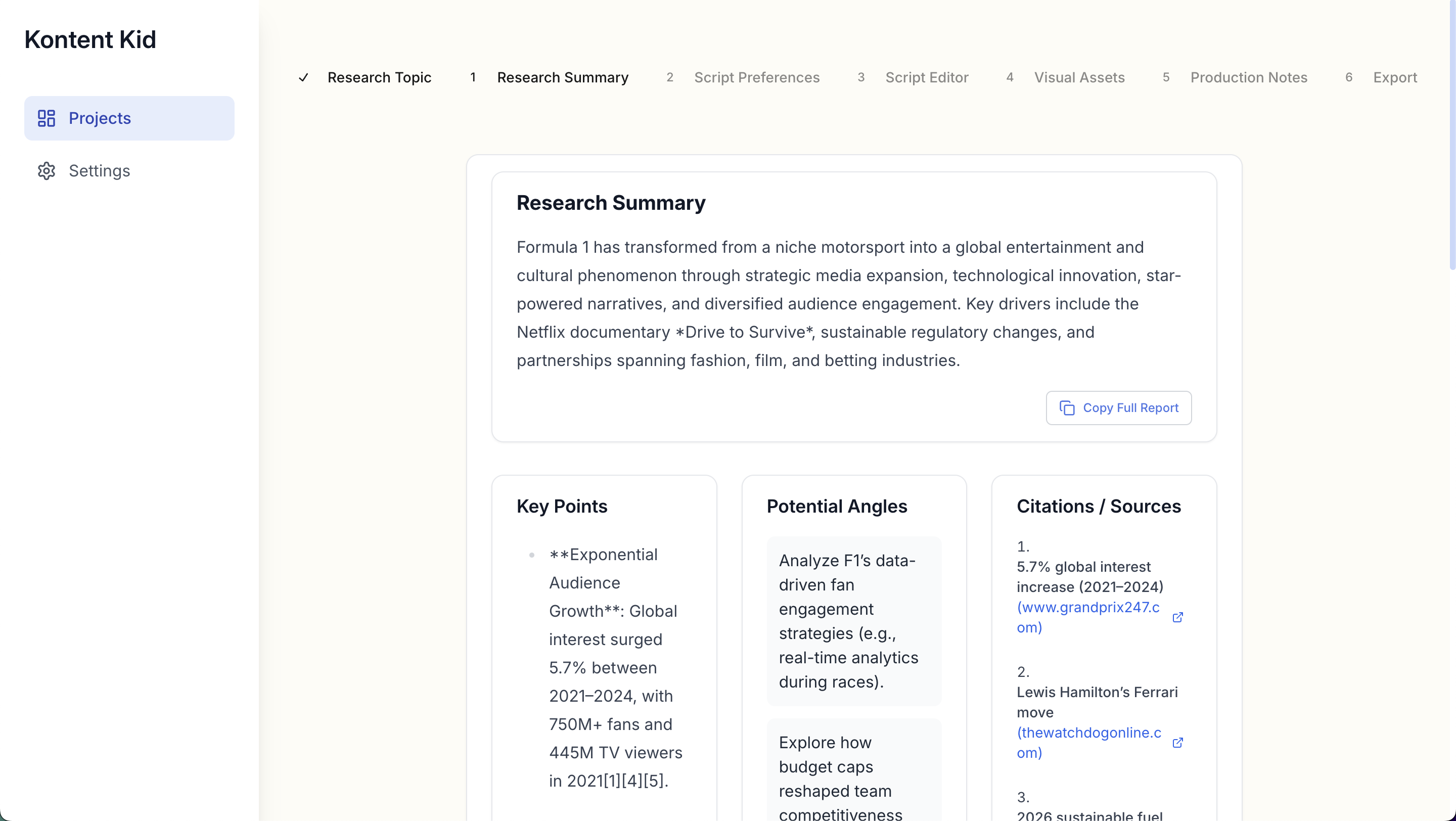
Kontent Kid is an AI-powered content creation assistant designed to simplify and accelerate the workflow for producing engaging content, such as video scripts or articles. Users can:
- Conduct AI-powered research using the Perplexity API to gather information and ideas.
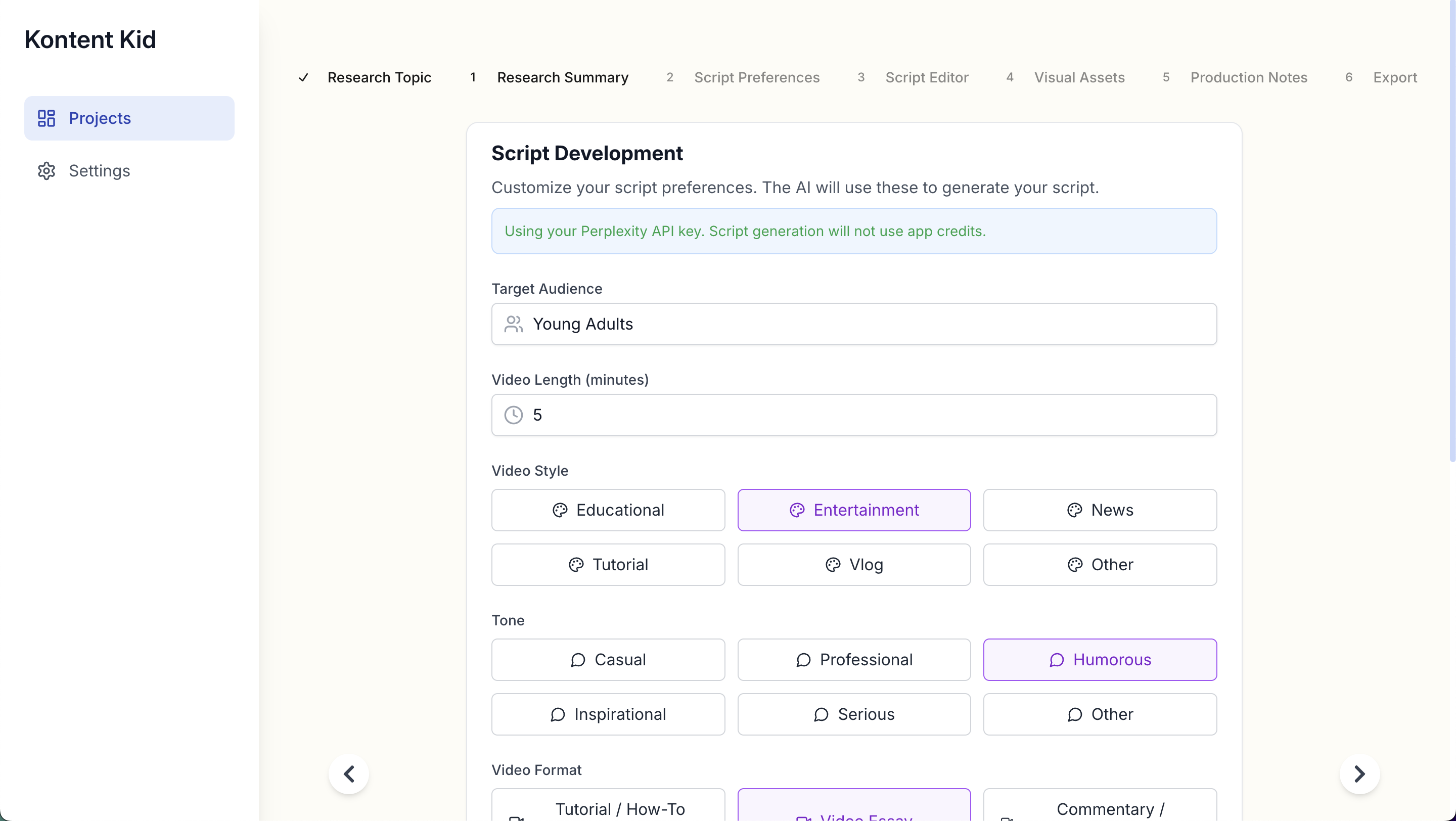
- Define script preferences and generate initial script drafts.
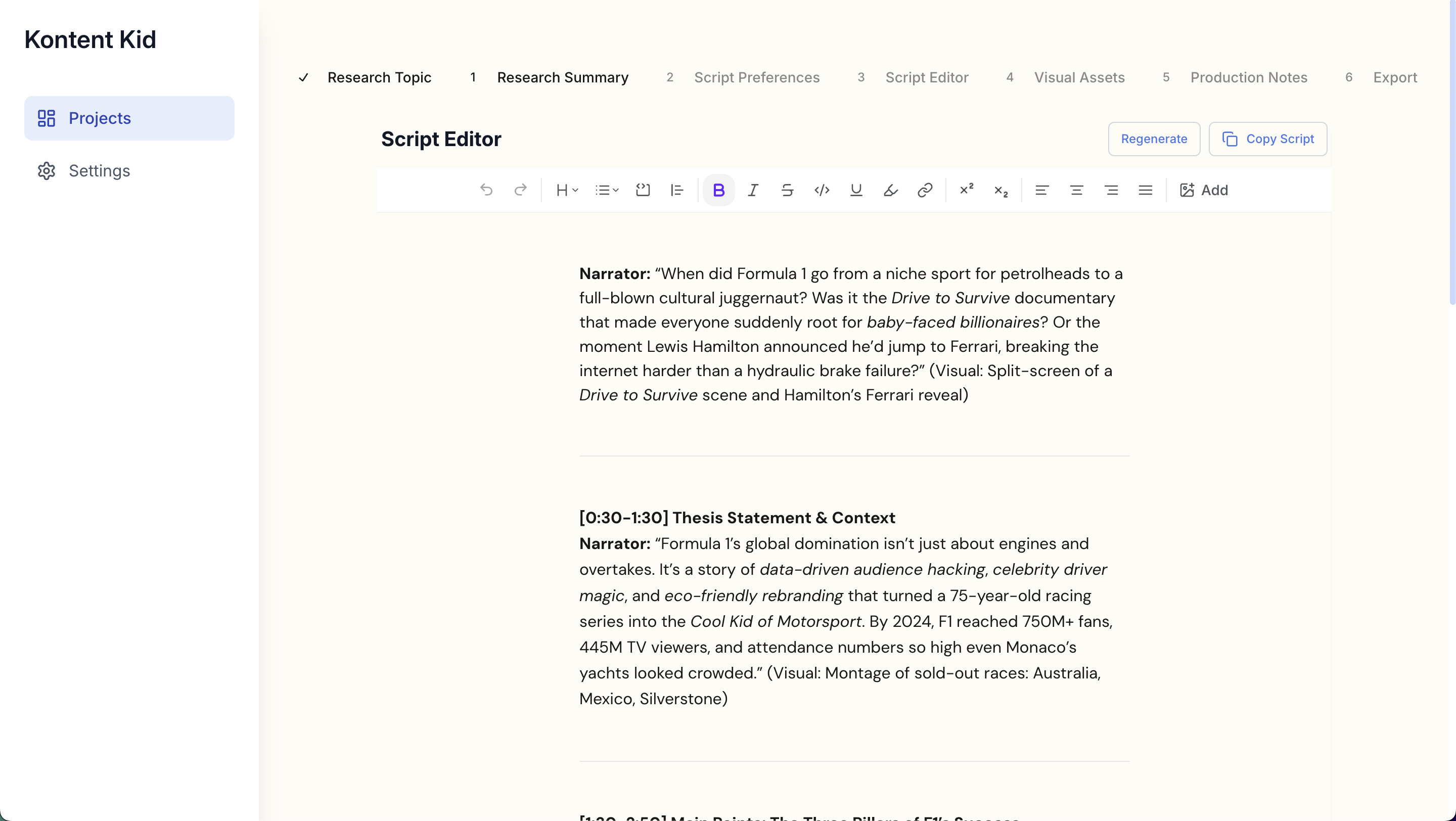
- Edit and refine scripts using a rich text editor like Tiptap.
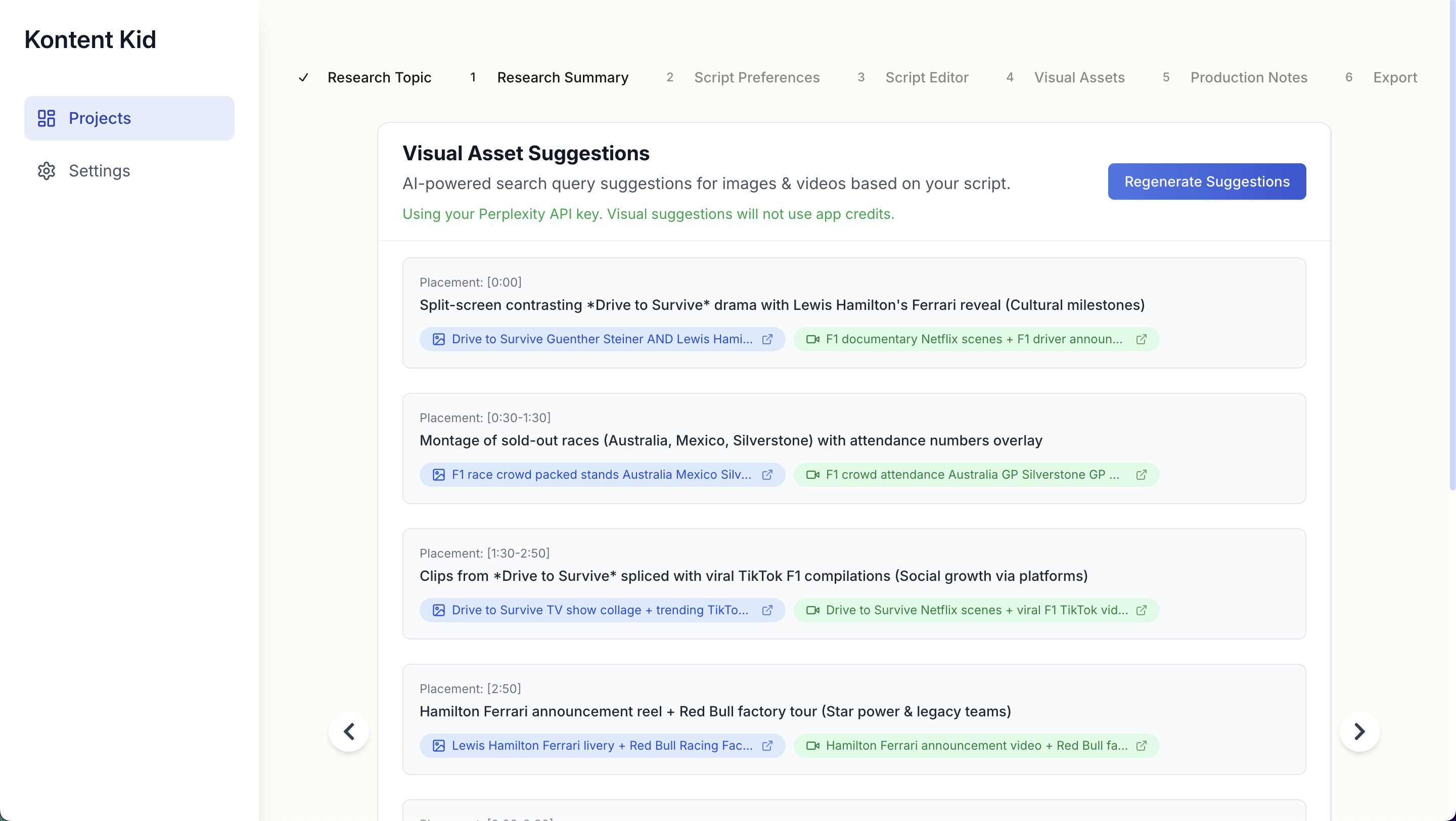
- Receive suggestions for visual assets from Google images to accompany their content.
- Manage their usage through a credit-based system, with options to purchase more credits. Or enter a Perplexity API key.
The platform aims to take the heavy lifting out of content creation, allowing users to focus on creativity and messaging.
How we built it
I used an agile, iterative approach, focusing on building core features first and then expanding. This allowed me to quickly get a functional prototype and adapt to challenges as they arose during the hackathon.
I utilized a modern web development stack to bring Kontent Kid to life. The frontend is built with React and TypeScript, leveraging Vite for a fast development experience. Styling is handled by Tailwind CSS. For the backend and database, we're using Supabase, which provides authentication, database services, and serverless functions.
Key technologies include:
- Frontend: React, TypeScript, Vite, Tailwind CSS
- Backend: Supabase (PostgreSQL, Auth, Functions)
- APIs: Perplexity API (for research/content generation)
- Version Control: Git
- Deployment: Vercel
Challenges we ran into
Integrating multiple third-party APIs within the hackathon's tight timeframe was a significant challenge. Ensuring a smooth data flow between the frontend (React/TypeScript), Supabase backend functions, and these external services required careful planning and debugging. Another hurdle was designing an intuitive user interface for the multi-step content creation process, from research to script editing and asset selection. Managing state effectively across these different stages of content creation also presented complexities.
Accomplishments that we're proud of
I'm particularly proud of successfully integrating the Perplexity API to provide genuine AI-assisted research and content generation capabilities. Building a full-stack application with user authentication, a database, serverless functions (using Supabase), and a credit-based payment system within the hackathon period is a major accomplishment. I'm also pleased with the content creation workflow I've established, from initial idea to a structured script with visual asset suggestions, all manageable through a clear UI.
What we learned
This hackathon was a fantastic learning experience. I deepened my understanding of leveraging large language models via APIs like Perplexity for practical applications. I gained valuable hands-on experience with the Supabase ecosystem, particularly its serverless functions and real-time capabilities. Furthermore, developing a project with a payment integration taught me about the complexities involved in monetizing applications. Managing a project with multiple interconnected components under pressure also honed my problem-solving skills.
What's next for Kontent Kid
I see a lot of potential for Kontent Kid. Future plans include:
- Expanding the range of content types supported (e.g., blog posts, social media updates).
- Introducing more sophisticated AI features, such as style transfer for scripts, or automated video storyboard generation.
- Adding collaboration features for teams.
- Refining the UI/UX based on user feedback
Built With
- git
- javascript
- node.js
- perplexity
- react
- scss
- sql
- supabase
- tailwind
- typescript
- vite

Log in or sign up for Devpost to join the conversation.