-
-
Mango
-
Our solution
-
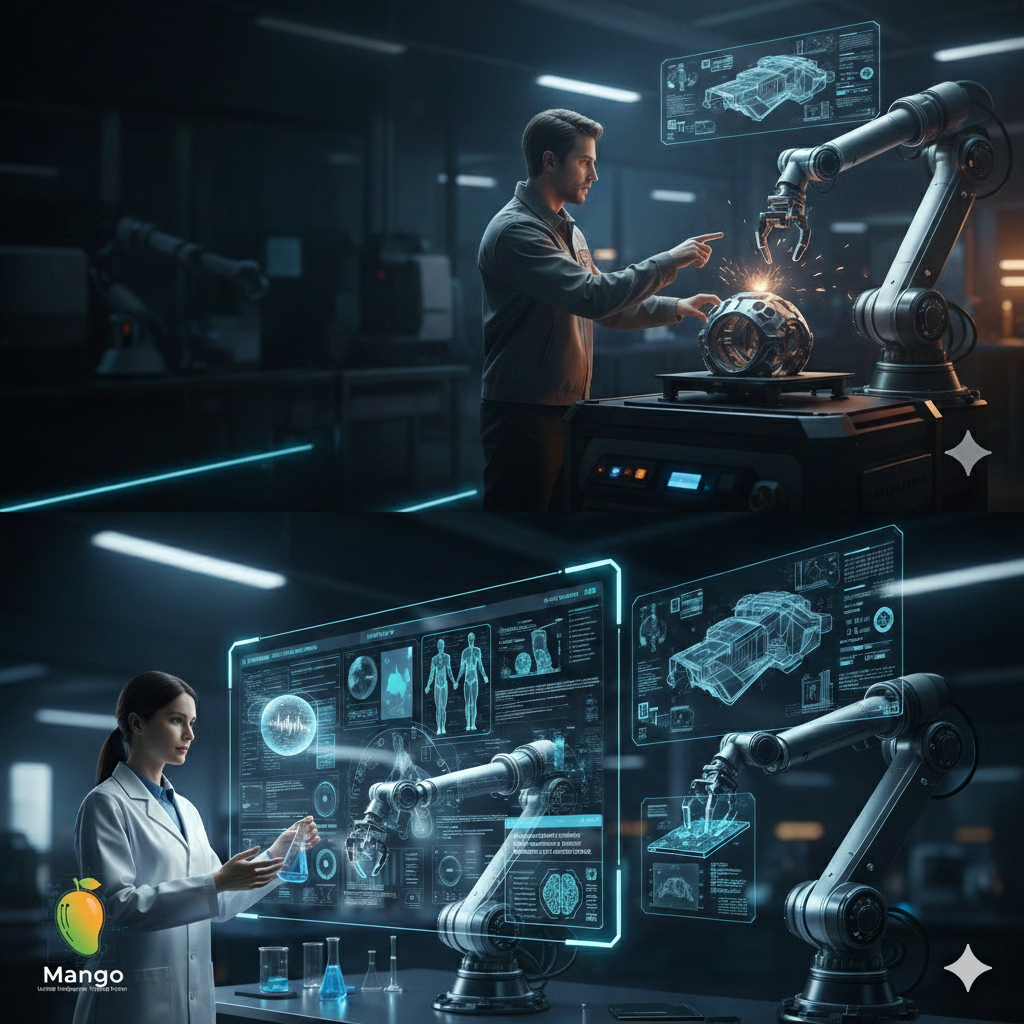
Personal Assistant at your lab, workshop
-
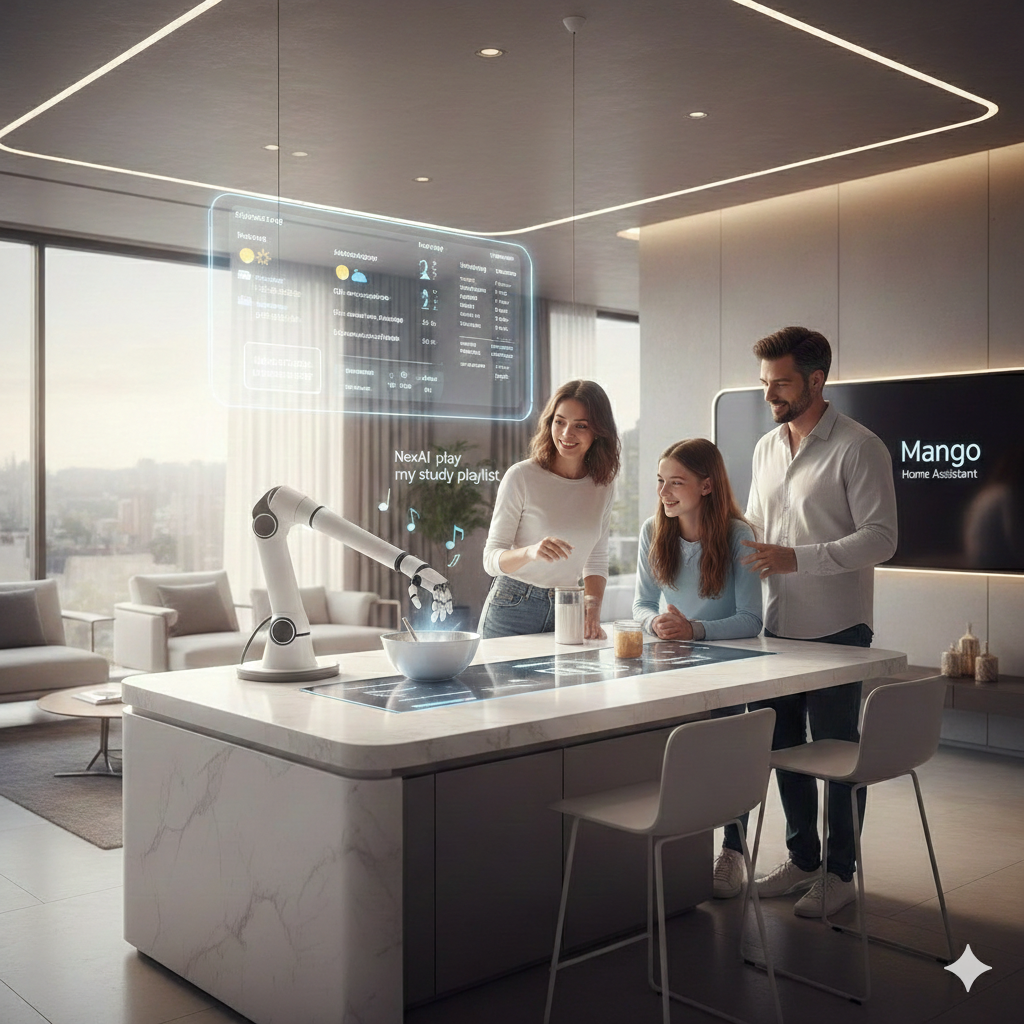
Personal Assistant at home
Inspiration
The inspiration behind Mango came from a simple observation: today’s assistants are either digital or physical, rarely both. We have powerful AI tools that help us research, write, and analyze data, but they cannot physically interact with our environment. On the other hand, robotic systems often lack intelligent reasoning and seamless digital collaboration.
We wanted to bridge that gap, to build a unified assistant that connects the physical and digital worlds, empowering innovators, researchers, and professionals to move fluidly between thinking, creating, and doing.
What it does
Mango is a multifunctional collaborative assistant powered by the Gemini 3.0 API. It combines:
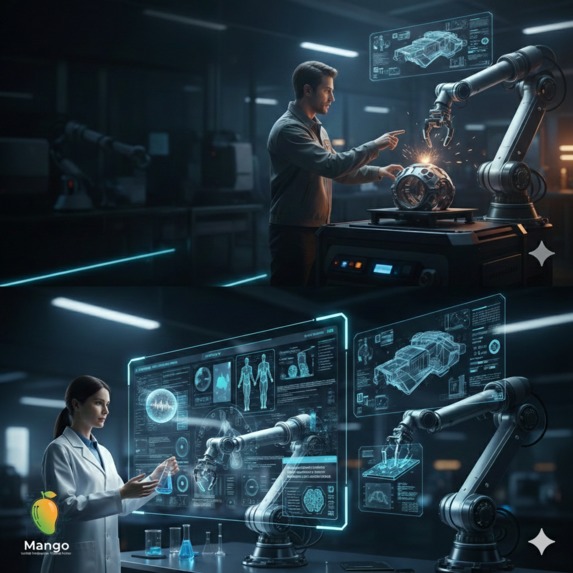
Robotic Assistance: A robotic hand capable of picking, handing, and manipulating objects safely and precisely.
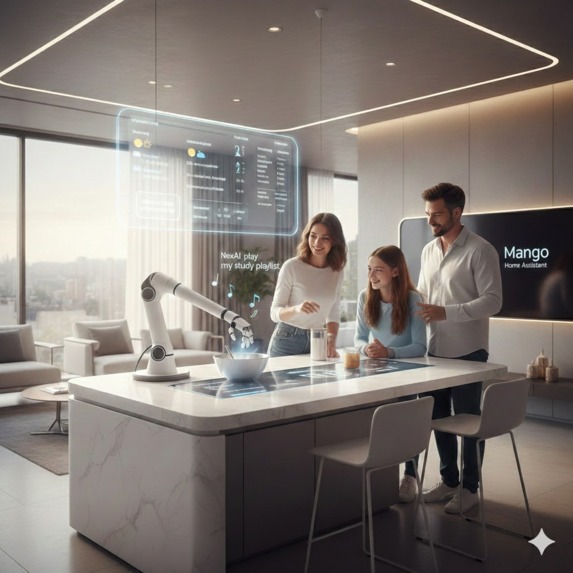
Voice-Controlled Digital Interaction: Users can navigate systems, conduct research, and manage webpages using natural voice commands.
Computer Vision Perception: Real-time environmental analysis, screenshot interpretation, and intelligent suggestions for modifications.
Mango acts as both a digital co-pilot and a physical collaborator, helping users execute tasks across environments seamlessly.
How we built it
We built Mango using:
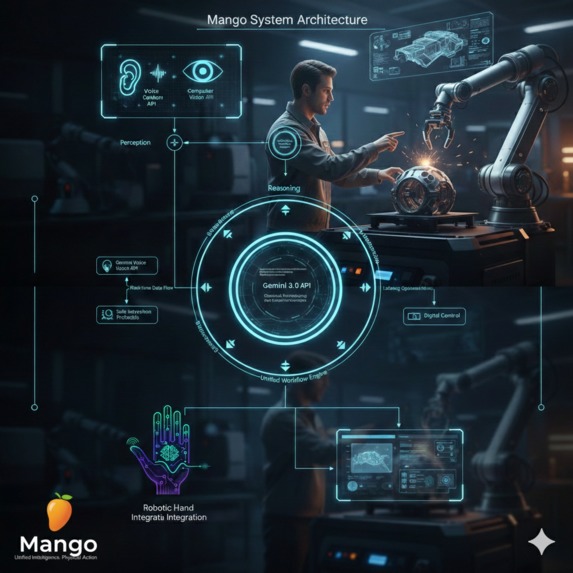
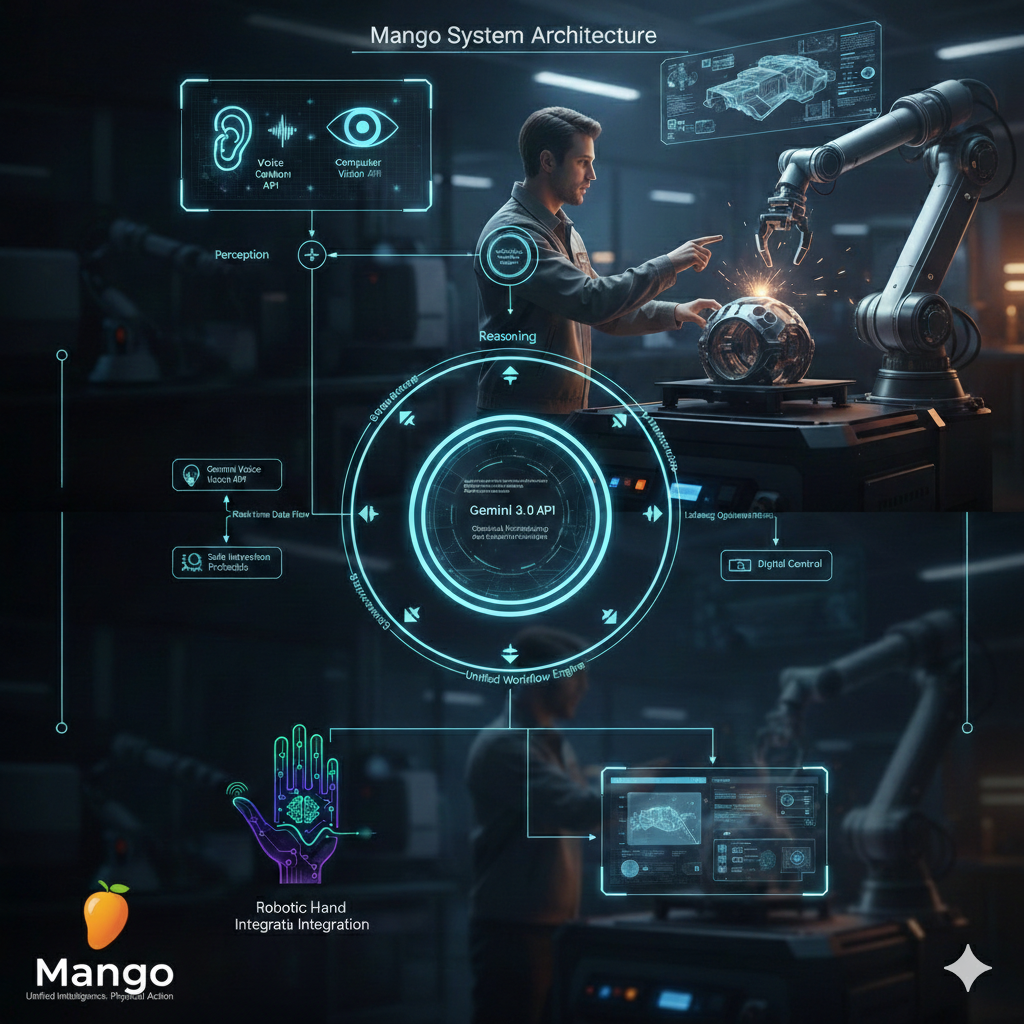
Gemini 3.0 API as the core intelligence layer for reasoning, task execution, and contextual understanding.
- Gemini Voice Control to enable responsive and natural command interaction.
- Computer Vision API for real-time environmental perception and analysis.
- Robotic Hand Integration to translate AI decisions into safe and precise physical actions.
The system architecture connects perception (vision + voice), reasoning (Gemini), and action (robotic execution + digital control) into a unified workflow engine.
Challenges we ran into
Synchronizing physical robotic actions with AI reasoning in real time.
Ensuring voice commands were interpreted accurately in different environments.
Handling latency between perception (vision), reasoning (API), and execution (robotic movement).
Designing safe interaction protocols for physical manipulation tasks.
Accomplishments that we're proud of
Successfully integrating Gemini 3.0 as the central intelligence layer.
Achieving reliable voice-controlled task execution.
Enabling real-time screenshot analysis and modification suggestions.
- Building a working robotic hand system capable of controlled object manipulation.
Creating a cohesive system that truly bridges physical and digital workflows.
What we learned
True collaboration between AI and robotics requires tight feedback loops between perception and action.
Latency optimization is critical in hybrid physical-digital systems.
Voice interfaces must be context-aware to be genuinely productive.
Designing for safety and precision is just as important as designing for intelligence.
Most importantly, we learned that intelligent systems become exponentially more powerful when they can both think and act.
What's next for Mango
Expanding robotic capabilities to handle more complex task sequences.
Improving contextual awareness and memory for long-term collaboration.
Integrating multi-user collaboration features.
Deploying Mango in research labs and innovation hubs for real-world testing.
Exploring enterprise use cases across healthcare, engineering, and advanced manufacturing.
Our vision is for Mango to become the ultimate collaborative assistant — one that doesn’t just respond, but truly works alongside you.

Log in or sign up for Devpost to join the conversation.