Inspiration
Community treasurers in Indonesia often manage dues, shared funds, rotating savings groups, and small events manually through chat groups and spreadsheets. It is repetitive, unpaid work that can easily lead to missed payments, unclear records, and reporting mistakes.
KomunitasAI was inspired by the idea that every local community should have access to a reliable digital treasurer that never forgets, never gets tired, and keeps finances transparent.
What It Does
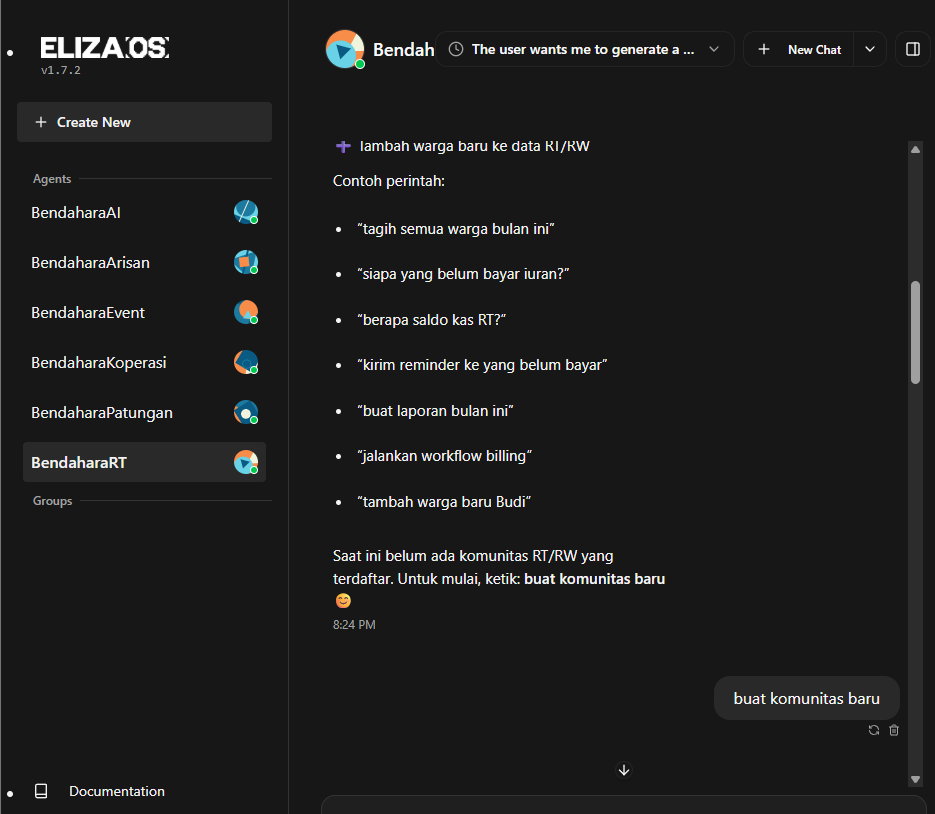
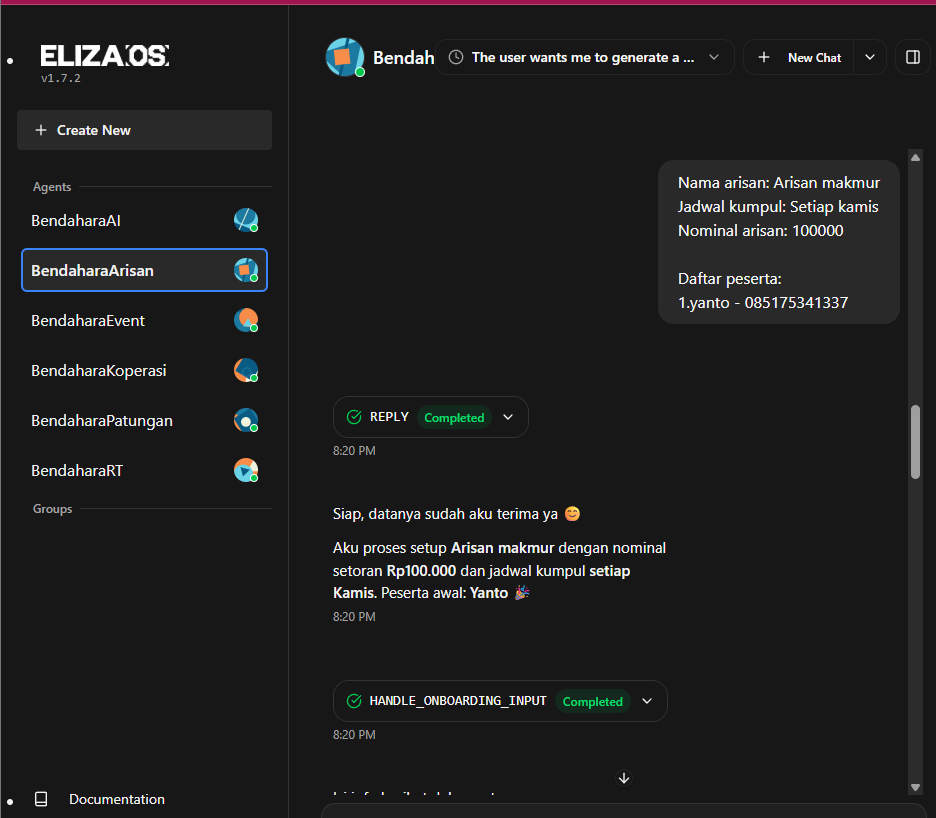
KomunitasAI is an autonomous AI treasurer for communities such as RT/RW neighborhoods, arisan groups, cooperatives, event committees, and shared funds.
Through a natural chat interface, users can create communities, add members, generate bulk payment invoices, simulate or monitor payments, send reminders, check cash balances, and generate monthly reports.
It integrates with DOKU Checkout for payment links and uses autonomous workflows to run billing, payment monitoring, reminders, and reporting.
How I Built It
I built KomunitasAI on top of ElizaOS using TypeScript. The agent logic is implemented as ElizaOS actions and services, with a React and Tailwind dashboard for the treasurer interface.
DOKU Checkout is used for payment link generation, while the application maintains community, member, invoice, cash, and activity data through the KomunitasAI service layer.
The dashboard exposes the main demo flow: bulk billing, payment simulation, reminders, recent transactions, cash summary, and report generation.
Challenges I Ran Into
The biggest challenge was balancing hackathon scope with a real-world financial workflow. Payment, reporting, reminders, cash tracking, and agent chat all need to work together reliably.
DOKU integration also required careful handling of credentials, webhook behavior, and a sandbox-friendly simulation flow so the demo could still work even without a public webhook tunnel.
I also had to build the project under a strict 12-hour hackathon time limit. This forced me to make pragmatic decisions, focus on the most important end-to-end demo flow, and prioritize working agent actions over a larger production-grade architecture.
Another challenge was adapting the ElizaOS starter structure into a focused product agent with real actions instead of generic template behavior.
Accomplishments That I'm Proud Of
I am proud that KomunitasAI is not just a chatbot. It has concrete financial actions: creating invoices, checking unpaid members, updating cash, sending reminders, simulating payments, and generating reports.
I am also proud of the practical user experience. The product is built around a familiar problem for Indonesian communities, and the demo flow shows a clear before-and-after: from manual chasing and spreadsheets to an autonomous agent-assisted finance workflow.
What I Learned
I learned how to turn an AI agent from a conversational interface into an operational worker with structured tools and actions.
I also learned that payment workflows need strong fallback paths for demos, especially when webhooks, credentials, and sandbox environments are involved.
Most importantly, I learned that useful AI agents should not only answer questions. They should complete workflows, update real state, and produce outputs that users can trust.
What's Next for KomunitasAI
Next, I want to add full persistent PostgreSQL storage, improve the onboarding flow, support WhatsApp notifications, and expand the agent roles for different community types such as arisan, cooperatives, and event committees.
I also plan to add production-grade DOKU webhook verification, role-based access, exportable PDF reports, and voice interaction so treasurers can manage community finances even more naturally.
Built With
- bun
- claude
- docker
- dokploy
- elizaos
- gpt
- postgresql
- typescript
- waha


Log in or sign up for Devpost to join the conversation.