-
-
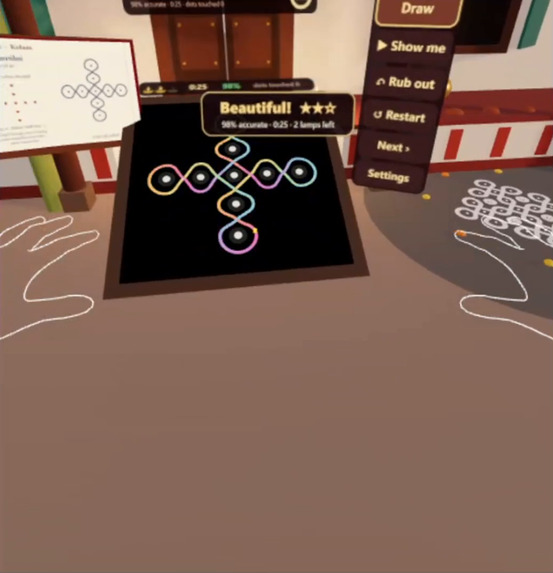
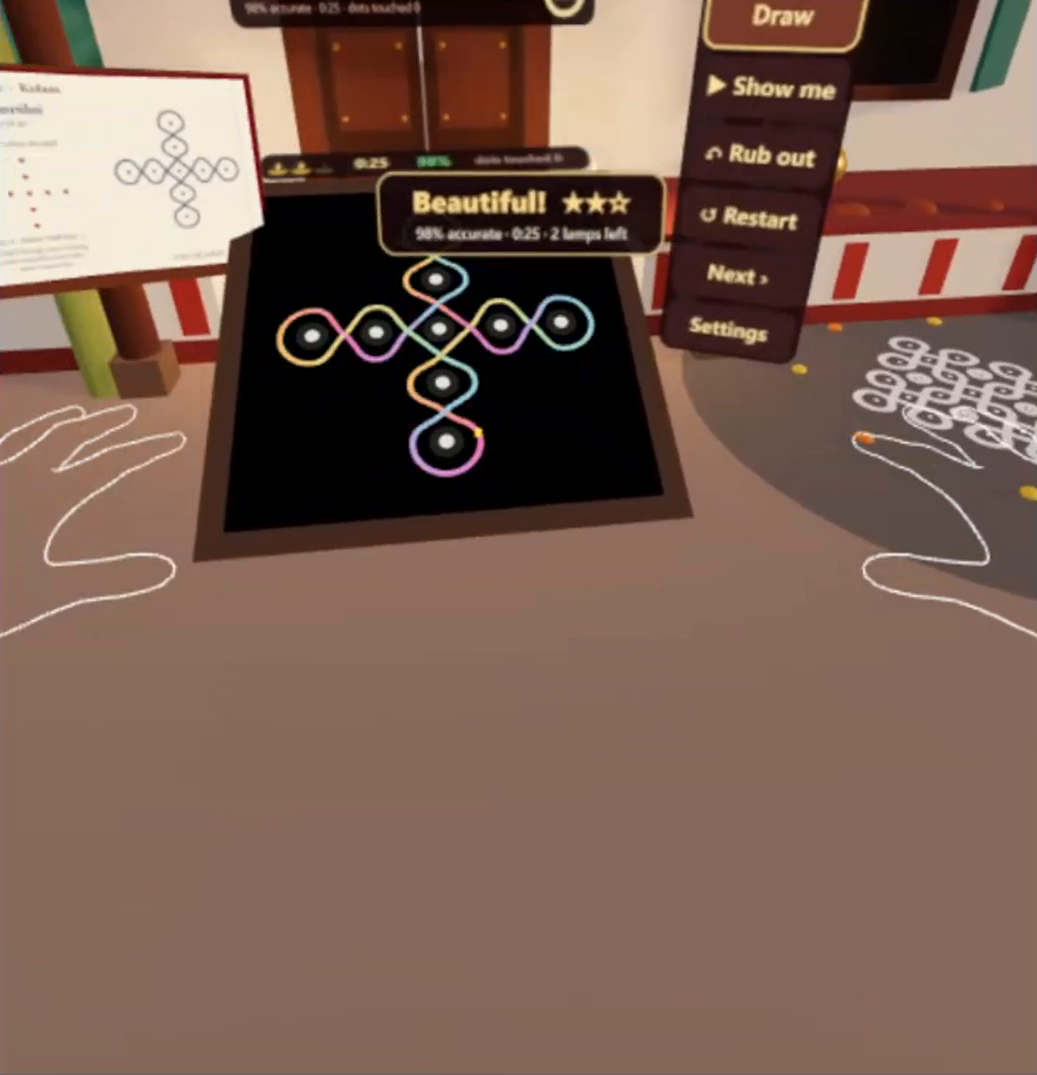
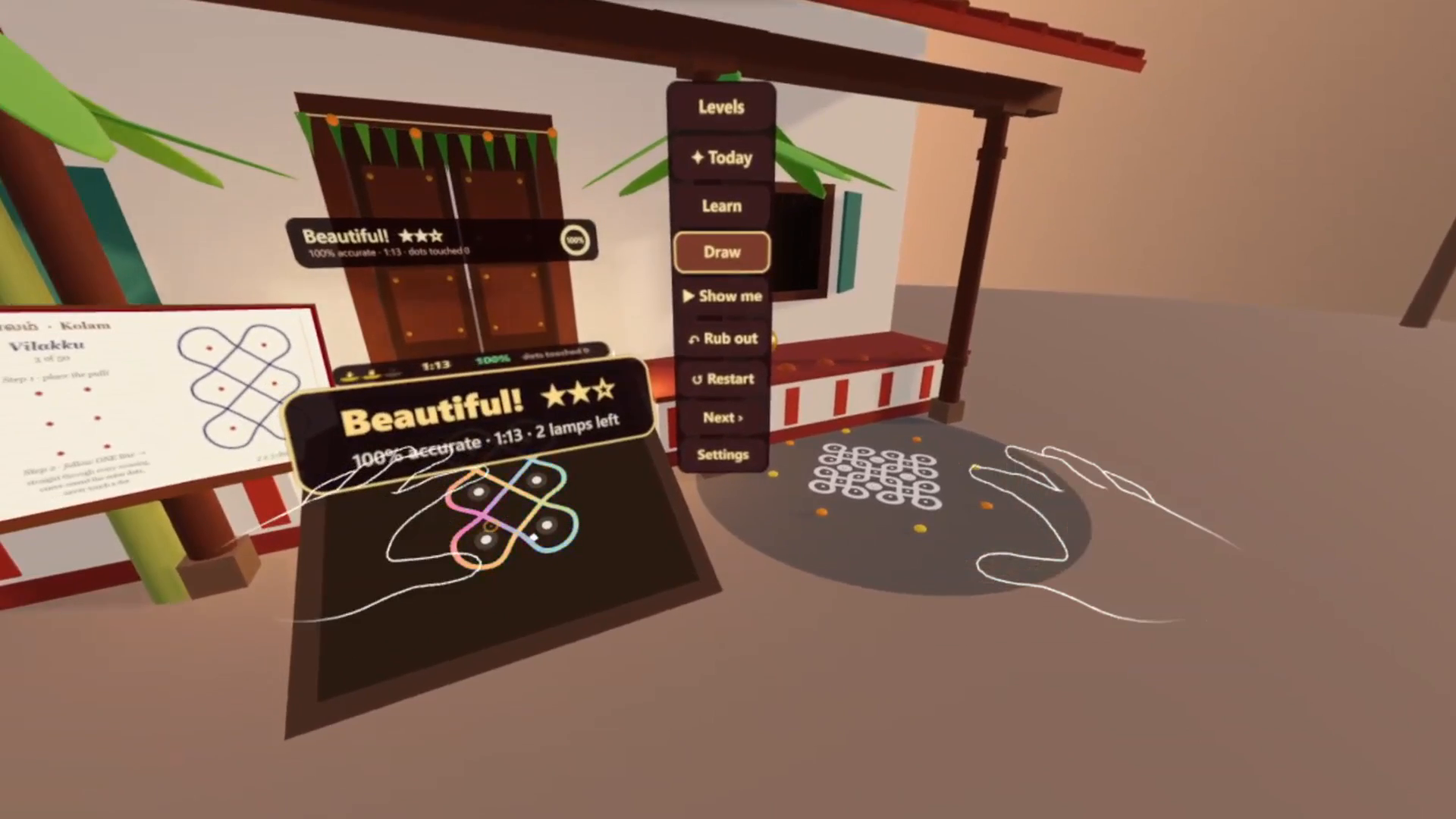
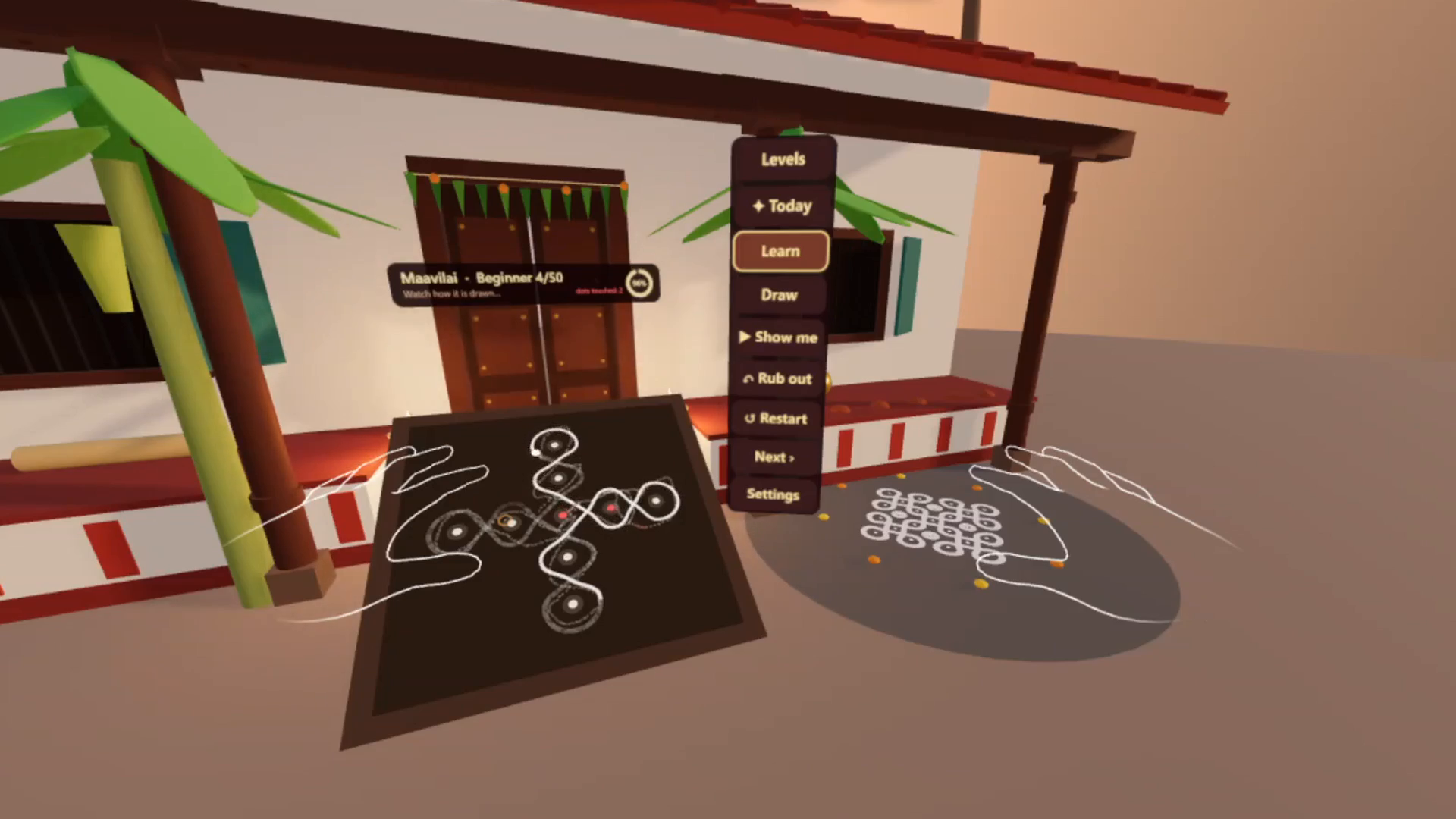
The Meta VR Glasses view in high contrast, finished with “Beautiful! ★★★”
-
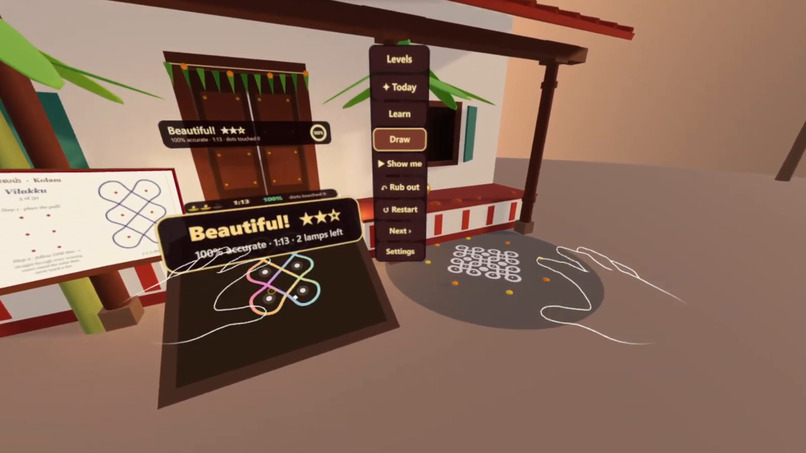
A finished kolam in colour with “Beautiful! ★★★”
-
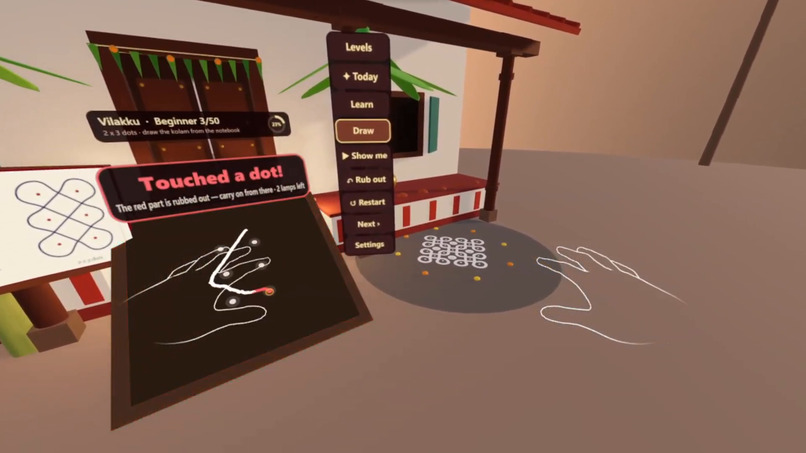
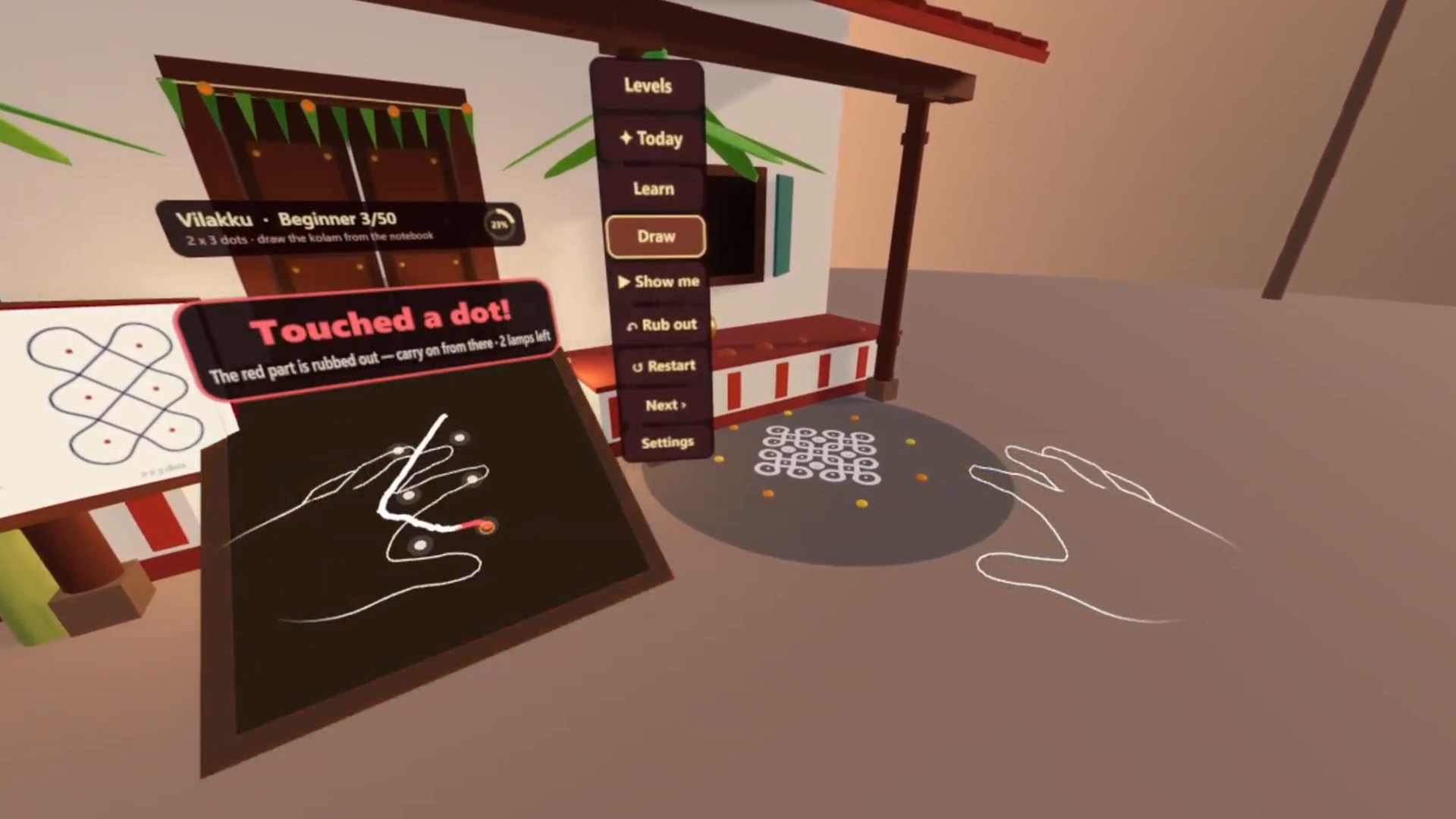
The “Touched a dot!” mistake shown in red
-
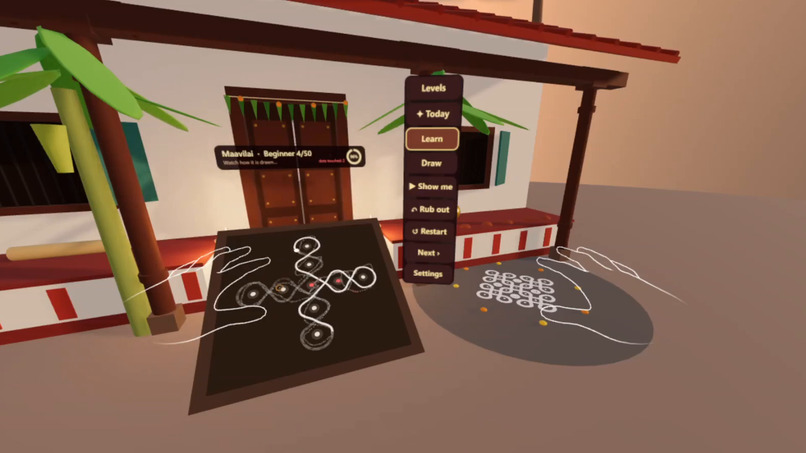
The kolam being drawn with Show me
-
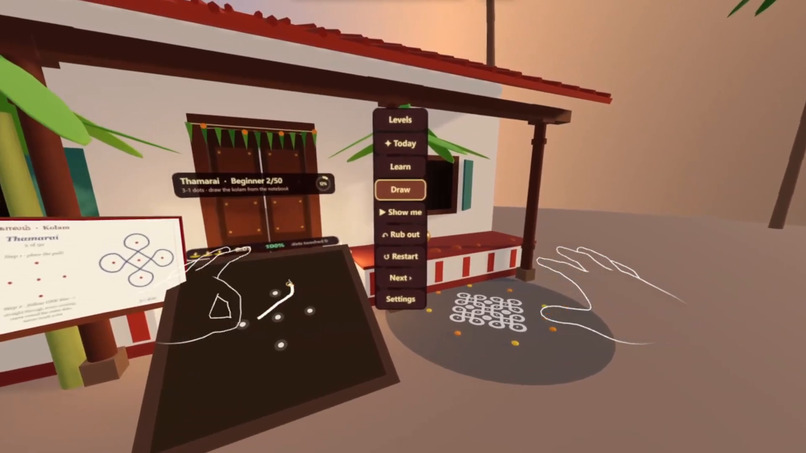
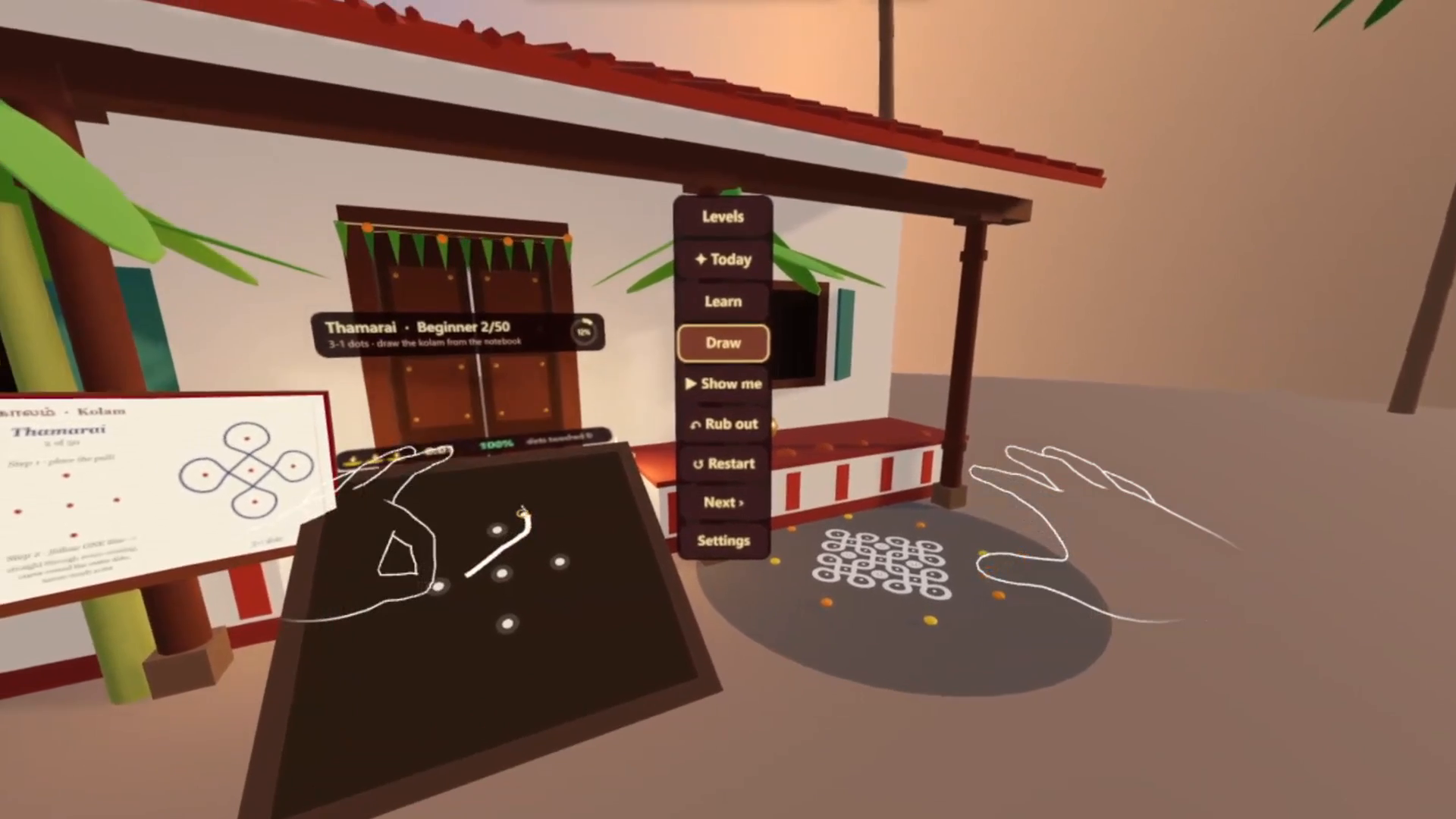
Drawing a kolam with your hand, copying from the notebook
-
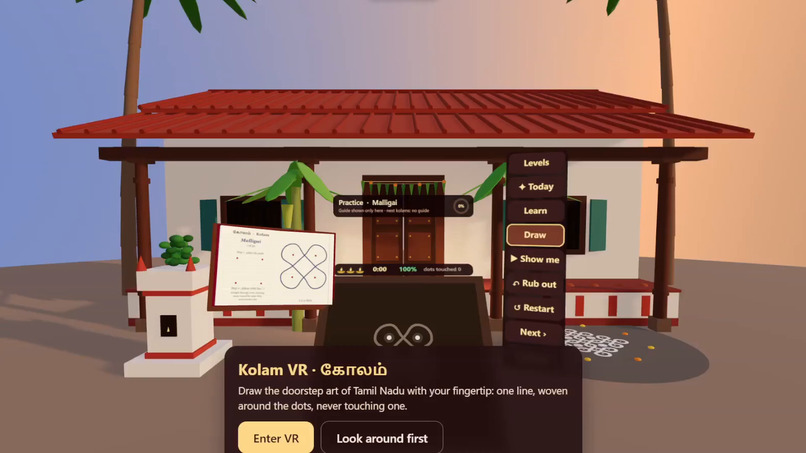
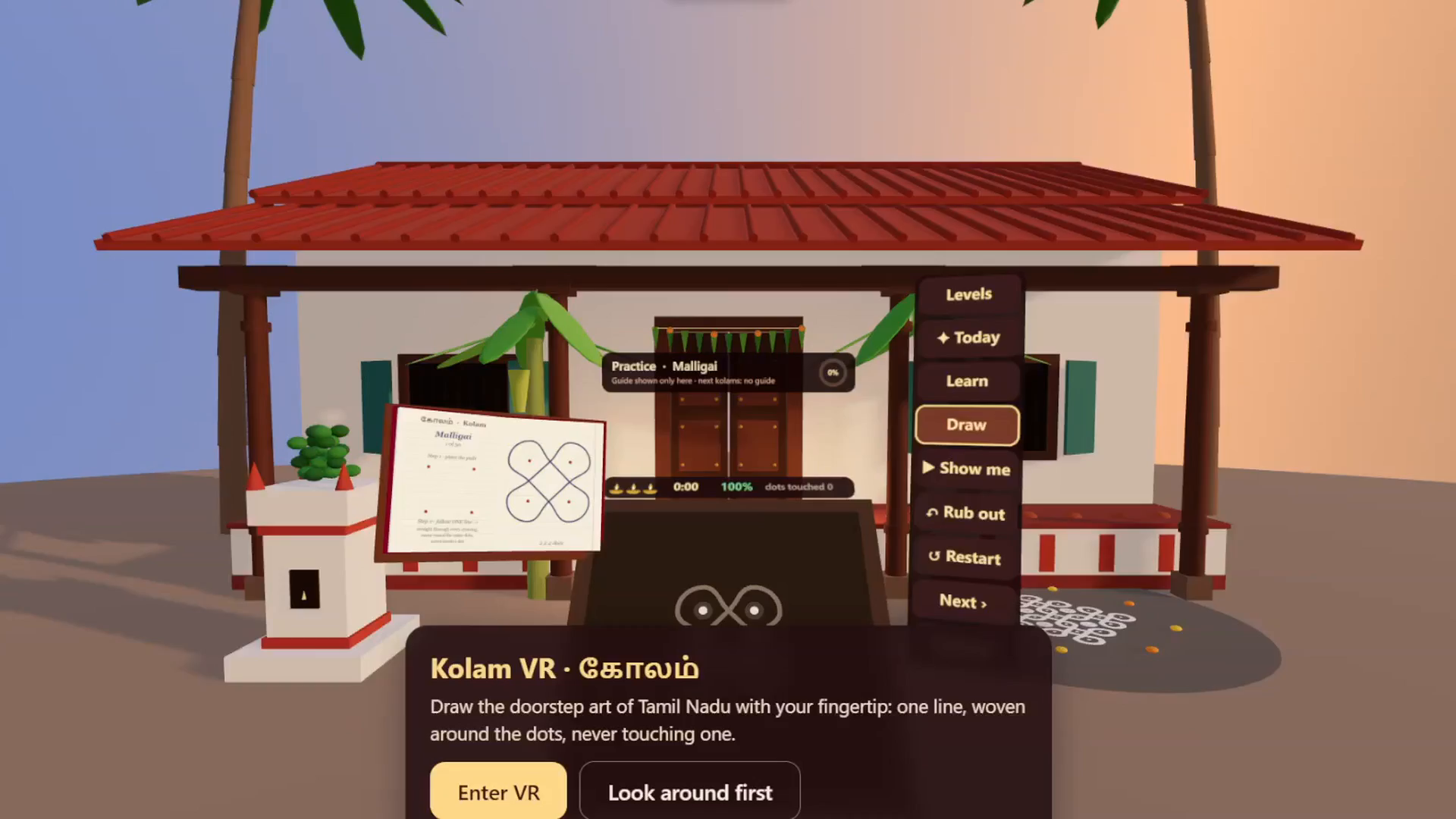
The Tamil house at dawn with the Kolam VR start card
Inspiration
Every morning across Tamil Nadu, India, and in Tamil homes worldwide, millions of people step out at dawn and draw a kolam at their doorstep: a grid of dots and one flowing line of rice flour that loops around every dot without touching one. It is art, mathematics and meditation in a few quiet minutes - all done with a pinch of thumb and finger. That pinch is exactly the gesture Meta's hands-first devices are built around, so we asked: what if the most natural VR input were also an age-old daily drawing ritual?
What it does
You sit at the doorstep of a traditional Tamil house at dawn. Dots lie on the ground in front of you and a family notebook shows the kolam. Pinch and draw: rice flour falls from your fingertips. Follow the real rules - one line, straight through every crossing, never touching a dot. Three lamps are your lives: a mistake glows red, a warning says why, and only the wrong part is rubbed out. A short practice kolam teaches you in a minute; then 50 original kolams in four stages, stars, "Show me" when you're stuck, and Today's kolam - a new one every day, with your streak lit as clay lamps on the doorstep.
Hands-first, seated and quick
Everything works with bare hands, end to end: draw by touching the ground or pointing and pinching; press buttons by touching, pointing, or looking and pinching on Meta VR Glasses. It is played seated, within arm's reach, and a kolam takes one to five minutes - a complete moment in a short ride. Progress is saved, so you can stop and come back anytime. It runs on Meta Quest 3 and Meta VR Glasses from one web link, with the layout fitted to the glasses' narrower view. High contrast, bigger lines, left-handed layout and adjustable ground height make it open to more people.
How we built it
Immersive Web SDK (WebXR), Three.js and TypeScript, hosted on Vercel. Every kolam is generated by our own code from the traditional "mirror curve" rules. A line-following judge knows which line your finger is on, so it can tell a correct crossing from a jump to the wrong line, catch a touched dot, and spot scribbles. An automated play-tester drew every kolam with simulated hand wobble to tune it: normal shake is forgiven, real mistakes are not. The house, ground and all sound - birds, the hiss of flour, a temple bell - are made in code.
Challenges
Getting the judge fair: "close to some line" is easy to fool in a dense weave, and hand tracking wobbles. We learned that a mistake must be shown, not just scored - players accept strict rules once they can see what went wrong.
What's next
Mixed reality on your real floor, family mode for drawing one kolam together, a 30-day Margazhi festival calendar, free-draw and sharing, and Tamil and English voice guidance.
Built With
- immersive-web-sdk
- three.js
- typescript
- vercel
- vite
- webxr
