Inspiration
As a young adult, I struggle to keep track of my finances, and many of us face the same issue. Overspending on things that aren't that important and being broke at the end of the month is a very common struggle. My own irresponsible behavior toward money is what inspired me to make this app.
What it does
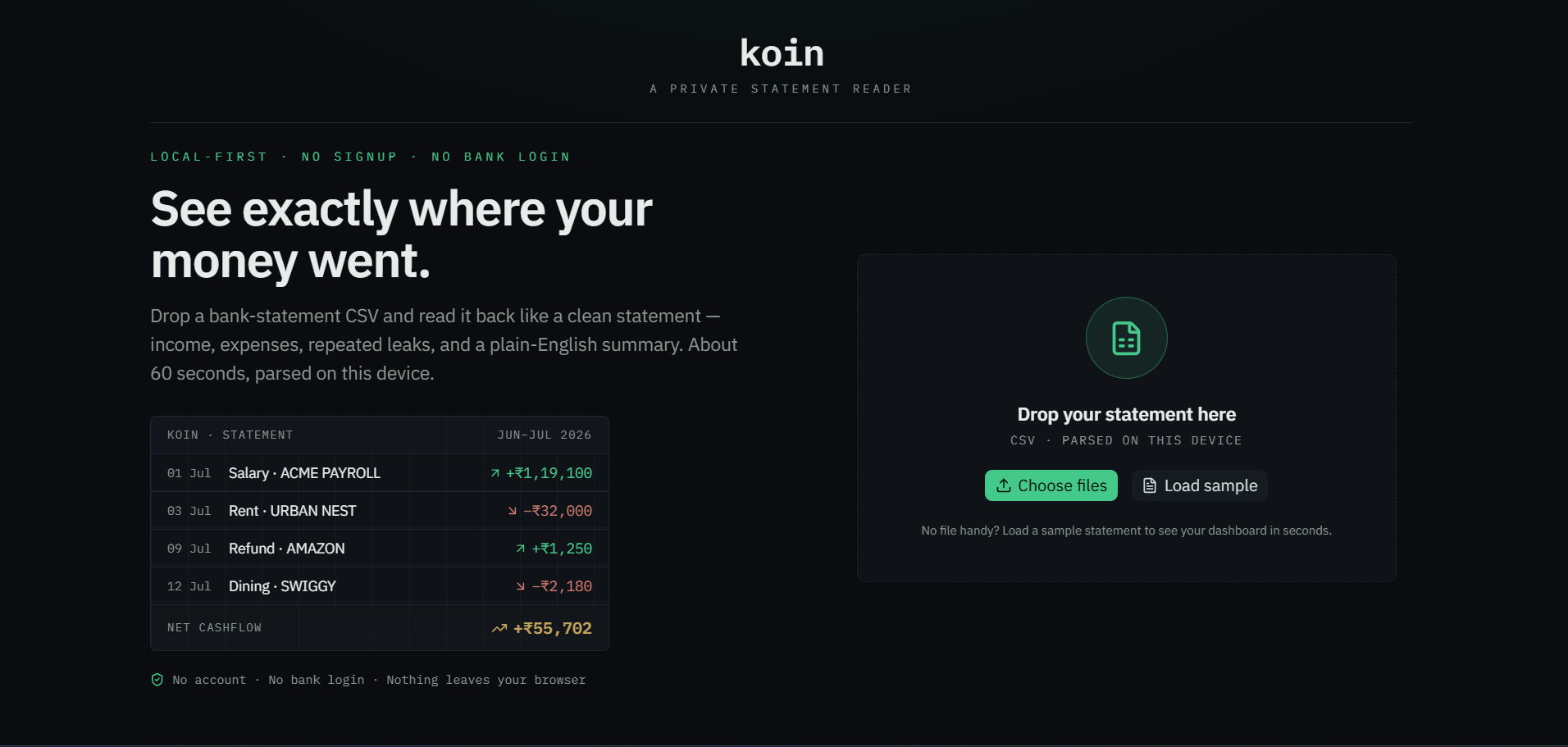
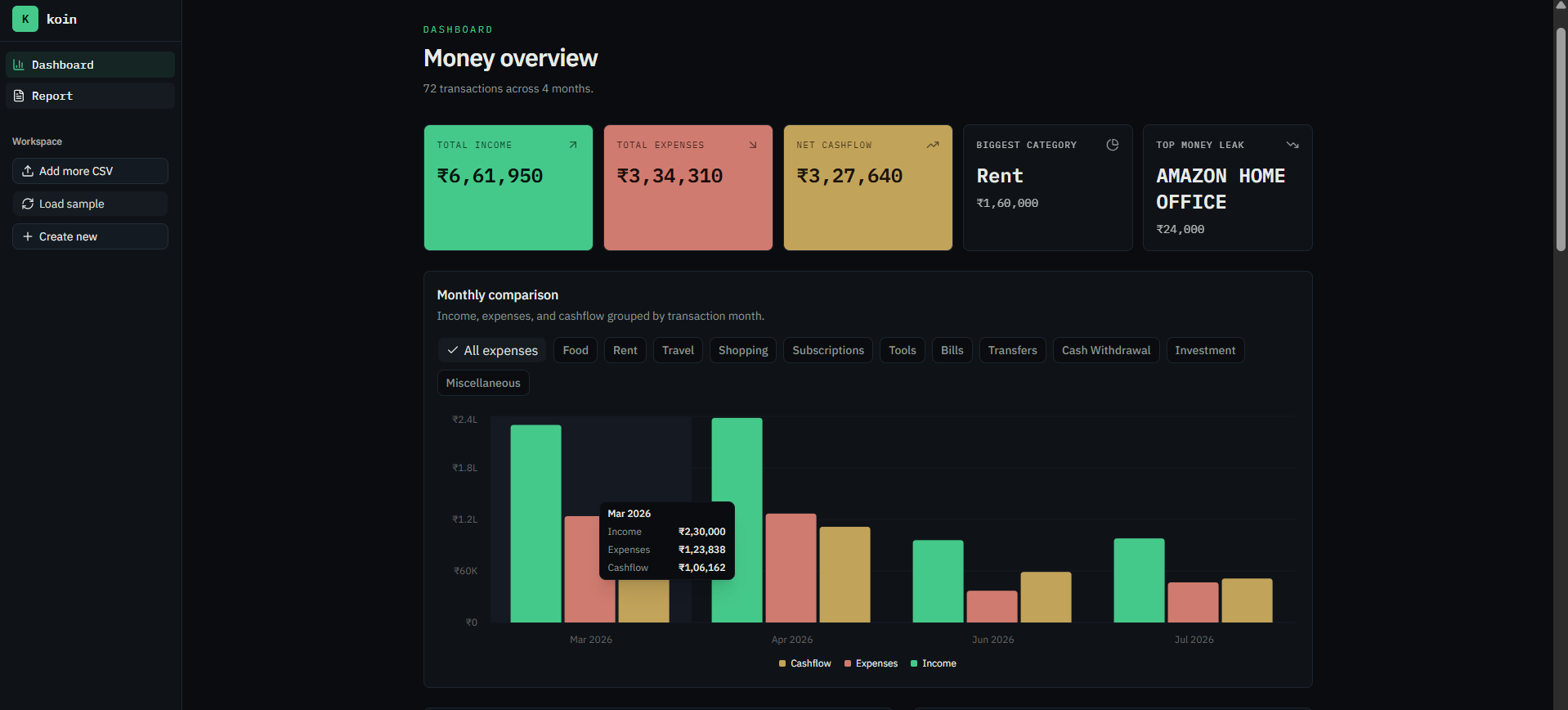
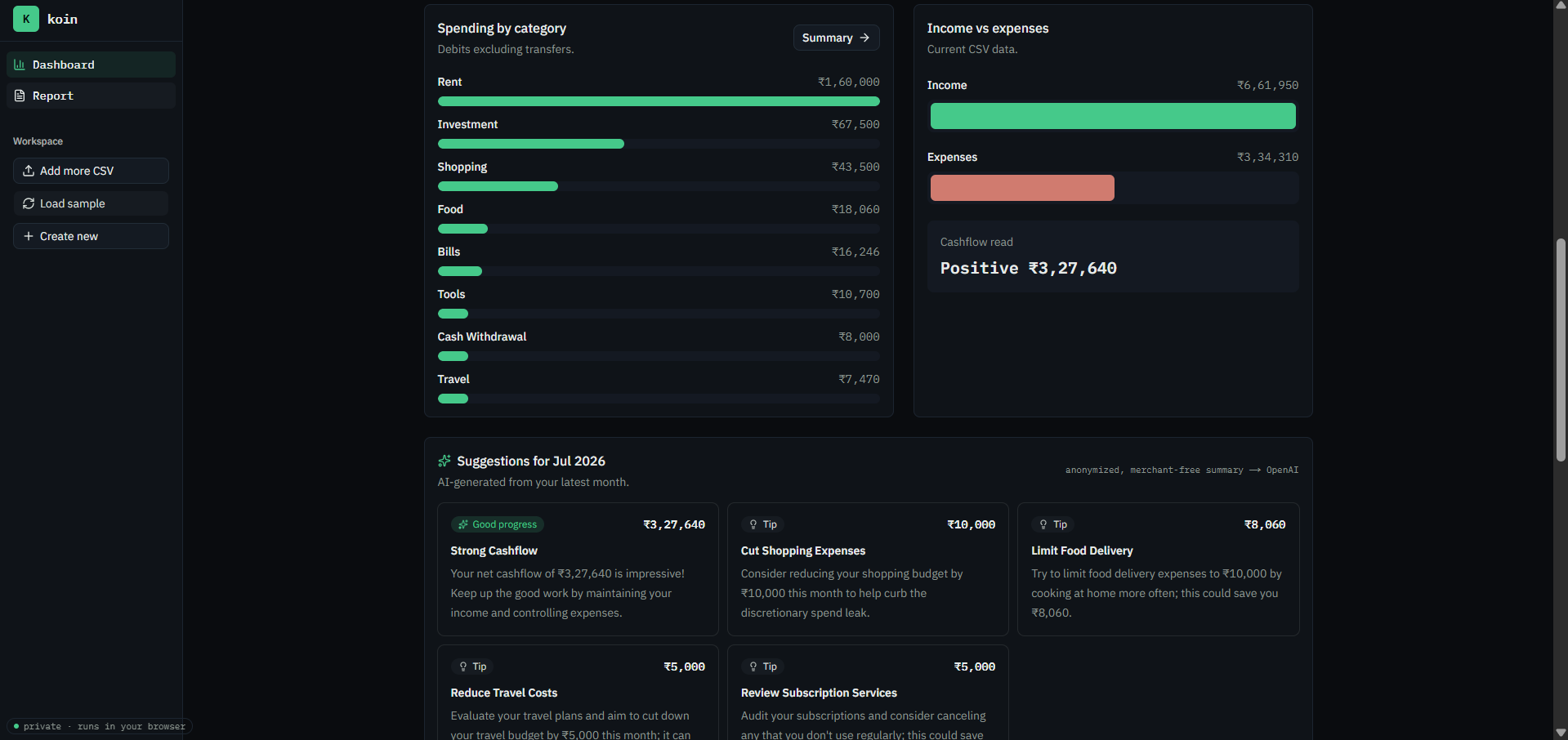
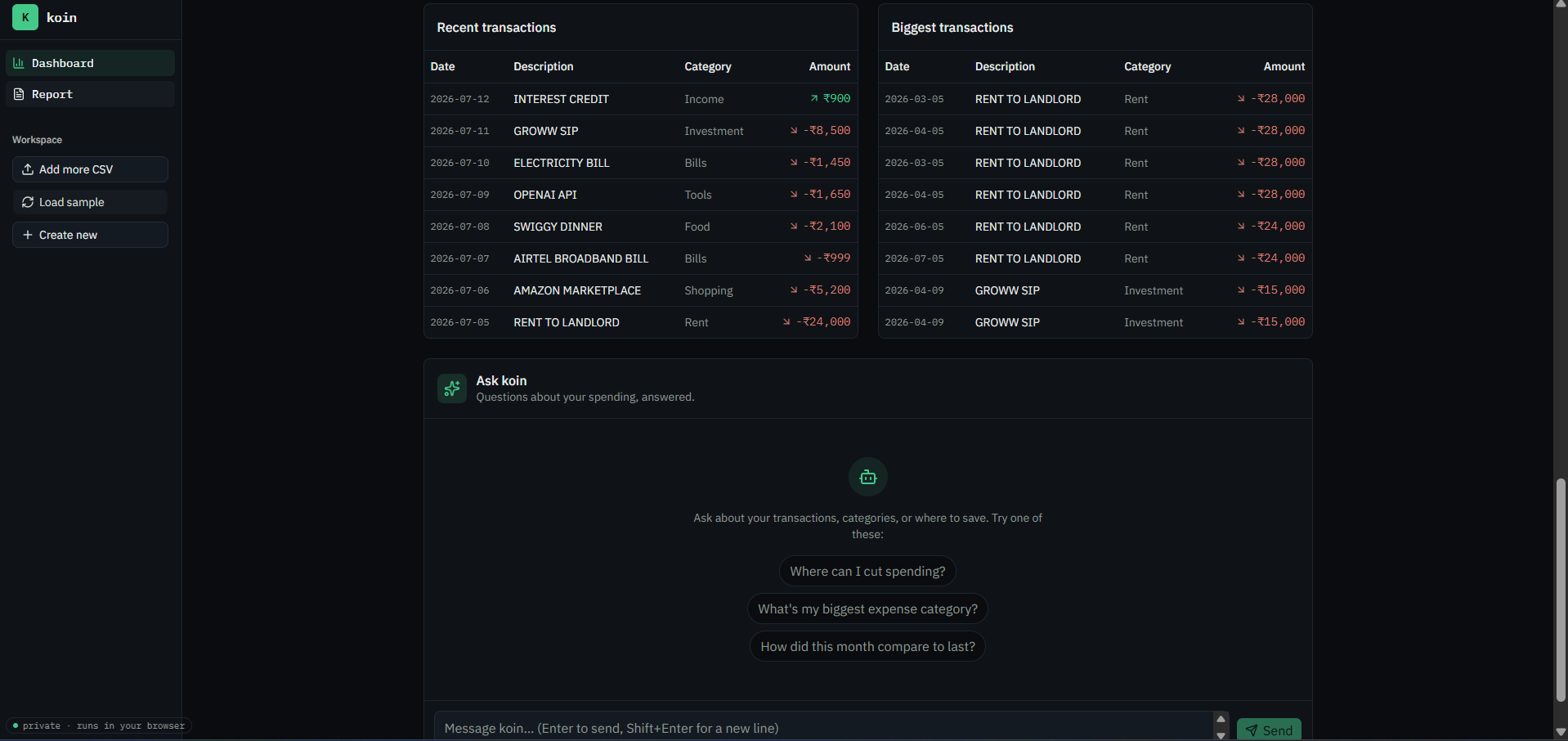
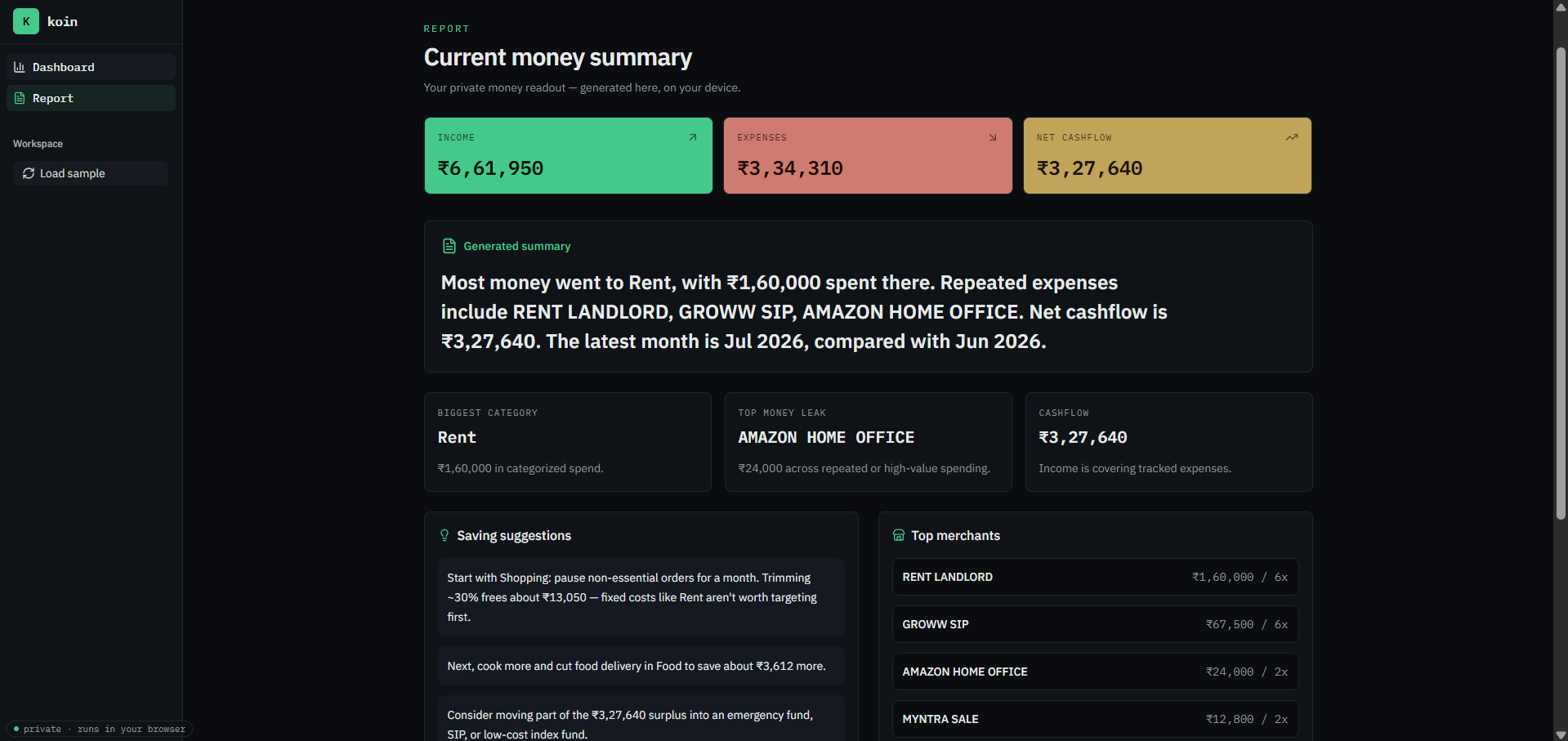
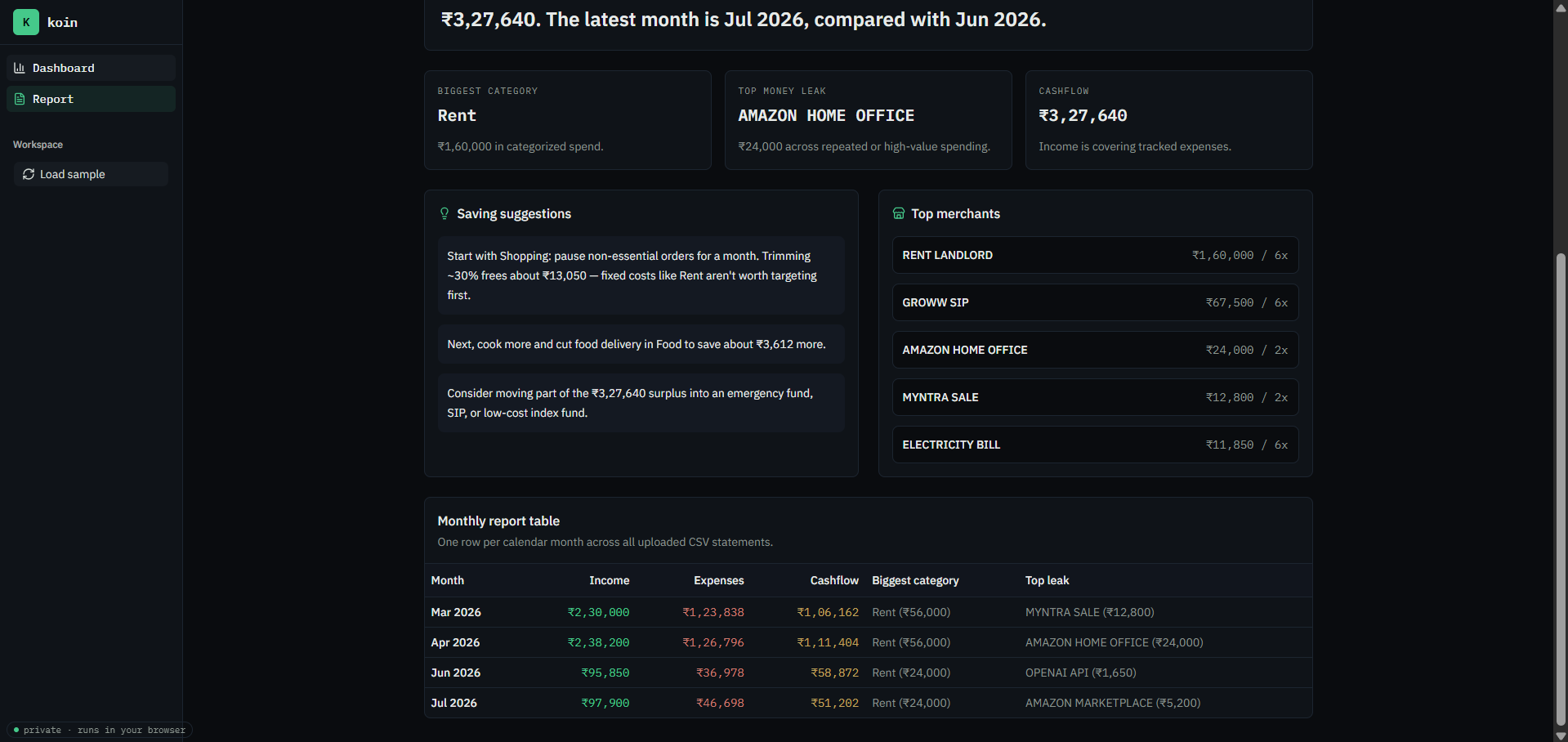
Users can upload their CSV files (one or multiple). The app extracts the data and shows clear bar charts of your expenses, salary, and cash flow. It even compares months side by side, so you can keep track of what you spend on food, travel, subscriptions, and more. It also has an AI-based suggestion box that recommends ways to save money based on your own CSV, plus an AI chatbot that helps with all kinds of financial advice (just not the illegal kind) and helps you understand finance and investing.
How we built it
The user drops in one or more CSV files and everything happens right inside the browser: the app reads the file, sorts each thing you spent on into groups (food, rent, travel, subscriptions, and so on), and turns it into simple charts and a month-by-month comparison and your statement never leaves your device. I built it as a Next.js app, and all your data stays saved in your own browser. No account, no sign-up, no bank login. The only thing that ever gets sent out is a small, safe summary (just the totals, no shop names or people), and that's what the AI uses to give you saving tips and answer your money questions. So you get good advice, but your real statement stays with you. I also used AI tools like Claude to help me build it faster.
Challenges we ran into
The main challenge was keeping the app trustworthy for users while still delivering quality results from minimal data. A couple of the issues I faced here were keeping the CSV data separated by month so it wouldn't mix together, even when everything was provided in a single CSV. Another was prioritizing the areas where users can actually save money, without suggesting they cut basic needs that are non-negotiable, like rent and groceries.
Accomplishments that we're proud of
Bank statements can be complicated, and I'm proud that Koin gives users instant results from raw input with no data leaks and complete respect for privacy. Another thing I'm proud of is the AI chatbot that respects your privacy and holds the moral high ground while helping you financially in every way possible.
What we learned
I learned way more than I thought I would. The biggest thing is that for a money app, the most important part isn't the charts or the AI it's trust. People won't upload their bank statement if they're scared it'll end up somewhere bad, so the whole goal became giving them real help while keeping everything private and on their own device. That honestly changed the way I think: you have to deal with the user's worry first, then add the cool stuff.
I also learned that real bank files are messy. Every bank saves its CSV a different way, the dates and amounts come in all kinds of shapes, and just keeping each month separate was harder than it looked. On the AI side, I learned how much the words you give it matter getting the chatbot to actually help with money but still say no to gambling or anything illegal, and getting the tips to cut from the right things (like subscriptions, not rent), took a lot of trial and error.
And on a personal note: building Koin made me way more careful with my own money. Seeing it all laid out in plain numbers is a little scary, but really helpful.
What's next for Koin
Next, I'm thinking of letting users upload PDFs and screenshots as well. Another thing I want to add is making it personal. I believe every person has different non-negotiable needs and spends accordingly. For example, women need tampons and pads, some people are on medication they have to pay for, some send money to their parents or siblings, and some pay for tuition or hobbies. These things are non-negotiable, so the next goal is to make the app much more personalized.
Built With
- nextjs
- novus
- openai
- typescript
- vercel


Log in or sign up for Devpost to join the conversation.