-
-
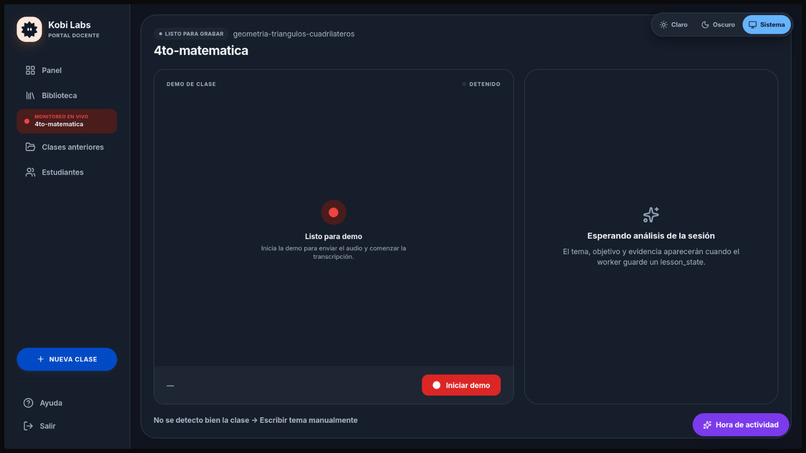
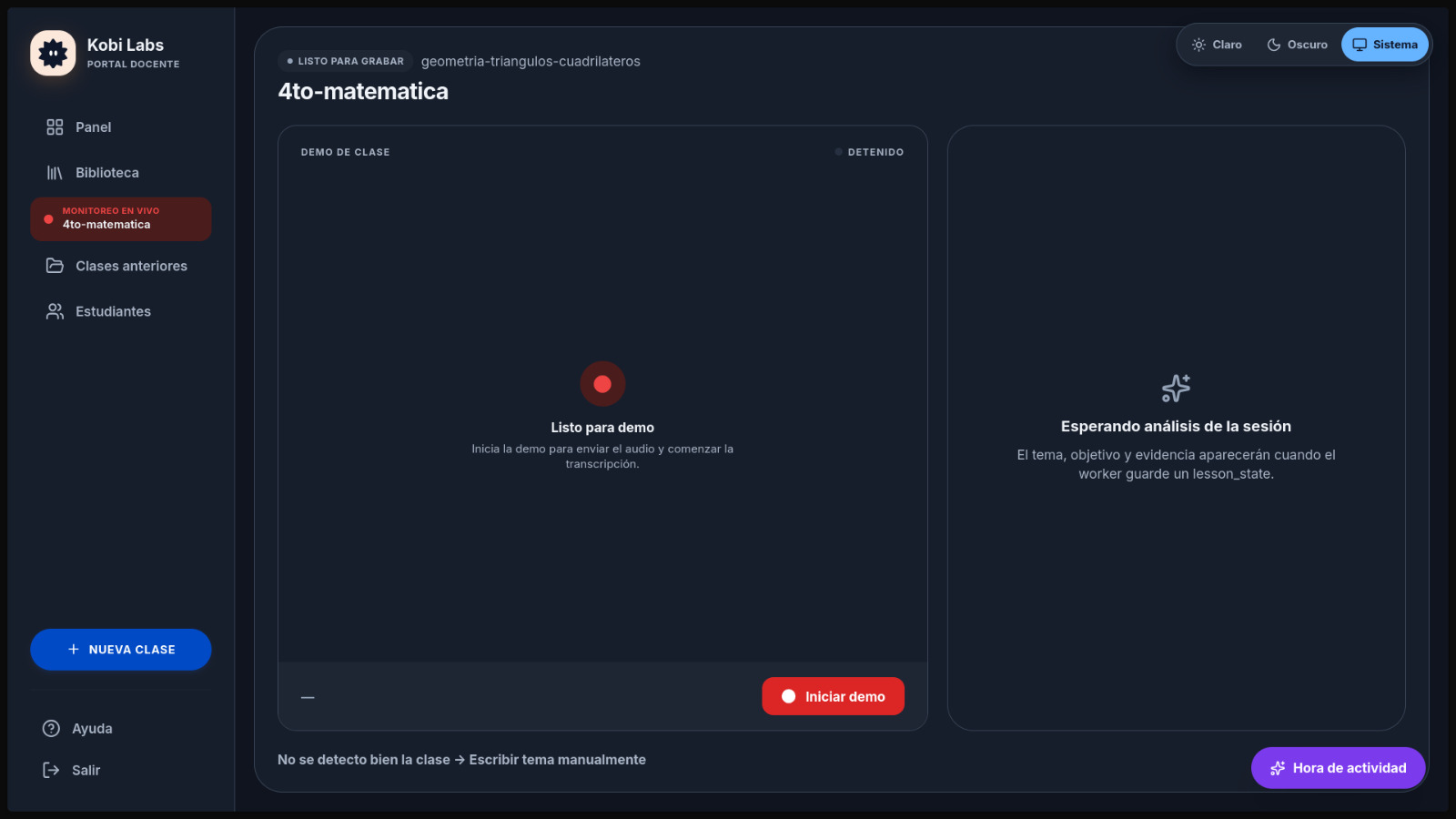
This is our main interface where teachers record
-
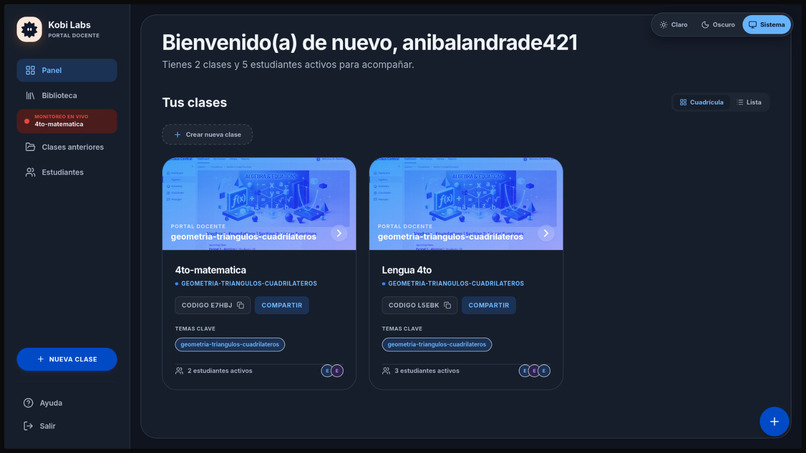
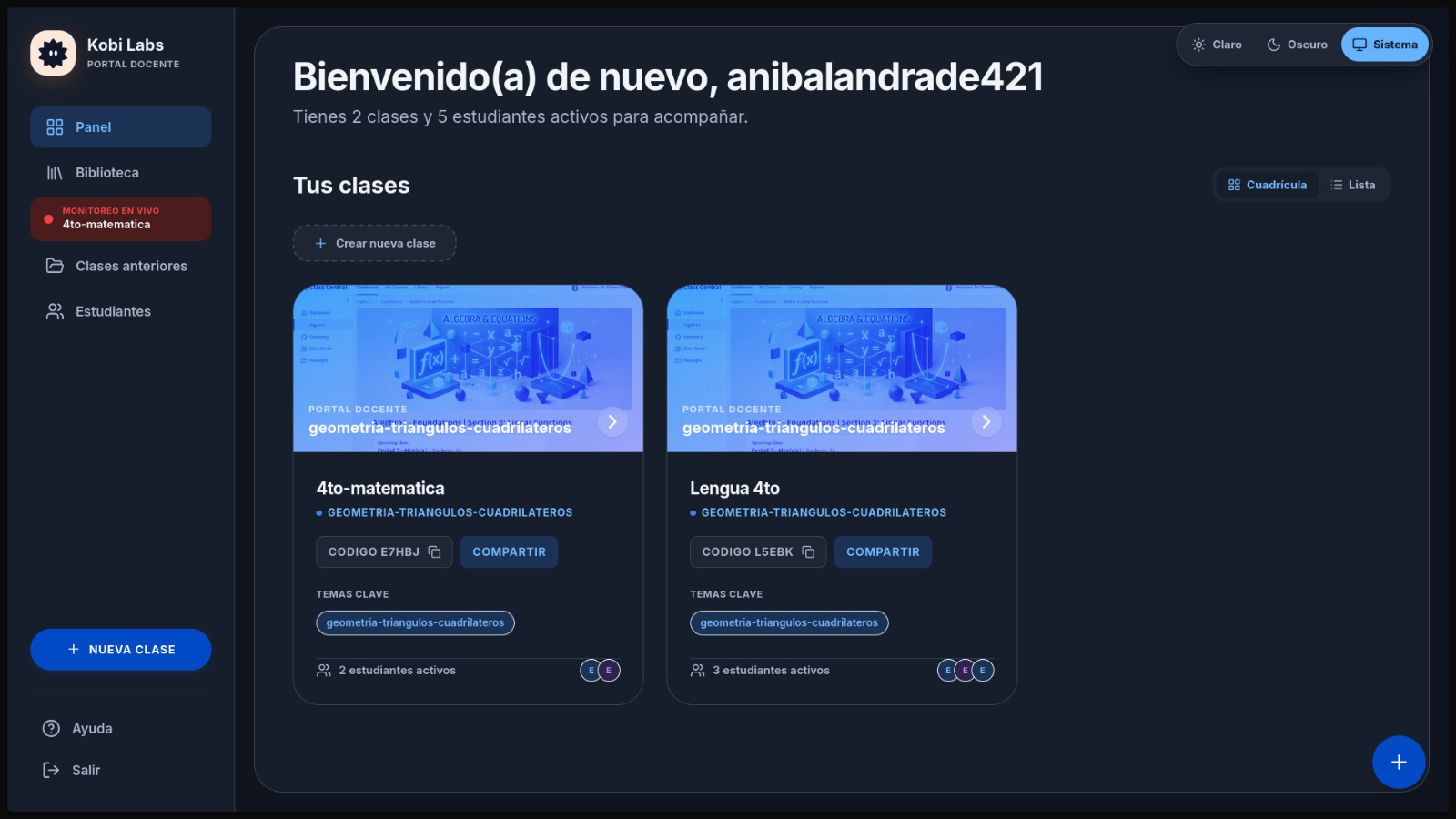
Teacher can manage class
Inspiration
Teachers often finish a class knowing that students need practice, but they rarely have enough time to create a personalized activity on the spot. Kobi was inspired by the idea of turning the last 10 minutes of any class into a useful, curriculum-grounded activity block with zero teacher prep. Instead of asking teachers to plan more, Kobi listens to what is already happening in class and helps transform that lesson into immediate practice.
What it does
Kobi helps a teacher run an end-to-end classroom activity from a live lesson. The teacher starts a class session, Kobi listens to the lesson, builds a rolling understanding of the topic, matches it to the selected textbook unit, and proposes activity options. The teacher reviews and approves one activity, then students receive it instantly on their devices. After students complete it, Kobi shows a session report with completion and correctness data.
The core loop is:
Listen → Understand → Propose → Approve → Deliver → Measure
How we built it
We built Kobi as a TypeScript-first product using a Next.js web app, a Node.js worker, and Supabase as the shared data backbone. The web app handles the teacher portal, student portal, API routes, activity player, and live classroom UI. The worker handles audio processing, transcription, lesson-state generation, curriculum retrieval, activity generation, verification, and variant creation. Supabase stores classes, sessions, curriculum chunks, activities, assignments, telemetry events, and student profiles.
A key architectural choice was treating activities as structured JSON instead of arbitrary code. That allowed us to validate, render, reuse, and verify activities more safely. For the MVP, we focused on three activity families: quizzes, cloze/vocabulary-in-context, and match/order activities.
Challenges we ran into
One of the biggest challenges was keeping the product scope small enough to finish, while still making it feel like a real standalone product. Kobi has many possible directions: deep learner modeling, pet companions, cross-school repositories, generative games, and long-term analytics. We had to cut those ideas and focus on the smallest complete loop that could work in a real classroom.
Another challenge was reliability. Live classroom audio, AI generation, and real-time student delivery can all fail in different ways. To handle that, we designed manual fallbacks at every AI stage: if transcription fails, the teacher can enter a short topic summary; if generation is slow, Kobi can reuse pre-seeded repository activities; and if personalization is too risky, the system can fall back to a core variant.
Accomplishments that we're proud of
We are proud that Kobi is designed as a real classroom workflow, not just a demo. The teacher approval gate, curriculum grounding, generic activity player, student delivery, and telemetry report all work together as one product loop.
We are also proud of the activity architecture. By making activities schema-validated JSON, we created a foundation where content can be stored, checked, reused, improved, and eventually shared. That means every activity generated today can become part of a future repository, making the next class faster and cheaper to support.
What we learned
We learned that the hardest part is not just generating content with AI. The harder problem is making AI useful, safe, and trustworthy inside a real classroom workflow. Teachers need evidence, control, and the ability to approve or edit before anything reaches students.
We also learned that personalization should start simple. Instead of pretending to have a deep learner model from day one, Kobi uses support, core, and challenge variants based on teacher-editable student bands. This gives real differentiation while keeping the system measurable and understandable.
What's next for Kobi
Next, we want to expand Kobi beyond the MVP loop. The first step is improving activity quality, adding more curriculum units, and strengthening the repository so Kobi can reuse and adapt past activities more often.
After that, we want to add richer activity types, deeper student profiles, longitudinal analytics, and eventually more interactive experiences. One future direction is generative HTML/JS artifact activities: self-contained interactive mini-apps rendered safely inside a sandboxed player. That would allow Kobi to move beyond fixed quiz-style activities while keeping the same approval, delivery, and telemetry workflow.
Built With
- ai
- classmarker
- classroom
- edtech
- education
- generativeai
- nextjs
- supabase


Log in or sign up for Devpost to join the conversation.