-
-
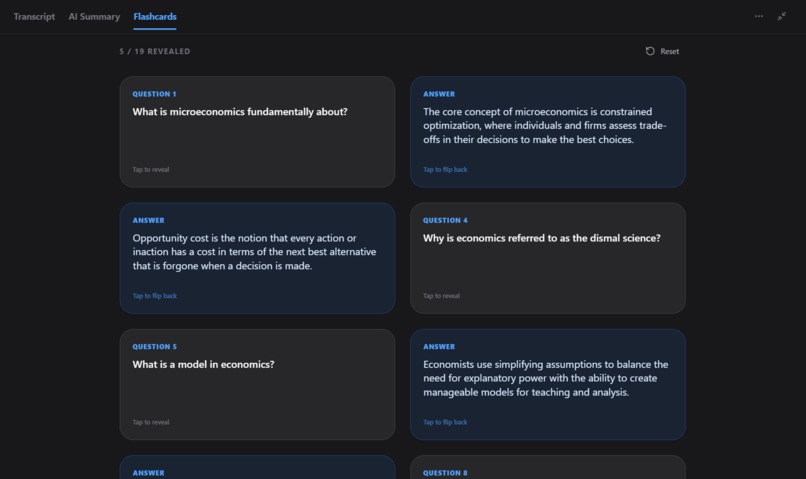
Flashcard Revision
-
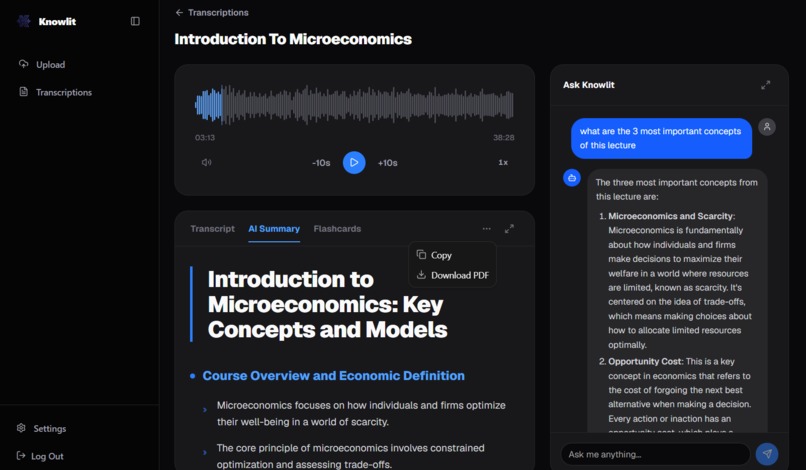
Lecture Workspace
Inspiration
As a student, I was constantly overwhelmed by the sheer long hours of lecture recordings and tutorials, on top of juggling other school commitments such as my clubs. Oftentimes, I find myself rewatching these videos and felt burnout just trying to keep up with my peers. I figured if I could build a tool to streamline this process and help me absorb the contents much faster, I can save hours on my end.
What it does
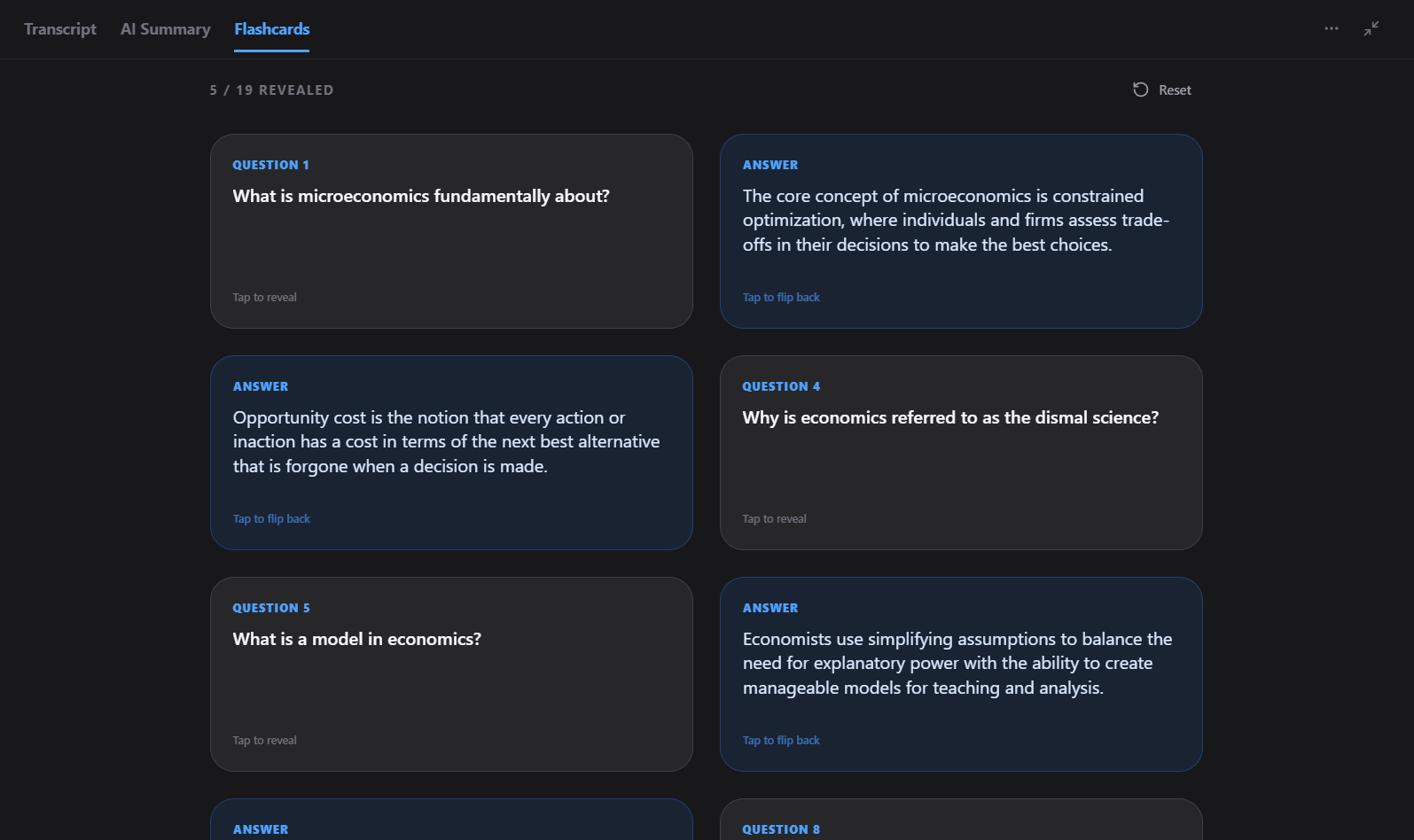
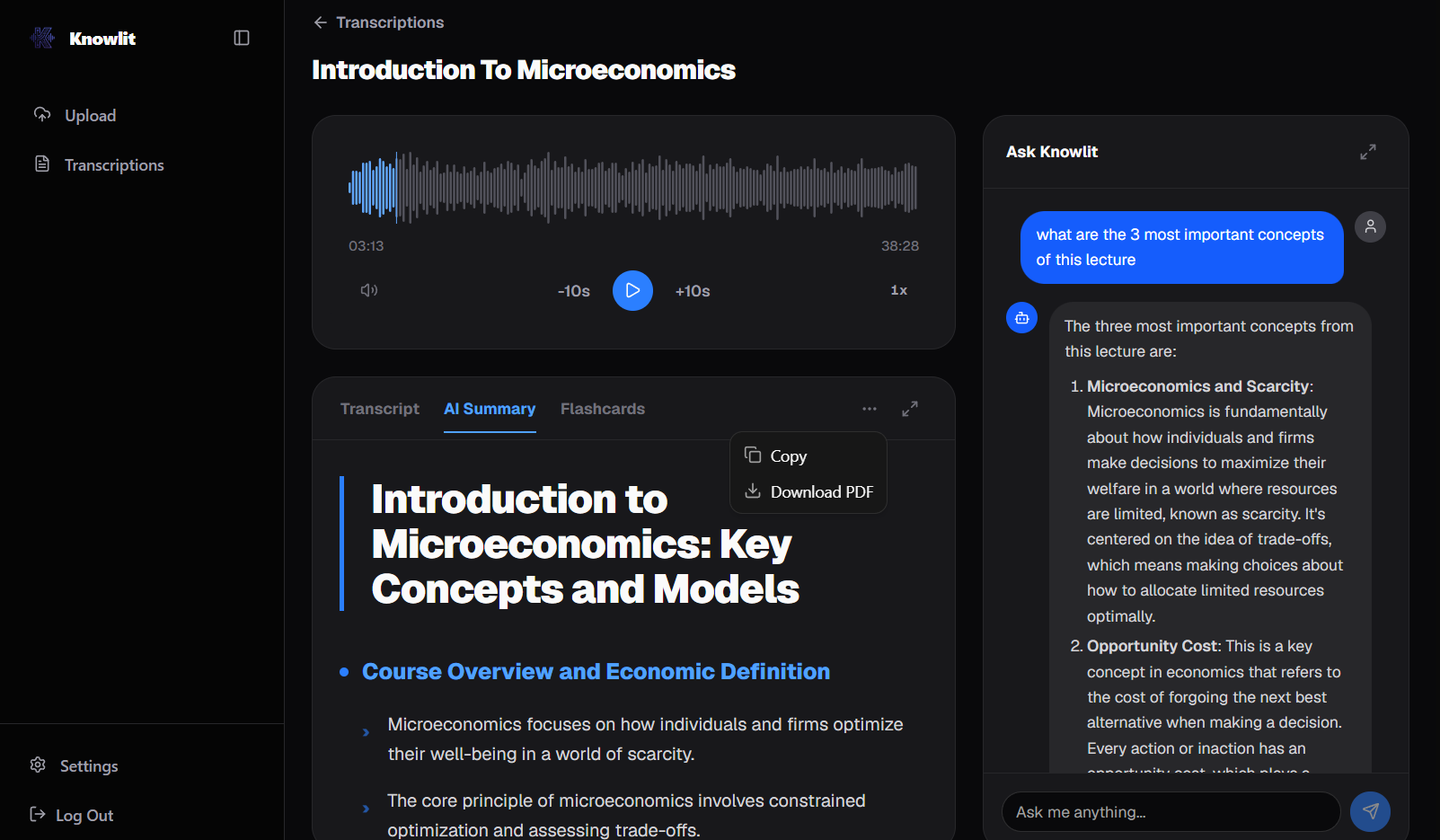
Now, I don't face this struggle anymore. Introducing Knowlit, your one stop learning platform. Knowlit turns lecture videos into study-ready material in three steps: upload a video lecture, and Knowlit transcribes and summarises it. A new feature that I found useful was generating flashcards for quick gauge of understanding. For the cherry on the top, an AI chatbot that understands the lecture content to clarify anything you're still unsure about. The goal is simple: stop taking notes, start learning
How it was built
Tech Stack
- Frontend: Next.js, TypeScript
- Backend: Node.js, PostgreSQL, Supabase, Amazon S3
- Hosting: Vercel
- Models & Providers: Groq Whisper Large v3, OpenAI API
Challenges faced
A big technical challenge I ran into was extracting the audio from video files, especially to support inconsistent formats and codecs of the lecture recordings. Since video files are large, this was also a storage problem. To counter this, I resampled the audio to a lower frequency to shrink file sizes to navigate efficiently through the pipeline.
Beyond the technical side, getting early users to actually try the product was its own hurdle. I got some of my friends to test it out on their own lecture recordings, but they are naturally hesitant to incorporate an unfamiliar tool to their workflow as there was a lack of proper sequence.
Accomplishments that we're proud of
I'm proud of shipping a complete, working end-to-end product, not a demo, but something I can genuinely use for my own university lectures.
What we learned
I learned just how many tradeoffs go into picking the right model for each stage of a pipeline. There's no single "best" model out there to do it all. Balancing speed, cost, and output quality across different providers taught me to think about AI infrastructure as a set of tools rather than a single choice.
What's next for Knowlit
Moving forward, I'll keep using the platform to help me summarise my own university lectures in university and introduce it to the rest of my peers to gather more feedback. If it works out in the long run, I'd love to scale Knowlit into a B2C startup.
Built With
- amazon-web-services
- google-gmail-oauth
- groq
- next.js
- openai
- react
- supabase
- vercel

Log in or sign up for Devpost to join the conversation.