-
-
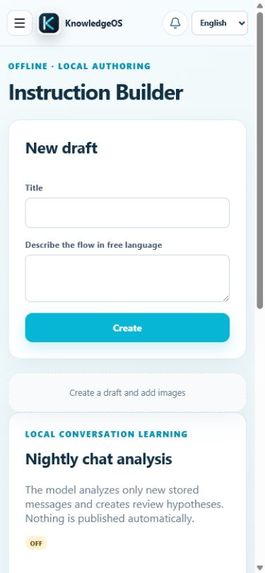
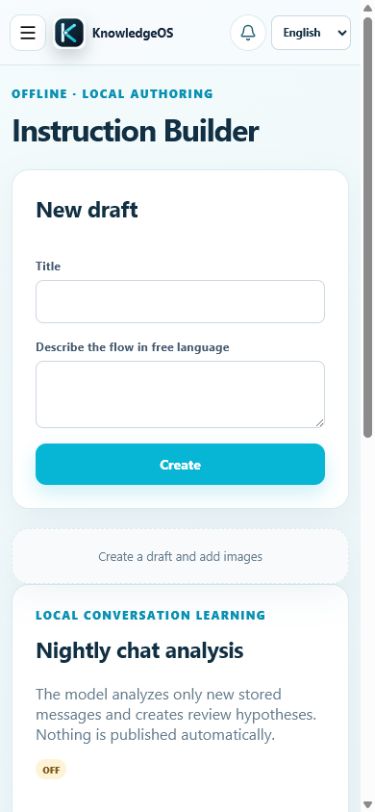
Mobile Instruction Builder — Create procedures from any device
-
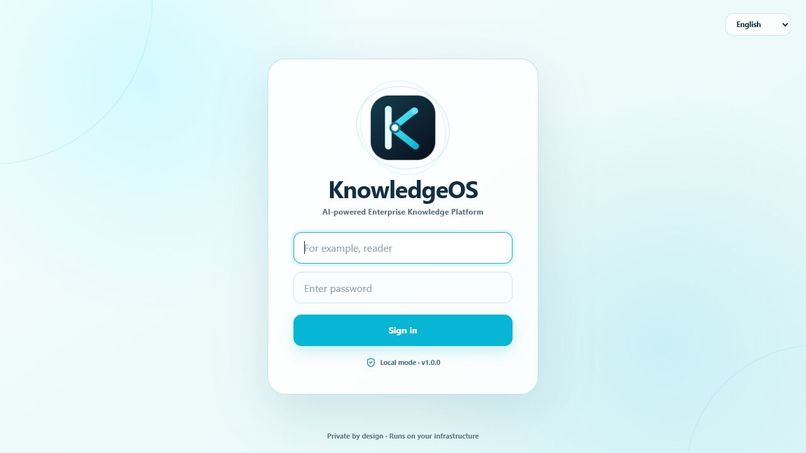
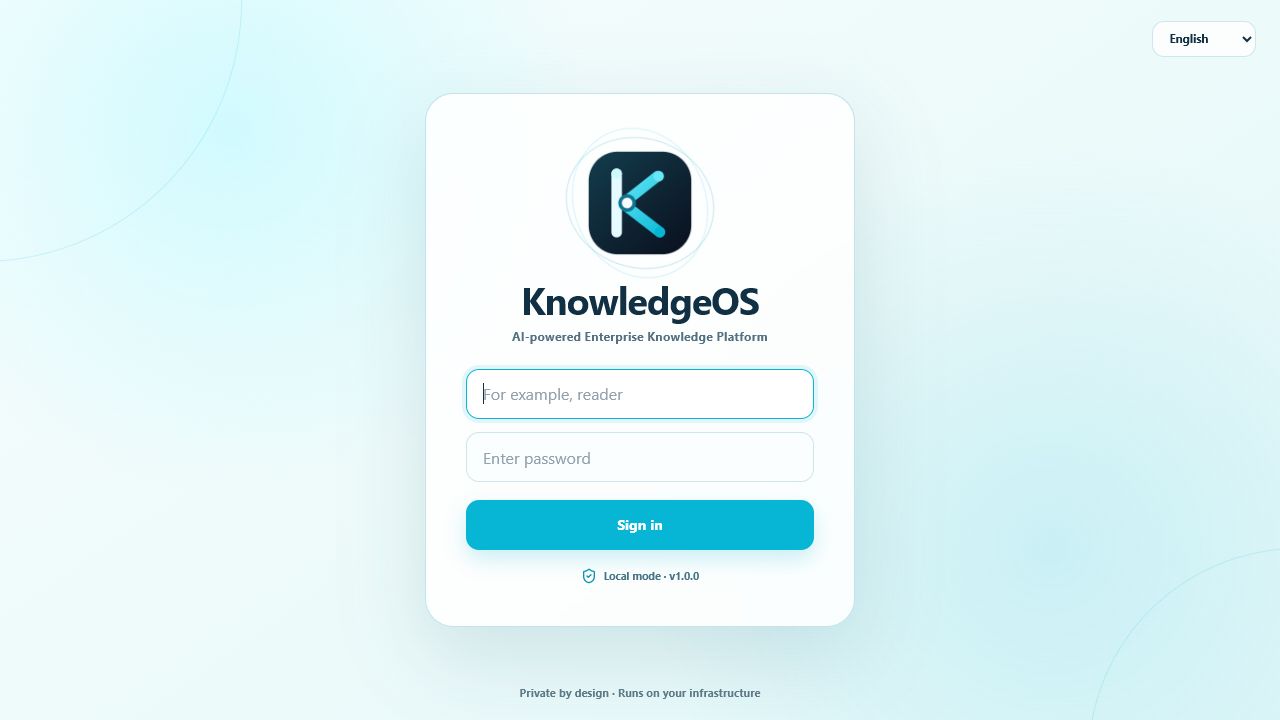
Secure local sign-in — Private access to KnowledgeOS
-
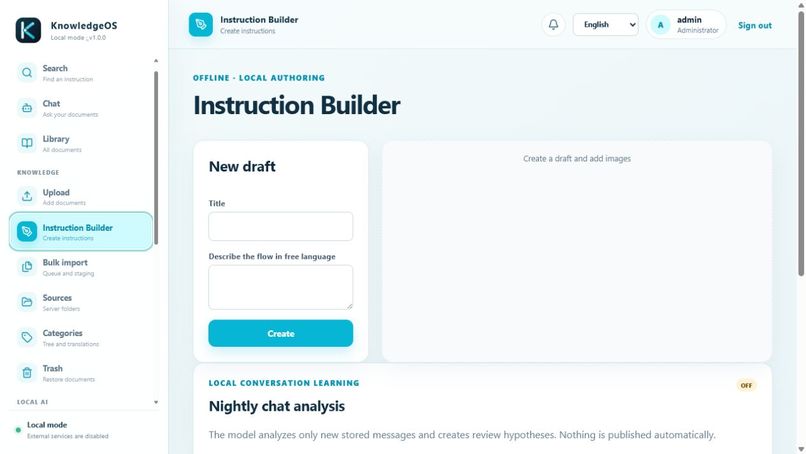
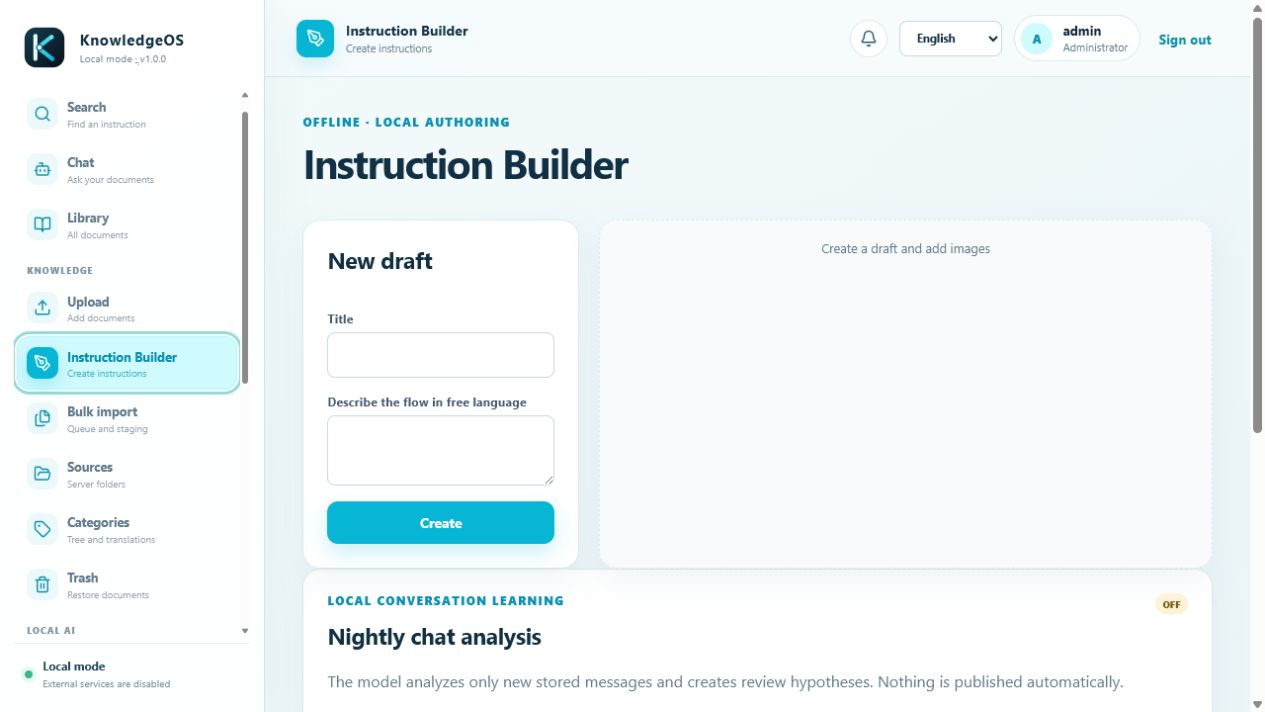
Instruction Builder — Turn knowledge into reusable procedures
-
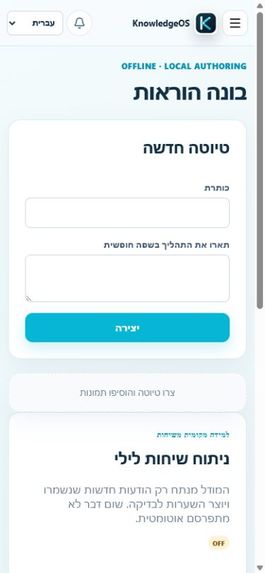
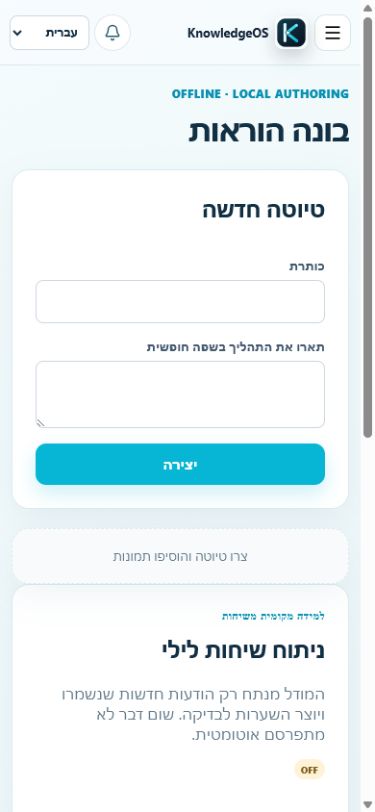
Hebrew RTL interface — Fully localized right-to-left experience
-
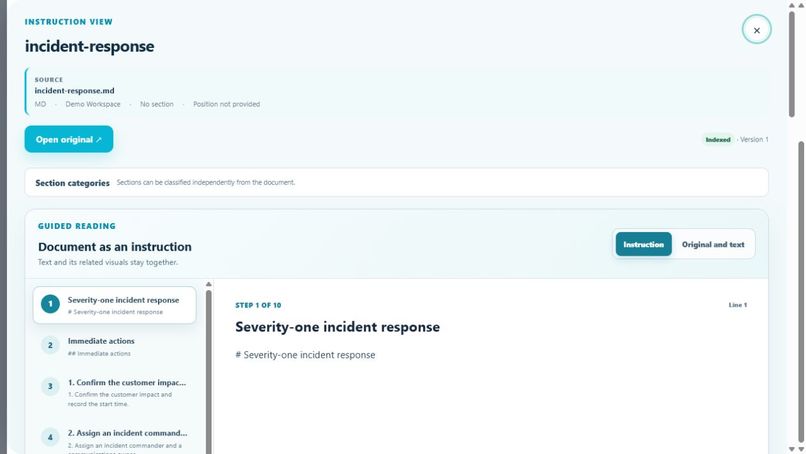
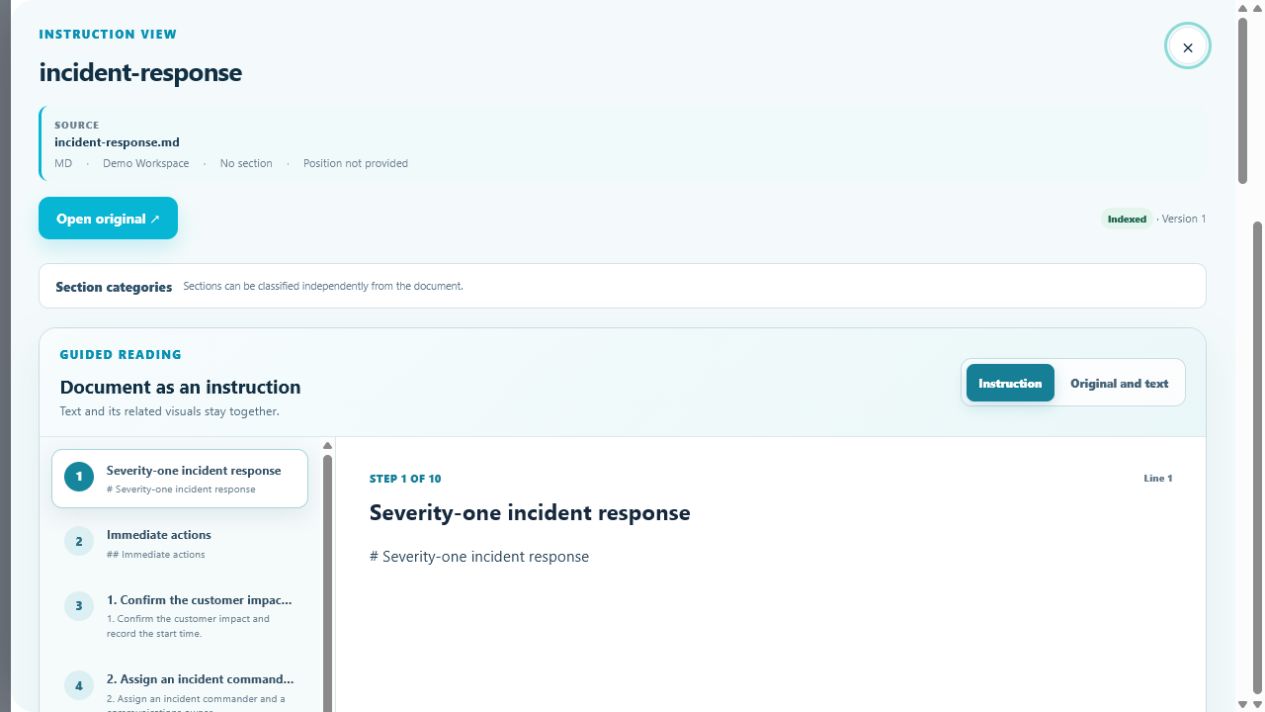
Document Workspace — Review content and source evidence side by side
-
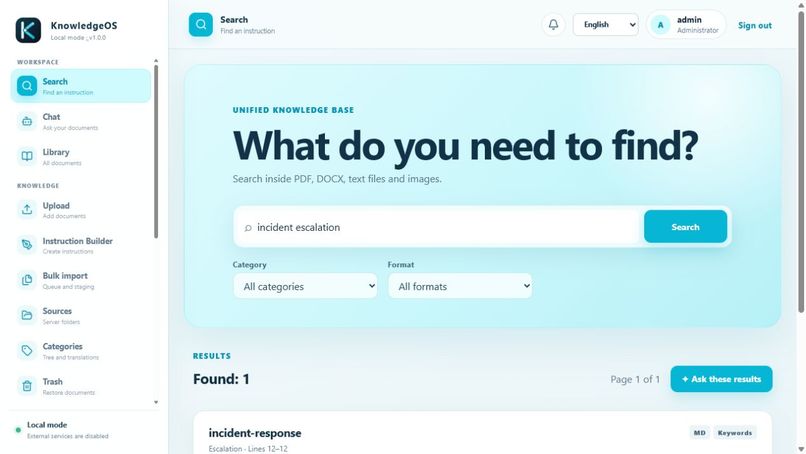
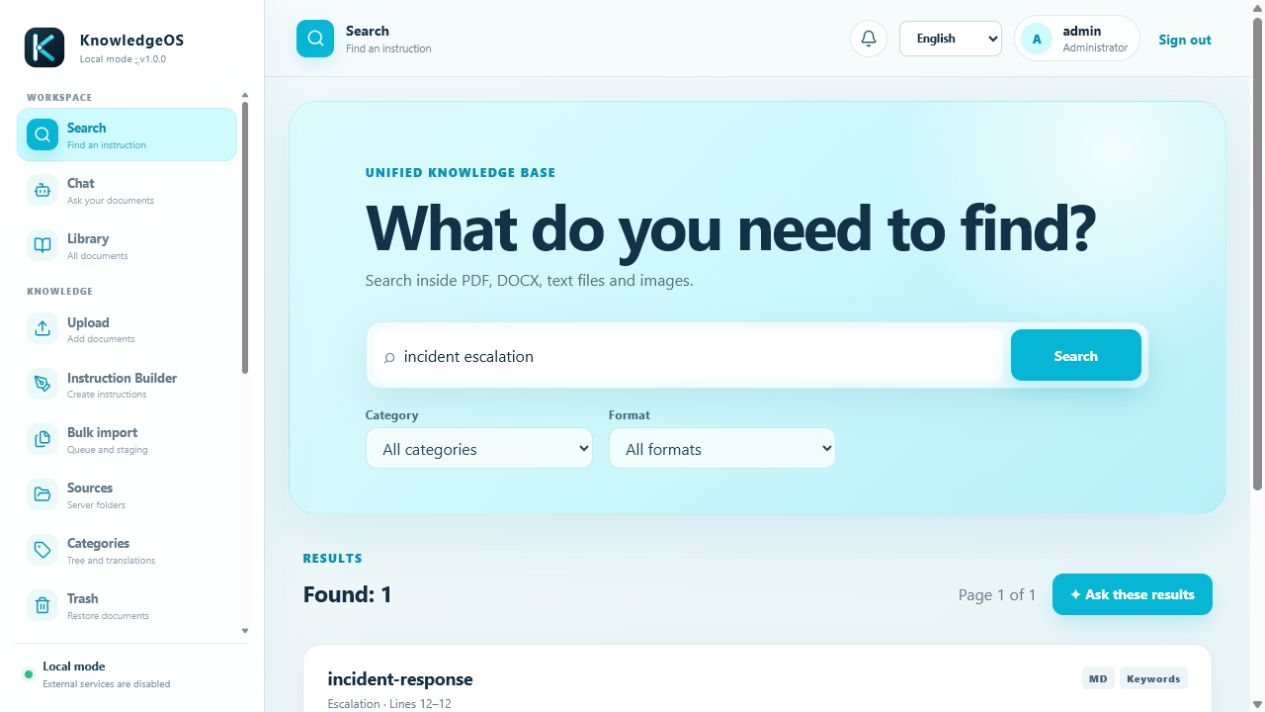
Hybrid Search — Find answers across private enterprise knowledge
-
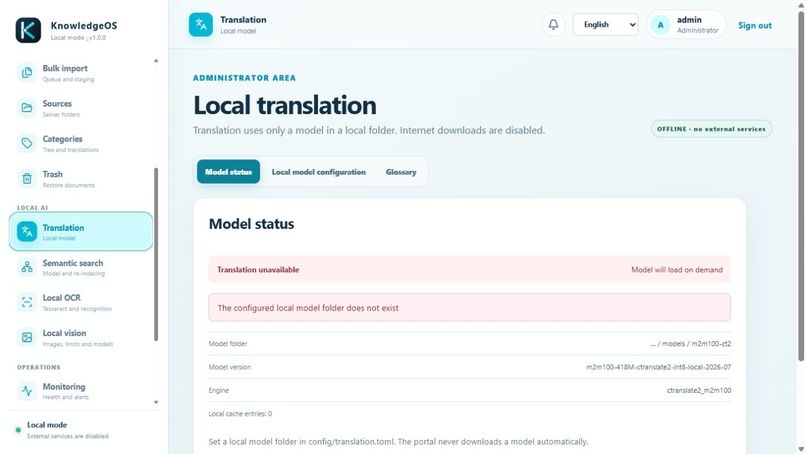
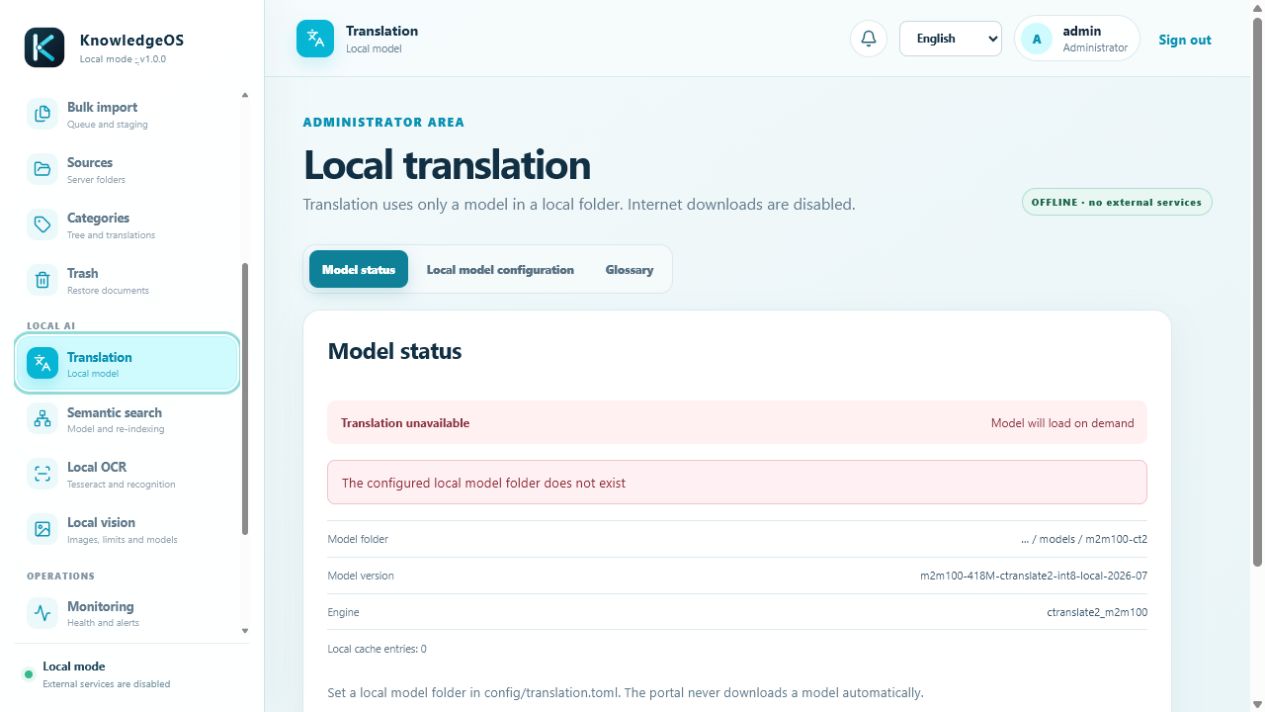
Local Translation — Translate documents without sending data to the cloud
Inspiration
KnowledgeOS began with a practical problem: important knowledge was spread across documents, scans, procedures, and conversations, while sensitive material could not simply be sent to a cloud assistant. The goal was not another chatbot, but a local workspace where every answer could be checked against its source.
What it does
KnowledgeOS ingests documents and images, extracts text with OCR, and combines SQLite FTS5 with optional local semantic retrieval. Users can search, ask questions, inspect citations, translate content, and turn evidence into reusable instructions.
Version 3 adds governed RAG memory, document-quality and audience review, conversation-learning hypotheses that require human approval, shared retrieval safeguards, and a formal AI release gate. Monitoring, persistent alerts, configurable rules, optional SMTP, roles, sessions, audit history, and network controls support local administration.
How the project grew
I defined the idea, real operational constraints, priorities, and acceptance decisions. Codex converted them into architecture, implementation, tests, interface work, and release assets. Each completed feature exposed the next requirement: search needed evidence; chat needed controlled retrieval; a growing corpus needed quality and audience rules; reusable discoveries needed governed memory; automated learning needed human approval; and good-looking demos needed a locked evaluation rather than subjective confidence.
GPT-5.6 Sol concentrated on backend architecture, security, retrieval, tests, and release engineering. GPT-5.6 Terra concentrated on frontend workflows, multilingual and RTL behavior, visual iteration, documentation, and presentation. Development followed an ongoing creator-Codex loop: idea, implementation, real use, discovered limitation, and a safer next design.
Challenges
- Preserving evidence through extraction, OCR, indexing, retrieval, memory, and chat
- Keeping runtime behavior local without automatic downloads or accidental network access
- Supporting Russian, English, Hebrew, and Arabic across complex administrative workflows
- Separating automated suggestions from human authority
- Publishing useful proof without exposing private documents, evaluation cases, databases, or model weights
Accomplishments
- End-to-end local document-to-evidence workflows
- Portable Open RAG Memory packages and a governed Memory Manager
- One authorization and ranking boundary across Search, Chat, and Memory
- Draft, review, and approval states for learned knowledge
- 151 passing backend tests plus independent platform and AI release gates
- A sanitized public release with synthetic demo data
Honest current status
The application regression suite and frontend checks pass. The stricter AI answer-quality gate remains NO-GO because citation completeness, citation correctness, terminology, and required human review have not all met their thresholds. KnowledgeOS is presented as a governed local platform with experimental answer generation, not as a fully qualified autonomous operational assistant.
What's next
- Close citation and terminology gaps on the locked evaluation set
- Complete critical human review without lowering thresholds
- Expand multilingual evaluation and browser automation
- Add enterprise identity, encrypted backups, and collaborative approval workflows

Log in or sign up for Devpost to join the conversation.