Inspiration
I built this during my finals period, where exams were closing in but I did not have the luxury of time to go through every chapter in the textbook one by one. Hence, I was inspired to create a tool that helped transform long pages of text into easy-to-understand graphs (similar to the Zettelkasten method).
What it does
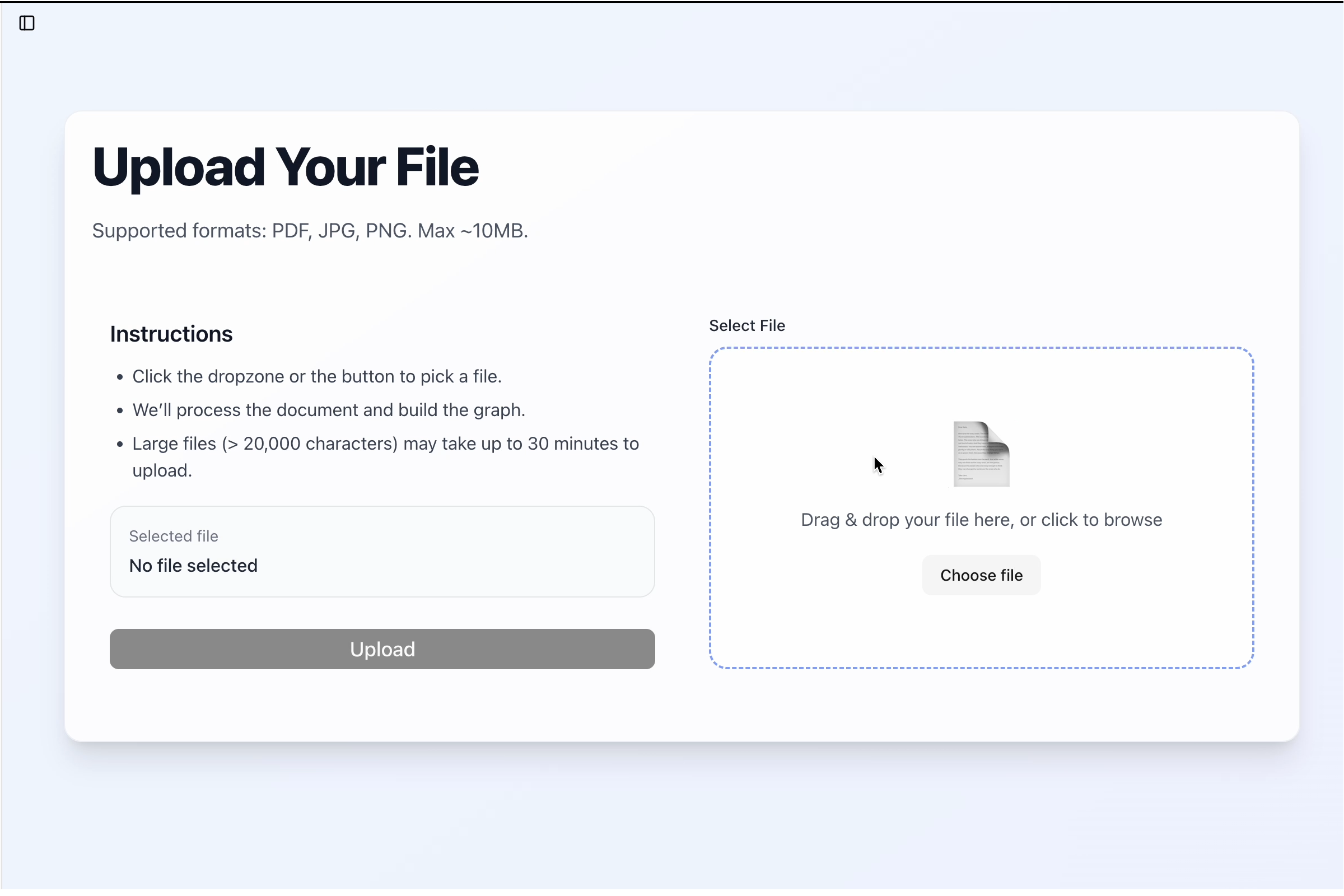
Transforms PDF or image files into graphs where nodes represent entities and links represent relationships between those entities
How we built it
We used Python for the backend since the APIs are most robust and well-supported in Python. FastAPI was chosen as the framework due to its lightweight nature and minimal setup requirements. For the frontend, I opted for React and TypeScript (tools I’m more familiar with) which allowed for a fast and elegant development workflow using Vite.
Challenges we ran into
Baidu AI Studio Ernie’s API struggled with successive calls due to the “x-bce-date” header being deformed during transmission. To ensure reliability, I implemented a manual hotfix that retries each request up to three times until a valid response is returned.
Accomplishments that we're proud of
Adopting Neo4j and FastAPI for the first time and integrating them smoothly into the system. Navigating around the strict 20,000-character API limit and ensuring the application still performed reliably.
What we learned
Don’t assume a script is reliable simply because it works on small inputs as scaling often reveals hidden issues.
What's next for Knowledge Graph
Merging different graphs together Providing a concise text summary of the entities and relationships
Built With
- fastapi
- python
- react
- typescript

Log in or sign up for Devpost to join the conversation.