📘 About Knowledge Flow 🌟 Inspiration
Studying today often feels overwhelming. Students jump between notes, PDFs, videos, and random resources—without a clear learning path. But with AI becoming more capable, I thought:
What if we could instantly convert raw notes or any topic into a structured, personalized micro-course?
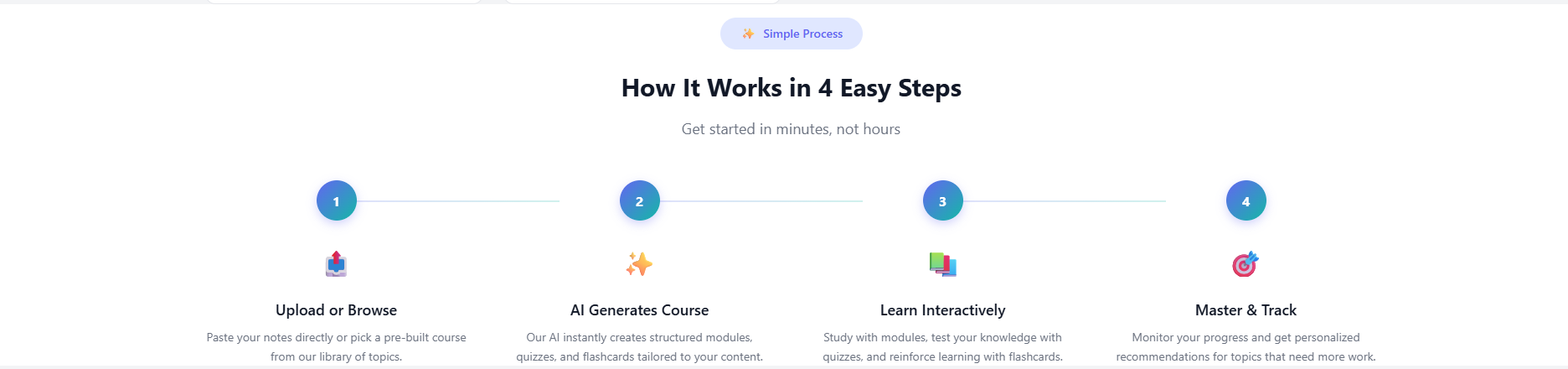
No hunting for tutorials. No messy notes. Just upload → learn.
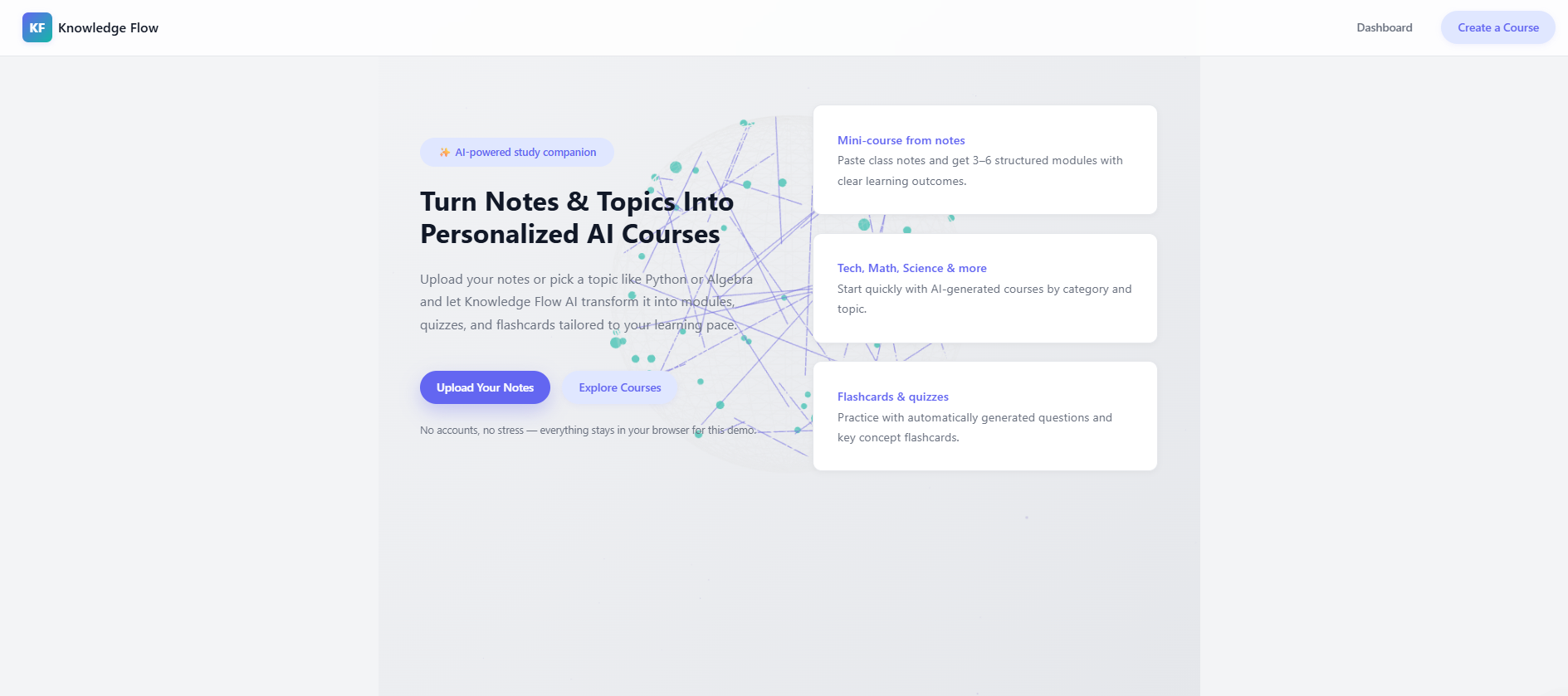
This inspired Knowledge Flow: an AI-powered study companion that transforms notes or topics into modules, lessons, quizzes, and flashcards—delivering a guided, interactive learning experience.
🚀 What the Project Does
Knowledge Flow offers two powerful ways to learn:
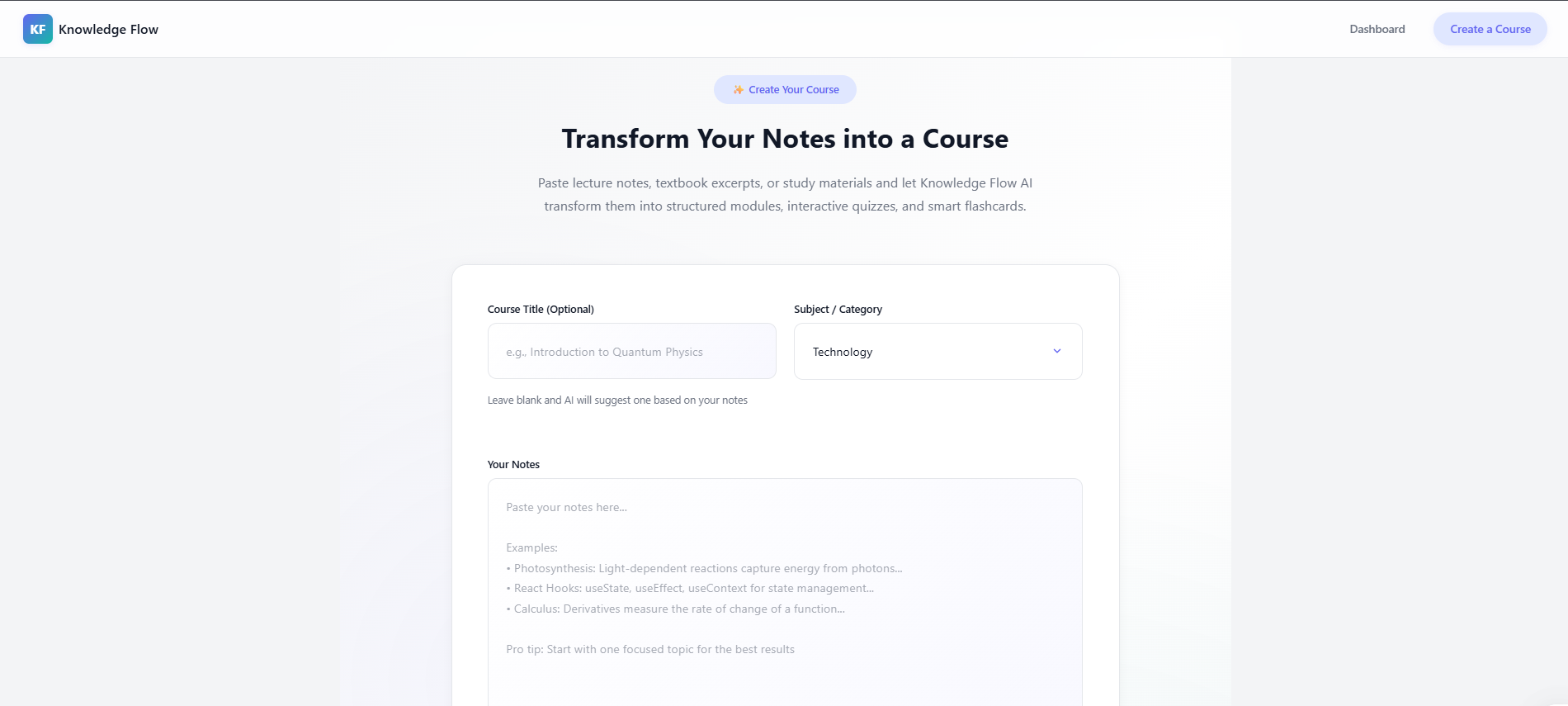
- Turn Your Notes Into a Course
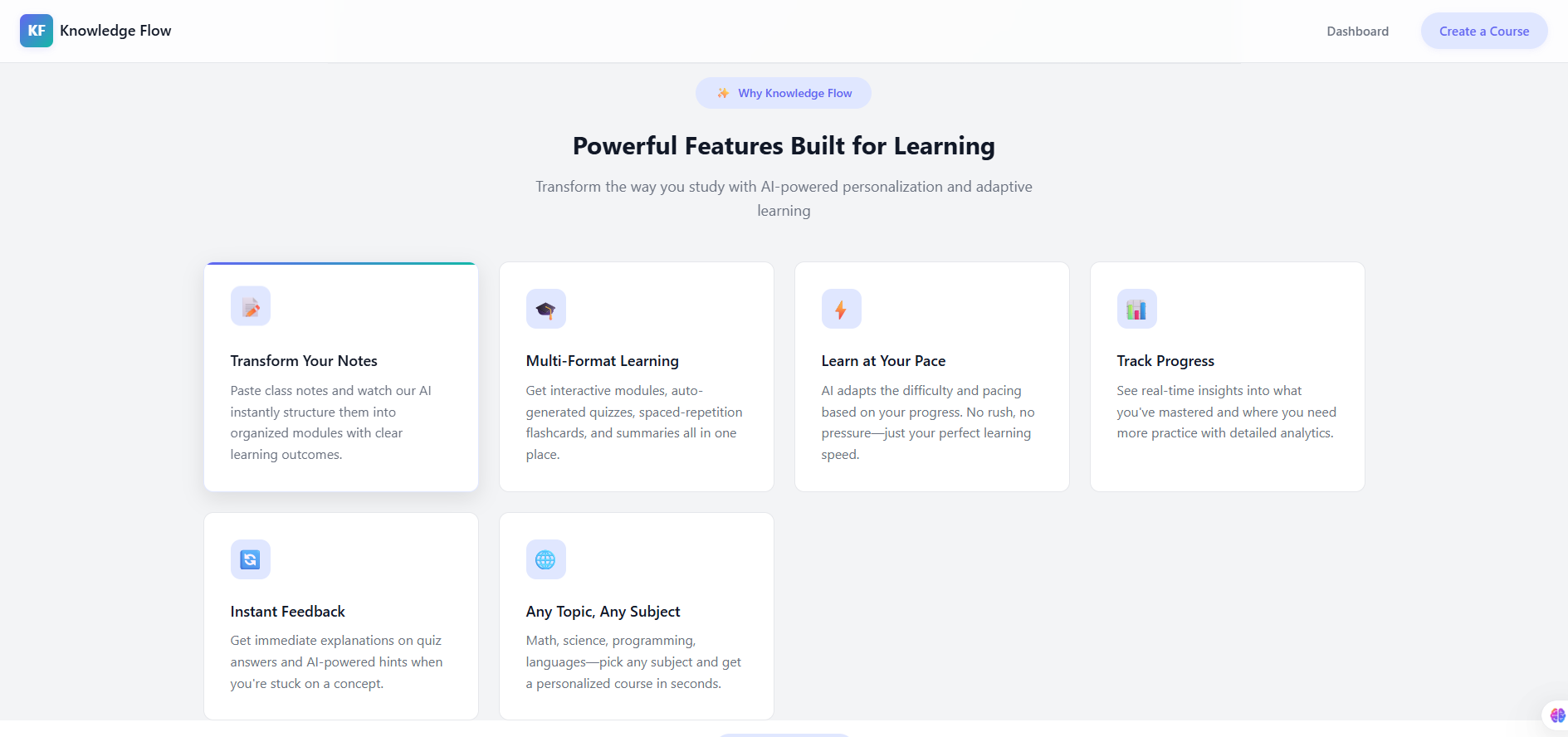
Upload class notes or typed content → AI transforms them into:
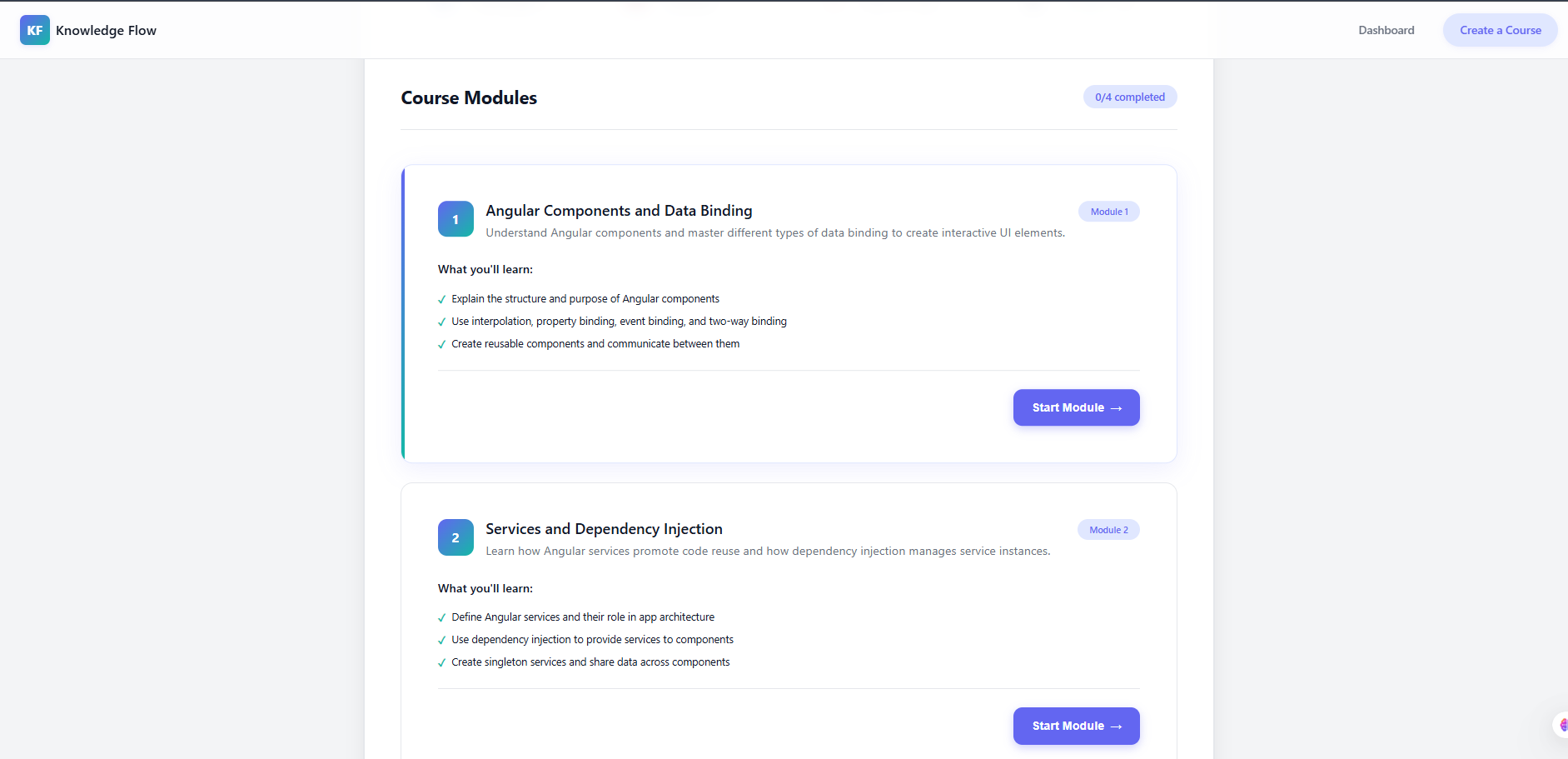
Structured modules
Clear explanations
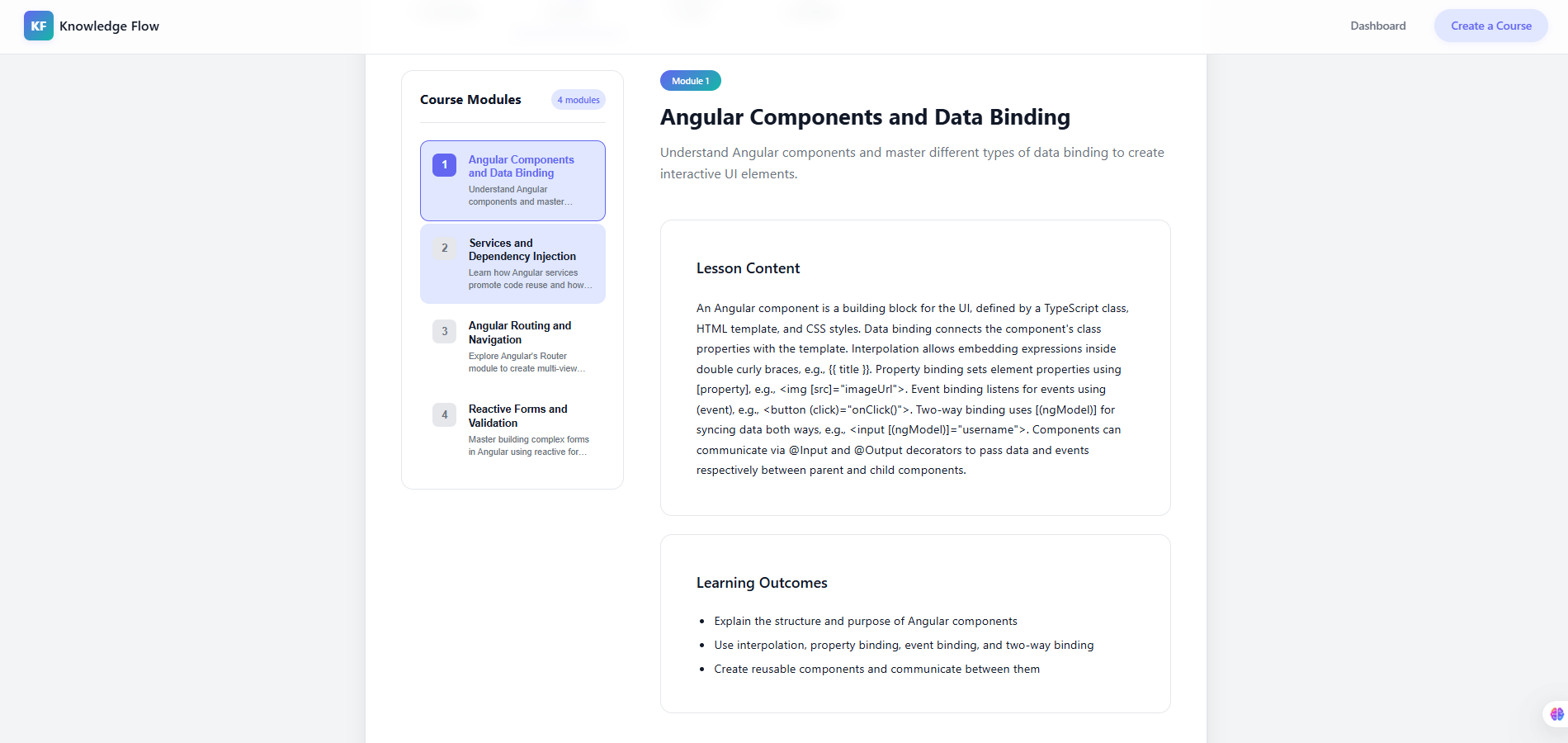
Interactive lessons
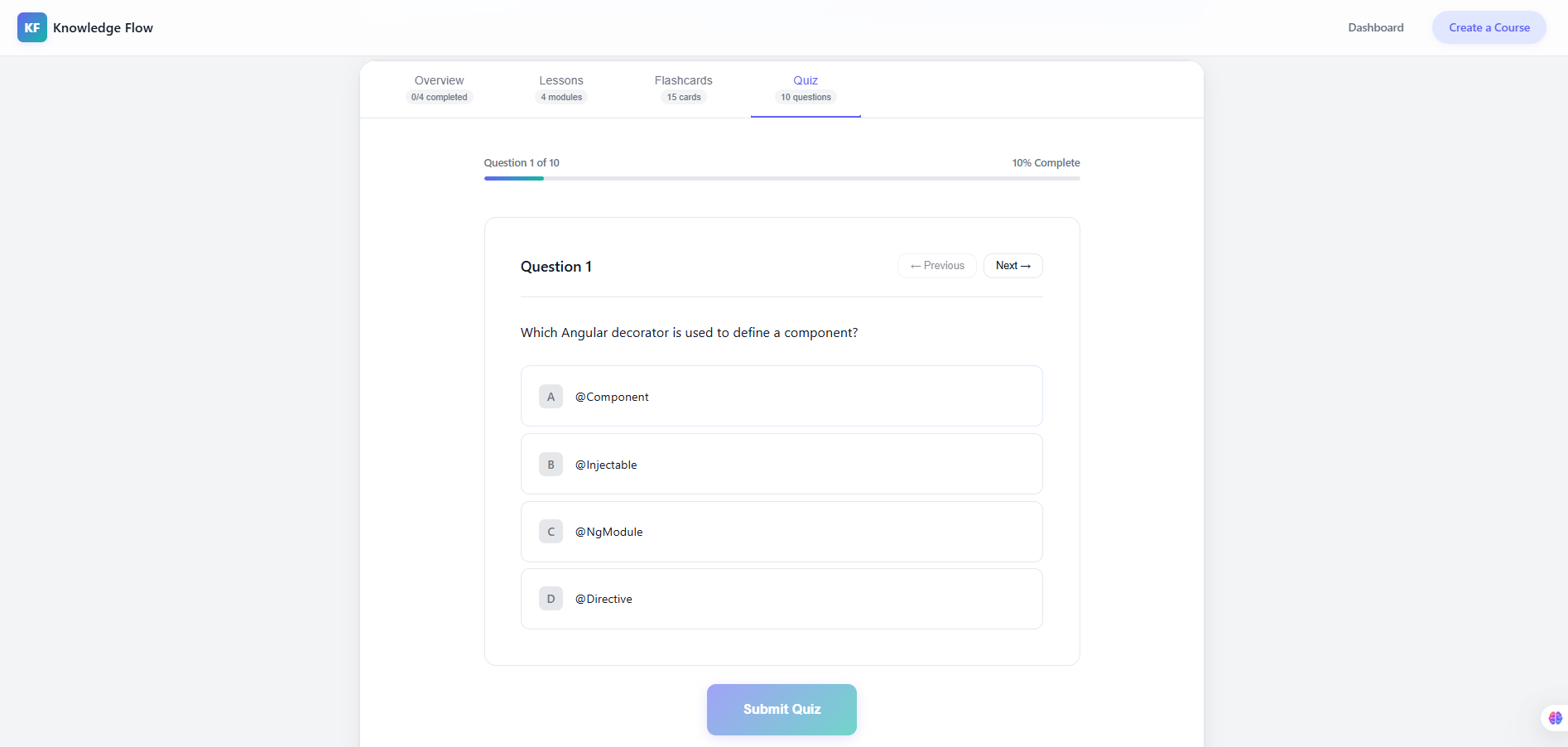
Practice questions
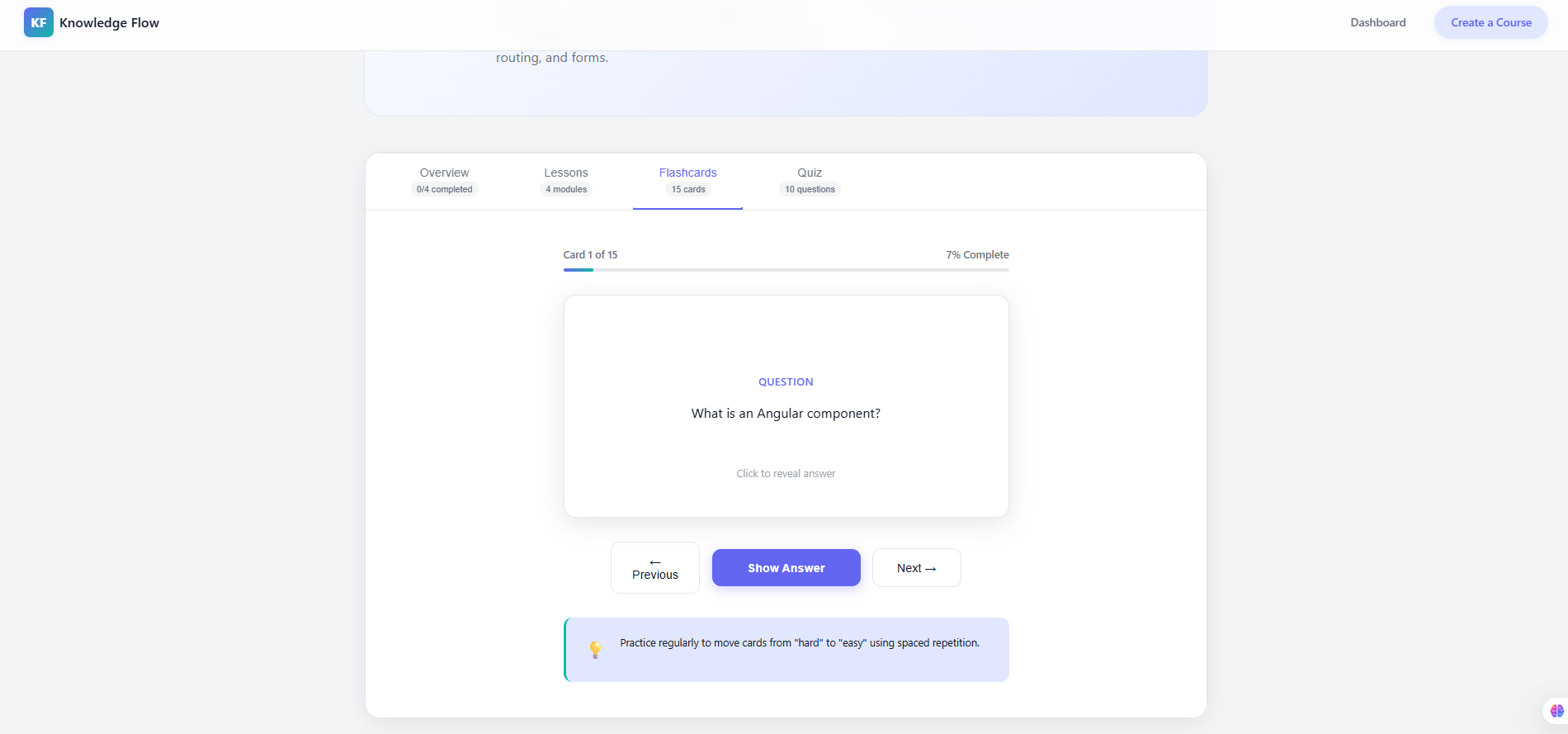
Flashcards
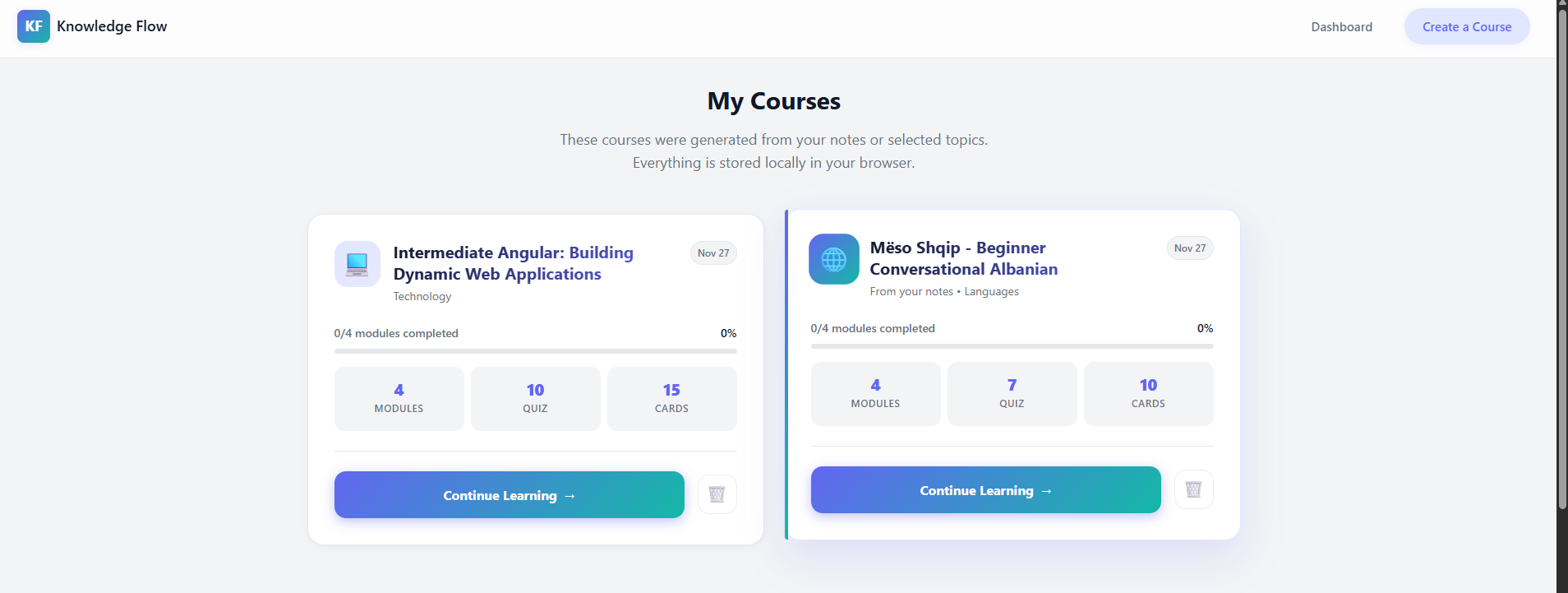
Progress tracking
- Learn Any Topic With AI
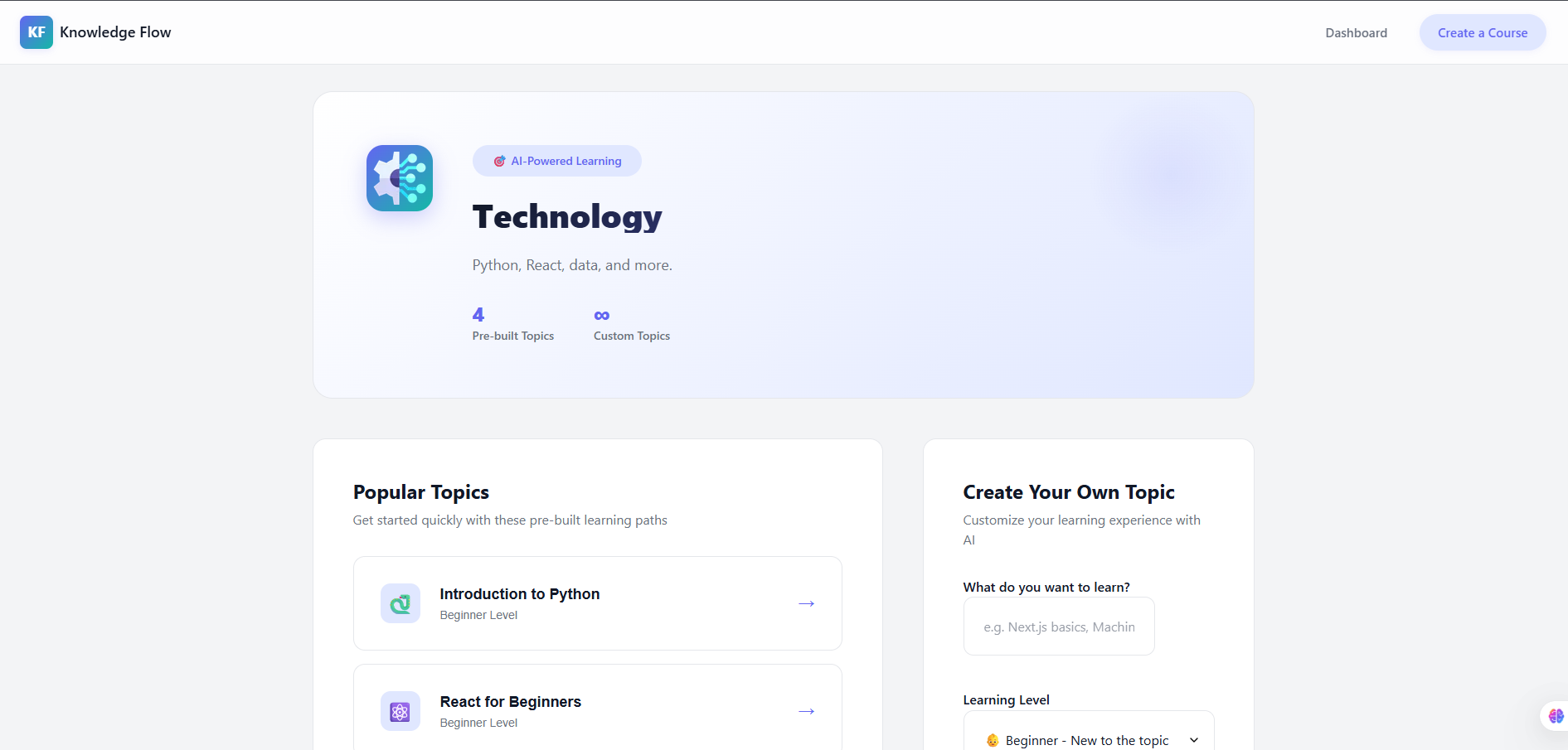
Choose a category (Tech, Math, Science, etc.) → pick or type a topic → AI generates an entire micro-course tailored to your level.
If the topic doesn’t exist, AI builds it from scratch.
🧠 How I Built It
The project is built using:
Next.js (App Router) for the frontend
TypeScript for strong typing and maintainability
Custom CSS for a modern, premium UI
OpenAI GPT-4.1 for generating:
Courses
Lessons
Quiz questions
Flashcards
Simple explanations
LocalStorage for storing courses & progress during the demo
Vercel for hosting and deployment
I also developed reusable UI components:
Lesson viewer
Flashcard carousel
Quiz engine
Module sidebar
Progress tracker
Category/topic explorer
Each part of the app is designed to feel clean, intuitive, and engaging.
🏗️ Architecture Overview /app /upload → Create course from notes /dashboard → My Courses + Explore Categories /category/[slug] → Topics & custom course creation /course/[id] → Full dynamic learning environment /api generate-course generate-topic-course explain-module generate-practice /lib courseStorage.ts → LocalStorage persistence ai/client.ts → API client helpers models/course.ts → Unified Course schema
All AI endpoints return JSON-structured learning objects, ensuring predictable UI behavior.
🧠 What I Learned
This project taught me:
✔ How to structure large AI outputs reliably
Getting consistent JSON from GPT was challenging—I learned to design strict schemas, system prompts, and fallback logic.
✔ How to architect dynamic learning content
I built a unified Course model that accommodates:
Modules
Flashcards
Lesson content
Practice questions
Progress state
✔ How to design a modern, consistent UI
I refined spacing, color systems, grid layouts, animations, and responsive behavior to create a professional-looking learning app.
✔ How to manage local state & persistence
Using LocalStorage as a “mini database” while keeping everything in sync across pages.
✔ How to make AI content feel human
I iterated on prompts to produce:
Friendlier explanations
Engaging examples
Real-world scenarios
Varied practice questions
⚠️ Challenges I Faced
- Getting consistent LLM JSON
AI sometimes returned partial or malformed JSON. I had to iterate:
Token limits
System prompts
Strict formatting rules
Safe parsing checks
- Designing a premium UI from scratch
Creating a high-end feel required:
Rebuilding layouts
Custom animations
Typography tuning
Gradient/shape adjustments
Handling desktop vs mobile backgrounds
- Managing multiple AI endpoints
Each endpoint (course, topic, explain, practice) needed:
Different schema
Different tone
Different cognitive depth
Error handling
- Time constraints
Building a full learning platform—design + logic + AI + persistence—inside a hackathon is intense. Prioritization was key.
🎉 Final Thoughts
Knowledge Flow started as a simple idea—make studying easier. It grew into a powerful AI learning assistant that can:
Teach anything
Explain clearly
Test knowledge
Personalize learning
Inspire curiosity
This project shows how AI can turn raw information into true understanding.
Thanks for reading — and welcome to the future of learning! 🚀📚
Built With
- api
- css
- localstorage
- nextjs
- openai
- tailwind
- vercel

Log in or sign up for Devpost to join the conversation.