Inspiration
As a homeowner in the Midwest, I grew frustrated with opaque real estate data—why was it so hard to see how my home’s value stacked up against nearby sales, or how local projects might impact prices? I wanted a tool that cut through the noise, no logins or hidden fees—just straightforward, actionable insights for regular people, whether buying, selling, or just curious.
What it does
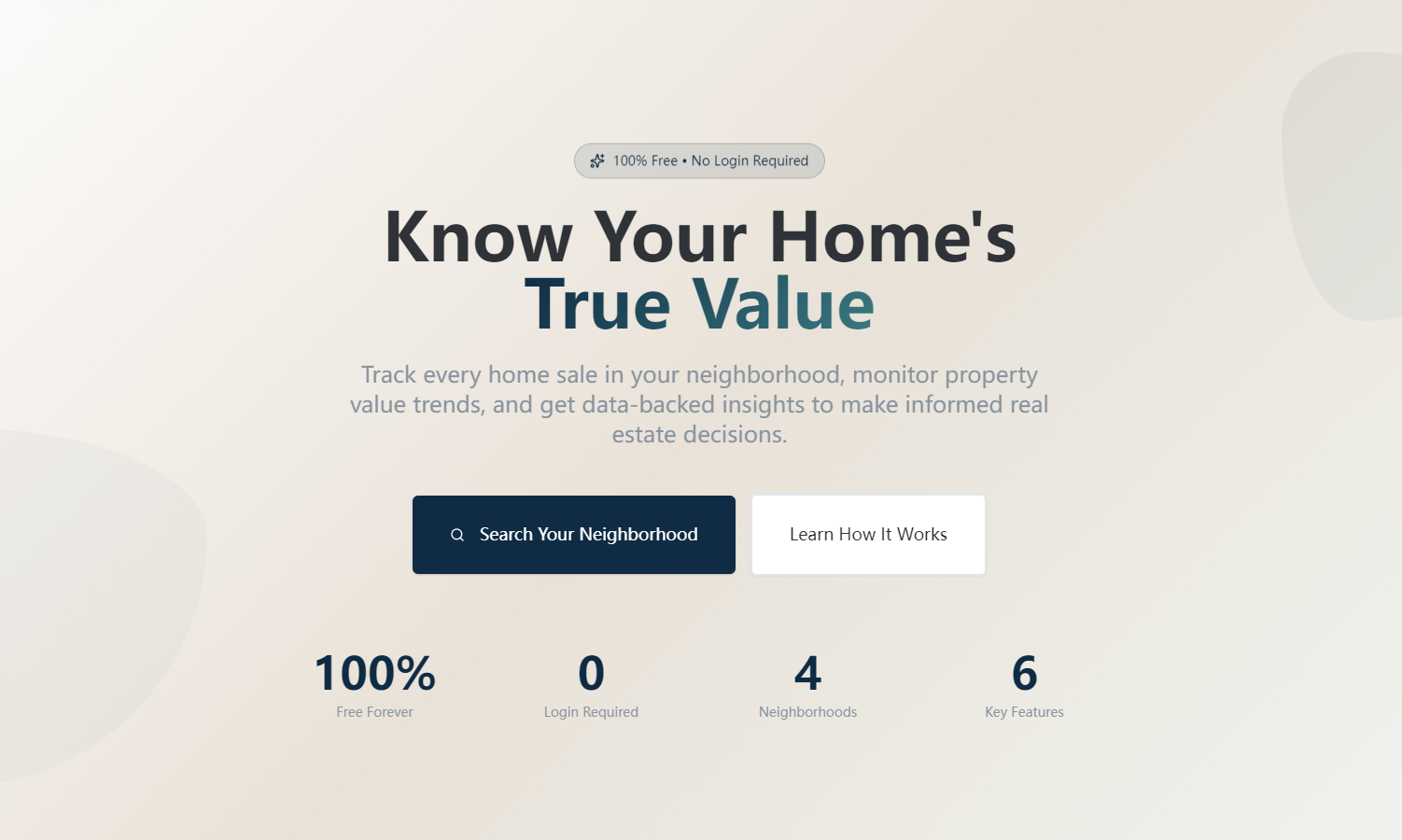
NeighborhoodHomeValue is a lightweight web app that lets users search any neighborhood/address to view recent home sales, track property value trends over 1–5 years, explore local development projects, compare nearby neighborhoods, and get data-driven guidance on whether to hold or sell a home.
How we built it
We started with core user needs: simplicity and clarity. We built the frontend with React and Bootstrap for responsive design, used Chart.js for intuitive trend/comparison visuals, and set up a Node.js/Express backend with MongoDB to store and query location/market data. AWS hosted the app to ensure reliability across desktop and mobile.
Challenges we ran into
The biggest hurdle was refining the neighborhood comparison logic—ensuring geographic proximity was accurate while keeping the UI simple. We also struggled with balancing data depth and usability; we iterated repeatedly to trim clutter without losing critical details (like price per square foot or development impact).
Accomplishments that we're proud of
We created a fully responsive tool that delivers clear, actionable insights without requiring accounts. The sell recommendation logic—tied to market trends and local developments—resonates with users, and the visualizations make complex data easy to understand for non-experts.
What we learned
We learned that user-centric design means prioritizing clarity over complexity—even "useful" data becomes useless if it’s hard to parse. We also gained hands-on experience with geographic data APIs and balancing backend efficiency with frontend performance for seamless user experiences.
What's next for this project
We plan to expand coverage to more regional markets, add granular filters for sales data (e.g., home size, number of beds), and integrate local zoning/school district data to make neighborhood comparisons even more robust. We’re also exploring lightweight mobile optimization to make on-the-go searches even smoother.

Log in or sign up for Devpost to join the conversation.