Inspiration
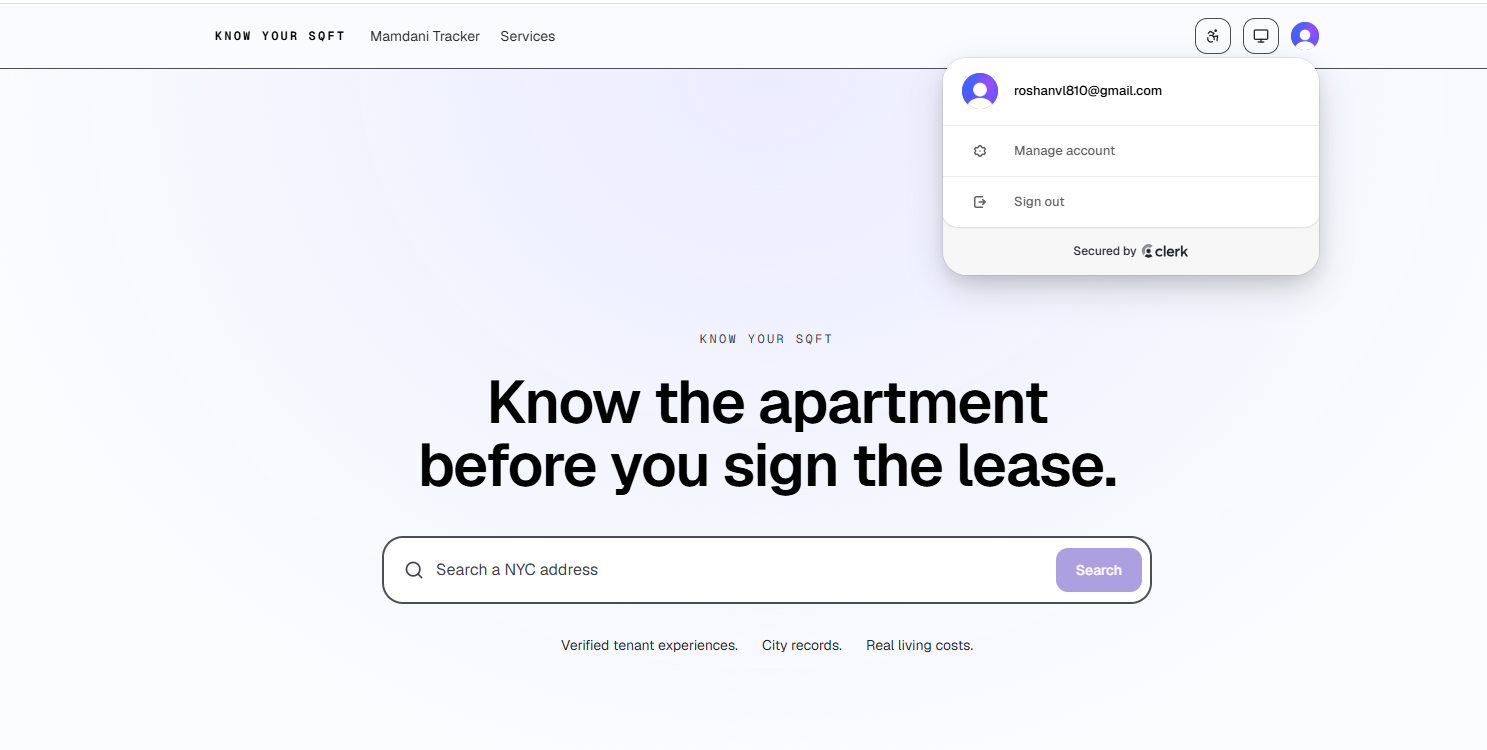
One thing I dislike about NYC is how difficult it can be to find good housing. Apartment listings tell you the rent, square footage, and maybe show some polished photos, but they rarely tell you what actually matters after you move in.
Does the heat work in January? Does management respond? Are there recurring complaints? What do tenants actually pay after utilities? What has HPD, DOB, or 311 recorded about the building?
I wanted to answer a much simpler question:
What should I know about this apartment before I sign the lease?
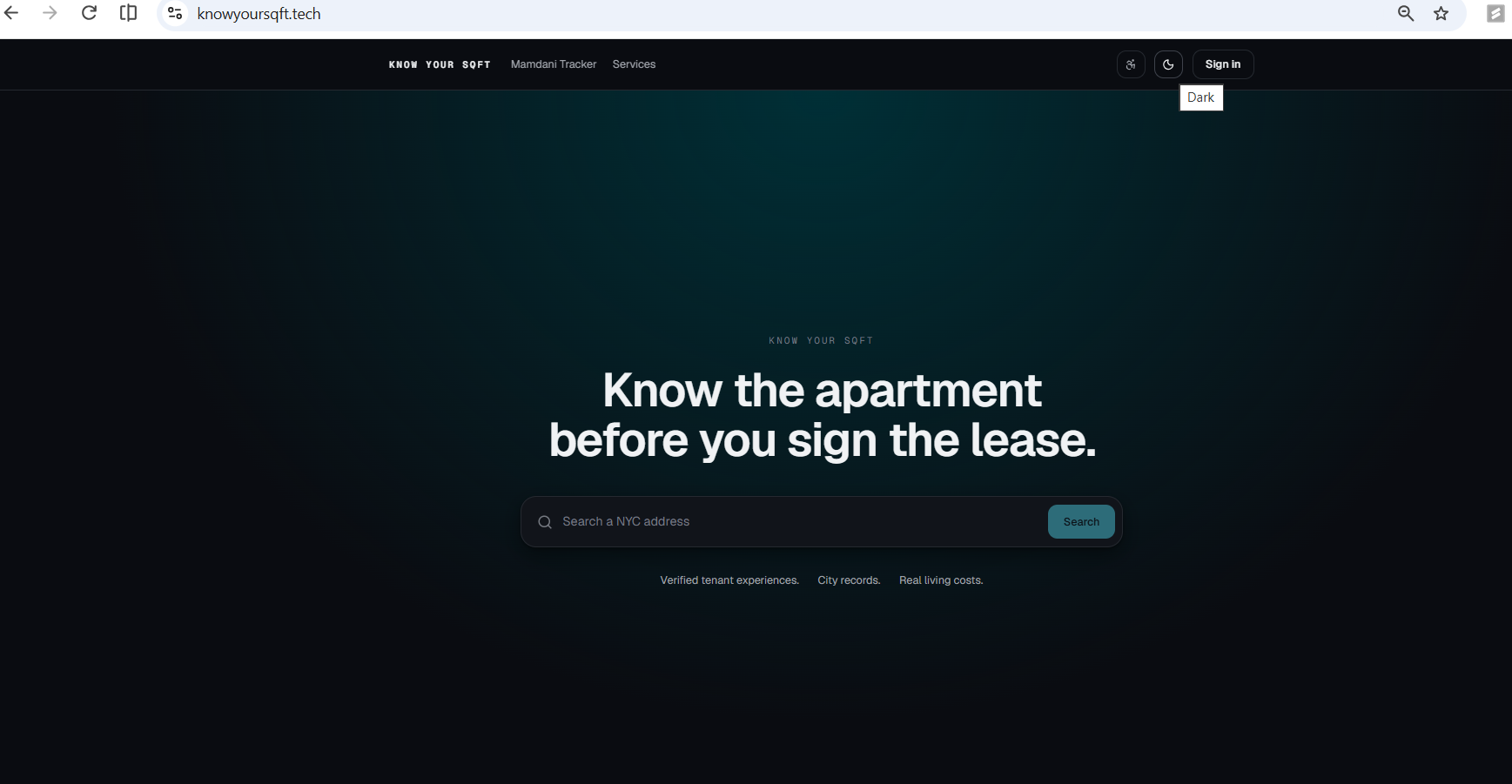
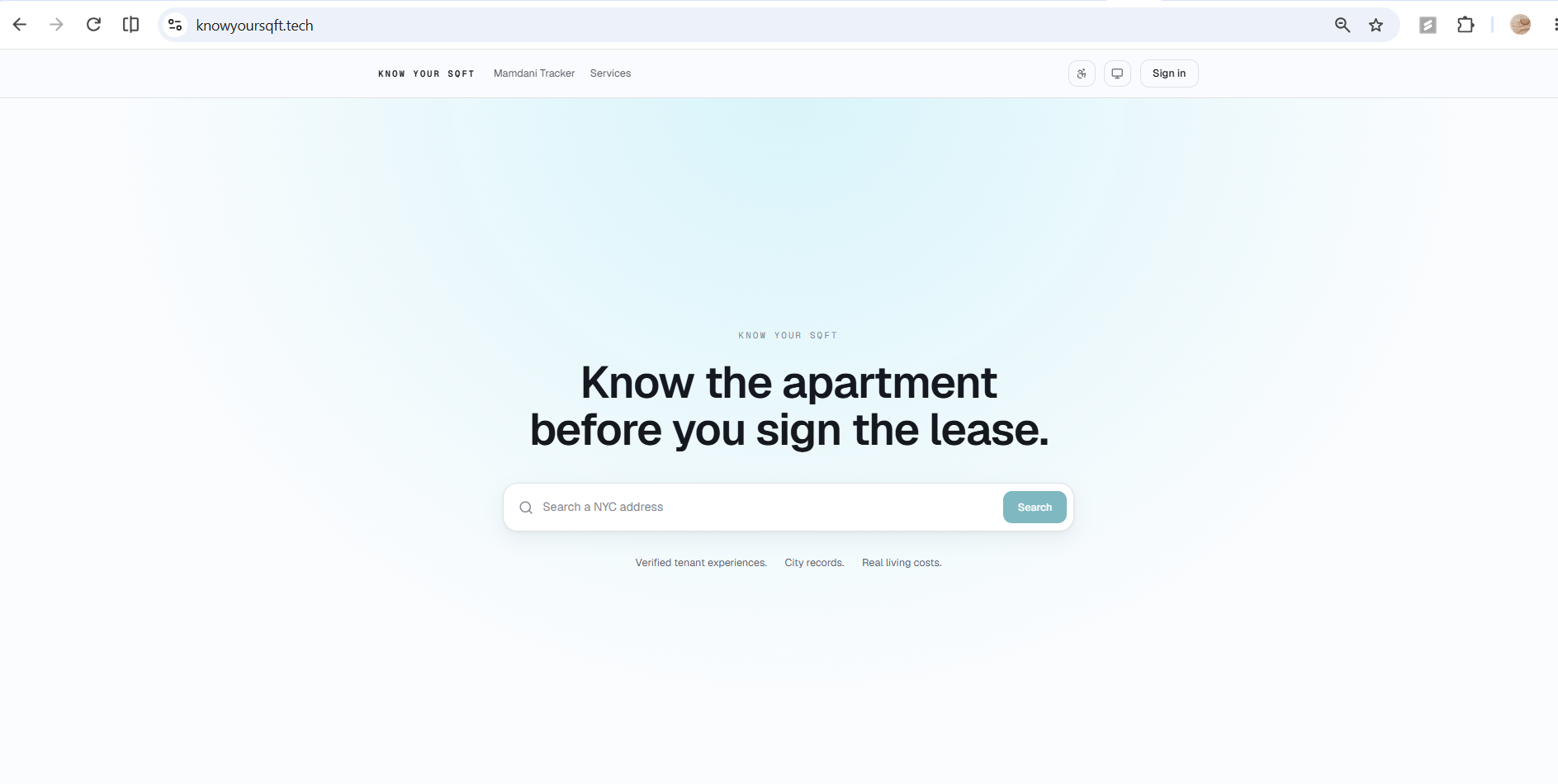
That idea became Know Your SqFt — a renter-first apartment intelligence platform built around real evidence instead of just listing information.
I also wanted to connect housing with what is happening around the surrounding community, which became our Mamdani Tracker / CivicPulse feature: an unofficial community layer for nearby reported conditions and observations. It is not affiliated with NYC government or the Mayor's Office.
What it does
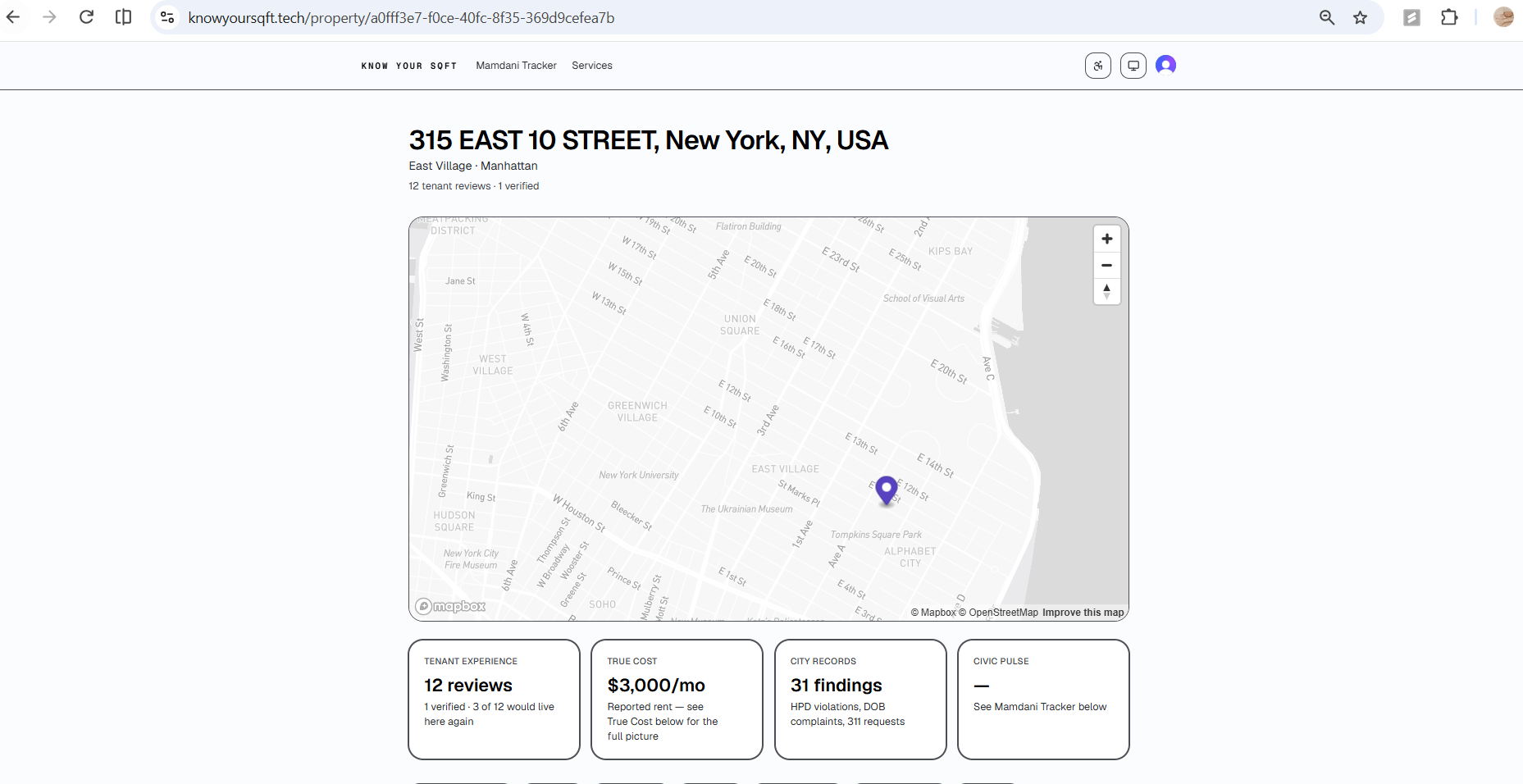
Search any NYC address and Know Your SqFt builds a property-level view using multiple sources of information.
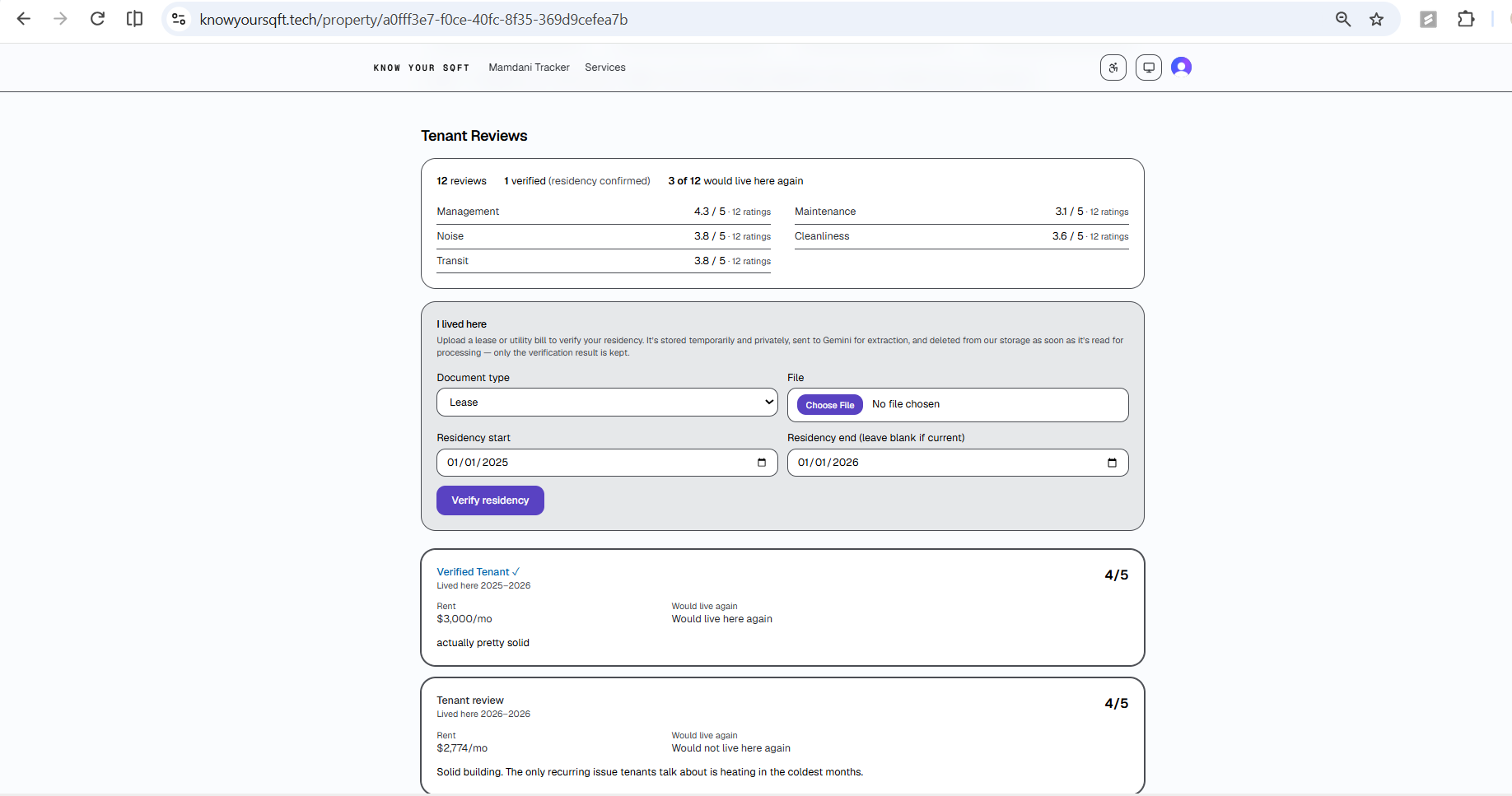
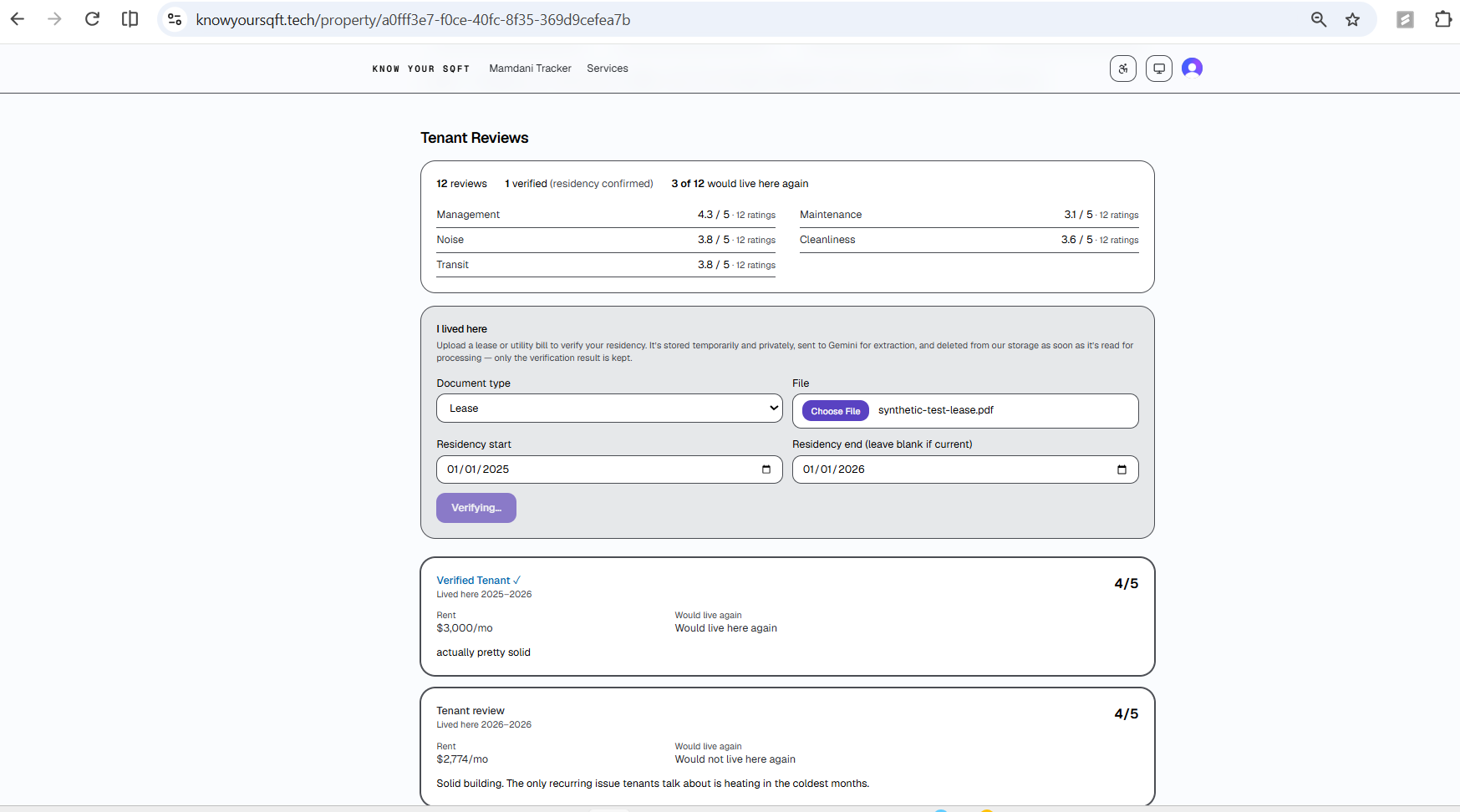
Verified tenant experiences
Residents can share reviews, ratings, rent information, and whether they would live there again.
To make reviews more trustworthy, tenants can verify residency using a lease or utility bill. Documents are uploaded privately, processed by Gemini to extract only the necessary residency information, and deleted from temporary storage after processing.
Instead of hiding everything behind one unexplained apartment score, we show transparent signals such as:
- Total tenant reviews
- Verified tenant reviews
- Would-live-here-again responses
- Management ratings
- Maintenance ratings
- Noise
- Cleanliness
- Transit
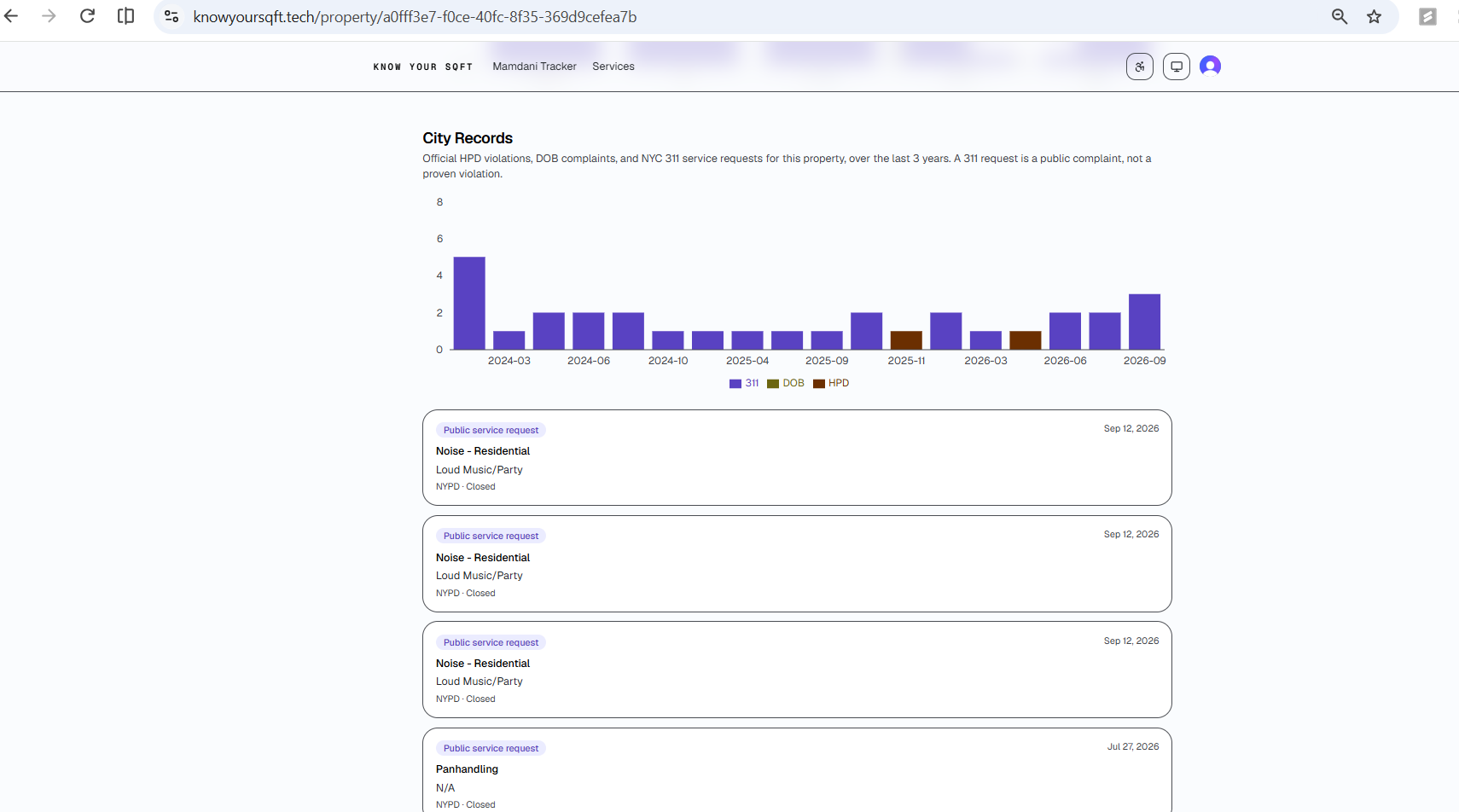
NYC city records
We combine official public data from:
- HPD violations
- DOB complaints
- NYC 311 service requests
and turn them into a single property timeline.
This makes it much easier to spot recurring issues without searching multiple city databases individually.
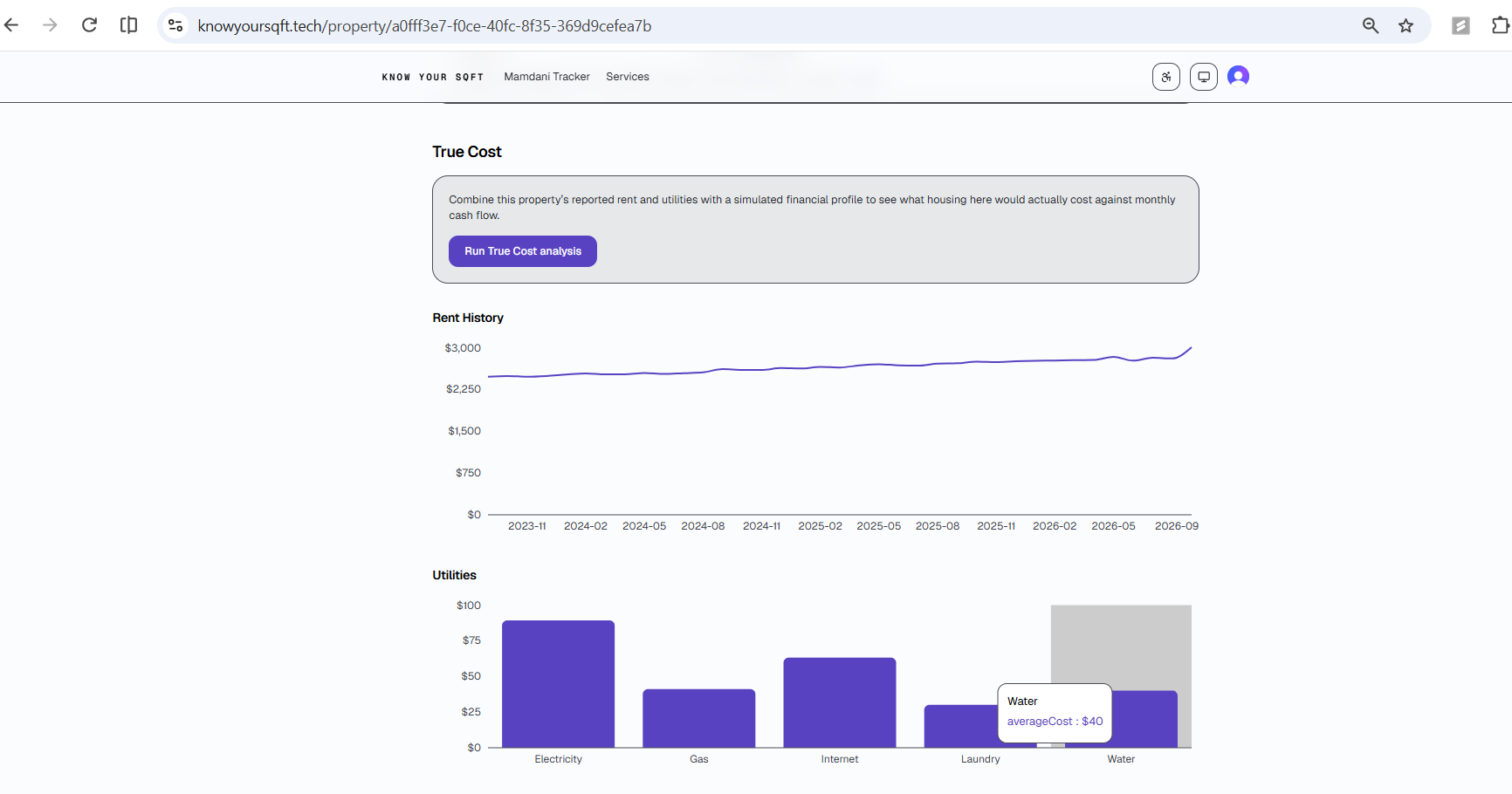
True Cost
Rent is only part of what an apartment costs.
Know Your SqFt combines reported rent and utility information with a simulated Capital One Nessie financial profile to help users better understand the monthly impact of an apartment.
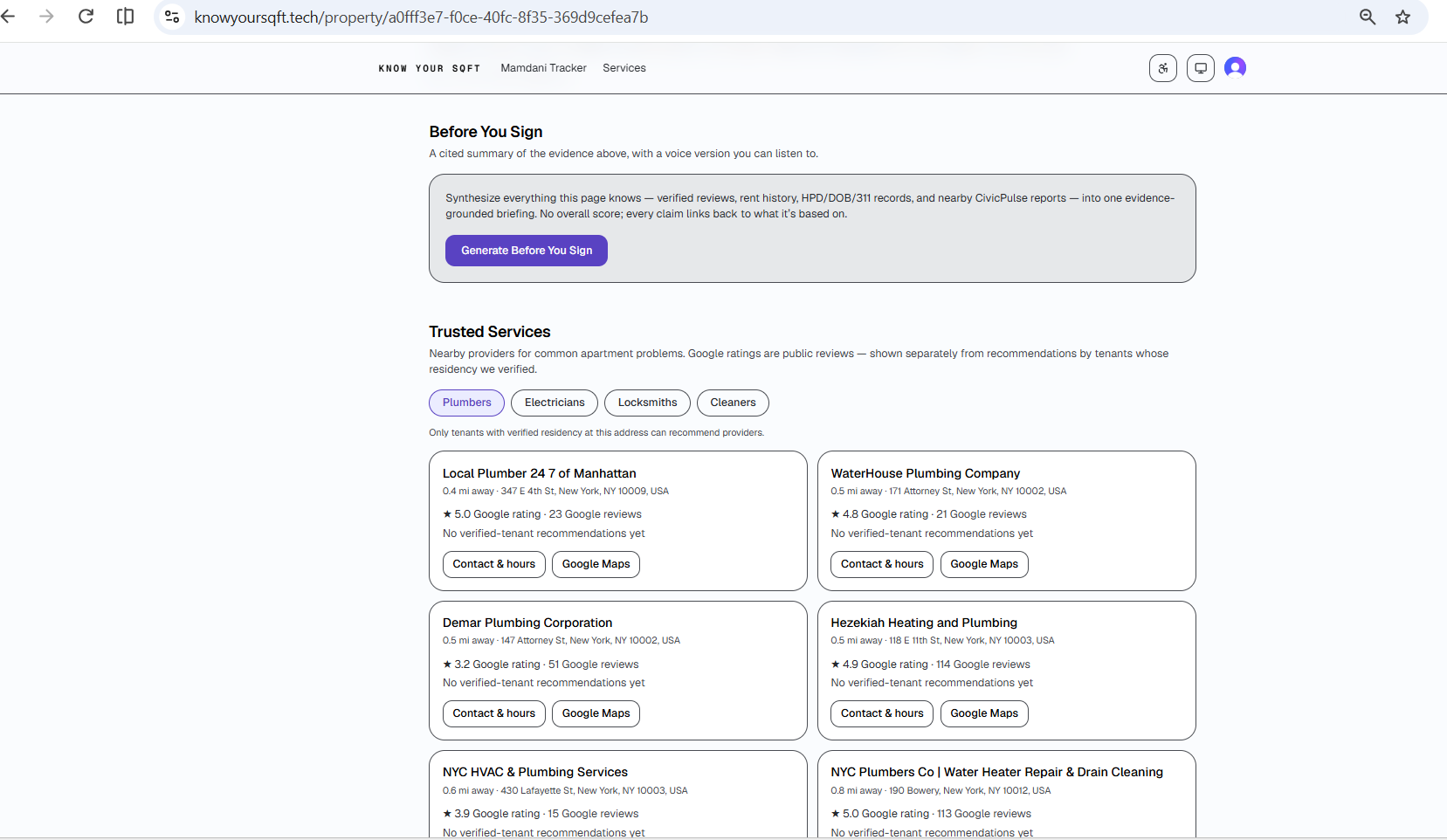
Before You Sign
Using Gemini, Know Your SqFt synthesizes tenant reviews, rent history, HPD/DOB/311 records, and nearby community reports into an evidence-grounded briefing.
The important part is that Gemini cannot simply make unsupported claims. Every generated claim references the evidence used to produce it.
Users can also listen to the briefing through ElevenLabs.
Trusted Services
If something goes wrong after moving in, the platform uses Google Places to surface nearby:
- Plumbers
- Electricians
- Locksmiths
- Cleaners
Google ratings are kept separate from recommendations made by tenants whose residency we verified.
HomeOps — agentic finance with guardrails
HomeOps lets an AI agent propose a service deposit while keeping actual financial authority outside the AI.
The flow is:
AI planner → deterministic policy authority → controlled signer → XRPL Testnet
Before any transaction can happen, the policy layer checks things such as:
- Allowed service category
- Approved provider
- Allowlisted destination
- Per-transaction limit
- Daily spending limit
- Policy expiration
- Testnet-only enforcement
The AI never receives the signing seed and cannot arbitrarily choose a payment destination.
We successfully executed autonomous transactions on the XRPL Testnet while also demonstrating blocked transactions when policy limits were violated.
How we built it
Know Your SqFt is a modular Next.js application built with:
- Next.js 16 + React + TypeScript
- Tailwind CSS
- PostgreSQL / TigerData
- Drizzle ORM
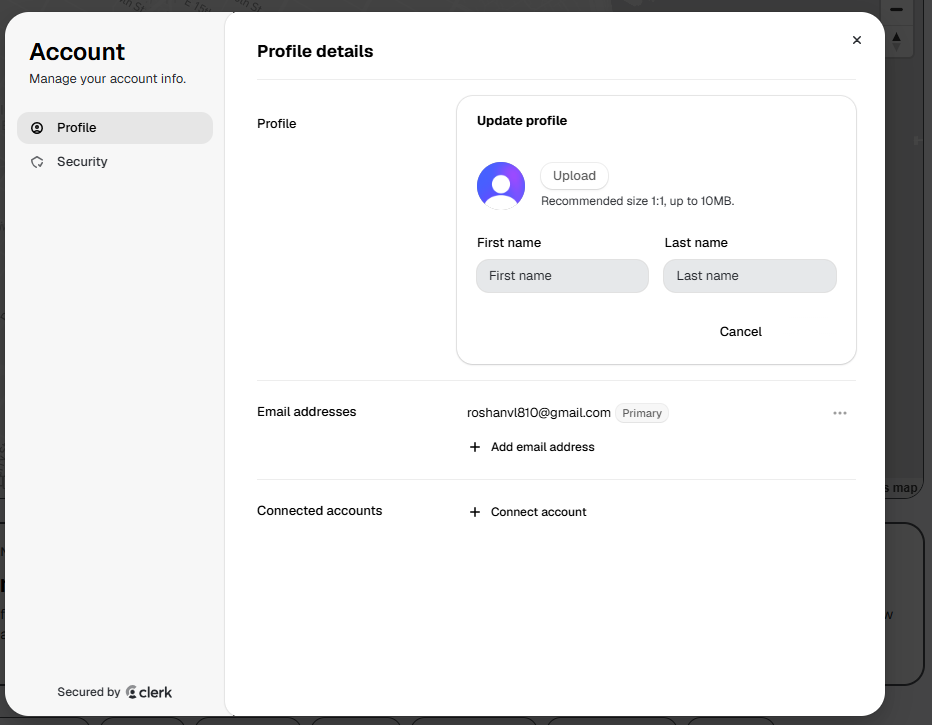
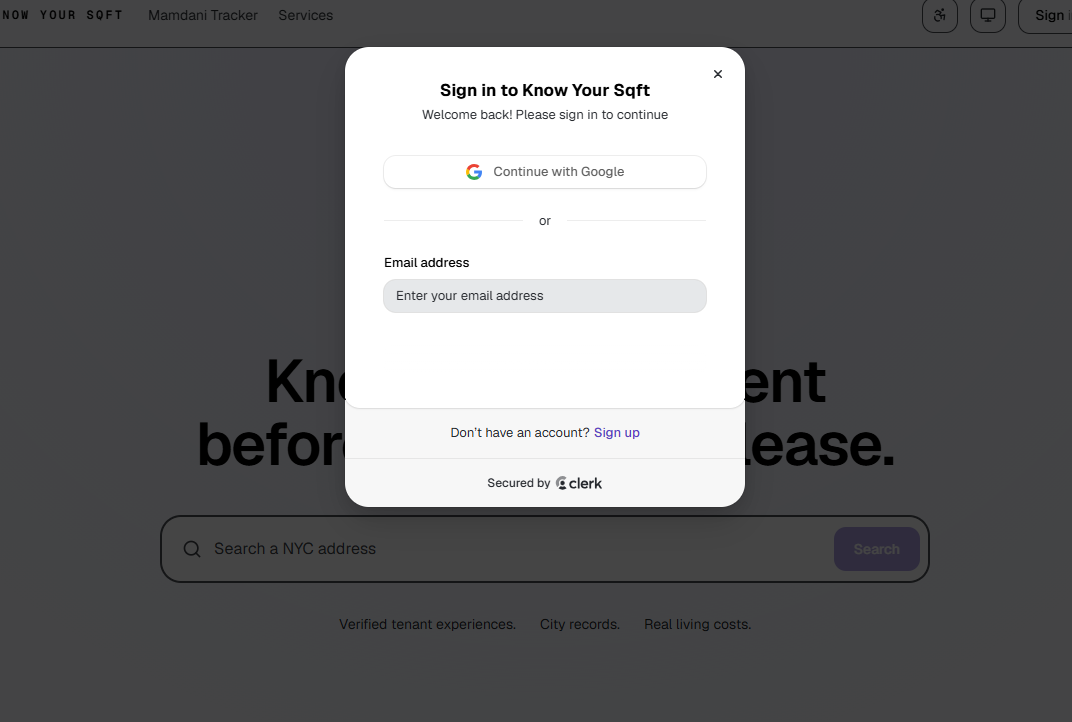
- Clerk for authentication
- Gemini for document extraction, moderation, and evidence-grounded summaries
- ElevenLabs for voice summaries
- Mapbox for property maps
- Google Places API for nearby service providers
- NYC Open Data / Socrata for HPD, DOB, and 311 records
- Capital One Nessie for simulated financial information
- XRPL + xrpl.js for autonomous Testnet transactions
- DigitalOcean Spaces for temporary private verification files
- Upstash Redis for shared rate limiting
- DigitalOcean App Platform for deployment
The production application is live at:
Challenges we faced
One of the biggest challenges was making all of these integrations feel like one product instead of several unrelated API demos.
Property identity was another challenge. An address string alone is not reliable enough, so we normalize properties using NYC identifiers such as BBL and BIN whenever available.
Tenant verification also required us to think carefully about privacy. We wanted enough evidence to support a verified-resident badge without building a database of people's leases. The resulting pipeline temporarily stores a document, validates it, extracts limited residency information, and deletes the original document after processing.
HomeOps introduced an entirely different problem: how do you let an AI agent perform a financial action without giving the AI unrestricted authority?
Our solution was to separate reasoning from authorization. Gemini can suggest an action, but deterministic code controls the payment rules and a separate signer controls the wallet.
Production deployment created challenges too. Moving from localhost to a real domain meant working through environment configuration, database connectivity, Clerk production DNS and SSL, API reliability, and browser behavior that did not appear during local development.
What we learned
The biggest thing we learned is that AI becomes much more useful when it is surrounded by systems that make its output verifiable.
For example, we do not ask Gemini:
"Is this a good apartment?"
We first collect structured evidence and then require generated claims to point back to that evidence.
We applied the same philosophy to HomeOps. The AI can reason about what action might help, but deterministic policies decide whether that action is actually allowed.
We also learned a lot about building for production rather than just building a demo: authentication, DNS, SSL certificates, persistent databases, cloud storage, API failures, retries, rate limits, privacy, and accessibility all became part of the project.
What we're proud of
What started as a housing-search idea became a working end-to-end platform.
A renter can:
- Search a real NYC property
- Read tenant experiences
- Verify residency
- Inspect official NYC records
- Understand rent and utility trends
- Generate an evidence-backed "Before You Sign" briefing
- Listen to that briefing
- Find nearby trusted services
- Use an AI agent to propose a service payment
- Execute that payment on XRPL Testnet only when deterministic financial guardrails allow it
Most importantly, Know Your SqFt tries to answer the question that apartment listings usually cannot:
What is living here actually going to be like?
What's next
We want to expand verified tenant coverage across more NYC buildings and continue improving:
- Privacy-preserving residency verification
- Long-term rent and utility trends
- Community-condition reporting
- Verified-resident service recommendations
- HomeOps spending policies
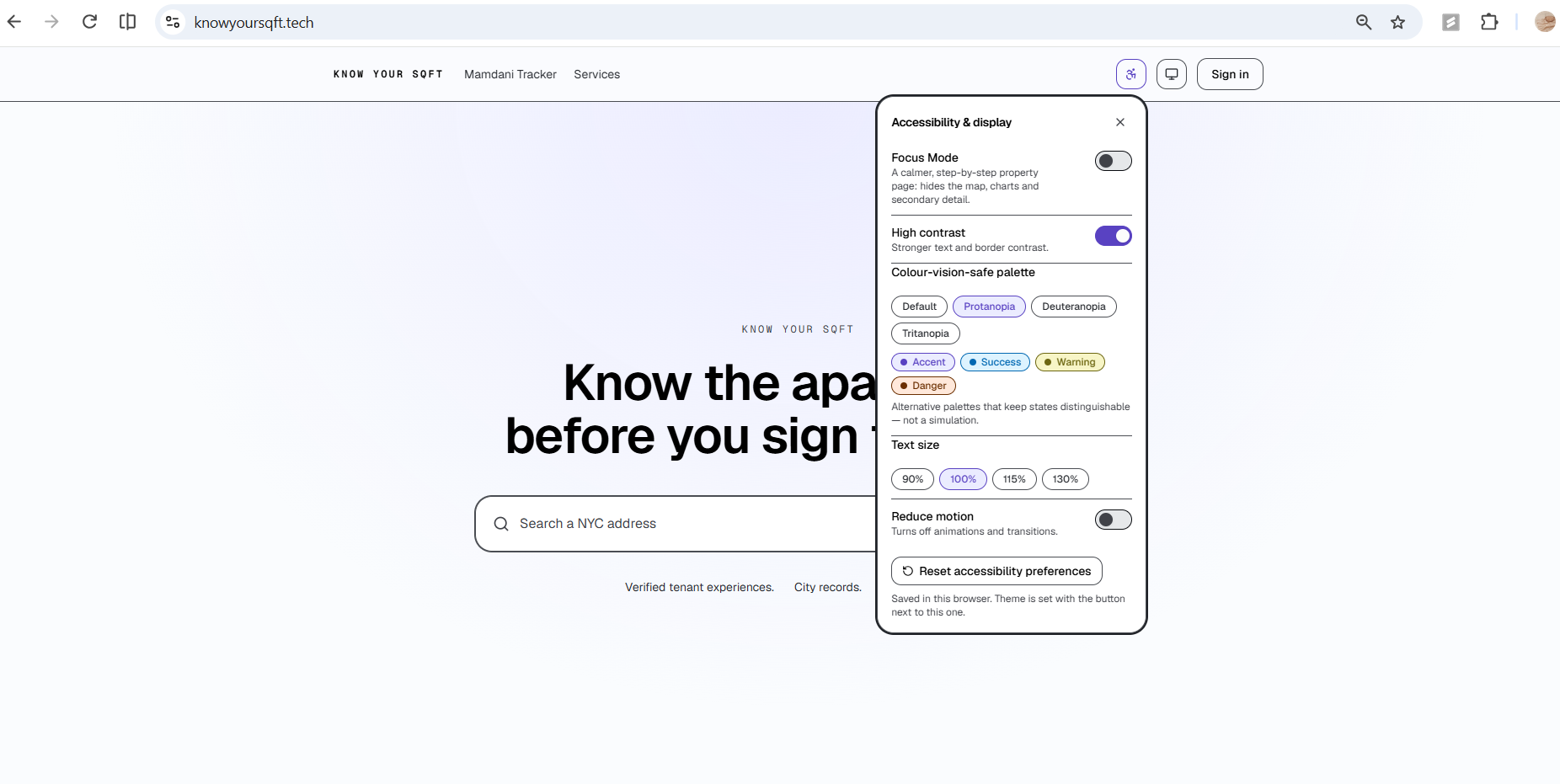
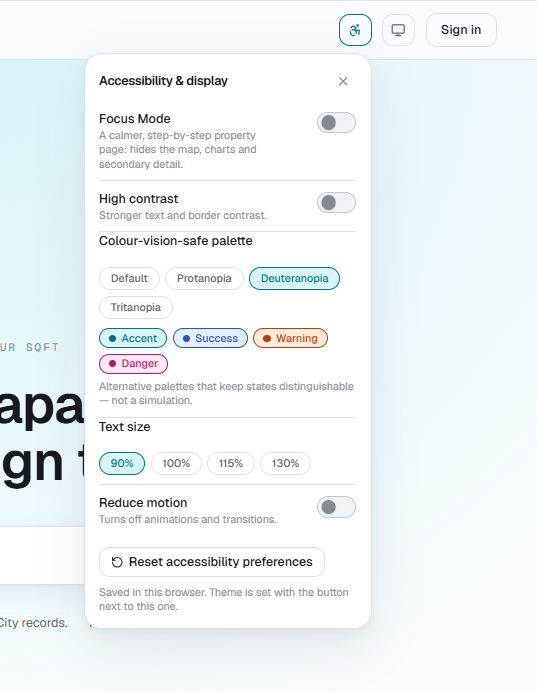
- Accessibility and Focus Mode
- Conversational property search through messaging
The long-term goal is simple:
Make apartment decisions less dependent on polished listings and more dependent on evidence from the people, records, costs, and conditions that actually define the place.
Built With
- api
- clerk
- css
- digitalocean
- drizzle
- elevenlabs
- gemini
- mapbox
- nessie
- next.js
- orm
- places
- postgresql
- react
- redis
- socrata
- spaces
- tailwind
- tigerdata
- typescript
- upstash
- xrpl
- xrpl.js

Log in or sign up for Devpost to join the conversation.