Project Story
What Inspired This Project
We started with a simple but urgent problem: during ICE encounters, people often panic and don’t know what their rights are or whether their documents actually protect them. In those moments, even small uncertainties can make someone feel powerless.
There is a lot of information online about immigration law, but most of it is written in long articles, legal language, or static PDFs. In a high-stress situation, people don’t have time to search, read, and interpret complex explanations. We wanted to build something that turns that information into clear, immediate guidance.
Our focus was not just on providing information, but on reducing panic through structure and clarity.
What We Built
We created a privacy-first, fully client-side web platform that helps users:
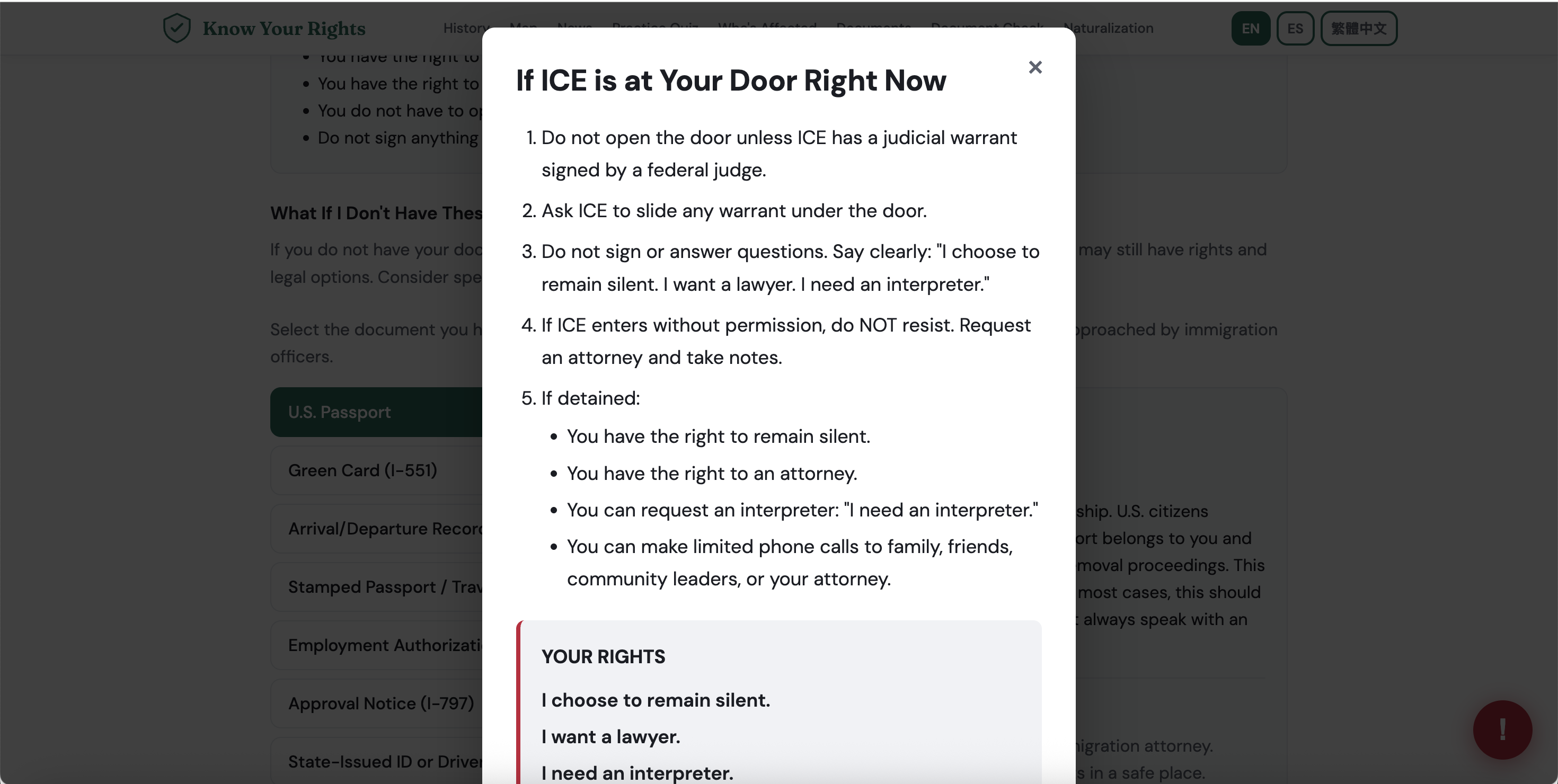
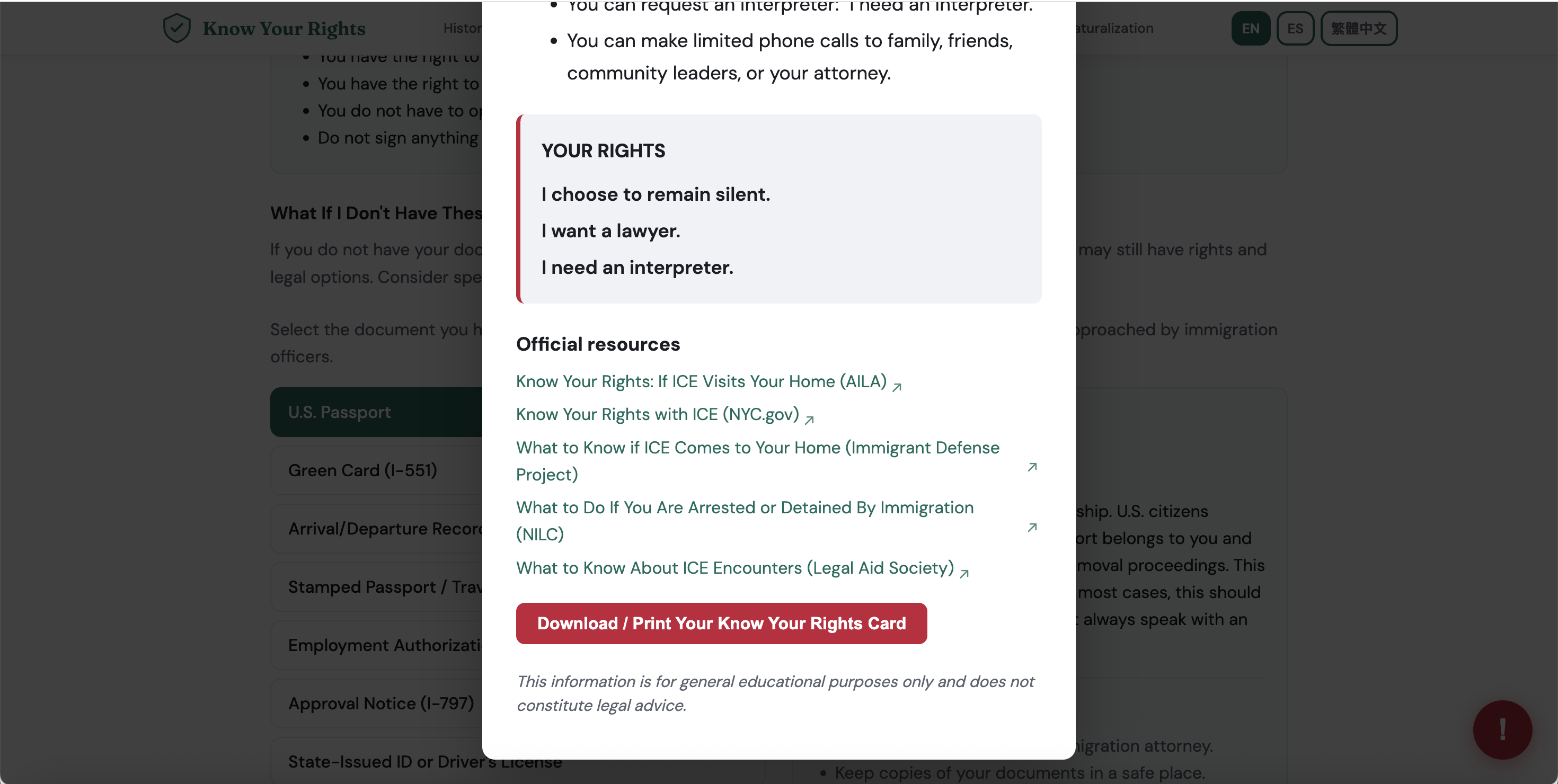
- Access an emergency step-by-step mode if ICE is at their door
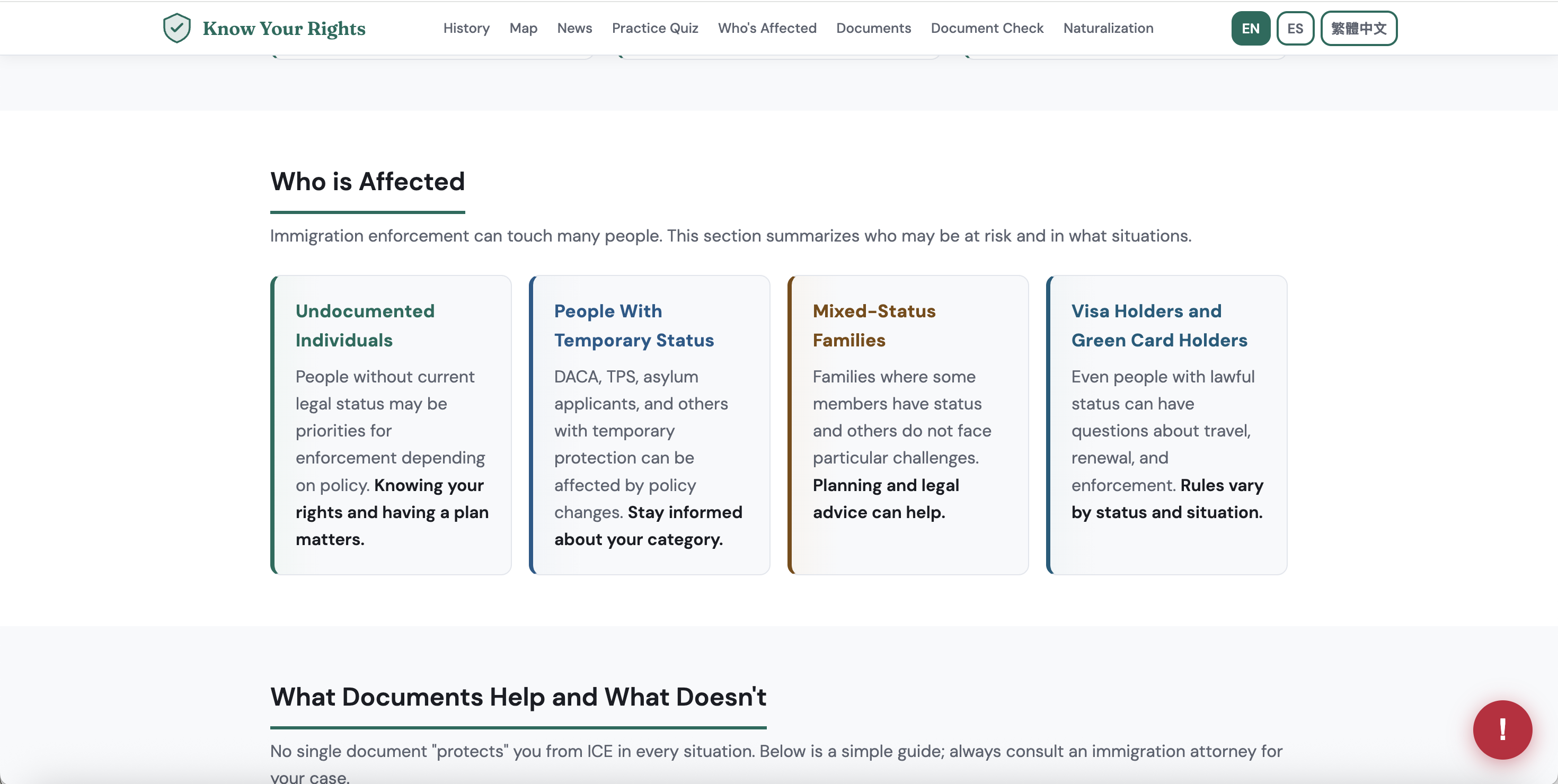
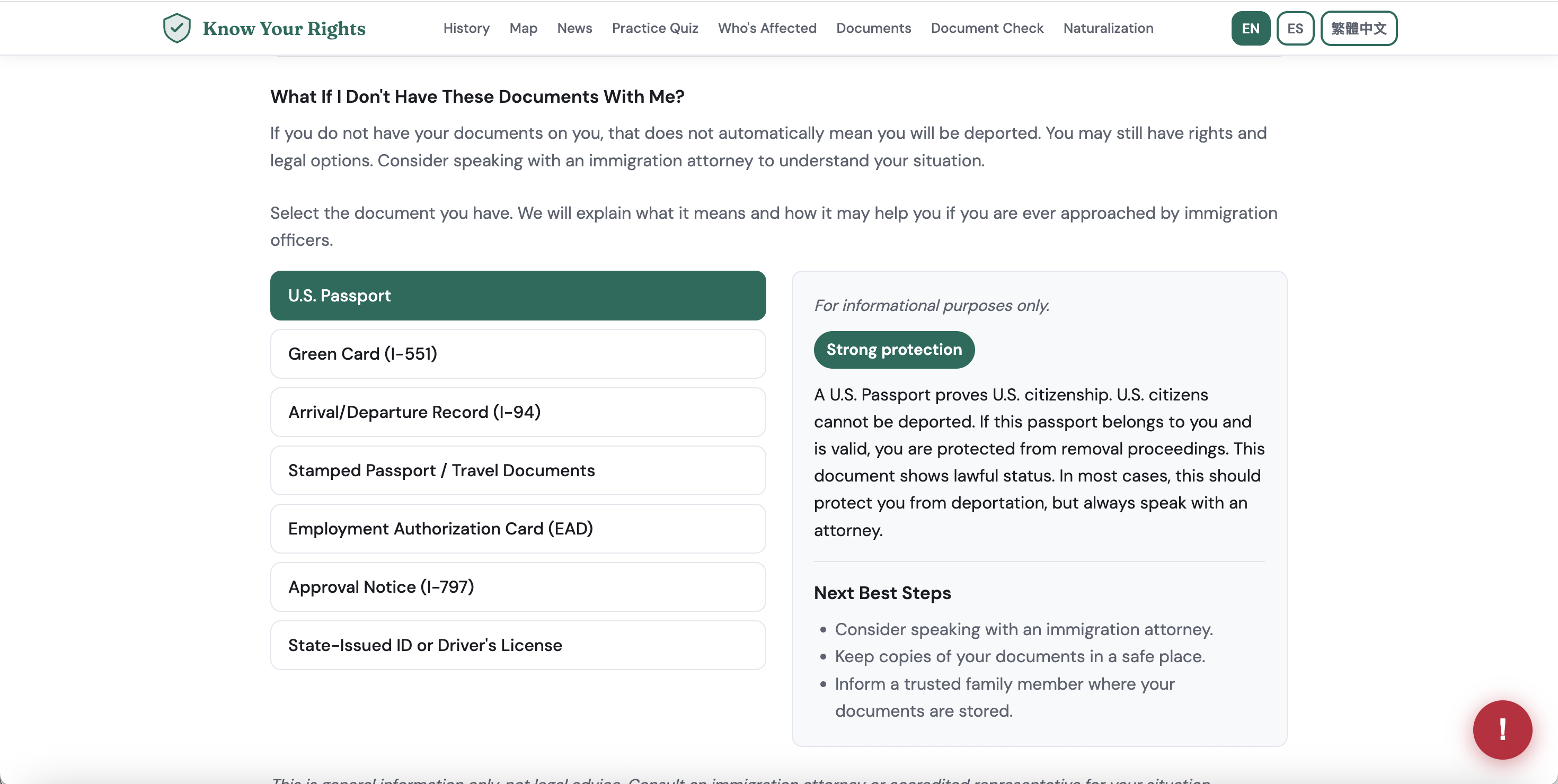
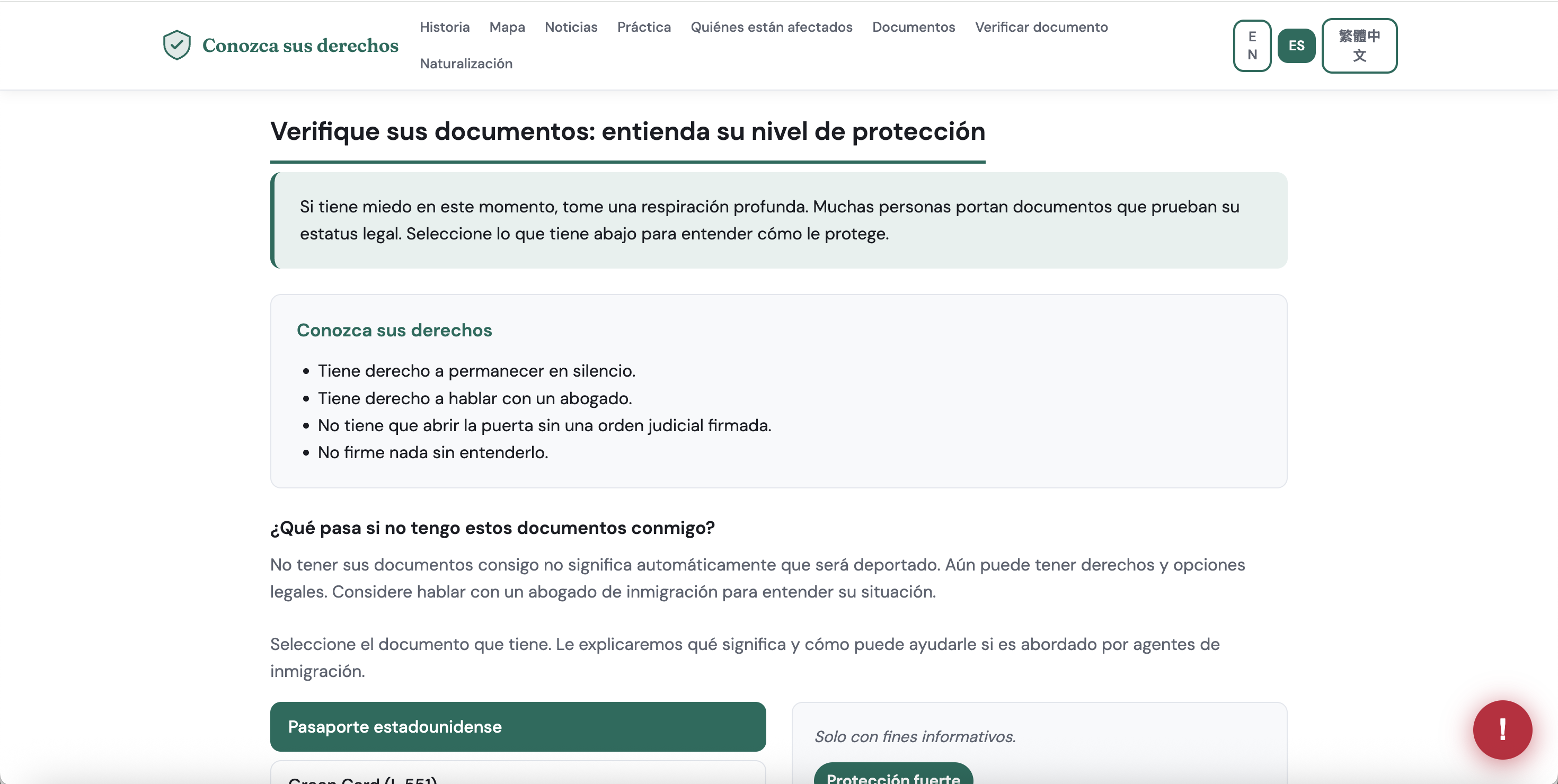
- Understand what their documents mean through a personalized risk clarity tool
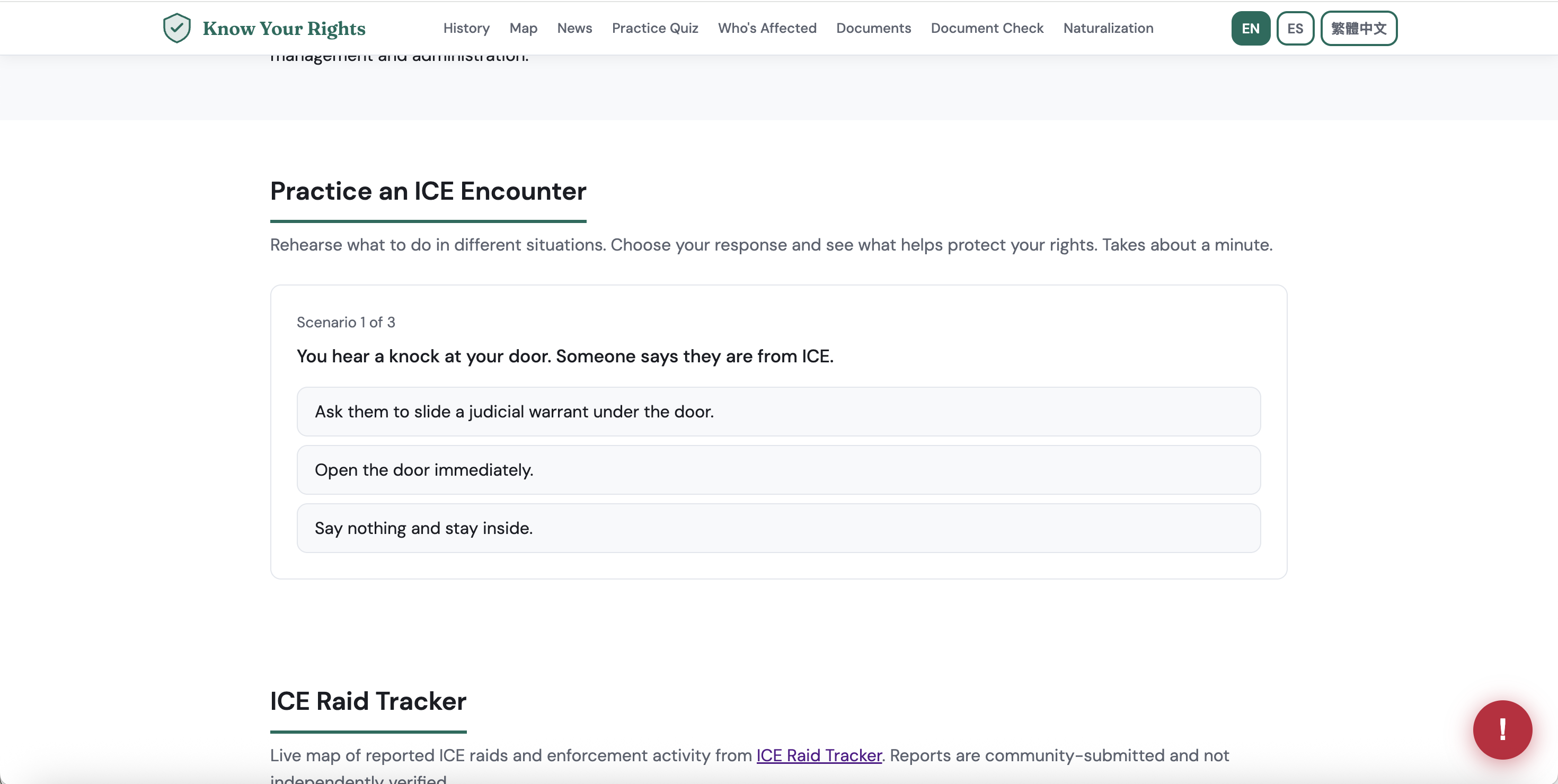
- Practice common encounter scenarios through a simulation mode
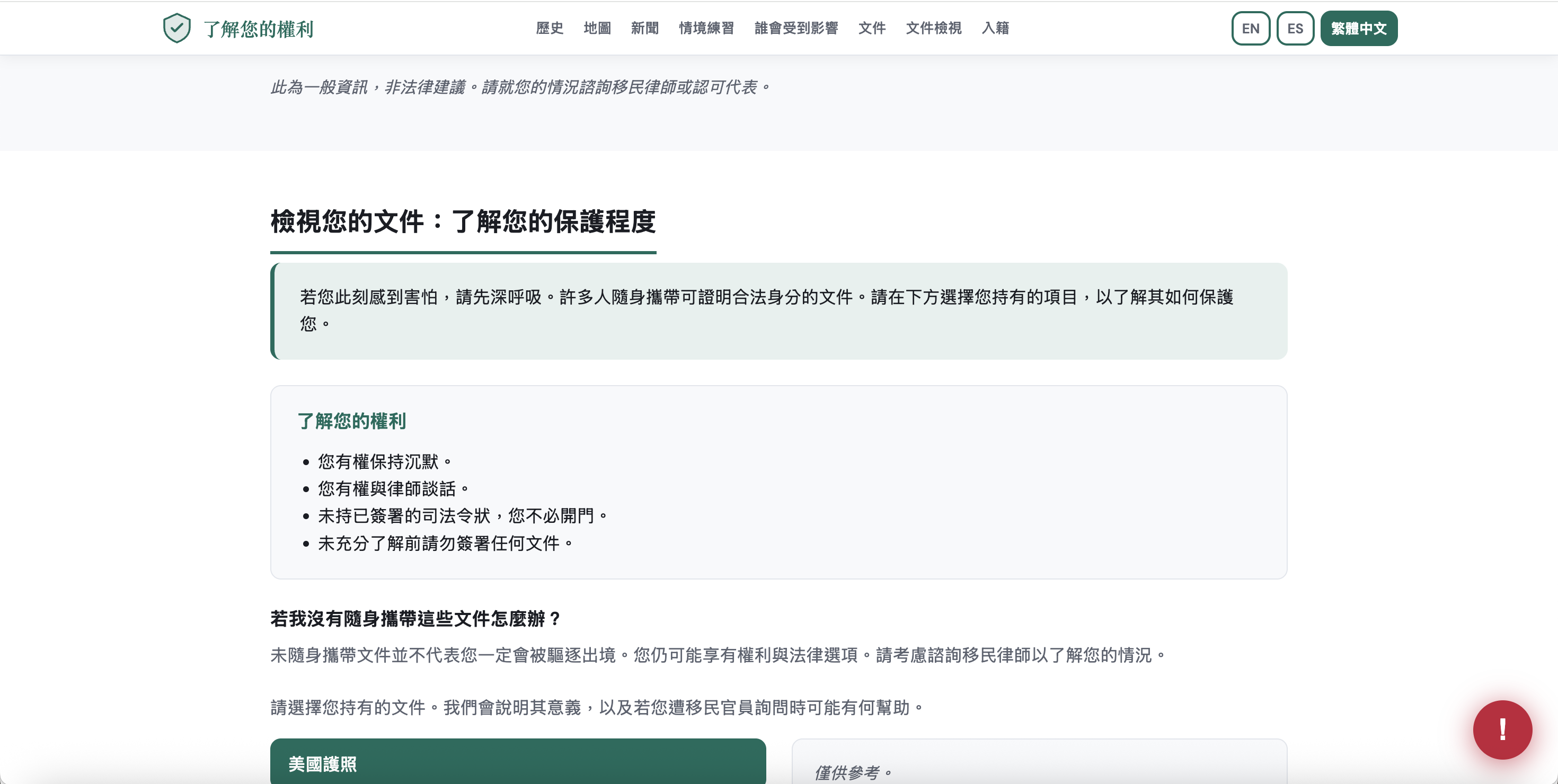
- Access information in multiple languages
- Use accessibility settings for better readability
The entire application runs in the browser. We intentionally avoided using a backend or database so that no personal immigration data is collected or stored.
How We Built It
This is our first hackathon, and we are not computer science majors. We used React and Tailwind CSS to build a responsive interface and structured the app around reusable components and conditional logic.
We also used Cursor as an AI-assisted development tool. Instead of spending weeks learning syntax from scratch, we used it to accelerate our learning and implementation. However, we were responsible for designing the decision flows, risk logic, user experience, and privacy architecture.
We focused heavily on:
- Making the emergency mode cognitively simple
- Reducing large blocks of text
- Designing for high-stress conditions
- Ensuring accessibility and high contrast
- Avoiding data collection entirely
Challenges We Faced
One of the biggest challenges was balancing clarity with responsibility. Immigration law is complex and highly situational. We had to be careful not to oversimplify in a way that could mislead users, while still making the interface usable in moments of panic.
Another challenge was technical. As first-time hackers, we had to quickly learn:
- How React state works
- How to structure conditional logic for decision trees
- How to manage accessibility preferences
- How to prepare a project for open-source publishing
We also had to make careful decisions about privacy and trust. Because the target users may be vulnerable, we designed the app to avoid collecting any personal data. That meant thinking differently about architecture from the beginning.
What We Learned
We learned that building for vulnerable communities requires more than just writing code. It requires thinking carefully about:
- Trust
- Transparency
- Accessibility
- Tone
- Simplicity under stress
We also learned how powerful modern development tools can be when used intentionally. AI-assisted coding helped us move faster, but we still had to understand the system we were building and take ownership over its design decisions.
Most importantly, we learned that technology can reduce fear when it is designed thoughtfully.
Looking Forward
If we continued developing this project, we would want to:
- Collaborate directly with immigration attorneys and community advocates
- Expand language support
- Improve scenario realism in practice mode
- Conduct user testing with community organizations
- Continue refining accessibility features
Our goal is not to replace legal counsel, but to make critical information easier to understand in moments when clarity matters most.


Log in or sign up for Devpost to join the conversation.