
Background and Vision
As the greatest cause of mortality in the US and the world for decades, cardiovascular disease (CVD) can often be prevented with lifestyle modifications: healthier diet, adherence to medications, more physical activity, etc. The challenge comes in causing those who are at-risk to reduce unhealthy behaviors and adopt healthy ones. In health psychology/behavioral science, behavior change typically occurs after an individual experiences symptoms of a certain condition. CVD presents such a unique challenge because it is often asymptomatic until someone's first event, which has a high likelihood of leading to disability or death. What we've found to be the real question at the heart of this issue is: how can we increase the perceived susceptibility of CVD in at-risk individuals in order to change their behaviors prior to their first coronary event?
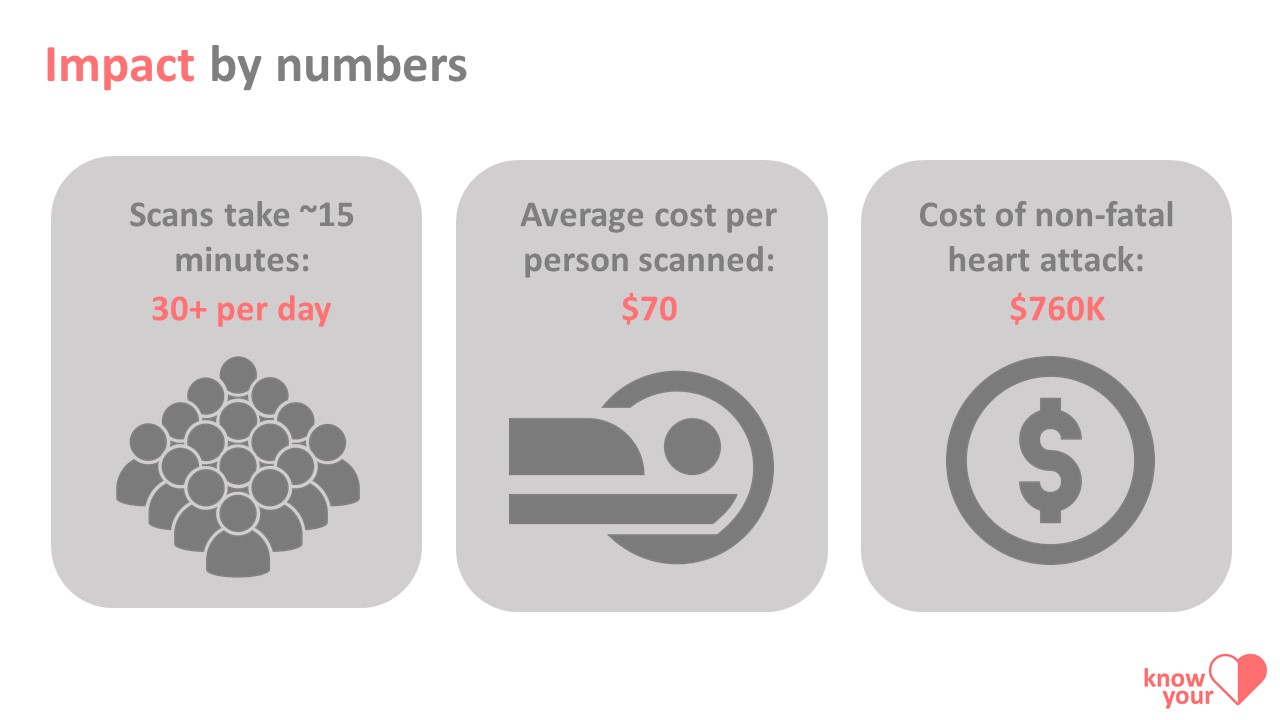
There is a screening method used called a coronary calcium CT scan which can effectively detect calcified arterial plaques, indicating individuals who are at significantly higher risk of coronary event. There has also been recent evidence in the literature that those who receive these scans and learn they're at an increased risk significantly change their behaviors to healthier ones – essentially being able to act as a wake up call without actually having to suffer a coronary event. However, the barriers are many for individuals who are at-risk and meet criteria for these scans such as money, healthcare access, time, and more.
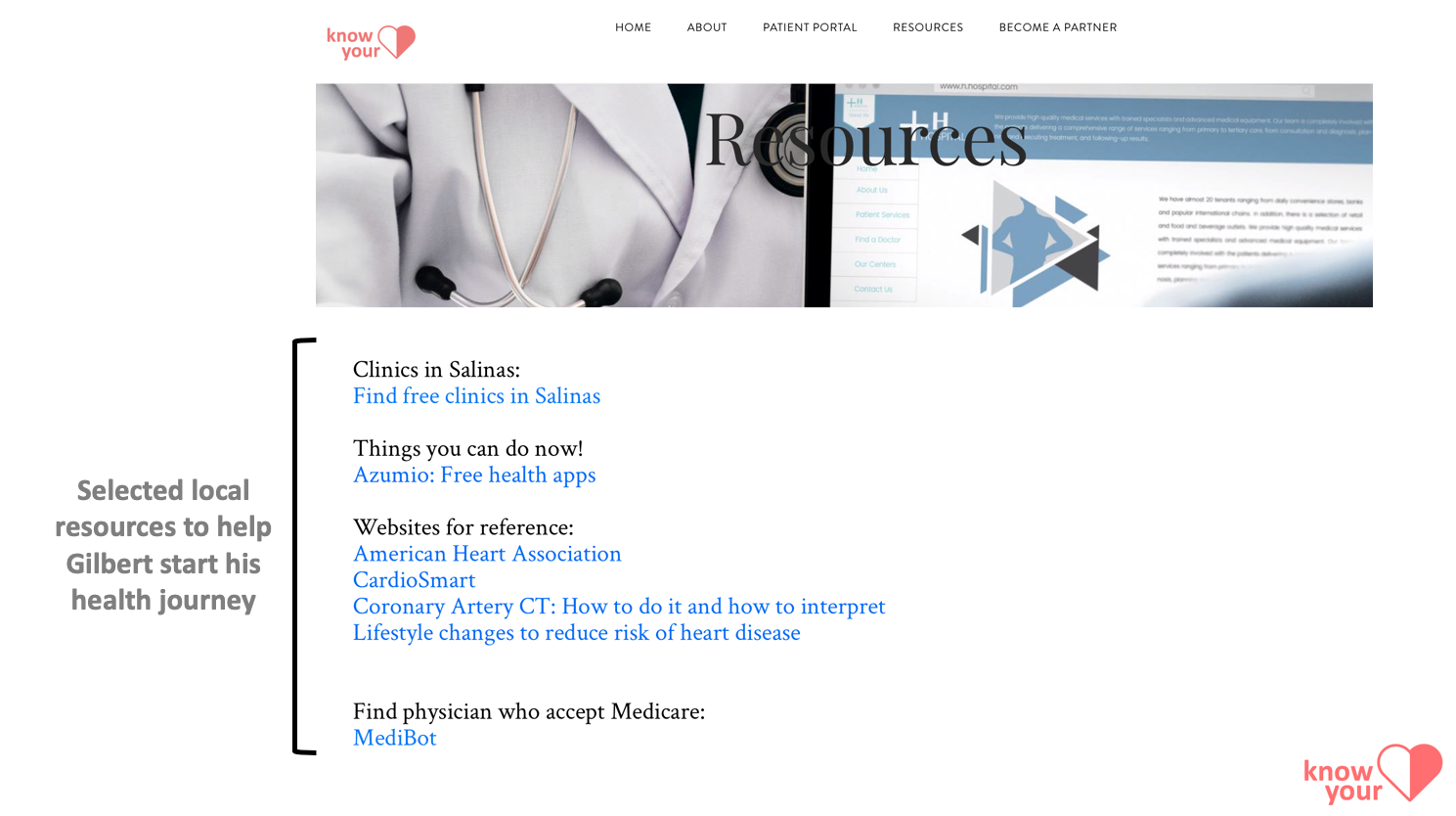
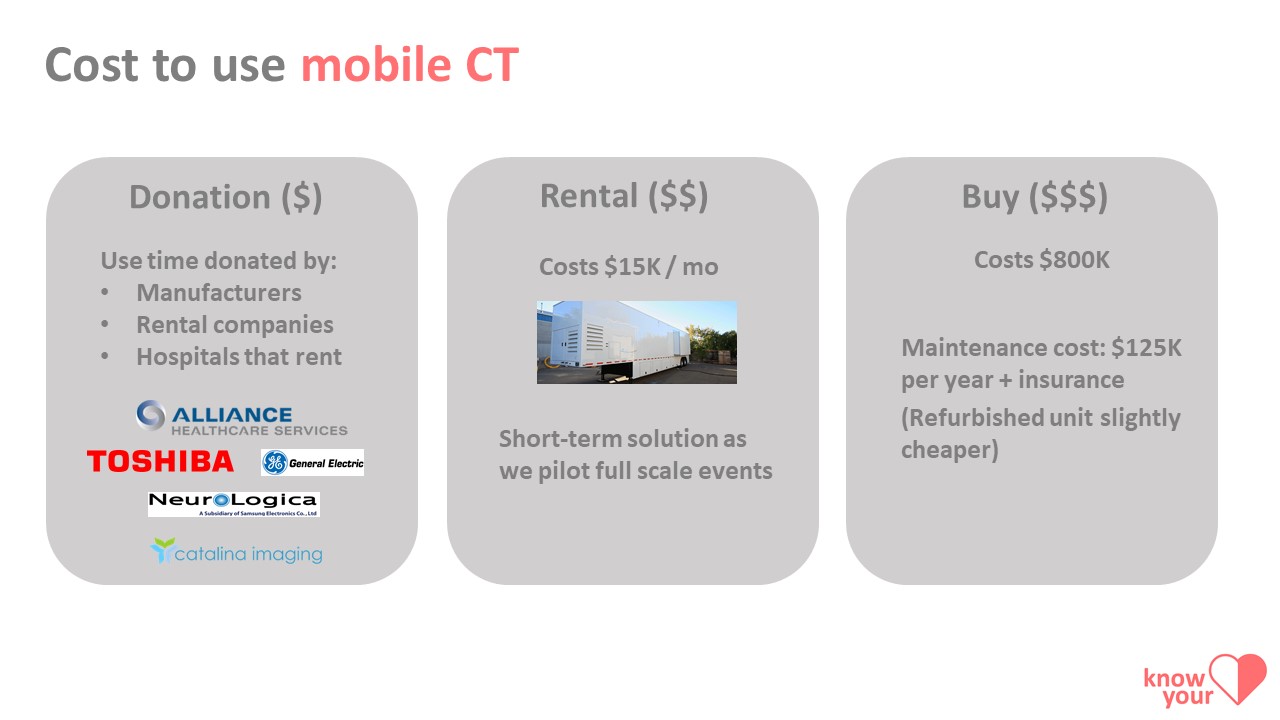
Our approach to this problem is to create a community health promotion campaign framed around the novel use of mobile coronary artery CT scan units. Essentially, we'd utilize mobile "clinics" which contain a CT scanner inside of a large vehicle and visit underserved communities to provide free scans to those who are at-risk and then refer them to free clinics (and physicians who accept Medicaid) where they can get care. Importantly, we would reach out to our target community months prior to arriving to provide scans so we could work together with community members to develop health promotion materials that would best resonate with that particular community – not a one size fits all public health approach.
How we built it
Started with a vision, then developed business model framework, slide deck, website (beta), and integration with Athenahealth via Redox API.
Accomplishments that we're proud of
Slide deck and website created entirely at health++ 2018.
What's next for Know Your Heart
Hit the ground running and build a network of volunteers and community partners to drive smaller community health benefits – such as providing free blood pressure screenings outside of community centers or grocery stores. Concurrently, we'll be working on our bigger vision of mobile CAC CT scanning and begin to search for large partnerships, grant opportunities, or philanthropic foundations.
Posted slide deck coming soon!
Built With
- athena
- redox

Log in or sign up for Devpost to join the conversation.