Inspiration
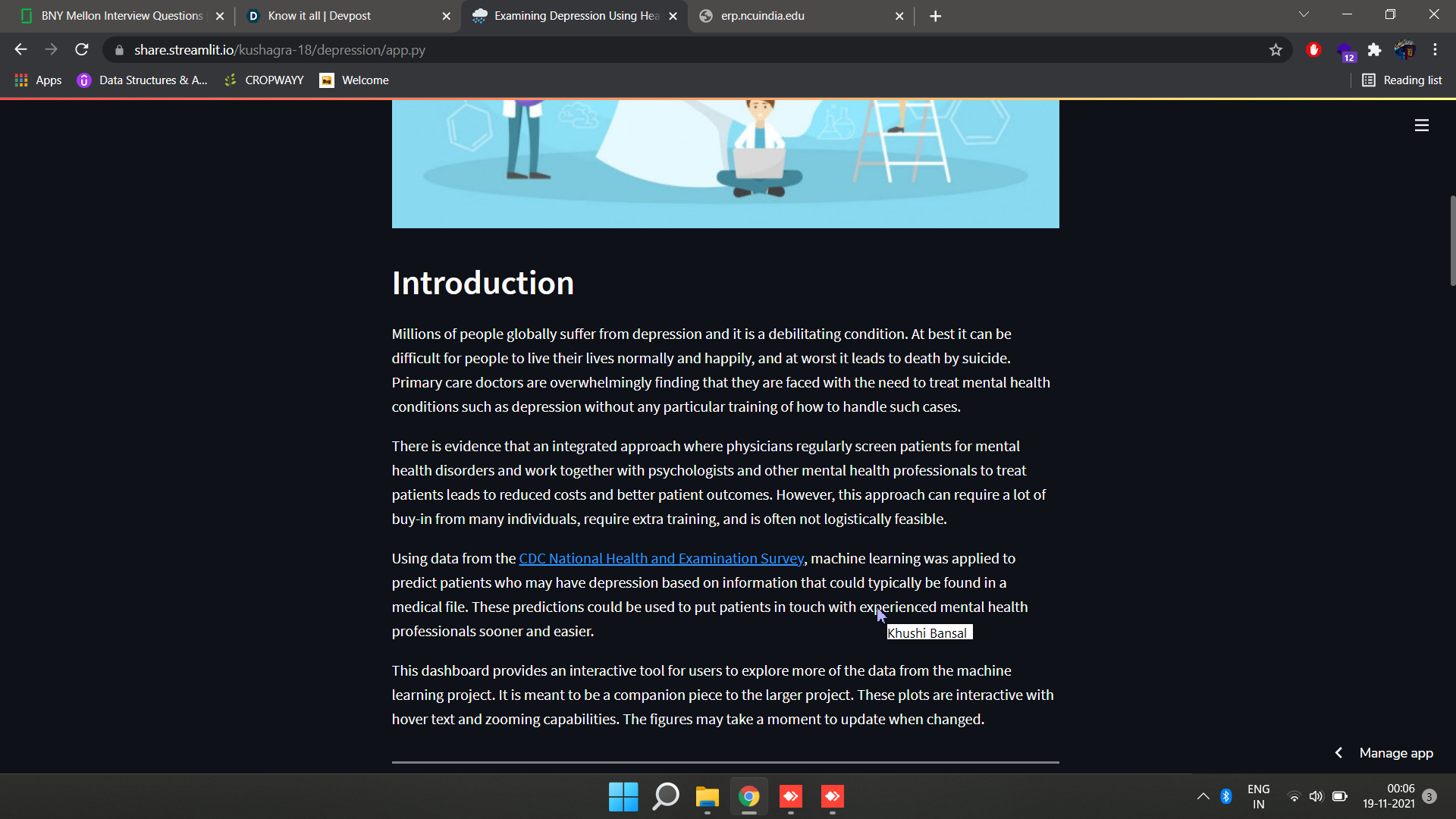
The American Psychological Association identified that primary care physicians are often being asked to diagnose mental disorders such as depression without adequate training on how to handle such treatments. According to their numbers, 70% of primary care visits are because of patients’ psychological problems, more than 80% of patients who have symptoms with no diagnosis receive psychological treatment by a physician, and only 10% follow up to a mental health professional. Patients are not getting the care they desperately need as 70% of individuals with depression go undiagnosed. Among people who commit suicide, 90% of people had a mental disorder and 40% of people had visited their doctor within the last month.3
What it does
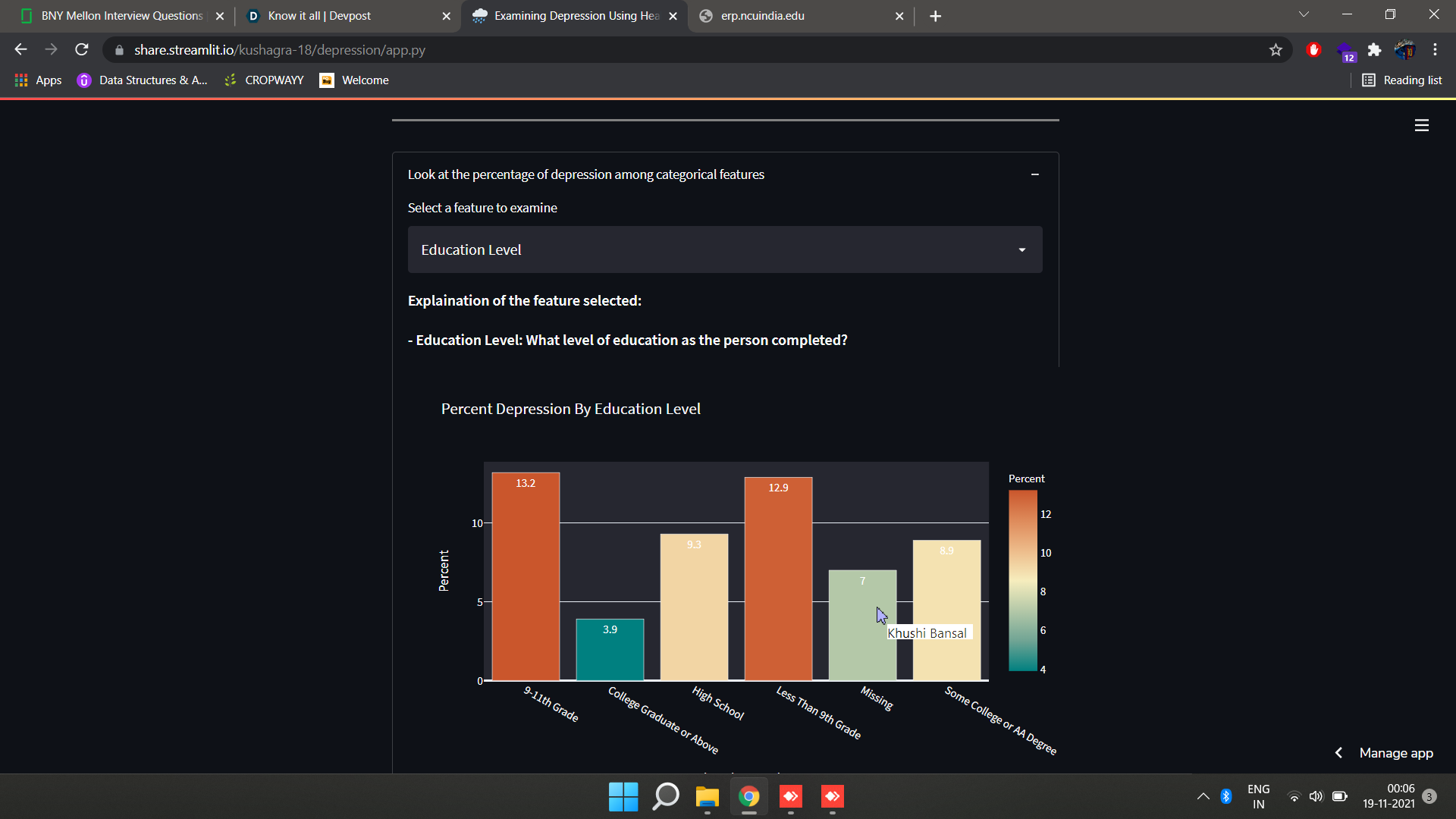
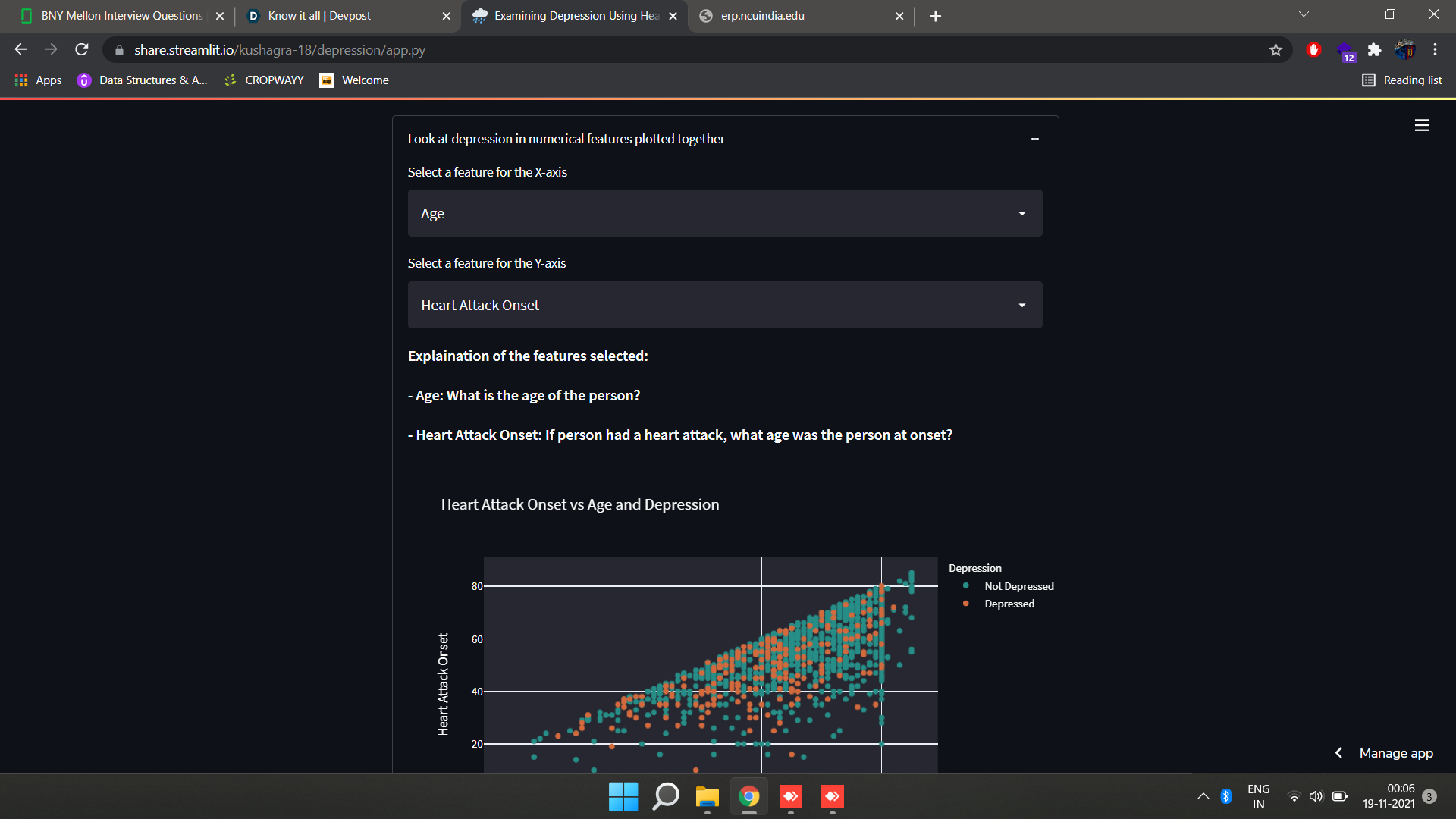
Health care professionals should prepare themselves to help patients with depression and can especially watch out for the most important features from the model. Right now physicians are still handling much of the first-line care for patients with depression and should prepare themselves on how to better provide care for these patients. Some features that were important for the model and show a dramatic difference in those who are depressed that providers can watch for include:
Patients who have memory problems Lower-income, low education, and not being able to work Trouble sleeping and sleeping too much or too little
How we built it
The way the data was preprocessed with feature engineering, filling missing values, and scaling was done with the goal of increasing the accuracy of the models. For each type of model, a model was first trained and fitted with default parameters as a base. Then, key parameters were chosen to tune using sklearn GridSearchCV and the best parameters were used to run the model. Finally, the tuned parameters were used to fit the same model using the resampled data for comparison. Performance was compared to the base model of each type, as well as between different model types. An F-beta score was used as the scoring metric for this project and models were evaluated using a classification report, a confusion matrix, and an ROCAUC plot.
Challenges we ran into
Deploying the application and making it scalable.
Accomplishments that we're proud of
We are proud of the solution which we have presented
What we learned
Deploying the application on cloud platforms
What's next for Know it all
Using AI to predict early detection of depression

Log in or sign up for Devpost to join the conversation.